This Week in Startups - Kevin Hartz, CEO and Founder of EventBrite
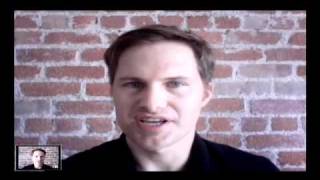
Kevin Hartz built Eventbrite to remove friction from ticketing. In 2010, the company processed over $200 million in gross ticket sales with an 80-person team. Hartz has backed PayPal, Airbnb, Lookout, and Yammer as an angel investor.
Questions this video answers
2006
Over $200 million in gross ticket sales in 2010
$20 million round (investors include Sequoia and Tenaya Capital)
Close to 80 employees
Approximately 3–5% (varies by whether organizer uses PayPal, Eventbrite processing, or their own merchant account)
Chapters
Today on this Week in Startups we've got Kevin Hartz, the CEO of Eventbrite. We also have another caller who's going to give us a 60 second pitch in the shark tank. And special guest Sean Percival is going to read the news. All that and more right now on this week in Startups.
That's what it's all about. Man is the root of all evil but funny how it feeds my people. We ain't gonna live like equals until we get the money, spend the money and defeat you. Yeah, money is the root of all evil. What Funny how it feeds my people. Yeah, we ain't gonna live like equals until we get the money, spend the money and defeat you.
Ah, thanks for joining us again. It's episode number 92. My God. And we're just pulling out all the stops. We got every week a better guest. Today on the program we're have CEO of Eventbrite, which is this extraordinary business. I hear nine figures in tickets are going through this system. I don't know if that's true or not, but there's a lot of rumors going around that this company is just on fire. And Kevin Hartz is a great CEO and also I think he was at PayPal for a while, angel investing. He's been around the block. There's a lot of things we can learn from him. And we've got Shark Tank as well. And Sean Percival is going to read the news. We're going to rotate every week some different person will read the news actually twice a week. And we had, wow, what a great event with Tony Hsieh last night. Bonus episode. I don't know if they published that yet, but we had a bonus episode. And what else is going on? Launch conference will be launching and the launch newsletter will be launching perhaps tomorrow, maybe Monday. And I'm going to respond to the whole Arrington thing briefly probably tomorrow on my newsletter or next week. And by respond I mean I'm going to say I think we have a good claim and we hope to resolve it amicably and perhaps even in private, which is basically my statement. So. And I think the claim speaks for itself. Moving on. One thing that speaks for itself is the efficiency and the wonder and the beauty of mailchimp. Look at that beautiful mailchimp logo behind Tyler. God, I love mailchimp. I'm using mailchimp for the Jason Nation newsletter. When you read my thoughts on hey, can you have a startup and have a kid that went out to 22,000 people with Mailchimp flawlessly and gets into everybody's email box. My delivery rate skyrocketed when I started using mailchimp and boy, do I love this product and do I love this company. If you have under 1,000 subscribers, it's free. So, I mean, that's most people's list. No, it's 1,000. So, yeah, I mean, they're basically saying we're going to take all the market share, we have the best product, and if we have to give away a lot of accounts to people for free, hey, if it's under 1,000, it's free. And you should totally try it for the next time you're inviting people to something or you've got some sort of newsletter because you can see who opened it, who clicked on what links. And you can do really interesting things like time delivery based on geography. So people in New York get it at 9am in Japan and in Moscow and in London, they all get it at 9am Kind of interesting things.
They got the right balance of good features, but simple.
I would say it's a very simple system to use. However, the frustrating thing for me about mailchimp is that I find out they have some feature after I've sent like three or four newsletters and I'm like, wait, I could do that. I can segment the list. I could send one message to my Twitter follower. I can send a message to just people who follow me on Twitter. What? That's incredible. I know which members are on Flickr, so I could send an email just to my Flickr members and say, hey, follow me on Flickr. Or I can send to my Twitter people who have their Twitter accounts in the system say, hey, I notice you are a member of JasonNation and you're on Twitter. Link here. Or I notice that you're on the west coast of the United States. I'm going to be speaking at this event. Why don't you come by and I find out about those features after I've already sent something. So my frustration with it is like many great products like SmugMug, I have the same frustration. So many great features and I need to go to mailchimp school for a day and just learn all the features. I wish they had that maybe they do. They've grown from 85,000 users to 450,000 in just one year. A testament to how awesome their product is. Another product that I feel this way about is Eventbrite, which I have been using Eventbrite now for four years. I think the company's maybe four or five years old and And I started using it for the first TechCrunch 50 event, which was TechCrunch 40. And it was a dream in terms of, oh my God, we don't have to go get our payment account like a merchant account. We don't have to fill up, make a database. It just all flows nice and easily. They print the tickets for you. And the product has gotten more and more robust. And I've learned to really appreciate the CEO and founder who I think is an excellent entrepreneur, as I said before, who we can all learn a lot from. Kevin Hartz, are you there?
Hi, Jason.
Thanks for having me. Okay, I think Kevin's there. Can you hear him in the chat room? Let's check one more. You know, the standard Skype check one more time. Kevin, are you there?
Hi, Jason.
Okay, I can hear Kevin. Can people in the chat room hear him? Ok, let me just make sure of that. Very quiet. It's a little low, guys. Can we check one more time?
You know what, I'll get up closer. How's this?
That's much better. Yeah, I guess you're on an open mic, but the fidelity is not bad. And you look crystal clear. Is that a real brick wall behind you, Kevin?
That is. That's our office and we're just giving you a taste of San Francisco. We're in a brick warehouse here in south of Market.
Excellent. So, you know, I'm a huge, huge fan of the product. I've been using it now for three or four years. How long has the company existed in and why did you start it?
Well, we started back in 2006 and we had just always felt that ticketing registration is really broken. You just don't see a lot of areas of innovation, a lot of innovation in ticketing. It's one of those, we call it kind of the last bastion of E commerce that really hasn't been addressed properly. And we've really focused around product and engineering of, of building just a product that people love, that our customers love, that our attendees love. And that's been our formula for success since 2006.
And so 200 million in ticket sales. Now, is that number correct and what is that per year or per month or total ticket sales?
Well, we measure what we call gross ticket sales and that is all the tickets that our customers sell. And it's, it's similar to what eBay uses in terms of gross merchandise value or PayPal uses total payments volume, TPV. You've got to have a clever three letter acronym. And we use gross ticket sales and in 2010, this year, we'll round the year up with over $200 million in ticket sales. And we like to measure that. I think it's very important because we like to see our customers successful. We want to see all the conferences and shows and different events selling a lot, and that's how we make money. Then as we take a small cut of that.
And what is the cut? Is it a sliding scale, like 3, 4, 5% or something?
Yeah, it depends if you're using PayPal or if you're using our own credit card processing through Eventbrite, but it's in that range.
And so just to sort of get wonky for a second here, you don't need to become a merchant if you're selling tickets to an event. I mean, this is one of the big innovations. I know when I was doing the Silicon Alley reporter events in the late 90s, we had to become a merchant. We had to process all this stuff. It was a real pain in the neck to become an American Express, a Visa merchant and manager, all that stuff. Anybody can come to your site and then start immediately selling tickets with all those major credit cards, correct?
That's correct. We really think about friction free commerce and we just want to make it super easy for anyone to publish an event. If you think about the olden days, I mean, just in the. If you think about kind of the history of Silicon Valley, it was always a solution that only reached the largest, most well financed organizations. And ticketing is like that. You've got to be, you know, you've got to be the Giants ballpark, or you've got to be a big organization to manage ticketing. And what we're doing that is we're bringing that to everyone and we're making super easy to sign up. You can start selling tickets in minutes either through PayPal, through Google Checkout, through our own credit card processing, or if you do have a merchant account, you can hook that into our system as well.
And how many people are at the company now? I mean, I know you did this Munster round with Sequoia Dag and a whole bunch of folks, $20 million round. How many people at the company and exactly how big is this business going to get next year?
Yeah, thanks. Our third investor, by the way, was Tenaya Capital. And we're at close to 80 employees now and the business is tracking nicely. We're really hiring in the product and engineering side. Here comes, I guess, the plug, of course, for we're hiring, but certainly beefing up product engineering, marketing, Customer service.
And who is the competition for this? I mean, you're not. Are people who have a small venue saying, I'm not going to use Ticketmaster anymore, I'm going to use Eventbrite. Or is this, hey, there's a bunch of conferences or special interest groups or people having a house party or something like that and saying, hey, this is easier than having people send us checks.
You know, Jason, it's really an enablement market at this point. It's a lot of people that would have to have this built or outsourced to a consulting firm and build it themselves. It's people that have a certain skill, say they teach Photoshop or want to teach yoga or hold a conference of some sorts and now can really do that readily. Through Eventbrite, we are seeing ourselves moving upstream and starting to see some of the players, the ticket web and so on. But it's really the enablement audience that this new audience we're reaching.
Now. You've been an angel investor for a little while and I'm not sure if you're currently active or not, but what have been some of your angel investments and are you currently angel investing as well?
Well, I have in angel investing for me has always been a. Has been really an intellectual exercise. It's an exercise for me to learn. And that's what, you know, I think when you talk about the culture at Eventbrite, we love to be challenged, we love to learn and really, angel investing has always been a way for me to meet and work with other very bright entrepreneurs. So, yes, I get to invest in some very interesting companies, but I also learned so much and really share practices. Some investments in the past, was an investor in PayPal more recently. Airbnb is a company I'm a huge fan of right around the corner and love learning from that young team out of Y Combinator. And also Lookout is another company around the corner. I'm on the board of directors there. It's a mobile security startup addressing the Android market. And, and again, it's really exciting to be involved in other companies for the learning that I get out of it. These days I've been less active just as I've got to focus more on Eventbrite.
Also Tripit and Yammer, I believe, and even Friendster you invested in back in the day.
Yes, Friendster. That was a little bit of a painful experience, but very exciting to see social networking in the early days.
Why did Friendster fail?
Friendster failed. You know, I think you can expound on this for a long Time. I think that, you know, first I, well, I think a lot of it had to do with the elements of building the right team and they had a lot of technical and scaling problems going into place. I think also that the viral growth wasn't, wasn't controlled in the right manner and you saw a non US audience grow up, which is an interesting market but not as interesting as first conquering the United States and really learning there. Whereas Facebook was done in more of a closed environment of the universities and was able to groom the audience. So yeah, I think there was a period of, of different issues, but in the end Facebook is really a long standing company that has an amazing team and they prevailed.
Yeah, speed, stability you brought up there. I know that Eventbrite, we've never had a problem with. Pretty bulletproof. And you worked on or co founded Zoom before that. How important is it? And you hear this debate in the entrepreneurial circles like, hey, don't worry if your site goes down. Ebay went down a lot. Twitter went down a lot. There's still amazing services. But then you hear other people saying, hey, you have to have perfect service fast. Google is so great because they're so fast. People trust PayPal because they never go down. Which is it?
Well, it's the latter. It's the notion of a dial tone when you. I guess that's kind of old school these days because nobody really has a landline anymore. But you pick up the phone in the old days and you expect there to be a dial tone and that's just something that has to happen. And in our businesses, especially in ticketing, you've got to have that super reliability. I think that if somebody has a sort of laissez faire attitude that, oh, it's okay if the site goes down now. And then I just question the sense of urgency of the entrepreneurs or the culture of the company that we're always fighting to make sure and we never want to have those things go wrong. And that's reflected in the culture of the company.
Other advice for young startups, we get a lot of them watching the program. What are the key things to you that you focus on? Top two or three things when starting a new company. What are those things that you feel like, God, I got to get these things perfectly right before I ask people to invest in this company, before I decide I'm going to go all in with it. What are your top three things?
Well, Jason, first I'd just say really get a make sure you have the right founding team and a good Partner. I'm a big believer in Paul Graham's notion that really starting a company by yourself is very, very difficult. And having at least one other co founder and somebody you can bounce ideas off and support you through the tough times is a critical piece. Getting the right product, market fit before raising money. You don't want to find yourself shifting models. Inevitably it happens a lot of times, but you don't want to get caught, overfunded or with a lot of capital in finding out that this product just isn't quite for the market. I think also really the third piece is relevant to the times that we're in right now and that is that I feel we're entering into a new bubble. The pendulum is swinging the other direction. Capital is easier to come by these days. So we all need to just keep our wits about us in terms of really thinking about how to be frugal, build a sustainable company and not get too carried away with the relative ease it is to raise money these days.
So somebody might say a cynic, you're talking about being maybe conservative in a bubble type environment, but you just pull down $20 million and I've heard eventbrite is already profitable. So what does your own behavior tell us? Are you believing that there. Should we take from your $20 million raise with a company that's either profitable or close to profitably, or could be profitable if it wants to, why would you raise that money? You think there's a bubble? That's. If you say there is a bubble, do you mean, do you think that it's going to burst?
Well, at some point we'll swing the other direction. I mean, I would anticipate, unless there is, you know, some terrorist action or crazy occurrence, that we've got a few years of Runway. But really when what happens in the upswings of economies are the salaries rise, I see the competition happening now. I see candidates coming out of companies and the salaries being bid up. And you don't want to create, you don't want to create a company with the wrong, what should we say, kind of spending base. If you overspend and build the wrong kind of architecture during the good times, when times get tough and they inevitably will, and that's the nature of capitalism and I don't know if that's near term or long term, you're going to really struggle and I'm in this just to build a long term company. Mea culpa on the funding. We, you know, we did to a certain extent see the macroeconomic signs and did pull that money down. But we're also thinking about really building a long term sustainable company. We're thinking about how we alter ticketing over the next five years, not in the next 12 months.
So what I'm getting from what you're saying is control costs as a company. Imagine you're living in leaner times and maybe don't have unlimited funding sources and build a business that is in fact sustainable in terms of the balance sheet and what you can charge for the service. However, as an entrepreneur in a frothy time, in a bubbly time, maybe you should fund yourself up. Maybe you should take a little bit of money and put it away so that you can take the long view. I mean, that is the reason to pull down this money. It's a great market to raise money and then you have the ammunition and dry powder to fight the long five year war. Is that correct?
Love how you articulated that we shouldn't fool ourselves as entrepreneurs. You know, we should certainly move with the, with the market and it's a great opportunity and a great time for entrepreneurs. But let's keep our wits about us and really focus on building our businesses.
Is building a company in Silicon Valley.
Today.
Especially for a person who's experienced like yourself, is that the optimal thing to do? I mean, the salaries have gotten out of control in most people's opinion. In terms of developers. You have Google and Facebook fighting over developers with hundreds of thousands of dollars. And I'm not taking anything away from anybody who earns their paycheck. I've gotten paid well in my career. But does it make sense if you're an experienced entrepreneur to do it in the Valley and have, I don't know, double the salaries or 50% more? Is the Valley becoming unsustainable itself as a place to launch a company?
You know, that's a really good question. There's so many benefits, but there's so many downsides as well. I mean, the benefits are, is that all the infrastructure here, the funders are here and so on. But the downside is that, yes, you've got so much more competition. And Jason, I just want to check if I'm still connected here.
Yeah, we can hear you. We had a little bit of fritzing on the audio. So what I'm going to do is I'm going to read a commercial. While I read the commercial, we're going to disconnect from you and then reconnect and see if we can get a better connection on the Skype. So why don't I Just say goodbye to you for one second, ask the crew, maybe we could restart that. And then I'm going to tell everybody about an amazing and amazing company. Just as amazing as mailchimp, just as amazing as Eventbrite. DNA Mail. DNA Mail. Everybody loves DNA Mail. That's right, Tyler, everybody loves DNA Mail and I love them for being with me for 92 consecutive shows. These guys have been my greatest supporter and oh boy, am I excited about the fact that they have been and they will help you succeed in your business by moving your mail to the cloud. You can get Google Apps or Microsoft Exchange hosted at their service. And guess what, I don't want to say anything bad about Gmail, but it's been a little bit of a rough ride right now. Maybe you need some. Consider Microsoft Exchange or hosting with DNA Mail because they have free activation, free setup, 24 hour support right here from Los Angeles with people who care and who speak English as their primary language. I mean you can't discount that. Sometimes I call customer support. This isn't being xenophobic, but sometimes a person just doesn't relate to me. And if they're in another country, I would rather talk to somebody here. 99.9% uptime guarantee and boy are they a great company. Don't let your business suffer from subpar communication. Sign up today and take advantage of their 30 day free trial. DNA mail. DNA mail. Everybody loves DNA Mail. Go ahead and say thank you, Namail, for supporting this week in Startups. Thank you for supporting independent media. Thank you for every week allowing two different entrepreneurs to tell their story. Up and coming entrepreneurs to pitch on the shark tank, Lon to read the news. Lon's not with us anymore anyway, to talk about the news. This week in startups is booming with over 100,000 downloads every episode. You get this free content and the reason you do is because of DNA Mail. It is your giri. It is your duty to thank them on Twitter. Thank you Namail.
Let's do a tweet drive.
A tweet drive, you know what I mean?
Like instead of like we have, we have people standing by for calls, you know, sending your contribution.
I tell you what, right now, live on the program, somebody tweets, thank younamail and mailchamp for sponsoring this week in startups. And I'll pick one of those people and give them a free ticket to the launch conference. How about that? February 23rd and 24th.
It's just kind of like the, those phone call drives where, you know, we're gonna, we've got a Kindle here. We're gonna give it away to the anyone who donates over $50.
All right, let's see. We got Kevin back. Kevin, are you there?
Hi, Jason. How's this?
Perfect. Just a little bit closer to the microphone and we should be fine. You've been around the Valley for a long time, and you've met with a lot of entrepreneurs. Who are the entrepreneurs that you look up to that you take notes from?
Well, one I'll say in particular, is actually a board member of ours. Two board members of ours. Sean Moriarty, first of all, who is actually the ex CEO of Ticketmaster. He's been a fantastic mentor, I think that you would say, oh, he's the head of Ticketmaster. Must have been a real tough guy. But he's actually just one of the most intellectual, one of the most thoughtful, and really cares about building teams. I'm a huge fan of Roelof. Also on our board of directors, he came out of PayPal and really embodies that PayPal spirit. Learned quite a bit from him. I guess the list goes on. Jeremy Stoppelman has done a fantastic job. He's a great Yelp.
How do you construct a board? There's a lot of young entrepreneurs listening to the program. Some Y Combinator folks, they don't even, I think, in some cases, know what the purpose of a board is. And in fact, I know, you know, I was two or three companies in before I started to even think about what is the purpose of the board and why do I have these people here and how do I leverage them. What do you think board members exist for? Why do you. Why do. Why does a company need to have them? What do you see them as the purpose, from your perspective as a founder, CEO?
You know, I have, I would say, almost a contrarian attitude as an entrepreneur towards boards. I find them incredibly helpful. And it all starts when we started Eventbrite. We thought about being very open and finding great talent, whether it's full time or whether it's advising or on the board. So we reached out very early on to find great people to be involved as advisors and so on. A board, to me, is a great sounding board itself to really keep you in check. I think oftentimes a mistake made is that entrepreneurs won't build up a strong board, and as a result, they're never really challenged. And I love to get great company operators involved, build out a strong board that's going to challenge me and challenge our team in every board meeting.
And so you Actually look to it as not an annoyance, not a necessity, not some people to meddle. Which is what you hear from a lot of entrepreneurs. Oh my God, my board's meddling. I'm spending my time managing my board, not managing my business. You're actually looking for them in a way, like a coach and a sounding board. From what I'm hearing, you like them to push you maybe and to challenge you on issues. Is that typical for entrepreneurs? And did you always think that way? Or in your earlier companies, did you look at them and say, oh my God, these guys, I got to manage these guys. They're meddling.
Well, when it comes down to it, the board is the founders and CEO is responsible for building the board. So if they turn out to be meddling, it was really a reflection of a bad choice that the entrepreneur or the CEO has made. I like to look at the boards as when we think about adding a board member. As the magic wand theory is, if you could wave a magic wand and have anyone appear on your board, who would that be? And that's how we build things here.
So you said, I'm building a ticket business. Boy, would it be great to have. Was he the founder or just the CEO of Ticketmaster?
Sean was the CEO of Ticketmaster.
So you said, hey, I'm building a ticket company, I should have the CEO of Ticketmaster. And then how do you go from magic wand to actually having the guy show up for board meetings five, six times a year? Did you just email him? Did you ask somebody for an introduction? How do you go about landing a high profile board member like that?
Well, it's really building a relationship. I was introduced to him, met with him, and again, I think we have all our biases about larger companies and he was just a phenomenal brain and phenomenal company operator and somebody I wanted to have involved and wanted to seek out his advice. And I think that's the biggest litmus test. And from that it just became a series of informal conversations over a relatively long period of time. A few months, that, that then it just became a really natural relationship.
So you get it, you get an introduction and then you start bonding with the guy, sharing your feelings and your mission and your vision. And then eventually it's got to become brass tacks. You just say, hey, I want you on the board and here's what I'm willing to offer you and I'm going to give you this much stock or this much money. One of the questions in the chat room right now from sglad was how Much do you pay a board? Do they get paid? How does that work? How does the offer process? Because sometimes that's uncomfortable, right? This is a guy who's obviously very successful, probably very rich. He doesn't need your money, he doesn't need your stock options, probably. How do you get them to actually say, I'm going to risk being on your board because there is a little bit of liability?
That's right. Board members of private Silicon Valley companies are not paid in cash. Investors are not compensated for their board role. They're investors in the company and have a stake and then a say from that. But an outside independent board member like Sean Moriarty, there is a. You make a stock grant just as you would an employee and it has a vesting schedule typically. And this is from my own experience of serving on other boards and where I've served as an independent member. You know, it ranges 50 basis points to 1%, sometimes perhaps more with a two or four year vesting schedule. And typically no cliff is what I've seen from experience.
So just to recap that, get one of these high profile board members, get an introduction, get them inspired and then, you know, up to a point in the company, 1%, which a company like Eventbrite, which will clearly become a billion dollar company in my mind, I don't think Kevin's going to just come out and say that. He's a pretty humble guy. But I will tell you, this is a billion dollar company. 1% is $10 million and 50 basis points. When somebody says 50 basis points, they mean half a percent, half a percent. So 25 basis points is 25% of 1 point. Some people, you know, they hear that basis point saying, they go, what does that mean? And the cliff would be they don't have to like a normal employee, get to 12 months to invest their stock. You say, hey, I understand you're a pretty high profile person. You can start investing monthly and they get that 50 basis points, 1% over two to four years of service. What are the mistakes Kevin, you made early that you have changed?
Well, I would say with my previous experiences that what we've really thought about here at Eventbrite is hiring not just based on raw intelligence and diligence, but also cultural fit. So really, how well does the team gel and work together? And I think in previous experiences and experiences I've seen out there where you have some really super strong teams in terms of individuals, you'll often have conflicts. And that's where Julia Hart's co founder, who also happens to be. My wife has really worked with us on building the right culture here at Eventbrite, and it really shows. Like, we just have. I get goosebumps when I walk in, in the office and everyone's. We're all in one big room together. Julia and I sit out in the middle of the room and just love the people here.
I mean, and for somebody like you, a successful entrepreneur who's done well enough that they don't have to go to work every day, that's kind of critical, right? I mean, you want to come to a place every day that you love and that is filled with people that you enjoy working with. I mean, you can't discount the importance of that, can you?
You're right on. It's. You know, startups can be stressful and we want to do great things. We really want to go out there and in our case, change ticketing, but we want to do it with people we enjoy being around and, you know, that share our passion.
The decision to go into business with your wife, easy decision. Is it difficult at times? What happens if you guys disagree about something fundamentally? Who wins?
Jason, she's right next to me, so I'm going to be careful. Yeah, I'm going to blink Morse code. You know, it's kind of like, help, get me out of here. What we did is we found mentors, just as that notion we talked about, about reaching out and finding people that inspire you or really that have done it well before. In our case, it was Michael and Sochi Birch who were the founders of Bebo. And they grew a company from zero to sale to AOL for over $800 million. And their advice was divide and conquer. And so Julie and I, we've been very involved. And by the way, our third co founder is Renaud, our CTO of the company. I can't leave him out. Very third critical member here. But we really divided our task and also we always had an exit plan. Most couples don't work well, and it's same with, you know, same with brothers. Same with father, son teams or mother, daughter teams or anything else. You don't want to destroy your relationship. First and foremost, you want to keep that intact. So you do need to have an exit plan early on. But we were lucky to be one of those few couples that we've gelled well together. And it's been a wonderful experience.
How do you deal with the fraud issue? And this has come up in the chat room here a couple of times. Anybody can set up an account, Anybody can sell tickets to something. What happens if I set up an account and I sell tickets to something and the event doesn't occur? Who's on the hook for that? Eventbrite. The person who set it up.
Well that's Eventbrite is on the hook for that and in fact we're under fire and under fraud attacks entirely. And it's part of the reason that that there is no simple self service solution out there except for Eventbrite. And this really comes back to the PayPal DNA. Why PayPal? On the appearance PayPal would be a very simple service. You send and receive money, you hook up your bank account, you hook up your credit cards and the money goes back and forth. But the reality is that there's very sophisticated fraudsters from all around the world continually hitting the system and building that infrastructure and back end is was a lot of and still is a lot of PayPal secret sauce and we did that at Zoom Company. I started in the international money transfer area and we're now we've also rebuilt that experience and we've got a wonderful fraud analytics team at work on that which is of a lot.
More from Kevin


Kevin Hartz, Co-Founder of Eventbrite, scaling online ticketing & new autonomous security at Sauron!
Kevin Hartz: "How I Lost Airbnb at Seed Because of an Exploding Term Sheet" | E1180
Kevin Hartz: "How I Lost Airbnb at Seed Because of an Exploding Term Sheet" | E1180