Kevin Surace UCSB
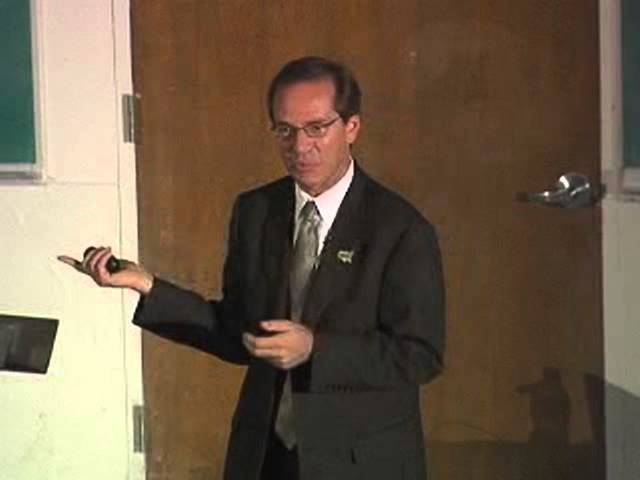
Kevin Surace discusses how clean energy and energy efficiency can rebuild U.S. manufacturing and jobs. Buildings account for a huge share of CO2 emissions. His company made drywall and windows that cut energy use, cut costs, and paid for themselves in years.
Chapters
Hello.
Good evening, everyone. Thank you for coming. Who cares about the environment? All right. Who doesn't care about the environment? Well, that's good. So I guess I came to the right place. You know, it's great to come to schools in California because everyone raises their hand. You know, you get to some of these schools somewhere in other parts of the country and they're not sure. They're still trying to figure out what we mean. So I wanted to give a talk tonight that is supposed to be controversial. It's supposed to make you think. And it's supposed to make you walk out and say, maybe I need to do something about this. I think you'll see that. We're going to open it up for questions at the end, and I'm absolutely happy to talk about entrepreneurship, building a company, building unique companies in unique spaces. I've also built traditional tech companies. Tonight we're going to talk about something very, very interesting. I'm going to back up and make sure I've got the light right here and all that for the cameras. I say the green economy, our last chance to save America. How many of you think that must mean that I'm going to talk about how America is going to be flooded and underwater and all of those things?
No.
Oh, come on, someone raised their hand because someone must think that. So saving America can mean a lot of things, but even though I'm going to touch on climate change, that's really not the focus of the presentation, but it is an important piece to understand. I'm going to start with the Industrial Revolution and go back into the really mid to late 1700s and into the 1800s, primarily the Industrial Revolution that arguably ran to the late 1800s in this country. Well, the Industrial Revolution actually started in England, and in fact England at the time was an absolute powerhouse of the world. It was the big country that sort of controlled the world. They had all the technology. In fact, they had the Industrial Revolution. We were too young to really start in the early part of the Industrial Revolution, but we came in later. By the mid-1800s, we owned it. We did very, very well with that. But the Industrial Revolution was built on some concepts that are just plain wrong by today's standards. First of all, energy was free. The entire Industrial Revolution was built on the concept that we had a steam engine and later gasoline engines and other things that could run on natural gas and oil and these kinds of fossil fuels and that they cost so little, so little that basically we could eliminate hundreds or thousands of jobs and just have this machine do that job. That was the concept. CO2 was safe. It was just a clear gas. In fact, we probably barely knew how to measure it. Burning fossil fuels was great and coal and oil drove that productivity. But today, There's a new industrial revolution, a next industrial revolution that we have an opportunity to lead. We have an opportunity to lead it because all of the premises of the industrial revolution, the one back in the 1800s, are now wrong because fossil fuels aren't safe. You just all raised your hands about the environment. We know what carbon pollution is. We know what climate change is. We know how this is affecting the environment. So we therefore, if you follow this premise, get to actually redesign most of everything that you've ever known in your life because it was all designed during the Industrial Revolution. Now, Secretary Chu just said this in the last few days, just last week when they awarded the ARPA-E contracts. I normally won't read an entire slide, but I will read this. After World War II, America was the unrivaled leader in basic and applied sciences. It was this leadership that led to enormous technological advances ARPA-E, which is this program to fund just a handful of companies and some new technologies around the environment, is a crucial part of the new effort by the U.S. to spur the next industrial revolution. And in this case, in clean energy technologies, creating thousands, which I think will ultimately be millions of new jobs, and helping cut carbon pollution. Very, very interesting because we're seeing these terms come out of Washington now. So this is becoming very, very clear. But why care? Well, we all raised our hand about Climate change. But I'll be honest with you, much of this country, that isn't something you can sell them today. They're out of jobs. They're worried about their job. They're worried about their community. They're worried about their kids. They're worried about how they're going to pay for things. So climate change is this thing that's out there and some scientists and this and that and they don't fully understand it. Anyway, they recycled their newspaper this morning and that's good enough. That's where most of America sits. It doesn't mean they're bad people. It doesn't mean they're not thinking about it. It's that they've got other things on their plate. Once you get past the 9% of Americans that are very strong around climate change, you get yourself in a very difficult area. There's got to be other reasons why we have to care. Energy independence, national security, the U.S. leading in the next growth industries. Those are all reasons to care. U.S. jobs, bringing back manufacturing to the U.S., climate change being one of them, support U.S. innovation and invention, and lastly, pay back $12 trillion of U.S. debt. We're going to come back to that very shortly. Because that actually may be the key to saving America. This is a very interesting chart. What it does is it tracks the current relative share— actually going back into the 1700s— the relative share of world manufacturing output. Notice that somewhere around there, around 1950, we peaked, just after World War II actually. We at that point made 45% of the world's goods, they were made in the United States. We made them all. We sold them to the rest of the world. People gave us dollars. We paid back our debt from World War II. That's exactly what we did. We owned basic science. We owned applied science. And we owned manufacturing. We invented, manufactured, and installed here. It was a spectacular time in the economy. 1950s, it fell through the '70s and continues to fall. You'll see that the big change here, this red thing, is China coming up. And of course there are some projections share for the next 30 or 40 years or so, but you'll see what happens. We continue— the United States continues to crush. Other countries are sort of maintaining their smaller statures. Japan, which was bigger, is going to get a little bit smaller. So that's the relative change in what's happening in manufacturing output across the world. At the same time, something else has happened. This is the federal government debt. Well, that's a little scary, isn't it? You see where that's gone in the last few years. I mean, arguably we got in a little trouble here, but it wasn't too bad. And gee, we started to plateau here, and then just recently in the last handful of years, it's right through the roof. And today sits roughly at about $12 trillion, which by any account of any imagination in any econ course here is an awful lot of dollars. Well, at the same time, we've got this climate change thing happening. And we don't have to go into a lot of climate change, but we'll remind ourselves that as CO2 goes up, the temperature goes up. Depending on who you listen to and what part of the IPCC you look at, somewhere by 2100 as high as 11 degrees Fahrenheit. This is real. This is happening. We can look at a lot of data here. This is another thing that comes right out of IPCC is looking at best case, good case, and the status quo. We're not saying how many years this would be. This could be 100, 150, 200 years, but if you look at PPM, stabilized CO2 ppm in the atmosphere, and you look at how many degrees Fahrenheit we're talking about rising the temperature on Earth, where we're headed right now is sort of into this range. If it's business as usual, somewhere between 750 and 1,000 ppm is where we finally stabilize. Now that may be 150 years from now, but that's where we finally stabilize. That's a 15-degree Fahrenheit rise in the temperature of the Earth. I assure you, we cannot survive with that kind of rise. We're all going to have to live somewhere very— what has been very, very cold in northern Canada or something, but we're not going to be able to survive in other places. This is the actual Arctic melt versus IPCC models. The IPCC models were very conservative. They said, look, we're going to melt somewhere around 2100. This is the NASA projection, currently around 2017 based on the satellite data of the last few years. So obviously it looks like we're going to have an ice-free Arctic much faster than the IPCC than we thought. This is the actual satellite photos from each of those years, tracking it all the way down until you can see that we're more than halfway gone. So there's a lot going on here that's important. And the cause of all of this is what? Primarily it's fossil fuels. Now, this is a challenge for us because we have worked certainly since the '70s to put wind and solar all over this planet. And there are some countries that have tremendous amounts of wind. Right now, Germany and Spain have had great success with solar over the last few years. Obviously, we're pumping out solar panels as fast as we can throughout the world. At the same time as I stand here, wind and solar add up to 0% of the world's energy supply. We're not even at 1%. We're at 0%. Now, that doesn't say we shouldn't do it. Don't mistake my words here. It just says this problem is huge. It's gigunda. And we're going at it with throwing little ants at it here. Ooh, we made a solar panel. We put one up. And look, that's great and I want you to do it, but we have to make billions of them. We have to make more than the entire output that we can possibly imagine of solar. In fact, as we look at where energy goes, I'll talk about how we can possibly use solar as part of the solution, but not a big part. Worldwide energy-based CO2. This is a surprise to most people in in this room. It's not that much of a surprise worldwide, but it is a surprise here. This is worldwide energy-based CO2. Building operations and building materials, this is the making of building materials every year, this is operating our buildings. Those add up to 52%. Cars, passenger cars, the ones we drive, 9%. Now, in America, we think of cars as big, like the majority of it. Well, it's not generally the majority anywhere in the States, but it's equal to buildings in some areas of the United States, especially California where we use our cars a lot. But when you look at the entire world as a picture, and CO2 is a worldwide issue, cars are tiny and they're going to get solved with electric vehicles. Buildings are huge. Now that's interesting because it tells us we've got a problem, but it also tells us we've got a great opportunity. This is the worldwide energy demand, total worldwide energy usage today. Electricity, gas, oil, transportation, everything that's used, industry, about 12 to 14 terawatts per year. 12 to 14 terawatts per year. That's growing, depending on who you listen to, to somewhere between 30 and 40 terawatts per year over the next 30 or so years. So huge growth, more than doubling, some people say tripling, of the requirement for overall energy. Now, here's the real truth of the matter. In our wildest dreams over that 30 years, we think, the best experts in industry and solar think, Maybe. Maybe we can get 2 or 3 terawatts out. That's building a lot of solar panels and a lot of solar plants. 2 or 3. Now, I would love to do 3 terawatts. That's huge. Except it's only 3 out of 40. There's the problem. We use energy faster every year than we can possibly make up for with any new technologies right now. This is a serious issue. This is the way the world is trying to get there, by the way. The world hasn't exactly run out of energy. What it's doing is digging up more coal And at this time, as I stand here, worldwide we build about 4 coal plants a week, 1 to 2 a week in China alone. And we'll build 6,000 of those and we'll get 18 additional terawatts out of that. That's what the world is doing. I'm not saying it's right, but that's basically what the world is doing. Now, the positive here is that we invent. In fact, this country, our colleges, our universities, our students, you invent. And we've been extremely inventive. In fact, most of the solar has been invented here, wind, biofuels. But also today, much more focus on energy efficiency. And you've probably heard some about this story, of course. But in energy efficiency, we have tremendous number of plays, tremendous number of plays. And energy efficiency equals megawatts. And megawatts mean we don't have to pay for whatever it was, whether it's electricity or oil or gas. And in fact, it gives us money back. So there's a tremendous opportunity. And in the built environment alone, if we could save in operations and manufacturing 75% of that, we in fact could reduce worldwide energy by 12 terawatts right there in 2040. Now that's the equivalent of thousands and thousands of power plants and it's much more than we could ever make in solar. So in fact, energy efficiency has to be part of the solution. The McKinsey study, which many of you have probably seen, it's the 3rd year it's been out, it basically says this. They figured it out. You get more money back from efficiency. But I happen to like the NRDC chart a little bit better because NRDC took all those little pieces, put them all together and said, look, what pays back the most or costs the most and how much CO2 can we mitigate by 2050? Of course, building energy efficiency came up number one. But McKinsey and NRDC at this time failed to consider new technologies that are already available in the marketplace today, including some that I'll talk about today. Consider those new technologies, probably including things you're working on, this is what happens. All of a sudden building energy efficiency gets virtually twice as big and even pays back more. So in fact, it's a place that we can absolutely work together and really, really make a difference on. So the premise of what I said earlier about America and saving America is that we have to invent, manufacture, and install. And I don't believe that we can Just invent or just install. We really have to do all of these. We want to invent here, we want to manufacture here, and we want to install it here. In fact, we want to invent here and manufacture here and install in the rest of the world too. This is an area that we can win in. This is an area that we can recover our economy. This is an area that we can recover jobs. Now, of course, there's all the traditional jobs of solar installation that everybody likes to talk about, and those are the things you think about with green jobs, inventing solar, installing solar, inventing wind and installing wind. By the way, in solar today, 95%— virtually all the solar technology is invented here, 95% of it is manufactured somewhere else. Only 5% is manufactured in the U.S. I don't think that's going to help us. Obviously, wind is certainly a big field, a lot of work. Biofuels, a lot of work, a lot of material science here, a lot of chemistry. But in fact, I know several companies that are working on more efficient motors. In ways that don't have all the pieces that are normally in a motor. It doesn't look like a normal motor. They sort of rethought the entire fundamentals of motors, engines. Some great work being done on engines in this country that can be 20%, 30%, 40% more efficient than what we've got in cars today. Obviously, air conditioning, cooling, heating in buildings, appliances have come a long way. We're seeing water heaters change. Smart grid, where there's a lot of software, a lot of storage, a lot of thinking about what we need to do there is occurring. LED lighting, I know you've got a fantastic LED program here, and LED lighting is a very, very big area. It's on a different curve than fluorescent's on. Fluorescent's got about as good as it's going to get, and LED is coming a long, long way. Very exciting. And factory and processes in factories and of course buildings. LEED building is green building today. These are Examples of sort of the ways you build. These are great LEED Platinum structures, by the way, so it gives you an idea of what is being built today. I'll show you the California Academy of Sciences here, which was just done last year. It's beautiful. It's up in the San Francisco Bay Area. If you haven't seen that, it's really a stunning building. Many of these buildings are being pushed towards net zero energy, which means they really don't use any energy at all. They generate at least as much energy as they use or more. And of course homes that are green as well and really being thought through how you do zero energy homes. So now there's new jobs. And when we talk about Silicon Valley, if I was here 10 years ago, because I came out of traditional tech, all we would have talked about was software and hardware, is that we only need double Es and we need CS degrees and we need IT degrees, et cetera. But now we need actually new degrees. We need things that we haven't needed for probably 30 or 40 years and we need them badly. Material science, chem engineering, mechanical engineering, sustainability design and engineering, all things that you do very, very well here. And it's not that there aren't opportunities for software and hardware in this space as well, because there are, but there's more jobs in areas that since the '70s we didn't need badly and now we need very badly. And that's good news for those of you who have touched or are in those programs. And so, you know, when we look at our labs in the company, they start to look like this. I mean, there's beakers and scientists and people doing real work, at least doing it for the camera anyway. This chart I like to show because I think it gives us a pretty good hint of where the new money is going. It's not always correct, but it does give you an indication of what's happening in the future. When you look back at the '70s, all the money in Silicon Valley, all the venture money in fact in this country primarily went into semiconductors. semiconductors. That's where it went. It's interesting because semiconductors did need material science and mechanical engineering and chemical engineering, et cetera. But then after that, we started funding things like software and networking and internet. You'll see there's a funny little dip there in the internet. That's the crash around 2001. All of a sudden the funding dips. It comes back a little bit and then something else starts picking up. Today that's cleantech. Cleantech is in fact the big growing area from a venture perspective worldwide, nationally, and certainly in Silicon Valley. This tracks clean tech investments through 2008, continuing to grow, but probably a better chart is this, and depending on whether you use PwC as a source or the Clean Tech Forum as a source, you get slightly different numbers, but basically this is the growth of clean tech as a percentage of venture investing. as a percentage of venture investing. And almost all of that is coming out of old-line sort of traditional IT that was around maybe security software, was around enterprise software, and to some extent was around internet. So a lot of those dollars that would have gone to that are now going into cleantech, broadly speaking. Broadly speaking. So let me touch a little bit on what we do as a company, why we do it, why we think it's interesting. interesting and important and why you might as well. We actually have 5 plants today. Now, in 2002, I started this company with zero plants, I assure you. It was me in a small office, and I had to convince myself I actually needed an office. It was supposed to be a hobby, so to be absolutely honest with you, I completely failed at this company. It was intended to be a hobby, and it's not a hobby anymore. So much so that we didn't have an engineering department.
You didn't?
department, it was me. And I'm a double E, so I don't know that I should have been in the lab mixing chemicals. There were a few minor mishaps, but we won't talk about that. But the net result is after just these 7 years, we've now got 5 plants around the country making a variety of products. I'll touch on a few of those. We were fortunate enough just this year to win Green Product of the Year for the reinvention of drywall for a product called EcoRock. Now EcoRock will be coming to market over the next few months. We built our first line. It's nearly ready for production and tuning of that line. This is fairly interesting. So the history of drywall is very interesting. Drywall was invented when? Does anyone know?
1894.
1894. The basic way that you make drywall has not changed since 1894. It's the same way we made it then. Why? That was the end of the Industrial Revolution. It was an Industrial Revolution process and nobody ever went back to look at it. It worked. What's the problem with the manufacture of gypsum drywall? The problem is you have a step called calcining and a step called drying. And to calcine this, you actually have to heat it quite rapidly and quite hot, between 500 and, well, 800 degrees Fahrenheit, to rip apart essentially embodied H2O. So you want to get 1.5 of the H2O molecules away from—
The gypsum.
This thing so that later when you combine it with water, it'll crystallize, form a crystalline structure, and that's what we know as gypsum drywall. And then you have to dry that water back out because you pour it in a slurry and you've got to get most of that water back out except for a very small percentage of it that recombines molecularly. So you've got a real situation here that uses huge amounts of energy. In fact, to make one sheet of drywall, not the whole wall here, but just one panel that's 4 feet by 8 feet, takes on average 200,000 BTUs of energy, most of that being natural gas. 200,000 BTUs of natural energy. The industry as a whole uses about— let's see, I've got to get the numbers right— about 200 trillion BTUs of natural gas a year, generating about 20 billion pounds of CO2 annually. They're not bad people. It's a perfectly healthy process. It just doesn't fit with today's mantra of Drive CO2 down, drive energy use down. This particular product was also rated Cradle to Cradle Gold. It's the first product in that space. Anyone know about Bill McDonough's book? Anyone read Cradle to Cradle?
Okay.
So you're familiar with this. And Bill is actually on our board. So we work with Bill closely. But that's quite an honor because you really have to think through the entire life cycle of the product to get that. This is an interesting thing. These are actual pictures from the lab. I'm sorry for blowing up termites that large. Not really fun before dinner. But this is really interesting because you'll notice that the termites in the lab eat the wood, but they don't eat all of it. They don't touch EcoRock and they completely eat the gypsum. Then you go, why would a termite eat gypsum? Well, because gypsum board has cellulose in it and also has starches in it. Of course, starches are sugars at that— after that temperature anyway. And so what they do is they want the sugar and so they'll completely consume the gypsum. So they're eating the wood and the gypsum. Consume the gypsum board to do so. So in fact, gypsum board is highly eaten by termites. In fact, more so and quicker than southern yellow pine would be. So very, very interesting, but they won't touch Eco-Rock. So when you redesign a product from scratch, you can rethink, truly rethink about all of the needs of the customer. So rather than going to the customer and saying, hi, I own a gypsum mine, therefore I'm going to deliver to you a gypsum board. We can go to the customer and say, what are your problems? What are you actually trying to do with that wall? Well, the first thing you're trying to do is cover up the studs with something that you can paint on, which primarily all a gypsum board does. It's not really there for structural use, it just happens to be there for decorative use actually, and it's just the cheapest way to cover up the studs. That's basically all you're doing. So once you think about that, then you say, okay, what other features can I bring? So can I make something that's Can I give you something that's 50 or 100% more mold resistant than anything you've ever had before? Can I give you something that's termite resistant? Can I give you something that's made of 80%, 90% recycled content? You know, can I give you something that generates less dust? Can I give you something that's cleaner score and snap? And so those are all the things we tried to do with this product by listening to customers. And rather than saying, we have a mind and I want to use it for your need, it's, what's your need? How can we design a product for it? And I think that's a great point. So it's the first time that's been done, I think, in a long time. We're going to talk about windows a little bit. I've got a bold statement here. It says, saves more energy than any other window, period. We can actually say that. And we can actually say that because window and glass is registered in a database as to its performance. We've got product that performs 4 or 5 times better than most anything else out there, but 2 times better than anything else registered. So we're talking about significant energy savings. significant advances in window and glass performance. Let's talk about what that means. Here's a typical school, actually, and you can see the school with an IR photo that, you know, all the heat still goes out the window. You can see that in homes as well. There should be absolutely no surprise here. You know, when you insulate a building— the building on the left is not insulated— when you insulate the building, you'll see still all the energy goes out the window. It's not a surprise. Well, of course it does. I think the big surprise to most people is really 2 things. First of all, heating and cooling is the majority of the energy we use really throughout this country, especially in the Northeast. This is usually a surprise to people, is that we've dramatically improved our walls. Now let's talk about R-value. Who knows what R-value is? Anyone know what R-value is? So R-value is the resistance to heat flow, the resistance to heat flow through a wall, a window, a door, whatever. It's measured in BTUs per hour. It's an It's an important value, and basically it tells you how insulative that is. So if you were building a building and you know that you want it to be 70 degrees inside and it's going to be something different than that outside— of course, except for Santa Barbara where it's always perfect here— but aside from Santa Barbara, you know that you want it to be something different inside than outside. And the wider those temperature gaps get, boy, you wish you had more insulation. So, you know, when it's in Minneapolis and it's 12 below zero, boy, you hope your insulation is saving you, because the lower that number, the more heat will be lost through it. The higher the number, the less heat. Okay, R-glass is typically R-2 to R-3 today. Now I know you're thinking, well, I've got dual-pane windows, I've seen them in our house, I've got them here, I've got them there. The dual-pane window was invented in—
1865.
1865. Yeah, because I told them earlier, 1865. Well, he could cheat. It's okay. So the dual-pane window was invented in 1865. 1865. And did not get any improvement whatsoever till 1978 when we began to put low-E coatings on windows. 1978. Would you carry an iPhone that was made in 1978?
No.
In fact, would you have anything that was made in 1978? Probably, I mean, if you have something, it's something your parents gave you that's a memento or something. It's not something you'd use. use, you know, we still had albums then. I mean, real albums, you know, vinyl. So no, I mean, the point is, is technology has moved so slowly in these areas that we're generally using technology from 50, 100, 150 years ago. So the dual-pane window is literally nearly 150 years old. We should not be proud of that. Now I can tell you, in 1865 it was developed. And in 1866, and I'd say all the way to, you know, 1870, it was really the height of energy savings. But I'm thinking by 1950, 1990, 2009, 2010, I think its time has passed. And so we can do much better than this. And in fact, we did so with our walls. We've invented insulation. We've brought the price down on that insulation. We've been insulating our walls better and better and better. But we've somehow left our glass behind. I won't go through all these pieces. There's a lot that we do here. One of the interesting things that we do for Center of Glass is building a suspended Mylar film. It says Mylar convection reducing film. So in a dual-pane window, you actually set up a convection current. Everyone knows that hot air rises and cold air falls. When it's cold outside and hot inside, what happens? The air against the inner pane starts to rise and the air against the outer pane starts to fall, and of course they just set up this Right. There's this beautiful current inside that's actually fairly rapid, but you can't see it, but it's just turning in there. And what's it doing? It's taking your hot air and bringing it to the outside, and it's taking the cold and bringing it here. And do you know, in the winter, when it's 32 degrees outside, a dual-pane window will be about 43 degrees on the inside? It's not very warm. We've got product that'll be 65 to 70 degrees on the inside because it is more comfortable because you've got this film in there that reduces it by creating multiple chambers, and we can do 1, 2, 3, 4 chambers. And when you've got that many chambers, you set— there's less temperature differential, excuse me, between each chamber, and because of that, you get less of these currents setting up. And finally, they virtually don't set up because there's just not enough temperature differential. So that's how you drive the R-value center of glass, and then you have to do 9 other things to get the R-value up across an entire window system. Whether it be commercial glass, operable windows, or inoperable windows. So the net result is this: the average commercial window in the country today is between R-0.7 and R-1.4. That's pretty much the range of commercial windows. The ones here are R-1.4. They're actually an R-2 center of glass in an aluminum frame, which takes it down to about R-1.4. That's what's in this, in this university. I noticed as I went by. You start to notice these things, which I'm not sure is particularly good. Major brands of residential are R-2 to R-3, and I know some of you are going to mention major brands. It doesn't matter which brand you pick, that's where they are. In fact, most of them don't even make their own glass. They buy a dual-pane glass package and they drop it in a frame and sell it to you in your home, or your parents' home, or some home that you know. Cirrus— ah, we went back, I hit the wrong button. Cirrus Windows, R-5 to R-11. R-5 to R-11. That is a major advance over what else is happening. We're not talking about a 20% improvement. We're talking about a 300%, 400% improvement in some cases, 500% improvement in some cases. So this is dramatic. It can save huge amounts of energy. And when you ask how much, this is versus a single-pane window. So single-pane versus dual-pane actually doesn't save that much, 12% to 18% depending on your window coverage in a home, for instance. But when you go to high R-value product, it's 20% to 30%. 25 to 42%. And depending on where you are, if you're in certain areas and have larger home— larger window coverage, can be as much as 50%. So substantially more energy savings. By the way, for just a little bit more money. In fact, our R-5 product costs about the same as other people's R-3 products. So virtually twice the performance for the same price. And those are the kinds of technologies that we've got to have to advance this field. You'll notice I have not said that anyone will buy products because they're green. I don't believe they will. This is a very, very important marketing piece right here that took us several years to learn. You're not going to sell it because it's green. You will sell it because it saves them money. And if you can deliver more features for the same price, or you can deliver something that saves people money, if people can buy our windows out of our Pennsylvania factory for For example, and install them and they will get their money back in a year and a half versus installing anything else, that was a great deal for them because over the next 30 years, it's the gift that keeps on giving. It's a great deal. If I go in and say, save the environment, buy these, just pay 20% more, I'm going to be thrown out of the house and I should be. So very, very important aspect. As much as we all think about the environment and you think about the environment and you know about climate change and you know about green, it does It does not mean that the American buyer is ready for that today. But they are ready to save energy and they are ready to save money. And that's where you win on these things. This is the average commercial window. Our commercial building stock is 100% less than R-2 and 57% less than R-1. Here are some examples of some of the projects we've been in. We've been in some 10,000 projects with high R-value windows. Any place you see glass here, you will see that those are our products. I'm going to stop at a couple and dig in a little bit to some really, really nice projects. This is a great project. That's all our glass there. That's in Virginia Harbor. That's the Air and Space Museum there. Really a stunning example of a building that probably has saved 50% or 60% of its energy bill compared to what it would have been had they put in dual-pane glass. This is a wonderful, wonderful example because it's a building that probably everyone knows. This is the Empire State Building. Anyone ever heard of that?
Yes.
Okay, who's still awake? Excellent, 3 of you. So no, we'll keep going. The Empire State Building has a $13.2 million retrofit program, $13.2 million retrofit program. The partners in this, which were numerous— Johnson Controls, Clinton Climate Initiative, Rocky Mountain Institute, and JLL, who manages the building— they picked out of looking at everything 8 major energy efficiency projects that they identified.
That's right.
That they felt would give us the— give them the biggest bang for the buck. They wanted to reduce overall energy usage, electricity and HVAC, by 40%, so everything across the board. They're going to finance that over 15 to 20 years and save money on day 1. Does that make sense? They're going to save money on day 1 because the payback is faster than the financing time, and therefore the financing charge is lower than the energy savings that you're getting. The only people who are losing here are the gas and electric company. Everybody else wins. These are the stats for the windows that we have modeled into that. And I'll say this project has not yet kicked off, so it's not fully funded yet. When it gets funded, we think that's going to happen soon, then we can talk in more detail. But this is pretty interesting. These are stats. So you'll see higher-value windows, the amount of CO2 saved, the amount of energy in millions of BTUs, that's CO2 per year. So you can go through that. I'm going to give you a little more data on the windows. This is the technical data. So to be clear, there's other pieces of windows that are important, solar heat gain coefficients and visual transmission levels and things like that. So we've tuned these to each side of the building to make them work. But when you get right to the kind of glass that we've modeled into this project, and again, to be clear, the project hasn't issued yet, but that we've modeled into the project, 6,500 windows, and we're going to use All the glass over again. So the glass that's already in there that was only installed 15 years ago, we're going to pull out, take it apart, clean it, clean up the edges, and reuse that glass into a high R-value assembly. It's never been done before, but it's very— at least on a mass scale like this— very, very cool reuse of materials. There's no reason to just crash it and throw it in the dump. It'll save $500,000 a year, inclusive of the extra boiler that didn't have to come back to the the building. So they're taking the boilers out. They're going to replace all the boilers except for one with higher energy efficiency one. And they don't need that one anymore because the windows save so much in the HVAC that there's one boiler that goes out the window, literally goes out the window. Saves $500,000 a year. Payback is 3.1 years. 3.1 years. Saves $33 million over the life of the windows with a 4.5% increase in energy costs and that's 60,000 tons of CO2 over the life of that product, energy savings equivalent of $5 million of solar panels. Fairly interesting, right? Very interesting case study. Let me give you a bigger case study. It's the Sears, now Willis Tower. Again, this is not an issued project yet. It's not a project that people have written any checks, but it is a project that is under discussion from a modeling standpoint. And in modeling this building, it is the largest commercial office building in the US. 16,000 windows in this building. We would be replacing R-1 curtain wall glass with R-8. And so that's a substantial improvement over, over what they've got, although we're modeling R-10, R-11, R-12. There's, there's some different things in there, but looking for the fastest payback, that'll save approximately $2 million a year in energy costs. $2 million a year in energy costs. $100 million over the life of the windows. 150,000 tons of CO2 over its life.
Wow.
One building. One building. So you can have a huge impact with quite realistic technologies that are there today with more coming. So I suggest that we act now, and we have to act now for a lot of reasons. But one of the reasons is that if we wait too much longer, more manufacturing will leave the country, and worse yet, more of these green technologies will leave. Right now, about 75% of green technologies that have come to market are being invented overseas. Only 25% have been invented here. And in IT, in the heyday when we had Oracle and Cisco and Sun Microsystems, all those companies starting, 100% were invented here and virtually 100% were headquartered here. So we really have to act now and the consequences of waiting are quite substantial. Energy technologies end up being made offshore. They're invented offshore. We lose more of our jobs in our manufacturing base. We have no way to pay back our debt. The value of the dollar falls substantially and America loses first-tier status as a country. I prefer that those consequences don't happen, at least on my watch. I don't think I want that to happen on my watch, and I don't think you want it to happen on your watch, and I think there's a lot that we can actually do here. Let's talk about the actual opportunity, because I think it's the opportunity that we have that we're going to actually act on. We must change everything and we get to change everything because it was all invented in the 1800s, so we get to really change everything. Don't listen to people who say you can't do it. And I would tell you, if you build it, they will come. Does anyone remember the movie? I know I'm dating myself when I pick up movies from the '80s or whenever it was, but it's a good movie actually. And seriously, if you build it, they will come. Now, I don't mean you should go out and build a ball field, but I do believe that you can work on technologies, work on business work on business models that address energy efficiency, address energy conservation, address energy independence. And there will be no bigger field to work on over the next 20 to 30 years than that. There is no bigger field, without question. Not only that, today obviously we've had tremendous job losses and green tech is beginning to save jobs. And I'm going to give you some examples here of some things that that we've done in a moment. This is another chart of American manufacturing, and it's just another way to look at it instead of looking at all piled up with the other countries. This is what's actually happened to American manufacturing as a percentage of world's goods. Again, we peaked at around close to 1950 at about 45%, and it's been sort of a downward spiral since then. And of course, once we got below around 30%, we began picking up debt, and we've continued to pile pile on that debt simply because people don't buy anything from us. By the way, for a handful of years, they did buy something from us, and it wasn't this, and it wasn't goods, and it wasn't manufactured goods, and it wasn't technology. It was financial services. Now, I want you to think about that. Did that work out for the world?
No.
Probably not. Now, they were very creative financial services. They're so creative I can't even figure them out. But I do know that if you had a mortgage on a home, it was owned by at least 95 banks, all of which went bankrupt the minute the home went down in value. So we did have creative financial services that I hope nobody wants to buy from us again. But these are real goods that are really invented, manufactured, and later installed. And by addressing this now, if we act now, we can actually turn that corner. And you're going to hear this, by the way, out of the administration. You're going to hear more talk about this, more talk about keeping energy manufacturing here, figuring out how we incent companies to stay here, figuring out how we incent our students students at our universities to invent here and work for companies that are going to invent it and manufacture it here so they can work the process all the way through, all the way through to production and all the way through seeing getting those products into homes, getting them into businesses, getting them into cars, whatever it is you're working on. So we this year reopened some plants in Chicago and Pennsylvania, and I'm going to tell you the story a little bit about this. There was a plant in Chicago that several of you may remember. Last year, there was a union that held a sit-in at an old Windows plant in Chicago because the owner had apparently, presumably absconded with equipment and other things. The thing abruptly closed and they wanted their 60 days of severance pay. The union did get that 60 days, but it was the first sit-in in a factory in many, many decades in this in this country. They actually sat in and locked themselves in the factory. It made international news. At the same time those workers had locked themselves in the factory, I flew out and I met with the union, and this was undercover at that time. I flew out and met with the union and said, how about we do a different deal? Let's, let's, you go ahead and collect your 60 days of severance, but how about I buy the factory and bring you all back to work? And so this is a little bit of the story of what we did there and what we did similarly in Pennsylvania. Because there was an opportunity to get those assets, clean up those assets, put them back together, put new technologies in there, and build our technology there, which is truly energy-saving instead of the commodity stuff that they used to build. And so we need sound on the laptop now. Okay, he says yes, so we'll find out. It's got to be a lot louder.
Serious Materials just reopened a manufacturing plant outside of Pittsburgh. Last year, that factory was shuttered and more than 100 jobs were lost. The town was devastated. Today, that factory is whirring back to life, and Serious Materials is rehiring the folks who lost their jobs. And these workers will now have a new mission: producing some of the most energy-efficient windows in the world. Green jobs are the jobs of the future. Not just because they pay well and can't be outsourced, and not just because they help strengthen our economy and lift up our middle class, but because they help us reduce our dependence on foreign oil and may just save this planet for our children.
Republic shut its doors very suddenly early last month, but the 300 or so workers at the plant refused to leave the factory. Get this: a deal for a California company to buy the former Republic Windows and Doors company. Tax credits. Are encouraging homeowners to make their homes more energy efficient. The single greatest immediate impact on the environment that we can have as a nation, and the world can have, is weatherization. That's the immediate biggest bang for the buck. You're not just churning out windows, you're making some of the most energy-efficient windows in the world. I would argue the most energy-efficient windows in the world. You know, 6 months ago this plant shut down. Putting 150 people out of work in this town. I know it was a tremendous body blow for Vandergrift to see a cornerstone of this community close up shop. But today, we start rebuilding. Today, we write a new beginning to this story. This is more than just a job to me. It's also doing our small part in this tiny corner of America to move this country forward.
It is time to fight back. And it is time for hope. And one of the reasons that I came here today is not only because it's such a great announcement, not only because Sirius is such a good visionary company, but because there's good news. And amidst all the bad news, there is good news out there. And it's up to us as leaders, it's up to us as citizens to take that good news and run with it.
Anybody need some energy-efficient windows? Union-made in the USA? Now that's a good news story.
It is.
So, I don't know how this slide got in there. You know, he's actually a really funny guy, and we talked, and he told jokes, etc., and they were really jokes that you couldn't repeat because they were off the teleprompter. So once he's off teleprompter, he's actually just a blast. But what I do want to say is that we've got a call to action. We've actually got a call to action in this room. Because we can invent energy tech literally right here. In fact, you are inventing these kinds of technologies here. There's no reason to let any other country take the lead from us. We can leverage the innovation. We can address climate change, bring manufacturing back to America, specifically in energy and energy-efficient technologies, lead the world in the next industrial revolution. And someone's going to do that. Mark my words. There is a next industrial revolution. It's here. We have to do something about it. And the future leaders of that industrial revolution are sitting right here in this room. And the net result is pay back that $12 trillion in debt. So, you know, I am looking at you as a call to action to do something that often speakers probably don't ask you to do. I'm sure you learned some things and you copied down. I saw people take some notes. I saw people go to sleep. Someone's still asleep over there. That's fine. But more than that, what I want you to do is leave the room with an action item for yourself that says, look, when I leave this campus, when I am done with my studies here, I'm going to work with a business that works in this field. I'm going to start a business that works in this field. I'm going to invent new technologies that are going to save a measurable amount of CO2 on this planet. These are the things we can do. I mean, if we don't feel a call to action to go do If you don't want to do something, then we'll go join some company and sit at a desk and do something, and that's fine. But I don't want you to do that because you're better than that. So you've got to get up after this session and get it in your mind that there's a call to action and there's something we have to do to save the planet from climate change, to gain energy independence, and probably to save the country. So with that, I thank you very much. Together we can absolutely do it, and I appreciate your time.
Any questions? Great.
So let's go ahead and take a few questions. Thank you.
Thank you.
You're very kind.










