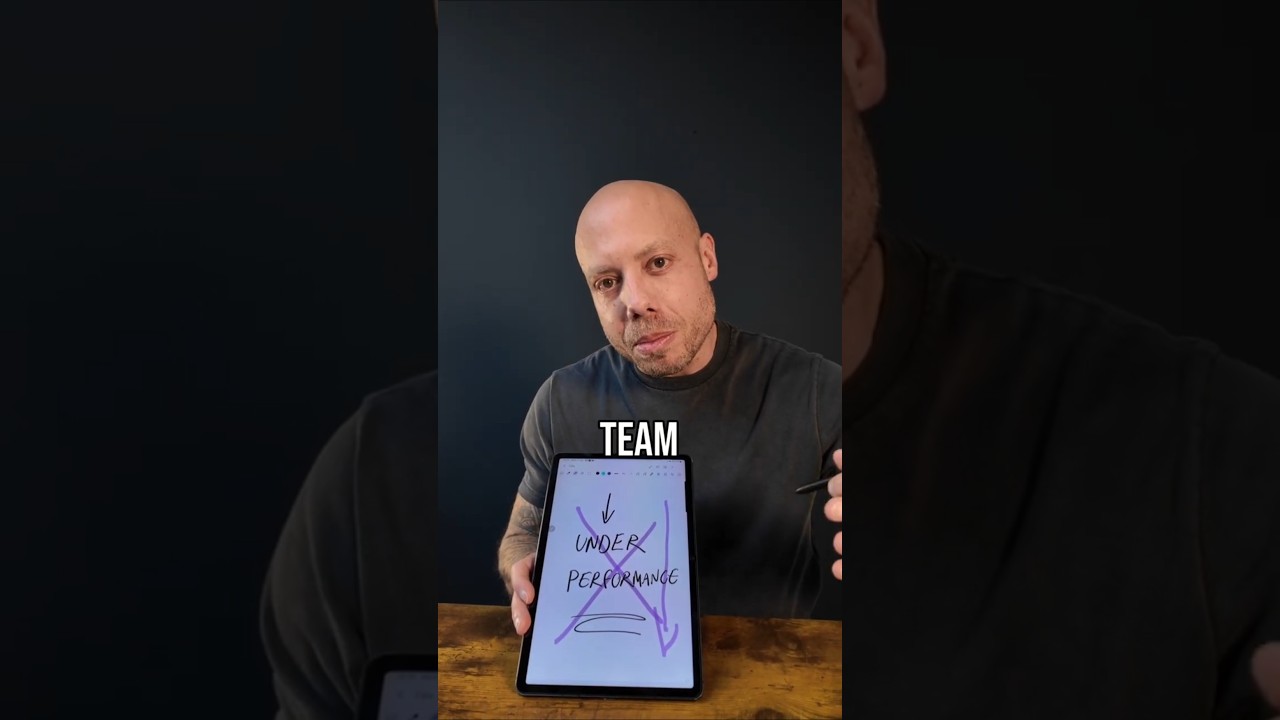
When you avoid confronting an underperforming team member, you set a low standard for everyone. Pull them aside immediately, state the facts about what's not working, separate the person from the behavior, and set clear expectations with a follow-up date.
Chapters
You can fix underperformance without killing morale if you do this in the first 60 seconds. You've got someone on the team and they're underperforming. You know it, everybody else knows it, but you're avoiding the conversation because you don't want to kill morale. The longer you leave it, the more the rest of the team will just think that this is the new way to do things. They'll become lazy. They'll think that this is the new standard. Avoiding one awkward chat quietly drags the the performance down and you're teaching the rest of the team that actually that level of performance is okay. So first thing you need to do, pull that person aside. Stage 1, go fast, go clear, and go factual with the issues that are happening and the problems that it's causing. Number 2, separate the person from the behavior. Don't just talk about feelings. It's not about that. It's about the facts, the behavior that you see, and the impact that it's having. For number 3, set your expectations. Make it very clear what's expected within your business and how they're gonna do it. And number 4, set some actions. Don't miss this bit out and make it time-bound as well. So you've then got a way to follow up without micromanaging all the time. If your team avoid ownership and you hate confrontation, that's exactly why I started this content.