In this solo presentation, Kit Barber explains how he adapted Elon Musk’s productivity principles into a four‑step framework he calls DONE (Define, Operate, Next, Evidence). He argues that many founders are the “system” because critical processes live only in their heads, which limits scalability and wastes time. Barber walks through each component: Define – a precise trigger that starts a process; Operate – the 3‑4 concrete actions the team must follow (illustrated with a sales‑discount workflow and a delegation ladder); Next – assigning a “champion” to own hand‑over and ensure the process is executed; Evidence – measurable proof that the step was completed (CRM button, sign‑offs, feedback loops). He stresses testing documentation on the least‑experienced team member (“thickest mate”) to expose gaps, then simplifying language. By codifying processes, Barber reclaimed about 30 hours per week, enabling him to scale his business and ultimately generate $47 million in revenue. He ends with a call‑to‑action: viewers should apply DONE to one process this week and contact him for further coaching.
Chapters
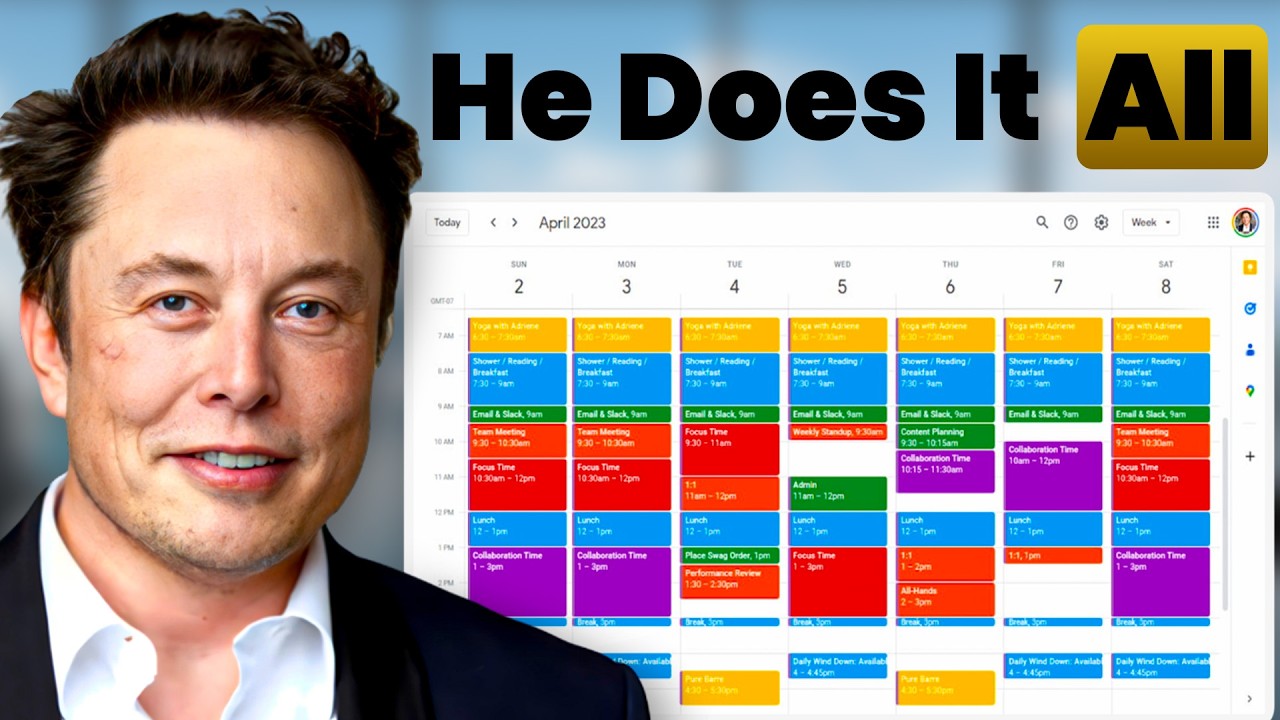
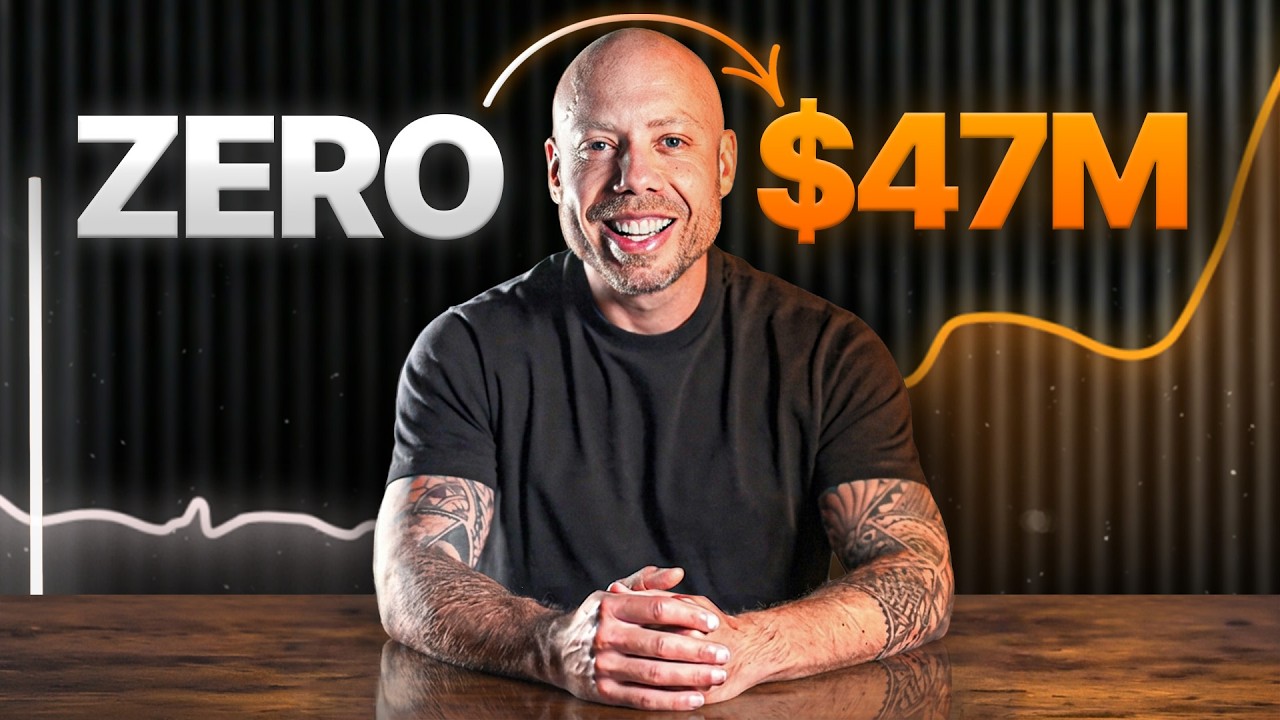
Elon Musk is known for his extreme productivity, and following in his footsteps has led me to make over $47 million in my business. In this video, I'll be breaking down the frameworks that I created to get my own precious time back based on Elon's proven business principles. So this is what we're going to cover. DONE. Now DONE stands for Define, Operate, Next, and Evidence. Define is what triggers the process. Operate is the 3 or 4 key steps. Next is where it goes when it's done and who owns the handover. Evidence is how you know it was actually done correctly. It's 4 steps and it's in that order. But first you need to know whether you are indeed the system. You think your business runs because you're good at what you do, and of course it does. That's why you started a business in the flipping first place. But it only runs because you're there, and that's a very different thing. It's just like a family recipe that's never ever been written down. It's the best lasagne you've ever had, and the only person who can make it is your gran. She doesn't measure anything, she just magically knows. But the day she can't make it, the recipe is gone. And that's what's happening in your business, and you're the one with the lasagne. A client of mine runs a number of very, very profitable businesses, and she was working 80-hour weeks. She gets up, she starts working, she'd go to bed late at night, and then get up and start it all again. Her team relied on her completely, and it made no difference whether it was Monday or Tuesday or Wednesday or Sunday. Now, she was making good money as well, but work out what she earned per hour over the 80 hours a week, and it was less than every single person on her team. And that is kind of the whole point. The stress was there. And she had no time. And on paper, she's making quite a lot of money, but not once she counted the value of her time. If the process lives in your head, you are the system. So quick check before we go on: if you disappear for two months, would the quality of your business hold without you? And does your team bring you decisions they could make themselves? Now, if you hesitate on either, you are the system, and this next bit is for you. D is for define, and O is for operate. Define is what triggers the process, and operate is the three or four key steps. Most owners think a The process is something you can just explain out loud. If that were true, you'd never get asked the same question twice. Imagine a road junction. When the light goes green, then you go. When it goes red, you stop. Nobody has to think about it, nobody has to ring anyone, and it works whether you're a learner driver or you've been driving for 40-odd years. The light is the trigger, and everyone knows what to do when it changes. But take the light away and put up a sign that says, go when it feels safe, everyone's idea of safe is very, very different. Some people absolutely fly through, some wait 10 minutes, and you get a crash every single And that's your business when a customer asks for a discount. There's no light. One salesperson gives 20%, another gives 5%, and a third, well, they ring you. Every one of them is standing at the junction with no signal, and you're the only person who can tell them where to go. In my business, the first process I had to fix was sales. I had a number of salespeople, which is great, but pretty much every sale, well, it still came through me. What should I do? Can I sell at this amount? What discount can I give? The usual things that we all hear. I had to fix it, and I had to fix it fast. So I started with the trigger. And that's the define part. In this case, it was a customer asking for a discount. Now you have to be really specific about this bit because vague triggers produce vague processes. Then operate, which is the 3 or 4 key steps. First, I coached or trained the team and I observed them on their sales process to give them as much guidance and feedback as I could. So I knew that they were trained up. Then the steps were simple. 1, deal with the customer. 2, close the sale. 3, when a question comes up, they make the call using something that's called the delegation ladder, which I'll cover in some of the other videos. If they've dealt with it before, they make the decision, but they don't tell me. If they have a strong feeling they know the answer, but it's slightly off the wall or it's outside the boundaries that we've coached them on, they deal with it, but then they come and tell me. And if they're entirely unsure, they come to me and they say, this is what the customer wants and here's my recommendation. At this point, I can use it as coaching opportunity if they're massively off, or I can authorise it and away they go. Now, next time they can't come back to me with the same problem because they already know what to do. And this all lives on a one-page guide that the whole team gets trained on and they get signed off. As soon as it was in place, people stopped needing to come back to me once they got used to it. And it was weird, I had to get used to it as well. And to be fair, at the beginning they still came back, but instead of giving the answer, my answer every time was, what do you think you should do? After a while, it became embedded. If they come to me now, that's the simple response I give. A process without a clear trigger is just a good idea. N is for next. Where does it go when it's done, and who owns the handover? Next is the most skipped step because everyone thinks, well, now I've got a clear framework, I'll just leave the team to it. But you need to put someone in charge to make sure the quality holds and the team are actually sticking to it. That's why next is so important. Imagine a relay race. Every runner can be super quick, but races are won and lost on the handover. You finish your leg, you put the baton on the track, and then you walk off. And nobody picks it up. You did your bit perfectly, but the team still lost. This is a classic example from my own business. I had the sales team fully trained up and they were making decisions without me, but I'd missed a vital part of the sales process. When a sale closed, someone had to update the CRM by pressing a button that moved the order onto the production stage so the production team could make the goods. Now, I hadn't built that into the framework. I'd assumed the team already knew what to do. I ended up with a 2-week backlog of orders that had never been fulfilled. It cost me 7 refunds plus 10 free products we gave away on top as a bit of a sorry for the customers whose orders were delayed. Now that was one stupid mistake and it cost a lot of money. But the fix was super simple. I put it into the one-page document as the final step in the process. Then I handed it to someone to take charge of it and make sure that it happened. Now we call these people champions. Each stage of the process has a champion who owns it. The trouble with assumptions is that they're nearly always wrong when humans are involved. E is for evidence. How do you know it was done correctly and what's the proof? Most owners assume the work was done right because nobody actually complained. The problem is that cracks very quickly start to show. Usually those cracks cost you efficiency, which ultimately costs you money, and they really demoralize the team as well. It's just like a teeny weeny little chip on your windscreen. You don't notice it and nobody complains, so you leave it. Then one cold morning on the motorway, it spreads right across the glass and now it's a new windscreen and an entirely lost day. Small cracks in a business do exactly the same thing. Nobody says anything, so you assume it's fine, and you only find out when it's already expensive. Evidence looks like a feedback loop in any business. Typically, it's a message to the senior leader or the direct line manager to confirm the task is done. It could be a button press in a CRM like the one that I'd missed, confirming it happened straight away. If you're selling an experiential product, it's an observational form with regular checks to make sure the team are on track when they're selling. And on the one-page guide, the team sign it off to say they've been trained and they understand it. All of those things do the job. And here's what it gave me: 30 hours a week back to focus on growing my business, which is why I now coach the details of this inside the Business Accelerator. I've got literally hundreds of examples of other business owners who've done the same thing by following a simple framework built for their own business and written by the business's owner. If you can't prove it's done, you're guessing. Okay, so that's the framework. Now here's the test that tells you whether it works. Most owners test the documentation on the smartest person. The trouble is that the smartest person is adaptable and they read between the lines. They pick up the nuance and the meaning behind your document, and they still deliver it even when it's badly written. The less capable people on your team follow it word for word, and if you haven't spelled it out plainly enough, they get it wrong. It's very similar to proofreading something that you've written. You read it 5 times and it looks perfect because your brain fills in the gaps. You know what you meant, so you can't see what you actually wrote. Hand it to someone who's never seen it before and they find the typo in 10 seconds. Your documentation is exactly the same. You wrote it, so you can't see what's missing. The person who didn't write it finds a problem, and the less they know, the faster that they find it. So we don't test on the smartest person, we test on the thickest mate. That's the person with the least common sense. The ones who can't get through the door because they're pushing it and the sign says pull. Everyone listening to this has got a friend exactly like this, and everyone in your business knows exactly who their colleagues are that fit this very description. Then simply give them your done document. If they can follow it without asking a single question, it's done. If they get stuck, rewrite the part that they got stuck on in plain English with no jargon and no assumed knowledge. Every time I've had someone stuck on a document that I wrote, it's because I made it far too technical. I used words and jargon that only made sense if you're technically minded, and I put too many processes and steps in place. As soon as I made it simpler and easier to understand while still following the framework, Everybody could follow it from the least experienced person to the most capable on the team. And that's a big part of how I got those 30 hours a week back. And you should always cater for the person who needs it spelled out if you're asking them to deliver the project or the service or the product. If your thickest mate can follow it, anyone can. Your business shouldn't need you to function. It should need a system that anyone can follow. Check out the links in my description or hop onto my Instagram and DM me 100 if you want to know more about what I do. And as an action for you, pick one process today and run it through DONE before the end of the week.