Inside the Rise of Reimagine Roofing: Systems, Scale & Real Talk
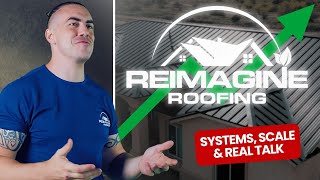
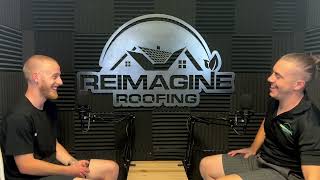
This is a YouTube video titled "Inside the Rise of Reimagine Roofing: Systems, Scale & Real Talk" created in August 2025. It features an in-depth interview between host Jamie Seacker and Cody Landals, the CEO and founder of Reimagine Roofing. The conversation covers Cody's journey from the solar industry to founding a roofing company focused on professionalism, innovation, and transparency. They discuss the challenges of scaling the business, industry hurdles, the pivot from B2B to direct consumer sales, and leadership lessons. Cody also shares insights on industry collaboration, company culture, and personal growth strategies.
Reimagined roofing was started five years ago because I wanted to help bring some professionalism to the roofing space. I came from the solar industry before and I just wasn't happy with the professionalism and the sharpness. Coming from the Marine Corps, I really found it important to have professionalism in everything I do. And so that's why I started reimagine roofing.
Hey, everyone. Welcome back to what it takes. I'm your host, Jamie Seacker, and today we have an incredible guest, Cody Landles, the CEO and founder of reimagine roofing. Now, if you ever had to deal with roofing or solar companies, you know, it can sometimes be a frustrating process. Cody saw those challenges firsthand and set out to change the game by bringing honesty, innovation, and top tier customer service to an industry that really kind of needed it. So in just a few short years, Cody has scaled reimagine roofing roofing from a startup to a trusted company operating in multiple states. But it wasn't always easy. Today we're diving into what inspired him to disrupt the roofing industry, the hurdles he faced along the way, and the lessons that he's learned about leadership, scaling a business, and building a customer first company. So, Cody, welcome to the show.
Thank you, thank you for having me.
So let's just start from the beginning. What inspired you to start reimagine roofing and what was your vision for the company?
Vision for the company was, it's in the name was to reimagine the roofing industry. You know, prior to this, I was in the solar industry. I was building solar sales teams and I kind of was extremely frustrated with dealing with roofing companies. A lot of times you have to replace a roof before you install solar. So, you know, my sales teams were across multiple states. We were dealing with roofers, you know, eight, nine, ten different roofers at a time. And every time it took, you know, a week to get a quote back, it was, it was just a lot of frustration and it all kind of reached ahead for me. They were doing a job out in El Paso. The job was about 75% done. And the roofer texted me and said, hey, I need you to send me all the money right now or I'm not going to finish the job. And I was just like, all right, don't have much choice. Solar is getting installed tomorrow, so I guess we'll send the money and. And I set out to find a better way. And so I wanted to build a roofing company to solve the issues that I was experiencing.
Well, that's great. You've been pretty outspoken about the problems in the roofing industry and the solar industry for that matter. What were some of those issues that you saw, the biggest ones that motivated you to kind of shake things up? And obviously you shared one of those, but I think there's probably a few more.
Yeah, I mean, I, I think it's just a lot of the roofing and solar companies aren't ran like a business. They're ran just like with kind of like a group of friends out there making some money and. Which is good when the times are good. But, but then once, you know, you hit some, some troubling times. That's why you see so many of these companies go out of business, which then the end result is the homeowner has a roof or a solar system that has no warranty on it anymore and they're kind of left out to dry. So, you know, I think, I think that's one of the biggest things is not having good structure, not having, you know, good vision of both the good times and the bad times. And that's just what I saw a lot of, especially in the solar. And I see a lot now in roofing because I'm one of the things that I do as a side as well as I'm a mentor in the Roofing and Solar Reform alliance, which actually helps roofing and solar contractors elevate their level of professionalism and deliver amazing experiences through training and coaching. So not only are we out here helping homeowners, we're also helping other contractors help homeowners as well.
That's great. And reimagine roofing is all about innovation and transparency. And I imagine those things, you know, organizations that you're a part of kind of help a lot with that. What are some other ways that you've set your company apart from traditional roofing models?
We're the easiest way to buy a roof in America. We're the only roofing company that you can buy a roof 100% over the phone. We've eliminated the in person at the kitchen table, hard closes where the husband and the wife has to be there and, and I'm not leaving until you sign. We've really streamlined the process, utilizing things like satellite measurements to quote a roof. We have a very, very comprehensive YouTube channel where homeowners can learn about the roofing process, learn about the company and come to the buying process already informed. And we're finding more and more homeowners want to do their own research, want to Learn on their own time. And once they made a decision, they don't need us sitting there pounding them over the head for an hour saying, buy my product. It's, you know, we do amazing things, we build amazing roofs, we tell the world about it, and if you want to do business with us, we make it extremely easy.
Yeah. And I'd imagine that that kind of helps with scaling as well, if you're not having to be in everyone's kitchen, like being on site and doing that. Like you said, that hard sale you've now used, that's part of the innovation, right? Is okay, well, this is how people buy and sell these days and why can't we do that? I would say that scaling itself comes with major challenges when you're a business owner and trying to figure out how am I going to grow this, this company. But it sounds like you guys have kind of found a way to do that a bit. Was that one of the, one of the things that kind of came of growth or was it just how did all of that process come about?
Yeah, so when I was in the solar industry, one of the biggest problems as a solar sales rep was getting roof quotes. You know, you do the presentation to the homeowner, the homeowner says, hey, I'd love to do solar, but I have a 20 year old roof. And so then you'd have to go try to get a roof quote from a roofer and it would take a week or two weeks. And you know, in all sales, time kills sales. You know that, that level of excitement you have when you're ready to go buy something. And then now two weeks go by, maybe grandma comes into town, you know, the dog runs away, whatever, whatever happens in life and it's impossible to get back on the phone with that person. And so it, or the other side of it is because it's so hard to work with roofers, a lot of solar companies were putting solar on very questionable roofs because it was just like, hey, I don't want to deal with the roofer. And so with seeing that, I knew that there was an opportunity. If we could deliver real time quotes, we could completely reimagine the industry. And so that's what I set out to do, is I wanted to develop a system. Because our original business model was strictly B2B. I built a roofing company for what I wanted as, as a solar sales manager, which was fast quotes. So before AI, before the satellite measurements, kind of before all of that, I developed a way to go onto Google Earth, measure the Perimeter of a house, drop yourself onto street view, measure the pitch of a roof. And I was able to deliver quotes in 15 minutes or less to sales reps that were sitting at the kitchen table with homeowners. So now when homeowners said, hey, I know, I know, I need a new roof, they'll go, great, I'll text reimagine roofing. They would text us, we would get them a quote back in 15 minutes. They would then be able to present that to the homeowner. And, and now the homeowner got a high quality quote from a high quality contractor right at the point of sale. And everybody won in that scenario.
Yeah, that's great. What do you think some of the biggest hurdles that you faced in starting? Because that's a totally new way of thinking about things. And I'm pretty familiar with the build industry and changes like that don't just get adopted overnight. What, what were some of those like hurdles? Or maybe it wasn't having to do with that process, but I'm sure there were some, some other things, Let alone getting from a startup to a multi state operation, you know, there's hurdles in and of itself. What are, what were some of the biggest challenges that you feel like you faced in doing all this stuff?
Yeah, the first biggest challenge was the person that was now selling the roof was not someone that knew much about roofing because it was a solar sales rep. And so then that is what spurred us to start building what I call video sales letters or YouTube videos. So now instead of the, the, the solar sales rep having to explain the homeowner, the, the different options they have, they would just open up their laptop, press play, and then I'd pop up and say, hey, you can do this, you can do this, you can do this. And now the homeowner is like, all right, well I want that roofing system. So I was able to explain, you know, very complicated concepts very simply because our first big hurdle was sales reps kind of giving the wrong information because they weren't roofers. And the other kind of hidden benefit of this model was it allowed us to really focus on quality because other people were selling our product. And so that allowed us to work through the hurdles of scaling because all of my intention was put on installing good roofs instead of having to worry about driving new revenue because I had the other companies driving that revenue because, you know, a solar industry is going to replace 10 roofs a month. And so if they replace 10 roofs a month and I go get another solar company and another one you know, now I just build up this reoccurring revenue model in roofing, which is pretty rare. And that allowed us to scale as well as not sacrifice quality.
Yeah, that's. That's great. How do you, though, maintain. Because I think it's hard enough to create this culture internally with your own team and build that, you know, the values and all that kind of stuff within your own team. How do you then maintain that culture when you're not even the face of your sale? Or like you said, you have a totally different model here. What's that like?
Yeah, so the real key for us for, like, the employee level and all the locations was I really try to stick to the belief that as a CEO, my vision has to be big enough that my team's vision can live inside of that. And so when I put somebody in a new market, that's their market, they have the ultimate accountability there and the ultimate responsibility there. But also, I paint them the picture of what this could look like in two, three, five years. Even on initial interviews, even to this day, as big as we've gotten, I am still on the final interview for every employee that joins it, whether it's bottom, our entry level, or one of our VPs. And what I always do on that is say, hey, you're starting off here. If you do X, Y and Z In six months, you could be here. In 12 months, you could be here. In two years, you could be here. And when people have that vision, they operate differently, they take a different level of accountability. And one of the things I'm most proud is that we've had over five businesses spun off from Reimagine Roofing. Some other roofing companies that I've helped, you know, their vision was, I want to start a roofing company. Great, let's work towards this over the next two years, I'll teach you, I'll mentor you, and then you go launch it and let's, you know, I will give you some advice on it. And to me, that's success, and that I don't need them to be an employee for the rest of their life. I don't need to be, you know, greedy with it. I really try to think of just an abundance mindset of there's enough roofs to go around, and if I can help somebody achieve their dream, the time we work together in those, you know, two, three years, we can accomplish some really amazing things, and then the next person will come in, replace them, and they'll build their dream.
And I think that that actually is in Alignment with your mission because you said you started this company because you wanted to put out a better product, you wanted to do. And so in developing people who then create their own company to then continue to do that is, I think it's in absolute alignment with what you set out to do and you're continuing to do, which is really cool. So you put a huge emphasis on transparency and trust. How do you make sure your customers have that exceptional experience from start to finish, especially if you're not the one, you know, touching them the entire time. There are different multiple hands if the end goal is, is solar and you have nothing to do with that at all. Right?
Yeah, yeah. And so what, what we made sure to do is we made sure we leverage technology. And so when we go do a project, we're taking photos and that uploads to a live link that the homeowner can follow along with as well. And then also once the solar install is done, then we would go back out and do a final inspection. And that was kind of our core business model for a long time. And then as the solar industry started to have some troubles, as interest rates began to rise, we had to pivot as a company. And over the last two years we went from a B2B model to a direct to consumer model. So now we're, you know, 95% of our business comes from direct to consumer. Because we saw some of the headwinds that solar was going to begin to face. And because of the fact that a lot of those companies were not ran like a business, we understood that we couldn't tie our future to their future anymore. And so that's when, you know, in late 20 or in late 2022, we decided to make a pivot as a company. And we still work with some of the larger solar companies, but we really had to kind of change our product offering and our business model because we were able to see what was coming around the corner. So, which, you know, is what happened in the solar industry.
Yeah, absolutely. And you also co founded the Roofing and Solar Reform alliance to tackle some of these like industry wide issues that you were talking about. Can you tell us more about that and the impact that that's making?
Yeah, so right now in the Roofing, Solar and Reform alliance, we have over 350 contractors nationwide. Every state in the nation is represented. We actually have some roofers from Canada as well, I think even one from Sweden. And it's, we're really changing what it means to be a roofing and solar contractor. Historically, people have been very, very guarded. They think everything's a trade secret. They don't want to share any ideas. And instead, what we've done is we brought together, you know, over 300 contractors that, that just want to strive to be great and they want to give an amazing service. And we're sharing inside secrets. We're learning from each other. You know, I'm sharing what we're doing here at Reimagine Roofing. And as a whole, we're elevating the industry because I really believe that if we can elevate the industry, that becomes the new standard. So now it's, I'm not competing against these other 349 contractors. I'm competing against anybody that's not elevating the industry, and that's a really powerful place to be in versus thinking that I'm competing against every single person, every single other contractor. I just stay in my little bubble. So. One of my favorite, it's actually my tagline on my email is when you start viewing your competitors as collaborators, the world opens up. And I really think that has been a large part of our success, is that we've collaborated with what traditionally would be your competition. But there's, there's plenty of roofs to go around, and if we can all work together to create a better industry, we will have better success as a whole.
I bet that's really freeing, too, to not have to view everything so you know, under lock and key and like, everything's a threat. And I think not just as, as an employer and somebody, you know, it sounds like you're very generous with your employees and building them up and sharing information and just making everyone around you better. But also, you know, when that expands out to your competitors, I bet that's a different level of just freedom that you're like, hey, this is what we do. I'm not really worried about what anybody else is doing. In fact, the only time I really am is if it's. I can learn from it and that can make me better and things that we're doing better. And I think that that's a, that's a, that's a huge asset. Not. Not very common thing that you see among business owners.
Yeah. And I think whenever I do a session or, or we do like a get together night and I go out and teach something, I, I honestly feel that I typically learn more than they learn because I learned so much from teaching. And I'm, you know, I'll be in the middle of doing a PowerPoint or teaching something, and Like I'll some pop my head and I'll get my pen, I'll write it down real quick like, oh, we could do that better. And so it's, it's me constantly sharpening my sword because if I'm going to sit in front of, you know, 30, 40 other contractors in a, in a room and, and you know, take them through a lesson, I need to make sure that I know that lesson forward and backwards and that helps me be better in my position.
That's great. And, but no journey is without his challenges. I mean, we're making this sound like, oh, like this is all great, but what's been one of the toughest moments that you've faced in your business so far? Like, how did you guys overcome.
I mean the toughest moment was when I got the call when the solar industry first started imploding. Essentially a large solar company went bankrupt. And it changed how all the banks were lending and most of solar is financed. And in a single day I got a call from over 8 contract different solar partners that all owed us, some of them up to six figures. And all telling me in the same day like, hey, sorry, we just can't make payments today. And we went from expecting over, you know, a large sum of money hitting our bank account that Friday to make payroll on Monday to it was, it was on a Thursday when I received that call to us figuring out how are we going to make payroll on Monday and us figuring out how are we going to survive as a business. You know, we have 40 employees. And now all of my revenue is coming from an industry that no longer can pay their bills. And when you can't pay the bills, your subcontractors are always going to be kind of the bottom of the, you know, you're going to make payroll first, you're going to make rent, you're going to go, you know, buy more materials so you can install more jobs. Subcontractors are pretty down low, down the list. And so in a, in a single day, our entire, our entire trajectory imploded because, you know, we had just received a large investment before that to blitz scale to the east coast. I mean, we were in 23 states by our second year because of the business model and how ingrained we were in the solar industry. We, we did the roofs for all of the largest solar companies. You name a large solar company, I was doing their roofing. And so I had maximum exposure to an industry that was facing essentially what happened in 2008 to the real estate industry. And so that was the biggest challenge. I mean, I. I had built this model with the naive understanding or the naive kind of thesis that companies pay the bills, you know, and I thought it was a better model because now I didn't have to go, you know, I do 10 roofs in a week. I go to, you know, ABC Solar and say, hey, you owe me, you know, $100,000. Instead of going from. To 10 individuals saying, you owe me $10,000. And it worked wonderful until it didn't. And then literally, in a snap of a finger, it's like, whoa, what are we going to do? And the first thing I did is I brought the entire team on the call. I told everybody, you know, within 30 minutes of me finding out exactly what was going on. And then I played him a YouTube video from Jocko Willink that's about two minutes long. And it's just. It's just good. And basically, what the concept of the video is, no matter what, if something happens, you just say, good. And, you know, if we're still breathing, good, we. We still have a shot at trying to turn this around. And what I told my team is, we've had an amazing story to this point, but if this can be our inflection point, this is going to be where we build something truly special. Our story becomes 10 times cooler, and everybody bought in. Even though I was transparent that we will make payroll this week, but we'll see what happens. You know, over the next couple months, we had to make some cuts. We had to pare down. We had to shut some offices. We had to see what was profitable, what was it. But, you know, that was in 2022, and. And here we are today. We rebuilt and, you know, we regrouped and we. We reloaded and we. We got back on our horse.
That's great. That's a. That's a good. I think a good moment where you can just point your finger at that and say, yeah, that, that changed. Because I think if you talk to anybody who's been in business for any number of years, sure, you can have years of just, great, great. Everyone's paying their bills, everyone's, you know, experiencing all that kind of stuff. But it isn't until you. It's not a matter of if. It's a matter of when. And when you go through that, you reach a different level, I think. I feel like if you can. If you can buckle down, if you can get through it, if you can solve some of those problems and make some tough decisions and keep going, that also can be freeing. Too. I find that because it's not a matter of, like, if it's. If it's going to happen again, it's when it's going to happen again and what, what am I going to do to be prepared this time? And. And so you do you learn a lot in those moments? I feel 100.
Yeah, it's. I learned more in saving the business than building the business.
Oh, I love that. I love that. I love that. I'm going to use that. Learn more in saving the business and building the business. I have to agree with you. Yeah, I think. And if you talk to any owner who has kind of been through that, they'd probably say the same thing.
Yep, yep, 100%.
So for entrepreneurs listening, what do you think is one key lesson that you've learned that every business owner should know? Like a practical takeaway?
I think you just always have to be learning in this day and age, with audiobooks, with YouTube, the Internet was one thing, but the fact that you can listen as you're driving, there's just so much that you can learn out there, and you control your own destiny. One of the things that I tell my team that really changed for me is what I started making. The commitment to myself is that my work hours are when I leave the house, from when I return home, meaning that drive into work, I'm listening to a book or I'm listening to a YouTube video. The drive home, I'm listening to a book or a YouTube video. And just that 20 minutes on each end of my day gives me 40 minutes a day of bettering myself, not to mention what else I do during the day. But those 40 minutes, you're doing that five days a week. That's over three hours worth of personal improvement by just one small psychological change of that. Once I leave the house, I'm working until I return to the house.
I love that. And we're such consumers, too, and we consume and consume and consume. But what are we going to do with the things that, you know, the information that is coming in, is it mindless stuff like, sure, we might get some laughs. And we're scrolling, you know, we see, we see those ads that are like, turn doom scrolling into microlearning and things like that. You know what I mean? But I think there's really something to that because the information is going to come in. We're going to have opportunities to do that. But what are we going to do with it? Are we going to do, you know, are we going to consume things that are going to better ourselves that we can learn from, that we can apply and take away, or are we just going to. I mean, I think it's old. It's like, one or the other. There's no, like, middle line. It's either going to build you up or tear you down. And, you know, I think we see that if you're a parent and your kids, all the. All the parents now we're all saying, oh, get off the phone, and da, da, da, da, da. But I think there's something to that. I think it's because we're not really utilizing all of our resources and everything that's out there in the best possible way to make things better, and it can be used that way, but we're not really choosing to do that. So I think that's really. That is really good advice that you can take away. But. Okay, so this is our signature question, something that we ask everyone that comes on the show, because our podcast is called what it Takes. Cody, in your experience, what does it take to build a successful business and disrupt an industry the way that you have?
I would say the three Cs. Clarity, commitment, confidence. Clarity on what you want and what kind of business owner you want to be. Because you can be a business owner that works 20 hours a week and. And makes, you know, decent money and sits on the beach the other time. And that's okay. You just have to be clear about that. But you can also, if you. If you want to do great things, you need the clarity of what you want to do, then you commit to that 100%, which then automatically leads to confidence. If you commit 100% to something and you really have clarity on what that commitment is, you'll be confident about your actions. And then you can move with a different level of decisiveness that somebody that is maybe a little more muddied in the water isn't going to. Isn't going to be able to achieve.
Yes. Sorry, I lost you for a second there. Well, I think that this has been an incredible conversation. Cody. Thank you so much for sharing your journey, your insights, and your vision in the future of roofing. I know that I've learned a couple of things along the way. I like the three C's. I love how you're not just running a business, you're really changing an industry and setting new standards for transparency and customer service. And as a homeowner, as somebody who has had.
More from Kody
From Startup to Success: Kody Landals on Scaling & Culture Building | RT3 Podcast
Launch Your Sales Career Today - 6 Figure Income - The Future of Roofing Sales Starts Here
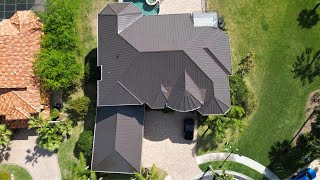
Standing Seam vs Exposed Fastener vs Stone Coated Steel: Which Metal Roof Is Right for Me?
Class 3 vs Class 4 Shingles: Impact Rating Differences Explained By A Roofer | Roofing Guide 2025