The Modern Way to Roof: Inside Reimagine’s Customer-First, System-Driven Model
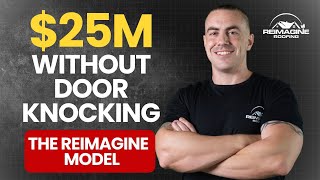
This is a YouTube video titled "The Modern Way to Roof: Inside Reimagine’s Customer-First, System-Driven Model" featuring an in-depth interview with Cody Landals, founder of Reimagine Roofing. The content includes a detailed conversation between Cody Landals and a host discussing Cody's background, leadership philosophy influenced by his Marine Corps experience, business growth strategies, and how he maintains quality and customer experience while scaling his roofing company across multiple states. The discussion also covers practical leadership training, decision-making empowerment, and the importance of brand equity and digital presence in the roofing industry. The video was created in August 2025 and provides insights into modern roofing business practices and leadership.
Foreign magic Roofing was started five years ago because I wanted to help bring some professionalism to the roofing space. I came from the solar industry before, and I just wasn't happy with the professionalism and the sharpness. Coming from the Marine Corps, I really found it important to have professionalism in everything I do. And so that's why I started Reimagine roofing.
Hey, welcome to another episode of the roofing success podcast. I'm going to tease it a little bit for the end. You guys got to listen to the end. You're going to listen, you're going to learn how to. From a man. Cody Landles from the Pitch Pro Movement fellow coach of mine. He is selling millions of dollars virtually. So I'm just going to preface it with that, like. But first, let's get to know Cody a little bit. Cody Landel's reimagined roofing Pitch Pro Movement coach. What's up, man? How are you?
I'm doing amazing. Doing amazing. Having an amazing start to the new year. How about you?
I'm great, man. This is, you know, going into 2024, strong. Lots of, lots of cool stuff going on. You know, we. We got a good chance to hang out together back in October at the Pitch Pro Movement and definitely wanted to have you on here because you're doing, like, you're doing so many cool things. Let's talk first. How'd you get into the roofing and solar industry?
Yeah, so, you know, I started off in the Marine Corps, did. Did about four and a half years in the Marine Corps. I was working in the satcom fields with, you know, infantry. And one of the things I worked on was Ford deployed satellite communication that was powered by solar. So it kind of. It kind of piqued my interest into solar. I got exposed to solar, you know, pretty early in my life. And then I got out of the Marine Corps, went to ASU and got a degree in sustainability. So I got a bachelor's degree in studying solar. And then I. I wanted to kind of decide what I was going to do with that degree. I wasn't really sure. I knew I was good at sales and I knew I was good at. At that. I want to do something for the environment. And so I stumbled across this job that was, you know, selling solar door to door. And I was like, huh, well, that's, you know, personal sustainability. You'd have your personal impact. You know, I could, I could go, I could sell and, you know, obviously I could probably make some pretty good money on it, so. I got into that, you know, started working my way up, building sales teams, opening offices across the Southwest. And I kept running into a consistent problem. You know, you can't put solar on a bad roof. And so a lot of times we were having to replace roofs in preparation for going solar. Well, when you're operating in five, six locations and you're using, you know, five, six, eight roofers, I mean, we're in the roofing industry. I'm sure you guys can imagine, you know, kind of what my experience was like, you know, and it all came to a head. There's a job going on in El Paso and, And solar was supposed to be installed the next day. The crew called me. The job was 70, 80, done. And they said, hey, I need you to venmo me the entire balance of. For. For the worker we're not finishing. I was just kind of like, okay, there's got to be a better way. There's got to be, you know, and, and so I wanted to reimagine the roofing industry. That's why I named the company Reimagined Roofing. And so I created a roofing company that was dedicated to the solar industry. And so that was our first couple years, really. The first two years, we only did roofs for solar partners in preparation for solar install. And so that's kind of how I got into the roofing. And then it's evolved from there to where now we do a lot of direct to consumer, you know, a lot of, you know, commercial metal and just kind of really diversified now. But that, that is how I first got into the roofing industry.
Yeah, that's awesome. One of the things that you presented on and some of the conversations that we have, man, I think that you have, I mean, you've had, you've had extremely fast growth, and I think that that with extremely fast growth, there takes a. It. There's a. How do I put it? Like, there's, there's a. There needs to be a high level of leadership in that, like, to, to. To. To make it right. And, and so I wanted to talk to you to start the conversation a little bit about your thoughts on leadership and in the, you know, in. As a business owner.
Yeah, definitely, definitely. And, and I would definitely say that that the, the biggest challenge, know, when you're scaling that fast is ensuring quality. And really where I got a lot of my leadership theory is in the Marine Corps. And one of the big things in the Marine Corps that they really are huge in is small unit leadership. So anywhere in the Marine Corps, no leader is in charge of more than four people at any given time. So you'd have, you know, four people in a fire team and then you have a fire team leader in charge of those people. And then you have four fire teams make up a squad. And so you have a squad leader, but your squad leader is only in charge of your four fire team leaders which are in charge of the mimics members. And then you know, the squad rolls up to the platoon and, and so forth and so on. But even at the highest level, when you go up to the regimental or the division level, the regimental commanders only in charge of four battalion commanders, which is in charge of four, you know, company commanders and so forth and so on. And the idea behind that is, is once you get over more than four people, you can't be intimately involved with their emotional well being and you can't truly know when something's off. But if you're only ever in charge of four people, when one of your four people come in and they're a little bit under the weather or they're a little bit, you know, sad for that day or they're just that, that 2% off, you're going to know instantly you're going to, you're going to be like, hey, Jim, what's wrong? What's going on? Oh man, I just, you know, I just broke up with my girlfriend. I just, I got a fight with my wife. I'm just, I'm just a little down today. And that allows you to make different decisions. When you know your team that intimately versus being in charge of a thousand people or even, you know, even 20 people. Once, once you get to 20 people, you can't, you won't always notice that first 2% difference.
Definitely. Like, I see that a lot. Like it's a, if you have to, if you're managing too many people that, that one sales manager with like, you know, 20 reps, there's no way that they can accomplish, be successful. You're going to have your, you know. But, but what you said, like in that individual relationship, right, you have to really be able to know. So how have you taken that practically into your org chart?
Yeah, we brought it into the org chart by ensuring that each person, each, you know, we have many divisions. We have divisions, you know, and then also on a regional level as well, you know, every region that we're in has a leader that is in charge of that region with a large amount of autonomy, you know, with, with a comp plan that also reflects them being you know, basically a small business owner, because that's essentially what they are. And that is one of the largest keys to the success we've had, is that I treat my leaders like small business owners and give them that ability to be a small business owner in my larger business. Because it just changes the way you think, it changes the way you act, and it changes the way you lead, you know, and it's. It makes a massive difference from what I've seen.
How do you. This is always a challenge to me, and I think in that you want people to be entrepreneurial or entrepreneurial right within your business. How have you laid it out where you can make them feel that way but not want to go and start their own company? What are some of the things that you've done there?
Yeah, I think it just comes in being strategic with how you design their responsibilities. And, you know, so. So for a lot of it, you know, for example, they may not have to be responsible for lead generation. So we would have lead generation coming from a central location. Our communication all comes from a central location. So every single welcome call in my business comes from our Phoenix corporate office, even if we're doing a roof in New Jersey. So what. What it does is it allows them to. To go and just grow their business and not have to worry as much about running the business. Obviously, they still have to run it. They got to build good roofs. We got to have customer relations. We got to still have boots on the ground. But a lot of the basic admin stuff, if I can take that off your plate, that's very attractive. I mean, we all love to sell, we all love to build roofs. Like, who loves, you know, doing job costing. Not many of us, right? You know, so if I can take that off your plate while still teaching you how to improve the profitability and, you know, then you're just looking at numbers. You're not having to calculate the numbers, you know, then you're just ensuring that the call was made, not having to make the call.
And.
And so that allows you to grow your business, which then grows your income, but also to look at it and be like, do I really want to go out there and have to do all this other stuff? It seems like a hassle where I can just continue to grow inside of reimagine.
One of the things that makes me think of is that kind of the. The analogy or the thought of the, like your dollar per hour, right? Like, how much. How much is that person worth per hour for that task? Like, should your regional manager who is a high dollar per hour type of individual in your business be doing low dollar per hour tasks. Have you, have you kind of thought about that when you were, when you structured? I don't know, man. I'm just like, that's what it made 100 me think of like 100.
That's why I'm laughing because I, I literally had that exact conversation with one of our, my division heads this morning. It's like, hey, man, you are a division head. I need you to be doing things that only the division head could do. I don't need you towing equipment because you're trying to help out. Like, one of the things I tell the team a lot is that if you go out and dig a hole for 16 hours a day, that's hard work. But that's not, that doesn't help the business. Just because you're working hard doesn't mean you're helping the business. And that's, that's tough for sometimes, even for, for myself. I have to remind myself sometimes, you know, I'll be in the weeds and I'm, I'm out here quoting a $7,000 roof because they called in at, you know, 7 o' clock at night. And I'm trying to, you know, just, just help the business out. But I, I use that analogy and for a lot of people, it puts the light bulb on. You know, you could go dig a hole for 16 hours, your hands would hurt you. You'd like, man, I worked really hard today and you did nothing for us. You know, on the larger scale of the business.
Yeah. How do you break that down? How, how do you look at that? How do you frame that as a business owner? Like, what do you, what are those, like, high dollar tasks? The mid dollar, you know what I mean? Like, how have you broken that down in your mind?
For me, it comes kind of to creation. Like, if it has, if you have to be creative or novel or innovative, that's going to be high level. If I can, you know, I wrote on my board to start the year duplicate myself, and I had all of my division heads also write that on their board. If there's something that you can, you know, outlined step by step of how you do it, then that no longer becomes a high level task because there's no, you don't have to think, you don't have to create, you don't have to, you know, problem solve. And so that needs to be, you know, moved down kind of the chain of command because now it's systemized and that Is, you know, that's how I kind of break it down. When, when we have to innovate or we have to create a new process or a new system or solve a new problem, that's going to require thinking outside the box. And, and that's where I put my, my kind of levels of, of leadership on, you know, making sure that they're doing the high value tasks.
Yeah, high value tasks. So whatever. What other like, you know, thoughts do you have? Like, you have your Marine Corps principles, you know, the, the four, you know, kind of groups of four. No one reports, no one has more than four direct reports. High level business decisions. I mean, I mean, I don't know, just to put it in context, I don't know where you guys are now, but I mean, you went from like 0 to 2 million a month, like really, really fast. I don't know what you guys are doing now, but like what, like to me there's a lot of, like, there's, there's more to it. What are you thinking of? What, what's the more to it in that leadership that you're thinking about in there?
Yeah, the, the biggest leadership kind of idea that's ever resonated with me is from John C. Maxwell. The four levels of leadership. He says the first level of leadership is that you're going to do it because I, because you have to. I, I'll rank you or I'm your boss. The, the second level of leadership is you're going to listen to me because I'm really good at it. So I may be the top sales rep and you're going to listen to me because, oh, he's the top sales rep. So if I listen to him, he probably knows. The third level leadership is once I become a teacher. So if I teach you something, if I teach you how to sell, if I teach you how to install a standing seam metal roof, you're going to be forever looking at me as a leader because I've taught you something that now you can go out and earn more money or you can go out and do it. And so that's the third level of leadership. And then the fourth level that I challenge all my leaders to and I challenge myself to is following somebody because of what they embody or who they are, you know, and, and you look up to them as more than just your profession of, you know, are they the first person into the office? Are they, you know, talking about physical fitness and being physical fit? Are they talking about nutrition, eating nutrition as well? You know, are they doing what they say they're doing. And once people start looking to you as a leader because of what you embody, that's when you are truly at the pinnacle of leadership. And that's when you can really help people begin changing their lives. And that's, you know, that's, that's what we, we try to do here is we. One of the things I tell when people come into the company is if you're looking for a job, this isn't the place for you. If you're looking for an opportunity, this is the place for you. Because this is what we're doing is. It's, it's so much more than just a job because we have leaders that are embodying, you know, real personal development and, and you know, really changing lives.
Yeah, how that, that, like how do you bring someone through those levels? How, you know, because you're, you're going to bring people in that are at a higher level that have the ability to execute on that. But, but are you also saying, man, you could start here because you said the opportunity right? Like you could start here. And our goal is to bring you to here. What's your thoughts on bringing someone from. They could do a task or they maybe, you know, they're doing something because they're being told to do it. To making those decisions to being able to be a leader that other people want to follow.
Yeah, it really just, I mean we do leadership training. We have a book of the month every month. So that's, that's something that's really big in the company. You know, one of the other things that I do is I reserve an hour a week for anybody in the company if they want one on one training. You know, we have over 40, over 50 employees now I think. But I always have an hour in two 30 minute blocks that if anybody wants, you know, relationship advice, fitness advice, leadership training, you know, sales training, anything you want in the world, I always have that hour open. And then we have scheduled leadership trainings throughout the week and other, other trainings. But the, the, I mean the biggest thing is also teaching people just how to think differently. And one of the, the big, big aspects within my company that we always talk about is even on day one, you're, you never should bring up just a question. So a good example. Let's say you're a sales guy and you want, you know, this person's going to buy a roof and they have a second home and they're like, hey, this first roof's 20 grand. This other roof's 20 grand. There's two ways to come to your. Your. Your sales manager and ask. You can do a discount. The first one is, hey, I got these two roofs. They're both 20,000. How much can I discount it if he does both of them? That's one way. Or you can say, hey, I got a $20,000 roof. $20,000 roof. He wants to package them together. Can I give a $1,500 discount? And then I might say, no, that's too much. $1000 or no, I'd give a $2000 discount. But if you come, if you try to come up with a solution first, and whether it's sales or production, even if it's, you know, this homeowner's upset, I think we should maybe get them a $200 gift card versus this homeowner's upset. What should we do that forces you to start thinking through your ideas, and then you just refine your ideas, but you've learned how to think instead of just every time. Because the brain's. It's a muscle. It's reps. It's just like going to the gym. It's reps. And so if every time you have a problem, it's just call my supervisor. That's what you default to. But if every time you have a problem, it's think through it and then present a solution, takes pressure off the supervisor and starts making you more of a problem solver.
I have a friend, Nick Kramer. He has a. He. He does. He's a Facebook or a Google Ads expert that. That he has a Google Ads agency that he does the same thing. And it's like, I started doing it too, and it's like, yeah, bring me. Like, don't come with a question. Come with a couple of options of, hey, I thought through it. I have this option or this option. Which way do you think we should go here? Right. Like that level. I think that to me, in training people is extremely impactful because people never, like, it doesn't soak in if they have Google to go to all the time. Right. You're the Google of your business. Right. That's just search for, you know, in Cody's office. Right?
Exactly Right.
Like search for answer by calling Cody. Right. Like, if you have that in your business. So that's a big aha moment, I think, for people listening. Like, if you do this, set this up with your team, no one gets to ask you a question. Yep. 100% only allowed to present you solutions.
Yeah.
You get to then coach them on which solution may be better and you may be able to bring up other ideas that they hadn't thought of.
Yep.
But if they're just bringing you a question and you're answering it, man, they don't, people don't. We don't learn that way.
Yep. And the other thing too is if you kind of think about it, if they bring you that solution and it's 90%. Right. Then all we got to do is coach that last 10%. And so when I give you that little bit of coaching, you're going to retain 10%. Right. But if you bring me just a question and I tell you the whole thought process and I tell you a hundred percent, that's a lot to, to try to retain. And then the next time you're like, well, I only remember 60 of what he told me. So I'm just going to ask the question again because I'm not confident versus, you know, you already had 90 figured out. I only gave you the last 10% or as just a little course correction and then you go, oh, now I know why that course correction next time, you know, then I'll just, I'll be able to just do it. And so it just really helps people level up a lot quicker.
Another thing I think we forget about as entrepreneurs or business owners or as, as high level managers is that it took us a lot of, a lot of failures to get to the knowledge level that we have. Right. Like, it took a lot, man. And like all of those doors you knocked all of the, like all of the jobs that you've been on, every roof that you've inspected, every, like there's so much data that we just overlook. You know, you're a big fitness guy. Right. Like there's like the way that you, that you do an exercise or you know, a specific lift or something. The, you're, you're not going to do it perfect. But over time you're like, now you go in the gym and you're doing your cleans and you're doing your stuff and it's just like your form is like you never learned it, but there was a time when you learned it. I talked to my kids about this all the time. Like you didn't know how to walk out at a point in time in your life. You understand that? Right? Like you didn't know how to walk. Like we have, like there's this path, there's a lot of learning that goes on. Right. Like, so it's this we and, and, and we need that grace to our team. Maybe. Right. Sometimes we need that grace to our team that they haven't gotten, gotten went through all of those losses. Right. All of the, all of the, all of the lessons along the way. But we can help them create a, A processing system maybe. Right. Maybe that, maybe that's a good way to put it. It's like you're, we're installing a, A processing system in them, so that kind of. Yeah, go for it.
Some bumpers up too. It could, that's what we found success with is let's say you're a project manager. Maybe your, your first 60 days on, on the job, you're allowed to do up to 250 gift card without, or worth asking for permission after the fact. So go solve the problem, make the homeowner happy. And then, then it's, you know, the first time they, they, there's one nail in the yard and they go get a 250 gift card. And to the homeowner I'm like, hey, there's only one nail in the yard. You could have just said I'm sorry and done an extra cleanup. You didn't have to get the gift card. But we're only out 250 bucks. And at least you have the confidence to make that decision, you know, and then they've been here six months now you get a 500, you know, credit limit, you know, and so now you could, you can go get a 500 gift card if we really mess up or whatever it is. You know, those are just kind of examples. But you give them those little bumpers that, you know, they can come out and make a decision. And if they make the wrong decision, great rolling out a couple hundred bucks. But at least you're in the, the mindset of making decisions because a lot of people, when they come from other employers, they just ask you to, just to be an employee, like just do exactly what you say. Don't, you know, if I tell you to type the letter A, write the letter A, you know, don't think outside that box. And that's where we've, you know, been different. And that's what has, I think, helped us scale and helped us maintain that quality as we scaled. Because people don't have that in the box mindset within the company.
Yeah, let's talk about that. Because again, like your growth was, was, was fast. And I know, I know a lot of business owners are like, man, things are going to fall apart. Like the wheels are going to fall off. If we move that fast. There's no way we get how do we build a quality roof? How do we, how do we have a great customer experience at this level of aggressive scaling? How have you maintained that through scaling? Or maybe talk a little bit about, maybe about your journey of how you've scaled. Like you said, close to 50 employees. Now, I don't know what your top line is, but you guys are crushing it. Not that it's overnight success, it's been some years, but it's like you've put in the work, but it's like, man, how have you, how have you maintained everything as it's gone, as you've scaled?
Yeah, so our, our scaling journey was a little bit different than probably, maybe any other roofing company because of the model originally. So the original model was we were working with, you know, probably eight, seven or eight of the ten largest solar companies. You know, we started in Arizona and then one of our partners said, hey, will you go to Nevada for us? You know, we have, we have tons of roofs in Vegas and we don't have a good roofer. And we said, okay, you know, how many roofs you got? Oh, we got, you know, 15 roofs a month out there. Sure, I'll, you know, we'll, we'll be out there soon, you know, get our licenses in place. They're like, hey, can you go to California? And so we were kind of stay, and then we went to New Mexico. We're kind of staying on the west coast. And then either the, the second or third largest east coast installer kind of heard our name and approached us and said, hey, hear what you guys are doing. We really want to, you know, jump on board and we want you guys to come build roofs for us on the East Coast. And so, you know, and that's, that's why we, we were able to kind of scale like that and focus on quality because we had the benefit of, I didn't have to drive sales, I didn't have to, we didn't have leads. These, these companies. What we would, I would do is I would go teach the, the solar sales rep who was selling solar. You know, if it's how to identify a bad roof and if it's a bad roof, then you'd say it's a 20 year old shingle roof. You know, we would provide them a quote and then they, the homeowner would buy the solar and the roof together. That solar company would then, you know, have us do the roof. So when you don't have to worry about sales, you don't have to worry about, you know, marketing. It Allowed me to focus 100% on quality. And so if I was doing a traditional scale, I wouldn't have been able to scale as fast. And. But I think even though. Because what we're doing now is now we're a much more traditional roofing company because the solar has industry has had a big pullback. We identified it, you know, back in October, so going on about 13, 14 months now that raising interest rates, you know, just kind of the climate we had to protect our business. And so we went from doing 90% of our revenue from Solar Partners in. In, you know, last year, which was, you know, first year we did, we went from 5 million to 15 million in our second year. So pretty rapid growth there. You know, continuous month over month and year over year growth to. To. Then, you know, this year, coming into this year, we had to pivot our whole model to. And this year we're now doing 90% of our revenue is just direct to consumer, you know, without sacrificing any of our revenue numbers. You know, we'll do over 25 million this year and, you know, probably in the. In the middle of summer we'll be doing 3 million top line, you know, with some pretty ambitious goals. So that journey, you know, our scaling was unique in the sense that, you know, when we opened a new market in New Jersey, it was because our partner said, hey, you know, there's 20 roofs a month out there. Can you go out there? I think it would be possible with other, you know, kind of B2B relationships, you could do something similar. But that allowed me to be 100% focused on customer experience. And then we had, I, you know, developed the customer experience, systemized it. And now this year I can drive sales and drive revenue because we have systemized and standardized the customer experience across all of our locations.
So let's start with quality. You know, how do you. How are you. Because you're in multiple. How many states are you in now?
Depending on how you count. Like the Northeast, like we. We service Delaware, but we're not, you know, so over 10. Like, maybe like 15 to, you know, that's a.
That's a large geographic area, right?
Yes.
And you know, man, you know, there's, you know, as bus. Like we want it. We want. There's that touch it, feel it, be able to drive up to it, make sure that everything is being done right. Right. Like, how do you do that? Like how. You know, for 10 states from the. And for people that don't know, I mean, most of it is the team in The Arizona office. Right. Is the support there. And then you have a couple of people in each of the regions in those states kind of doing that day to day stuff. So let's talk through that. How are you ensuring quality at scale?
Yeah, so a couple different things. One, you know, anytime we went to open a new market, I told my partners, even when they're, you know, saying, hey, I need it as soon as possible, I told them I would not open a market until I had the right general manager there. So that was, that was the key for me is I needed a linchpin that I needed like someone that I could trust 100%, you know, and, and they take ownership of that market and then, you know, put in a series of checks and balances, you know, leveraging technology like Company Cam, you know, obviously using a CRM, you know, and checking updates and doing things like closeout calls, you know, checking in with customers at the end of the job and seeing what the experience was, you know, you'll get, you'll, you'll find the canaries in the coal mine. You know, it will, it's, it's what I call public accountability. If we're all asking the same questions. Well, as long as everybody's telling the truth, it's all, it's great. But if four people are all asking the homeowner, hey, how'd everything go? And only one, you know, three people are here and it's, it went bad. And the one guy on the ground say, no, homeowner was happy. She, she bought, she baked me an apple pie. You know, obviously that's, you know, not the case. Exactly. So, so that, you know, it's just, it's trust but verify, you know, that's, that's a key term, is that I trust my, my, my general managers, you know, the, the boots on the ground to, to make the, the right decisions. But I'm going to verify as well through, you know, photos through. And what we do is we have a, both a project manager and a virtual project manager for every job. So somebody in Phoenix will be the virtual project manager and they'll manage, you know, 15, 20 jobs at a time. And, you know, and their job consists of just sending text messages each day saying, you know, day two of the build, you know, we're 50% done, looking great, you know, and you'll get things back. Yeah, everything's going smooth. But the crew showed up an hour and a half late today. No big deal. You guys have been awesome. Okay, so why'd the crew show up an Hour and a half late. Is this a systemic problem? Was it just a flat tire? You know, so you start getting that little bit of feedback. And if you're constantly checking in, just like, if you're constantly checking in with your team members, your employees, you'll catch it before it becomes a massive problem because you'll start just seeing the stuff on the margins. Like, you know, nobody just goes from being awesome to not awesome overnight. It's usually kind of a progression of complacency, you know, that they just get a little bit lazier, a little bit sloppier, a little bit whatever. And so if you have those, you know, check ins that trust but verify on multiple stages and clear expectations, that's, that's the other thing is, you know, part of the comp plan, part of the requirements for my general managers are things like five star reviews, you know, no complaints, or you know, not no complaints. Obviously you're always gonna have some, but addressing them in a timely manner. And, and you know, it's not just, I don't care if you, if you do half a million in a month. If, if 250,000 of that are angry and they're, you know, and they're sacrificing, you know, the brand. So it's, it's, you know, I think it's either warm. I know Charlie Munger that says, you know, show me the incentive and I'll show you the outcome, you know, and, and so if your incentive package for your leaders is not tied to the quality of outcome, it's just tied to revenue or profitability. That's all they drive. And we'll, and then they'll sacrifice quality of install for revenue. Hey, we got to hit our numbers this month. You know, let's go build 10 roofs this week, even though we only have capacity for eight. And then you go pick up a random crew and then they do a bad install and you know, we've all been there before, so it's, it's incentivizing the right things and, and making sure that they understand what's the, the primary focus and, and what's most important at the highest level.
That's awesome. I think there are so much left on the table in clo, in, in closeout calls. It's, I mean there are actually businesses that are built on a close out call. So, you know, there's a service out there that, that people know about that like they built their whole business on calling your homeowners after the job is closed and asking a series of questions. And then asking for a Google review, like that's a whole business, like multimillion dollar business that just does that for contractors, right? Like it's, it's crazy, but I bet you listening don't do it, right? Like, and on that point, I mean.
The biggest key to us being able to make this pivot from that one. I mean to pivot a 15, 20 million dollars a year company in a year and not sacrifice revenue because I changed my entire revenue funnel. The only way I was able to do that is because I had built up the brand equity over those first two and a half years. You know, when we made that pivot, I had over 300 five star reviews. So when I needed to go to the public and say, hey, I'm ready to start selling roofs directly to you, I had the brand proof, the social proof, the good marketing, the good media, the good reviews to instantly turn that switch on. And people wanted to buy roofs from us and, and we had built it up because people were buying roofs from us through a third person. You know, we weren't selling these roofs originally. It was some solar guy telling the homeowner, hey, I use reimagine roofing. Look, they're really awesome. Look at their YouTube channel. Look at their reviews. So I had to build this whole business of, of, you know, selling ourselves without even being able to tell our own story all through digital media. And so then when I made that pivot to being a direct consumer company, that was, that was the key that unlocked it all. That was the, that's the secret sauce is the brand equity and it lives in the digital space in this day and age. Yeah, I'm preaching to the choir, you know, at the roof market, man.
But this is it. Like, it's, they're, they're one of the, one of the most, one of the, one of the, the trait that measures success in, in people most is self awareness, right? Like if you look at all successful CEOs, you look at successful business owners, you look at the most, the more successful a person is, the more self aware they are. And I'm kind of bringing this back to this. Why would someone hire you, right? Like you have to ask that question and, and be honest with yourself. Not you can't say, because I'm the best roofer, right? If you. Great, prove it right? Like, and how do you prove that in a digital age? Well, you prove it through reviews on Google on, you know what I mean? You prove it through video content. You prove it through all of these experiences that you're creating for, for other people. The challenge is when you're new, right?
Yeah.
Like, think about it, Think about this. If you go to a gym and you're gonna hire a trainer and you walk in and there's a trainer that's out of shape and you're like, this is crazy. You're out of shape. Like, how long have you been doing this? And they're like, well, it just started three days ago. So how long you been working out? You know, a week and a half. Right. Like, are you going to trust that, that person to be your personal trainer? No. You walk into the gym and there's a super fit person and they like you talk to them and you're like, man, this is like, yeah, I've been in the, I've been, I've been training people for 15 years and I've, you know, like, there's this story of that, that, that now it's like, yeah, I want that person. I want to work with that person, not that person. So you in, in that self reflection, you need to be looking at, you know, why would someone hire you? What you did very well. And I think a lot of sometimes I've seen this leveraged in a few different ways. To me it sounds like you leverage those kind of referral relationships to build your brand equity. There's too many. Like, I know another company that leveraged repair work to build that brand equity. Like, they would essentially, they would, they would pretty much do repair work for free. No, sorry, not for free. For a review. Right. Like, ah, let me just pop up here and do some like this cactus flashing and we're good. Just leave me a Google review. Right? Like, I don't. No big deal. Hey, let's just do this real quick. I could, I could do this real quick and just, hey, I'll take care of it. Just leave me a Google review. I know that. I know of a company that built up, you know, 150, 200 reviews. Just kind of just with that strategy. But what it does down the road and what it did when you went direct to consumer then is when they look you up online and they will. It's like, oh yeah, reimagine roofing man. Yeah. 300 something. 500 star reviews. You got content on YouTube, you got all this, you have all of the things that invoke trust in people.
Yep.
So if you're not self aware in that, if you're like, well, people should hire me because I'm good, prove it.
So you only doing 50 roofs a year you should be getting 50 reviews, like because you're intimately involved. Yep. That's when, when it was like when I started this business, it was, you know, just two of us, you know, just me and a, and a production manager. So I was on every single job. When that job done, I said, hey, I'm trying to build my business. It would mean the world to me. I'm standing right here. Can you leave me a review? Hey, hey, leave me a review. Like I every 100% review rate, you know, so I only did 50 jobs and I got 50 reviews. Well, you look at some of your competitors. There's guys that are doing, you know, 500 jobs a year with only 50 reviews. Yeah. You know, so you instantly look as like a mid sized company with 50 reviews. You do that two years in a row. Now you're at 100. Now people think you might be a big boy and you're still only doing 50 roofs a year. And it just blows me away. I look at some of my competitors and they've been in business 30 years and they do similar revenue numbers to me and they have 68 reviews or 82 reviews. And it's just like, man, you got.
More from Kody
From Startup to Success: Kody Landals on Scaling & Culture Building | RT3 Podcast
Launch Your Sales Career Today - 6 Figure Income - The Future of Roofing Sales Starts Here

Standing Seam vs Exposed Fastener vs Stone Coated Steel: Which Metal Roof Is Right for Me?
Class 3 vs Class 4 Shingles: Impact Rating Differences Explained By A Roofer | Roofing Guide 2025