OpenAI Sora 2 Team: How Generative Video Will Unlock Creativity and World Models
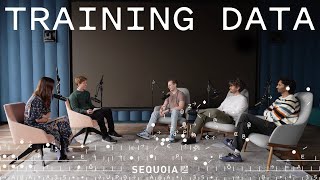
Bill Peebles, Thomas Dimson, and Rohan Sahai from OpenAI's Sora team explain how their generative video system works and where it's headed. Sora 2 generates roughly 7 million videos per day using diffusion transformers and space-time tokens, with emergent physics understanding. The long-term vision is a general-purpose world simulator where digital clones interact for scientific discovery and new media forms.
Chapters
For OpenAI across the board, it's really important that we kind of like iteratively deploy technology in a way where we're not just dropping bombshells on the world when there's some big research breakthrough. We want to co evolve society with the technology. And so that's why we really thought it was important to do this now and do it in a way where we've hit this again, this kind of GPT 3.5 moment for video. Let's make sure the world is kind of aware of what's possible now and also start to get society comfortable in figuring out the rules of the road for this kind of longer term vision for where there are just copies of yourself running around, around in Sora in the ether, like just doing tasks and like reporting back in the physical world. Because that is where we are headed long term.
Today on training data, we sit down with the team behind OpenAI's search Sora, Bill Peebles, Thomas Dimson and Rohan Sahai. You'll hear about spacetime tokens, building internal world simulators, and how optimizing for creation instead of consumption is just better for social platforms. This conversation goes way beyond video generation and into questions about how society will co evolve with powerful simulation technologies. We promised that this was an actual real world conversation and not a video generation, but we don't know how to.
Prove that to you. Let's jump in.
Hey guys, thank you for being here at Sequoia. Congratulations on sora.
Thank you.
Maybe you could tell us a little bit about yourselves and how you got to OpenAI and Sora.
Yeah, I'm bill, I'm the head of the sora team at OpenAI. I had a pretty traditional path, came through undergrad doing research on video generation, then continued that work at Berkeley and then started OpenAI working on Sora from the first day I joined.
And I'm Thomas, I work as an engineering lead inside of sora. Have a bit of a longer story, but I worked at Instagram for about seven years doing some of the early kind of machine learning systems and recommender systems there. But it was a very tiny company, it was about 40 people. Then I quit, did my own startup for a while which was Minecraft and the browser which we've talked about a couple times. And I think that OpenAI noticed that we had a very cracked product team there and so they acquired our company and I've been bouncing around different products inside of OpenAI and on the research side as well on post training, but super happy we landed kind of together On Sora to bring this thing to life.
It was a really cool product in between two. Like the global illumination product. Oh yeah.
I still believe in it.
Yeah, me too.
Awesome. I'm Rohan. I've been at OpenAI for about 2 and a half years. Started as an IC on ChatGPT, but then as soon as I saw the video gen research, I got quickly Sora pilled and made my way over there. And so currently lead the Sora product team. Before that, just startups, big companies within kind of the valley. Bunch of random stuff. Yeah.
Cool. Well, Bill, you are the inventor of the diffusion transformer. Can you tell us what that is?
Yeah. So most people are pretty familiar with autoregressive transformers, which is the core tech that powers a lot of language models that are out there. So there you generate tokens one at a time, and you condition on all the previous ones to generate the future. Diffusion transformers are a little bit different. So instead of using autoregressive modeling as kind of the core objective, you're using this technique called diffusion, which at a very high level, basically involves taking some signal, for example, video, adding a ton of noise to it, and then training neural networks to predict the noise that you applied. And this is kind of a different kind of iterative generative modeling. So instead of generating token by token, as you do in autoregressive models, diffusion models generate by gradually removing noise one step at a time. And in Sora 1, we really kind of popularized this technique for video generation models. So if you look at all of the other competitor models that are out there, both in the States and in China, most of them are based on dits diffusion transformers. And a big part of that is because DITs are a really powerful inductive bias for video. So because you're generating the whole video simultaneously, you really solve issues where quality can degrade or change over time, which was kind of like a big problem for prior video generation systems, which dits ended up fixing. So that's kind of why you're seeing them proliferate within video generation stacks.
When I try to visualize it, I mean, for each diffusion, you have a matrix of pixels and then you do the entire video at the same time, which you can basically see as different frames, I imagine. Can you visualize that as a matrix of matrices that basically transforms over time?
Yeah, it's a good question. So we really kind of consider things at the granularity of space time tokens, which is sort of like an insane phrase, but whereas, for example, characters are a Very fundamental building block for language, for vision. It's really this notion of a space time patch. You can just imagine this little cuboid that composes both X and Y, like spatial dimensions, as well as a temporal locale. And that really is kind of like the minimal building block that you can build visual generative models out of. And so diffusion transformers sort of consider these almost, you can think of it like voxel by voxel. And in the traditional versions of these diffusion transformer models, you have all of these little space time patches talking with all of the other ones. And that's how you actually are able to get properties like object permanence to fall out, because basically you have full global context of everything going on in the video at every position in space time, which is like a very powerful property for a neural network to have. Yeah.
And is that the equivalent of the attention mechanism is the object's movement throughout the video?
Yeah, that's right. So in our, like SORA one blog post, video generation models as world simulators, we kind of laid out some visuals which sort of go into exactly your point here, which is really attention is like a very powerful mechanism, right, for sharing communication, like sharing information across spacetime. And if you represent data in this way, right, where you pacify it into a bunch of these space time tokens, as long as you're properly using the attention mechanism that allows you to transfer information throughout the entire video all at once.
What are the biggest differences between Sora 1 and 2? And I remember with the original Sora 1, you were already seeing kind of emergent properties where the more you scale, the more it's able to do things like understand physics. Is SORA2 purely a function of scaling or what are the biggest differences?
Yeah, that's a great question. We've spent a long time really just doing core generative modeling research since the Sora 1 launch to really figure out how we get the next step function improvement in video generation capabilities. We really kind of operated from first principles, right? So we really want these models to be extremely good at physics. We want them to kind of feel intelligent in a way that I'd say like most prior video generation models don't. So by that I really mean if you look at kind of any of the previous set of models that were out there, you'll notice a lot of this kind of like effects that happen, like if you try to do any sort of complicated sequence of physical interactions. Right. For example, like spiking gymnastics, classic.
Riding a dragon, like you did riding.
A dragon that was Fun. That happened for real. Actually, Constantine, There are very clear problems with the past generation of models that we really set out to solve with SORA too. And I think one thing that's really cool about this model compared to prior ones is that when the model makes a mistake, it actually fails in a very unique way that we haven't seen before. And so concretely, for example, if, let's say the text input to SORA is a basketball star wants to shoot a hoop, right? Shoot a three throw. If he misses in the model, SORA will not just magically guide the basketball to go into the hoop to be over optimistic about respecting what the user asks for. It will actually defer to the laws of physics most of the time and the basketball will actually rebound off the backboard. And so this is a very interesting distinction between model failure and agent failure. Agent as in the agent that SORA is implicitly simulating as it's generating video. And we haven't really seen this very unique kind of semantic failure case in prior video models. This is really new with SORA too. It's kind of a result of just the investment we put in really doing the core generative modeling research to get this massive improvement in capability.
Okay, so not purely a function of scale, you're actually. There's some concept of agents implicit in this. There's things you're doing beyond just scaling up the model.
Well, the notion of agents, I'd say is actually mostly implicit from scale. In the same way where we kind of showed that object permanence begins to emerge in SORA one pre training, once you hit some critical flops threshold, we see similar kinds of things happen as we push the next frontier. So you begin to see these agents act more intelligently. You begin to see the laws of physics be respected in a way that they aren't at lower compute scales.
How does the concept of a spacetime latent patch relate to a spacetime token? Relate to object permanence and how things move through the physical world?
Yeah, that's a great question. So I'd say spacetime patch and spacetime token are more or less synonymous with one another. I'll use them interchangeably. What's really beautiful, right, is when people started scaling up language models from GPT1 to GPT2 to GPT3, we really began to see the emergence of world models internally in these systems. And what's kind of beautiful about this, right, is there's incredibly simple tokenizers that actually go into creating the data that we train these systems on. But despite this very simple representation, like BPE characters, what have you, when you put enough compute and data into these systems, in order to actually solve this task of predicting the next token, you need to develop an internal representation of how the world functions. You need to simulate things, and the models will make lots of mistakes right now at low compute scales. But as you continue pushing from three to four to five, you just see these internal world models get more and more robust. And it's really analogous for video and in many ways more explicit. So I think it's easier to picture what a world model or a world simulator looks like with video data because it is literally representing the raw observational bits of all of reality. But what's really remarkable is because these space time patches are just this very simple and highly reusable representation that can apply to any type of data, whether it's just video footage of this set, whether it's anime cartoons, whatever it is, you're just able to build one neural network that can operate on this vast, extremely diverse set of data and really build these incredibly powerful representations that model very generalizable properties of the world. It's useful to have a world simulator to predict how a cartoon will unfold, and likewise it's useful for predicting how this conversation might unfold. And so that really puts a lot of optimization pressure on Sora to grok these core fundamental concepts in a very data efficient way.
Did you have to put effort into selecting the data such that it reflected the physical world? For example, I'd imagine if you have data from the physical world, it all abides the laws of physics. But you mentioned anime that might not always abide in the laws of physics. Did you have to be selective or did it naturally find patterns that separated that out?
That's a really great question. We did spend a lot of time really thinking about what does the optimal data mix for a world simulator look like. And to your point, I think in some cases we'll make decisions that maybe are for making the model really fun. For example, people love generating anime, but you know, do not necessarily like perfectly represent like the laws of physics that are like directly useful for like real world applications. So like, to put it another way, right, I think in anime there are certain primitives that are simplified that are actually probably useful for understanding the real world. You know, people still locomote through scenes, for example, but like if there's like some crazy dragon that's like flying around, that's probably like not so useful for like grocking aerodynamics or something.
Dragon Ball Z is more or less how I learned athletics, you know, There you go. Motion and Super Saiyan.
I think it is an interesting question like that. I do not know the answer to whether somehow pre training on simplified representations of the visual world, whether that's sketches or some other modality, makes you more efficient rocking these concepts. I think it's actually a very interesting scientific question that we need to understand better.
Do you think we're close to exhausting the number of pre training tokens there are out there? Or do you think video is just so massive and it's actually one of the more untapped vats of data?
Yeah, the way I kind of think about this is the intelligence per bit of video is much lower than something like text data. But if you integrate over all of the data that really exists out there, the total is much higher. So to directly answer your question, you know, I think it's hard to imagine ever fully running out of video data. There's just like so many ways that it exists in the world that like, you know, you will be in a regime where you can continue to just like add more and more data to these pre training runs and continue to see games for like a very long time. I suspect.
You think we'll ever discover new physics. There's the LLM world of, you know, Einstein thinking the whiteboard. It's equivalent to these LLMs thinking. There's also just the. If you develop a perfect simulator and you just simulate physics better and better, you might learn things about the world that we haven't learned yet.
I totally think that this is like bound to happen one day. And like, you know, I think we probably need even like, we probably need one more step function change. I'd say in like model quality to like really get to a point where, for example, you can think about doing like scientific experiments in the models, but you could imagine one day you have a world simulator that is generalized so well to the laws of physics that you don't even need a wet lab in the real world anymore. You can just run biological experiments within SORA itself. And again, this needs a lot of work to really get to the point where you have a system that's robust enough to do this reliably. But internally, Again, we've used Sora One as kind of being the GPT1 moment for video. It was really the first time things started working for that modality. Sora 2, we really view as GPT 3.5 in terms of it really being able to kickstart the world's creative juices and really break through this kind of usability barrier where we're seeing mass adoption of these models and we're going to need a GPT4 breakthrough to really get this to the point where this is useful for sciences, as we're seeing now with GPT5. I feel like every day on Twitter I've seen other convex optimization lower bounds get improved by GPT5Pro, and I think eventually we're going to see the same thing happening for the sciences.
With Sora.
Do you think you need physical world embodiment to get there or do you think a lot of it can be done effectively in sim?
I am always amazed every time we push another 10x compute into these models, what just magically falls out of it. With very limited changes in what we're training on and the fundamental approach to what we're doing, I suspect some amount of physical agency will certainly help. I have a hard time believing it will make you worse at modeling collisions or something else. Video only is quite remarkable though, and I wouldn't be surprised if it's actually kind of AGI complete for building a general purpose world simulator.
So for this concept of a general purpose world simulator, a world model where you can do science experiments in that world, do you think that video is the soul or some combination of video and text are the combined data inputs and you train it on this type of model, or does it have to be based on more structured laws of physics that are understood and laws of biology that are understood?
I think it probably depends a lot on the specific use case you're kind of envisioning. For the world simulator, for example, if you just really want to build an accurate model of how a basketball game is played, I actually think only video data and maybe audio as well, kind of sufficient to build that system.
Not of me playing basketball. That would be an inaccurate, very bad player of basketball.
You know, you actually like Sora's current understanding of how people play basketball. Constantine may be at your level.
Wow. Okay, that makes sense.
You know that makes sense. It's possible. It's possible.
I think he just dissed you.
I like it's accurate, but it's better than mine. Constantine for what's that was like a Sora 1 situation. You're at Sora too.
We'll toss some hoops. Is that what they'll say?
Like, you know, I'm down, I'm down. Yeah, shoot some hoops.
Thanks.
Thomas's first first statement in the podcast.
But I'm also at your level.
So.
You know, I think it is an interesting question, like, what are all of the modalities that should be present in like this kind of general purpose system? Like, certainly, you know, if you add more modalities, I have a hard time believing it will like decrease the intelligence. I also think there's an argument to be made that just, you know, adding more and more does not provide like significant marginal value compared to like, you know, full mastery of like video and audio, for example. I think it's an interesting open question. I'm not actually sure right now. And it's something we need to understand more.
Yeah.
So cool. Sonia a minute ago mentioned Einstein at a whiteboard and obviously that makes me think of you, Thomas, and your hair.
Me too.
Knew it was coming.
It had to come. Like if, if any hair gives the feeling of space time tokens, it's definitely, definitely yours. At some point, Bill, you're the creator of this revolutionary technology that has changed the way that AI video is created. At some point, you from Sora 1 to Sora 2 said, hey, altogether you said there needs to be an application around this. There's some benefit to an application. You brought together some of the best product people in the world. How did that crew come together at OpenAI?
Yeah, I mean, the story is never as linear as you might think it is. So I think that, I mean, we've had a product team on SORA since the get go. Rohan was like spearheading that effort in the Sora 1 days. But I think Bill's right when he says it was really like a GPT1 kind of moment. We're seeing pockets of very interesting things there. But the models were not like, you know, models without sound, videos without sound. It's like a very different kind of environment. And so we were working on that surface mostly target on kind of like a prosumer demographic. And separately, I mean, Ron probably go into more details of what all that separately. We're also just kind of exploring different social applications of AI inside of OpenAI and like what that could look like. We had a lot of prototypes, most of which were quite bad. And when we started to see some of the magic was actually with ImageGen before it had been released. We were playing with it internally in a social context. And the social context was really interesting to see that what people were doing is you'd sort of like take an image and then you'd have like a chain of remixes of that image where like, I don't know, there was a. It's a duck. And then now the duck's on somebody's head, and now everything's upside down and they're smoking a cigarette. Like, just a lot of weird things. Yeah, it's like. And we were seeing this. We're like, oh, this is kind of like a very interesting thing that, like, you know, nobody can really do that with, like, social media because it's so hard to create something or riff on something. It, like, it's such a high barrier to entry action. Maybe you have to go get a camera set up. And it's not just, like, thinking of the idea. There's actually a lot of things involved. And so we were like, okay, this is a very magical behavior. How can we kind of productize that behavior? And we're mostly thinking about it away from sora. Some of the SORA research was still ongoing. And, I mean, there are signs of life, but it wasn't, like, quite there yet in productized form. Bill probably had it in his head somewhere. So I can see the future, but that's fine. I'm a little bit more. Can't quite see the future yet. So we were just exploring that. I think we tried a few things. And then at some point, the research was really just showing very clear value of even iterative deployment style value of like, oh, this is something that people will really want. And so we went into this project, like, two or three months ago.
It wasn't very long. It was like July 4th.
July 4th, yeah.
That's when you disappear, Thomas.
That's when it disappeared. Yeah, exactly. And we just kind of locked in, like, okay, we're finally doing it. You know, that's always a moment. And we started with. Without any magical features, just like, okay, let's just try to get native video environment where you can hear the audio full screen. And we did some quick generations. Things were showing very. They're very cool, very fun, very interesting. And because of that ImageGen experience, we sort of had thought like, okay, the magical thing here is that barrier to entry is very, very low for creation. Coming from Instagram, that's like, it's impossible to get people to create on Instagram. And that's the most valuable thing that people do. So what does that unlock? And it's like, okay, well, that remix thing from Imagegen, that kind of could still apply here. And so it brainstormed all these things about how could remixes work. And, like, what does a remix mean here? One of those was this cameo thing, which I think also Bill had in his head, but this is in the ether. It was in the ether for sure. But we just were hacking together things on the product. Let's see if this works. I didn't think it would work at all, but it was on the list. And there were a few other things on the list. Some of them were pretty crazy. It was like, why didn't you think it would work? I am bad at predicting technology. It wasn't super clear to me that you could, you know, take a likeness of a person and have that kind of imagined into a video form and whether it would work or not. And so we had early prototypes of different things of, like, people reacting in the. In the video corner or stuff like that. But when we saw cameos just start to work and even playing internally, like, Ron, do you remember that day where we're like, yeah, Feed is entirely cameos?
Yeah. It just went from, you know, we didn't have that feature once we had that feature product market fit on the team. Everything we were generating was all of each other insane.
You must have seen the meme potential.
I mean, yeah, that's. I think at first we were just like, this is hilarious. This is amazing. And then, like a week later, we were like, this is still all we do. There's something here.
Yeah. I mean, at first we were actually a little bit like, is this good? Like, hey, the cameos. It's just all cameos now.
Does anyone else care about those?
People care about other people doing stuff? And we kind of got to the point where we're like, no, no, this is actually good. It feels like I'm coming back to see. And it really humanized it a lot, where a lot of AI video is just kind of static. Scenes that are quite beautiful, quite interesting might have extremely complicated things going on, but they lose that human touch. And it really felt like it was coming back into it.
Another learning from Imagegen, too. Like, Imagegen took off and had viral moments. Because I think you could put yourselves in these scenes in accessible ways that weren't possible before. Obviously. This massive, like, put me in a Ghibli scene, people taking selfies with their idols and stuff like that. And so once you actually kind of thought about it, it's like, yeah, cameo feature makes a lot of sense. You put yourself in all these scenes. That's way more exciting. You and your friends. It's novel. It's like, not something you could do before. Yeah.
And then that combined with remixes. I mean, came a remix to begin with, but then you start to think about, okay, well, now I can riff on Rohan doing something or whatever. It is like. But Bill had you wrapped in an action figure package and it was.
It's been remixed, like.
Yeah.
An insane number of thousands of times.
Yeah. So like just very, very crazy things that kind of go on and very emergent. A lot of stuff that I would have never thought of, actually.
How many generations of you guys have been like publicly posted at this point?
I have no idea.
I know I'm 11,000 or so.
I was like a little less than that. Wow. Yeah.
What has surprised you about the types of users that are really sticking with Sora? Who is it really a hit with?
If you just go to the latest feed, which is just like the fire hose astronaut mode of everything. Yeah. It's space time, Thomas mode. It's wild out there. But that gives you a pretty good snapshot into like just everything happening. I mean, I think we have like almost 7 million generations happening a day, so you can imagine there's just a ton of information. There's. It's one of my favorite ways to just get product feedback. It is so diverse, the type of stuff people are doing, the type of people. There'll be like a complete variety of age, some people just doing envisioning themselves in scenes that seem like motivation oriented people just memeing with their friends, people cameoing. Some of like the public figures on the platform that have done cameos. So I think the diversity has surprised me. I was kind of expecting this sort of like, you know, the Twitter AI crowd to like heavily dominate the feed. They definitely dominate, like the press cycles, at least the ones that, you know, we're most exposed to. But in terms of people actually using this, it's quite a wide variety. And last thing I'll say is a bigger departure from like the sort of niche AI film crowd that existed before, which is great. Early adopters, but now you kind of get these. I thought it would start there, but it felt like it started with just a way wider range of people. I think getting to the top of the App Store helps with that and just get people who are like browsing and see this thing.
My mother keeps cameoing Thomas.
All right.
So weird.
There are real stories like that.
We said 11,000, she's done 10,000 of them.
Thomas, you wrote the original algorithm. If I'm right, for. For the Instagram ranking ranking algorithm. There was a lot in the Sora 2 blog post about how you guys are clearly being very intentional about how you want to do ranking in the algo. Can you talk a little bit about lessons learned from Instagram and How you're approaching it over at Sora.
Yeah, I mean, there's a lot to cover in that. I think that the first thing to think about when we think about these platforms, or think about Sora specifically, is the thing I was mentioning before about creation. So Soar enables basically everybody to be a creator on this platform. And that is a very, very different environment than something like Instagram, where you have this like extreme power law of the people that are creating. And the power law just naturally gets more narrow. What's the right word there? But more head heavy. Yes. So sometimes I feel like I have to defend myself. On the Instagram algorithm side, we actually did it for. I mean, we did it for a reason. It was to solve a problem. It wasn't just kind of like a random decision to, you know, optimized for ads or something like that. And the reason we did that was that we noticed that what was happening on Instagram over time was because it was chronologically ordered, every single person that posted was guaranteed to have the top slot of all their followers. And so if you think about that for a second, the incentive for somebody in that environment is actually to create constantly because they are guaranteed distribution when they create. And over time, because of this, like, power law becoming heavier and heavier or like more head heavy, those type of people, which are great, they provide a lot of value to the ecosystem, but they start to crowd out people you really care about. And so maybe you follow National Geographic or something. Not to dunk on National Geographic, I love them. But if they're posting 20 times a day, your friend's not, they don't have the same optimization objective. They're probably just a picture of their coffee or something. And so you'd have 20 NAT geoposts and then one picture that you actually really cared about that you never really scrolled to. And there's not too many solutions to that problem if you have a guaranteed ordering. One of them is that you have to unfollow all these accounts that you maybe care about, but care about not as much as the person that posts once a day. And the other is that you have to permute the feed. And so we went with that path. We tried it, we tested it out internally. It was very kind of controversial to do, but I think that you can actually kind of like math this out. It's like a proof that basically over time, you're going to have to take control over distribution on the platform in order to prevent these kinds of issues and show people what they actually care about. So that's why we did it. And it actually showed a lot of value. I remember the early tests. I won't get into the numbers on them, but they were pretty unambiguous, actually. About this was showing more people that you cared about. It was improving your experience with the platform. It actually moved creation, which is unusual. It made people create more because they were seeing more content that was, like, accessible to them. But I also think that these things can go astray over time. And I won't say, like, the Instagram algorithm is unequivocally bad or unequivocally good, but when we started to open up to more unconnected content and ad pressure was very strong, there's also a natural company incentive to optimize for just blind consumption because it's how you make money. So maybe cheaper content or maybe just like, get people to scroll more and more and more and more. And that also can encourage people to create less because it's just like a more mindless scrolling mode.
But you guys have very concretely committed to doing things to prevent that kind of behavior.
We have sort of. We have a lot of mitigations there in place. But I think what it really comes down to me is just like, what are we trying to do as a platform? And I think the magic of this technology is that everybody is a creator. And so we want this feed to be optimized for you to create, to inspire you to create. And that can be like. Sometimes when you think of inspiration, you think of like, oh, it's this beautiful, crazy scene that's so elegant. When I think about that, I think about a meme culture or something really funny or, oh, that's cool. I've got a riff on that. And I think that's a very different brain mode when you're browsing the feed. And of course, we have lots of other things in place. So, like, I think it starts with incentives. That's our incentive right here, is to encourage more creation in the ecosystem. But there are certainly use cases we want to prevent. We're not going to get them right all the time. It's very challenging. It's a very living system. It's also very hard to write a recommender system when you have no data and you don't know what to recommend or you don't know how the platform's going to evolve. But that's like, basically how I kind of think about the incentives of feed. And then, Rohan, we have a lot of mitigations in place that I think you've Been kind of like thinking about and maybe even more deeply than I have about like preventing maybe the extreme cases. And so I don't know if you want to talk a little bit.
Yeah, happy to. But one thing before you, I mean, just one thing to add is that the stated intent of like optimizing for creation is working really well.
Yep.
It's almost 100% of people who like get past the invite code and all that on the app end up creating on day one. When they come back, it's like 70% of the time they come back, they're creating and 30% of people are actually even posting to the feed. So not just like generating for themselves, they're actually like posting into the ecosystem, which is incredible testament to the model how fun it is and to like how what we're optimizing for is actually working pretty, pretty well right now. But yeah, beyond that, I mean, like one of the top of mind things is I think we don't want this just to be like a mindless scroll. And beyond just optimizing for creation in the ranking algorithm, there are things we can do, like trying to just get you out of this sort of flow state of just like consumption and push you into like creative mode. I think there's a great article on this called like the curvilinear nature of casinos where they design it so you never have to make any decisions. It's just like you walk in a circle, there's no windows, all that kind of stuff. We can be very intentional about not doing that. And whether it's an infeed unit that's like, hey, you just kind of viewed a couple of videos in this domain. Why don't you try creating something or other ways to just kind of like push you out of that. We actually have things like that in the product. Yeah, those are some of the things that come to mind. Yeah.
I really commend you guys for what you've done to make sure that there's a version of the world where video model as world simulator could have just ended up with us each retreating into our own computer screens and just becoming addicted and just retreating into ourselves. And I think the amount to which you're, you know, prioritizing the, the human element and the social element, I think that the care you've put into that really shows.
I don't think we would have launched like a feed of just like AI content that wasn't. That didn't have a human feel like just. I don't think that excited us. And as soon as we, we like had the product, we had Cameo and we had that feeling internally. We were like, okay, this is actually a little different then.
Yeah, I feel like it was totally obvious again. It was like a pretty crazy sprint to go through this. It wasn't like super obvious to us what would emerge. But I think that the idea, it makes sense in retrospect. But it was a completely not obvious product decision. The Cameos would be the thing where it's like of course you just want to see your friends doing cool things. So it's like that makes sense. But I was never actually that afraid of competitive pressure in that, that crazy product phase because I was like, we sort of had these, all these non trivial decisions that are obvious in retrospect but were not obvious at the time that we're sort of building on top of each other. It's like, okay, cameos. Well, there's also a version of Cameo where you have a crazy flow that's just for you and it's a one player mode cameo and you like go through this onboarding flow and do your stuff. But we were already seeing these interesting dynamics where it's like, oh, I could take Rohan in my video. That's crazy. Like and then we can have like an argument or like I can have anime fight, doesn't matter. And I was like, okay. So that's, that's actually the human element. That's the, that's the magic of this. It's actually strangely more social than a lot of social networks. Even though it's all AI generated content. It's very unintuitive.
Totally.
Is it a separate, is it fine tuned version of Sora 2 or is it like, is a separate model from what's available over the API or is.
It the same between the app and products? So we're currently exposing like the models in the same state across API and the app.
Okay, really interesting. What are you saying people do on the API side and is it different from the types of things people are doing on the, on the consumer app?
The motivation behind even launching an API is just like support of these long tail use cases. Like we have this vision of enabling, you know, ChatGPT scale level consumer audience with this tech. But there's tons of very niche things out there. You can imagine people who are much, you know, with Sora 1, we went out and talked in a lot of these studios. What we heard from them is they want to integrate this in this specific part of their stack in this specific way and we'd love to support all these long tail use cases, but we don't want to build a thousand different kind of interfaces for this stuff. So that's the kind of stuff we're excited to see with the API. So far it's been those kind of like a little bit more of a niche company not trying to build like a first party social app, but maybe you know, has some either filmmaking kind of audience or kind of people they're supporting or even just like we've definitely we've seen some like people trying to, you know, I think there was like a, some company making, they were doing something with CAD where they were like using Sora. Yeah, yeah, yeah. So there's, there's, there's cool use cases out there. I think we're still getting a sense of what they are.
Yeah, I think there's a lot that can be done with these things. I think about gaming all the time, just based on my background. AI and gaming is always a very controversial subject, but it's very clear that there's a place and there's a role. Maybe it doesn't have to interrupt the creative process, it can enhance it and I'm pretty excited to see some of those use cases emerge.
Do you think the video models are good enough now for people to be able to build video games on top of the API, or do you think we're still another rev or two away?
I have my own take on this.
I was going to say never bet against the ways people can be creative with technology to build. Someone will be able to build a game and maybe has built the game already. Will it feel, look and feel like. Obviously there's latency with this model so you'd have to do all sorts of crazy stuff to get around that.
I think that your mind immediately goes to kind of the obvious sort of things that you would do in gaming. And we've seen some of that sort of stuff certainly in research, blogs and that kind of thing. My mind often goes to like, okay, this is like a creative tool that's a little bit different. And the types of games that really excite me there, I'll just go off on one which is this like there's a game called Infinite Craft, which is the world's simplest game. It's a web game where you just take elements like fire, water, earth. You have like four elements to start and you just drag them and it.
I love this game.
It combines into something new. And the thing it combines with is like it's LLM based, so it's like fire And Earth might be a volcano, and then volcano plus water might be an underwater volcano or Godzilla or something like that. You always end up in Godzilla for some reason. But that's a game that like, it's like, oh, it kind of makes sense where it's like, yeah, you don't really need a crafting tree. The LLM can derive this crafting tree. And it's a process of discovery. And so I think there's a lot of untapped stuff in that space where again, I like the idea of a process discovery. In fact, my philosophical, philosophical view on LLMs and video models to some extent is that it is a process of discovery. These are all in the weights. You're just unlocking it with like a secret code, which is your prompt. And I love that. That is. That is very magical. That was always in gaming, that was the thing that like excited me the most, was discovering something new. Especially if it was a true discovery, it wasn't put there by somebody else. Maybe they just enabled the mechanics around it. So I think there's a huge opportunity in that space of, of gaming. When you think about games and just a different thing and embrace this technology in a very different way.
It reminds me of how some of the earliest use cases for GPT3 were kind of these text games. So it's different from how you think of a playable video game. But actually a lot of these mechanics are very game like.
Exactly. Yeah. I think there's still constraints and I think that's going to be like the mechanism design that's still very human. Like a lot of the early games with GP3, they're kind of like, yeah, it was fun for a minute and then it kind of went off the rails and you're like, I don't really know what I'm doing anymore. But again, like this is sort of, in some ways, so it feels like a little bit of that where it's got a little bit of gaming DNA inside of it where it feels very fun and different and exploratory. So I like things like that and I think there's going to be more use cases that we can't even think of.
It's too creative.
What are you guys seeing on the creative filmmaking side? Like, is that an important target market? Do you want to do it empower the long tail or do you want to empower the head, so to speak, of the creative market?
I think it's a really good question. We've benefited a lot from creatives who are really willing to go all in on even the early technology like Dall E1, Dall E2 and really help steer us along the path. And I think it's important that we continue to build things for those folks and we are working on some things that are more targeted towards creative power users long term. At the same time, I do think AI is a very democratizing tool at its best. And so what's kind of beautiful about the Sora platform in general, right, Is whenever someone kind of strikes gold, you see one of these beautiful anime prompts that goes to the very top of the feed for everyone. Anybody can go and remix that, right? Everyone has the power to build on top of that and learn from all of these people who come in with this incredible knowledge about how to really get the most out of these tools. And so I am really excited just to see the net creativity of humanity just increase as a result of this. But I think a big part of that, right, is continuing to empower people who are always at the frontier, which are these like more pro oriented, like creator type folks. And so we want to keep investing in them as well.
We've nerded out for a while, like almost a couple of years now about that vision of feature film length content. Like, yes, you have these amazing cameos and shorter content, but at some point the individual creator has been something that you've been excited about for a very long time.
Yeah.
When do we get there? You know, is there a point where we have a feature film that is created on Sora too? Yeah. And how do we consume it? Is it in the Sora app? Is it posted somewhere else online? Do you go to a movie theater and watch it?
Yeah, it's a great question. I mean, I think this will happen in stages to some extent. So like if you guys watch the. Right. The launch video, I mean, that was made by like Daniel Fraden, who's on the Sora team. And he already, with these tools, right, is able to pump out these like incredibly compelling short stories within like days at most. I mean, he literally made that like all by himself in almost no time. And he's been like continuing to like put new ones out there on like the OpenAI Twitter sense. Clearly this is like massively compressing the latency that's associated with like filmmaking. I think to get to the point where like really anybody can do this, right? Like any kid in their home can just like fire up the app, restore.com or something and go and make this. It's really like an economics problem of like the video models, video is the most intensive, compute intensive modality to work with. It's extremely expensive. And you know, we're making good progress on the research team like really continuing to figure out ways to make this affordable for everyone long term. Like right now for example, you know, the store app is like totally free. In the future there will probably be ways where people can pay money to get more access to the models just because that's the only way we can really scale this further. But I think we are not far off from this world where anybody can really have the tools to make amazing content. I think there's going to be a lot of bad movies that get created by this. But likewise there's probably the next great film director who is just kind of sitting in their parents house still in high school or something and just has not had the investment the tools to be able to really see their vision come to life. And we're going to find absolutely amazing things from giving this technology to the whole world.
I'm looking forward to the feature film length Constantine's Greek Odyssey.
Me too.
Coming to the theaters near you.
We're all in it together, different characters. I play the Cyclops. It's a good one.
I think just to touch on that, one more thing, something I've learned from recommender systems over and over again is that like oftentimes so the tools getting people more creative is going to be a huge unlock for just making people more creative in general because you don't need this access to this filmmaking equipment, all that sort of stuff. But we do consistently see that things. Content is also a social phenomenon in a way and movies and all that. Everything you see out there is kind of a bit of a social phenomenon in addition to the actual content itself. And so I think we're going to enter a very interesting world where you know, there's so many people creating and so much content out there that even the idea that people are paying attention to and watching it is going to become more and more important. And I think that's actually going to make the quality of content just to kind of elevate because there's this anybody can create and actually it's going to be the consumption that's going to be quite limited which is very different than the world we live in today.
You guys are very thoughtful and intentional about how you treated IP holders. Can you say a word on that?
You know, we've been in close partnership with like a bunch of folks across the industry and like really trying to like both show them kind of this like New technology, right. That is actually like a huge value proposition for rights holders across the board. Right. And like, we're hearing so much excitement from the folks we're talking with. Like, they really see this as being like, you know, a new frontier for again, every kid in the world having the ability to go and use some of this beloved IP and really bring it into their lives in a way that feels much more personal and custom than what's been possible before. At the same time, we really want to make sure that we're doing this in the right way. We've been really trying to take feedback and really steer our roadmap in a way where we know that both users are going to have an awesome experience getting to use this ip, but also the rights holders are going to get properly monetized and rewarded in a way that everyone wins, basically. So we're right now actively working on trying to scope out the exact details about how we're going to, for example, make it. So if you want to cameo your favorite character from some beloved film or something, you can do that in a way where you have access to it, but monetization will flow back to the rights holder. So really trying to figure out this kind of new economy for creators. We kind of just have to create this from scratch right now. There's a lot of deep questions about how to do this the right way. And, you know, as with everything with this app, we come into it with like an open mind and we hear feedback and we iterate quickly. You know, we're not sure where this is going to totally converge, but we're working closely with people to figure it out.
Really cool. What's ahead?
Pets?
Yeah, I think, I mean, 1. 1.
Sorry, what cameo is that? One of the most demanded features.
Great, great.
For me it is.
Bill's demanding will remind us we were just talking about curing diseases and role models and now we're.
To the future.
This is something. No, it's actually. So that's definitely true. We've committed to that. It's coming. But we had. We. I promise the. We actually had Bill's dog as like when we were playing around with this.
Rocket, the goodest boy.
And actually it was very, very cool to actually feature a pet. You can imagine where that goes.
It's.
It doesn't have to necessarily be a pet. Could be anything. Clock or whatever. You have Clock? Well, yeah.
You have a special clock.
Actually, it's really compelling. I didn't think it could be so compelling until Thomas showed me this clock. It's like a sentient clock. Well, it's like based on like a real clock.
Yeah, I had a clock. My father. My father was a technology person for a while. His company Veritas gave him a clock for his, like, whatever anniversary. Anyway, so I have it on my, my, my, like, table somewhere. And there's this old Simpsons episode where they talk about a walking clock. And for some reason that's just been an earworm in my head for the last 30 years. And so I always. It's like, you know, they're telling some joke and it's like, is it a walking clock? Walking clock. It's like, walking clock. And then it's like, no, man, it's my dog. And so it connected in my brain where I was like, okay, rocket walking clock. And then so I tried it.
Thomas is the dislod.
Love it.
Yeah. So connected my brain. And we've been playing around with this just to see if we can get it to work and whether there's something special there. Which is part of the fun of being on the solar team is you get to play with this emergent crazy technology. And like, maybe it does something you wouldn't even have expected. So I recorded a two second video of my clock and then I gave it some cameo instructions and I said, you're just a walking clock. You're walking clock. You talk like you talk your character. And then I generated my first video and it was insane. It was crazy. It was a walking clock. And then I had one where it was talking to Bill and Bill was like, I didn't think it would ever land the pet cameo feature. And walking clocks, like, here I am, you know, I just landed. So it's coming.
It's all internal memes.
Talk about immersion ip. Yeah, who needs Pokemon when you can have a walking clock?
What's the greatest ip?
One thing to add in terms of the future, I think on the feature film question, sometimes something I think about all the time is like, what? You know, what will that actually look like? I think my, I mean, caveat. Bill's the only one who's good at predicting the future here. But my sense is that the, you know, as we get to longer forms, what our equivalent of a feature film will look and feel very, very different from what a feature film is today. You know, I don't know exactly what that looks like, but I think on the subject of creators and what's coming in the world, I think a new medium and a new class of creators, new class could include a lot of existing creators. And support existing sort of mediums and stuff like that. But I think we're just in the early innings of what I imagine will be the next film industry, rather than thinking about this being a feature film. But I think there'll be something new. There's some anecdote. I hope this is true because I say it all the time. But apparently when the recording camera, like, you know, hit the world, the first thing people did was record plays. Just like the least interesting thing you could do with a recording camera. It's like, what's the big idea? Oh, people don't have to travel around acting. We can just film them and distribute it. And then someone was like, wait a minute, we can make a film and film in all these different areas. And I feel like we haven't. We're in like the first inning of so many different sort of things that people will do with this technology, especially as the constraints change with latency and length and all that kind of stuff.
So cool and fun. Film history Nerd Fact is one of the original videos, and we should check this as well. But I think the original video was made just down the peninsula to settle a bet on if a horse, when it galloped all four legs, left the ground. And I could see a world where you have new. That is an example of new scientific discovery. People didn't actually have an answer to that. Now that you have a new simulation format, what are we going to be able to discover in that?
It will be crazy. I think one broader point here is this app right now feels very familiar in a lot of ways. It's a social media network at its core. But fundamentally the way that we really view it internally is with Cameo, we've introduced the lowest bandwidth way to give information to Sora about yourself, aspects about your appearance, about your voice, etc. You can imagine over time that like, that bandwidth will greatly increase. Right? So the model deeply understands your relationships with other people. It understands, you know, more than just how you look on any given day. It's, you know, senior full, like how you've grown up, all of these details about yourself and will really be able to almost function as like a digital clone. Right? So like there's really a world where the Soar app almost becomes this like mini alternate reality that's running on your phone. You have versions of yourself that can go off and interact with other people's digital clones. You can do knowledge work. It's not just for entertainment. Right. And it really evolves more into a platform which is really aligned with Kind of where these like world simulation capabilities are headed long term. I think when that happens, the kind of immersion things we will see are crazy. And you know, for OpenAI across the board, it's really important that we kind of like iteratively deploy technology in a way where we're not just like dropping bombshells on the world when there's like some big research breakthrough. We want to co evolve society with the technology. And so that's why we really thought it was important to do this now and do it in a way where we've hit this again, this kind of GPT 3.5 moment for video. Let's make sure the world is kind of aware of what's possible now and also start to get society comfortable in figuring out the rules of the road for this kind of longer term vision for where again, there are just copies of yourself running around in Sora in the Ethereum, like just doing tasks and like reporting back in the physical world. Because that is where we are headed long term.
So cool.
So you're building the multiverse?
Actually kind of, yeah.
Okay, well, can, can Timothy and me go and find my soulmate somewhere in there?
I mean, anything is possible in the multiverse.
Call for action, everyone.
It is kind of crazy though, because now I'm going to sound totally cuckoo, but if we're in a computed, you know, environment, you're building the perfect simulator that kind of is the way you ultimately understand and break out of the competitive environment. Right? Like, are we getting closer to the heart of the Matrix?
There's some very, some very deep existential questions. Yeah, yeah. What's your guys P of we're simulated like this is.
Oh, rising.
Yeah, me too.
What's your P?
I'm low. Yeah.
Oh man.
But yeah, it's okay.
You're really okay. I'm just a believer.
I'm just like, you know what? Sometimes it's got to be real. Yeah.
I feel like I'm at like solid 60%. I don't know, like, more likely than not at this point.
I'm there too.
Whoa. Yeah.
Zero.
Should we make, should we make a calci on it?
A trivially spell settlement?
What's the oracle?
Sora 10. We'll answer.
Sora 10.
Yeah, yeah.
What do you think are the theoretical limits to Sora?
Yeah, it's actually a great question. I thought a little bit about this. Like, I think there's like a question, can you eventually like simulate like a GPU cluster right in Sora or something? And I assume there are some very well defined limits on like the amount of computation you can run within one of these systems, like given the amount of compute you're actually running it on. I've not like thought deeply enough about this, but I think there are some like, there's some like existential questions there that need to get resolved. Yeah.
See, this is why his PSIM is so high.
Fascinating.
Wow.
Got a few lightning round questions for the team that we just kind of generated on the fly here. And take your time. Jump in whenever you have an answer. Your favorite cameo on Sora to date.
And what happened that is so tough.
I have a hot one. Okay. So there was this TikTok trend of and I got obsessed with them. I don't know why, but these Chinese factory tours where they're like, hello, I'm the Chili. This is the Chili Factory. They get like one like and it's me and it's like they're showing their chili Factory and they're like, it's the Chili Factory. Like this is amazing. Or like there's an industrial chemical one. Yeah, I've lost the name but there's an industrial chemical factory. And the first day I had my cameo options open just because I was like, I just want to see what happens. And the first day, late at night I opened my cameos and I was starting to get tagged in factory tour cameos that were all in Chinese. And I was like, I'm in the Chili Factory. And I was so excited. I get 0 likes. I liked it. It was just me but I was like, I'm the Chili Factory guy now I'm like doing the ribbon cutting at the Chili Factory. Amazing. That's too deep of a cut though.
So congratulations.
Fun fact.
I actually have done Chinese factory tours in real life and they are truly epic.
Yeah, there's this one just I saw of Mark Cuban and Jorts dancing around.
That was pretty good.
That got me. But I mean my more back to the like just I scrolling the latest feed and just seeing like the wholesome content of people like doing things with their friends. Actually I think what brings me the most joy of they're not like super liked but it's like people just like getting a lot of you know, value obviously from just like making videos with their friends.
So Sam has so many bangers. I like the one of him doing like this K pop dance routine about like GPUs or something. It's very good actually. I would put it on my Spotify if like we had the full song.
Wow.
It's very good. It was like generated by Sora. It's like, like very compelling. Yeah.
All right, well, that leads to the next one because you mentioned Spotify. What does an AI, fully generated AI win? First Oscar, Grammy, Emmy?
I think the, like, logical answer is like a short. Winning an Oscar.
Yeah, I think that's probably right.
Yeah.
What would we win it for? Like, for like jorts. Yeah.
The George trilogy. Yeah.
Yeah.
We need new content.
Yeah.
I do think if people stitch things together in an interesting way. Yeah, yeah. I think there's. You can actually start to make some very compelling storytelling in that. And I don't think it's like. It doesn't really feel like AI anymore. The content I'm seeing, like, that was actually something I noticed with Sora as well. Just like throwing.
Sure.
It wasn't even noticing it was AI. It was just kind of interesting.
That's a more interesting question. Will we know?
Oh, yeah.
Maybe it's already happened.
Maybe it's already happened.
I feel like for Oscars, one of the cool things that'll be unlocked is this long tale of epic stories in history. Stories of heroism and struggle and all of these things that have been locked up because of the cost of creating. As a history enthusiast, I cannot wait for AI to unlock all of those stories.
Have you seen the Bible video app?
No, I haven't.
Oh, it's really good. I'll show it to you after.
Perfect example. Or there's this movie, the Last Duel, a few years ago about this really terrible crime that was committed in medieval France that was historically relevant and basically says a lot about humanity. And it just got picked up because eventually Hollywood picked up this important story about humanity. But how many more are there in human history? That's going to be really cool. Favorite character from any film or TV show.
I have a really random one.
Go for it.
You guys see Madagascar. King Julian, oh, played by Sacha Baron Cohen, is a lemur. He's a lemur king. Absolutely.
It's a banger.
His humor meets kid friendly storytelling. It's just perfect.
I play a lot of video games, so I mean, your classic answer is gonna be like Mario or something like that. Although I'll do the deeper cut of. We were always joking about Rapper the Rapper.
Yeah, yeah, yeah.
Rapper the Rapper. Like the old, old PlayStation game, one of the original rhythm games. And it's got a great artistic style and it's got great IP of just this little.
What is he, a dog?
He's a dog.
Yeah.
Yeah.
That's a good pick. When I was A kid, I played the like Pokemon trading card game competitively for a while. So I was like, really in like the Pokemon rabbit hole. So like, I don't know. Pikachu. Mudkip's great.
Super non consensus.
Like a fringe.
Deep cut.
Okay.
First world model scientific discovery, most specific possible. Obviously you're not going to say the discovery.
I suspect it will be something related to like classical physics. Like a better theory of turbulence or something. That would be my guess.
I was guessing that's going to be something like that. I was like Navier Stokes. I don't know. Yeah, some fluid dynamics thing that's maybe hard to understand now. There's a lot of like unsolved kind of problems there. I think sometimes they call it like continuum mechanics where it's like in between and we don't have good models of them.
Something that lends itself to simulation. Just like the amount of iterations you can do of a simulation unlocking something which I don't. Yeah. Something in that realm.
The last thing we'll be able to accurately simulate.
I do think there's like a set of physical phenomena for which video data is like a poor choice of representation. Right. So like, for example, is it really efficient to learn about, you know, like high speed particle collisions or something from like video footage maybe. I really think video is at its best when, you know, the phenomenon that you're trying to learn about is just natively represented in the physical world. And so when. When you need to do like, you know, like quantum mechanics or some other discipline where, you know, it's more theoretical. We don't have like video footage beyond.
Can't see it. Yeah.
Things that we've like, manually rendered for like educational purposes. It feels like a weaker medium for understanding those things. So I suspect those would come last.
I guess it's the things we don't have sensors for.
Right, Right.
Yeah.
Maybe the last things we care to simulate is another way of thinking about the answer. I don't know. I mean, people aren't doing much with smell right now.
You know, that's green fields.
I've been meaning to tell you about that. Kind of awkward.
We're still trying to figure out how to simulate Thomas with bad hair. Oh, yeah. It remains an unsolved problem. Not even Sora can do it.
Thomas's hair flow.
Just general guzzling ketchup. Yes.
There was a. There was a good round of people being bald. We were all doing bald.
Oh yeah. Bald gens were good, actually.
Kind of cool. That's. That's our use case. That doesn't. I don't really talk about very much, but it's like visualization when you're bald. Yeah. Everybody wants to be bald. No, it's just like you just see yourself in some different context. I think it can be quite powerful, even like therapeutic in some ways, where you just like, see yourself in some context that you either want or don't want yourself to kind of be in and just see yourself.
It's a real use case.
Yeah.
Yeah.
Guys, thank you so much for coming. From space time tokens to object permanence, world models that will enable scientific discovery, the democratization of creation, all the way to walking clocks. You guys have covered it all. Thank you so much. And the future is being created by you.
Thanks, Konstantin. Thanks, Sonia.
Thank you.
Sa.
More from Konstantine

The $10 Trillion AI Revolution: Why It’s Bigger Than the Industrial Revolution

Sequoia’s Konstantine Buhler “How we're teaching computers how to use computers.”
Sequoia's GPs - The AI opportunity is massive, but only for those moving fast enough to seize it