Watch CNBC's full interview with Sequoia Capital partner Konstantine Buhler
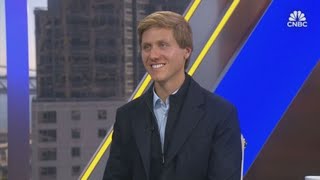
Sequoia Capital partner Konstantine Buhler sees AI as a multi-cycle transformation entering its third wave: generative AI agents that take actions, not just answer questions. He points to examples like Expo Xbow automating cybersecurity and Viz.ai's FDA-cleared stroke diagnosis, and warns that most value will accrue to the agile application layer, not the capital-intensive infrastructure.
Chapters
Well, Constantine, it's great to see you. Thanks for being here in person.
Great to be here. Thanks for having me.
Kate, we have so much to talk about, but I do want to get your take on just AI and your predictions for 2025. We're still early enough in the year that I think we can do that. But one thing we talked about in the past is the AI cycle, if it's fair to call it a hype cycle. Where do you think we are in the different stages of a potential cycle here?
Absolutely. So, Kate, we are in the middle of a really big transformation. And the AI revolution is akin to the transformation of the industrial revolution. And we are in a cycle right now. But it's not even the first, not even the first of the AI revolution. As I see it, we're in maybe the third cycle of the AI revolution. And the first one started decades ago, early 2000s. That's what we call the predictive AI revolution. Numbers in, numbers out. Can you actually take data and make a prediction? And that revolution powers a lot. That's everything from the recommendations of your Netflix account to what to put in your cart on Amazon. That's your social media feed. That is a huge impact already. In fact, when Meta lost some of their attribution data in 2022, you saw the stock go down a ton. And when they used predictive AI to actually remedy that, you saw the stock go up hundreds of billions of dollars. So that predictive AI revolution has created trillions of market cap already. Then we have a descriptive AI revolution, roughly the 2000 and tens. And that's still words in images in and the numbers out. That's an image. Is this a dog? Not a dog. Right? That is a sentence. What's the sentiment of this sentence? And that turned into amazing technologies. That's everything from self driving autonomous vehicles, that, that's AI healthcare and image diagnostics, that's physical security and that's currently transforming the world. Still we have Waymos on the streets here in San Francisco. They are amazing. Tesla self driving is incredible. That will create hundreds of billions, if not trillions in market cap. And now we're in a third AI revolution, which we're really excited about. In generative AI, we think it could be the biggest yet. Although it's very early and from our perspective, with many decades of AI interest and focus, we think that there's decades of come decades to come in this revolution.
It's interesting to think about one big cycle and then sort of the mini cycles within that. Like I think That's a great way to think about it within this current mini cycle, I guess we're going to call it. But where are we on the curve? And there's been so much hype and excitement around AI. How should investors think about the potential versus the hype out there and is it overhyped in certain areas?
Okay, there is definitely hype and we are definitely in a hype cycle. We try not to think about it too much as where are we in the hype cycle? We try not to time that. We take a longer view position and say, hey, is this going to be really, really important? And we think this is going to be transformational industrial revolution, like transformational manufacturing for the mind, like transformational. Right now, where the technology is, is we're moving from AI assistants to AI agents. We've been talking a lot about AI agents in the past 18 months. The simplest version is that an AI assistant might answer a question, but an AI agent actually takes actions. So think about, hey, draft me an email. An AI assistant can do that. An AI agent might actually draft that email, send it, and might even go back and forth in some correspondence if you give it permission to do so. That's starting to really work. I'll give a very tangible example here in a really big important market, cybersecurity. About a year ago, we had this brilliant team that created GitHub Copilot come to us and they said, hey, we'd like to start a company that does AI cybersecurity from a completely new perspective. We actually helped AI learn how to code. We know that the way you hack a website is with code. We think that AI can now hack a website. If we can hack a website, we can find its vulnerabilities. If we can find its vulnerabilities, we can patch those vulnerabilities. And if we can patch those vulnerabilities, we've defended applications better than ever. We thought it was a brilliant idea and a brilliant team. They formed a company, Expo Xbow, and they went to work to see if it could work. Within months, they had an AI agent taking these actions that was outperforming really seasoned professional hackers, penetration testers, and then they released it to the world. And of course, with the permission of the applications, they went on HackerOne, which is a open list of vulnerabilities and applications to hack and find vulnerabilities for. And they are already number 11 in the entire United States on that leaderboard, using it.
Mostly an agent.
Totally. Wow. So we have agents already in a really critical use case, performing some of the best in the whole country. That is huge and exciting and just the beginning of this agent type revolution.
What do you think it means for productivity at a macro level? I would think for consumers this is probably game changing and that you just have more time to not go back and forth on that email open. I had a demo today where they were ordering groceries and making dinner reservations. Do you have any thoughts, big picture, on just what this is going to mean for the economy?
Okay, yeah, this is a big deal and it's going to manifest first in these agents and then in networks of agents. So you're going to have an agent that might in the beginning be on one side of some transaction. Let's use the cybersecurity example. It's finding a vulnerability. It's telling you, hey, this needs to be patched eventually. Unfortunately, the bad guys are also going to get that technology and they're going to say, okay, we're going to go on the other side of this. At some point you have a network of agents, defenders, attackers, and that's going to form a really complex massive thousands, tens of thousands, billions of inferences that create something like we've never seen before, an incredibly complex network, at least never seen before in cybersecurity. So that's the experience that we're going to feel as users now you're also going to be able to manage these agents. There's going to be areas like cybersecurity that the agents should go and do this and they're going to be fast, quantitative, effective. There's going to be areas where the human is particularly advantaged, like one to one human interactions. And in those interactions you want the human in the loop. Another example of an AI agent where you want the human in the loop is go to market, selling. We backed an AI agent called Rocks. They help the best sellers, sellers work with their best customers, high importance clients. And they said, you know what, we'll make an agent. Maybe we'll write these emails and send it for them. And then they took a step back and they said, wait, these are the best sellers on the planet. We want them in the loop. We want them to actually be managing these agents and these agent networks. We don't want them to put it on full autopilot. They took away the auto send and they saw triple the reply rates.
Interesting.
Immediately, wow. So certain types of work will be automated, massive networks of AI agents, other kinds of work. You want the person in the loop, that person's going to be managing that agent or that network of agents.
How do you keep a lid on that? I just think of agents talking to other agents and interacting and working. How do you make sure that the types of hallucinations that are coming up now in generative AI aren't an issue? And kind of monitoring all of this agent on agent activity that you're describing.
Keeping the human in the loop. It is different types of tasks are going to have different levels of a person's involvement in it. So certain tasks that are really high frequency, high value, highly quantitative, we're going to probably hand those more and more over to agents.
Interesting.
And that's a good thing. We'll find new ways to monitor that. By the way, this has already happened in some industries like financial services. Many of financial services, high finance transaction industries have actually done this for making markets that will go fully automated or heavily automated with new types of heuristics to monitor it. Other tasks will be somewhere in between. I have dozens of AI assistants that I work with and they can do everything from helping to craft a great email to working on some review material or memo material to move even faster that you want to be able to monitor as the individual. It's your tone. You want to ensure that level of quality always. And I use a product in the Sequoia portfolio called Dust to do that. I'm able to modify the assistance call call on them either in the app or in Slack, train it to actually get better over time, give it feedback and then the third kind is going to be agents working for you. But you really control every message. Yeah, that's. That rocks. Example I gave.
How do you use AI? This is fascinating and it might be some real news you can use. What do you think has been the biggest life hack as an investor or a consumer in just using this technology and making yourself more productive?
I have come to love it and use it as almost every part of my day in work. And some of it's old AI and some of it's new AI. One is audio. So text to speech and speech to text. I'm. I've got headphones on for a lot of my work, especially my written asynchronous work. And I'm using text to speech models including the built in dictation, but also the amazing models like eleven Labs are offering. And I'm using speech to text for dictation. That's an older type of AI but it's really good. You're able to use it to move much faster. The newer types of AI like These assistants, I'll make custom assistants that are made for a specific task. And frankly for the horizontal use case, that future is going to be pretty customized. We're going to have AI agents for verticals, for cybersecurity, for selling, for the services industry, for legal, for banking. And that will be really optimized around your specific tasks. But for the thousands of smaller tasks that are specific to you, I use a agent management system and a system management system dust to actually manage. Hey, this is how I'd like to draft this type of email. Oh wow. This is actually how I want to work on this type of report. And that has been a wonderful improvement in process and then experimenting with these new agents as well, seeing how they do.
You're a power user in AI, but it's helpful, I'm sure. I get that question a lot. Is sort of personally, how are you using it? I think it's fascinating. We talked a little bit about old AI and sort of these different generations. You helped lead the Citadel securities investment for Sequoia. That's a great example of old AI. But maybe talk about financial services and the opportunity there in light of the Citadel investment.
Yes, old AI and new AI. The financial services industry was way ahead of the curve on machine learning and AI. If you think about trading decades ago, 30 plus years ago, it was really traders oftentimes shouting to each other in a pit in order to make transactions. And there were pioneers in this industry like the founder of Citadel Securities, Ken, who said, I actually think that this is going to electrify and I actually think you're going to have intelligence in that electrification. You're going to be making decisions about when to buy, when to sell. And our thesis around the Citadel securities investment, which was three plus years ago at this point, was actually an AI thesis. Before this most recent wave of AI enthusiasm, it was that this technology has become ubiquitous in allowing for electrified transactions of securities. And that Citadel securities is the global leader in making the right decisions at the right time for when and how to buy and sell these securities. If you think about the network that they've built, each of these Alphas, as they call it, is kind of like an agent. It makes a prediction and then it actually takes an action. Now there's a lot of process there, but it makes a prediction and it takes an action. And so we actually see the future of how a lot of industries are going to look by looking at the forefront of this industry and especially with Citadel.
I wonder what this means for just the broader markets as generative AI becomes more ubiquitous. As consumers start to use it more, the markets become even more automated. Have you thought about what it means just for the average retail trader, for example, or just markets at large here?
Well, it has made a huge impact. The beauty of this type of really quantified network of agents, like market making and like Citadel securities, has helped transform for the world is smoothness. Think about how smooth comparably the financial markets are. Think about the depth and liquidity that these always on AI agents Alphas are able to provide. That's the promise of AI networks in the future. And we'll see it in really quantifiable areas like cybersecurity. We'll certainly see it in verticals and we will certainly see it in our own work.
It has become so much smoother as an experience to trade equities, at least as a retail investor. So it's been interesting to talk a little bit about kind of what goes on behind the scenes. We talk about health care as well. Your wife is a surgeon, so this is close to home. That seems like one of the big potential upsides just for the us, for the world, if we're able to cure diseases, make doctors more productive. What is your big thesis on what all of this could mean in health care?
Health care is incredibly important and a really fruitful area for AI for at least two reasons. First, it is one of the most critical parts of our lives. It is what matters most. And secondly, because it's really expensive, it is outpaced most things in terms of cost in the past several decades. And AI is really good at driving down costs. So AI is going to make a huge difference in the health care industry in the coming decades. And I'll give two examples of how one is really good diagnostics, moving faster, making good decisions. And a company that I personally have invested in from the beginning is called viz AI. They are a diagnostic company that's able to help find a specific type of stroke called a large vessel occlusion. It's a really bad stroke. Every minute that you have this large vessel occlusion that isn't treated is 1.6 million permanently dead brain cells. So time is brain in this situation. And this team came in and said, we're going to identify that stroke really quickly, faster than any human can. And more importantly, we're going to be always on. So if a patient comes in the middle of the night, we'll be able to identify this really, really challenging stroke and then bring the right neurosurgeons in. They had this vision back in 2015, almost a decade ago, and in the past 10 years they actually have become the first FDA approved AI medical device. They are now deployed in 40 plus percent of the hospitals in the country and they are saving a lot of lives. So AI is going to save lives. We've got to find more ways like this to deploy it. AI has a huge potential to have better care also. It's going to save time. And doctors are people, surgeons are people. My wife is a surgeon and she's constantly working to serve her patients. There's going to be an opportunity to take a lot of the drudgery of the health care job out of the mix. An example of this is one of our portfolio companies, Comeure. They are addressing the huge back office challenge of health care. Almost 10 plus percent of our entire country's workforce is in health care and estimates of 15 to 50% of that are in administrative work. They say, you know what, we're going to use AI to just get things going there, drive down costs, but also insert ourselves into situations where we're taking work that the doctor doesn't need to do. So listening to an interaction with the patient, actually entering into the ehr, the information, working on the billing in the back office so that that doctor can be focused on the patient, not all the back office. And I know a lot of these doctors and surgeons, I know you do as well. And many of us, these doctors and surgeons have touched our lives. They're not going to take that extra hour and go sleep more.
Right?
They're going to take that extra hour and take better care of their patients and serve more patients. And that's a really good thing.
It seems like such a massive opportunity and there's a lot of friction, as you mentioned, in the health care system. It did come up in the White House press conference this week with that Stargate announcement. It's something Larry Ellison really spent a lot of time on. I wonder, speaking of that, just the, the infrastructure spending and the support from the US government that we're seeing this week, even if symbolically, just to say, hey, we're investing big in AI in the us what did you take away from that announcement and what type of tailwind could that be for AI in general?
Yeah, it was a big week, some would say a $500 billion week. And that's a great sign. It's just another, another great sign on this massive multi decade revolution of AI. And that $500 billion commitment over four years is material. And also to put it in perspective, the five big hyperscalers are projected to be investing 300 billion this year alone in that type of AI. This goes back to how big this transformation is, that this transformation is really like an industrial revolution. And I see these as akin to building factories, right? This is manufacturing for the mind and these are factories for cognition. Over time, we're going to see trillions invested in this in the decades to come. And this week was a great stop.
Is there a worry about the return on investment? It's so expensive, it's so capital intensive. I wonder just how folks are underwriting this and the expectation for those trillions, as you mentioned, to return money to shareholders. It just seems like such a big check up front.
It's a lot and it is a big, big investment upfront. And there are actually already huge returns to AI. I'll go back to the predictive AI revolution, which accounts for a ton of the big company market cap. From the recommendations that they give to even the story about the data center optimization of the DeepMind acquisition back in the day, AI is already producing hundreds of billions of revenue in that way and trillions of market cap. And frankly, that's continuing to evolve. I work with a portfolio company called Kumo that does predictive AI, and they took the technologies that have enabled Pinterest, Airbnb, LinkedIn to get really good at that predictive AI. They made a technology that democratizes it so everybody can have access to that low hanging predictive AI fruit. So predictive AI is the workhorse where a ton of value is already created and these big companies are going to be making a lot of money. Generative AI, it's in its nascy. We see how long it took for the autonomous vehicles to get to the point where now they're really great. Generative AI is still getting there, but these examples of agents that are starting to really work are transformational. And the flip will be when it goes from software as a service, which we all know really well, to service as a software, that AI penetration tester Expo as a service as opposed to the software.
What do you think it means for the existing SaaS companies, software as a service that are out there, will they go away or is there going to be a lot of disruption? Or do you think they just adopt the technology and continue as is?
They got to move fast and really smart because, yeah, that is a really big risk for existing SaaS companies, a really big risk because this revolution is coming immediately and there have been some big SaaS companies that have done it really well. Servicenow has been at the leadership of this in many ways. And Bill and his team have called this years ahead of time. They've been investing in it years ahead of time, not just in their agents that they've actually deployed to their customers, but also internally. They have 85% of their workforce using it daily and They've estimated about 3 million hours that's being saved in that. And that's actually really important. Having your workforce use it and try it just kind of teaches you how to use this technology and that helps them then apply it to others. I think Salesforce is doing a great job of this as well. They brought in Adam Evans who's been doing a great job of building out this agent force and they had some risk here and they've said, hey, we're going to invest in this, we're going to have good partnerships. We're also going to invest in a new way of integrating AI into our platform. But the big SaaS players absolutely have to move and, and some of them are doing a great job of it.
What about competition? We mentioned some of the hyperscalers too they're investing in. There's so much foreign money. MGX has been a massive investor. As we were talking about Stargate. How are you seeing more sovereign wealth funds kind of show up on cap tables of portfolio companies or just be more relevant in a way that maybe they weren't in previous tech waves?
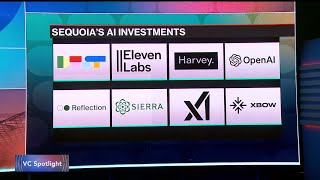
I think that that will happen especially at the infrastructure layer. A lot of the infrastructure layer is going to be limited to the hyperscalers and the foundation models companies and that's going to be a lot of capital outlay, but it can be done really efficiently. What XI did in Memphis is incredible efficient, fast, really well done, really excellent machinery. On top of that is going to be the application layer. That's where I'm even more excited because we've got these factories and then we say, okay, what are the products that we're building on top of those factories? What are the technologies that we build on top of these factories? And you're going to have everything from not just cyber, not just sales, but you. You have Harvey doing amazing work in legal tech, you have companies doing amazing work in financial services and banking. And those applications are going to be a lot less asset heavy and much more focused on building a flywheel within their customers to be learning, improving the product, getting a virtuous data cycle going.
So because the infrastructure layer is so capital intensive, you think that'll be more reserved for sort of the sovereign wealth hyperscaler level.
I think a lot of the infrastructure layer, that large capital outlay will be absolutely hyper layers, foundation model labs, that type of big dollar deployment. And I think that if we look a long way out, so much of the value is going to accrue to the application layer. That's where I'm hyper focused. I really think that there's going to be big companies there benefiting from these huge capital outlays saying, great, let's go build the future. Now that these models are possible, both for closed source models and for open source models, the price of inference is going down fast. And this has been going on for years. You could say two orders of magnitude in the past couple years. There's estimates 100x improvement in inference. What does that mean? That doesn't mean, okay, well we're just going to spend less on AI over that means no, we're going to use it everywhere. The future that we should be thinking about is one where calling an AI model is as ubiquitous as doing a database call. You actually are calling it in every cell of your spreadsheet. You're doing it in mass. You actually have these endpoints that just like you might do a post request to your database. You call that LLM. It's really cheap, it's really good and it's doing a lot of work.
We started on the hype cycle and a lot of the excitement. Are there areas of froth or areas in AI that you just don't see value that you would avoid and say that's actually just not going to work? Is there anything that, that you'd point out is just not worth investing in or looking at?
I think that we're really early in the consumer AI revolution and I think that a lot of what's happening now can grow really quick initially, but there's a lot of platforms with a lot of distribution. A lot of times a founder will come and say, hey, I'm a great technical founder. Here's a problem, here's a solution, here's engagement. But we're missing potentially the most important part, distribution. Distribution is oftentimes 50, 70, 80% of that problem. And in consumer, I think we are at the precipice of an amazing consumer opportunity, a huge consumer wave. But figuring out that distribution in a way that actually lets these companies access customers and not get disintermediated by the really big ones that already have that distribution, that's a challenge. Creative consumer founders are going to figure that out. I think that it's going to probably be A chat type of interface. You're going to gain Trust with these AIs or these AI assistants and then they might start to layer in actions, purchase actions or other actions that are, that are material.
Anything you think we missed just to watch for this year? We talked about your predictions, but what else, what else is coming in the next 12 months you think that we wouldn't expect or viewers might not see coming?
The. The amount of AI that's going to be deployed in terms of inference is going to go up exponentially. Certainly we hear a lot about training and a lot of these data centers that are being built up. A lot of this capital outlay is training. That's really important for building amazing models. Then we're going to actually go into more and more inference as this cost goes down. That's a huge win. Everyone should be thinking about how they're going to use these LLMs and these AI models as if they're almost free, as if they're almost free ubiquitously. That will be critical. So how do we, that's how companies can stay ahead of the curve. But how do we, as a country, as an economy, stay ahead of the curve? Creativity, ultimately is going to be the creativity of the researchers, the technologists, the application model makers. And I think back to when I was a grad student and I was studying AI at Stanford and a lot of the time there was this emphasis of, okay, well, we're well positioned, but there are other countries with more data, they have bigger supercomputers, they have a lot of papers being published and we just have to find more and more elegant algorithms in order to compete. Well, that actually wasn't it. It was the outlier thinkers, the creative types, really, the people at OpenAI that said, actually this transformer architecture which came out of Google is going to be transformative. And it was the OpenAI team and Dario there at OpenAI who was working on it, and these early different creative thinkers who saw that trend, which was not the norm, that the academy, the best professors and AI scientists and students at the time, really thought that creativity kept us ahead and is really critical. I don't think that the transformer is the end all. I don't think the current architecture is the end all. We need innovation there, we need innovation at the application level.
Konstantin, a lot to track. So thank you so much for laying all of this out. It's fascinating and good to see you in person.
Thank you so much. Gabe, great to be here.
Thanks for coming in.
More from Konstantine

OpenAI Sora 2 Team: How Generative Video Will Unlock Creativity and World Models
The $10 Trillion AI Revolution: Why It’s Bigger Than the Industrial Revolution
Sequoia’s Konstantine Buhler “How we're teaching computers how to use computers.”
Sequoia's GPs - The AI opportunity is massive, but only for those moving fast enough to seize it