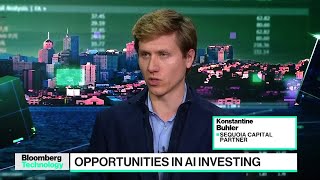
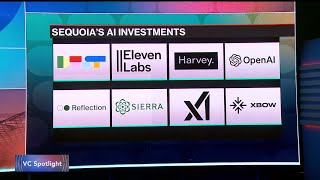
In this interview, host Ed and guest Konstantine Buhler discuss recent U.S. technology infrastructure deals in the Gulf, emphasizing their strategic importance for national AI leadership. Buhler outlines the four pillars of AI strength—compute, power, data, and algorithms—and stresses that algorithmic superiority has historically kept the United States ahead. The conversation shifts to the growing relevance of AI memory for agentic systems, illustrated with a physician‑assistant use case where an AI must retain both patient interactions and its own operational context. Ed introduces breaking news about a $1.2 trillion economic commitment from the White House to Qatar, underscoring the scale of U.S. investment. The dialogue then touches on the hypothesis presented by Bloomberg’s “Big Take” that China’s AI industry, exemplified by the rapid rise of Deep Seek, continues to thrive despite U.S. policy pressures, noting that over half of global AI researchers are based in China. Throughout, Buhler argues that maintaining leadership requires continued advances in algorithms and emerging capabilities like AI memory, while acknowledging competitive pressures from China.
Chapters
Let's start with just simply your reaction to the infrastructure deals of the last 24 hours. US technology going to the Gulf and setting up data centers and AI development in that nation.
Well, thank you, Ed. It's always great to be here. And these new deals are testaments to the fact that AI artificial intelligence is not just a matter of corporate success, it is a matter of national imperative. It is a great sign of the importance of this industry. I think back to a decade ago, and we had concerns about the US Staying ahead of AI. There are really four key pillars to AI strength. There's the compute, there's the power, there's the data, and there's the algorithms. Thinking back to that last wave of AI, the reason why the United States has been so far ahead is that fourth pillar, those algorithms. So as we develop new technological allies around the world for compute, for power, for data, it's really important that we stay on the absolute forefront when it comes to algorithmic advancement. We have the best researchers in the world. We have the best engineers in the world.
Okay, I'm sorry to interrupt you, Constantine. We've got some breaking news crossing the terminal from the White House. President Trump has secured $1.2 trillion in economic commitments in Qatar. The Qatar commitment is $1.2 trillion. According to the White House, there are economic deals worth 243.5 billion. This is something the President has announced on the ground in Doha. We were just speaking with Bloomberg's Annmarie Horden, who is in Doha, Qatar, and she noted that this is what's pending. We don't have the specifics in terms of sector, in terms of companies involved, but as we get that, we'll bring it to you. And right now, we'll go back to the conversation we were having, which is there is US Leadership in the field of AI infrastructure. You basically break down the four categories.
Yes.
One that is increasingly crossing my desk is AI memory. In the context of agentic AI, this is something that people say, we need to invest in this and solve it. I personally don't have the expertise or academic grounding to understand it. Why is your industry talking about it?
You're exactly right, A.D. so there's compute, there's obviously the data, there's obviously the power and the algorithms. But another important component is memory, because when you interface with an agent, you want it to remember you, of course, but it also has to remember itself. Think about a physician, for example. Every time they interface with a patient, an agent is going to be able to help them think back to previous interactions. Not just what the patient said, not just their vitals, not just data about the patient, but over time, using tools and companies like Open Evidence, the physician is going to be able to remember exactly what the interaction was like, how to communicate to the patient, and memory is going to become more and more important.
The question is, where does all of this activity take place? Right? The subject of today's Bloomberg Big Take is Deep Seek. Right? And the Big Take presents the hypothesis that the company's sudden emergence last month illustrated how China's industry is thriving, irrespective of US political policy. You know, Jensen Wong told me in March, more than 50% of AI researchers are in China. When you think about the issues you've outlined, do you agree with that hypothesis presented that China's AI industry is thriving, but also looking at the same issues that your industry is looking at here?
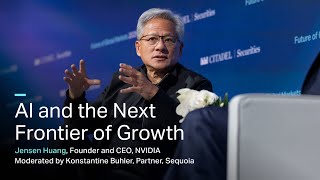
Well, it is true that they have amazing researchers there, but it's also true that we have some of the most creative, brilliant researchers on the planet. Here's an example. Just recently, we hosted our annual AI conference, Sequoia Ascent. We brought together 150 of the top minds in the industry. This is everyone from Jensen Huang and Sam Altman to the young up and comers. And the number one technical topic of the conference was a concept called tool use. Tool use is all about AIs working with each other. We're teaching the computer how to use the computer. And there was fortunately, a big advancement in our industry over the past few months, a new protocol called Model Context Protocol. Think about each AI agent as an expert. Think about every piece of software as an expert. Your CRM is really good at remembering your previous interactions with customers. For example, the issue is that those experts don't necessarily speak the same language. What this new protocol allows is a universal translation mechanism so that all these agents and all these softwares can communicate. That is pivotal to us as the United States staying ahead. We have to be working together. I'll give an example of what this protocol could do for us. We have a portfolio company called Rocks. It helps the best sellers do really great research before meeting with a potential buyer. They can not only do that research now, they use MCP to connect and actually make a pitch deck directly on the specific needs of that user. They can even plug into Cognition or Claude code and write an entire demo. That's how we stay ahead of the curve in AI collaboration and working together as researchers and engineers.