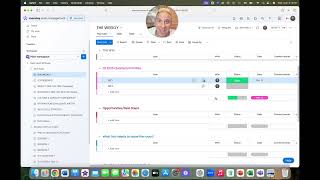
This is a YouTube video titled "How to Create Your Scoreboard / Next Level Nonprofit" created in August 2025. It features Jenn Freedman explaining the concept and practical use of a scoreboard tool within nonprofit organizations to track key metrics weekly. The content is instructional, focusing on disciplined execution, accountability, and improving organizational impact through measurable goals.
I'm Jenn Freedman and I'm excited to introduce you to one of the tools in our next level nonprofit toolkit, the scoreboard. The reason I'm excited about something that most people dread is because I believe wholeheartedly in the adage what gets measured gets done. And getting things done in our organizations is exciting. When we take the time to identify the important measurable activities that move our organizations forward forward and we set and work toward ambitious yet realistic goals, we can make even more impact with the people we serve. And that's why we're all here. The scoreboard is one of the tools within the disciplined execution component of the Next level nonprofit operating system, and it is part of the weekly, which is the Executive Leadership Team meeting which takes place every week. Our scoreboard is where we report the most important four to 12 metrics that allow us to keep a pulse on our progress and create clarity around our organizational objectives. Your organization as a whole and every department within it will have dozens of things you pay attention to. But at the end of the day, it is critical to identify and put on the scoreboard the most important measurables that will move the organization forward in the most meaningful way. The scoreboard is like a progress report for the year round activities that will produce the outcomes we want in our organization. These must be quantitative metrics that are tracked and reviewed weekly. They should be simple, predictable, clear, and create the opportunity for improvements along the way. As you monitor the metrics, you will see patterns and can respond in real time, catching potential problems early so you can intervene before large issues develop. Like all next level NonProfit priorities, only one person is responsible for reporting on each metric during the weekly. This fosters leadership through accountability on the Executive Leadership Team, or ELT for short. The scoreboard metrics will influence decision making during key discussions as well as improve your ability to predict and plan for the future. Finally, but no less important for the team, hitting number goals weekly is a big morale boost for team members. So how do you effectively create and manage your scoreboard? First and foremost, you want to measure the things that most clearly represent your organization's main objectives. Look at each department and choose the most important activities to measure. Then determine and predict what outcomes you expect and assign only one person to be ultimately accountable for each measurable. Even though other team members might be responsible for the activity being conducted and measured, there will always be one ELT member who is ultimately accountable for the achievement of the goal and responsible for reporting on the number every week. For example, if your organization is measuring the number of participants who attend a youth program. The youth program director will be responsible for setting the goal for how many youth to recruit and will be charged with creating an excellent program in order to maintain attendance. To achieve that goal, they will also have to monitor and collect youth attendance. However, the youth program director's coach is the ELT member who guides and supports the program director along the way and therefore this ELT member brings the numbers to the weekly they will report the number and state whether or not the number is on track or off track each week to meet the goal that was set for the quarter. Some tips to remember as you develop your scoreboard. Number one because the numbers are reported on a weekly basis, it is imperative that whatever metrics you choose, they can actually be measured weekly. So if your number is more easily measured monthly or quarterly, work backward from that number to determine what the weekly goal should be. Number two Once you choose your scoreboard numbers and start to report on them during the weekly, you will begin to notice whether or not those activities are in fact the most important in order for the organization to move forward. Make tweaks as necessary and continue refining your scoreboard as you progress. Number three if the number is off track after a few weeks of reporting, it is critical to explore why and make any necessary changes. When discussion is needed about an off track metric, you should add it as a discussion topic in the Opportunities and Next Steps section of the weekly. Otherwise, the scoreboard is only for reporting on track or or off track. Finally, be disciplined in your use of the scoreboard and you will find that my favorite adage soon becomes yours too. You will see what gets measured, does get done and your organization will flourish because of it.