The Role Call Episode 20 with Chris Lambert
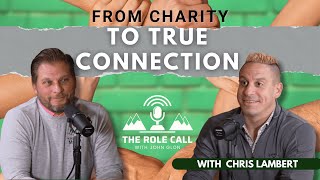
John Glahn talks with Chris Lambert about running Life Remodeled and Next Level Nonprofit, two organizations focused on community revitalization and nonprofit operations. Lambert discusses how nonprofits can scale their impact and the challenges of building effective leadership systems in the social sector.
How we can learn from past mistakes. Again, a challenge you've had.
Yeah.
And it could be business, personal, whatever it is, failure, whatever you want to call it that you think the listeners could. That maybe has helped you the most.
Yeah.
Let's go back to the point in time that I mentioned of where, you know, there were death threats on my life and I'm called a white mother effort and whatnot.
Right.
A part of me was reacting against that and defending myself and just putting up my, you know, earmuffs. I don't need to hear this. I'm not a colonizer. I'm not a racist. Thankfully, the other parts of me that said, okay, be curious, learn, lean in. What are people saying and what do you need to learn from this? And what I learned was, I'll go back to that phrase I was using. We were doing work for the community, which was inevitably treating people like charity cases. Hey, we're going to come in here. We know what you need, and we're going to do it because we have the resources to do it. And we didn't talk like that. At the end of the day, that's what people were hearing because we weren't as relationally connected and truly hearing as we needed to be. And so we shifted to where we learned to do the work with people. And I think this applies to all areas of life. In fact, I back it up even more. I'd say when it comes to neighborhood revitalization, there's three ways we can do it to a community that's displacement and gentrification. For a community that's charity with. That's where real transformation happens. And I grew exponentially during that very uncomfortable time.
Welcome to the Roll Call, the podcast where we dive into the role define us. I'm your host, John Glon. On each episode, we explore the journeys of people discovering their true roles in life, business, and beyond. Get ready for inspiring conversations about finding purpose and authenticity. Let's roll the roll call. Welcome, everyone. I'm John Glahn. I have with me good friend Chris Lambert, the nonprofit boy. I should have come up with a better one, but, you know, extraordinaire, just absolutely something. And we'll dive in some more on that. But we're all here and accounted for. That's the roll call. Let's get started. So, Chris, man, we have a. A story that goes back, right? We went to high school together.
Crazy.
You know, we competed together. We weren't like best buds or anything like that. No animosity. But, you know, we went the same high school. We all went off and did our own thing. And I run into Chris at a mutual. Was my client in Detroit, Michigan. I don't even know what the number of years ago. Six, seven years ago now.
I think maybe I want to say 2014 or 2015.
It was even longer than that.
Yeah.
So again, a minute ago, hadn't crossed paths. He goes to the rival college iu and I, you know, I go to Purdue. So then there's even more divide.
Right.
Then life happens. And we're going to get into that. But we just happened to come across each other in Detroit and we just talked about probably the only two Wawa C high school graduates definitely in the. Not probably definitely in the Detroit area. And God brought us together on that odd on that day. And there's so much more after that. So I wanted to bring you on to this podcast because you're an incredible inspiration for what you're doing for people, what you're about to do for people, and you're just getting started and who you are as a human being. So welcome, Chris Lambert.
John, thank you.
You're the man.
Yeah. And I should have. And I didn't even get to explain.
Right.
You are Life Remodeled, founder of Life Remodeled. And I'll let you describe that or what the city of Detroit and I can all chime in. And also next level nonprofit, which is the next big boom to change the game in the nonprofit world. So welcome, brother.
Great to be here with you today.
Yeah.
Awesome. So, man, I know that you could go through so many stories about how you got here, and I'm down for any and all of it.
We'll go wherever you want to go, man. I'm going to follow your lead.
Yeah. So what brought you? Let's talk about Life Remodel. What's Life Remodel?
All right, so I always start with why, right? Why does Life Remodeled exist? It's because we're absolutely convinced the Detroit residents have all the talent they need. But many don't have access to all the opportunities they deserve. When we talk about an opportunity gap.
Right.
Three statistics that many of our listeners will know, others will not. Right now, 88% of third grade students are currently reading below grade level. 30% of Detroiters can't access the health care they need. And Detroit residents median household income is half that of suburban residents. So what we do in response to this reality is we repurpose large vacant school buildings into one stop hubs of opportunity for community thriving. We then fill these buildings with the Best and brightest nonprofit organizations that are providing services directly requested by community members. And we help them collaborate to make far greater impact together than any of us could ever make alone.
That's incredible. If anyone paid attention to those numbers. And you just were telling me about so now what you actually do. So that's the why.
Yes.
So how do you actually now.
Yeah.
What have you done? I guess.
Well, the. The why was the.
The.
The talent is evenly distributed all over the world, but opportunity is not right. It's another way to say it.
The.
The what we do is repurposing vacant school buildings. The how is then we fill them with these nonprofits who. Who are moving into a space into Detroit neighborhoods. And for our listeners familiar with Detroit neighborhoods, some of those neighborhoods aren't yet in the condition where an organization would necessarily feel confident to move in. But by creating this space where we're all in one place and we're working collaboratively, we've been able to now bring resources directly where people live, which is where the resources need to be.
Right.
And no one nonprofit has all the. All of society's solutions.
Right.
And so by working collaboratively, we're actually able to make far greater impact than working in silos or working in isolation.
Now, I happen to know and have heard that, you know, sometimes it hasn't been even though your intentions have been the best.
Right.
What you just said, you want to go in and help. How has the local response been from day one ish. To kind of where things are now?
Yeah.
Well, day one was actually pretty great when we moved into the city of Detroit. But then there came a time and point where all that shifted and I had death threats all my life. And it was a real shocker of the reaction, but basically the genesis of when we started in Detroit, we used to renovate existing high schools and we would mobilize 10,000 volunteers in the surrounding neighborhood and we would repair owner occupied homes. So all in all, we would spend one year in a neighborhood, we'd invest about $5 million and then we were gone.
Right.
And so everything was great when we did that, when we shifted our Strategy was in 2017 when the school district asked us to repurpose a soon to be vacant school building. We first informed the community that this was the request and that we were going to take them up on their offer, and everyone was excited. However, what we did not tell them, because we weren't supposed to make the details of the negotiation public, was that we were acquiring the building for $1 a year for 50 years, I, in my ignorance, thought that people would be excited about us getting the building for only a dollar because then we could invest more money into the. For the community.
Right.
And the key word there is really for. And I'll come back to that in a minute. But basically, long story short, when we made the news public, people were absolutely furious. And I was called a white mother effer and less polite language than I'm using right now from this public meetings and stages. And at first I was very much in shock of the reaction, but then eventually I began to realize why they reacted the way they did. Many were right to react the way they did. I represent based on 400 years of history.
Right.
And in the city of Detroit as well, and gentrification and displacement, where people are pushed out of their neighborhoods. And so what it led to was me learning to listen even more effectively and work collaboratively. Instead of doing work for the community, which is charity, we started working with the community, which is where transformation really happens.
And so now you have a new project.
Yes.
That is even grander.
Yep. Right.
More money involved. You name it. Sure has it from those learnings. How is it, how's that translated from your ease in the buy in from the community?
Night and day. So before we bought the school building that we just purchased last year, we actually went to the community leaders and we asked them, we have been asked by the owner to buy this building. We would like to do this project, but we're only going to do it if you're for it. I thought for sure they would say yes. I was also convinced there'd be at least two people who were going to stand up and say no.
Right.
For various reasons, I was wrong. It was a unanimous decision. They said, please come here. We want an opportunity hub. We've seen Durfee, we've been in Durfee. This is exactly what this community needs. And so that was night and day different. Also, the fundraising has changed drastically. So when we first repurposed the Durfee building, which is now called the Durfee Innovation Society on the west side, I would walk my friends through who were philanthropists, and they would put their arm on my shoulder after I showed them the vision and got all excited. And they say, chris, you need to run away from this project because there's not a business in sight. And to my own words, 80% of people who lived within four and a half square miles lived at or below the poverty line. I said, you'll never get this building to even 50% occupancy that was 2017. We were at 89% occupancy in March of 2020. You remember something. Something happened then.
Yeah.
One year later, we grew to 100% occupancy. During the pandemic, what happened was, in a time when people didn't want to travel very much, actually, the Durfee Innovation Society got put on the map in a whole new way because community members realized we can get access to all the opportunities we need in one place. And then nonprofits started moving in by the droves.
That's fantastic. So, you know, by nature of the name of this podcast.
Right.
Let's talk about the roles that we play, you know, as entrepreneurs and, you know, in life, in community. And you're kind of molding a lot of those. Right. The community aspect. And when did. And however. And I also have some other friends in nonprofits.
Sure.
And they have a hard time calling themselves a business.
Okay.
When and where did you catch and realize, wait a minute, I've got a. This is a business and I've got to treat it. It's not like, hey, I'm just a nice guy trying to do great things.
All right?
It's a.
Well, let me say this. I used to say to nonprofit organizations that I'm going to invite you to become more like businesses. I have since changed my tune because I realized that's not good enough. So, for instance, imagine with me two organizations. One's a for profit, the other's a nonprofit. And for the sake of this analogy, they're both similar in size in annual revenue and the staff size.
Okay.
In my opinion, leading the nonprofit organization is far more complex, and here's why. And I'm going to oversimplify the for profit world so you can push back on me, please. I might be wrong, but if you simplify it down to its core. When a business is selling goods or services at market value to its customers, as long as they can keep their customers happy and produce a quality product or service, everybody eventually is going to win.
Right.
In the nonprofit sector, this is not the case. Our clients. Our customers are not paying for their services. Typically, if they are, it's certainly not market value.
Right, Right.
But usually they're not paying at all. And so they have wants, needs, desires, and perspectives. Our donors who are paying for the services have a completely different perspective. Our volunteers, who are in many cases delivering those services, come from a different worldview. Our board members who are governing the organization. And so we have four different stakeholders who all have complet Completely different wants, needs, desires, and theories of change. We have two bottom lines. Absolutely. Financial.
Acumen, right?
Not profit, but no money, no mission. Right.
Okay.
But more importantly, measurable social impact. We are not allowed to pay our talent the same amount of financial resources that the for profit world can pay, because many donors look at that as overhead and as if it's bad and if it's evil. So we have to find Mother Teresa's to work for us, and there aren't enough Mother Teresa's in this world. And then to top it all off, the world, the work that we do with people who are experiencing significant suffering and marginalization is often very emotionally taxing. All right, so I want to preface that. And then I'm not saying leading life remodeled is more difficult than running gm.
Okay.
It's not even close. GM wins that heads and tails. But if you take similarly sized organizations, it's more complex than the nonprofit space. However, in 2014, someone handed me the book Traction by Gino Wickman.
I read that book. I ate it up.
I graduated from that other school in Indiana, the one that's undefeated in football right now. Which one is that, John? They're an undefeated college football team in the Big Ten. Come on, you can say this. Indiana University. Indiana University. And anyway, I'm such a Big Ten fan. I was rooting for Purdue to win the basketball championship last year.
Appreciate that.
I studied business, read Traction, loved it. I said, we're going to do this immediately. My next reaction, though, was someone needs to translate this into the nonprofit sector because there are many nuances and distinctions between the two, as we've already evidenced a little bit.
Right, right.
And so I searched high and low to find out who had done that. What my research uncovered was no one had done it. So eventually we created a system we now call Next Level nonprofit because we believe that people who are served by nonprofits deserve the highest levels of excellence we can give.
Absolutely. And there's a book by that title.
Yes.
And the author is. Is Chris Lambert.
Yeah, this. Dan.
This guy. In my spare time, I wrote a book.
And. And, you know, and thank you. Because I, you know, I would venture a guess, as much as I know that, you know, the small businesses run, really run. The majority of the, you know, the majority of the businesses are small business.
Absolutely.
Majority of them don't run on any type of operating system. They just run on grit and hard work. And, you know, which is great because.
Most of us don't know what we.
Don'T know, don't know what we don't know.
Yep.
And then that's why I brought up on the, on the, on the nonprofit side or not for profit side, you know, it's. You still have to run it as a business. But like you said, there is a more come. There is different complexities for sure.
Yes.
So when.
All the more reason. We need an organizational operating system. I believe every business and every organization needs an operating system.
Absolutely.
I mean, you and I both know if we really play that out, we all have one, whether we know it or not. Typically, we either inherited it or we created it haphazardly as we go. And if we can't describe it instantly, then that tells us a lot about what's really going on. I mean, we're just running blind.
And running is the real answer.
Right.
Running in quicksand. Running. Just constantly running. Constantly running.
Right.
It's cumbersome.
Right.
And now we're again, many for profit companies. You know, as they grow, they generally have funds to figure this out or whether they're part of a peer group or whatever. There's plenty of opportunity for profit businesses to learn about, hey, best practices and some other things. Yes, I'd imagine it's a little more difficult on the non.
Not for profit. Well, I'll also keep it 100 in that many of our leaders in the social sector are incredible humans who did not come from the for profit sector. And unfortunately a lot of us, and I'm not one who's done this, but stiff arm the for profit sector and label it as exploitative.
Right.
Are there some exploitative companies? Sure.
Right.
Are there some exploitative nonprofits? Yes.
Right.
But anyway, they won't read books by Jim Collins and Michael Gerber and Kim Scott and Patrick Lencioni and Gino and Bloom Growth or whoever.
Right.
They think that doesn't relate. And honestly, this is one of the reasons I changed my tune on using the word business. Because even though it's true, look, I agree with you.
Dirty word.
Right?
It's a dirty word. And so that's again, the point of using the language that nonprofits speak is essential to introducing an organizational operating system to them. Now, many people, just myself included, before I made so many mistakes in the first four years of leading life for Model, there were so many things I did not know, what I didn't know. And if someone would have just come to me and said, hey, I've got a system for you, you know, I would have said, okay, dude, yeah, right, please. But as soon as I read Traction, the light bulb came on. And that's why I wrote the book Next Level Nonprofit, because I knew people weren't going to really get this until they see it played out in front of them. But in the for profit world, a lot more people are aware of the need for an organizational operating system.
Right. So I know obviously your heart. And here's the other part, right. Nonprofit generally, they're great human beings that are trying to take care of a need somehow, somewhere. So to your point, like, they didn't come from the profit. Big heart, big hearts, Big, huge hearts.
Very little attention to their inward internal systems that would actually ensure greater impact and greater reach.
Right.
So, you know, much like, you know, I've heard the same thing with doctors and lawyers. Right. They're great at what they do, they just don't know business.
Yep.
So that being said, how many, how do you get. Because I know where this is headed with you. You didn't do it so that you could profit. Get your name on there, on the book and whatever.
Right.
There's a mission and there's a reason you did this.
Yep.
Yeah. And one of the reasons is financial. But it's the opposite end of the spectrum because.
Right.
A great implementer. Now, I don't, you probably are really, you know, giving people a great deal. But look, they range from 50 to $120,000 a year, in my experience, which I'm going to say is worth it. I mean, at the right size pay John Glenn, $120,000 a year, that's fine.
We can do that.
And it's, it is worth it. Now I'm, I'm not saying that tongue in cheek, right. Because the value is more than 10x financial in a short period of time. But in our sector, in the nonprofit sector, you tell somebody they're going to pay 30, 40, $50,000 a year or more for this coaching, they're going to like, look at you, like you just, you know, fell from I don't know what planet.
I could hire a couple people and make more.
People are thinking from a scarcity mentality. They're thinking exactly about the moment. So we have said that price affordability is critical to our model. So we charge $20,000 a year for a nonprofit between half a million a year in annual revenue and 3 million if they're over that. We charge a little bit more, but it's not much more.
Right.
And then that means that we need to convince great coaches or guides or fill in the blank, people who help implement these systems to implement this at this Pricing. And what we found is there are many. Why Driven, passionate people in this world of for profit operating systems that actually share mutual values for the social sector and they're using their skills to make a real exponential impact.
That's awesome. Now, to be clear on what you're saying.
Yep.
You wrote the book because it's a, it's a guide that people can, they can self implement. So you have tools and things like that.
We did not hold back any secret sauce.
Right.
We didn't dangle a carrot and say, well, if you really want the good stuff, hire a coach. Now we were clear it's all in there.
Right.
And you're going to go much further, much faster by hiring a coach. And I'm speaking from someone who, I was approached by a wonderful EEOS implementer in 2014 who was very convincing and said, it's only going to be $50,000. And I looked at him like he came from another planet. It was very nice. But I said, that's wonderful.
Right.
Never called him back. And I said, I went to Indiana University, I studied business. We can figure this out. We self implemented. We did grow significantly. But in 2019, we were able to get an incredible implementer named Tip Quilter. I don't know if you ever met Tip. This dude's amazing.
Right.
We grew so much further, so much faster that my biggest regret was why did I not try to find a way to hire him earlier? And I, I would, if had I known what I knew then I would have found a way to raise the money.
Yeah.
And now you and I, we don't need to preach that to each other. You get it. But you also know how difficult that is.
Right.
For someone on the other side of that, who, who was me before. Right.
Because again, icky ick, you know, if, you know, you know, yeah. It's easy for anyone on the other side of like, yeah, dude, you got to go do it.
Yeah.
But it's hard to see the tangible results in something that is, you know, can, can be considered nebulous.
Right? Yep.
Especially for a nonprofit leader. So one of the things that next level nonprofit is going to do, sure, $20,000 is cheap, but most nonprofits don't have a $20,000 pile of cash that was not yet already allocated in their budget in advance. So we're going to start eventually fundraising all across the United States to find donors who want to see their money make more impact and carve out pay for 15,000 out of the 20,000. And eventually we're actually going to go to businesses and entrepreneurs in particular who are running on operating systems. And you know, one of the questions I'm going to ask them is, hey, who handed you the book Traction and how did it change your life?
Right.
Or whatever the latest book is, the Pinnacle book or the Bloom Growth or you name it.
Right.
And okay, tell me about the nonprofits that you love. How many of them are operating on an operating system? And then you're going to get, you know, deer in the headlights look, because no one is. And then I'm going to ask them, what difference do you think it would make with the donation you give if they were to run on an operating system? And anyone who's ever run on one that they understand.
Yeah.
Can answer that question immediately.
Right.
And so we're going to eventually be helping the nonprofits that we're coaching even access that even easier rate.
That's fantastic. And really the thought, you know, because it's just like so many business principles, so many things. You know, if I were to give the $20,000 to help you, I would.
Tell you, do not give 20. I would say give 15. So now that you're offering.
Right.
And I would say do not. I would also say do not give it to next level nonprofit. I would say give it to the non profit that you want this coaching because one, they need to have skin in the game financially.
Yeah.
Two, they need to get used to paying that money to their coach.
Right.
And they need to see this as not a one year quick remedy fix.
Right.
You know how, you know, the foundations that are built in a year. Unbelievable.
Right, right.
But, but the work that we're doing, both of us in our organizations, we, we will bring tremendous benefit by walking alongside organizations into perpetuity as they elevate.
Absolutely, absolutely. And so that's where, where I was headed with it was. Yes. I could still give that 15 directly to that, that nonprofit just because.
Yes.
Or if it's a purpose, what can I act? What could they actually do? It's a multiplier effect by doing it.
In that it's exponential.
Right. So it's not, you know, we're gonna do 15,000 so that you could do. Install those chairs that you were talking about from the Fox. Right?
Yes.
Yeah. That's great. You do need to actually do that.
Yes, we do.
But if someone.
Right.
We invest in them in the long term.
Yes.
That's a, that is a, that is a hell of a message.
If I ask a hundred nonprofits anywhere I go, what is Your biggest challenge 99 are going to tell me they need more money.
Okay.
Do I disagree with that? No. Do I want them to have more money?
Yes. Right.
But the difference that Life Remodeled is making with the resources we have now compared to the difference we were making before we had an operating system. It's night and day now. I'm grateful people believed in us enough to support us at that point. But the people who support us now, they're seeing tangible impact, measurable results that we can regularly deliver. And many philanthropists are becoming more aware of this concept that teams need to have the right people in the right seats. It's the foundation of everything.
Right.
They need to have a strategic plan that they actually know what's in it and they are going to operationalize it in a way that it gets done. And in our sector, you know, most people have a strategic plan. Most of them have plans that are 10 pages more or more. They have no idea what's in them. They're doing a great job sitting on the shelf. And when the donor comes over, we pull it off and we say, look, we have a. We have a plan.
Right.
But so much of it is filled with just fluffy statements, aspirational goals which I can't stand. That's a whole nother conversation. And there's no accountabilities listed there, no very clear measurables. And so anyways, you and I are both big believers in distilling your strategic plan down to, I don't know, do you do two pages or. We do two pages.
One.
One, you're even better. See?
Even better.
So we do two. We're not quite as sophisticated yet, but to the point where then everyone in the entire team knows where we're going, how we're going to get there. And then we break it down into those bite size quarterly priorities so that everyone understands how their role is leading to achieving this incredible strategic plan.
Right. So what's a little different? What is it that's different that has the nonprofit in mind?
Sure. So obviously the word profit is at the center of every business strategic plan as it should be. And as we talked about, we need to have financial success. No money, no mission. But profit is not a driver for any of us. No one is driving for equity financially in the organization. Not even a board member. If those listening don't understand that board members don't get paid in non profits.
Right.
And so we're all in this for impact, for measurable social impact. And that's at the core.
Right.
And then the language itself that we Use, there's a number of distinctions. So in next level nonprofit, one of the things we got rid of is the word mission. Here's why. Because I've done this exercise with people, I've been in a room with 10 or more people, and I said, I want you to write down not what your mission statement is. I want you to write down the definition of what a mission statement is. And every time I've done this exercise, no matter how many people are in that room, as many people as there are, that is how many definitions I get back. So there's, there's lack of clarity around what is a mission statement in the academic world because everybody's got to carve out their niche, right? Well, I think a mission is this cool. And I'm not, I'm not against the word mission. But here's what we say. Tell us why your organization exists, which is what I did earlier with life remodeling, and I did it with next level non profit. Tell us what your organization does.
Okay.
And then tell us how you do it. Those are the questions you asked me because that's the way we talk every single day. And when it comes to strategic planning, we've got rid of anything that's a colorful, you know, kind of like marketing word.
Yeah.
Gone.
Right.
We, we don't even use rocks. We just call them quarterly priorities because that's what they are. Our weekly leadership team meeting is literally called the weekly.
Right.
Because it happens every week at the same time. Starts on time, it ends on time.
Right.
And so we're big believers in clarity. And I know you are as well.
Right.
We want people to say what they mean, mean what they say. And then when we set our goals now, we are very intentional. We set smart goals, but we change smart just a little bit. So S is specific, M is measurable, A is ambitious, R is realistic, T is time bound. Because what we found in the for profit sector, you know, after smart goals, people got smart and they realized that I'm going to be held accountable to this goal, this quarterly priority. Iraq, they lowered the, you know, the goal. And so we don't allow that in our organization. But what drives us is the why. And so every time we're setting a quarterly priority, or our ten year moonshot that we call it, or our three year picture, right? It's, is it ambitious and is it realistic? Right? So again, you go to the literal 10 year moonshot that President Kennedy laid out for our country and for our world.
Right.
We can all testify that was ambitious. In fact, many though, considered it impossible.
Right.
The math didn't exist to bring the spaceship safely back to Earth. The technology didn't exist. But it was realistic. Now, if he would have said, we're going to Mars, that would have been ludicrous. We can say that now.
Right.
If he would have said, we're going to go to the sun and back, I don't think that's possible. Can we agree on that?
Yeah. Right.
And so that's the kind of goal setting that we do. But because we're in the social sector, one of the things that nonprofits are typically better than for profits at, and this is starting to change. Right. Which is good, is we know our why really clearly we know our purpose.
Yeah.
People walk through that door, we got that down.
Yeah. Okay.
And more and more companies are getting that down, which is brilliant and really important.
Right.
And so anytime we're, you know, starting to set a goal that's not ambitious, that why draws us right back.
Right.
And even again, more effectively than saying, well, what's your mission like? No, no, no, no. Why do you get out of bed to do this work?
Yeah. Oh, yeah.
This is why.
Right.
Talents evenly distributed all over the world. But opportunity is not. What am I going to do about it? I'm going to increase access to opportunities.
Yeah, man, that's fantastic. So how are we getting that message out? How are we multiplying your effect to get this out to people?
Well, you're doing it right now, so thank you for that. All your listeners are doing it by listening this far in. So thank you, everybody.
Right.
And the book is available, it's on Amazon or you can get it anywhere. Audio books are found as well. And our coaching is available now in three states. We're going to be in nine states by the end of this year. And our 10 year moonshot for next level nonprofit is to coach 2,500 nonprofit organizations by the year 2033. And so we're looking for business leaders out there who say, either I want to support a nonprofit to go through this, or I want to become a coach, or I want to just give this book to the nonprofit that I know or I love.
Wow.
That's why just God, putting you back in my life has been such a blessing. You're making such an impact. It's mutual, brother.
Iron sharpens iron. And you, you connected me to the, the event that we're at on this very day. So I'm grateful for you.
Excellent. Thank you. So going back now, getting beyond that, because right I said the roles that we play.
Yes.
You blend community, you blend business. Right now. How about on the family side? The roles that we play there.
Yep.
You know, I know you got kids. I know they got the basketball bug maybe a little bit like you do or did or. No. What's your role in life?
What's going on? You know, it's. It's funny. So we're at an event right now.
Right.
A conference where one of the sessions I'm going to go to, this couple has figured out how to integrate a strategic plan.
Right.
What does Bloom Growth call the strategic plan?
The plan.
The plan into your marriage, into your family. So I'm excited to see how that's gonna unfold.
Okay.
Because honestly, there's times I'm a husband, I'm a father. My. My boys are 15 and 12. My wife and I have been married for 20 years. It'll be 21 years this May. And I'm 44 years old.
Right.
And one of the things I'm doing is looking back and saying, how have I not been as intentional about our family as I have been on the organization? And so we started looking 10 years out now, my wife and I, and literally, just writing on a page how old we're gonna be 10 years from now was like, boom.
Whoa. Yeah.
54.
Right.
And how old each kid's gonna be?
Right.
25 for our 15 year old, 22. And where are they gonna be at in life and what do we need to do between now and.
So.
Okay. Um. My kids would say I've done a pretty great job, thankfully, and they still think I'm cool, so. So that's good.
Right.
For teenagers or ones assumed to be teenager. But, you know, I look at the fact that these kids are going to be out of the house soon. I know that's true for you too.
Yeah.
And I'm going to lose all my influence, you know, or the 90% of it.
Right.
By the time they do that. So it's like, okay, I am prioritizing them, but I'm leaning in right now to say, what more can I do, you know? And just that intentionality is. It's challenging and it's exciting. And thankfully, my wife are on the same page on wanting to do that, so we'll see where it leads.
That's fantastic. Have you pulled them into the business?
Not yet. We're going to.
Right.
So we just started 10 years, three year. One year. And what. What we found is that actually, you know, my wife and I weren't on the same page at first where it's like, I'm a visionary. So I come in like, let's do 10 years, this is going to be great. And my wife is more of an integrator.
Right.
Or and she's more of thinking about the day to day.
Right.
And she's like, well, Chris, you know, you're always thinking about vision. So I said, well, how about we back it down to one year? What do we want our lives to look like a year from now? We did that and then that led to the three year, that led to the 10 year and we got to this place where we were both like, this is actually pretty exciting. Now let's get some time carved out to bring the kids in and see, you know, without telling them what we've written down, what are they visioning. Right, that's cool. And then let's learn from them and let's see where we're supposed to go, you know, and how we're supposed to get there.
That's great. That's great. And they're obviously you're a great example of for them to see what impact you can have. That's not. Again, a career path is generally not considered thought, hey, I'm gonna go work for a non profit and I want to work for, for pennies on the dollar.
Yep.
Right.
That's just not something that many parents are, are leading their children to a mission like that.
Sure. Not many.
I know some aren't.
Yeah.
And so there is a career in significance.
And I would say the same with you, brother. I mean, I don't believe in a sacred secular divide. I, I don't believe in such a thing as like church is a building. I personally believe it's a way of life. And I don't believe in secular jobs and sacred jobs. And those words may be, you know, not even common for most of us, but basically, I believe everything is spiritual. All of us have callings on our lives. We're all uniquely gifted.
Right.
With superpowers or geniuses. As you utilize and the work that we're doing out here in this world, it all matters now. Some of us might not be doing the work that best aligns with who we really are and why we're on this planet. I believe you are right and probably a lot of our listeners are as well. But yeah, I want to make sure people understand that there's not more nobility in doing what I was created to do than you doing what you were created to do.
Yeah. Okay. Yeah.
And that's important because Sometimes we can carry this shame and guilt with us. Oh, I'm not doing enough. Like, honestly, we couldn't do the work that we do without the work that you're doing.
Right.
So what a great. What a great gem.
Right? Yeah.
In the humility, in that way. I do like to. To end on how we can learn from past mistakes. Right. So thinking of, again, a challenge you've had.
Yeah.
And it could be business, personal, whatever it is, failure, mistake, whatever you want to call it that you think the listeners could. That maybe has helped you the most.
Yeah.
Let's go back to the point in time that I mentioned of where, you know, there were death threats on my life and I'm called a white mother effort and whatnot.
Right.
A part of me was reacting against that and defending myself and just putting up my, you know, earmuffs. I don't need to hear this. I'm not. I'm not a colonizer, I'm not a racist. I'm not a.
Right.
Thankfully, the other parts of me that said, okay, be curious, learn, lean in, what are people saying and what do you need to learn from this? And what I learned was. I'll go back to that phrase I was using. We were doing work for the community, which was inevitably treating people like charity cases. Hey, we're going to come in here. We know what you need.
Right.
And we're going to do it because we have the resources to do it.
Right.
And we didn't talk like that. But at the end of the day, that's what people were hearing because we weren't as relationally connected and truly hearing as we needed to be. And so we shifted to where we learned to do the work with people. And I think this applies to all areas of life. In fact, I back it up even more. I'd say when it comes to neighborhood revitalization, there's three ways we can do it to a community. That's displacement and gentrification for a community that's charity with. That's where real transformation happens. And I grew exponentially during that very uncomfortable time. And so whatever any of us are facing right now.
Right.
Maybe we're receiving some very intense constructive criticism that we believe is completely unwarranted.
Yeah.
Maybe from the person that we love the most. That never happens for us.
Right.
And.
And then there's the, you know, difference of leaning in and saying, okay, how can I really listen to what this person is saying and understand from their perspective and actually potentially learn something that can change my life?
Wow.
Right. Because They're. In most cases, they're. They're telling you what. They're telling you what they're looking for. Yeah, we're hearing something else.
Yeah.
Or our loved ones that are. Or, you know, people giving us some feedback. They're doing it out of love, like they really are trying to. To do the right thing.
Yeah, usually.
That's beautiful. Yeah, that's beautiful. Well, thanks, man, again, again. Next level nonprofit is a book. How else can people connect if they.
Want to learn more about life Remodeled and the vacant school building we're repurposing on the east side. That's we need some money model. We need $2.3 million. LifeRemodeled.org, l I F E R E M O D E L E D. Awesome.
And Next level nonprofit is the website.
That's nextlevelnonprofit.org that was a whole other scenario where this other guy had recently bought the website before I even wrote the book. And I'm like, oh, my goodness, now we have to come up with another website? And we did. And about a month ago, I felt in my spirit, God say to me, call that guy up. Make him an offer. He's gonna sell you the website. And I'm thinking, but he just started this company, right? I never talked to him. I called him up. He's like, it's really funny you're calling. About a month ago, I was thinking about selling it, and I made him. I started with a low offer, and then I offered him maybe this money, or I offered him 500 more. He said, no, let's go with the lower number. It was crazy. So we have Next Level nonprofit dot org.
Now it's God doing his work. That's fantastic.
Amen.
Love it, man. Everyone connect. Help Chris. Help nonprofits move forward in this world.
Thank you.
Thanks all for the podcast. Let's listen, follow, share with people, and you know what? That's a wrap, man.
All right.
Thanks.
Good stuff.
Thank you, brother.
Thanks for tuning in to the Roll Call with John Glenn. If you enjoyed today's episode, be sure to subscribe for more insightful conversations. Remember, discovering your true role in life is a journey worth exploring each and every day. Until next time, keep defining your path and living your authentic self. This is John Glahn signing off.
More from Chris

Next Level Nonprofit with Chris Lambert - Podcast Ep 97 #nonprofitplan #fundraisinggoal