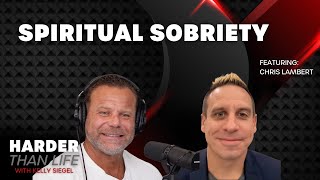
Next Level Nonprofit with Chris Lambert - Podcast Ep 97 #nonprofitplan #fundraisinggoal
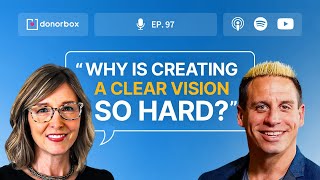
Kira from DonorBox talks with Dr. Chris Lambert, founder of Life Remodeled, about building stronger nonprofits. They cover organizational systems, strategic planning, and team unity, drawing from Lambert's book Next Level Nonprofit.
Foreign.
Powered by donorbucks.
Your nonprofit has an amazing mission. I just know it. But do you sometimes get entangled in all you have to do to keep your mission moving and grow your organization? Welcome to the Nonprofit podcast. I'm Kara, fundraising coach at DonorBox. We're here each week with practical actions you can use today to increase donations and take your nonprofit to the next level tomorrow. I'm delighted to be joined today by Dr. Chris Lambert, the founder and CEO of an innovative nonprofit called Life Remodeled. And I can't think of a better fit for today's podcast. I recently read the book Next Level Nonprofit, which was written by Chris, and I was wowed. This book is full of practical advice and a solid framework for nonprofit leaders to overcome those challenges and be more successful and make a bigger impact. And so that sounds like it's right up our alley. So welcome, Chris. Welcome to the nonprofit podcast, Kara.
So good to be here. And I love the resource you've made available to the nonprofit sector.
Well, thank you. I love your resource too. And your book provides practical, actionable strategies and some real world examples. I have notes written all over my own copy, but I have some questions for you that might be on the minds of nonprofit leaders and founders and fundraisers. You ready to go? Okay, so first, I'm really impressed with your business experience, your expertise there, and your passion for nonprofit work. And I know it led you to look at the nonprofit sector from a different perspective. It's a little eye opening, I know. And that framework, that perspective, it's been pretty effective. So can you elaborate on the concept behind the next level nonprofit, that operating system that you basically created, and tell me a little bit how it differs from traditional nonprofit management approaches that most people. People take?
Well, in my experience, almost every nonprofit leader I know believes that the people they serve deserve the highest level of excellence they can possibly give them. The challenge is, most of us as nonprofit leaders and organizations, we're so outwardly focused that we're not investing the time and resources on our inward internal systems that will actually ensure much greater impact and far greater reach. And so we're not able to have the impact and the reach that we know that we're truly destined for or are capable for. And so when I talk about an organizational operating system, I want to be clear, I'm not talking about software, although I do want to use software as an analogy. So if you think about your iPhone, which is running on iOS, or your Mac, or your PC running on Windows, or your Android phone, running on Android, these are all operating systems which happen to be the most important software on the entire device because they will integrate the every other program that ever runs on that device and they'll take very complex inputs and makes that make them appear very simple. And so an organizational operating system is similar to that, but it's really the core foundational components of what it means to have a well run organization. And so we break those components down into four. And the four are number one, team unity, number two, compelling vision, number three, right strategy, and number four, disciplined execution. And you don't work on these elements completely linear. But if you were to think of these four elements almost as in a, in a circle or a cycle, like a flywheel on a car, on your car. Every time you get your flywheel going faster and faster and faster, your car goes faster. The same thing with this model I've just described. Every time those four components are improved and you turn over the cycle, you're going to go to the next level and the next level after that.
Is that a business principle that you've kind of applied to non nonprofit?
Yes. Every principle I write about in this book is something is a principle that's been around for decades. The most effective for profit organizations around the world utilize these principles every day. And what I have actually found in the nonprofit sector is there's a bit of stiff arming toward for profit languages. And I think that stiff arming comes from a place where we think in the nonprofit world that these principles don't apply because we think for profits are just exploitative, when in reality these are timeless principles. And so what I've done is I've translated these into nonprofit language and into our own nonprofits experience as well as the experience of the many nonprofits that we coach.
Yeah, those business principles really are often overlooked in nonprofits. You're right.
Well, here's something I want to say that I actually believe. Running a nonprofit is far more complex than running a for profit organization. Let's say you take two organizations, one's a for profit, one's a nonprofit, they're doing about the same size of annual revenue. They have about the same size staff. Here's why it's way more difficult to run a nonprofit a for profit. Your customers are paying market value for your goods or services. You keep your customers happy. Everybody wins in the nonprofit world. Your customers are either not paying for your goods or services, or they're certainly not paying market value. But you've got to keep your customers happy. You got to keep your donors happy. Keep Your volunteers happy, keep your board happy. All right. We can see the complexity here. We're operating under financial constraints where we cannot pay our staff members the same amount that we can pay in the for profit world. On top of that, our work is emotionally taxing, and we have a bottom line that's far greater than just a financial P and L. Our bottom line is really social impact. All the more reason why a well run organization is essential to achieving the impact we all long for.
Yeah, it's so easy to get bogged down with putting out all those metaphorical fires, and sometimes it's really hard to stay motivated when you're leading an organization. So that takes me to my next question. What tips do you have for nonprofit leaders that maybe they can put into action today, like right after this podcast, to help them stay motivated and dedicated despite all of those obstacles, despite the challenges they face?
Well, let's talk about component one, which is team unity. And this is based on this principle that who is greater than how? And so when we think about and dream about the impact we want to have in this world, and we sometimes metaphorically bang our heads against the wall trying to figure out the solutions, what really sets us up to have the kind of exponential impact we want to have is having the right people in the right seats and developing a team of one that is truly united. And one of the tools that we've created is called the culture and capacity assessment. And so one of the important tools is discovering, do we currently have the right people in the right seats in our organization. It's just a simple tool called the culture and capacity assessment. It starts with culture, and it's all based on your core values. Which, by the way, Brene Brown says in her experience, only 10% of organizations are actually operationalizing their core values. So, you know, if you don't have core values, core values, today, that's one of the most important next steps you can take, is defining your core values. And core values are not aspirational. They're not who you wish you could be. They're who your culture actually is. And once you set your core values, you are saying, you will never bring someone on your team who does not already embody that minimum expectation of excellence in culture. Once you've defined your core values, you are consistently looking at your team members through this lens of this culture and capacity assessment. When it comes to capacity, you're asking three questions. The question is, does this person fully understand what the job requires? The second question is, are they passionately committed to do Everything the job requires. And number three is, do they have all the capacity needed to do this job with excellence? The first question seems so basic. Do they understand what the job requires? But I can tell you from experience, I made so many hires early on in starting life remodeled, where I didn't even truly know what the job description was. And we just said, well, this is a great person. Let's bring them on our team. That is a recipe for disaster.
Okay?
Because he holds somebody accountable to an outcome that we don't even understand the path that we don't agree upon the path. So first ensuring, does this person fully understand what the job requires? Do they have the passion to do everything the job requires? Let's say, for example, that taking out the trash was one of the roles which nobody gets super excited about. I'm not saying that you get butterflies in your stomach when you take out the trash, but you are committed to do that with the highest level of excellence and passion possible. And then the last piece is about capacity. Do you have the time capacity, the emotional capacity, the physical capacity, and this tool, which can be implemented in a matter of seconds. Once you understand that, first and foremost a way to figure out, how do I encourage our team members where they're excelling, how do I affirm them and celebrate where they're living our culture and living our capacity?
You have a really great model of this in your book. So let's talk for a moment about vision. We talked about team unity. I want to talk about vision. At DonorBox, we have this resource library and I was really surprised to see that the number one downloaded resource is a mission and vision planning template. So that tells me that is on a lot of people's minds. Now. Many nonprofit leaders are struggling with creating a clear and compelling vision for their organizations and then living and delivering services into that. So in your opinion, what are the key elements of a compelling vision? And then how do you put that into strategy for a nonprofit?
I'm glad you put them both together because I, I believe it's essential that they go together. We advocate for a principle that's been in the business world for decades, which is you need to get your strategic plan down to two pages. Page one answers the question, where are we going? Page two answers, how are we going to get there? Most nonprofits, these are extremes. Either have no strategic plan or they have a beautiful 20 page plus plan that's doing an incredible job sitting on a shelf collecting dust. Nobody knows what's.
Yes.
So your page one of your plan is answering Questions like, who are we? Right? What do we do? Why do we do it? And how do we do it? We advocate for using those simple words because these are the kind of words that people are asking every single day, what do you do? Why do you do it? How do you do it? And then we help you arrive at what we would call a ten year moonshot. All right, and let's think back to 1961 when former President Kennedy and I have this quote on my wall. He said, I believe that this nation should commit itself to achieving the goal before the decade is out, of landing a man on the moon and returning him safely to Earth. Now, I wasn't alive during that time, but I know enough to know this. When that statement was made, it was ludicrous in some regards. The technology to achieve this mission did not exist at the time. And we didn't even know the math of how to return this ship safely to Earth. But what we did was we made a smart goal. All right? Smart. S. Specific. Immeasurable. A Ambitious. R. Realistic. T. Time bound. I say it was ambitious because of everything I just said before, but it's realistic because it was achievable. Now, if he would have said we're going to go to Mars, that wouldn't have been achievable at the time. We could make that goal. Now, if he would have said we're going to go to the sun, that would have been absolutely impossible. And so what we did as a country is we worked backwards from that 10 year moonshot and we did what we needed to do to discover and create the technology and to learn the math. And obviously we achieved it in 1969. The moonshot analogy is phenomenal because that was major. That was an incredibly ambitious, yet realistic goal. That's what your vision needs to look like. What could you achieve in 10 years from now that would be incredibly impactful to society? But it's going to take a tremendous amount of work to get there. And so to tie this up, what's so critical is when you create a strategic plan that you're not just communicating the vision of where you want to go, but that you're operationalizing your plan all the way down from 10 years to three years to one year to 90 days, and then to every single day. So in this plan, what we help organizations do is set quarterly priorities where every single team member, eventually, when you roll out this methodology every 90 days will be establishing the three to seven most important objectives they need to accomplish to be on target to achieve that 10 year, moonshot. And this is not forced, by the way. Eventually it becomes so natural and it becomes a way of life. And organizations that are doing this, they look back and they say, how do we ever exist by not doing this? And now all of a sudden, everyone in the organization knows exactly where you're going and exactly how you're going to get there. And in the event that something wild like Covid 3.0 or a world war or an economic collapse happens, guess what? The teams that have planned the most effectively and that have the right people in the seats, they are the quickest to pivot with the highest level of excellence and they innovate like never before.
Yeah, they're going to survive. So I've been on a board for a number of years and three years ago, every October we have a day long planning retreat where we set goals for the next year. I kid you not, we met one October, the next October we came together and we're like, what were those goals we set last year? And we had to literally dig through the minutes to find the goals we set the previous year. So from that point forward, we have monthly check ins to make sure that we're staying on top of those goals. We did not want to have that happen again. I can't believe that, that we let that slip through. But it's probably more common than not, right?
That's normal. And you're ahead of the game, Kira. So congrats to you for not only recognizing the opportunity, but creating action steps and then seeing them through.
Yeah. So let's talk about meetings a little bit more. I will be the first to say I do not enjoy meeting. Meeting for meeting's sake. I can't imagine most people do. In your book, you refer to one of my favorite books, Patrick Lencioni's Death by Meeting.
And I love titles.
It's so good. Absolutely. But you, you kind of use that to launch some suggestions for improvement. What are some crucial meetings that you think every nonprofit should be having and when should they be having them?
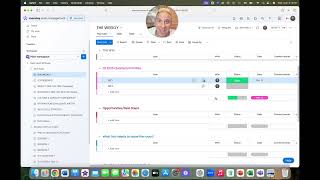
The most important meeting is called. We call it the weekly because that's literally what it is. It happens every week. It needs to happen at the the same time, at the same place. It needs to start on time, it needs to end on time, and it needs to be only 90 minutes. And this is the meeting that takes place with your executive leadership team once you get this rhythm down. And we lay out the whole format of what the meeting needs to look like to be truly game changing. And we constantly hear from nonprofit Leaders, this is, these are the most not only exciting and thrilling, but productive meetings I've ever been in a part of my life. Eventually, you roll that out to all the departments within the organization. So I'm speaking to nonprofits of all sizes, right. Whether you have ten employees or a thousand employees or two thousand. So the weekly is the most important. Another key rhythm is every 90 days having a quarterly off site, one full day where you're reflecting on your past 90 days, you're planning out your next 90 days, and then at the end of the year, you do a two day off site, we call it the yearly, and you're reflecting on your entire past year, and you're planning out your entire next year at the highest levels. Right. And in my experience, most nonprofits are not doing this quarterly off site. And what that means is we're spending so much time working in our organizations that we're not actually working on them. And so we are constantly reacting, as you said earlier, to what we would call the tyranny of the fierce urgency of now. And this is about elevating, all right, and getting to a place of truly developing a healthy organization. And these meetings are not negotiable. They're essential. But as I say this, some listeners are still just not understanding how this is going to be exciting. And it is one of those things you really just don't know until you know. And you, once you start putting it into practice again, you'll get to a place where you say, how? How did we ever not do this right? And all of a sudden people start showing up to meetings early. And you, if you try to force people to come to a meeting, you're still going to have a posture of which nobody's going to have a good time. But if you create a meeting that everyone realizes is extremely worthwhile and valuable, guess what? Everybody's not only going to be there, they're going to bring their entire selves to that meeting and you are going to elevate to levels you didn't even know you were capable of.
Yeah, I can see how those well planned conversations can really make a big difference, you know, in nonprofit performance and outcomes and alignment. All right, I have one more question for you. So let's talk about the thing that is on almost everyone's minds in the nonprofit world. There's never enough time, there's never enough money, there's never enough staff. So how can a leader of a small organization that is strapped for resources navigate the challenges that they face? And how could they implement Some of these things that you've mentioned, if they're.
A small team, we can start wherever we are. And so, for instance, if you take the two page strategic planning process that I mentioned, it's one thing to do that just by yourself. If you're starting off a nonprofit, you're all alone. It's another thing to do that with a team of 3 and 5 and 10. The important thing is do it now. Whatever stage that you're at, get it on paper. Because one of the things you're doing is you're building the muscle of prediction. Every time you work on that muscle of prediction, you are then evaluating the outcomes and you're getting smarter and you're getting better. Whatever size your team is right now, bring them together to create this process together so that everyone is owning it and they're going to own these successes and they're going to own the failures. And in the process, you're going to get smarter. Along the way, you're going to start applying the culture and capacity assessment today and make sure you have the right people in the right seats. And if you don't start having candid conversations right now, really, everything that I'm talking about doesn't cost money. It does take time. But here's what I want everyone to realize. The time you will spend working on your organization will be far shorter than the time you will spend reacting and putting out fires. Like you said earlier, Kira, if you don't do this work, and I want to give you the confidence as well, but I want you to know from experience, our organization started off messy, rocky. We were all over the place for four years. And then we created and implemented this system. And over the next eight years, we ended up mobilizing over $43 million of investment into Detroit neighborhoods. We mobilized over 77,000 volunteers, renovated four schools in Detroit, and we now coach organizations to this kind of growth to this day. It doesn't happen overnight. It takes intentionality. You can do it.
Thank you. Thank you so much, Chris. This was so, so very insightful. If someone wanted to learn more about how to become a next level nonprofit, where should they go to get more information?
Well, my book is available on Amazon and everywhere audiobooks can be found. And then Our website is nlncoaching.org okay, great.
I have it on Kindle and a paperback copy so they are well loved in my house. We'll be sure to link those in the show notes for anyone listening today looking for more information. So thank you again, Chris. These are all practical actions that can certainly really increase that lasting impact for so many organizations.
Thank you.
And thank you to our listeners for choosing to spend your time today with the nonprofit podcast. I hope you've left with the confidence to take a small step today that will make a big difference tomorrow. Be sure to click the download button on your podcast player. Then leave the nonprofit Podcast a review or give it a thumbs up if you're listening. Listening to the NonProfit podcast on YouTube, your review really is a great way to help others find us. You're here to help others. We're here to help you. So until next time, stay inspired.
That warm feeling when you help someone, it's not just happiness, it's fulfillment. And we believe it should be available to everyone. From frontline heroes to first time fundraisers. Our tools empower you to help others. This is our mission. This is DonorBox, helping you help others.