Spiritual Sobriety w/ Chris Lambert
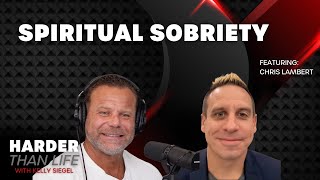
Kelly Siegel talks with Chris Lambert about his spiritual awakening and nonprofit work with Life Remodeled in Detroit. Lambert discusses his book Next Level Nonprofit and how faith and practical business principles shape his approach to leadership and social impact.
I'm Kelly Siegel and this is Harder than Life, a podcast about self love, self awareness, business and health. We tell outrageous stories and boil everything down to simple, practical advice you can start using today. Let's get living. If I've said it once, I've said it a thousand times. There are no coincidences in this lifetime. People come into your life for a lifetime, a reason, or a season. I know. Today's guest, Chris Lambert, is in mind for a lifetime. We were social media friends and that didn't get us talking. So God put us together at the Children's Foundation Kentucky Derby party and we instantly connected. If you're watching this on YouTube, you can see how handsome he is. But he's even more precious on the inside. His story is bananas. And today we're going to go deep dive into it and share with you the Harder Than Life listeners. Great. Grateful to have you on the show, Chris. Sorry for the crazy intro.
You're awesome, man. It's a pleasure to be with you, bro.
Man, Chris, when I met you, literally we just went deep. And. And I want to manifest that today as well. I wish we kind of had that little crosshair where we didn't have you in studio. You are a local Michigan guy, but we're gonna, we're gonna burn this place down today. So, Chris, what's your story and why does your story matter?
All right. I was born and raised in a very small town in northern Indiana. And when I say small town, I mean we didn't have a four way stoplight until I was in middle school. And when it came to kind of faith and spirituality, what you're going to find is, as you already know, Kelly is a pretty big thread in my life. My parents would take my sister and I to church maybe once a month because they thought it was the right thing to do. But I can't ever recall them talking about God in the home. For whatever reason, I was this really spiritual kid. So much so that in eighth grade, other classmates called me Lambert. That's my last name, Lambert the Jesus freak. Because I was the kid who was trying to convert everybody to Christianity. I wasn't very successful at it, but shortly before I turned 16, I hit a growth spurt. And that growth spurt didn't last as long as I hope it would either. But I kind of became a little bit of a big fish in a small pond when it came to sports. My high school actually was a pretty decent size because three different cities all went to the same school. But I started looking around at my buddies who were not following God. And I started to think to myself, wow, they're having a lot more fun in life than me and my dorky little youth group. So I said goodbye, Jesus, ran away as fast and as hard as I could. And basically, for six years of my life, from the ages of 16 to 22, I did whatever I thought was going to bring me the most joy or satisfaction or happiness. And so for me, that meant a lot of drugs, alcohol, women, parties, all that stuff. And I went to Indiana University, studied business. My plan was to then go to law school and become a real estate developer so that I could make a ton of money, because that's what I thought that I wanted and needed to live the lifestyle that was going to bring me that joy and happiness I was seeking. And while I was at Indiana University, I also joined the largest fraternity on the campus so I could have more of all the stuff that I was looking for. Well, there'd be nights when I'd lay in bed and think to myself, wow, this just isn't doing for me what I thought that it would do for me. So my solution to my perceived problem was just to double down on all the activities I mentioned earlier. Right? I mean, go figure.
Well, brilliant.
It sounded so much better at the time than when I say it out loud now. But my junior year, I moved to Australia for six months to study overseas. And while I was there, I experienced what I would call a radical encounter with God that changed the entire trajectory of my life. So a few things happened in Australia. One, I was traveling around in various countries in, let's see, the Pacific Rim, Southeast Asia, and of course, Australia. And I began to realize the world was a very big place. It did not revolve, it does not revolve around me. And at the time, my 22 year old ego. And that was very eye opening for me. I also met a couple guys over there who became my closest friends. They happen to be what I would call Jesus followers. I don't call myself a Christian. We can go there if you want to, you know, go there on the show. But they were pretty fun guys. They could go out to a bar, have a few drinks, go home. Meanwhile, I'd stay out doing the things they weren't doing. And they kept trying to convince me to come to their church service. And I was like, no, dude, that's not happening. There's, there's no chance of that. I didn't come to Australia to meet with God. And they wouldn't stop. And they Were convincing enough to get me to go. I went to this little Anglican church Where the pastor wore skateboarding shoes and skateboarding shorts. I thought that was a little odd, and it was an okay service. I ended up going back a second time and a third time. And the third time that I went, this pastor got on the stage. He told this story that in many ways outlined my life to a t. And as he was wrapping it up, I experienced hearing God speak to me for the first time in my life. And it wasn't an audible voice, but I would say it was more clear than anything I've ever heard another human being say to me. And that was a climatic experience for me that led to some pretty drastic changes coming right out of that. And so, you know, I'll say the biggest change that was very immediate Was I stopped using drugs and I stopped getting wasted. I still like to, you know, drink a glass of bourbon and have a cigar and whatnot. But, hell, yeah, it wasn't what I stopped doing that really inspired me the most. It was what started happening. And prior to this experience, I loved my parents, my sister, my friends, the girl that I thought I was gonna marry at the time. But, you know, frankly, I didn't give a about the rest of the world around me. I was paying no attention to other people outside of my little bubble, right? And I wasn't a bully, I wasn't antagonizing people, But I was just not paying any attention. Immediately after this experience, I began to be filled, what I would call maybe this radical sense of curiosity, where people that I would meet, I'd want to connect with them, find out who they are, what makes them tick, what's going on in their lives. And I just started to care a lot more about people. So I moved back to Indiana University for my senior year of school. Before I left iu, there wasn't a single Jesus follower or Christian in this entire fraternity of 180 guys before I got back. And this had nothing to do with me. My three best friends in the frat had also had these radical encounters with God, plus my drug dealer. When I got back, we got this Bible study going. We started leading all these dudes in the fraternity to Jesus. And after about a month, we had 12 to 15 guys coming every week. One week, we had over 35 guys, and I started thinking about my future, and I realized I don't want to go to law school and become a real estate developer. That's just about me trying to make a bunch of money and prove myself to myself and, and to others. I just want to help people connect with God. And so I felt like God was calling me to be a pastor. I canceled law school, moved out to California to study at this seminary out there in la. Met the woman who became my wife. We eventually felt called to come to Detroit and start a church. Before that, we moved to Africa for nine months, lived in a mud hut most of that time in, in a country called Liberia. Came back, started a church just outside the city of Detroit in 2007. And then God gave me this vision to start a nonprofit called life remodeled in 2010. And I thought I was just going to keep planting churches and get this nonprofit up and running, handed off to somebody, but it ended up turning into a very clear calling that was, was really the, the most significant reason I believe that I was here on this earth to do this work. And before I tell you what the organization does, it's called Life Remodeled, I like to say why we exist. Why Life Remodeled exists is because we're absolutely convinced Detroiters have all the talent they need, but many don't have access to all the opportunities they deserve. And so what Life Remodeled does is we repurpose large vacant school buildings in Detroit and we turn them into one stop hubs of opportunity for entire families to thrive. Where we fill these buildings with the best and brightest non profits who are moving the needle in three areas. Youth programs, jobs, and health and human services. And then we help these organizations collaborate to make far greater impact alone. So there's a little thumbnail sketch of my story, but obviously there's a little more.
Okay, microphone drop. There's so many nuggets in there at the. I. Wait, what? The first question I have is you converted your drug dealer.
You know, he had this experience before I even came back. That was what was so crazy about this story. And by the way, he was an atheist before I left. And I remember one night when we were both using substances and I actually tried to talk to him about God for a minute and he stiff armed me and he put me down pretty hard. But anyway, this all happened while I was gone. It was just this crazy set of circumstances like you said. God bringing people together for purposes, for reasons that we don't even know until they manifest.
What was the. I'm sorry, I'm laughing because my producer's laughing. He's got me dying. What was the. What was drug. What drugs were you taking that night?
That night that I ended up becoming a Jesus?
No, that you were trying to talk to that you were trying to talk to your drug dealer about. I don't know why it's so funny, because the other way happens all the time. We convert people to drugs all the time. But. But then you convert your drug. Do you remember?
Yeah, well, I was just using weed that. Okay, yeah, hardcore, I mean, opium every now and then and.
But you know, that's when you get deep because you're. You're one with your mind. It slows everything down. So I. Before I start asking the rapid fire, all those questions of the deepness that you just went and that. That opening 10 minute monologue, which was fantastic. Thank you. I suggest everybody head over and follow Chris on all the socials because of what he mentioned of doing the life Remodeled and then his recent book launch of Next Level Nonprofit, which is a perfect segue. I want to ask you what the book is all about and why did you write it? But I still. I got a couple of quick questions from the, from the opening that I'm going to digress from. What fraternity were you in? I was in. I was in Sammy. Sigma Alpha Mu. What were you in?
This fraternity is the only Greek fraternity that didn't have Greek letters. It's called Acacia. It's not very large nationally at iu at the time, it was the largest fraternity. Two years after I left, it got kicked off for cocaine and guns and whatever else, you know, went along with that. And then it doesn't exist to this day there at iu.
So this is why we get along fine. Because I did the same thing at Western Michigan University. And I tell you, when you told me that you had that spiritual awakening, we're going to deep dive into that next. I believe you. I mean, I was written you right in the face and not for one second that I go, oh, this guy's weird. I could feel it emanating off of you. So that's why I asked you to be on the podcast. And I'm super excited to deep dive into that. But before we get into the book, I want to understand you use the term Jesus follower. Sorry. I keep looking at my notes here, and you said specifically, I'm not a Christian. Tell the listeners about what. What's that all about?
So we could do a whole show just on this. But I won't do that. I'll just try to get, you know, right to it. I think when people use the word Christian in the United States of America, it can mean a lot of different things. And in a lot of circles, it means that you're of a certain political mindset, or you have certain constrictive beliefs about this moral choice or that moral choice. And for me, I'm not looking to associate with one political ideology or the other. I am a Jesus follower, and my whole life is committed to not only, you know, believing in his life, death, burial, and resurrection, but the ways that he lived his life. And I think that he spent the majority of his public ministry, I guess you would call it, with people who were the most marginalized and oppressed. And I believe that was such a big part of who he is and his message, and that's a lot of what he's calling his followers to do. And in my experience, in a lot of church settings, there's two extremes. Either people who only talk about Jesus and they don't really do much of anything in society to make society a better place, or. Or to help people who are struggling and living in poverty, or people who do a lot of good in society but don't really talk a lot about Jesus. And so, you know, I. I believe Jesus led with very dramatic action, and he also had some pretty powerful words to say as well. So I just really. I'm about focusing that conversation on Jesus rather than a certain brand of Christianity.
I'm going to take it a step further. I don't believe that you focus on Jesus. You're just doing the right thing, and Jesus did the right thing. And you find it so curious. I find you so curious because I'm not a Jesus follower. I'm Jewish. But I believe you and I respect your views and I love your views. And like I said to you, I want to go back to what you guys are doing at these searches, and I want to double down on my commitment. I don't think you thought I was serious, but as what sponsors this, the Harder Than Life podcast is my national technology management IT company. And we want to be a part of donating any technology that we can to help you with these centers. So certain things we can donate 100%. Certain things we can discount. But you have my commitment on the air on episode 42 of the Harder Life show that we. That Harder Than Life Kelly Siegel and the whole entire national technology management family has your back. So the next center that you guys do invite us in, we'll light up the WI fi cameras if needed, access control to keep people safe and get the infrastructure for. For technology to exist as low as we possibly can to. For our giving to. To your Jesus followers. And, you know, this is how the world's supposed to be. We're, we're all one people.
Thank you, bro. This is very timely since you and I last spoke. We actually bought another school building on the east side of Detroit. I do want to clarify. Life Remodeled is very intentionally not a religious organization. We have people from all different walks of life, right. No particular religious faith or you know, you name it under the sun. And I'm all about. We're here on this earth to love one another, to work together no matter what our beliefs are on politics, religion, morality, you name it. And I think we're cut from the same cloth in that regard, man.
Absolutely. And I was just making fun. I was really poking and highlighting the fact that people from different backgrounds, ethnicities, walks of faith, religious, we all can get along. We will be happy though. The one universal truth I will tell you is go back to what you said of taking your six year debauchery. It's never the answer, you know. And I will tell you this is reigns supreme for my life. The further what you resist, persists and whatever you run from God will find you. And that's. I believe you say God, you want to see Jesus, you want to see the Creator, the higher power, the, the source. Ultimately, if you continue down the path of debauchery, you'll pay with your life. And, and, and what I say is take a page out of Chris and my book and live your life, man. We only have one life to live, so way to go. Only taking six years and boy does that reign supreme. Everything you said there hit home for me. You didn't give a. About. I didn't give a. About anything but the next party. So if you're listening to this and, and, and you're maybe in the thralls of that man, you know, look no further than, than your higher power, whatever that may be. As you heard from Chris and me, let's jump into this, into the book. My friend. You, when we met, you were just about to launch at Next Level Profit. What's the book all about and why'd you write it?
So Next Level non profit. I, I like to start with the why of why I wrote it. I am absolutely convinced that the people that nonprofit organizations serve deserve the highest level of excellence we can possibly give them. And that's what this book does. It's a step by step guide for operational excellence. And some of the other reasons I wrote it is, are because I told you about life remodeled and how our organization, well, where our organization is at today and we've grown very, very quickly. And over the years, people have asked me two questions more times than I can count. Number one, how in the world did life remodel grow so fast and increase so much impact so quickly? And the second question is, how did you build such a dynamic team? And this book answers those questions. This book uses life remodeled and our failures and our successes as examples and a footprint. But there's very concrete tools in here so that organizations anywhere in the country can take this book immediately and start implementing these principles to obtain the ability to build a dream team and increase lasting impact. And so there's four. Yeah, go ahead.
I just want to jump in because you're being so humble. The reason, other reason I resonate to you is we run. If you read the Heart of the Life book, we run eos. So entrepreneurial Operating System. So what you are, and correct me if I'm wrong, but what you are providing is the blueprint for a nonprofit. So the blueprint EOS provides is for for profit companies. If you follow it, you will increase profit. What you're doing is akin to eos, where you are providing a blueprint for nonprofits to be successful. Is that what this is?
I am a huge believer in EOs. Gino Wickman, who is the author of Traction, the founder of eos, he's a friend of mine and, and he loves this book and he loves next level nonprofit and what it means for the nonprofit field. And so there are a lot of similarities with some of the same business principles that you'll find in eos. And one of the things I found in the nonprofit world is there's a bit of stiff arming by a lot of nonprofit leaders when it comes to applying business principles to or business books. A lot of nonprofits are led by incredible people with tremendous passion who may not have any experience in the for profit world. And so there's this stiff arming where sometimes nonprofit leaders say, oh, businesses are just about exploitation and, and making money. And that's not what we're about. Right. But when you think of the word organization, within the word organization is the word organized. And so I believe that the word nonprofit should never be an excuse for mediocrity. And in many ways, I'm not calling nonprofits to be like businesses. I'm calling them to be even better. One of the things that nonprofits have that many businesses have not yet discovered is nonprofits have discovered our, our, why, our, our purpose. That, that's, that's, that's bigger than, you know, financial resources or fundraising. But many businesses are discovering that now as well, which is a very powerful thing to do. But non profits need to run just as well as great businesses, if not better.
Ah, you're, you're lovely. I, I, I couldn't agree more. I, I, having owned my business for over 20 years, it starts, it starts with the top down. And, and I don't, I've never run a nonprofit, but we donate a lot to nonprofits and we work with a lot of nonprofits. I think that that's probably you're shining light on a little known fact that nonprofits operate a lot like a business. And I think just because they say they're a non profit that they think that they should be different and they're not. It's one of those finally hidden ideas that you're making that you're shedding light on. And I, I think it's going to grow rapidly when there's, when there's thought leaders in the nonprofit space like you and like our friend at the Children's foundation who was on this show, by the way, and shameless Plug, will you. Gino said I had to get 50 episodes on before we'd come on. So you're 42, so eight more episodes. You have to give him a plug. But I love what you're doing and we're gonna help and I want to learn more. And I'm sorry, usually I have the book read before you come on, but this was supposed to be a meeting and it turned out to be a podcast and I love it. So everything happens the way it's supposed to because we're going to dive right in and help. I want to go back and talk about the spiritual awaken that happened your junior year in college and what you did with it, because that's, that has happened. I will, I don't never said this on the air that I had that several times and I ignored it several times. And mine were near death experiences where I knew that something was talking to me saying, siegel, you got to make a change. I just did a post this morning where I was at a Kenny Chesney concert. I had rented a suite and somebody took a picture of me from behind and I was leaning over and I remember this like it was just, it was 10 years ago, Chris, and I was contemplating life and saying that I believe God was talking to me right then and there saying that you are on the wrong path, Mr. Siegel, and you have got to change your ways. And I went on for five more years going down the wrong path. And it was one of those eye opening moments. I've been shot at, I've been run over by cars. I've been, I've almost gotten killed by a car. And these were times where the naughty water was present. And this was God saying to me, hey, Siegel, I'm not going to kill you because you got to do some amazing things here, get your head out of your bottom. And so I want to really deep dive in that because somebody's listening to this right now saying, there's more for the, for me in this world. And so talk about that, Chris, because, I mean, when you told me, I was just, you saw my. We were smoking cigars. We're at the charity event, the Children's foundation charity event, which were avid supporters of them as well. We do all the technology for them, and if you get a chance to go to one of their parties and support them, please do so. So tell me, tell us more about that. That's, it's fascinating to me.
Well, you know, back to your comment about these experiences where you now look back and, you know, God was speaking to you, but maybe you weren't as aware of it at the time. I actually believe that God is speaking to us and really all of us, frequently, maybe even every day. And one of the things I compare it to is, you know, no matter where any of our listeners are right now, radio waves are going through the room that you're present in or wherever you're standing, playing songs that you have no idea about. Everything on the Internet is literally passing through your body at this moment. And all of these signals are happening that we can't tune into unless we have the right device, right. The right radio frequency, the right WI fi connection, right, you know, device on our phone, whatever. And I believe it's very similar with God that he is often speaking to us through life experiences, through other people, through nature. And certainly I would believe through this, you know, love letter that he wrote us that I would call the Bible. And we just often aren't paying attention or tuned into it or willing to listen to what he's saying. And so for me, that radical change happened, not just when I listened, but when I took action. So, you know, what I didn't talk about is what I heard God say to me. And for some of our listeners, and maybe even, you know, Siegel, for you, this is going to sound really weird. I think I might have told you when we were smoking that cigar, but what I heard him say to me was that I was like lukewarm water. I wasn't Hot or cold, and he was about to spit me out of his mouth. Now, some of our listeners are going to recall that comes from the last book of this love letter that I talked about in the book of Revelation, right? The last book in the New Testament in the Bible. And that was a specific cultural analogy of something God said 2,000 years ago. That wasn't something that I read in the Bible that particular day or that the pastor said. I, I know that I read that at some point when I was a kid. What that did for me is it spiritually sobered me for a few seconds where I wasn't on any drugs or alcohol this particular moment. But I would say if there was ever a time in my life I was spiritually sober, it was for this little window of time. And I began to see this highlight reel, or really, actually probably a lowlight reel of my life. Over the last six years of my life, these instances just popped up where I realized that God basically let me do everything that I wanted to do. He didn't get in my way. He didn't mess up my plans, right? So, you know, I, I dealt drugs for a very short period of time. I wasn't really a drug dealer because I, I, I did wake up and realize that wasn't going to be a very wise path for me. But I didn't go to jail then, and I didn't go to jail, you know, for being publicly intoxicated or driving around with various drugs in my vehicle or whatnot. And, you know, sometimes God does allow that path for people, but he didn't send me down that path. And it just became so clear as I was viewing this highlight reel in my mind or in my soul that at no point during those last six years had I ever been as happy or as satisfied as I was when I was Lambert the Jesus freak. And it was such a clear, you know, epiphany of, dude, this was the whole point of this journey, right? And, you know, like, like I said earlier at the time, the. This journey sounded a lot, you know, more intelligent than when I play it back. But I think in many ways, bro, all of us are children all of our lives. I mean, I don't know how old you are, Siegel. I'm 43. I'm still a kid, right? And, and I like that because I have a father. And it's, for me, that's why I'm not really about religion. I'm about a relationship. I have a father in heaven, our creator, who I talk with, who he talks to. Me, he's leading me, he's guiding me. I mess up all the time, bro. I get in the way of hearing his voice every day. I'm on, you know, I said to you, I think when we talked, I'm on a journey. But, but you like the word quest even better.
Crusade, I think, is what.
Crusade. Yeah. I say I'm gonna stay away from that word because the whole, you know, Christian crusade, that there's one of the reasons I don't call myself a Christian. Right. The years of the Crusades hundreds of years ago, which were just an atrocity. But look, the word is still a good word. But I'm on a quest, right? And it's, it's lifelong.
I got to tell you, you're boiling hot water and the lid is fluttering and it's going to blow off. So there's that. And I love you. I'm so grateful that I met you.
What you just, I don't know. This is kind of dangerous, putting us both on air. Maybe that's why God didn't have me in the same room.
The building be on fire. Oh, I'm going to come because now you have to call me because I got to go tour this building you bought and we're going see what we can do to, to do it. So I got to get started on that. What you just, I want to run back what you just said. This is completely off script. But when it was pl. When you had your spiritual awakening and you were playing the low lives, and then God let you do what you're, what you wanted, but he was right there the whole time because every time that mine, my bad things happen where I could have been dead or injured and I wasn't. So I, I would go back to the post that I put in this morning where I was looking out over the crowd and, and that's what I was going through. I just come out of another toxic relationship that had everything to do with booze. And I just was going through the low lives, the, the low lights of my life. And now, five years after my change, I, I, I can't think of any. I get mad at myself when I even get down because it's like people would trade their problems for me straight for mine, straight up. Right now I don't have problems, but yet the six inches between my ears will create it. So I go back to gratitude. I look to God and I look to, to today and be present. And it's an everyday battle. So from the TEDx stage to coveted lists like cranes 40 under 40 building design plus construction, 40 under 40 and smart business dealmaker of the year. Chris's reputation precedes him, but it's his journey ahead and the people he's asked to help lead the way that excites him most. What's next after you finish flying three times around the world? Chris.
So Life Remodeled is, is going to keep expanding in Detroit when it comes to repurposing these large vacant school buildings. The one we've just acquired is the old Dominican Catholic Girls high school on 94 in Whittier. I don't know if that school rings a bell.
It does. Well, that's a interesting neighborhood.
Very interesting. That has some pretty significant gaps when it comes to opportunities. And so the work that we're going to do there, it's going to be transformative with a capital T. And then we're going to expand this work to other cities around the country. When it comes to this book, Next level Nonprofit, I get so excited about it personally because the work I'm doing in Life Model Remodeled here in Detroit is significant. But this book is exponential because every organization around the country and maybe even around the world, it actually made it to Kenya last month and it was in the Virgin Islands a week ago before that. Every organization that implements this model is going to serve not only more people, but they're going to serve them more effectively. And so I won't even know the full impact of this book, the side of Eternity, but I, I know that I'm going to do everything I can to help get it in the hands of as many people as possible. And so anyone listening today who's leading a non profit or thinking about starting a non profit, this book is obviously for you, but also anyone who's listening today who sits on a board as a non profit leader or maybe you just donate money to a cause that you're really passionate about and you believe that that organization could serve more people and serve them more effectively. Which by the way, is true of every nonprofit on the planet. This system is absolutely game changing. Life Remodeled wouldn't be anywhere near where we are today in impact if it wasn't for implementing these tools. And so I'm going to double down, I'm going to triple down on next level nonprofit. And you know, Siegel put me on the show to talk about means a lot because I know there are listeners right now who are considering checking out this book on Amazon that otherwise wouldn't have.
I was just gonna ask you. We're 32 minutes into this. I Like where can we get the book? So I, I'll make sure that we put a link to the book in the show notes guys. So please order it. You're. Even if you're, you know, you're just, it's, it's for good cause. So do you have. Because I'll probably see in the next day or two. Do you have copies with you? I do. All right, I want to grab one, I'll buy it, but I just, I want to get it in my hands. I'm going to be in LA and I want to, I want to read it. So this is a very interesting segue. Some, some think we're in a recession. But what emerging trends are you seeing in the non profit space, especially with AI, emerging technologies and the big companies laying off people? What are you seeing in the next 12 months in the, in your space?
Well, you know, you mentioned AI. I'm personally very excited about AI while also being sober about the potential harm and exploitation that can come from AI. And usually the nonprofit sector is about 20 to 30 years behind the for profit sector, but I'm actually seeing many in the nonprofit sector starting to pay a lot of attention to AI and, and kind of be on the, the front end of at least some of the research and, and playing with some various tools. So, so that excites me. I think what I've seen come out of the pandemic and become an even more difficult problem than it was before. The pandemic is attracting, retaining and developing top tier talent. And the nonprofit world already struggle with that enough. Because look, the A players, the rock stars, we call them reindeer. I'll tell you why in a minute. Most of them want to go to the for profit world and kill it and make a lot of money. And there's nothing wrong with that. I mean, good for those of you who are killing it in the for profit world, but that means in the nonprofit world, we're counting on Mother Teresa's and there aren't enough Mother Teresa's in the world. And so for those of us who are leading these initiatives, one of the things you'll see in my book is that who is always more important than how? Getting the right people in the right seats and creating a unified team of one of what we call reindeer is way more important than figuring out how to solve issues. Because if you get the right people in the right seats, they are going to come up with the best house time in and time out. They are going to ensure that your organization achieves far more than it ever could without them. Right. And so that's the foundation of our entire model. But recruiting and retaining and developing reindeer is extremely challenging. And I'll tell you why we call them reindeer. So, you know, I'm sure, Siegel, you've heard people talk about when they're looking to invest in a startup company, if they're really impressed, they might call them a unicorn. Or even in scenarios where we're trying to hire someone for a position, sometimes we create these elaborate job descriptions and we say to ourselves, oh, wow, well, we're looking for a unicorn. And when we say that, sometimes in the nonprofit world, we think to ourselves, either one, this person doesn't exist, or two, if they do exist, they're going to be so impressive they're never going to want to come work for my organization. Well, we all know unicorns don't exist, but I'm going to be honest with you, I didn't believe that reindeer existed. Well, I, I believed in reindeer up until I was five years old. And then I discovered Santa wasn't real. And then at that moment, I stopped believing in reindeer because I thought, you know, they were just associated with Santa and Rudolph and Dixon and Blitzen and blah blah, blah. Until I became a teenager, I discovered that reindeer were actually real creatures. And if you study them, they're, they're almost magical. You know, they're, they're absolutely amazing. Well, anyway, unicorns don't exist, but reindeer do. And when I say that we're looking for reindeer for organizations, I mean we're looking for the A players, the top 10% in the field who are willing to accept a job like what you're offering. And attracting them is, is difficult enough. But once reindeer join an organization, there's no guarantee they're going to stay because every other non profit wants your reindeer. And one of the things that I found is that reindeer don't want to work on teams that are filled with non reindeer. So rock stars don't want to work with B players, A players don't want to work with B players and C players. And in the non profit world, I'm going to tell you from experience, we put up with people challenges far more than the for profit world does. And now we're in an environment post pandemic where we're so concerned about how difficult it is to recruit top level talent. We put up with people issues even more than we did before. And by keeping the wrong people in the wrong seats, we are not only harming those people that we keep around, they leak Toxicity to the rest of the entire organization. Now here's where it gets really messy is the people that we serve therefore are not getting the highest level of excellence we can give them. So everybody suffers, man. So this concept of right people, right seats, it's at the heart of our whole model. But, but there's more to the model than that. But that's the foundation.
You're a unicorn.
Yeah, reindeer. I'm a reindeer.
This went deep. And I believe in the magic and everything you're saying. I mean, it's just, it's. There are no coincidences. I, you know, we run eos at National Technology Management and. Right seat. Right. But culture. Next man up. Next person up. I always say impossible only describes a degree of difficulty. And we put in one of our core values as family. And we were told that that family only goes so far. But it's just so important to me. So our culture is strong and I'm, I am loving this conversation and I'm loving you and I want to learn, I want the listeners to know more about you. So we're going to, we're going to kind of switch. First of all, everybody go out and get the book Next level nonprofit. Follow Chris on his socials. They'll be in, in the show notes. Do whatever you can to get involved because I'll tell you what, people's, your purpose will fuel you a lot further than money. I can tell you that right now. I, since I've made my change, my purpose is huge and I've made a lot of money over the years and I've never been as satisfied as I am now. So I'm going to flip to you personally, Chris. So I'm going to put you on the hot seat. What's your biggest fear?
One of the ways I've described it is being successful at that which I'm not called to. And so I'm very, very intentional about how I use my time. And I also realize that because of my finite limitations, I can easily get off track. And I love that core value you had earlier about impossible only defines the degree of difficulty. I don't think I've ever heard it said that way. I really like that we have a core value called always find a way. Well, that can be a double edged sword. Right. And for years of my life I kicked down doors for the adrenaline sake of it, you know, because I liked a challenge and I liked that I could find a way and conquer it. These days, you know, I'm a little, little wiser now. I'm more important about fighting the battles that I'm actually meant to fight and staying out of the ones that I'm not meant to get in. Right. And, and, and taking the hills I'm meant to take rather than just doing it for adrenaline's sake. And so that, that's a fear that, that drives me to be wiser.
How do you know the, the difference between the two? Which ones do you know that you need to take? Which, Because I, I, yeah, dude, you're like, you're my little brother and you're, you're my Jesus brother. So I, we're gonna do, we're gonna, we're gonna be forever friends, like I said in the opening. But how do you know the difference?
Let's go. I mean, there, there's a number of ways that I discern the difference and love that word has a different, you know, lens and framework that they use. I'm going to go back to the spiritual piece where I so believe in this reality of God speaking to us. I mean, I'll just real quick, you know, the person of Jesus, he said, I only do what I see my father doing. And that is a phrase that I try to live by. And so communicating with God, praying. Every morning, I start my day with prayer before I pick up my phone and look at a text or an email. But I, I'm addicted to this, this thing, man. I, I want to look at my texts and my emails and, and, and have something to do. And so I got to tell you, bro, it is really hard for me to pray. I'm super adhd. I, I, I am a workaholic. I struggle to define myself by who I am. I often define myself by what I do. So I have to put in some rhythms in my life to keep me accountable to even believing that, that prayer matters. And so, so much of the time, you know, we gotta act our way into feeling instead of feel our way into acting. And there's this discipline level, but I, once I get past the, okay, I need to do this, nine times out of 10, I actually get into the rhythm of like, whoa, all right, we're talking now. You know, there's something going on between, between God and me. I read that love letter I talked about, you know that, that book, the Bible, people relationships, surrounding yourself with people who you have asked to keep you accountable. And so we create this culture here, by the way. I just love that, you know, your culture and your company. Brene Brown and her experience. Only 10% of organizations she works with are operationalizing Their core values. Culture eats strategy for breakfast. You are crushing it. Largely because you know, your culture, you're creating your culture. A big part of the culture we create around here is being vulnerable, being transparent, being authentic. To set that tone, I have to be the one that demonstrates that one of our, you know, rules that I talk about in the book is never criticize another team member in public. Always do it in private. Constructive criticism, with the exception of the CEO or the CEO. So I ask our team members, I want you to call me out in public, not at a fundraiser when I'm on the stage and grab the mic and tell everyone what a terrible speech that was. But if you see me, you know, saying something that makes you feel a certain kind of way or a microaggression or macro aggression or whatever, call me in front of every. Call me out in front of everyone about it, right? One, that sets the tone that I'm serious about this authenticity and vulnerability. Two, it ensures that I'm actually going to have people around me that call me on my shit, right? And that is so important because I got issues, bro. I'm a work in progress. This organization is called Life Remodeled for a Reason. All of us are on this quest or on this journey or as you call, crusade, right? If we embrace it. And so getting people around me that can tell me the truth plays a huge role in helping me discern. Is this vision truly a healthy vision for this organization, or is this just me getting bored as an entrepreneur? Because I can get bored, right? And. And I can want to just do stuff to do stuff because I'm itching, you know, And I. And I gotta. I know I'm preaching to the choir here because. Because I. I got that vibe from you very quickly. Birds of a feather flock together when we were having that cigar. And. And I love you for that. And I also recognize in you that that's not always easy to carry those gifts around that you have. That's a great. And it takes discipline.
I receive all that. Thank you. I got to shout you out for that. Your beautiful hair. That's what I love, your hair. So if we're going to call somebody out about something, let's call you out of your hair. But you just talked to my jam right there. Brene Brown is. I've read all of her books. And since I've adopted her philosophy and being vulnerable. I mean, we talked about. I just met you and we talked about you. You looked me right now. I told me that you talked to God and you don't know where that's going to go. I believe you. Get what you need or get what you want when you're vulnerable, get what you need. Is, is, is, hey, Chris gonna be in my life or not? Is this dude Kelly gonna be in my life or not? You need people in your life that are there for forever and, and, and have your back. Get what you want. Would have been just, hey, tell me where we stand, you know, So I love the vulnerability. I think vulnerability is cool. Ever since I've adapted and I've got closer to my work family, I've got closer to my clients, I've got closer to people like you that I just met and, and, and as a man, we were taught and grow. Growing up, at least I was that. That's. Being vulnerable is a weakness. So I assure you it is not a weakness.
I will answer my first minute too, and say, you know, when, when I look at a guy like you who's just shredded, right? That shirt can't contain your biceps and your, your shoulders. You know, you are not the, the profile from an outward perspective of someone who is going to embrace vulnerability. But you and I have discovered, and Brene Brown taught us this, right? Vulnerability. Willing to be vulnerable is actually the greatest strength. Those among us who are truly operating in strength are embracing this posture of vulnerability. It's so much stronger. It requires so much more bravery than machoism. And I'm the man and I'm always right. And, you know, and, and you guys need me. I don't need you. You know, and I live so much of my life like that, buying into that, that BS that I was sold. And I sold that BS to others too, right? But I'm done. I'm done dealing that.
So winners do the right thing, losers do the thing everyone else is doing. So I will tell you, and I've just, just made this epiphany. So the reason why I am vulnerable isn't because it's cool, isn't because it gets results. It absolutely clears out and allows me to be emotion and release those emotions to allow good things into my life. So it's, it's the being available for good stuff. And the, the whole point of being vulnerable is releasing and being unavailable for negativity. I don't know if that made any sense, but it just had an epiphany and it freaking made sense to me, so I shared it.
That resonates with me 100%. And those other byproducts are too true as well. It does work better in leadership There. There. There are benefits to it beyond even your own personal experiences and feelings. But the good thing is, doing good does feel good. And I'm so grateful, because if it didn't feel good, then none of us would even want to do good, right?
You know what? I didn't talk about that, too. I wanted to answer the question. So I know that I'm doing right by the organization and right by God and right by me. Right by you. Because I feel it in my entire body. I embody it, and it starts in my heart. And if you ever see me walking around and you'll probably see me when we're walking through the building, I'll just tap my heart, and it's me centering myself, because I get so emotional nowadays, because I allow it, and I create space for it. And I do some really cool things. Like, next weekend, I'm going to be a chaperone at the Variety charity. I do it every year where I get to help walk on a fashion show Runway with a less fortunate person. And it's overwhelming to me, and. And I sit there and I tap my heart. And when we're doing good, you feel good, and you can do better. And so I. To answer that question, I just feel it all the way through my entire body, starting on my heart. If you were offered a mulligan in life, what would you do over.
Oh, boy.
There's a. I don't want this interview to end. You're so deep. I cannot wait to collaborate more with you and. And do more for. For everybody.
So much of my early career was spent around working on myself, you know, focus, building the organizations. I led very much based on my abilities and my skills, and I burnt through a lot of people. I was very high challenge and very low affirmation. I was really good at being like a, you know, a drill sergeant on pushing, pushing, pushing the next thing, the next thing, the next thing. And so everything that I led, we would go really far, really fast. But I burned out a whole lot of people in the process because I spent very little time affirming people, being vulnerable, people, nurturing. And therefore, I didn't build great teams, including yourself.
You burned out yourself, right? It was exhausting. It's much easier doing it this way, isn't it? I, I. You expend much less energy.
Well, there's an old African proverb, right, that if you want to go fast, go alone. If you want to go far, go together. And I've come to discover that and live by that. I wish it didn't take me so long to figure out how to build an amazing team by really realizing that there are so many people that are so much better than me at so many elements of what it means to create a great organization. I actually need them. They are incredibly valuable for who they are and what they do, not just what they do. Right. And so now I spend a lot more time developing amazing teams. And it's no mystery that we're accomplishing so much more than we ever did and we're having a lot more fun doing. Feels great to be on a kick ass team.
Much more meaningful.
Truly loves one another, man, and, and that we're operating in our sweet spots and we're killing it. We. We set very ambitious goals that we could have never achieved when we only limited ourselves to, to my limited abilities. Right. And man, I wish I could have figured that out a lot younger.
So what you're really saying is you wanted to surrender sooner? That's funny. I don't want to. I don't. You know, and it's personal development space. Everybody said they don't want to do anything over because it would. But I, I am the same as you. I wish I could have started this personal development sooner and understood that I don't know what I think. I know I don't.
And, and that's when people say things like, oh, I don't have any regrets and whatever. All the things that we did shaped us to who we are. No, I don't. I don't believe that. Right. I do have regrets. I don't live in shame. Right. Because guilt is hating what you've done. Shame is hating who you are. Right. And so I don't live in shame, but I do recognize where I have failed. And so I'm committed, bro. If I can help not only somebody younger than me, but somebody my age or somebody older, if I can be of assistance to them, I'm. I'm in.
I'm here to help.
I, I'm here to teach you through my failures and, and my successes and, and, and I, I got a whole lot I can learn from you, Siegel, and I got a whole lot I can learn from others. So, man, I embrace the 360 degree nature of learning and growing.
I'm so grateful that I get to do what I do and I get to do what I do, and I, I'm learning the audience. This is an instant classic. The, the one liners that both of us are throwing out. I, I'm. Thank you. Thank you. I'm. I'm just floored. You're bananas. If you could create one universal law that everyone had to follow, what would it be and why?
Oh, man, we're getting deep on you now.
Love.
Love everybody, including yourself. And I say that, and then I, I don't believe that even. Right. Because you can't force anybody to love anybody. So I guess I wouldn't want there to truly be that kind of universal requirement because then it wouldn't even be love. I guess I would frame that as a universal invitation that I, I would love to see it become more embraced, more prevalent. Bro, all of us want to love and be loved, but we are full of so many insecurities that create these, you know, roadblocks in our lives where we start labeling people and deciding who we're going to associate with, not associate with. But I just wish there was more of a universal invitation every day to love and to be loved.
I love you. And there's that in my bathroom every morning when I'm showering, a glass shower, and I look up and I'm on the wall. It's Ram Dass. Quote says, love everybody and tell the truth. So I love. So basically, that's combines our two universal laws, minus everybody should tell the truth. Yours is love everybody. Combine them together. That's why we're going to do some great things together. When you are down, what can you think of that makes you smile?
Why, my kids, my wife, and just being with them, man, the small things, right? And we have a lot of fun adventures together. But just being in the same room brings me so much joy, gets me out of a funk, reminds me who I am, you know, and who I want to be.
And as we're interviewing you, you're at your, your office and your youngest son is to your left. What is he doing right now?
So he's playing with our, our puppy, who is now our office dog that I, I bring in here. He's 11 years old, and I love that he's here in this room and that I can be myself and even use a few choice words around him that, that I explained to him later, you know, when that's appropriate, when that's not appropriate. Right. And I want to model for, for my boys the lessons that I've learned. And also that includes when I screw up and when I mess up, you know, modeling for them, apologizing. But I'm so proud of this young man here for who he is right now and who he's becoming. And he's going to be going to school In a couple of weeks. But every moment I can get to spend with them, I'm going to take it, man.
I'm proud of you and what you're paying forward. I mean, most people would have stayed on that six year hiatus and justified it, but not you. So you're a strong man and I want. What's your son's name that's there?
Judah?
Judo. Judo. Listen to this next question. Because it's. Huh.
Yeah, it's Judah.
Judah. Judah. It's. Listen to this next question, my friend. Define success for me.
Do you want to come define it? Judah, come on over here. Come on over here.
This makes up this. This is easily my most favorite part of Hard on Life podcast. 11 year old young Judah gonna tell us what success is. And I love this. Judah, tell us what success is.
Well, there's two ways. There's one success, success in your love when you like have like a fun job and have fun doing it. And then there's another success with money where you have a job that's like, okay, but you get paid a lot.
Judy, you're beautiful. Have. So he just said have fun and make money. Brilliant. Love it. Thank you for joining the Heart of the Life podcast. I love your hair. I, I think your hair might be cooler than dad's.
Yeah. And, and that's, you know, okay with me because I want to see these boys go above and beyond their father and they're on that path.
So to put you on the spot too. And this is the next question. I apologize. He's right there. Well, I met you, you were having. You're enjoying your one glass of bourbon. And my big epiphany changed when I decided to say no to it. We had a long talk about it. So I want to ask your. You a question. What's your association with alcohol?
I personally consume it in a way that I know I can be in control. I have a whole lot of friends that, that is their poison. And I think the bravest and wisest thing they can do is avoid it completely. And so I think that, you know, you got to know yourself, you got to know what your. What can get you, you know. Right. And so I'm proud of you, man, for making the choice that you've made. And if I ever get to a place in my life where that becomes a life controlling factor, it's done.
Yeah, I just, I like to ask everybody that. But keep to just reiterate that when we were there, we talked for had to be an hour and I, you know, we Ran Twitch several times at this party. So it was there about three hours. I think you had one, maybe two. I tell everybody two or less, you know, and it's funny because I could. I don't believe I was an alcoholic. I don't really. It does. It's irrelevant. I just choose not to have any. And I could have one, but I vibrate at such a. As you felt a high energy. Like, I don't want to dull that at all. And I feel so good that I don't want to take anything away. I just want to let God do its work and just energize through me so I can do what I do. I'm excited to ask you a question, ask you this question because I know your response is going to be fire. If you could have dinner with one person who is either passed on or alive, who would it be and why?
Well, obviously, you know, I'd say Jesus, right? But I've said that a number of times. So, you know, right now, being that you brought his name up earlier and I brought his name up earlier, yes. He's a friend, Gino Wickman. But I'd like to get to know him a whole lot more. He is one of my heroes. He has paved the way for me in so many ways with the creation of Life Remodeled and even to lead me down this path to create next level nonprofit. But he's doing a new venture now where he's helping entrepreneurs discover if they truly are entrepreneurs and if they are, what steps they need to take next. So I look up to this guy and I want to keep following in his footsteps in a lot of ways.
It's called the 10 Disciplines, and I'm joining it. And he and I are going to have some choice words because, you know, there's two things in me. I, I, you. Option A is you do what I want you to do. Option B is you. I make you. So I, I asked him to be on the podcast and he's the one that said, you gotta have 50 episodes. So I'm coming up on 50. And then I'm coming from for him and I'm going to join this group. And I told his partner, Rob Dubay, and I said, be careful what you wish for. I go, rob, you know me well. I'm coming there to disrupt and hold you guys. I'm sure you guys want me there because I'm a disruptor. So you. I'm joining a new group is starting in September, so if you want to join, it's, it's, it's affordable and, and I would love to do some everything I can with you.
You. So actually some of those sessions are going to take place right here in this building in the Dury Innovation Society, this old school building we've repurposed. So they're, they're going to hold a number of them here. Rob is also someone who's become very involved in life, remodeling our mission. So shout out to Rob Dube and who you are and what you're doing, brother.
I was just on his podcast that he was just. Yeah, we get talk about everything we just talked about. I, I was not available for the love and the kindness that Rob was trying to show me. Ten years ago we tried to do business together and I just, I was like you said, a bull in a china shop and just not available. I think I knew my ego walked in before I did and I just thought I knew everything. And it was fun to be on on his podcast and he's coming on this podcast and you know, years later. So I got it right. It took me a little longer. I am a thick headed but eventually I get it right. After some twists and turns, we're coming up against it. We're doing this for an hour. Is there anything I haven't asked you today that you feel compelled to share?
You know, I'd love to just share a little bit more about the book because we've talked about the foundation is who is greater than how. You know the right people in the right seats, finding reindeer, becoming one. But there's really four components to this system that I've created. And the first component is team unity. The second component is compelling vision. The third is right strategy, and the fourth is discipline execution. So I like to invite people to think of these as if they're a flywheel on a car. Every time you turn over that flywheel on your car, your vehicle is going to go faster and faster and faster. And organizationally speaking, think of those four components as a flywheel. And every time you turn over those four, your organization is going to go to the next level and the next level after that. So when it comes to compelling vision and right strategy, we teach people how to create a two page strategic plan, which is also what EOS does. And page one of our plan is answering the question, where are we going? Page two is how are we going to get there? And it's so critical to distill your strategic plan down to two pages so that everyone in the entire organization can truly understand exactly where we're going and exactly how we're going to get there. And then that fourth component brings it all together, right? That's the discipline, execution. Because no matter how compelling your vision is, or even if you have the right strategy, if we aren't committed to do the right things day in and day out and throughout the entire organization, then obviously we're never going to materialize our hopes and dreams. And so we've created this system that allows for everyone in the organization, no matter how big it is. I mean, you could be leading an organization of thousands of people. One of the organizations I coach is clear University. They're $15 million a year in revenue. And this model is bringing tremendous value to this university. And I coach organizations that are as small as only three executive team members on their leadership team. And they're seeing radical change and transformation. And so this model works in organizations of all sizes because it gets everyone to a place where they know exactly where they're going, how their quarterly priorities translate into the strategic plan. And then again, you get intentional about this culture and. And you commit that you're only going to hire people who are culturally aligned with your organization and have the capacity alignment as well. And so, again, I appreciate everything you've done to inspire people to check out the book. It's about to be on Audible. Probably by the end of September, it'll be released. Audible takes a little bit longer. It's already on Google, Spotify, and a number of other audiobook retailers. But it's on paperback and Kindle right now as we speak on Amazon.
Did you do the reading?
I did the reading, yep. You know, I actually do more reading through audiobook than, you know, having a physical book in front of me. And I always love it when authors read it themselves because I want to feel what they're feeling, what they were feeling when they wrote that. And you know what they really mean when they say it?
I did mine for the harder than life. And you can hear my voice crackle at certain times when. When I get in deep of my childhood wounds. And so it's often authenticity. We didn't talk much about that, but it kind of comes with a vulnerability. What, so you said something. We haven't even spoke about this. And I want to raise awareness. This. You do coaching. How can somebody reach out to you for coaching? And what. What does something like that cost? And how does that work out? Says, we talked about the book. Of course, the book. You can go get the book. And I read the book Traction, and it wasn't until I Hired a coach to come in quarterly and make us follow the rules to a T. We doubled our revenue since we've put an eos and it is more profitable revenue. So you can read the book all you want, but reach out to Chris and hire Chris no matter what the price. I can tell you right now, I, I, I, I, I've made, well, I, one deal, I sold one deal after we implemented eos and it paid for the whole year of what the coaching cost me. So I highly invest in coaching. So how does somebody hire you as a coach?
So our website is NLN Coaching. NLN stands for next level non profit. In the for profit world, the average cost for the services we're providing is $50,000 plus per year. We're doing it for only $15,000 and we only work with nonprofits. We're probably going to raise that to $20,000 next year. And the reason we're making it so affordable is because it's got to be accessible, right? Nonprofit leaders, they're just not going to fork out the dollars that you know, are common in the for profit world for these types of services because a lot of funders don't want to pay for what they would call overhead. Right? And so we make an offer you can't refuse because we are so committed to this model. We're not making profit off of this, but we make it work and it's, it's game changing. And so what we do, we actually, we have three coaches besides me right now who are even better than me. You know, I, I, I'm great at what I'm great at, but these coaches are even more skilled coaches than I am. And it's seven full day sessions throughout one year with your executive leadership team. So this is only for executive leadership teams. We teach you how to implement the system, get you set on the rhythms and we help you then roll it out or implement it throughout the entire organization.
I can tell you from experience, 20 plus years of being in technology, that if you are a nonprofit, we could come in as national Technology Management and audit and I can save you $15,000 to pay for Chris guaranteed. And it's usually just by streamlining processes. And we're so efficient and we're huge in cyber security. So you know, use the two shameless plug. But I, I just been doing this for a long time and I want to see everybody do it. I gotta, I'm gonna end it with one, one thing because I think it's, this is why we resonate. So I'm gonna tell you NTM's core values because it's it's almost their metaphors for what the your coaching program is tenacious, continuous improvement, honesty, integrity, family and results delivered. God deliver results in this world and that's what you you kept bringing it up. It's all about results.
Those are powerful.
I the only thing they let me do it that and make relationships because I'm great at that. So I really enjoyed this. This is going to be a classic. It's not going to air for a minute and I apologize. We may move some around. I love you but I meant what I said. I get back in town Monday night late. Let's, let's, let's schedule a walk through the new building and I'll help you in any way, shape or form. So with that I'm going to say please rate and share this podcast. So I do my best to comment to respond to all the comments on all social platforms. So if you want to see more of something or less of something, leave a comment. Each and every episode is sponsored by the aforementioned National Technology Management, the easiest and best IT company to do business with, delivering peace of mind with technology every day. Visit trustntm.com for more info. And until next week, be harder than life. Thank you for listening. Please rate and subscribe to Harder than Life. And let's take this to the next level. Get connected at the links below.
Right now as we speak on Amazon.
Did you do the reading?
I did the reading. Yep. You know, I actually do more reading through audiobook than, you know, having a physical book in front of me and I always love it when authors read it themselves because I want to feel what they're feeling, what they were feeling when they wrote that. And you know what they really mean when they say it.
I did mine for the heart of the life and you can hear my voice crackle at certain times when, when I get in deep of my childhood wounds and so it's often authenticity. We didn't talk much about that, but it kind of comes with a vulnerability. What so you said something. We haven't even spoke about this and I want to raise awareness this you do coaching. How can somebody reach out to you for coaching? And what, what does something like that cost and how does that work out? Says we talked about the book. Of course the book. You can go get the book. And I read the book Traction. And it wasn't until I hired a coach to come in quarterly and make us follow the rules to a T, we doubled our revenue since we've put an eos and it is more profitable revenue. So you can read the book all you want, but reach out to Chris and hire Chris no matter what the price. I can tell you right now, I, I, I, I, I've made well one deal, I sold one deal after we implemented eos and it paid for the whole year of what the coaching cost me. So I highly invest in coaching. So how does somebody hire you as a coach?
So our website is NLN coaching.org NLN stands for Next level nonprofit. In the for profit world the average cost for the services we're providing is $50,000 plus per year. We're doing it for only $15,000 and we only work with nonprofits. We're probably going to raise that to $20,000 next year. And the reason we're making it so affordable is because it's got to be accessible, right? Nonprofit leaders, they're just not going to fork out the dollars that you know are common in the for profit world for these types of services because a lot of funders don't want to pay for what they would call overhead. Right. And so we make an offer you can't refuse because we are so committed to this model. We're not making profit off of this but we make it work and it's, it's game changing. And so what we do, we actually, we have three coaches besides me right now who are even better than me. You know, I, I'm great at what I'm great at, but these coaches are even more skilled coaches than I am. And it's seven full day sessions throughout one year with your executive leadership team. So this is only for executive leadership teams. We teach you how to implement the system, get you set on the rhythms and we help you then roll it out or implement it throughout the entire organization.
I can tell you from experience, 20 plus years of being in technology that if you are a non profit we could come in as national Technology management and audit and I can save you $15,000 to pay for Chris guaranteed. And, and it's usually just by streamlining processes and we're so efficient and we're huge in cyber security so you know, use the two shameless plug. But I, I just been doing this for a long time and I want to see everybody do it. I gotta, I'm ending with one one thing because I think it's, this is why we resonate. So I'm gonna tell you NTM's core values ex. It's almost their metaphors for what the, your coaching program is tenacious continuous improvement honesty, integrity, family and results delivered. God deliver results in this world and that's what you you kept bringing it up. It's all about results. So those are powerful I the only thing they let me do it that and make relationships because I'm great at that. So I really enjoyed this. I this is going to be a classic. It's not going to air for a minute and I apologize. We may move some around. I love you but I meant what I said. I get back in town Monday night late. Let's, let's let's schedule a walk through the new building and I'll help you in any way, shape or form. So with that I'm going to say Please rate and share this podcast. So I do my best to comment to respond to all the comments on all social platforms. So if you want to see more of something or less of something, leave a comment. Each and every episode is sponsored by the aforementioned National Technology Management, the easiest and best IT company to do business with, delivering peace of mind with technology every day. Visit trustntm.com for more info. And until next week, be Harder than Life. Thank you for listening. Please rate and subscribe to Harder Than Life. And let's take this to the next level. Get connected at the links below.
More from Chris

Next Level Nonprofit with Chris Lambert - Podcast Ep 97 #nonprofitplan #fundraisinggoal