Episode 733 - Holiday Energy & Time Management - Level 3 - Household Manager
This content was created by Lisa Woodruff. This content was uploaded by Lisa Woodruff. This is a YouTube episode (Episode 733) from the Organized 365 podcast, hosted and presented by Lisa Woodruff (recorded/posted 2026-10-23). It is the first installment of a four-episode Holiday Blitz series and is a solo podcast monologue in which Lisa outlines holiday planning and household management advice. Topics covered include assessing personal energy, sleep, diet and emotional readiness; setting realistic expectations and boundaries; prioritizing tasks based on capacity; rest-building and scheduling strategies; task-stacking for difficult days; considering different family compositions and home-time; and moving from household manager to household CEO. She also promotes free Holiday Blitz resources and a mini planning day available via the Organized 365 app/website.
Chapters
Hi everyone, welcome to the Holiday Blitz podcast series here on the Organized 365 podcast. There are going to be 4 episodes in this series and they're going to dovetail really well into the Holiday Blitz that we have going on right now and the free Holiday Blitz mini planning day. All of the resources to support what you're doing inside here inside of the podcast are available for free over at the Organized 365 app So for the next month, I am going to download to you all of my learnings over running a household for 30 years, uh, 35 years living in our house, being married, raising children, now with grown children, grandchildren. What have I learned about being a household manager and moving into the role of CEO in my household when it comes to the holidays? Now here in podcast number 1, I want to talk to you about you. I want us to talk about where we are. What is our energy level? What is our capacity right now? How healthy are we? What is our emotional resilience right now? Where do we stand going into this holiday season? And this is not usually how we start. I mean, I don't know why we don't, but this isn't usually how we start when we think about running the household or Or being the household CEO. How we start is like, what are the tasks to be done? And then if we're lucky, we think about what order we're gonna do the tasks. But mostly what we do at home is very reactive. Like, you know, the dog threw up, we needed to go fix that, and then we need to hire the cleaning people to come in to clean the floor, and then we need to make sure that the dog is okay. Obviously not in that order, but we're just, you know, one task after the other, after the other, after the other. And it is exhausting and it is never-ending. And if we don't take time to think through why we do what we do and the order in which we do, do it, we're just going to live on the hamster wheel or the treadmill or whatever device you want to have that is never-ending, the Ferris wheel, forever. And the only way that we could step into the management of our household and the CEO role in our household is to stop, take inventory and stock, and think about, is what we are doing what we want to be doing? How do we want to experience the holidays? So in the Holiday Blitz, which is free, you can go to Organize 365 or click the link below wherever you're watching or listening to this now. You're going to get a survey that you're going to fill out for yourself and anyone that you spend the holidays with. And we're going to ask you a bunch of questions like, what are your favorite foods? What do you like to experience? What do you like to see? Uh, what do you like— you know, all these things. Before we have the holidays, is it really, really key that we do the holiday blitz before we're putting up the Christmas tree, before we're at the mall looking at everything that is going on? I'm sorry, I can't beat Costco. I mean, Costco was starting to sell Christmas stuff I think in July. So I mean, we can't be that early in how we plan the holiday blitz, but we're not really there yet in our personal houses. Most of us, we don't have Christmas trees up yet. We don't have the Thanksgiving turkey purchased yet for Thanksgiving. We have, we have ideas of what we're going to do. We know what we did last year, but we haven't fully made decisions. We haven't fully committed to what the holidays are going to look like yet. So in the Holiday Blitz, we're going to get all that data from ourselves and our family, and then in the planning day, we're going to make sure that we have enough time to get all those actionables and those ideas done. That's the Holiday Blitz. That's the mini Holiday Blitz planning day, and those are both free this year. You can go get those at Organize360.com. In this podcast, we're going to talk about you, the person where all the magic comes from. How are you doing? Are you ready for this? Are you ever ready for this? Can you be more ready for this? We're gonna, we're gonna really take stock about where you are right now in your readiness to be the holiday merrymaker. Next week in the podcast, we're going to talk about what is your role and your description for yourself in your role as holiday magic maker? And what do you want to say yes to, maybe to, and no to? We're going to talk about that next week. Then I am going to make the maybe the best podcast I've ever made, which is saying a lot because I've recorded over 1,000 podcasts. But I have really— I think I've really figured out this Black Friday thing, and I saved my family So much money during the Black Friday sale. I'm going to share all the details about how I do that and also how I feel like Black Friday sales have changed over time. You're not imagining it, they definitely have. I'll give you all my insights. I don't know if they'll pan out because, I mean, I don't have like a magical ball to tell you what the Black Fridays will be like, but I think that I will be able to double your money if you listen to that podcast. And then we're going to put it all together. So the last podcast episode will be like moving from household manager Into your role as CEO when it comes to the holidays and what the difference is between managing and leading. And there is a difference. All right, so let's get into it. In this podcast episode, we're going to talk about your time and your energy and your capacity. First of all, let's talk about our health, our health and our wellness. So last year I came out with a book called Escaping Quicksand. And in the Escaping Quicksand book, I really talked about self-care, how we must care for ourselves So that we can care for others. And I dove into all the different ways that we do that in our households as far as like the order in which we get organized and what is annoying us and how we can eliminate the things that are annoying us. Spoiler alert, it usually wasn't any family members. It was like waiting for the coffee maker, waiting for water to boil or get hot. Like, it was when I was waiting for something in my role as household manager that I would get ticked off. And I would get annoyed. It wasn't usually my family, although sometimes they took the brunt of it, if you know what I mean. And the same is going to be true for the holidays. Like, a lot of the work that we bring on in the holidays, I guess, becomes expected over time because it becomes tradition, but we do have a say in it. So one of the things that came out of that Escaping Quicksand book— the book was, was good, it's really good— but what was even better was the Escaping Quicksand self-care retreat that I made. And I did not realize how much I needed the retreat that I made for myself and how much I go back to that over and over and over again. And in that 6-hour live event that is recorded and now you get it on replay, I went through all of the things that I would take care of for my children or my spouse or, you know, a parent that's under my care, and I applied them to myself. Your nutrition, your sleep, your entertainment, your like every— everything. It was really eye-opening that I haven't done that for myself when I definitely do it for my children, my grandchildren, and everyone else in my sphere of influence. So I want us to really just take a few minutes and think about that right now. How's your sleep? Anyone who has children is like, well, it was great before I had kids. Like, now it's gone. And anybody who's in perimenopause is like, well, I don't know, I used to sleep, but now like I don't sleep. Nobody sleeps. Nobody's nobody in our house is sleeping. Like the grandchildren are up before five a.m. My husband and I both are not sleeping well for various reasons. We don't even know the reasons. If we knew the reasons, we would fix them. We don't even know the reasons. So I get plenty of sleep because I go to bed early and I lay in bed a long time. But I mean, I don't have uninterrupted sleep. My sleep isn't great. But I do feel a lot of energy during the day. I remember when I was in my You know, late 30s, early 40s. My kids would have been in middle school at that time. My sleep was shorter. I didn't have as many sleep hours, and I was exhausted all the time. I didn't have any problem falling asleep or staying asleep at that stage of my life, but any of the sleep that I got wasn't really restful sleep. I was just on a continuous exhausted train to nowhere. And I realized in my early 40s that a lot of that was the food I was eating. And some of the things I'm going to share with you in this podcast episode You can't share— you can't change by the holidays, but you can change it for 2027 or 2028, 2029. And as you start to really care for yourself and take care of yourself, you do have more capacity for others. It's just a slower change. So I got a— I gave up Coca-Cola. I was drinking like, I don't know, 4 or 5 Fountain Cokes a day, fully leaded, plenty of sugar. Then I gave up like full white bread, like really, really junky food. By the way, when I was 40, I had 100% fast food diet. Now I eat a Chick-fil-A grilled chicken sandwich. That's the only fast food I get. So I mean, like, I've changed a lot in the last 14 years. But I remember that I'd be exhausted by 10, and once I gave up the Coca-Cola, I could make it until noon. And once I gave up pizza every single day for lunch, then I could make it until 2. And now when I wake up, like, even if I have broken sleep, interrupted sleep, whatever, like, when I'm awake I'm great until for sure 4 o'clock, but usually 6 or even 8 o'clock at night. Now after 8 o'clock at night, I'm done. So I can put in a good 12 hours and I have plenty of energy. And I have been working on this for 14 years. The sleep, I don't know. I don't know. I mean, I'm sure it's better because of some of the supplements and things I do. It could be worse. Oh my gosh, it could be worse. But I do have good daytime energy, and that's what I want you to think about. Do you have good sleep? Do you have good daytime energy? I'm thinking the majority of us are gonna be like, no and no. And I think that's pretty typical. It's not like yes and yes, like take on the world, you sign up for everything you want. But if you're saying, I don't have good sleep and I don't have good daytime energy, I want you to give yourself grace. Like, you are a human being. You are not a robot. You are not artificial intelligence. You are going to have to use your reserves of energy and put on whatever you're going to do for the holidays. And so if your energy is really low right now, you need to know that your energy is really low right now and don't overcommit to things that your body literally can't deliver on. Or you will deliver on them and your body will pay the penalty in January, February, and March. So I think it is okay to say, hey, I am in a low energy season of life, and select accordingly. Okay, so next week when we talk about selecting, we're going to select accordingly. You can still select quite a few things, you're just not going to select the things that are really high energy if you are low energy. And if you are high energy right now, then take advantage of that because you You know, now that I'm looking at my husband retiring and I'm really thinking more about like children and grandchildren and parents and the ability levels and the energy levels of different generations, like if you have the energy, go for the big things this year because you might not have the energy next year. We don't know. Energy is not a guarantee. Let's talk about your diet. I know you don't want to. I don't want to either. Um, as I mentioned, I had a full fast food only diet powered by Coca-Cola, fountain Cokes preferably, and from McDonald's of course because that's— they have the best. I don't know, I haven't had Coca-Cola in a long time. I did have it when I was over in Italy because there wasn't really anything else to drink, but, um, I just haven't had Coca-Cola in a long time and I used to live on it. Like, I swear it ran through my veins. It was, uh, something that I loved, but I have been really, really working on my diet Probably for the last 5 years, but really significantly for the last 18 months. Part of that was because when I was getting the PhD, I couldn't do the physical exercise I knew I should be doing, but I was eating anyway. So I cleaned up my diet first, and my diet is really clean. Like, it's really clean right now. So clean that I don't even know what to eat because there's so few foods that I eat. Uh, but food isn't something that like gives me life, and I want the variety in food. My husband He cooks Sunday dinner. There's—it's always different every single week. Like that would exhaust me to come up with a new meal every single week. It gives him energy. It doesn't give me energy. But just thinking about your diet, any progress that you've made in your wellness and in your nutrition this year, let's not sabotage it in November, December. Okay? Like I mean, if you want to have the extra cookie, have the extra cookie. If you want to have a glass wine, have a glass wine. But we don't have like have a glass of wine. Every, uh, every night at every single event you're at if you've given up alcohol this year. You don't have to have cookies and extra dessert at every single event you do for the last 6 weeks of the year if you've really gotten down to where you just have a treat like once a week on a Saturday or something like that. Like, you can maintain whatever your wellness and health goals, your progress through the holidays. And maybe just my saying it gives you permission to be like, okay, Because when you go out and you're with family and friends, everybody is enjoying themselves and everybody is giving themselves a little treat, a drink, a cookie, or whatever it is as a special treat. But they maybe aren't going to a party every single night of the week like you are, or they maybe this isn't their 3rd event of the day, right? And so you can just say, I'll take water, or I'm gonna take a sweet tea, or whatever instead of the alcohol. Or you can just say, oh yeah, I just, um, no extra cookies. Or just stop going in the kitchen where the cookies are. Oh my goodness, this summer there were so many good desserts at our family gatherings And I just kept going in. Every time I went in the kitchen, I had another cookie, I had another this. And somebody said, what's for dessert? I said, all 5 of these things. And I've tasted all 5 of these things and they're wonderful because sweets are my thing. Like, if there is sugar, I'm going to eat it. So I spent the rest of the day out on the patio, not near the kitchen, so I would stop eating the cookies. So just don't go where the food is, and then you will adhere to your health and wellness. Because again, What do you want to feel like in January? And I mean, I'm not like going to be a bah humbug. You can have anything you want in the holidays that you want. I'm just trying to— I'm speaking to myself here— I don't want to reverse the progress that I've been making this year in my health and wellness because I just don't have good self-control. So I will try to just not be where the cookies are. It's basically what I'm going to do. I want to address if you have any chronic issues or if you're with family members that also has physical limitations. So when we're thinking about health and energy, usually the speed of the pack is going to move at the speed of the person who is the slowest. So just thinking about if you or your family members have any chronic conditions, physical ailments, just are really low in energy when you're all together, is that activity or that event really going to serve everyone? I remember when my kids were younger and they would get overstimulated very easily, we would go to events early and we would not go to any evening events, and we wouldn't go to things that we knew were going to be really overstimulating. Like, no 3D movies for us. Okay, fine, I'm the one that doesn't like 3D movies, but also, like, we just would pick things that we knew wouldn't be too overly stim— stimulating. So prioritize the activity level So that everybody has enjoyment and people don't feel like they're holding the family back or, um, that they're not moving fast enough for the pack. Just take everyone into consideration. And if you are the person who has a chronic condition, there are so many options to how we celebrate the holidays and the things we do for fun during the holidays. They don't have to be, you know, running a marathon. By the way, if I'm ever running a marathon, it's probably because somebody's chasing me, and you should be running, not— You know, in a contest. Like, I'm not going to run a marathon. Other people might enjoy it, but not everybody will. So thinking about the energy level of yourself and the energy level of everyone around you. Um, okay, now those are some bigger global things, and I don't know, only superhumans among us are like, I have high energy, my diet is great, I don't ever have the extra drink or the cookie. Like, I, you know, Check, check, check. Everything is great. And the reason I'm doing this podcast episode is because I am a positive person. Like, I'm not trying to be a Debbie Downer, but we need to give ourselves grace. And by grace, I mean like we need to recognize that there are some— we have limitations. We are humans. I'm going to keep coming back to we are humans with limitations, and we want to meet and exceed everybody's expectations of the holiday, including our own. But I'm trying to level set a little bit what the expectations of the holidays maybe can be or could be or should be versus whatever is going to be marketed to you. Listen, the Holiday Blitz and this podcast series are like a girlfriend talking to a girlfriend over coffee or a martini or whatever it is you like, where you're like, I just don't know if I could do it again. I mean, I did it last year and I'm probably gonna do it this year, but I don't know if I can do it again. Like we get together and we're like, I can't believe I have to do this. And do you? And then we go, all right, cheers. We're gonna go actually do it. Like, and we do it. Like we put on the holiday. We're gonna put it on. We're gonna put on the holidays. I'm just saying we're having our little gripe section here about this is a lot of work, you guys. It's a lot of work. And we're like gearing up for the work that is coming. And I want to make sure that you're not overcommitting to the work so that you don't enjoy the holidays. My number one aim in everything I'm doing with the Holiday Blitz, this podcast series, and everything is for you to enjoy the holidays. I don't care if, you know, like the Pope comes— he's not gonna— but he comes to your holidays. Did you enjoy it? Do you remember it? Are you energized in January? Do you look back on it fondly, or are you still like passed out trying to recover your energy because you just left it all on the field? Okay, so when we think about our energy, I'm going to ask you a couple of questions. I just want you to be honest with yourself. You don't have to answer them out loud. You don't have to share this podcast episode. But number one, are you run down? Like, could you just use a long nap, or could someone just send you to a spa day? Like, if you can afford it, you should definitely schedule that, by the way. But are you run down? Like, are you run down just in general? Like, Was 2026 a hard year for you? Has the last decade been a hard decade? Like, you're like, Lisa, I don't even remember the last time I wasn't run down. I can tell you now that I have my energy back, uh, and I've— I'm always pretty high energy, you guys know that. But I mean, at the end of the PhD, I was run down. That's probably the most run down I've been in a long time. And I was like, I kept thinking like, I'm gonna turn this in, I'm done with the PhD. And like, it went on for 6 more weeks and I was like, oh my gosh. And the stress Of the PhD, I don't know, I just thought I wasn't gonna actually get it. Like, they were gonna be like, oh, you did all this work but you're not gonna get the PhD. That plus the book launch plus the Escaping Quicksand retreat we were doing plus going to California plus like— I mean, it was like all these things stacked on top of each other and I was just like, oh my gosh, am I gonna make it? I made it, but also I don't want to be that run down again. So I am in control of a lot of what I decide we're going to do at the holidays. Because I'm the one seeing all the Pinterest ideas that I'm gonna pick, or the Instagram Reels. I'm like, oh, that looks like a good idea. Nobody else is seeing them. Nobody else is seeing them, you guys. So if you're run down, don't overcommit mentally and then try to deliver something for your family that your body can't do right now. And can you schedule more downtime for yourself? Do you need rest? Like, do you need rest? As we go through the Blitz, as we go through these podcast episodes, if you're like, I am run down, I need rest, that should be an activity that you put on your calendar. We now, for the last couple of years, on Christmas Day, we get up— grandkids live with us— we do the whole big Christmas morning thing, we have Christmas brunch, and then we take a mandatory rest time. Mandatory rest time. You don't have to sleep if you don't want to, but I do. I go upstairs, I lay down, I close my eyes. And I usually fall asleep for part of the rest time, and then we do it all over again with my mother-in-law. Mandatory rest time. I mean, I know the grandkids need to go down for rest time or play with their new toys. I mean, everybody does it, and it is a really nice thing that we've added into our Christmas Day, and I will keep it in our Christmas Day. Growing up, we would open presents with my family, with my parents. We would clean up the house, we would all get ready, and then we would travel up to my in-laws. Or my, I mean, my grandparents, somebody's in-laws. We would spend time with my family Christmas Eve, drive home. We'd have Christmas morning together as a family, get ready to go up, and then we would go up to the other side of the family on Christmas Day. And that in between Christmas morning and before you're doing something Christmas night with the other family, you know, I was playing with all my new toys, but that would've been a classic rest time. Building in rest times and then making them traditions. Allow you to catch your breath, get rid of openings number 1 to move to openings number 2? Like, where can you start to strategically put in rest times in your holiday celebrations or in your holiday time off? Okay, next question about your energy: what time of day or what time of the week do you have the most energy? So for me, it's in the mornings and early afternoons. I mean, I have energy, you know, till about— I would like everything to be over at 6:30. Like, I'll start turning the lights off. You can leave at 6:30, but I'll start at noon. Like, I'll start much earlier in the day. I don't want— when the sun goes down, I would like to be in a hot bath. I would like to not be entertaining people. I would like the dishwasher running and to be done with the entertaining that we're doing. And now that I know that, I should schedule things earlier. My husband's like, we're having this at 3 o'clock? I'm like, we are. Whereas in the past, maybe that event would have started at 6 and ended at 9. It doesn't. I always use the excuse that my children had to go to bed, and now we have grandchildren that need to go to bed. But really, it's me. It's me. I'm the one that needs to go to bed. I'm the one that needs to have the break before we do things the next day. So what time of day and/or what day of the week generally do you have more energy? So I could go out on a date on Friday night or Saturday night, but my husband will say, oh no, no, we're going out on Saturday. After a week of working, I can't work— I can't go out on a Friday night. A lot of the things you're going to be scheduling for the holidays are during the work week if you're still working. So be thinking about that. Like, it's not just any Friday night. It might be the last Friday before everybody's off for winter break, and you're gonna have a lot of actionables due at work, and that's gonna be the worst night for you to go do something. Or maybe it's going to be the best night because you're like, great, I'm finally done with that, like I'm ready to kick off the holidays. Which are you? It doesn't matter. You are one of these. Which one are you? Know yourself and you'll be able to make better decisions. Here's another big one: how many days in a row can you go with all this family fun before you're like, I need a break from you people, I need a break from you people? When I was doing in-home professional organizing My partner Carol, I could book her day after day after day. Like Carol, she had no end to her. Like she could organize a basement or a storage room every single day of the week. Like she worked out. I was drinking fountain Cokes, so I couldn't do it. And even today, now that I'm not drinking, I just don't have that amount of mental, physical stamina to do that much physical organizing in someone's house. How many days or hours or parts of days can you go before you're like, All right, I need to have some alone time with me and talk to me about how I think that went. For some people, you're like, I am off for 10 days and every single day there's gonna be something, and I'm gonna schedule this in the morning, and then I'm gonna do this in the afternoon, and this in the evening, and I'm gonna go hard, and there are gonna be like 30 events in 10 days, and I'm gonna love it, and I'm gonna relish it when I'm done. And other people are like, 10 days? Uh, every other day, so 5 activities, and those activities need to be done in about 3 hours. So I've got 5 3-hour blocks that you could book for me in 10 days, and then I'll be very, very happy. You're one or the other. There is no good or bad. You're one or the other. And think about your family. Like, some of your family members are like, let's go, go, go, go, go, like my grandson. And other family members are like, every other day, an activity or so would be great, but please don't book me all day every day. So that's how many days can you go without a break. All right, so now that I've said all of that As you're going through the holiday blitz, and we're going to talk about this in the next podcast, like what are the tasks, what are the activities that we want to do, how do you want to prioritize this brainstormed list in light of this time and energy that you have? And also thinking about how you're going into 2026 now, the holidays of 2026, the energy level you have, the wellness that you have, the stamina that you have, do you want to go into 2027 with more? I mean, I do. So I have been working really hard on my diet, on my nutrition, on my working out, and I have continued to increase my capacity, especially to run with my grandchildren that are boys and they're big. Like, I need to like keep going on working out. And having these conversations really renews the fact that I'm prioritizing our time and money To prioritize those things, to be a healthy and a well person. And also, um, it reaffirms that I want to do that again next year. So you may say, oh, I'm exhausted, I don't have a lot. And when I think back to last year and the year before that and the year before that, like, it's the same story. I come into the holidays and I'm like, you know, on fumes going into the end of the year, not like, and I'm ready to kick it into high gear. Because that's what we do. Like, it's the end of the year and we're like, okay, we're gonna settle down and we're gonna hibernate. Like in the United States, that's like where we are energetically, and the world is like, now kick it into high gear and like do everything you possibly can for the last 6 weeks of the year. And our body's like, I thought we were going into winter, I thought we were going to sleep more, I thought we were going to hibernate later after the holidays. You can do that after the holidays. So what changes do you want to be making in 2027 so that you go into the holidays of 2027 with more energy, with more stamina. Your body is very resilient. There was a study they did in a nursing home of people who were in their 80s and 90s, and they had them start lifting weights and doing some exercise, and they increased the amount of, uh, muscle mass they had by 174%. And some of them got rid of their walkers. So do not tell me that it's not going to make any difference. Of course it's going to make difference. Like, your body, your wellness. Your self-care, how you are personally resourced, is going to impact yourself and everyone around you. So this is definitely worthy of your time next year. All right, I want to hit another topic, and we're pretty far into this podcast already. Another big one that I want to talk about and just give you permission to feel Are your emotions and your desire. So let's talk about our emotions as we go into the holidays. What feels really hard? Like when you're thinking about the holidays coming up, what are you like? Oh, that thing's coming. That event's coming. That relationship's coming. That activity's coming. Going to that church is coming. Like these things come around once a year and you just deal with it, or you, um, haven't resolved it, so you just go through the motions, or it's tradition, you just do this thing. I'm going to ask you some questions. Something came up for you. I'm going to ask you some questions. It could all be no and you're just going to do that thing again, but you know, I'm 54 now, I'm where traditions come from. So the older you get, the more you are the person making the tradition. So I'm just going to ask you a couple questions about whatever that thing is that came up for you. Number 1, can you change it? The answer is always yes. It's just that, uh, it might be hard to do so. So you're like, oh, this thing is gonna happen. Can you change it? Well, I mean, I guess, but then the family would be fractured, or, you know, like there'll be ramifications to that. So can you change it? It may be something where you're like, oh, maybe I can change it. I didn't realize I could change it. I never asked myself that question. That's only gonna be for like 10% of you. The next question is, do you want to do it? Like, is it like hard but you want to do it? Like, it's hard to do this, but I want to do it, so I mean, I'm just gonna have to get it together and do it. Can you avoid it? So this is different. Not can you change it or do you want to do it, but like, can you avoid it? Like, can you just— oh gosh, I accidentally scheduled something on that day, so sorry, can't attend. Or, um, oh, uh, can you limit it? Like, oh yeah, you know what, I could stop by but only 30 minutes. And like set your timer on your phone and your watch goes off and you're like, oh my gosh, I gotta go, I got the next thing. So you're doing it but you're not doing it as long, whatever the thing is. Um, and you get very creative about things like that. And then the last solution, which I don't know, it just came to my mind, so I don't know if it's a good idea or not. Is can you task stack a hard day? You know me, I'm always trying to task stack and prioritize things. So there are like three hard things that you have to do. Like you need to go visit this certain person. You need you go need to go do this certain thing. Can you just put it all in one day? Can you put it all on one day back to back? And you're like, okay, this is gonna be the hard day. And you get up and you go and you get your favorite coffee or whatever in the morning or breakfast, and you turn on a podcast you like in the car in between each of these things that you're doing. And you go to the thing and you do it, go thing, you do it. And then at the end of the day, you have something you really want to do, like go to a movie, read a book, whatever, whatever you want to do. So you're like, this is my hard day, but I'm gonna like Oreo sandwich it with something I like in the morning and something that I like at night. And then I'm just gonna go through these activities during the day. I know, I know this sounds horrible. I sound like a Horrible person. I can't believe I'm saying this out loud on a podcast that people are gonna like go on the internet and see. But if you can't change it or you don't want to and you can't avoid it, this is a way to kind of limit it and bucket it so that it's not like, okay, I've got 10 days for the holidays and 3 of the 10 days I have a hard thing on it, so 7 days— you see what I'm saying? Like you're gonna get all the hard things on one day. Here's the thing, you have traditions and you have what you've done all the time, but it is early enough in the year where you can reach out to these people or events that are hard and be like, oh my gosh, you know what, my calendar is filling up so quickly based on things I'm putting on it, and my time to see you or do this event or whatever is this day. And whichever person is the least movable, or event that is the least movable, that becomes the hard day. And then you stack everything else on that day. It's kind of like picking one day in the future and then stacking all your doctor's appointments on it. I know it sounds horrible, but I'm just saying. Merry Christmas! Happy holidays! Um, okay, so some things we can't avoid, uh, and we are going to do them, but we don't have to do them the way we've always done them. Also, when you're in situations that are hard, um, and there's no way to get out of them and you're going to live through them, finding new strategies for making the event or the situation more palatable are really helpful. And I'm not an expert in this, but Some of the things I've done is like I'll brainstorm a list of things, topics to talk about before I even get to the event or the person so that I have a list of things to talk about that might be interesting. Uh, you could bring a game, like you could bring something new into a situation. Like if it's normally you all sit around a table for 6 hours or whatever and it's a situation you can't get out of, you could bring a game and then maybe the game will change the dynamics of the family relationship. The other thing is you could bring like some handwork for you to do, like knitting or needlepointing, or you could bring a jigsaw puzzle for everyone to do at the table. And if no one does jigsaw puzzles, then you get to do it all, which is what I would do. So like, can you inject something into that that would kind of dissipate the, um, attention on you and/or conversation or deflect things like that? Okay, let's move on into something else. Emotions and desires. What are you excited about? Like, what are you really excited about for the holidays and you just can't wait for this thing? And what energizes you? Like, what are the things you're like, if I can't do anything else, these are the things I love to do for the holidays? Like, the things that energize me are family. Like, I just love being around family and friends, people. I just love it. I love everything about it, um, even all the messy parts. I just love every single minute that I get to be with family. I also love surprises. Like, if I have to do the work, I want to do the work in secret and then surprise, it's all done. So I love to do all the work and then have it be a big surprise. If you find out I'm doing the surprise, I'm like, well then what's the point finishing all the work? Like, so I really like it to be a surprise. Um, I also love projects. I know, shucker. Uh, I love projects. So I love projects around the house and projects like to get me going. For the new year, and I love free time at home to just putz around, to just like do a little housework, do a little organizing, do a little project, listen to a podcast, like just putz around the house. So those are the things that really energize me throughout the holidays. And then I want to leave you with this: how much home time do you have over the holidays? So I think it's interesting when we think about different family compositions And then we think about the holidays, we just ignore all the things that are different family compositions. So like if you're a stay-at-home mom or parent, a parent, then the holidays actually are not relaxing at all for you. They're pretty much 24/7 work because if you're the stay-at-home parent and your spouse works and your kids go to school, then all of a sudden everybody's home all the time. So the housework increases, the activities increase, everybody's looking to you to be entertained because they're They don't have the structure of school and work, and you're like, okay, all right, we're doing this, we're doing this, we're doing this. Any quiet time or thinking time that you had when they were away, it's gone for the whole entire duration that they are home. And so for me, when I was a stay-at-home parent and everybody was home for the holidays, like, it was game on. And I got my rest and relaxation in January when they went back to school and went back to work. Now I'm a full-time working person, so now I realize, oh, as a full-time working person, you're like, oh wow. This is like a whole string of days, not just like a 3-day weekend, but like it could be anywhere from, uh, 5 days to 14 days that you have at home without any work obligations. Like, this is a lot of time at home that you don't normally have. Like, collectively, maybe more time at home that you have than the entire year combined, which is why in the Holiday Blitz we really talk about what projects you want to get done at the end of the year, because you usually have some extra time and capacity to get some big projects done. And then I don't travel at the holidays, but maybe you do. And if you travel at the holidays, then you have no time at home because you're not home, you're somewhere else. Or if you have guests coming in, you're more like the person that's in the full-time parenting position where you've got guests, you're coordinating guests, you're coordinating all that in your house, and you don't really have your house to yourself. So how much home time do you have— actually have when you think about the holidays? Is the time that you have that is opened up different than the time that you usually have throughout the rest of the year. All right, I hope you enjoyed this podcast episode. I think that you're going to get a lot of open loops in your head for the holidays in the next couple of episodes in this podcast series. I really want you to critically think about the holidays from many different lenses, and in this podcast episode, I specifically was looking at You. You as where the holidays come from. You as the household manager. You as the person who wants to experience the joy of the holidays. What is the assessment on ourselves going forward, going into the holidays? What is our energy? What is our— how's our emotional state? What is our desire for what we want to happen? How much time do we actually have at home? All of those things. Take stock. And then in the next podcast episode, We're going to move into, all right, we're signing up to be the holiday magic maker. What is our job description and where are we going to get the data for that job?
More from Lisa

Why We Feel Like There Are Not Enough Adults to Complete All the Household Tasks


Podcast 726: Time, Money, and the $300 Million Impact of Household Productivity
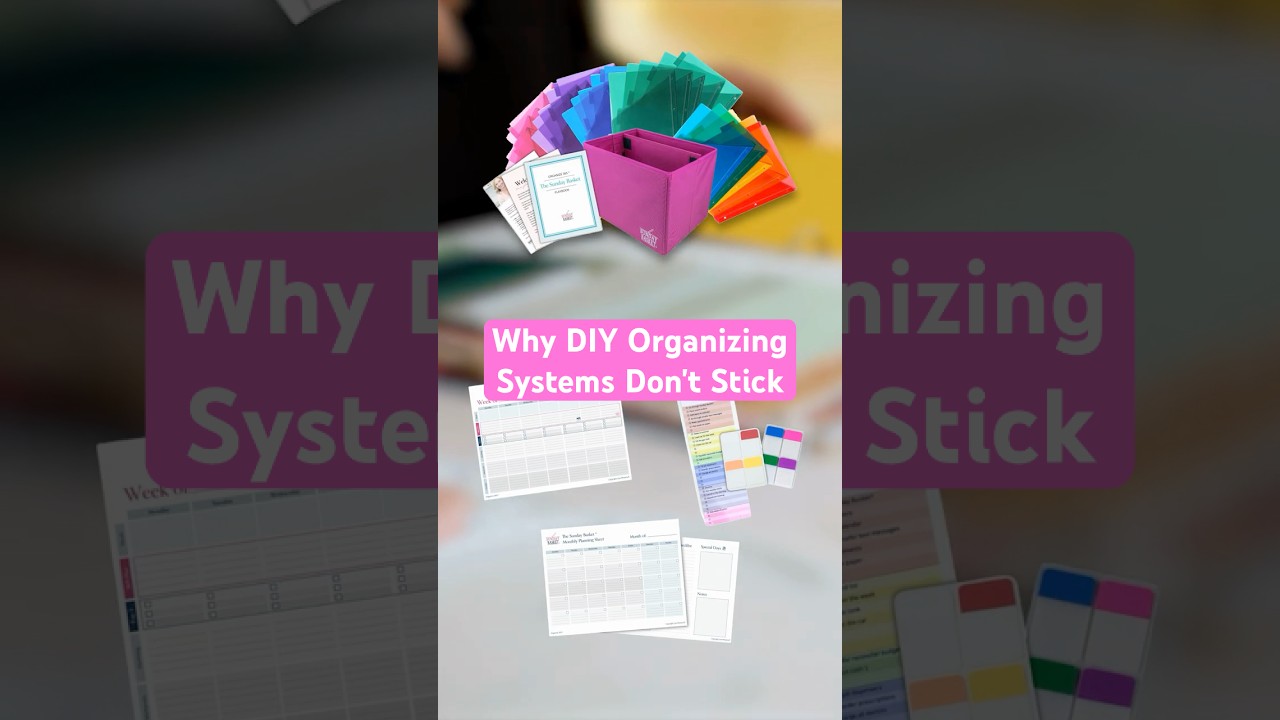

Parenting Isn't the Only Caregiving Role That's Draining Your Energy #Parenting #Caregiving

Turning 40 Isn't About Age, It's About Responsibility #TimeManagement #Organizing #MentalLoad
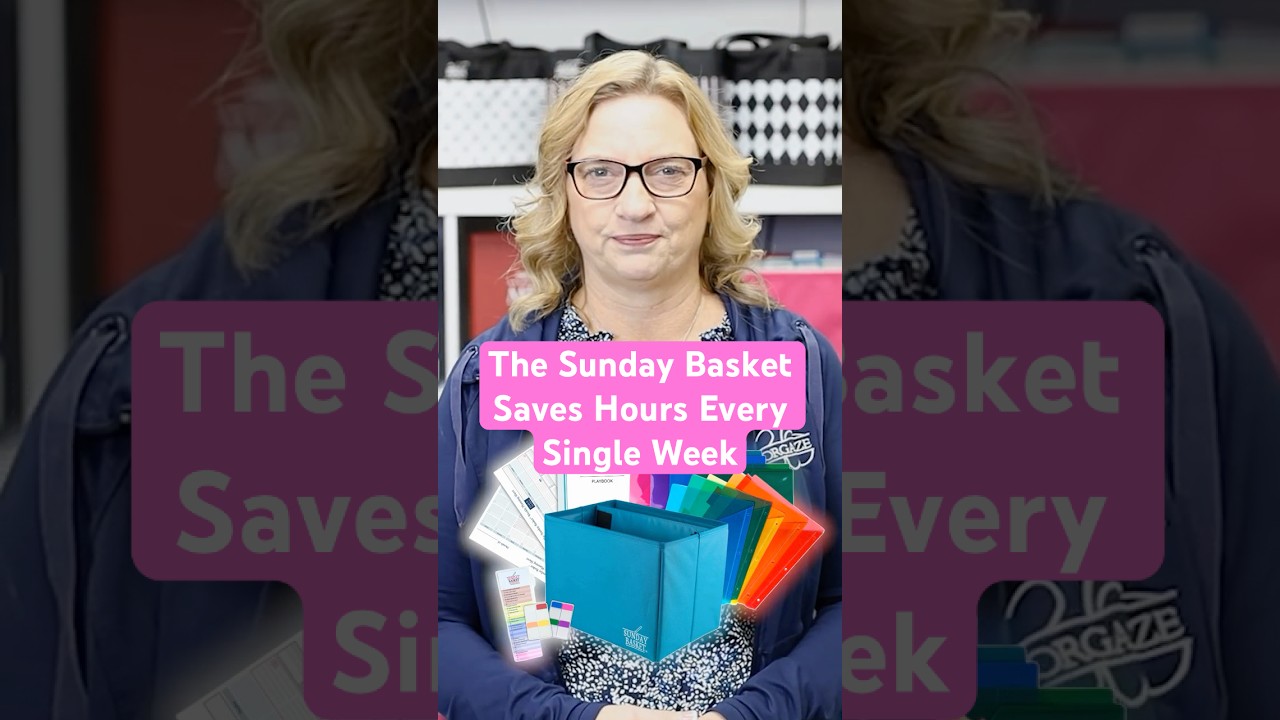
The Sunday Basket Saves Hours Every Single Week #SundayBasket #Organizing #TimeManagement