How to advocate for your child in an IEP, 504 or medical setting | Organize 365 | Lisa Woodruff
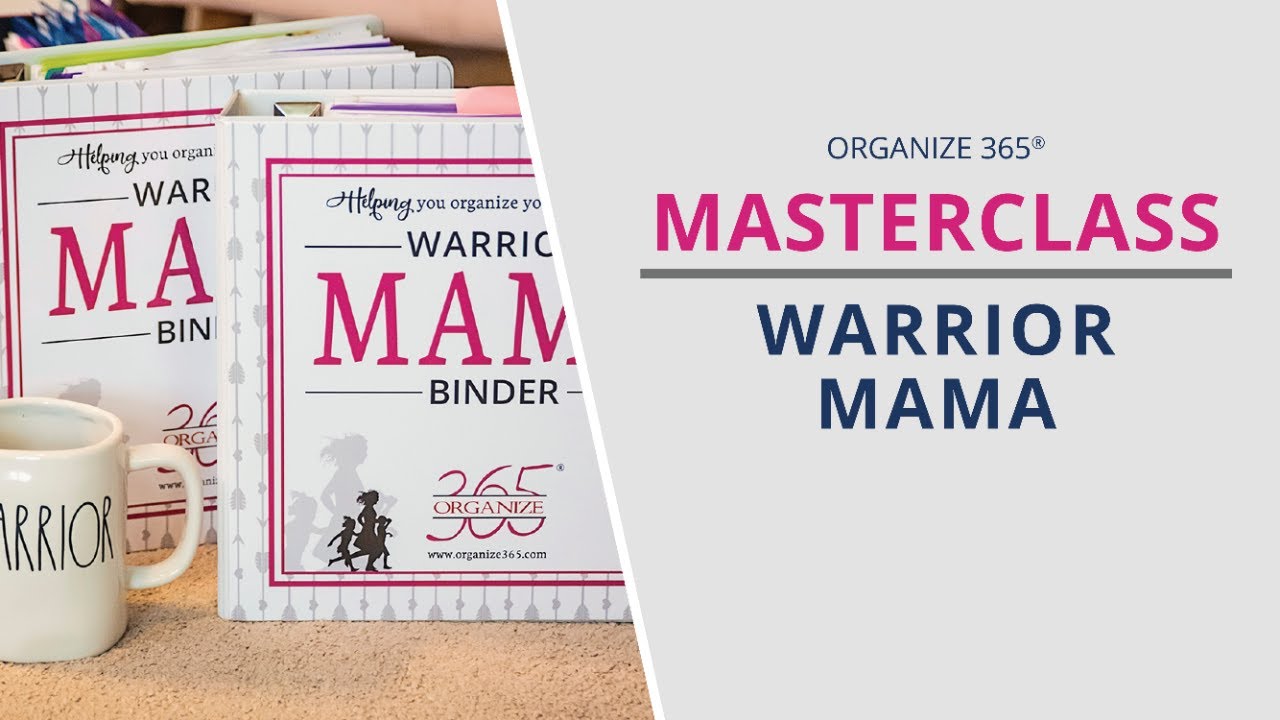
In this live masterclass, Lisa Woodruff—parent of two adopted children with special needs—guides parents through effective advocacy for their children’s Individualized Education Programs (IEPs), 504 plans, and medical services. She shares personal anecdotes, explains why a dedicated "Warrior Mama" binder boosts credibility in meetings, and provides step‑by‑step methods for organizing therapy bills, insurance explanations of benefits (EOBs), payment records, and tax‑related write‑offs. Lisa answers live questions about binder size, age appropriateness, the need for separate binders per child, and how to handle insurance appeals. Throughout, she emphasizes that the binder is a tool for empowerment, not a prerequisite, and encourages parents to adopt a proactive, organized stance to secure the services their children deserve.
Chapters
Welcome everyone. I am so glad that you're joining us for the Warrior Mama Binder Masterclass. This will be available on replay and we're going to be talking here about being a Warrior Mama, and Mama stands for Managing All Medical Alternatives. So we're specifically going to be talking about kids who are at home and how we advocate for them and also how it impacts us as the parents taking care of the kids. My name is Lisa Woodruff and I am a parent of 2 adopted children, both that would qualify with special needs. They have IEPs. I have 2 podcasts. One is the Organized 365 Podcast where I talk all about organizing your home, organizing your paperwork, and really the mindset shifts that need to change as you start to live a more organized and productive life. And my other podcast only has 28 episodes and it's specifically for paper. So organizing your to-do list, your mail, your files, all of that is done in what I call The Sunday Basket. And if you started episode 1 and go through episode 28, we literally will hit all of the kinds of paper that are in your house. I also have 2 Amazon bestselling books. The first one's called The Mindset of Organization: Take Back Your House One Phase at a Time. This book was written after I had organized hundreds of women in Cincinnati, Ohio, and I found that I would organize an 8-year-old bedroom one day and an 80-year-old house— an 80-year-old's house the next day. And I was able to organize all of those spaces. But the person that was being organized, whether it was a child or someone in their 20s and 30s or 40s and 50s or 60s and beyond, they organize their bedrooms differently. They organize their kitchens differently. Interestingly, We're headed into the next phase of life here with a 17-year-old and a 19-year-old, and I firmly remember this phase of life. Emily's on the line with us. Emily, you might remember this as well. I'd gone away from college. So my oldest is off at college and Emily was at home with my parents. And what happens at this phase in life as the kids start to leave home for college and they learn to drive is they rarely eat at home anymore. They have favorite foods that they eat and they eat out. So I would come home from college. And I would go to make whatever my favorite foods are, and the food would be expired because the people that were living in the house were no longer eating those favorite foods. And I only came home every 3 or 4 months. So if you live in the same house, like if you've lived in the same house for more than 10, 15 years, odds are you're at a different phase of your life in that same exact house. And the organization that you need in order to keep that house organized is different. So that book talks about how As you age, you use the spaces in the same house differently and the interpersonal conversations that go on between generations of your grandparents, your parents, yourself, your children, your grandchildren. The second book is called How ADHD Affects Home Organization. Both of my children are diagnosed with ADHD. They both went to a specific learning disability school here in Cincinnati, Ohio called Springer School and Center, which is for language learning disabilities, and a high preponderance of the children that go there have ADHD. So I went to a lot of parent lectures. I've spoken to a lot of the top people at Children's Hospital about ADHD. And as I learned how the brain is impacted, the 8 executive functions with ADHD, I was able to extrapolate out how the 50% of my home organization clients in Cincinnati were also impacted in these same executive functions that my kids were in learning and keeping their house organized. And so I pulled that into a book as well. All right, you are in the right place if you have a child who has, or you suspect should have, an IEP or a 504. So an IEP or a 504 are the United States definitions, or what we call the pieces of paper that they give to you at school that give your child accommodations in the classroom.
So 504 Is a—
usually the first thing that they will give you. It's some accommodations they make for a year or 2 years or something that is building-specific. An IEP is a legal document that will go from one building to the next, one state to the next. You need to have a more significant diagnosis, and you have to have some more testing in order to get an IEP. If you can get an IEP, I always suggest to get an IEP. So today we're going to specifically learn about this stuff. We are going to learn about this Warrior Mama binder that I have created for my kids as I went through schooling. And how I've turned it into a product for you to specifically organize your child's diagnoses, which tend to change as they age, all of the educational accommodations, goals, and evaluations that you are given verbally, in writing, and that you want to advocate for in the future. Tracking your child support team and getting reimbursed for all the finances. I will just be honest with you, there was a 5-year period of time where 50% of our take-home pay went to medical expenses for our kids. So if you can relate to that, I have been there. Like, it is not inexpensive raising a child who has extra needs. So let me tell you just a little bit more about myself. I live here in Cincinnati, Ohio. I was raised in the Akron-Cleveland area. I went to Miami University. I met my husband. I was going for an MRS degree. I wanted to be Mrs. And I became Mrs. Woodruff the year after I graduated. And now I'm a Cincinnatian. I love Cincinnati. The first picture is Skyline Chili. If you're in Cincinnati, it's Skyline or Gold Star. I am a Skyline Chili girl. That is when I was out to dinner with my son. He's got hot sauce drizzled on the top of his I do not have hot sauce on mine. The middle picture is Hunter. Hunter is a Shiba Inu. It's the most cat-like dog that you can have, but we love him. Hunter will be on a lot of my Instagram stories if you follow me on Instagram. And I love Culver's onion rings. They are the best onion rings ever. Don't try them because they're so good, you will be addicted like I am. So it's just a little bit about me. And I will tell you, for years I didn't even know what I liked because I was so busy taking care of these kids. We have 2 children. I'm going to tell you about both of them. Joey is our firstborn. Both of our children are adopted. They were both born in the state of Ohio and we live in the state of Ohio. And Joey developed asthma in his first year of life. Here he is at about the age of 2 or 3, and we just lived with that nebulizer machine. I had asthma as a child. I understood asthma. Asthma is a medical diagnosis. So I was very equipped to be a mom that could handle a medical diagnosis that had a set, you know, protocol. Like, we knew that he got the breathing treatments every 2 to 4 hours. For him, it was every 3 hours. If he would cough and I was in bed, I would be in his room and have that breathing machine hooked up before he coughed the second time. And if I didn't, we were on our way to the emergency room. So that I understood, you know, medical diagnoses like that, I understood. Intellectual— Diagnoses like ADHD, autism, mood disorders, learning disabilities— those are not as easy to diagnose, and those were harder for me as a mom to comprehend. Now, Joey is the sweetest kid. If you came to RISE last year, he ran our sound, and if you come to EMBRACE, he'll be— he'll be running it again. He is at a special entrepreneurial school for audio engineering. He's 19 years old now. But I'll never forget, we had the kids in Montessori school. And there are only 12 kids per class in Montessori school. And they got pulled out in kindergarten for half, half of their class one day a week. And they would go in this little room. And in Montessori school, there's— the one we went to, there's a two-way mirror. So you can like watch your child in the classroom and they don't know you can watch them. And Greg and I happened to be watching him in the classroom after we had some meeting or something. And there are only 12 children in the classroom. The classroom is like the size of your child's bedroom.
It's not big.
And the teacher was writing on the chalkboard and Joey was sitting in the front row. So he was maybe 3 feet from the chalkboard. And he takes his little tiny preschool chair and he puts it right underneath the chalkboard. So literally like his nose is touching the chalkboard. And then he copies down what he's supposed to be copying down from the chalkboard. Now Joey was not a verbal child. Like, he didn't have a lot of words. I thought, he's just a boy. Like, he just did not talk very much. And I watched that and I said to my husband, Greg, I said, that is not normal. Like, that's not normal. So I took him in to have his eyes checked. And we went to— we were going to go to a vision therapist anyway, because at that point we're pretty sure he had ADHD, yada, yada, yada. So we go to the vision therapist and they check his vision. They go, well, he's pretty much almost blind. Like, he's almost blind. So you know how they put those like machines on you and they can figure out what your eyesight is without you even saying anything? Well, they did that and they're telling me that, okay, He's, he's got whatever, these football-shaped eyes, like it's bad. And the whole time they're having him watch a TV show so they can figure out what his eyesight is. And they're talking to me and he's looking through this big metal plate thing that has the right glasses. He doesn't talk very much. They pull that away to say it'll be, you know, a couple weeks to get these glasses. And he starts crying. He just starts crying. No, no, see, I want to see, I want to see. And they said it would take 2 weeks. Every single day, that little boy said, when do my glasses come? When do my glasses come? When do my glasses come? And they had told me in the office, they said, you're gonna have to have a reward chart. You're gonna have to do all these things so that he doesn't lose his glasses. Can I tell you, Joey has never, ever lost his glasses. 18 months younger than him is his little sister, Abby. And Abby was healthy as a horse as a little girl. She was really, really healthy until the time she was like 2 or 3, and then the wheels just started falling off. And Abby has all silent diagnoses, like things that you would not notice if you saw her, or, you know, there's no insulin pen or anything like that. So here I was with 2 kids. By the time Joey was 5, both of my kids were on their way to having IEPs. And by the time they were 5 and 6, they both had IEPs and they were significant IEPs. So some of the diagnoses that we received were ADHD times 2. As a matter of fact, the kids were jumping on the couch one day and I just had it. And my husband's like, don't we tell them not to jump on the couch? I was like, aren't they cute? Like, I don't even care anymore. Like, you literally lose it, ladies, when you're dealing with all this. Both had learning disabilities. Both had huge anxiety. Anxiety is something I noticed a lot of kids are having. I think it— there are a lot of reasons for it, but anxiety is huge. It is very, very real. They both had receptive expressive language disorders. And specifically, that means that they both can audibly say more than they can intellectually understand. So I was in an IEP meeting when they explained this receptive expressive language disorder to me with Abbie. And I said, huh, Joey has that too. And I said, are you telling me that my children don't understand sarcasm? And they were like, oh yeah, like, no, no, they would not understand sarcasm. I was like, but that's my whole parenting premises. We're using sarcasm and they're totally not getting it. Like, just like common everyday things that you just don't even think about are difficult for your children. They had allergies, food sensitivities, asthma, mood disorders, reactive attachment disorder, and on and on. I mean, like, give me a diagnosis, I'll tell you a child that had that at some time. And honestly, when your kids are younger, a lot of you have said we're not sure what it is, or we have a new diagnosis. It's like playing a game of whack-a-mole. You're like, okay, we're sensitive to gluten. We'll go off of gluten. So you knock that one down and then this one pops up over here. But I've got a receptive-expressive language disorder. Okay, great. We'll go to therapy for that. So you do that and you're like, oh, but I have, you know, and there's just so many diagnoses, so many treatment options, so little is covered by insurance. And all of these things involved me. Like I, Just wanted someone to save me, like, please. And I'm constantly trying to explain this, like, to my in-laws and my parents, and they don't understand, and they think the grandchildren are perfect, and it's all in my head, and I don't know what I'm talking about, and I'm speaking it into existence, and they really don't have any issues. And yes, I still have— I still have issues about this. I just want somebody to save me. So kids were 4 and 5. Joey had just gotten his IEP. We were then starting to work on Abby's IEP. I literally lost it, you guys. I had an out-of-body experience. I had on one of those bracelets, those Pandora bracelets, and I was in my kitchen and we had a metal board next to the refrigerator. And I just started hitting the board and I had that bracelet on and I was denting the board and I was like hyperventilating and I was screaming. And my husband looked at me and he was like, I am taking the children. And I'll be back later. I don't even know where he took them. I didn't care. I was like, good, you leave. I'm losing— I am losing it. So I calmed myself down. I got a fountain Coke because that's what I was drinking at the time. I got my calendar. I got all the kids' paperwork. I went up on my bed, which is my happy place. And I was like, I— it was the summer also. I was like, I have got to figure this out. Like, I can't handle it. There are too many diagnoses. There's too many options, you know, and I was— we were going from flush, like private schooling because we wanted to, to, oh my gosh, how are we going to afford all this? How are we going to make this work? I don't know how we're going to make this work. And I sat down and I was like, Lisa, seriously, like, you're an organized person, you're productive, you own your own direct sales, you know, you're running your direct sales business, you're making money, you're You're college educated, like, you can figure this out. Why are you so overwhelmed? Like, it cannot be this difficult. So I thought, well, how many meetings, doctor's appointments, therapies have I gone to for the kids, like, for their diagnoses? Not I'm the field trip parent, because I was that too. But like, how many times have I been in a school meeting, a doctor's meeting, an adoption meeting? How many meetings have I been to? And I started counting and it was 110 meetings in the last 365 days. 110 meetings in the last 365 days. I was like, no wonder you're losing it. Literally every 2 to 3 days I was in front of an administrator, a doctor, a therapist, trying to figure out what was going on with my kids. And how I could fix it. Like, I just wanted to fix it. And honestly, I couldn't fix it. Like, I had to come to terms with the fact that I could not fix this, that this was going to be a lifelong thing, that I had to figure out how to make it the best I could, that I had to manage my expectations, expectations, change my expectations for who I was going to be as a mother, for the children I was going to have in the future. For their future expectations. I mean, I'm a 4th generation female college graduate. Do you know how rare that is? And I was looking at the situation going, these children are not going to college. It's still true. They're not going to go to a 4-year— they're not going to Miami University like Greg and I did. They are not. They're not going to have a desk job. They're going to be very sufficient adults, but they are not going to have the life that I had and my parents had and my grandparents had and my great-grandparents. It's not going to be the same life. And it probably took me 18 months to really realize that we were not going to be in the spelling bee. We were not going to be, you know, in the all-A club, or like— not that I needed my kids to get all A's, but, but everything I had set up for what my future as a mom was going to look like was being changed. It was being changed. We didn't play on intramural sports teams because we couldn't remember the rules. We didn't play board games at home like I thought we would as a great family because we couldn't do turn-taking and one-to-one correspondence on the, on the board. Like, all the things that I thought we would do as a family in my perfect life weren't going to happen. And I spent a lot of time and money. I mean, like $100,000 trying to fix it and make it go away and make it be that You know, nature over nurture, like, doesn't matter. Like, I will make this work. It didn't. I couldn't make it work. And it was at least 18 months. And Greg and I went through it separately of this grieving process of the parents we thought we would be. It was not our children. It was the parents we thought we would be. And I could not find a way out for myself and my kids. So, and there's so many options. Like, I've looked at some of the diagnoses you guys are putting down here. Not one single person put down, Oh, my children has one diagnosis. You all listed so many. It is so many diagnoses. So I started thinking about what is their future going to be like? And for years, I wanted the therapist to tell me. I'd be like, yeah, but what's this gonna be like in the future? What's this gonna be like in the future? And they wouldn't tell me. They're like, it's gonna be fine. I'm like, I don't think it's gonna be fine. I think we need to make modifications. I don't know if this is going to be fine. And I knew there had to be a way out of this. Like, there had to be And I couldn't be the only one. Here's what you think. You think you're the only one. I think I'm the only one. I'm telling you, 50% of moms need this webinar. 50%. This will be a free replay. We will probably put it on YouTube. Share it, share it, share it. You think you're the only one. 50% of moms are doing what you're doing. I started getting my Google MD, like literally it's insane how much I know about how the brain works. When I ask questions to one of the head psychiatrists at Children's Hospital, she says to me, Lisa, you ask me questions and you understand the medications used with your children at the research level. Like, your questions are questions we still have in research and development and haven't come out yet. That is how much I understand what is going on intellectually with my kids and what is going on with the diagnoses that they have. You know so much. so much about your kids. And I want you to really, really feel that. Own that. Own that you are the person that knows more about these kids than anybody else. It does not matter how highly ranked the doctors are you're working with, how long the teachers that you're dealing with at school have been working with children. They don't know them as well as you do. So I became a warrior mama, and my very first blog was called Warrior Mama in 2009. But I decided not to do that business because I didn't want my kids' story to be my business. But I do know that organization— I am as organized as I am, and I am thriving because I'm organized, because I had to be for my kids. And MAMA stands for Managing All Medical Alternatives. I came up with that because I thought I couldn't be the medical person. Turns out you kind of can. So if you, if you know the letter you want your doctor to write, if you know the test you want your child to have, tell your doctor the exact test. Send them an email before the appointment of the letter already written. They will read it, modify it, and put it on stationery for you. You are the person that understands your child the most, and you have to be organized in order to fight for them and do what they need. So I am a firm believer that I took ownership of the fact— that fact, and that no one knows my child better than I do. And this little boy Joey, oh, My goodness, this little boy Joey, if we had not done everything that we did for him, he would not be the boy he is today. And he doesn't mind me saying it because he knows how blessed he is to have gone to Springer and gone to Baden and in this entrepreneurial college. Let me just tell you about his college. He is at GrooveU in Columbus. GrooveU is a 2-year audio engineering entrepreneurial program. There are 16 kids Total in the school. There are like 4 or 5 kids that are second years and they're like 7 or 8 that are first years. The entire school is a house. It's an audio acoustically perfect house, but it is a house. Like, he literally is in college with a total of 15 students doing what he loves, starting his business. He's running the sound for our Embrace Conference. You can come meet him. He is such a cool guy, but he has been in all tiny schools. He has always had somebody that helps him. He has been supported and given everything that he needs. And you know what your kids need too. You know the size school they should be in. You know the, the services they should get. Some of it you're going to have to pay for yourself. You're not going to get all of it by different— organizations, but you can get more than you think. I want you— if you take nothing from this at all, if the only thing you take from this presentation is the fact that you know your child better than anyone else, then winning. We are winning. And your gut feeling— always, always, always follow your gut feeling. I 100% believe that your children are your children because you are supposed to be their parent. Period. End of discussion. Joey and Abby are supposed to be in our house to be raised. What will they do as adults? I don't know. But I know that Greg and I were supposed to be their parents for this time in their life. Now about this gut feeling thing. It's a real thing. One of the places I took my kids was the Pfeiffer Institute in Indiana, Illinois. I don't know, begins with an I. It's near here. And I took them there for supplements like these custom supplements based on all of probably based on DNA, but at that time it wasn't based on that. I had Joey on a supplement called 5-HTP, and 5-HTP increases your serotonin. It does a lot of things in your brain. I told you I know a lot about the brain, but it is a supplement that you titrate up. So you start at 50 milligrams, then you go to 100, and then 150, and not everybody tolerates it, and there's a certain level that's right for you. And because I was trying to do as much as I could from home with my MD through Google. I had this notebook and I did all this stuff and I knew that 150 milligrams for Joey was working and I knew exactly what it was doing based on observation. So we got there and they said, take him off of the 5-HTP. And I said, cold turkey? And they're like, yes. I was like, are you sure? And they said, yes. And I said, okay, but I think it's doing all these things. They're like, no, based on his profile, there's no way he needs to be on 5-HTP. Just take him off. I was like, okay. So I was like, that doesn't seem right. But you know, they're the professionals, they know. So I did it. So a week later, they call me. I said, oh, do you have the test results? They said, no, but put him back on 5-HTP. I said, but you don't have the test results. They go, put him back on it. You were right, we were wrong. So I titrated him back up. And that's another example, like, even if somebody looks at your child and they know the diagnosis and they know everything about that, they don't know your child. I've already touched on this a minute. Multiple diagnoses. If you are observant and proactive, as I am, you will notice that there is an issue long before the medical and educational community will be able to corroborate and provide resources for you. So typically in education, we don't really know that there is a learning disability until around 3rd grade because there needs to be enough of a discrepancy between your child's scores and the cohort that they're with, where you've got an 18-month to 2-year gap. And here's the problem. If you're proactive like me, you are already like in preschool, you're reading. I had them in all-day kindergarten. I'm doing everything I can to level them up and keep their skills as high as possible. And sometimes your kids' skills have to fall lower in order to qualify for services, which— let's not get into that. So if you are keeping your kids' skills up and providing outside therapy, Sometimes it takes longer for them to be diagnosed in the system and get any system-wide help. And you often will get multiple diagnoses, usually under the age of 4. They're going to say sensory processing. They're going to say— now they're saying ADHD. They didn't used to say ADHD. Sensory processing. There's another big one that they usually say when they're younger. There are food sensitivities.
Hmm.
And it's like, it's like, you'll notice after you get through this, that they're like, they diagnose things in like 2 to 3 year segments. And then when you get to about 12 to 14, you get what your true diagnosis actually is. And it's not always the education and the medical community's fault. It all looks like ADHD. Every 2-year-old looks like ADHD, period, end of discussion. Like, what does ADHD look like? A 2-year-old boy. That's what it looks like. So if your child still looks like a 2-year-old boy when they're 7 in the middle of reading class, then maybe it's ADHD. Or sensory processing. Sensory processing could be a million different things, but it looks like your child has a meltdown because you put the wrong kind of socks on or the light is too bright. Well, maybe they have something going on with their eyes, but you don't know that because it's been labeled sensory processing. So you'll get these Blanket diagnoses that a lot of people get, and then the diagnosis gets more specific as they get older. So it is hugely important that you keep track of every diagnosis anyone has ever given you. Any letter— like, we still have a diagnosis from when Abby is 4, and I pull it out when I need to for certain services. Every time you can get one, definitely get it on letterhead. If you have a new doctor, Even if you're going to them for a second opinion and they're saying, we think the diagnosis is XYZ, have them give it to you on letterhead. I use my diagnoses whenever I need for whatever I need as a warrior mama to get my child's needs met. And different organizations will use different diagnoses for different things. So everything that I'm saying is going to cause a lot of paperwork, right? And what do we do with all this paperwork? I am a firm believer in that we don't really want to digitize it and we don't want to get rid of it because I found when Joey was— I think he was like 8 or 9, he had outgrown asthma. But I knew that when he was 2, we, we had put him on too many steroids. You're only allowed to be on steroids, I think, 6 times in a year, and I knew we had done more than that. So I actually had a copy of his entire medical file from the pediatrician, which you can get. You can ask for your kid's medical file and they will give you a copy of it. Sometimes they charge you, sometimes they don't. It's like $15, just do it. So I had that and again, I sat on my bed and I went through everything and I made a list of every prescription he ever got and all the medications. So when he was 2, he was on 8 drugs for asthma, 2 of which were still like not approved for asthma, but they were giving it to him because his asthma was so severe and he happened to have been on steroids 9 times. So now he is 9, but I was looking back when he was 2 and 3 at everything he had been given because, you know, 5 years later you find out like, oh, this drug caused that thing, or I don't know what I was looking for. Um, but sometimes it's very helpful to be able to piece all that together. And when you have it together like a jigsaw puzzle and you could pull all the different pieces of paper, it's important. Here's the other thing. When Abby was 4, they did an IQ test and her IQ was over 100. It was like 115 or something like that. And then later, her IQ dropped and has consistently stayed lower every single time we test it. And when I was in a meeting for her and they were looking at this new IQ score and they're like, well, this behavior based on this IQ, you know, whatever, you don't get that service. I said, oh yeah, but it used to be 115.
They're like, That's impossible.
I pulled out my piece of paper. I was like, 115, done by a psychologist at the, at the school. And they were like, that's not even possible. I said, yeah, well, she was also reading books at that time too, which we're not doing now. And they were like, it's not— it's physically not possible for your IQ to drop like that. Like, did she have a seizure? So then all of a sudden, we went from a school meeting where they were like, this mom is crazy. This kid has whatever IQ, so we're not giving her blah, blah, blah. to how did this happen? This is medically impossible. We need to look into this. What else can we do? The tone in the room changed 180 degrees from that is a wacky mom who doesn't know anything to, oh my gosh, we have got to help this child. We had so many tests. And that, that's what paperwork can do for you. When you pull out a piece of paperwork, they take you so, so, so much more seriously. And take all kinds of notes. Like, I have all the notes all the way back every time we saw the psychologist For our kids, everything they told me to do, all the therapies they told me to do, so that when I went to a new therapist, or every year I go through my kids' IEP binder and I read all the old notes, and sometimes I'm like, oh, we never followed up on that, we should try that now, or oh, that worked in the past, maybe we could try it again this summer. I tend to parent mostly in the summer. If you have kids who have IEPs, going to school is like running a marathon every single day. I am not a parenting expert. I will never give you any parenting advice whatsoever because I beat myself up for so long over those books. You guys, I read that Babywise thing where you let your baby cry. And I sat outside in the, in the car with one of my friends. She's like, we just gotta let him cry it out. We just gotta let him cry it out. And we sat there for 30 minutes while he cried. And I did that numerous times because, you know, that's what the parenting books said to do. And when I look back on it and I know how sick that child was, and I didn't know it at the time, I wish I'd just held that baby his first whole year of his life. Why didn't I just hold that baby the first whole year of his life? Because all my friends were doing Babywise and their kids were sleeping through the night and their kids were whatever. It doesn't matter what everybody else's kids are doing. You are your child's parent for a reason. And I'm not saying that for guilt. Don't you ever take guilt from me. I have forgiven myself. You forgive yourself. You do the best you can with what you know when you have it. Period. End of discussion. I don't judge you. You don't judge me. My kids are, well, fine. They're fine. But I will tell you, I was on the phone with somebody the other night. She's like, oh my gosh, don't, don't bother the noise in the background. The kids are just doing the dishes. I was like, first of all, you never have to apologize for kids doing dishes or background noise with me. And second of all, just in case you're wondering, my children have never Done the dinner dishes. They're 17 and 19. They've never done the dinner dishes. The only chore I've ever given my children is to clean their rooms. That is the only chore. My kids did not learn to do laundry until 6 months ago, and they were 16 and 18 when they learned, and now they know how to do it. It's just, it's never risen to the top of my to-do list. I wanted them to be able to use communication devices. I wanted them to be able to graduate high school. I wanted them to be able to Take care of themselves and learn to drive. Like, both of my kids drive. I'm— you have no idea how ecstatic I am about that. That was not a given. And so that was what I poured all of my time into. It was not doing dishes. So I'm not going to give you any guilt. I'm not going to give you any parenting lessons. And I know that 50% of parents need to hear this. 50% of parents need to hear this. Okay, I'm going to talk to you about This specific Warrior Mama binder. Now that you know, okay, I know what I'm talking about. I need to keep all the paperwork. I need to advocate for my children. I am a warrior mama. And not to the point where you go and you say, because I've done this before, this is what my kids need and you're going to do everything for my kids. No, take what the school will give you. Take what the medical community will give you and then invest in your kids and in their future. And when you invest in your kids and their future. The number one thing I will say I have done right as a parent, and I would counsel every parent to do, is what are your kids great at? What lights them up inside? And for some kids, it's easier to find than others. And I have literally, for the last 5 years, every time I think of my kids, I'm like, could that be a career? Could that be a career? Because I know I have to help them find their career. And it took 3 years to figure out and guide Joey into audio engineering. And now, man, that kid He's only 19, but he is already off. Like, he's, he's done. He's set. We got business cards and a website. Like, we are good to go. If you need an audio engineer, he'll be graduating in a year and he can run your live sound, your podcast, everything. Like, he is doing so awesome. He has so much ownership. He has straight A's in college, you guys. Straight A's in college. It's amazing. Amazing. I take it this year off to homeschool Abby. I'm just gonna tell you, homeschooling, we're using that term loosely. We're using homeschooling loosely. She has learned more this year, though, than she learned in the first 2 years of high school for her future. And almost everything we've done is animal related. She swam with dolphins and— is it dolphins? Yes, swam with dolphins. And she has a hermit— she just got 6 hermit crabs. We got a ferret. We went and played with penguins. She's been to the zoo. She's been to the aquarium numerous times. We're going to go see the Ark Encounter, which is in Kentucky next week. I mean, she is going to do something with animals or the elderly. She's volunteering with the elderly every week. We went to a community college and found out what certifications she can get to work with the elderly. High school isn't serving her. It's not serving her. It was causing more anxiety, depression, suicidal thoughts. It was not worth it. It was not worth it to have her walk graduation like everyone else in my family always had if she was miserable. And what was she going to do with that degree? So we are finding out what she needs. Okay, so I'm going to have— we're going to take a look inside of this binder. And I will tell you that— let me see, I can stop the sharing. Oh, you can see me. Okay. All right. So this is the Warrior Mama binder. It is $75. And it comes like this. I'm going to show you how it comes and then I'm going to show you how it's displayed. So you get the actual binder. We send you a catalog, which is so cool. I have a catalog, by the way. I'm really excited about that. And then you get all of these sheets printed out. See how thick this is. This is— I don't even know how many sheets. It's a lot of sheets. And I will show you the sheets in a minute. You get 2 business card holders so you can put in any business cards of anybody at school or medical or whatever that you need. You get a set of 50 sheet protectors and you need these sheet protectors for like those letters I told you to get, report cards. Anything like that that you haven't 3-hole punched yet. And then you get a set of our 2.0 slash pockets. Which, if you're familiar with my system, you know that I manufacture these. You can't buy them anywhere. And they are part of the Sunday Basket system. You get 5 blue, 5 green, 5 pink, and 5 purple. When I created this binder, I did not create it to be profitable. I created it to solve the problem, and everything that you need is in this one binder. It's not a profitable product that we sell. But it's everything that you need. It is a 2-inch deluxe one-ring T-Touch D-ring binder. I'm kind of particular about my, my binders. I love this because you can fold it backwards and have it on your lap inside of a meeting and it's not flapping open. It's a D-ring binder, so everything lays flat. It's a nice one-touch open and close. It's going to last the whole 18 years that you're advocating for your kids. Then inside. You are not going to do this. You are not going to put the book in sheet protectors. I have the book in sheet protectors so I could show it more easily online. You're going to either put the 3-hole punch sheet protectors in here or you're just not going to have the book in here at all. This is an ebook. It's basically a printed book. And in here I tell you a lot of the things I just told you in the webinar, a little bit about my kids. But in here are more, more of the things I actually did. So like when I went into my IEP, what are some of the magic phrases? What is it that when you say it, the school district has 30 days or less to comply with what you're asking for? And then there are a lot of printables. So this is your communication record with the medical community. Here's if you want to request an IEP, what you need to say. What you could do at the IEP meeting, which is when they determine if your child is eligible, the types of accommodations you might want to ask for. And then I give you a couple of podcasts I've recorded about this as well. How my binders have helped me, how to set up your binder. And then I give you all these colors. So pink is for medical, blue— purple is for education, blue is for the team of people that are going to help you. And green is for financial. So let's go through each color. So pink is for medical. In here I give you a whole list of things that you might want to put in your pink. So first of all, you're going to gather all your papers and you're going to have these in front of you and you're going to put them where they would go in this binder. But also on here it will say, you know, like diagnosis letters or therapy or test results. You're like, oh, that's right, like Cincinnati Children's, we have it in a MyChart. But you could go print it out. So I want to print it out and put it in here. So anything digital, we're going to prompt you to go get that and print it out. Same with education. I give you a list of what to put in there. And for your team, that includes like summer camp information, respite workers, volunteering, college career centers. Medical, I told you it was 50% of our take-home pay for 5 years went to medical. I talked to you about what to save and where to save it. I do suggest you take the green slash pockets out of your binder, label them for your children, and put them in your Sunday basket, and then just keep pink, purple, and blue in the binder. And then we have a lot of printable sheets. And what we did here is we gave you the printable sheets to fill out for your kids' medical history, for their medication list, for what did and didn't work with medication, for all their educational milestones. Notes for your IEPs, executive function tracker, which is for ADHD, because here's the thing. ADHD is a spectrum disorder. It's how the prefrontal cortex of your brain works, and there are 8 different executive functions. No one has perfect executive functioning, but if you can pinpoint which ones are needing more help, then there are specific things you can do to help them. If you get that ADHD book that I have over there. It's like $7 and read about these 8 executive functions. So many parents have read that and they're like, oh, that's why they can't pick up their room. Oh, that's why they never remember everything I asked them. So that ADHD book is a great addition to this. If you have a low working memory, and if you have a low working memory, I guess working memory. Processing speed. When you have an IQ test done, they always tell you your working memory and your processing speed. And when those are low, that is when you usually will get a diagnosis of ADHD. But there are other things that affect whether or not it is an IEP. Then we have a list for you to make contact information for your kids' team member. This is a joke, but it isn't a joke. Greg Still says to my children, 17 and 19, Their running joke. They're in the kitchen. He goes, what would happen if something happened to mom? And everybody goes, we're in trouble because we don't know, we don't know any of our medication or doctors. Ahahaha. I'm like, okay, it's not really that funny. First of all, nothing's happening to me. And second of all, it's not really funny that nobody knows any of this stuff but me, and nobody knows any of this stuff but you. So you have all those to fill out. But then what we did is in that printable packet you get, you get a second copy. Everything, so you could just copy it if you need additional ones. So that is the binder. I'm going to go back to my— I don't know which one it is you're supposed to see. Okay, Emily, are you seeing the take a look inside the binder thing again?
Yeah. Yes.
Okay, good.
All right.
So the reason why it's a binder and not a box, because I clearly gave you everything that we could make this a box, is because we need it to be portable. I told you, if I hadn't been able to pull out that IQ result in the middle of that IEP meeting, I would have had to call a whole nother meeting, been like, I found my paper. I was able to do that. I also told you that I went through my binder every summer. So I do, I tend to do that in the summer. I tend to do all my parenting in the summer. In May, next month, I will figure out what are the skills that I want my kids to learn over the summer. And that's— we learned laundry one summer, we learned driving, each of the kids learned driving in the summer. So I— whatever the big skill is, and I only pick one, we learn over the summer. I want you to proactively plan for the future you have for your child. So often how I felt as a warrior mama was A diagnosis is coming at me, another diagnosis is coming at me. Oh my gosh, my kids don't have friends. Oh my gosh, we can't go, you know, they weren't invited to that party. Oh my gosh, we didn't qualify for that thing at school. You know, like, it's just like you're just getting hit by wave after wave after wave. And everyone that comes at you, you feel like, or I felt like, a bad mom. I just felt like a bad mom. Like, how come it's not easier for my kids? How do I make it easier for my kids? And so I was I was reacting to everything that was coming at me, and it never got easier to go to a doctor's appointment or an IEP meeting. As a matter of fact, we went to a doctor's appointment the other day, thought we'd sail through it like we normally do, and I left with 5 specialist appointments and all these things that I need to do and all these things I didn't know were wrong. And I was like, are you kidding me? Like, when is this ever going to end? It's not. It's, it's not going to end, but you can still Proactively plan for your kids' future. It's just going to look different than what you thought it was going to be. And plan for what would happen if something happened to you. So if something does happen to me, there are these binders and Greg will call the 2 doctors and they will figure it out. But mostly, I want you to know, you are not alone. You have it, what it takes. You were made for this. You are a warrior. Mama. All right, Emily, why don't you tell me some of the questions? I'm going to tell you what I would love for you to do is come to a paper organizing retreat. I don't care if you have to fly here, put all your kids' paperwork in a suitcase, wear the same clothes the entire time, come to our paper organizing retreat. I am there and we will do your Warrior Mama binder together.
Okay, are you ready for a few questions?
I'm Always ready for questions. All right, number 1.
Hi Lisa, I'm so in love with your style and you give me such motivation. My biggest question is this: I have a 12-year-old with autism. He was diagnosed at the age of 2, and so I have mountains of paperwork for him. I want to be as specific as possible as to what you think I need in the binder for the future and current appointments, and then the best way to file and store the rest. Also, I would love a sheet to document medical changes, log therapy reports and progress, and teacher reports. Are there log type pages in the binder?
So yes, there are log type pages in the binder. Um, you're going to need more than one binder. So first, you need to get it all together. We need to make a chron— make it chronological, and we have to divide it by type. So you got the autism diagnosis at 2. I'm sure you've done a million trillion different kinds of therapies. So all the different therapies need their own pile, all the paperwork for everything. And then like, for example, we did vision therapy with our kids, which was great. And we're done with vision therapy. We did it when they were very, very young, but I still have that in a binder in the basement. So some of this stuff is gonna go in a binder somewhere else, and some of it is gonna go in the binder that you actually take into each of your meetings. So step 1 is get it all together by type, And then what do you need for each stage? I don't know how to explain it on a webinar, but yes, it's definitely doable.
Okay, question number 2. If not college-bound, what else might we need to help convert to and work with various adult services programs like SSDI, SSI, vocational rehabilitation, Pride Industries, etc.? I'm sure it depends on each state, county, city, but perhaps some suggestions for a federal services Or legal guidelines. Our family is learning these things due to an onset/discovered disability of our adult child. Now we are in the thick of it to figure out services needed when an IEP was not needed in school years. Lifelong warrior mama of a recent disabled adult child with both physical and mental, yet has the ability to work part-time.
Yep. Number one request that we've gotten as soon as we came out with it was you need one for adult children. And I— now I've heard this so many times and we've only had it out for like a couple weeks. I'm like, oh shoot, we definitely need that. So that will be coming. Again though, anything you can substantiate under the age of 22, even if you apply for services after the age of 22 with Social Security, is going to help you. So if there was a medical diagnosis, even if you didn't need an IEP, it is going to help you qualify. There are also certain Diagnoses that are automatic qualifiers, like bipolar is an automatic catastrophic illness. So, and also, I know that when you apply for Social Security the first time, you almost always are denied, even if you should have been accepted. So keep that denial and apply again. And when you are accepted, they will go back to the first time you applied and they will pay from the first time that you applied if you are eventually given the services. For right now, I would— we're working on coming out with something like that. Get all the paperwork together, keep everything. I'm telling you, this is an example when they say declutter everything or digitize everything. When it comes to special needs, when it comes to the government, when it comes to these governmental services, you do not want to do that. Military families, you do— you have to keep all that physical paperwork. That's why I'm so passionate About physical paperwork because people say, oh, you can always get another copy. You can't always get another copy. So get it, organize it the best you can, and we'll be coming out with that binder as well.
Okay, this one is multifaceted. Okay, what things go in the binder versus what things you want to save elsewhere? Thinking of old medical test results, old IEPs, etc.
Yeah, so same exact Same exact thing. You're not going to get it all in the binder, especially if your children are older. But even when my kids were younger, I usually had a binder at home. And then the binder, the Warrior Mama binder, is the one you're going to take to Social Security, to the doctor, to wherever you're going, so that when they ask you a question, you can answer it there so that they keep moving. The whole goal is that when you're having a meeting with people, that you can give them enough information so that they can keep going at their end. You'll work till 3 AM if you need to at your house to keep it going. But once you're away from that doctor's office, then you need another appointment and that's 3 more weeks. It just takes forever to get anything done. So substantiating documentation from the past would stay at home. Stuff that you need to currently advocate would go in the binder. So if you understand the other way we organize paper, we have a Sunday basket and we have your 4 household binders that replace your filing cabinet. The Warrior Mama binder is the Sunday basket. It's your active, what you're actively doing with your child, and our 4 binders for the filing cabinet. Your WorkBox or additional binders are like, they're like additional files in your filing cabinet. Again, all of these, these are all, you've got enough here to do a paper organizing retreat. The only reason I'm going to keep saying a paper organizing retreat is because when I did my own kids' binders, it took me a week and it's really hard to do that at home. I know you can't all leave. But do you have anybody that would come watch your child? Because you need a break. You need a mental break away from your child in order to look at their totality. And it's difficult. You're going to cry. It's super hard, like, because you're gonna be like, oh, that's right. You're going to read all these reports that make your child look like they shouldn't even be alive, basically. Like when I took the report in recently to someone to evaluate one of my kids for something that we're doing. And then they saw the child, they said, oh my gosh, I thought this child wouldn't even be able to talk. And I was like, okay. But the paperwork looks so bad. And we don't want it necessarily to look great because we do need to get services, especially if you have these hidden services like we have. So give yourself the gift of the weekend to get it all organized. And then I can literally say, oh, do this, do this, and you do that part. And I'll come back an hour later and say, okay, now do this, now do this.
Part 2, does the binder also include past and present therapies, specifically paid out-of-pocket updates?
I mean, they— it can include whatever you want. So you can make, you know, blue be therapies, and then you have like 2019, 2018, 2017. Or like I did it by therapy type, so vision therapy was all in there, and I did it chronologically. And how I do chronological is a little different. Like most people put the oldest on the top and the newest in the back. I do the Opposite. So when I open up that and I'm putting something new in, the most recent is always on the top. So when I open that up, I see the most recent thing on the top.
How do you decide what goes in the medical binder versus the IEP binder?
Great question. And somebody asked that in the 100-day program, I think. So if you have the 4 binders for Organize 365, you have the medical, financial, household reference, household operations. You have those digitally too. You got a digital copy. So what I recommend is buy a Warrior Mama binder and make color copies of whatever you need out of the medical binder and have it all in the Warrior Mama binder and just use those inserts inside of the medical of the Warrior Mama binder.
Doesn't— does it include any future planning material? I'm particularly, I'm particularly thinking Of the letter of intent that gives guardians the plan for your child's future and plans for transition if your child is still in school but closing in on transitioning out?
No, this is a big hole that we realized that we missed because, I mean, I'm at 17 and 19. I didn't realize I needed it till the doctor the other day told me I did. So yeah, sorry, I haven't navigated it yet. I'm in process.
That's the last question we had pre-submitted, and there's nothing in the chat. Any other questions you want to type into the chat, feel free.
Uh, let me see if I can find the chat again. I don't know where my chat went. Hold on. Oh, there it is. Does the Warrior Mama front pocket slip out to be printed on? No, it does not. Hold on, there are a lot here. They just didn't get to you, Emily. If you reply to all panelists and all attendees, I'll read some of these and then, Emily, you might be able to see something.
Hmm.
Okay, so they're asking, does this Warrior Mama, like this front part of this, slip out to be written on because they're worried about walking into an IEP binder with a Warrior Mama binder. Walk into the IEP binder with a Warrior Mama binder and you're going to get more services every single time. Like, I've had— no joke, no joke— I often will say, if you don't have a Warrior Mama binder, it's not a big deal. Just grab any binder off of your shelf, walk into your next IEP meeting with that and see what happens. And so someone said, Lisa, I totally did that. I grabbed an— I grabbed a binder that was Not even a Warrior Mama one. It had like, I don't know, recipes in it or something. She said, I walked into that IEP meeting and I got more services than I have ever gotten, and I didn't even say anything differently. So do not worry about the fact that it says Warrior Mama on it. Like, it just shows that you're educated. You wouldn't— if you were a doctor, you wouldn't walk into a room without a white coat on because you didn't want to intimidate the patient. Like, show that you know what you're talking about. You are a Warrior Mama. Oh, the Q&A. They're asking over in the Q&A. Can you see that, Emily?
Oh, okay. Yes.
No, one binder per child for sure. Like, so both of my kids have their own binders.
Yeah, I'm not able to see the Q&A.
That's okay. All right, I'm over in the Q&A. Um, my son is almost 14 and in 8th grade. Is this appropriate for this age? Yes, that's totally like all the way up to 18. How thick is the binder? It is 2 inches thick. I have several children. Do I need a binder per child? If they have an IEP or a special need, yes, you want separate binders for each child. I have 3 children with special needs, 2 are 4-year-old twins with the exact same delays. I would still get 2 separate binders. Um, because they're not— even if they're the exact same, they're not going to respond to therapy the exact same way. Like going forward, they will have different IEPs, even though they're the exact same kids. Would you recommend separate slash pockets for what is versus what is not covered by insurance?
Yes.
Okay, so in the, in the green part, we have— so this is how I did this. And this literally was a part-time job. Yes, you're gonna be able to watch a replay for whoever's asking. This was part-time job, and it was worth it because it was a lot of money. I would do whatever the therapy is, and then I would get the bill from the therapist, and then I would get the EOB, which is your explanation of benefits, from your insurance provider. And then I would match those up and I would staple them together. And then whatever I owed to the provider after that, I would pay them. And if I paid them using our flex spending account, that went into one file. And if I paid them with cash, that went into another file. And then you need to keep track of all of this on your— I'm sure we say this— on your taxes. Let me make sure I say that. I have to have said this in here. And you can write off mileage. So you want to keep track of mileage and look up on the IRS everything that you can write off, which is a huge amount of stuff that you can write off as medical expenses. So anyway, I would match those up and then every 3 months or so I would go back through the ones that didn't cover by insurance and I would appeal to have them filed by insurance and I would have the doctors resend the stuff in before I paid. Before I paid anything, I would keep appealing and you have up to 18 months before you have to pay. Um, Anyway, yes, that's the answer for that. Any other questions, Emily?
Oh, I don't see any on my side here in the chat or the Q&A.
Okay, great. If you guys have any more questions, you can email me, lisa@organized365.com. I am, I am hopeful that this binder will help you, and I hope that this webinar totally empowered you to be the mama that your child needs. Thank you so much for joining us.
Have a great day, everybody.
Bye.
More from Lisa






Podcast 726: Time, Money, and the $300 Million Impact of Household Productivity


Parenting Isn't the Only Caregiving Role That's Draining Your Energy #Parenting #Caregiving

Turning 40 Isn't About Age, It's About Responsibility #TimeManagement #Organizing #MentalLoad

The Sunday Basket Saves Hours Every Single Week #SundayBasket #Organizing #TimeManagement

Your To Do List Will Never Be Done, and That's Normal #TimeManagement #Organizing #MentalLoad