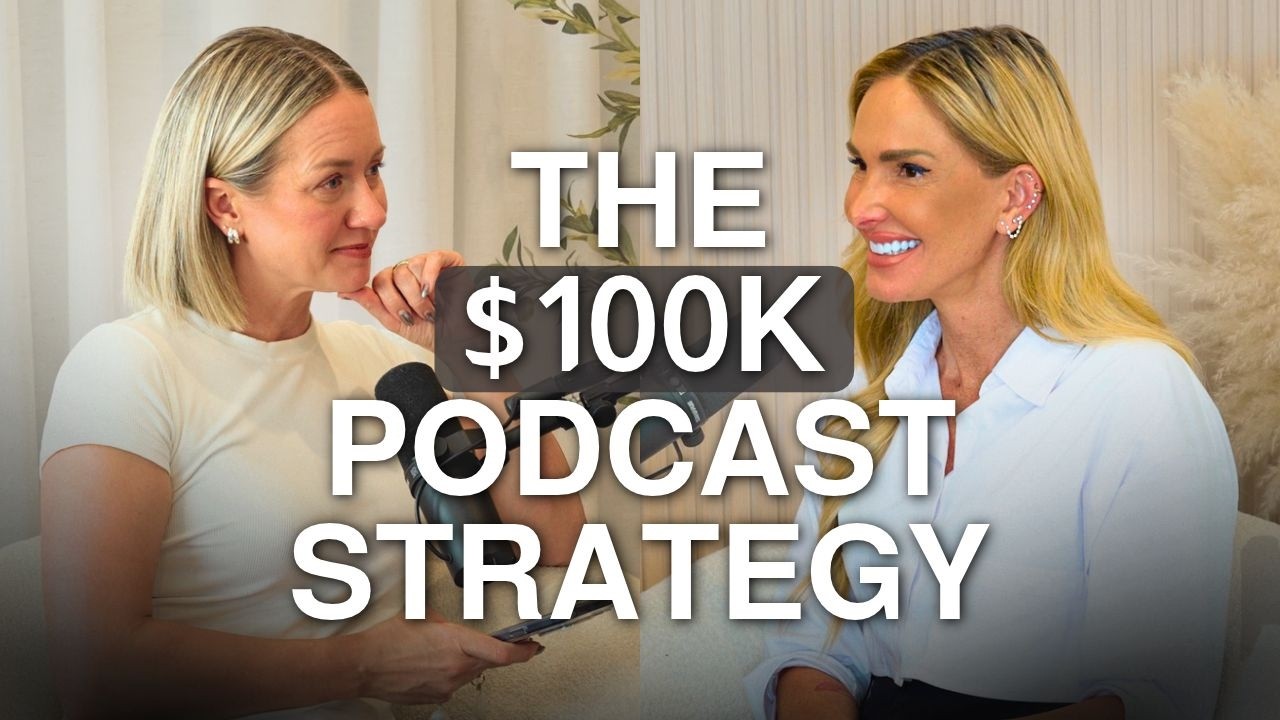
How to Turn Your Story Into a Million-Dollar Speaking Career with Erin Stafford

In this interview, host Lori Harder talks with corporate‑to‑speaker Erin Stafford about how she transformed a $11 billion healthcare marketing career into a seven‑figure speaking business. Erin shares the moment that sparked her transition, how she chose burnout and peak performance as her niche, and practical methods for building credibility—surveys, interviews, books, and data collection. They discuss mining relatable, everyday stories instead of epic tales, structuring keynotes without overloading content, and customizing talks through pre‑event calls and audience‑specific slides. Erin reveals her pricing strategy (from $8 k to $250 k+), common pitching mistakes, and the importance of a dedicated speaker website, professional photos, testimonials, and consistent visual branding. Rehearsal hacks such as confidence‑monitor slide duplication and cue‑cards are explained, along with how to handle technical glitches and stage anxiety. The conversation also covers marketing tactics drawn from Erin’s corporate background, leveraging corporate experience for relatability, and promoting her upcoming “Million Dollar Speaker” workshop that teaches the framework of packaging, performance, pitching, and profit for aspiring speakers. Throughout, both hosts emphasize storytelling as a critical skill in the AI era and provide actionable advice for building a paid speaking career.
Chapters
So often the stories that people relate to most are like the time that you were in the Target parking lot crying your eyes out and you didn't know what to do. You know, when my husband and I weren't getting along and I had an absolute meltdown 'cause I wasn't going after the dream that I wanted, I started throwing chicken nuggets at him. People love that story because they've all had a meltdown on someone that they love because they're not following their dream. Erin, I'm so excited to have you on the podcast. Thank you for coming on. I am absolutely thrilled to be here. Thank you so much for having me. Well, I've gotten to have a really fun, unique seat, um, with you as well, really getting to know you. Gotten to have a lot of lunches with you at our masterminds, got— gotten to really see you Um, interact in an amazing room of entrepreneurs, gotten to see your speaking style, gotten to see how you show up. Um, and it's been really awesome. And I, I can't wait to share you with everybody because I've also gotten to see lots of clips of you speaking and, uh, know what your zone of genius is and truly know that you are one of the top speakers in the world, which is real, like an incredible skill set, especially for right now. Um, and you know, I'm going really, really deep on storytelling and speaking because I do think in the age of AI, this is one of the most important things that we can do. And you have a really interesting story around how you went from corporate to making a million dollars in speaking, which is not an easy thing to do. So I would love for you to kind of start there for us and let's dive in for what that looked like.
Yeah. So like a lot of ambitious, driven, motivated people, I have lived my entire life by this mantra that if I work hard, I win. And if I don't win, I didn't work hard enough.
Oh yeah.
And so that has pretty much fueled my entire life. And I had a lot of different careers, climbed the corporate ladder, was ultimately the head of marketing for a massive $11 billion healthcare company. As you can imagine, doing healthcare staffing during the pandemic was its own special hell.
Oh my gosh.
I had my whole burnout experience, but I really had this moment where I was like, you know, I have a great job, I'm making good money, I've climbed the corporate ladder, I've got the team, I'm doing all the things, everything looks amazing on social media and on my resume, but I'm like, why am I so miserable? Why do I feel so unhappy inside? Like, this just doesn't feel right. And I really just had a moment where I was like, God, I think I'm done in this job. Like, I'd been there 6 years, I'd done what I was gonna do, and I really wanted to speak. And I'll tell you when the, like, aha moment happened for me. As a head of marketing, you know, we put on a bunch of events. And so we'd hired this speaker, and I knew that we were paying him $25,000 to do a keynote. And I just remember sitting in the audience looking at this guy giving his speech thinking, I could do that. I was like, this guy's no smarter than me. He's definitely no more charismatic than me. Like, he's not any better than me. I'm like, I could totally do that. And I think for me, it felt like such a— well, one, I like speaking, and, you know, I was a reporter, and this isn't a huge stretch from a lot of the stuff I've done before. But it really just, I had this aha moment of thinking like, I don't have to blow up my whole career. I don't have to start from zero. I don't have to choose a whole different career path. Like I can literally just take what I know, what I've already done, package it with a nice little bow and turn it into a speaking career where I'm still making good money. I was like, this feels amazing. Like, how do I do more of that? So. That was really the impetus and the starting point of becoming a full-time speaker.
Okay. So going from the moment of seeing him on stage and going, okay, I could do this. But what came up for me is going, what in the hell would I talk on? Like, where did, where did that, uh, start to enter in for you? Because I know some people were like, I would love to be a speaker. I know we have a lot of people on this podcast right now. who would love to speak, but I think that is one of the first blockers. We'll get to some other ones. Yeah, I think that's probably one of the first things is like, what do I, what do I have to say? Like, what's important enough to say?
Yeah, and I think, you know, once you've reached a certain point in your career or a certain spot in your life, we, we all have a lot of things we can talk about, and you have to pick one thing. As you well know, you cannot be a speaker that talks about innovation and AI and burnout and leadership and customer service. Like, you gotta pick one thing and go with it. I knew, even though my whole background had pretty much been in marketing and media and communications, I knew I didn't wanna talk about marketing. I was like, I have done this for 25 years as a career. Like, I'm— I love it. I, I, but I just, I don't wanna be a marketing speaker. That's not what I wanna do. And I had just gone through my own burnout. We had just come outta the pandemic. Mm-hmm. Where everyone and their mother was burnt out. And I worked with a, with a mentor who I kind of just verbally threw up on and told him my life story and all the things I thought I could speak about. And he really helped me hone in on burnout and peak performance. Mm-hmm. Just because, you know, part of it is just capitalizing on the right topic at the right time. And I do think, you know, I always say I had a little luck and a lot of hard work to get me to $1 million in 2 years with speaking fees. And I think part of one of the things that helped was that I did have the right topic at the right time. I started full-time speaking like 4 and a half, almost 5 years ago. We were just coming out of the pandemic. Everybody was burnt out.
Mm-hmm.
I had my own burnout experience. I also had a background in healthcare. So that was like, gave me so much credibility in the burnout space, and I just capitalized on that. You know, I was passionate about it. Like I said, I'd lived my whole life by this mantra: if I work hard, I win; if I don't win, I didn't work out. You know, like, I just, I'd been burnt out my whole life. Mm-hmm. And I knew so many people were, and so I just really zeroed in on that. But I think for other people out there, the key is What are you passionate about? What do you have some level of credibility in? And what do you actually want to talk about? Because you don't have to have climbed Mount Everest or, you know, walked across Antarctica or won an Olympic medal or started some huge company in order to be a speaker. There are ways to get more credibility in an area.
Mm-hmm. Okay, I love this. So many, you know, I'm kind of in the same world with teaching people how to be a better podcast guest. And the thing that comes up is, I don't know if my stories are good enough. Like, I don't, I don't know. And so I kind of want to dig in here because, you know, you actually just gave a lot of people relief even when you were like, well, I talked on burnout. Okay. Okay. Well, actually, a lot of people could probably talk on burnout. You're like, okay, you didn't need some crazy story about it. You literally were in corporate America. experienced your own burnout, probably had your own testimonial and your own transformation, and then started seeing other people who had it. Let's kind of talk about how you mine for those stories if you don't have, you know, if you feel like you don't have some big story. What does that look like?
Yeah, so there's a few different ways to go about it. Obviously, some people just have an amazing story. You know, there's a girl that's coming to my speaker training that was like a child bride in Burma and got married off at 15 and then created some huge multimillion organization and sold it. Like, that's a cool story.
Yeah.
Not everybody has that story. You know, obviously, if you're an Olympian, if you're whatever, like, those are natural stories. But if you are like me, just somebody who had a pretty good corporate career, and have now turned that into a speaking career, there's a few ways that you can become more credible in your area. And that could be things like doing a survey with thousands of people, collecting critical mass of data that you can then use As the basis of some of your credibility. You could interview people. You know, I did interviews with hundreds of people before I started doing this, and it all just started with like, who do I know? Who do I know that's got a cool job or that has reached some level of success that's probably dealing with burnout? And then I'd ask them, do you know somebody else you could put me in touch with? You know, um, things like writing a book. There are so many ways that you can self-publish a book now, or hybrid publish, that instantly will give you more credibility in a space. So writing a book, doing surveys, research, doing some sort of social media experiment. Maybe it's like, you know, there's another speaker who told himself he was going to get rejected 100 times, and that was like the basis of his talk now about rejection and resilience and stuff. So there's a ton of ways you can create more credibility in an area, but also when we think about stories, think about yourself going to events. Yes, you could hear some monumental story about somebody, you know, sailing around the world and dealing with some crazy catastrophe, but like, that's not most people. So often the stories that people relate to most are like the time that you were in the Target parking lot crying your eyes out and you didn't know what to do. Okay, how many of us have had that moment? Like, so many people.
Everyone.
And so we don't— we think of a story that we need to tell on stage as like some epic tale. It's like, no, dude, it could be when you had a meltdown in your closet trying to hide from your kids. Like, so many people can relate to those stories. It's just a matter of figuring out what you want to talk about, and then does that story help you tell The bigger story of what you want to talk about.
It's so good because I think when I think of all the speakers I love that speak, there are these very small stories that they tell that I'm like, oh, that's me, or, oh my gosh, that could happen to me, or they're very relatable. And I think of the stories that I tell on podcasts and on stage, I actually kind of steer away from my big stories. I don't tell a lot of stories around winning 3 fitness world championships. I don't tell stories about being on magazine covers. I actually tell these little stories about, you know, when my husband and I weren't getting along and I had an absolute meltdown because I wasn't going after the dream that I wanted because I had so much anxiety and panic attacks that I started throwing chicken nuggets at him. Like, and people Love that story because they've all had a meltdown on someone that they love over them not doing something because they're not following their dream. You
know, it's relatable.
It's relatable. So I, I just want everyone to hear, like, you— I avoid my big story. I actually avoid them. Like, I'll use that for pitching and maybe some credibility around getting on stage. But even that, Erin, I love that you shared, like, with what I'm doing, I'm, I'm, I'm building credibility in such a different way right now. And so For anyone listening, this is a huge blocker of like, well, I'm not credible enough in that area. But I love that you just shared, go do some studies, go do some surveys, go find a bunch of data.
And they don't have to be like, you know, peer-reviewed, like Harvard studies. Like,
no,
you can literally go survey 100 or 500 people through Google so easily and inexpensively.
Mm-hmm.
And collect some data. And the reality is, one thing I really want people to understand is your credibility will grow, your story will evolve, your speaking will evolve. Like, what I talk about now, yeah, it's still roughly peak performance and burnout, but it's very different, the talk I give today versus the talk I started giving 4 or 5 years ago when I first started this full-time. It's evolved. As I've gotten better, my story's gotten better, my delivery's gotten better. I think so often we think, oh, it has to be perfect immediately. No, there's a lot of organizations and groups that will hire you right now before you have the big New York Times bestselling book or whatever it is.
Yeah, I love that. What is, uh, a big mistake that you see when people are trying to pitch, like either corporate people trying to pitch for speaking or anybody?
I actually want to take it back a step further. I think one of the biggest mistakes people, new speakers make is trying to put too much in their keynotes. I think when you're starting out, and I was 100% guilty of this as well. Same. Yeah, we think that we've got to fill the 60 minutes with everything we possibly know on the subject, and we have to convince these people that we know what we're talking about and that we deserve to be there. And so our keynote turns into this like 60 minutes of us just like trying to prove ourselves that we know what we're talking about, and that's exhausting to listen to. And throughout the years as I've been doing this now, I'm like slowly taking things out of like, okay, this is too much information. They don't need 8 examples on this. Just give one really good example that hits, you know? We don't need 8 stats. Let's just have one or two that really make the point. You know, let's not give them 10 takeaways that they need to do. It's too much.
Mm-hmm.
Just give them 1 or 2 that they're actually gonna do. And so I think that's one of the biggest things I see with new speakers is just trying to shoehorn way too much in a keynote from the get-go.
One of the biggest traps I see entrepreneurs fall into is that the more successful the business gets, the less time they have to actually do the thing they started the business to do. And if you own any business that runs on appointments, You know exactly what I mean. You're serving clients while also trying to manage scheduling, payments, follow-ups, marketing, staff, and a million little things behind the scenes. That's why I think Gloss Genius is such a smart solution. It's an all-in-one system built specifically for service businesses that helps you get more clients, increase what you're earning, and bring clients back while automating so much of the admin that's eating up your time. Clients can book in seconds without creating a login or downloading an app. Their AI can answer calls and texts 24/7, help fill gaps in your calendar, and bring back clients who haven't booked again. And the results really got my attention. Businesses using GlossGenius grow revenue 26% in year 1, have an average 75% rebooking rate, and save about 40 hours a month on admin. Can you imagine getting that time back? That's an entire Work week back. And for an entrepreneur, time is one of the most valuable things that you can get back. Ready to earn more and get your time back? Go to glossgenius.com/earnyourhappy and use code HAPPY for 50% off your first 2 months of a premium plan. That's glossgenius.com/earnyourhappy, code HAPPY for 50% off your first 2 months of a premium plan. I don't have kids myself, but I'm surrounded by people that I love who do. Suddenly it's not just, am I gonna be okay? But I watch them say, are they going to be okay if something happens to me? And as an entrepreneur, that really hits home because we are planners. We'll spend hours thinking about how to protect the business, grow our revenue, build the savings, and prepare for every possible scenario at work. But some of the most important planning you'll ever do has nothing to do with your business. It's making sure the people who depend on you aren't left scrambling financially if the unexpected happens. That's why I think Fabric by Gerber Life is such an important resource to know about, especially if you have kids or anyone who depends on your income. Fabric by Gerber Life offers term life insurance you can get done today, made for busy parents like you, all online on your schedule, right from your couch. You can be covered in under 10 minutes, often with no health exam required. If you've got kids, especially if you're young and healthy, the time to lock in low rates is right now. If you have life insurance through work, that's a good start, but it may be less than what your family needs and could disappear if your job changes. Term life from Fabric stays with you. Flexible policies built to fit your family and your budget. And as long as premiums are paid, coverage follows you wherever you go. There's no risk, 30-day money-back guarantee, and you can cancel at any time. Plus free digital walls and tools to help invest in your kid's future, all right from your phone. Fabric has partnered with Gerber Life Insurance Company, who is trusted by millions of families for over 50 years and rated excellent on Trustpilot with over 2,000 5-star reviews. Join the thousands of parents who trust Fabric to help protect their family. Apply today in just minutes at meetfabric.com/earn. That's meetfabric.com/earn and use my link so they know I sent you. meetfabric.com/earn. Policies issued by Western Southern Life Assurance Company, Cincinnati, Ohio, which operates in DC and all states except New York and distributed by Gerber Life Agency LLC using Fabric Technologies. See meetfabric.com for additional disclosures. This is a paid ad. So for, for people who are new and are starting to be like, Huh, this could maybe be something for me. I kind of want to know about the opportunity because I do think you have to really focus and go all in on this if you think you're going to do it. Because even for me who's dabbled, it's kind of like, hey, I haven't really made great money from actually speaking. I've gone and spoke a lot for free and sold my stuff on different stages that were aligned fits. So I'd kind of love to hear your thoughts on that, becoming a true paid speaker. Speaker.
Yeah.
Is that what you mainly want to teach people?
100%. Yeah. And I just want to make the clarification, there's a couple different types of speakers. So yeah, I would consider myself a corporate keynote speaker.
Yes.
It's going to be very different than somebody who speaks for free and sells on stage.
Yep.
Both are fabulous, both can make you boatloads of money, but they're two very different things. So as a corporate keynote speaker, I am getting hired by associations and by organizations I get paid a speaker fee to come show up and speak on their stage with the expectation that I'm not going to be then trying to sell the audience into more stuff and get them to sign up for my course or my mastermind or my this or my that. That is definitely frowned upon.
That's a big no-no and could get you not speaking ever again.
100%. Yes. So, okay, again, very different than if I was going to show up at your event that you're hosting on your own. I maybe am not getting paid to be there. But you're saying, yeah, Erin, this is a great audience for you, feel free, you can sell them into your course or whatever. Very different things. And so as a corporate keynote speaker, you are getting hired by organizations and associations for client offsites, you know, corporate offsites, all-hands meetings, sales kickoffs, associations, you know, they do national conferences every single year with budgets allocated for speakers. So There are truly endless opportunities for speaking engagements ranging anywhere from, you know, $3,000 to $5,000 up to, you know, $250,000, $300,000 depending on your level of celebrity. There's a lot of opportunity to make a lot of money.
Okay, I love hearing this. And there are people who really, they just want to know, like, I'm gonna line up these speaking gigs, I'm gonna Get to go speak, get to go perform, um, get to go talk about the topic that I love and be getting paid, which feels really good. I know that you are, you know, you make 7 figures from speaking. Is that something that is possible for people? Does this happen right away? Do we work up to it? What, tell me about that.
Yeah, so we really, like everything, it depends. Obviously, if you have a massive social media following, that gives you more credibility. If you have some level of celebrity, yeah, you can start charging more than I did. You know, if you're a founder of a successful organization, yeah, you can charge more right out of the gate. You know, people like Brené Brown, I think she's like $250,000 for a speaking engagement, but she also only does like 5 or 6 a year and doesn't want to do more. You know, so it really depends. For me, somebody who is not a celebrity, Olympian, any of those things, I, my very first speaking fee was $15,000. Now that felt like so much to me at the time, but the mentor I was working with was like, no, Erin, based on your background and stuff, you can charge $15,000. I was like, well, what the hell do I know? Sure, I'll just do what you say. And honestly, I started getting paid $15,000. Now, yes, of course, sometimes they don't have $15,000, so you take $10,000 or you'll do it for $8,000 or it's a virtual. So you're like, yeah, I don't have to leave my house. I'll do it for 6. You know, like, it really varies, but it is very— like, what am I trying to say? It's very common to get anywhere from $3,000 to $15,000, $20,000 for a speaking engagement. There are an awful lot of talks available in that range. Once you go higher than $20,000, $25,000, That's where it gets started, starts to get a little harder to get hired at that fee because they expect a lot more from you. They expect you to have a level of authority, credibility, celebrity, etc. But for a lot of— I mean, you can still make a hell of a living, $300,000, $400,000, $500,000, $600,000, $700,000 a year charging $10,000, $15,000 a talk.
Yeah, for sure. It's a— it's an— it can be an incredible career. Are you switching? How often are these people like switching keynotes? What does that
Yeah, so that's, you know, it's an interesting question because obviously you wanna stay relevant and you want to stay with your finger on the pulse of what's going on in the world. But at the same time, you can't be seen as constantly wishy-washy changing your topic all the time. You can change the subtitle, you can change it with a slightly different direction, but I mean, you'll see right now, like AI is the topic of du jour. And there's a lot of speakers out there now trying to be AI speakers, and I'm like, I am not an AI speaker. That is not my area of expertise. That's not what I talk about. I'm not going to try to be an AI speaker, but I still need to adjust my topic to account for this AI revolution that's happening in the world. I'd be doing myself a disservice if I just completely ignored it. So there's that fine line between stay in your lane, don't try to be all things to all people. I'm the burnout girl, but I still have to know what's going on and stay relevant. So I think most speakers are not changing their topic every single year or even every couple of years. I think people will adjust their topic as they come out with a new book, or maybe they've done some new research or a new study. But usually it's not like a hard left. It's not like, oh, I talk about leadership and now I'm talking about customer service. You know, it's just like a new spin on leadership.
Okay. For me, looking back, when I had started doing some keynotes, oh my God, Erin, I wish I would've known you back then because I did a new talk every time I spoke. And I was speaking on not a lot, but like 5, To 8 stages a year that were anywhere from 500 to, you know, I mean, if we were doing network marketing, 500 to 15,000 people. I was switching every time. I was exhausted. I never felt good about the talk ever because I was delivering a talk for the first time every single time.
Yeah.
I had so much anxiety I couldn't even handle it because again, delivering a talk for the first time every single time and So can you, for people who maybe felt like I did, where it was like almost not worth the anxiety for me to get on stage, how do you help people through that? Even though I knew I wanted to be a speaker and like, I still deeply have some anxiety, it helps doing the same thing over and over again. But how do you help the people who that's, that's like their, their biggest fear right now?
Well, first of all, yeah, you can't be doing a whole different talk every single time because it just kills you. It's exhausting. You never feel like you truly know your content. You're always like, oh crap, what— where are my notes? Like, what comes next? You just can't ease into it. You also don't get enough reps doing the talk because so many of like the really good one-liners I have in my talk are just random things I said off the top of my head one day that really landed. And then I was like, oh. Okay, I gotta, I gotta make sure I include that every time now. But if I was doing a talk, different talk every time, I would never know that. So part of it is customizing your talk. So if you have, let's say, one solid keynote that's 60 minutes, let's say, I mean, for me right now, I pretty much do the same talk, but I would say there's maybe 75% of it is the same talk. And then I customize the 25% based on the audience, based on what's going on in the world, what You know, so I'll swap out statistics, I'll swap out a couple stories, I might swap out a couple anecdotes, but I'm not changing the entire talk. And so that way, I still feel confident with what I'm saying, but the audience still feels like I'm talking to them, and I'm not just using the same regurgitated talk that I've done 1,000 times.
I love that. But your core is still so innately in you. And—
Well, yes. Oh, and another thing I forgot to say, You can also just change the title and change the subtitle. And, you know, I maybe have 3 or 4 content pillars in my talk. Change the name of them. It's the same damn content pillar. Just give it a different name that, like, resonates with that audience. You're still doing the same thing, but you're just making it applicable to that group.
That's huge. Um, so I, I love that you are, you know, for anybody listening, even if they don't want to be a corporate speaker or a corporate Speaker.
Yeah.
Um, this is so valuable for anyone to hear because these are— this is essentially just all of the tools and tricks for also speaking anywhere and on stage,
presenting at a,
at a meeting
or something,
you
know, just feeling more confident. I think so much of the anxiety and fear comes when we don't know the content, when we feel like we're not prepared.
Mhm. That's where all of my anxiety came from is, yeah, I had these slides and yes, I rehearsed hours and hours and hours, but you know, 15, 20 hours is still actually not enough without doing it over and over and having it in your body. You know,
I also have some tricks for how you can do that. So
do tell, do tell.
A couple of my favorite tricks for doing that and like remembering your content. So if you have a, what they call like a down screen monitor or a confidence monitor when you're presenting, Or even if you're just in like a conference room and you have your computer in front of you and maybe there's a screen behind you, put it on presenter view so that you can see it. And then what you can do is you can duplicate the same slide over and over again, okay? And then put different notes underneath the slide so that you're not like having to scroll through the notes in the presenter view. When you click through it, the audience has absolutely no idea that you are changing the slide. To them, they think it's just one slide. But for you, your notes are progressing in the confidence monitor so that you can actually like read more of your notes or reference them, even if it's just little bullet points. That saved me so much my first year. And
I've never thought of that.
Yeah, because the audience has no idea that you're— you've got 18 of the same damn slides in there. You know, it's— they just see the same slide. They're like, oh, she's really Going deep on this one. And then another thing I like to do is, let's say I'm telling a new story that I'm still kind of like, I just don't fully have the story down yet. I will put a bunch of slides up that help me maintain the arc of the story. So maybe at the beginning it's like, and that was rock bottom. Mm-hmm. And I'll literally say, that was rock bottom. On the screen, and maybe I'll have a photo of something. And then, you know, I'll have another one that said, this was the turning point, or another one that says, you know, I don't know, some— I knew I had to make a change, whatever. Just the, like, key phrases of the story that help me remember, like, oh crap, what comes next? Oh yeah, yeah, yeah, that was the turning point. Okay, this is where I talk about this. Like, the audience again has no idea. That you're using these slides to keep you on track, but they're really helping you anchor your story along so that you remember where you're going. Those are like 2 of the things I did my first couple years that really helped me.
I love that. I'm, I'm huge on slides doing that same exact thing because I was trying to memorize things myself, or just like, okay, if I can just remember these 4 bullet points, this will help me through the story. No.
Yeah,
I really used a confidence monitor like you said, where only you see some of the slides. And then as I progressed, I was able to go with the big screen that everybody saw and kind of able to use those to prompt the, um, the transitions. I kind of just needed the transition slide to tell me what was coming next.
Yeah, and I mean, the goal is to not be reading everything off the confidence monitor But let's be real, like when you first start, you tend to be a little bit more reliant upon—
I did, I did do that.
That plot is okay. Nobody is really paying attention. And the reality is, your first few speaking engagements probably aren't gonna be on stages for 10,000 people anyways, you know? So they're, they're not gonna care. They're really not gonna care if you're doing that.
You know, I even, uh, here's worst case scenario, you're Your teleprompter goes out. Um, but I like, I even had backup. I like had it on my phone, I had it on notes, and I was like, okay, worst case scenario, this goes out and I literally pull my phone out and have to say, hey, I'm gonna use my phone notes. Like, I think you have to have so much like willingness to be seen kind of being messy on stage, and I think that's what scares the shit out of people.
But that's what the audience likes. Most. I mean, think of yourself when you've gone to see a show or a comedian or a musician or whatever, and something happens and they're like, oh well, looks like this mic's not working. That's the stuff that's relatable. And yeah, as an audience member, that's the stuff that makes me laugh, that I feel like, oh, like you are rooting for that person, you know? I think speakers sometimes forget the audience is often rooting for you.
Now,
that's not to say that there aren't difficult audiences at times. Of course there are. But I think for the most part, people wanna see you succeed and they're rooting for you. And—
I think so too. I think people realize that it's one of the scariest things that a human can possibly do. And I think majority of the audience goes in and is like, come on, we want you to win 'cause this would be better for all of us.
Yeah, yeah, yeah.
Oh
yeah, absolutely. And you know, the reality is, as you do it more, as you get in the reps, as you get better and you get to know your content better and you've gotten the same feedback time— I mean, I'm sure you get the same feedback all the time. I get the same feedback all the time. Like, it's probably 3 or 4 things that everyone says when I speak. But then when you have an audience that's totally just not your audience— and trust me, I'll happily go give my talk to them if they're paying me— but I don't take it as personally Because I know it's not me and it's not my content. We just weren't the right fit. The very next day, I could do the same talk to a different audience and get glowing, you know, reviews. Oh my gosh. And I think the more you do it, the more you realize this just wasn't the right fit for my message at this time. Maybe in a year that audience would be perfect for your message, but right now in today, you know, that, that wasn't the right message for them.
So what do you say in the beginning? Do you think people should just take whatever stages kind of come to them to get reps, or should we be a little more particular in the beginning when we're speaking?
Again, I think it depends on your circumstances and your background. Obviously, if you are making boatloads of money and you have all this amazing success, like, yeah, you could probably be pickier and cheesier. You know, Bill Gates isn't speaking at his local Elks Club. You know, like, but like, if you are just starting out and you— let's just assume you don't have the celebrity factor or the Olympian factor. I do think there's a lot to say about just getting in some reps. Now, that's not to say that you need to do this for free forever, but doing it for $500, for $250, for $1,000, like that's very common for people to pay that amount. Even if you're just doing it for that, I always would say if you're agreeing to something for free or for a very low fee, negotiate in a testimonial from them. Negotiate the fact that you can use their logo on your website. Get video footage or photos of you speaking there. Make sure it's worth your while in some capacity, because Lord knows I took a lot of inexpensive, you know, events when I first started, but I always was collecting logos, collecting testimonials, collecting photos and video so that I could continue to grow as a speaker. And the reality is you've got to have photo and video and testimonials in order for people to believe that you can do this and hire you.
I'm literally still in that process of like really learning that, like wherever you go speak, hire a video crew, hire a, a small influencer that you find online who can come and just like video for you, who understands it.
Yeah,
uh, because that's how you're gonna get booked on any next stage. And I think one of the other big things I'd love to hear from you is about, you know, people probably find you a lot from obviously pitching, but maybe from seeing your social too and actually seeing you speak. What are some things that are often missed that people don't do if they want to really be seen as a speaker and start speaking?
I think one of the biggest things is have a website that is just dedicated to you as a speaker, even if you haven't even spoken yet. Create a separate website because most people have had like— maybe they're consultants, or maybe they've run a different business, or maybe they're an executive at some sort of organization. Buy a URL, have a whole separate website set up just for you as a speaker. Have your bio that's focused around what you wanna talk about, not your whole life story and everything you've ever done in your career. I mean, if it's applicable, great, but have your bio focused around what you're talking about. Have a couple session descriptions. This can be the same talk, but give it 2 different slants. Maybe one's a leadership focus and one's a, you know, motivation focus, but it can be the same talk just with a different spin. Have some photos and testimonials and logos of companies you've worked with. And even if you haven't spoken for those companies yet, and maybe this is controversial, but I would do it, put their logos up. If you've worked with them in a capacity as a professional, put their logo up. You can— I wouldn't claim that you've spoken for them, but you could certainly say worked with, you know, like maybe that's shady. I don't know. I would do it though.
Some of my favorite finds ever have come from tiny local shops I stumble into when we're traveling. Chris and I used to RV across country for a few years in a row, and I will tell you, there's just a different feeling walking into a small business versus a big box store because everything on those shelves got picked by an actual person who loved it. And running my own product-based business, I know how much work goes into building that kind of trust through your inventory, and every item you stock is a decision about who you are and what you love. And that's why I wanted to talk about today's sponsor, Faire. Faire is a B2B marketplace connecting independent retailers with brands that actually reflect their community's character. We're talking access to over 100,000 unique brands worldwide. Huge timing if you're planning holiday inventory right now or holiday holiday gifts. If you own a store, think about what that kind of selection does for you. Unique quality products are what make people stop, walk in, and keep coming back. Faire makes the logistics easy too— streamlined ordering and reordering, 60-day interest-free payment terms for eligible retailers, and free returns on your first order with every brand. Faire has already given over 700,000 retailers To that whole network. Sign up today and get 50% off your first wholesale order up to $100 at faire.com/happy50. That's faire.com/happy50. Terms may apply. My relationship with money has changed so much over the years. The older I get, and especially after becoming an entrepreneur, the more I realize making money is only one part of the equation. You also have to know where it's going, what you're building, and whether the decisions you're making today are actually moving you toward the life that you want. That's why I think Monarch Money is such a smart tool. It brings your financial picture together in one place, your accounts, investments, savings goals, and spending. So instead of trying to piece everything together in your head, you can actually see what's happening. And I love how practical you can get with it instead of only telling you what you've already spent. Monarch can help you set goals, map out a big purchase, and see whether you're actually on track before it's too late to adjust. You can even ask Monarch's AI assistant questions like, how much did I spend on travel last summer? Or can I actually afford this vacation without touching my savings? And their AI weekly recap can flag things like spending spikes, net worth changes, and upcoming expenses. It's almost like having a financial advisor in your pocket, helping you pay attention to the things you might otherwise miss. Write your own money story with Monarch. Use code EYH at monarch.com to get your first year of Monarch Core half off at just $50. That's 50% off your first year at monarch.com with code EYH.
Have your contact page, have a couple photos, professional photos of you. You know, I, a friend of mine used to always say, you don't have to be good looking, but you need to look Good.
Like, so true. You have a good— just have a good photo.
Have a good photo. You do not need to be, you know, God's gift to mankind in terms of what you look like. But you need to look good. Get your hair done, put some makeup on. Men, get a haircut, shave, do whatever. Like, find an outfit that photographs well. Get the lighting good. Get a couple good photos of yourself, throw them up on the website and just start positioning yourself as a speaker. Because as you're starting to pitch yourself, or if people are finding you through social or online, if they get to your website and they're like, oh wait, so this girl, she, she's a consultant and she does masterminds and she does a— has an online course. Oh, it looks like she's an influencer too. Oh, and I think she speaks. It's confusing. You want to— I mean, you know this more than anybody. You want to give people one simple thing for them to do. So if they go to your speaking website and all they see is you as a speaker, it makes it easier for them to see you as a speaker and to book you as a speaker. And now with AI, I mean, you could whip up a website in a day. It's so— less than a day, you know?
Truly. I know, you know, I know, you know that. And your site was awesome. We were chatting about this with Replit. Like, you guys, you can look insanely professional now. It's taken out that barrier of entry. So if you do feel like you could be an incredible speaker or you are an incredible speaker, now you don't have to have like this huge team around you who has to do all of the design. And like, that's such a barrier of entry for people. So now it's really eliminating so many of the excuses. Um, I would love to know for you, you know, you have, uh, 25 years experience in corporate America.
Yeah.
What kind of edge has that given you that you can kind of, uh, Share with us.
I think for me, how it's helped me is understanding the nuances of how corporate America works. And I share so many of those little anecdotes and things on stage that I think really help me be relatable with audiences because I know what it's like to have a boss that's a jerk. I know what it's like to sit in a meeting with people that just will not shut up. You know, I know what it's like to be in back-to-back calls or meetings and you don't even have time to pee. You're like accidentally fasting, which is like intermittent fasting with more meetings. Like, you just don't have time to do anything. And so I know the office politics, like, I know all of that stuff because I've lived it for so many years. And so I really try to incorporate a lot of that stuff into my keynotes. Because the people sitting in the audience, often that is the life that they are living. And so it's fun to be able to relate to them in that capacity.
Okay, so that takes me to my next question where, you know, when I go and speak in front of different audiences, I— one of the ways that I kind of tweak a talk, uh, or podcast audience as well, is to really think about who that audience member is. Can you give us kind of— do you do a method around that when you're really thinking about what can I pull in, how can I relate to this person? What does that look like throughout a talk?
Yeah,
to relate to them.
Yeah, so this is something that I've kind of perfected over the years, but for every talk that I do, I have a pre-event call. And this is pretty common. Pretty much every client will ask you for a pre-event call. Pretty much every speaker does a pre-event call. And on that call, I have a very specific set of questions that I ask the client. Now, those questions are very specific to me and my talk. So I'm asking questions like, what are the biggest stressors facing this group right now? So I'll get 4 or 5 stressors. Well, I have a spot in my keynote where I talk through the stressors that are facing this audience. So it's like I ask that question and I slot that answer directly into this one spot in my keynote. I have another question where I'm asking them something, and then I slot that in another place directly in my keynote. And so It's made it much easier to customize the keynote because on the prep call, the questions are worded in a way that give me the answers I want so that I can just slot them into my keynote. That's one way. Another way is simple things like I'll swap out photos. You know, if I'm speaking to a predominantly male audience, I'll have mostly male photos in my deck. If it's mostly a women's audience, I'll have women's photos. If they're, you know, healthcare workers, I'll make sure I have photos that reflect them. Again, it's just a small little way to make sure that the client and the audience feels seen.
Mm-hmm.
I will often swap out statistics. So I have one, uh, and I'm, listen, I'm not a statistician, I'm not an economist. Like I don't have a ton of statistics in my talk, but I have a couple. And it's like the burnout epidemic, you know? Mm-hmm. So sometimes instead of just a global or a US number, I'll specify like US healthcare workers that have this much burnout or whatever.
Mm-hmm.
Um, so those are some of the small ways. And then, you know, I really don't try to force a story to fit an audience. If there is one that I have, great, I'll swap it out. But I'm not always like sitting here racking my brain being like, I need a story that's specific to Engineers, because I think that's a really great way to make yourself feel uncomfortable and not sure of your story.
I'd
rather tell a story that I know lands that isn't about their industry than a story about their industry that I'm uncertain of, and then I just look like a moron up there talking about something I don't know about.
Can you tell me about some of your, um, keynote or speaking fails that taught you the most?
Oh, God.
Maybe moments at all that you have?
Yeah. I mean, I think at the very beginning, being too reliant on the confidence monitor. And not every talk will have a confidence monitor. And I remember I spoke at this big women's event. Mel Robbins was the keynoter, and I was— Oh my God. I was doing a breakout session. So she was on the main stage with 10,000 people. I was in a breakout room. Which still had like 400 or 500 people, and there wasn't a confidence monitor, which again, as a reminder, in case for anyone listening, it's where you, the speaker, can see your notes and you can see like the next slide and what's coming up. You can reference it.
Like a big TV kind of on the floor tilted up to you.
Yeah. So I didn't— there wasn't one in there, and I didn't realize that. And it was really this like come-to-Jesus moment of like, okay, well, buckle up, sweetheart. Uh, you're doing your talk, you better know it. And it went pretty well. It did go pretty well. But I certainly had a moment of like, holy crap, like, I don't— I, like, I just have to go with it now. But the beauty of that is the audience has no idea what you meant to say. Like, if you skip a story or you botch something, they have no idea. Yeah. what you were planning on saying. So that's one big one. Oh God, there's been— I feel like there's been so many. There's been so many technology meltdowns. Oh my God, one of them cracked me up. And you can't even— some of this stuff you cannot plan for, okay?
No.
I was speaking at an event and it was in Vegas. And so there, you know, there's a million ballrooms with a million different events going on at any one time. I was on one level and then directly above me there was another conference room on the, the floor above me in the middle of my talk, my slides just started going crazy. They were all advancing and moving and changing. And I was like, oh my God, what the heck is going on? I, I, I'm not touching anything. And the AV guys could not get it together. And so the, the whole rest of the talk was just sort of botched. And I just was like, okay, whatever, screw it. We're not gonna use the rest of the slides. I'll just finish my talk. And the audience was lovely. They were laughing, but not like at me. They were just laughing at the, Craziness of the whole situation. Turns out another company had just loaded into the, the, the ballroom above us, and somehow their clicker and our clicker were on the same frequency.
Oh my God.
So they were controlling my presentation. I mean, this is the stuff you just have to— you're never going to prepare for everything. You just got to roll with the punches sometimes.
Oh my God. Nothing. And honestly, nothing is worse than that. I've had click— I have had clickers that don't work and I'm like, oh my God, I just, I literally don't get to use my slides today.
Yeah.
That's what's going on in your head. You're like, oh shit. Oh my God.
Yeah. But again, I mean, as you're starting out and you don't know your stuff perfectly, like it is totally acceptable to have notes if you need them or have them right off stage. And if something happened or put them on the lectern and if something happened like that, Just be like, okay, hey guys, looks like we're not doing our slides today. I'm gonna use my notes. People don't care. They really don't care.
No, they don't. You better believe I keep backup notes in case it doesn't work. And I'm like, could somebody grab that for me?
Yeah.
Thank you so much. Thank you. Um, okay, so you have, you know, when back when you were, um, at your, at your day job, we'll call it, you really helped scale a company. You were part of a team that helped scale a company. I believe it was like 27 times. Where it was at. What did you learn about that for marketing yourself? Because people aren't just gonna go and land these things. It does take you putting effort behind getting on stages. So what have you learned from that?
Yeah, I mean, I think I was fortunate in that I was the head of marketing, so I have a marketing background. I love design and fonts and photos and graphics and colors and you know, copy and websites. Like, I have a background in that, and so it helped me. I had a large team of like 60, 70 people, and so I was able to use a lot of them to help me get my assets created immediately. Obviously I paid them, but like, I had already hired all these people to be on my team at my office, so it was easy for me to then call them to say, hey, can you make me this? Can you help make a website? Can you create these graphics for me. Um, so that was super helpful. I think, you know, when I first started at that organization as well, we were very much the little fish. We— I used to laugh and say it was like DIY marketing. Everybody did whatever the hell they wanted to do. There was no rules. It was just no holds barred. And I had to come in like the brand police and like get them dialed in. And I took that same approach with my, my brand as a speaker, you know, really dialing in my photos, dialing in my color colors, dialing in my fonts, making sure that everything I do visually looks like it's come from me. And I think using a tone in my copy and in my social that's— I'm a very no bullshit, keep it real, straight to the point sort of a person. Yeah. And I feel like I still, I kept that approach throughout everything I do, which helps hopefully make it more recognizable. But again, I, I, I really also think being able to commit to something and try it out, I learned as well. Our CEO was a very challenging man to work for, but he was truly the most brilliant human being I've ever met in my entire life. He passed away last year, um, sadly of cancer at 51. He was so young, but he was a genius. And he was absolutely unfa— like unfrazzled by anything. And so he would just launch stuff. He was so quick to market. He was so quick to try something new, to fail fast, to make a change. And I think I've taken a lot of that on with my, my speaking as well and jumping into this career and just thinking, you know what, what's the worst that's gonna happen? This doesn't pan out, I can go get another marketing job. Like, I had a good marketing career. I could go get another marketing job. I'm not worried about that. And so I just kind of jumped in and thought, well, what the hell do I have to lose? Like, just do it. You know, even the speaker training that I'm, I'm hosting in a couple weeks, like, part of me is like, oh, maybe I should have waited till next year. I would have had more time to market it, blah, blah, blah. No, no, let's just go. Let's try it out. Let's do it now. You know, act fast.
Yes.
Figure— fail fast, figure it out later.
Okay, let's talk about that because you are, um, hosting an event. And yeah, I loved watching you. An opportunity had kind of arisen of us chatting about like, well, obviously you're a professional speaker and you know this better than anybody. You should teach people how to speak if that's something that you're interested in.
Yeah.
And an opportunity kind of presented itself for you and you're like, YOLO, let's go, let's try it.
Yeah.
And, and honestly, it's the only way that I have ever done anything is like, we're just gonna try it, it's just gonna be, you know, data. And, um, we are going to teach people all the inside secrets of everything and get them to this awesome place of feeling like they could go and do this if they wanted to. Talk to me about the event and exactly who it's for.
Yeah, so the event's called Million Dollar Speaker, and it is November 6th and 7th. We're hosting it in Hollywood, California at the W in Hollywood, and it is really teaching the framework of how I went from $0 to $1 million in speaking fees in 2 years. So it is perfect for somebody who has never spoken before, who has an interesting background or story or career, and is like, hey, I would like to be a speaker. It's also great for people who are speaking a bit but want to take it to the next level. Maybe they're only doing a few a year and they really would like to do more, or they've done a lot of free events and they're like, okay, I actually want to get paid for this and want to take it to the next level. It is not for somebody who's been speaking for 20 years and is already getting booked a million times and stuff. This is definitely for more just starting out or have never spoken before. Um, and we really break it down. So it's an opening reception on the 6th, and then November 7th, it's a full day of programming. And we are talking about how to package yourself, how to perform, like stage performance. We're talking about pitching and we're talking about profit. So it's really like 5, 4 or 5 different sections of like getting the lay of the land. How do you work with speakers bureaus? What are they? What's a speaker's manager? What's the commission structure look like? How do you get booked? How should you position yourself? Because obviously the people that I speak to that I help are people that have interesting backgrounds. But like we talked about earlier, there's a million ways you could package yourself and really looking at, okay, I know that's what your area of expertise is, but that's not broad enough to get booked by multiple people in lots of different industries. So how can we Take your background and your story and experience and maybe level it up a bit so that it's a little bit more broad so that we can get people hiring you from like Dell and Apple, but also like the Plumbers Association of Idaho would also hire you because you've got an interesting story that's applicable to them. So really thinking through what's that packaging, what's that positioning looking like? We talk through stage performance and storytelling and working the stage and not pacing constantly back and forth on stage and eye contact, pitch, all of that stuff. We talk about pitching, how to really find speaking engagements, what you can charge, and then we talk through profit of like, what does this look like? What's a reasonable amount you can make? What is spin? How do you do all of that sort of stuff? And how do you continue to market yourself? How do you you collect email addresses in a, in a good way so that you're not getting in trouble from sailing on stage, but you're, you're able to then market to those people later. So it's really a whole framework— package, performance, pitch, and profit— about how to get yourself positioned and paid as a speaker.
I love that. And the thing is, is whether you want to make this a huge career or not, this is a skill that people need to learn. Like, honestly, one of the things I did early on is I took, um, speaker, like, training and courses really early on when I was in network marketing, just because I needed to learn how to package myself and speak at a dinner party and speak in front of people and speak in a small room and speak in a big room. And people are leaving so much money on the table when they don't understand how to package themselves and learn how to package their stories in multiple ways.
Yeah.
And learn that their little stories are the big stories. And so I actually think this is a skill that everybody needs in the age of AI. Like, you must learn how to storytell and package yourself, and it's the only way that anyone is going to hear you anymore. Um, and it really is an art. It is an art. So you guys go check it out. Yeah. I will make sure I put those links in the show notes for your event in Hollywood. I mean, who doesn't want Go to Hollywood in California, you guys. It's so much fun, and you get to be in the room with a pro who literally does this for a living, and there's no better person to learn from. So, Erin, thank you so much for coming on.
Thank you,
and I'll put all your links for them to find you, follow you. What's the IG handle?
Instagram is Erin M Stafford.
Amazing. Erin M Stafford on Instagram, and then we'll make sure. That you guys can go find all the links below in the show notes. Just scroll, scroll down and you'll be able to find her and the event. Okay, Erin, thank you so much for coming on.
Thanks for having me.
All right, everyone, we will see you next time.
More from Lori


Zynga Founder Mark Pincus: How to Test Your Business Idea Without Wasting Time & Money