Zynga Founder Mark Pincus: How to Test Your Business Idea Without Wasting Time & Money
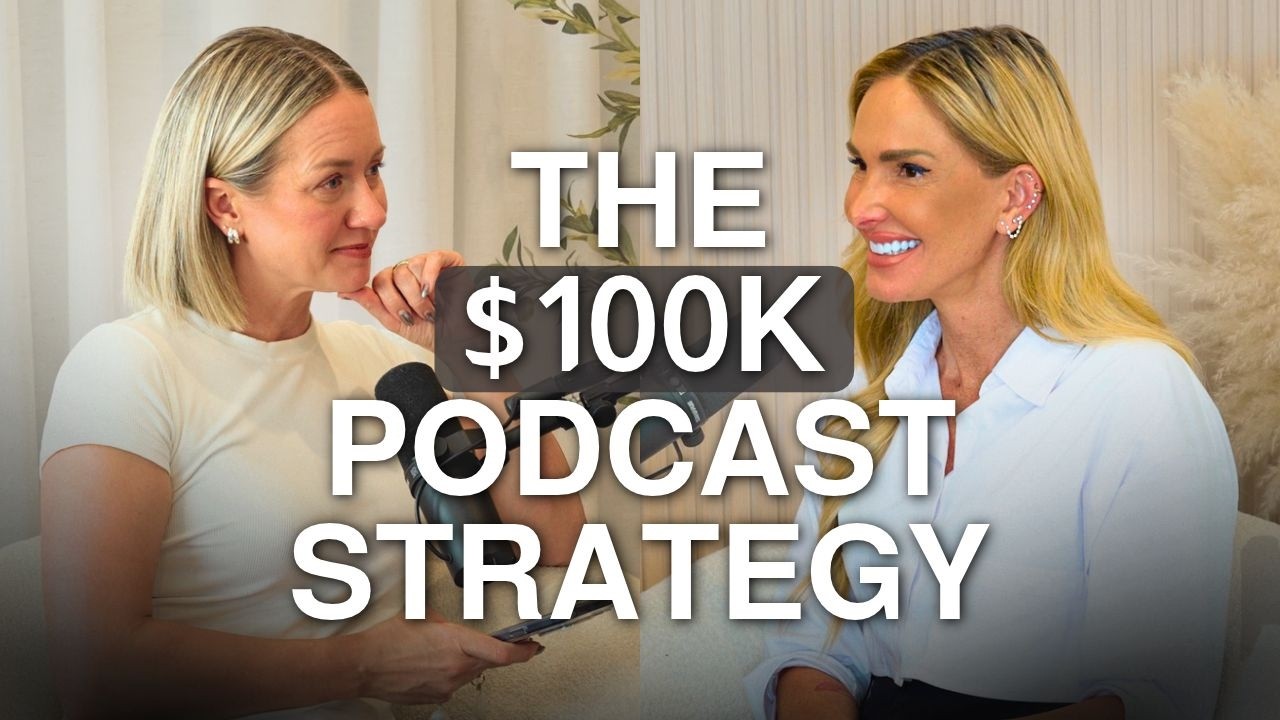
In this interview, host Lori Harder talks with Zynga founder Mark Pincus about how entrepreneurs can test business ideas efficiently without wasting time or money. They discuss the influence of a Midwestern upbringing on product intuition, introduce the Proven/Better/New framework for evaluating ideas, and emphasize a product‑mindset that treats the founder as a "focus group of one" to quickly validate concepts. Mark critiques the over‑hype of AI, suggesting founders should train AI tools to be skeptical rather than overly optimistic. Lori shares a real‑world example of developing a daily hydration‑stick supplement, illustrating how to apply the framework, identify proven elements, improve (better) aspects, and create truly new value. They explore metrics for success, the importance of top‑of‑funnel testing, and the role of gamification and fun in driving engagement. The conversation also covers monetizing podcast guest appearances through a 6‑week accelerator, and includes sponsor reads for Monarch Money, Fabric, Quince, and Indeed. Throughout, both guests stress disciplined testing, clear success/failure criteria, and iterating based on real user signals rather than intuition alone.
Chapters
AI now. I think it has either created for people a lot of excitement because things are just going fast.
Yeah.
But it's also created a lot of the mentality of like, can I even do this? Can I even get this out there? How do I know what's good?
Go do your homework. I see too many founders, they mistake passion for necessary domain expertise. And I'm not saying you need to go be an expert, especially with AI, but don't Fail for the wrong reasons. So my idea for you is just have a section you call like the green room or something where you just, you just record, start recording When we have like our preamble talk and, you know, that stuff, I just find more kind of more interesting stuff comes up there.
Yeah, I feel like every single podcast that I do, I'm like, what we were just talking about that I wish I would have hit record on.
Yeah.
So yeah, um, you know, I noticed that you are from Chicago. Were you born and raised there?
Yeah.
Okay, I'm a Midwest girl, so
Where
are you from? I'm originally from Upper Michigan, the Upper Peninsula.
Do you show on your hand where you're from?
I show— well, you're on the lower, but I show on the upper portion of Upper Michigan. So I'm way up here and then Lower Peninsula is down. Am I doing it right? I can't even tell.
The UP, yes.
The UP. But I love that you knew the hand. That's how I've shown where I live my entire life. I'm like, I'm here, I'm higher than Toronto. So if you hear a Canadian accent, that's why. So born and raised in the Midwest. So for you, you know, I was really thinking about this, and you have gotten— you've literally lived a crazy life. Like, really.
Yes.
You have gotten to be in rooms with people that, like, I have been listening to, reading about, um, like, just learning about your career and everything that you have done too. I'm like, oh my God, I'm talking to the guy who did Words with Friends. This is in Farmville. This is so crazy. There are so many questions that I have for you around that, but one of the first ones is that you grew up in the Midwest. Now, you were Chicago, so a bigger city, but truly in the Midwest, there is a little bit different of a mentality around big dreamers and people who have big visions. And I personally did not feel like the environment around me was nurturing that whatsoever. You might have had a different experience. But can you tell me what your experience was like? And have you, have you always thought big? Did you know that about yourself?
Oddly, I did always have these kind of big dreams and fantasies, but I never had any sense of, like, any sense at all of how it would happen. In fact, my growing up in Chicago, you just, it's a great city and I just assumed that's where I'd live my life. And You know, when I got outta college, I interviewed and tried to get jobs there and couldn't get a job in Chicago. When I, I went to business school and I got out and I still couldn't get a job in Chicago. It was like these sleepy, you know, investment firms or I don't know, there just wasn't any obvious career other than like going and working for my dad, which was a hard no for me.
And, um, how was that? And Mark, what did you think you were gonna be? Like,
oh, well, my dad built this financial public relations firm. It's like a version of PR that's investor PR. He pioneered the whole category, built a nationwide firm over 38 years, and it was, it was really successful. And then after 38 years, it was acquired by a big ad age conglomerate of ad agencies. and PR firms. And yeah, and he wanted me to like go work in the business for him.
Hmm.
And, and I definitely was not going to do that on many levels. And yeah, I, I had no idea. I just wanted to be an entrepreneur and just also was very much like my dad and in the sense that I think my mouth gets me in trouble. Like I can't stop myself from speaking up when I think That I see a truth or I think we're doing something stupid. And it doesn't matter if I'm the lowest employee on the totem pole or the chairman, I speak out the same way. And it's funny, as the chairman, when you do it, it has more weight, but also people feel a little bit like you're overpowering as the chairman. But I'm no louder or more intense than I was when I was like the most junior employee. But so I tried to, Get back to Chicago. And I just, I just couldn't. And, and then for a long time it seemed like you couldn't do tech anywhere but Silicon Valley. Now you can do it anywhere. So now it ha— it obviously it's happening everywhere. But yeah, now, now I'm not motivated to go back to Chicago, but I, but I miss the mentality and I, I refer to my family and friends and I refer to the Chicago kind of Midwestern smart pragmatism all the time. It's really like my target user for everything I do.
Mm-hmm. Yeah. I, I would love to know, what do you think is one of the main things that you took with you throughout, uh, when you were building everything that you could refer back to from being raised in the Midwest? I know, I know I feel like I have gotten ahead of the game because of a lot of things. With growing up that way, living in California now, I'm like, you just have to show up and you can kind of win here. Um,
but because I've been focused on consumer experience, consumer internet, consumer tech, I just always in my mind I'm thinking like, will this play in Chicago? And I, it's such a barometer to me on politics, on culture, and on like Accessibility of these products. And I think Chicago to me is kind of like the beginning of the mass market. Like, until it works in Chicago, it's not going to work. After it works, it will work. And people there aren't like just in love with tech. And so it's like, okay, will they use email? I'm like, oh, they don't use email yet. Then I was like, they don't like BlackBerrys. They think they're weird. You know, they, Then they're all using BlackBerrys, you know, and then they're not using iPhones. And, and I just think there's a very smart, pragmatic mentality that is like, I'm not going to just crawl across glass to use this stuff the way you people will in the Bay Area, because you just have to try every new thing. And when I see my family wearing Oura rings and talking about it, I somehow luckily invested in the first round of Oura, and I never invest in hardware. And I like— that was interesting what I saw. My— I have 5, uh, I have a niece and 4 nephews who all grew up in Chicago and mostly live there, and they're committed gamers. They were important to me with Zynga. They all fell in love with the show Silicon Valley. That blew my mind. I was like, oh my God, they get these jokes and they like this. Okay, we've penetrated the culture enough that that's kind of interesting in Chicago. You know, so there's just— and I maintain that mentality. I, I don't force myself to use these products, and I don't— I won't read instructions. I don't care enough, even though I'm in that world, to even, you know, in the game industry, I wouldn't ever force myself to play a game. And my nieces and nephews, they're committed gamers. So they were into stuff that wasn't going to make it to the mass market. But, but they were also just, I don't know, they just always were like my little laboratory of 5, you know? And, and my sister who lives in a suburb, we grew up in the city, but she lives in a suburb of Chicago. And I, I really tune in. To, to their— they somehow, they helped me just have a deeper sense of like, even in politics, like the way it was so fascinating to watch the way that they were. They felt the same kind of distrust and distaste for Biden and the Democrats, but not enough that they were going to like vote for Trump. They kind of wanted Trump to win, but they weren't going to vote for Trump. That's where I saw like Chicago.
I don't know, jumping
around, but
that's no, you're you're actually explaining exactly what I say to um. So obviously coming from the Midwest and spending majority of my life there from I lived there until I was thirty and now I'm forty five and I've spent the rest of that time in California. I got a pretty good taste of obviously my whole life. Um, of you lived
west. You lived in Chicago or where?
No, sorry. I I've lived in um Milwaukee, Madison.
My mom, my mom and stepmother both grew up in, in Milwaukee. My mom grew up in Mequon.
Yep. Yep. Know all about Mequon. Had friends there. Yes. So that is, you know, where I spent majority of my life. And when I would come out here to the coast, even with different ideas, um, I ran big women's events, did a lot of entrepreneurial, um, uh, like digital products, wrote books, things like that. And I always remember thinking like, You know, I talked to some of my, um, coastal friends and they would just be talking about super maybe spiritual woo things way over people's heads. And I'm like, this isn't quite there yet. Like, you're, you're really in a small bubble and you don't know it at all. I was like, I go home, they're like, what are you, what are you doing? Like, what, what is your life? It's so crazy. So it's always been really grounding for me. Yeah. And I would watch as other books— I released a book at the same time as this other woman released a book, and I remember thinking, that's such a basic book in the best way. I was like, she's saying the most basic things. Yeah. And we released our books at the same time, and her book just sold millions and millions of copies. And we were friends at the time, and I was like, she went for the very— like, it was saying the things that the whole middle of the country still really needed, which is such a bigger market. And we forget that. We forget what the market actually is.
And that's how I thought about my book. I have 4 sisters, 2 bio sisters, 2 stepsisters. And so I grew up—
I love this for you.
Yes. So I grew up with all these sisters, and our target audience for Zynga's games were primarily adult women who nobody thought— games were made by dudes for dudes. And no shock, women were not playing the dude games that were made that were tank explosions and I win, you die. And even inside Zynga, It was kind of a necessary evil that pretty much all of our game designers were men because we couldn't find— we eventually found some female, but we couldn't find female ones and we needed game designers. And they would kind of be mansplaining, look, women don't like competition. And I'm like, with 4 sisters, I got to tell you, they like competition, just not the way you frame it. Yeah. Super competitive. And so we brought competition into our games in a way, though, that I believed was more accessible and interesting to women. In FarmVille 2, we had a monthly competition, but it wasn't zero-sum. It was like, who could grow the biggest, best tomatoes? But it was like— and we had co-opetition and— We— is more zero, non-zero sum, like games like Settlers of Catan where, you know, you win, but I won by more, you know, not like chess or not like person PvP and stuff. And it worked. And, and women loved competition, you know, in, in that context. So, and then in writing the book, I, I had this hope, this dream. That it could play to an, a nurse in Indiana or a stay-at-home mom in Chicago who's wondering like, how do I get back in the workforce or start a business? Mm-hmm. So I was, I was trying to write it for both. I was, I was trying to be like the show Silicon Valley that played for both.
Yeah. No, I think it's amazing. And I, I wanna dive into that because, you know, you've talked so much about a little bit, we're, we're tapping in a little bit to how you're thinking. And also why so many of these things have been so successful for you. So your book is Life at the Speed of Play, and this is truly about, um, helping us all test our ideas. And so this is where this gets really interesting for me because right now there's, I work with entrepreneurs in a lot of different ways, so I get to see different people's ideas, especially with AI now. They're just, I think it is either created for people a lot of excitement cuz things are just going fast.
Yeah.
But it's also created a lot of the mentality of like, Oh, can I even do this? You know?
Yeah.
Do like, can I even get this out there? How do I know what's good? Because AI is kind of just telling us everything is good. Like, oh, that's genius. You should absolutely do this. So I would love to learn a little bit.
Although I think I've overtrained my Claude because I, I put up, I, I put, you know, I, I put a, a few pages into my profile so it persistently Feeds that as, as a pre-prompt. And it's made it too, I think, too negative because it always like, let me start with the counterargument of why this is not a good idea and done by everybody already. And then here's the idea, and it's a 3 to 5% probability of ever making it to the level that you want. I'm like, okay, all right, Claude, I won't do it.
You're like, I need to put a little delusion in back in.
Yeah. Yeah. I need a little delusion back in my, I'm gonna say be, be a little bit, you know, build some hope.
Pretend you're part human.
But, but the, the real, the point of my book, first of all, I'm trying to get a vibe across, which is, yeah, a product mindset, which is like building this approach to everything we do every time we consume something, we're potentially learning. It's a learning moment about a product. Like, it doesn't matter if it's a food, a movie, or especially trying other products for the first time. You know, we can get in this mode of becoming students of ourself and using ourself as a focus group of one. Mm-hmm. Being like, oh, I like that. That was magical. That was a shelf moment. That, that's bad. That's boring. That's— I'm turned off. So just this mindset. I, I taught my twin girls and their friends math during the pandemic, and I, we called it Daddy Math. Mm-hmm. And I was just trying to teach a math mindset to them, not any particular math knowledge. And so it was kind of similar. I'm like, how do I kind of get you excited to be in this mindset, uh, because you're gonna get better and better once you do it. It's gonna make you better at everything you do. And then I also wanted the book to be, I, I like to say like a cheat code for anyone. Mm-hmm. We've all had some friend who came up with an idea and they're passionate and they wanna go do it and you're like, yay, good. I don't wanna make you, I don't wanna unsell you on it. But go do your homework because you're gonna fail for the wrong reasons.
Hmm.
And, and I see too many founders who mistake, you know, they, they mistake passion for, for, for necessary domain expertise. And I'm not saying you need to go be an expert, especially with AI, but some of the basic points I wanted to get across in the book is like, Don't fail for the wrong reasons. And, and the biggest thing is I, I try to get these 2 points across in the book and in my Stanford class, which is, okay, you have winning instincts and losing ideas.
Okay.
Like, learn to separate the instinct, this thing in your gut that tells you, ooh, maybe I do want an AI agent assistant. Maybe there is something there. That's a, there's this gut feeling of, okay, there is something there, but then we put an idea on it and that's coming often, almost always from our ego. Mm-hmm. And, and the idea is probably wrong. Mm-hmm. Or it's either slightly wrong or very wrong. And oftentimes it's very basic things in your idea that aren't even the new innovation zone you're excited about that are wrong. That's the junior people who are new to product making, try to make everything new.
Mm-hmm.
And they, they just try to like come up with something that the world's never seen.
Yeah. Something that's, yeah, something that's not out there, hasn't been heard before. Mm-hmm.
But every part of it. And instead of saying a really, really experienced, like real master of the craft will be so good at knowing what's out there that is already brilliant and copying that and then saying, really, my idea is right here. It's just in this one part. And, and that's where I'm innovating. And I'm gonna spend all my time on that one part and none of my time on the other parts. And I'm, so I'm gonna check the box. And I'm gonna copy all the other parts that have been done brilliantly before me, and then just go to where my innovation is. And then at least if I fail, it's for the right reason because my innovation didn't speak to the market. And I'm gonna test in the time it would've taken me to try to rebuild everything here because I'm copying the rest. I'm gonna actually test 4 or 5 or 10 ideas in my innovation zone. And not be trying to reinvent the wheel.
Mm-hmm.
So, I don't know if that's too abstract, but it's, it's just such a core point. And if, if your listeners could just get that, it's going to, yeah, move them ahead by light years.
My relationship with money has changed so much over the years. The older I get, and especially after becoming an entrepreneur, the more I realize making money is only one part of the equation. You also have to know where it's going, what you're building, and whether the decisions you're making today are actually moving you toward the life that you want. That's why I think Monarch Money is such a smart tool. It brings your financial picture together in one place, your accounts, investments, savings goals, and spending. So instead of trying to piece everything together in your head, you can actually see what's happening. And I love how practical you can get with it instead of only telling you what you've already spent. Monarch can help you set goals, map out a big purchase, and see whether you're actually on track before it's too late to adjust. You can even ask Monarch's AI assistant questions like, how much did I spend on travel last summer? Or can I actually afford this vacation without touching my savings? And their AI weekly recap can flag things like spending spikes, net worth changes, and upcoming expenses. It's almost like having a financial advisor in your pocket, helping you pay attention to the things you might otherwise miss. Write your own money story with Monarch. Use code EYH at monarch.com to get your first year of Monarch Core half off at just $50. That's 50% off your first year at monarch.com with code EYH. I don't have kids myself, but I'm surrounded by people that I love who do. Suddenly it's not just, am I going to be okay? But I watch them say, are they going to be okay if something happens to me? And as an entrepreneur, that really hits home because we are planners. We'll spend hours thinking about how to protect the business. Grow our revenue, build the savings, and prepare for every possible scenario at work. But some of the most important planning you'll ever do has nothing to do with your business. It's making sure the people who depend on you aren't left scrambling financially if the unexpected happens. That's why I think Fabric by Gerber Life is such an important resource to know about, especially if you have kids or anyone who depends on your income. Fabric by Gerber Life offers term life insurance you can get done today, made for busy parents like you, all online on your schedule, right from your couch. You can be covered in under 10 minutes, often with no health exam required. If you've got kids, especially if you're young and healthy, the time to lock in low rates is right now. If you have life insurance through work, that's a good start, but it may be less than what your family needs and could disappear if your job changes. Term life from Fabric stays with you. Flexible policies built to fit your family and your budget. And as long as premiums are paid, coverage follows you wherever you go. There's no risk, 30-day money-back guarantee, and you can cancel at any time. Plus free digital walls and tools to help invest in your kids' future, all right from your phone. Fabric has partnered with Gerber Life Insurance Company, who is trusted by millions of families for over 50 years and rated excellent on Trustpilot with over 2,000 5-star reviews. Join the thousands of parents who trust Fabric to help protect their family. Apply today in just minutes at meetfabric.com/earn. That's meetfabric.com/earn and use my link so they know I sent you. meetfabric.com/earn. Policies issued by Western Southern Life Assurance Company, Cincinnati, Ohio, which operates in D.C. and all states except New York, and distributed by Gerber Life Agency LLC using Fabric Technologies. See meetfabric.com for additional disclosures. This is a paid ad. Okay, so let's let's chat about that in some terms of some some different things. So the reason I'm tracking, I I have a physical product as well. It's it's a daily beauty supplement. But what I did is I Noticed a habit that I did every day, which is drink a hydration stick every day of my life. And I noticed a lot of my friends do, people in sports.
My son and I do.
Yeah. And I was like, this is a habit. I know that I also want a daily consumable. I know that I want a subscription-based thing. I know this works really, really well in this modality. So what do I need to change now about this to stand out in the market? And there wasn't, I think I only found like one or two um, uh, sticks like that that focused on your skin and beauty. And so I went in and changed ingredients for skin and beauty, but still did a bit of the electrolytes.
Yes.
Um, and so that, that was like what we really focused on. I'm like, okay, let's find proven things with proven ways that it's delivered with this, you know, what we know on subscription. That's what we wanted. We wanted a repeatable thing so that it was on order and we could have a strong subscription base. And then that let me really focus on figuring out, I mean, which has been a challenge in and of itself, is creating a little bit of a new idea around that. I will tell you that's been a challenge, but I can't imagine all of it being a challenge, 'cause we talked about gummies for a while and that was new. And I'm like, I think that's too new.
Yeah.
Yes. I'm like, this is too heavy of a lift. So I understand it in terms of that for sure. And this just makes sense to me. And then also, we work with a lot of people and I also have them, but—
But that already— Yeah. Maybe you didn't need my book.
Yeah, go ahead.
You already did. That's a perfect case of proven better new, right? Because you already get it. I mean, you already just on your own are going the way I would've advised, which is like most people would skip the hydration part. You're like, no, no, no. That's already proven, right? So you're like, yes, I'm going to take the hydration you already want and the way you already consume it, but now mine also does these other things for you. And that's new, not better. You know, people mistake— they get better wrong because better is 10 out of 10 of the existing users would already— would all say they want that. You know, that's why better is much smaller increments of innovation. Like, better is Half the price, or, you know, it's a delivery— like, I— this would be a dumb one, and maybe this would be new, not better, but to me it's better. I don't know why these hydration packs are so hard to open, but I— it drives me bananas every day. I have to, like— I don't have scissors around to open this fucking thing, and—
Right.
So I have to go find a knife, and which is Steps. And I have 5 kids and I am like military precision in the morning in order to— 2 of my, my teens have a 15-minute window, sometimes 12-minute window, and they expect me to get them breakfast. Like literally this morning I had a 4-car pileup because my partner handed me our toddler. She's like 21 months. And she's like, I gotta go brush my teeth. take her over. Like, okay, got her. I walked downstairs with her, and then my 4-year-old comes down and he's like, Daddy, I want a smoothie and breakfast. And I'm like, okay. So I'm holding her in one hand, I'm trying to get him breakfast. And then the 16-year-olds come down and they're like, I can't believe that you didn't make me breakfast. And they're hurt. Like, their feelings are hurt. They're emotional.
Yeah.
Like, so I'm like, okay, okay. So I'm like, 16-year-olds. Georgia Carmen, I need you to go and feed Chia while I put sausages on for you. And then I'm gonna like give Enzo a hydration, you know, what he doesn't call it, a hydration drink. He calls it, he says, electrolytes. I give him his electrolytes.
Yeah.
But, but that's more steps because I pull the packet out. Now I gotta find some way to open it. So anyway, I'm geeking out on this one thing, but I'm like, I think it could be a better, not even a new, like you might get 10 outta 10 people who have the packets who say, yeah, a fast open would be a better, but it's like little teeny incremental things, but that are really, really noticed. So anyway, and then you're new and I agree, you need, it has to be enough of a novel idea to get people's attention. Yeah. And it's not a static world and the context matters. And people forget that too. And I probably didn't stress that enough in the book, which is what moment are we in? What moment is your market cycle and your customer in? If it is fairly mature and their behavior is set, you gotta be a lot more novel to get their attention. If it's newer and it's AI, you don't have to be new. Like AI is the new, it's just now with AI, like the same thing you do. Here's your weather app. Now it's smarter. And that might be enough. So, so we gotta think of the context. And, you know, for me, I think it's the drink mix is more mature for us. We have our Nuun tablets and we've got these 2, I don't know how they got there, 2 other kinds of things that are hard to open. Yeah. And so, you know, I don't even know how I'd find a new one and buy it. So for us, it would have to be, you know, significantly novel to get our attention. So anyway, I interrupted you.
No, I love that too. We actually solved that problem with the packets because right away our first batch, they're like, this is so hard. And we're like, okay, we're gonna solve that. So we now have solved that. Um, but I love that you literally had that same problem. Okay, so let's talk in terms of how people should be thinking when they are— because you have the Proven Better New Framework and we just talked about it a little bit. Can we talk about it in terms of when someone is also— I have a lot of people who do like digital products or, um, even when they are creating— I don't know if you, you know, know about like different entrepreneurial masterminds or when they're going and speaking on a stage, like how can we actually implement This way of thinking into our life. I know you talk about it in your book, but if I was starting with, um, a new idea, what do I sit down and do? Am I going through the framework? Am I gonna use, you know, am I going to use a lot of AI for research? What does it look like?
Do you, do you wanna throw out, throw out some, make up some ideas so we can, so it's not so abstract for people. Give me the idea for your new digital Okay, well, I just launched
one. I launched one that's doing pretty good, but I can tell you the new idea because I want to make it a lot bigger.
Okay,
so right now I am, um, doing a 6-week accelerator where I teach people how to be like, uh, the best podcast guest and storyteller and monetize the podcast.
Wait, you're teaching people how to be great Guests.
Yeah.
Essentially help them monetize their product or help the podcast monetize.
So essentially it's learning how to profit off of other people's podcasts, and that is by being an incredible guest, but also learning how to sell without being salesy on someone else's podcast.
Okay. Which is funny. It, it reminds me in an earlier career, I was at TCI and Liberty Media and we owned QVC and eventually Home Shopping Network. And I was amazed that, you know, Martha Stewart could go on there and sell like thousands of knife sets. You know, she was good at that. Yeah. At least in the old form. Um, okay. So, so your product though is selling people in, in what form? Is it a course? Is it a newsletter? What's the product?
It's a 6-week accelerator. And I chose that because I know I have liked being in those and it works really well.
So it's like a live online Zoom for 6 weeks. So it's like a course. Okay. So our, our product is an online course, correct?
Mm-hmm.
Okay. Okay. Okay. And before we get to the proven, better, new, so what is, what is the instinct beneath this product idea for you? Can you, can you tell me that, not the exact idea, but what is the instinct that you feel?
Yes.
Is going on?
Yes. I was on a walk and I recently, um, my husband and I have a, a, a mastermind where we, uh, help, uh, like 6 and 7 figure entrepreneurs scale their businesses. And we had in one of the masterminds offered them to be on my podcast as part of signing up for the year. And I ended up doing these, uh, 30 podcasts with them and noticed that even though a lot of them were brilliant, they really struggled to be clear, to know what their message was, to know how to share what they did. They all asked me, was that good? Was that okay afterward? And so I was getting this gut hit that I have done 1,700 episodes of podcasting. And I was like, I must tell people what I have learned because I know the difference between what is good and what is bad and when it's gonna go well and when it's not within like the first 5 minutes. And so I like deeply wanted to show people that they're missing a big sales channel in their business by not learning this very important storytelling skill.
You had an instinct that people could be using this medium Much more directly. Yes. And they could be monetizing it and, okay. So you had an instinct about that. You packaged it in one idea format, which is an online course.
Mm-hmm.
Fair. Yeah. Okay. I, we could try this. I don't know if this would work, but I could turn it to my whiteboard and we could try to put proven better new up. Let's, should I try it?
Sure. Yeah, I love it.
Okay. I don't know if you can read this, but I'll try to write big.
Yep. You're good.
Okay. So So that what's proven, there's, there already are online courses, right?
Correct.
Okay. So there's online courses. Um, and is there any that you think of that are partic— that are really big and successful that you admire?
Um, yes. My friend Amy Porterfield has one that helps essentially one of the, she was one of the main people to help people just take their business online, like teach them how to do Online courses in general.
So we also could go even more broad. So there's online courses we could think of as proven. There's also, have you followed this French guy? It's a one-man show and he has this, this AI that you give it an idea and it invents the business for you. No. You pay like $20 or $100 a month. I'll find the name, but okay. He, he invents a business for you. And the AI does everything and it markets it and does the whole thing. But so there are these like AI business in a box.
Mm-hmm.
That might be more broad than your idea, but, but at least you could say online courses. And then what I encourage you to do in the proven is go into at, at every level of the experience of the most successful ones. What is it about the way that product experience works, the way it's packaged, the way it's marketed? Mm-hmm. That you can copy, that you admire and you can copy and break it into like every single thing. Where do I find it? Where's, how did I find it? What's the advertising for it? What's my onboarding experience? What's, how, how long is a session? You know, how many people are in it? How, But like every single aspect of that as your base case. And then better, I don't know what— you may not have anything better. You may not, because is 10 out of 10 people in your friend's course gonna wanna sign up for your course? Probably not.
Mm-hmm.
So probably not gonna have a better, we gotta be realistic about that.
Yeah. Yeah.
Better's really hard to get to. Yeah. And then new, this is, I presume, the only course of its, of its kind, right? That you're the first and only course that you're talking about that wants to teach you how to monetize.
I think I found 2 others, but they're different. They're not, they're not teaching the, the exact things that I'm teaching in here.
Okay. And it's great to have strong competitors.
Mm-hmm.
And people forget that. And we also have to assume that, that the new is, is going to fail. Um, cuz new usually does fail.
Mm-hmm.
And so the other side of it to think about is what, what would you do if you knew, if it's 3 months from now or 12 months from now, And you knew that your idea— first of all, do you know what— do you have an idea in your mind of what success is? Do you know the metrics? Do you know in 3 months and 12 months, what level of success would you be like, fuck yeah, I'm going all in on this? And what level of failure would you pull the plug on? And what's the awkward middle? Like, do you have that in your mind?
Yeah. Yep. Based on other things that I've launched throughout the last 15 years, I have an idea of the rate which I would like it to grow and what I think is like a good rate. Yeah.
So there's some level of, of, of subscription in this and revenues and growth. Okay.
Yep.
Great. So, and if, if we turn the clock forward 6 or 12 months, And this didn't work, would you scrap it or do you believe in the idea enough that you would try a different variation of it?
I believe in the idea enough that I would try potentially a different delivery or way of, um, packaging.
And do you have any idea now what that might be like? What, what that other idea would be?
I'm already seeing, so I was doing all myself to my audience, so it was me promoting to my audience, my email list. Now I'm seeing that I think I have some really good affiliate partners that I'm working on, but I'm also learning that I, I've been invited into rooms on stages that works really well. And then also to these people who are already speakers and who have books, they're like my prime target cuz they're all wanting to be on that. Okay.
But so, so let's separate 2 points here, right?
Yep.
You were talking about marketing and acquisition versus the product. Right. Okay.
Yes, yes, yes, yes.
So, so, so the one thing we wanna be careful about is we don't want to see you go for a year and have this be a meh and have you say, well, now I'm just gonna try some different marketing. The question I wanna get to a more core, core question of,
mm-hmm,
is there any signal that you could get that tells you that this is a good or bad product idea?
So I just did a, yeah. Yes. So the, okay, so this is helpful. We just finished our first round of it, and we did a big survey out to them. So we did like a 20-question survey that we paid them to. We we tried to get as many as we could, so we just gave them like a $10 gift card if they filled it out. Sure, I did get a lot of great data from that, and it was.
But is there a second course? Is would you know because people they they resubscribe to a new course, or is there? Is there a level of recommendation to that you'd want? Or, cuz what I'm looking for is how do we, let's separate the product from the marketing. We gotta be careful that we don't just presume the product's right.
Mm-hmm.
And we just keep going at it and it's not hitting the metrics you want and you're like, well, now I should just try different marketing. What if your product isn't quite right? So,
yeah. Yeah.
That's, that's the thing. I'm not, I have no judgment about if it is or isn't right. Yeah. I don't know. Sounds smart to me, but, but we need to be able to test. There's, you're kind of talking about top of the funnel, like that's really important and, and people don't test that enough early on. Mm-hmm. We tend to build our product and then try to market it. And you can test top of the funnel and Some of the best product makers don't build the product until the top of the funnel gives them signal. So you could also do that. But then there's just the product itself, and is it a good enough idea, or is it tuned in to the signal that you have the instinct for to make it? Because we could try to come up with other— You have this instinct that, let me say, let me try to state your instinct a little bit different way. Yeah. Without sounding arrogant. Um, maybe your instinct is podcasts could be monetizing far more than they are. Yes. You've got people's attention and engagement and some level of trust. And like QVC or Home Shopping Network, right? The whole point of those channels and people viewing them was to buy stuff. And maybe we haven't really even touched the tip of the iceberg of the amount of e-commerce that could be happening through podcasts. And there's one version, which is advertising and kind of the infomercial of, I've got your attention. While I've got your attention, I'm gonna try and convince you to get a ramp card. Okay? That's the old version. There's another, there's other ways you could test this that might unlock far bigger levels of monetization. And that sounds to me in a lot of ways like your most core instinct. And then on top of that, you're like, okay, I can make a product that helps people who are trying to sell products use this medium better. To do that. But if that didn't work and you still believe in that instinct, you might go back to the product itself and try different things. You might say, you know what, I'm going to actually vertically integrate and I'm going to try to, I'm going to try to generate fine products that lend themselves really well to podcast types. Mm-hmm. And then find the experts, package them, put them on podcasts where it's very intentionally focused on selling the products. I don't know if we rolled the camera forward a year and this didn't work at a product level and you believed enough in the instinct, we might go back and try different variations of the instinct.
Yes, that makes, that makes sense because I'm kind of already, I, I did a sale off of the backend of this one, kind of dabbling in something else cuz I'm like, I could also see it be this. So yes, I— okay, now I'm fully in.
I'll give you my version of that. I have a couple of just global instincts that have just been true and kind of haunted me my whole career. The most basic one, that's so basic and obvious that it'll sound a little stupid, is— but sometimes I'm like Captain Obvious. That's kind of consumer.
Which kind of works.
It does. Sometimes it works. Is my whole career is about making this medium more accessible to normal people. That's it. My first company, Freeloader, was like, I want to make the internet faster and more accessible to normal people. Zynga Games were about making games and social games more accessible to normal people. Yeah. That's why we made them Familiar games, farming or, you know, Words with Friends. And that's why we, we made them— you didn't have to learn rules and you could justify the time because you were playing with people you knew. So things like that.
I'm actually wearing one of my newest Quince finds right now as I'm recording this. So if you're watching on YouTube, you can actually see what I'm talking about. It's their cotton cashmere fitted ribbed cardigan, and it is so freaking cute. I style it with a couple buttons undone at the top and at the bottom, so it's really fitted through the middle. And then I stack all my jewelry because obviously you guys know I love my jewelry and I need to be able to see it when I'm wearing my tops. The quality feels amazing and it was less than $50. I also ordered their organic cotton micro rib Henley, which was less than $25, and I love that one for the exact same reason. I can unbutton it at the top, layer all my jewelry, And it makes a really simple, chic, basic look completely pulled together. That's what I love about Quince. They make those elevated everyday pieces you actually want to wear over and over again using premium materials like Mongolian cashmere, organic cotton, and premium stretch denim without the crazy luxury markup. Their 100% Mongolian cashmere sweaters start at just $50, and everything at Quince is priced 50 to 80% less than similar brands. Because they work directly with ethical factories and cut out the middleman. And it's not just clothes. They have hotel quality bedding and bath, kitchen essentials, furniture, and even beautiful 14-karat gold jewelry. I have some of their sheets and I love them. Find the fall pieces you'll reach out for most at Quince. Download the Quince app for app exclusive offers or go to quince.com. Get free shipping on your order and 365-day returns now available in Canada and the UK too. And when Quince asks where you heard about them, let them know it was Earn Your Happy. It's the best way to support the show. Okay. Let me tell you about one of my sponsors, Indeed. When I first started Glossy, I was elbow deep in everything, whether it was customer service emails or design or figuring out fulfillment. I didn't have systems yet. I didn't have a very big team. I just had me and way too many late nights. And I remember thinking, I don't need another generalist or someone that I have to train on everything that I don't fully understand yet. I need someone who's actually been running e-commerce or fulfillment, and I need someone who understands Shopify, who can catch this stuff before it's keeping me up until 11 PM at night. And that's a job for Sponsored Jobs. Here's the stat that really gets me. People are finding quality hires on Indeed right now. In the minute that I've been talking to you, companies like yours made 27 hires on Indeed according to Indeed data worldwide. 27 hires while you've been listening to me talk. That's sponsored jobs getting your posts seen instead of buried. Listeners of this podcast get a $75 sponsored job credit for premium status at indeed.com/podcast. Just go to indeed.com/podcast right now and say you heard about Indeed on this podcast. indeed.com/podcast. Terms and conditions apply. Need the right hire fast? Then this is a job for Indeed-sponsored jobs.
Anyway, so that's like this global make it more accessible. The other one I call the cocktail party, like this social thread, is that I just have this kind of global career-long instinct that we're all kind of looking for the cocktail party and that what we care about most in our lives is social and what this improving relationships. staying close to people we love. And so everything I do comes back to those 2. So, okay, in this moment I'm thinking a lot about and even dabbling in building around AI agents and assistants. And sometimes I call it hiding in plain sight or hiding in the middle of the pack because that is not a novel new idea right now. It's like— Right. a cliché, you know, when Meta is like, you know, canvas bombing us with, um, billboards for Muse and—
Dots.
Yeah, I am not giving you a groundbreaking, or your listeners a groundbreaking idea, but what I'm thinking about is those, these products are very Silicon Valley. too much for me. And they're very masculine Silicon Valley. And I, at the risk of sounding like I'm mansplaining, you know, my opinion, they're not designed for my family in Chicago or nurse in Indiana. They're—
Yes.
They're not looking for an empty prompt box and they type something in. They, they didn't wake up this morning thinking, what's a new way I can use an AI agent? Where in Silicon Valley, Everyone's geeking out and they're on X and they're like, oh, here's a prompt you can put in your Muse that'll save you money and the California tax database, you know, or whatever, you know, arcane nerdy thing. And so I'm thinking a lot about, well, how could this fit into their existing lives and behaviors in ways that are additive in their life and in their flow? Yeah. In a way that has some magic moments, some surprise and delight. And, and the other theme for me is fun.
Hmm.
No one's thinking about how these are fun. There's nothing fun about Muse. There's nothing fun about Instinct or Dots. There's really nothing fun about using ChatGPT, and it's always an afterthought. And then they look at games and fun like an almost necessary evil. And then they make it fun in some lame way. Like, look, here's a pet, here's a virtual pet. They always go there first, the virtual pet. They're like talking down to people.
Mm-hmm.
They're,
mm-hmm.
Yes, maybe someone would get addicted to a virtual pet or, you know, spinning a wheel to gamble on something, but that's not actually, it's, it's not fun in the way my nieces and nephews in Chicago would like it to be fun, or I would like it to be fun. It's just, it's a very— I don't know the right words to put around it, but it's, it's not intelligent. Like, like Curb Your Enthusiasm was intelligent, or even the humor in Silicon Valley was intelligent. It wasn't talking down to people.
Mm-hmm.
It was like, not everyone got the joke, and that's fine, but it was It was fun because it's like you kind of were like getting to be inside the room in Silicon Valley in a way that you could see the ridiculousness of it, but it wasn't making it slapstick and stupid. I don't know if it's making sense, but there's a way they miss everybody because they can make products just for themselves and just too nerdy. And not getting it in terms of like that no one else is looking for these things. And then when they finally do want to market to, you know, I called my nephew Ned in Chicago and I said, I want to get where, where are you on these agents? And he's like, what do you mean? I'm like, well, have you seen Muse? He's like, yeah, there's a billboard in Chicago for it. And I'm like, have you tried it? He's like, nah, no, I know I should get it, but It's not like it's not on my list today. I don't need it. You know, there's, there was nothing about it that he felt like he needed to go and find it, you know, or go and install it. So, so anyway, I'm, that's just the zone that I'm in. I'm like, I'm wondering in this moment, like, okay, something isn't connecting. Like, we all in Silicon Valley are living and breathing by AI. It's like, obviously it's the only thing we talk about. And it's like, did you try this yet? And then you're embarrassed you haven't. But that's not what everyone's talking about in Chicago.
Mm-hmm.
100%. You know, they're not like, did you know that a new version of Claude just came out that can do blah, blah, blah? No, they don't know or care.
So, mm-hmm.
Anyway, So that's, that's, that's the zone that I'm
thinking that you just made me think about. Because I actually— fun is like a very core, just like experience in my life that I think is really important. And it made me go, oh, I've never actually been like, how could I make this more fun for my people so that it's just like, maybe a new thought of an experience?
Yes.
Like, I didn't know learning like this could be this much fun. So that's interesting. Yeah.
And, uh, and let me give you even like a little bit of a hack around fun that maybe you know this, but that we found in years and years and years of mobile research and consumer research and focus groups and metrics and blah, blah, blah, blah. We just kept coming back to one simple truth that is always true. And you'll probably know this. If people engage with your product every day, multiple times a day, like 8 times a day, you also will have higher retention, right? That there is a direct, and you could argue causal, relationship between daily engagement and monthly retention. And it's obvious and it's true.
Mm-hmm.
Yet we don't gamify that engagement and we don't We kind of just ignore it to a large degree. Like, we just like, I'm gonna build my product and I hope it's useful. But what would it look like if you started putting in game mechanics? What would it look like if you started trying to reward and incentivize people who are trying your online course to actually be participating in your community message threads?
Mm-hmm.
5 to 10 times a day. And You could really, really gamify it that like if you, you know, post more than 10 times a day, you know, every day for a week, you get your next month's subscription free. I mean, you could go really far with it, right?
Yeah.
But what's crazy is even when you gamify it that much, it tends to just work. So even though you're like, well, am I just incentivizing people to do something? You are, but there's something in our brain that also kicks in. So there's all these game mechanics, like that's called a drip reward, you know, leaderboards. And there's things like that that we can incentivize people to engage a lot more with our products. And it works. And we can just try to stick fun things in. Like you could, in the, you could have like a 7th inning stretch in the middle of your online course and be like, You know what, um, we're gonna offer everyone a 15-minute break, and we're also going to host everyone, encourage everyone to go play this game together, and the top 5 people on the leaderboard are going to get next month free. Or I don't know, just, it could be really cheesy and it can work. So
yeah. And we have so much, I mean, now we do have so much access to AI that these things are not They're not as challenging for people to add in. They're pretty basic. Yeah. And just trying something, which is huge. So I feel like you've already made me think so differently because I have been— I think that I am such a tester of things, like I'm such a student that it's easy for me to go and do maybe new or maybe better. Yeah. You're using—
you're an amazing student because you're, you're using every term the way I meant it, which doesn't happen that often.
Okay, well, that makes me so happy. And hopefully people, hopefully people listening, um, you guys, truly this book is a, is a framework from one of the best minds in the world, which is so cool that I get to chat with you. What would— so for you right now, your focus truly, which I think one of the coolest things is knowing some of the biggest thinking is truly getting to look at, how can I just make this more fun? And I think that question alone can make all of our products so much better. And I know for you, you had mentioned in the beginning, you said, I really intended for this book, I really wanted this more mainstream entrepreneurs, or I think you had mentioned female entrepreneurs. Yes. vision be of how people use this and how is their life better after the book?
Well, there's a few different threads that I tried to weave through the book. Who knows to what level of success I get there, but one is these kind of founding philosophies and life philosophies. And, and I write, I start the book talking about the book of life and about Knowing our why and being intentional and holding ourselves accountable to that. And a lot of people have told me that's useful in their lives far beyond starting a company. It could be useful in your marriage or, you know, in how you think about your relationship and where you are in things. So holding ourselves accountable to ourselves as we go through our lives is important and And thinking upfront, like, what if I'm founding a product or whatever? What, what does success look like? What is, how ambitious am I or not? And it's, there's no judgment. Mm-hmm. That's one thread. Another is just, let's, let's just give you the mechanics to do this, to give you much higher odds of success.
Mm-hmm.
Let's, let's get you good at, and you can upload my book and have Claude, you know, or GPT, your favorite AI can actually let you hire me working for you as your product manager that I can do benchmarking and proven, better, new for you. And it's really shockingly good at it. So benchmarking, looking at who's already successful. close to what you're doing and making sure that you get a PhD in their product, their customer, their success, that you're spending more than half your time looking at the other products you admire than just, you know, navel-gazing. And we just spend too much time on our own. Also with that, being grounded in What speaks to you. If you are building a product for using yourself as the focus group of one, really getting good at using— you can move so much faster if you can use yourself and, and finding the people around you that really represent your audience. And then looking for true signal and really looking for that intellectual honesty, that deeper, deeper truth. Mm-hmm. Truth without no emotion, no ego. The closer you are to the truth, as brutal as it is, you know, the faster you're going to get to the true signal. And then, you know, they're using this framework, building your own cadence and feedback loops to be disciplined about this. I just, for myself, for Everybody, I really think that you can just change your odds of success. And, and going to the end now and working your way backwards, saying it's 6 months from now, it's a year from now, what was success? What was my bar that I feel is great, or I'm gonna pull the plug? And now how do I come back to today and test? Are there things I can test for? Are that— could I start testing ads for my product before I even build it? You know, and, and be brutally honest about what do I need to see? What do I need not just to believe to be true to win? What has to be true for me to win? And I just think you can get better and better and better at doing this. And it doesn't even matter if this product idea works. What matters is that you get better. So that when you do it again, you're 10 times as good at it. So you took something away from this. And yeah, and I just think you can just inflect your odds of success and have a lot more fun doing it. And I want to do put in the plug for fun, that there is no product that can't include fun.
Mm-hmm.
You can't somehow be making something about it fun. And so much of fun is silly and breaking the rules. And my friend Bing Gordon would say an OMFG moment, like, I can't believe someone just stuck that in an ad, and come up with these crazy instincts and then have fun trying them. And so much of this is realizing that nobody else has it figured out either. It doesn't matter if you're inside Google or, you know, Mark Zuckerberg's conference room at Meta or Sam Altman's room or Sequoia, the top VC. They kind of have nothing figured out beyond you. And, and they kind of know that too. And that's why We keep seeing like some 23-year-old came up with an AI assistant when we thought that was already being done everywhere, and it's worth $10 billion. You're like, how did that just happen? Right?
Mm-hmm.
It's not, it's not that 23-year-olds know something we don't, it's that they're willing to try something that we're not. And so go be the 23-year-old, you know, go, there is no dumb idea. You know, there's only untried, untested ideas.
Mm-hmm. I love that. And I'm so excited for everybody to read this, um, really helping you find your winning idea faster and how to think in that way. So you're really helping us just be much better thinkers. And it—
oh, and, and I'll also tell your, say to your listeners that I wish I'd put it in the book. So my signed books, I put it in that they can find me on X. @MarkPink. Um, and, and I try to reply to any, you know, intelligent, decently respectful comment. Um, and, and that is kind of my social network. So.
Okay. So fun. We'll put that all in the show notes. Yeah. You guys, so you can go, um, find him, follow him. But, uh, below is also the link to the book and make sure you go grab it because it's an incredible read. And thank you so much for coming on the show. This was so fun and even getting to workshop with you.
Yeah. And, and I need to take your course because I'm doing these podcasts and I'm so terrible at selling and promoting my book. In fact, I'm— I, I do such a bad job at it on these podcasts because I don't— I'm not good at staying on message or, you know, whatever, that I've realized my hack is— I shouldn't even mention— is I now realize, oh, I don't Like, Ari Emanuel has a new book. I'm not gonna buy his book. I'm just gonna listen to his podcast because you get all the good stuff on the podcast, you know? Yes.
No, you're better than you think you are. And for sure, I'm just gonna send it to you so you can go and check it out. But I can't even imagine— I can't even imagine you on, like, on storytelling times 10 because you're already such a good storyteller. So All right. I appreciate you so much. This was so wonderful. And you guys go down and grab the book, check out the show notes, and until next time, earn your happy. Bye everyone.