Your Moving Company's Profit & Loss Statement - Louis Massaro
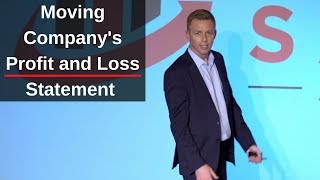
Video by Louis Massaro explaining why every moving-company owner should review a profit & loss (P&L) statement monthly. He recounts learning to use the P&L after cash-flow problems during the 2008 recession and gives practical guidance: record all income and expenses, use a detailed P&L (not just the summary), verify transactions are correctly categorized (so percentages like truck fuel remain meaningful), and recommends QuickBooks Online and having a bookkeeper produce detailed reports to review.
Chapters
Profit and loss statement. One of the most important things you could be doing for your business every single month. Now have a confession? I didn't look at this until almost eight years after being into business. Alright, who else wants to confess? Who else does not look at this? Come on, we're all in this together every single month. Everybody else is looking at it every month. All right, when did I start looking at this? Well, remember I told you Yellow pages started dipping at the same time. I just happened to buy a million and two, $1.2 million of long distance trucks. Guess what year this was? 2008. The perfect storm, right? 250,000amonth in yellow Pages. They're not working anymore. The recession hits all these trucks with payments, by the way, and like cut a check. And up until that point, there was so much money flowing in and there was never a cash flow issue with paying the bills. And it was just like, you know, one office was short. Yeah, no problem. Take it from this office, put it over there, you know, was never an issue. It was an issue. It was just masked by the money. So those of you that are making money, they're like, yeah, but I'm making money, you could be making more, right? All my inefficiencies were covered up by the big checks. I was saying, I'm like, I'm good, I'm happy, right? The buckets got holes in it, whatever. I didn't like think of it that way then, right? I was just like, money's coming in, money's coming out, business is great. Well then I had to get real.
Serious.
About running my business and start running my business, you know, mind you, at this point, I'm 27, 28 years old too, right? 23. I crossed the threshold, became a millionaire at 23. So it wasn't. Thank you, thank you. So it was a shock. It was a complete, complete shock to be able to be like, whoa, hold on, we can't pay these bills. What's going on here? Well, don't worry, we'll take it from this office. And then all of a sudden there's no more money to move around, right? You got to like get your shit together at that point. And this is where it starts. So from that time forward, this had only been before that, this was all I knew about a profit and loss statement. Yeah, that's something you give the accountant to do the taxes. That's what it was to me. It wasn't something you use to run your business. But from that point forward, it had to be a Way to run the business, right? Multiple locations. I'm not there. My accountant finally sat me down and I finally was like knocked off my high horse and was all ears because he had been telling me this from the beginning. But, you know, I'm like, yeah, all right, whatever. Just, you know, make sure everything's paid, make sure everything's good. And when I went there, broken down and humbled and felt like I don't know what to do, the cash flow is not there, it was like you sat me down. And I learned this, right? I learned this, I learned my balance sheet, I learned how to project the cash flow and figure out, you know, to see this coming again. If it was going to happen again at some point. I hope that it never happens any of you, but chances are you're going to run across something like this at some point. Chances are at some time soon. When I say soon, in the Next, you know, 10 years, I would imagine you're going to have another recession. Something's going to happen with the marketing and things are going to shift. How many people got slammed when Yelp changed their thing and took off all your reviews? How many people got slammed by that? Okay, Scary, right? When you have a sense of control over your business and when you know where everything's supposed to be, you're in a better position to deal with those, right? It doesn't make them better, but you're just in a better position to deal with it. Alright, so let's just talk about how to go through this for those of you who don't do it every single month. First, you just need to make sure that you record all income and expenses. All right? You have a copy of it at the top. So basically the top showing your income. This is just a local moving company. It does local and storage. So you record those expenses, income, and then you record the expenses and cost of goods or expenses also. They're just classified differently. Essentially, the that's what it's essentially costing you to do the move, right? Your cost of doing the move. So review a detailed P and L first. Okay. If you don't have an accounting system, I recommend QuickBooks Online. It's easy, it's accessible. If you have a bookkeeper that's working remotely, they could get in. It integrates with some of the newer moving softwares, so it'll help pull some of your information directly into the income. So the detailed P and L does not look like this. This is called a summary. P and L. A detailed P and L would be each one of These expenses. So if you see under expenses, the second line is advertising and marketing. Okay, $100,000. So this is a year profit and loss. Alright? So you figure monthly ones, you know, depending on the months, 8,000 or whatever it's going to be. And underneath in a detail, the detail is going to be several pages, right? A lot of pages. But it's going to show you each and every transaction that adds up to that hundred thousand. If you ran it for a year, I mean running a detailed for the year is a lot. But what you want to do, like what I would do is I would have my bookkeeper run the detailed for me. I take a look at the details. Sometimes I do it on a computer, sometimes I would just print it out and do it with, you know, pen highlighter and go through and make sure everything's in the right category. Right, Everything's in the right category. For example, I'm just looking at some of this here, You know, for example, truck rental, okay, let's say you went out of town on a business, you came here, you're on a business trip, right? You're going to write it off, you rented a car, your bookkeeper is not used to seeing that. Right. And they put that in truck rental. You're going to want to move that at a truck rental because it's going to skew your numbers. What really is going to matter when you're reviewing these is the percentage of income on the side. And if you're used to your truck rental percentage being a certain percentage, if things are in a wrong spot, it's going to throw it off. Right? If your bookkeeper takes your fuel, you know, maybe you pay your fuel, your gas for your car through the business.
And, and they include it in truck fuel.
That's not good, right? Because it's going to throw off what the truck fuel is. So basically you knowing the business, you knowing every dollar that gets spent goes through and just make sure everything's in the right place. Everything's in the right place. You know, sometimes they're pulling stuff off your credit card statement, right? It's not necessarily checks that they're cutting. You need to make sure it's all accurate. There's nothing worse than looking at an inaccurate report, especially profit and loss, because you're going to make decisions based on this. I want to get you guys to a point where you run your entire business off of this. You could look at this and identify what's wrong, identify areas that you can improve, identify things that are going great, all from this one page you can then drill down to find out further, but you'll run it off from this and you'll be able to have your finger on the pulse. Part of the stress, part of the anxiety, part of the feeling of overwhelm with your business is not feeling like you know everything that's happening. Am I right? This is how you know everything.
I hope you enjoyed that episode. Make sure you subscribe to the new Moving Mastery Podcast. It's available on itunes right now and it's the exclusive place where I share proven strategies and processes on how to reach higher levels of success in your moving business. Every week I share valuable insights, stories and expert interviews with takeaways you can implement in your business right away. You'll get a behind the scenes look and tactical training from my seminars and online training programs on how to improve each area of your moving business. It's called the Moving Mastery Podcast and it's available on itunes or anywhere you get your podcasts. So make sure you subscribe. And if you're ready to take your moving company to the next level, make sure you check out my brand new on demand training on how to consistently book more high paying moves all year long. It's called the six Stages of a Moving Company Sales Machine and you can access it right now for free@lewismassaro.com Six stages in this training you'll learn the steps you need to take to increase your sales with a smooth running consistent process. And this is the same process I use in my moving companies to book 12,000 moves a year. And now I'm training you on how to implement it in your moving company for free. It's available now@lewismassaro.com Six stages before you go, make sure you subscribe to my channel. It really helps support me and the channel and enables me to keep putting out new videos for you. I'd really appreciate it. By subscribing, you'll also get a notification every every time I release new training, so make sure you hit subscribe.








