IFVG Trades you should vs SHOULD NOT be entering into... (visual learning)
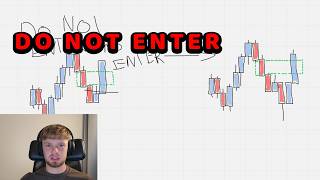
Kai Davis shows side-by-side chart examples of trades to enter and avoid. Good setups have three things: a liquidity sweep, a fair-value gap reaction, and an SMT signal. Bad trades skip one or more of these, have weak candle closes, or equal lows that kill the setup.
Chapters
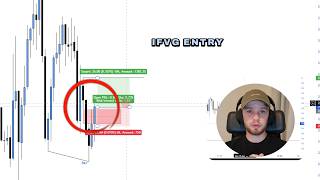
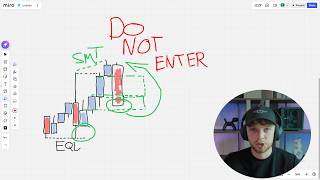
Welcome back to another video. Now in this video, I'm going to be showing you the trades that you should be taking compared to the trades that you should be avoiding, because I know a lot of you guys are visual learners, and it's okay me telling you and me showing you what trades you should not be taking, but if I'm then not showing you the trades that you should be taking, you might find it harder to understand. And hopefully this will help you understand the difference between good trades versus bad trades to actually take. Now this actually happened happens a lot when we're trading. We can see a trade, some people can't understand why it is a bad trade to take. It happened recently, whereas other people can, maybe because of their experience in the market, maybe because they just haven't seen the trade. So what is going to help that is, for example, you see a trade in the market, you're not sure whether it's a good trade or not, but it's hard because you have nothing to compare it to. So in this video, I'm going to be giving you a direct comparison showing you the bad trade versus the good trade. So starting off right here with this trade, now we're starting off with an interesting trade. A lot of traders would look at a trade like this. You're looking at this trade right now, you're probably thinking, okay, this does not look like a bad trade to take. Let me get my drawing tool. Now you're probably— where's my drawing tool? Drawing tool. Here we go. So yeah, you're probably looking at this and thinking, yeah, this is not a bad trade to take. Let's even say that your bias is bullish, so you want to enter into longs. Now yes, this isn't necessarily a bad trade to take, but it could be so, so, so much better. The reason being, if we look, we have no sweep on sell side liquidity. Price still has this sell side liquidity intact. We haven't even swept any internal liquidity levels because we've came straight up and got an instant rejection. We are not respecting any sort of fair value gap. As you can see here, there is no fair value gap being created because these are because there is still 2 wicks from this candle. Now for the third thing that we're looking for, an SMT. There is no SMT because NASDAQ and ES are correlated. So this is something that when you are looking to enter, you want these mainly, these 3 things. So let me see if I can get text here. Text. Boom. So firstly, you want either a liquidity sweep, liquidity sweep. Now let's make that a bigger. You want either a liquidity sweep, or you want an SMT, or you want a fair value gap reaction. These are the main 3 concepts that you're looking for for context, okay? These are your main 3, and in my opinion, your most important. So as you can see here, we do not have any respect of a fair value gap, we do not have any SMT, and we have not swept south side liquidity. So you could argue that this is an okay trade to take, but to Would you rather enter into this trade right here, or would you rather enter into a trade that looks like this? Now, it's very similar, but we have the extra context. We look to the left here, we have swept this sell-side liquidity. Not only have we swept the sell-side liquidity, but we have also rejected from the sell-side liquidity point. Now we come up, get this inversion of this candle close above this bearish FVG, this of course is where you will enter into the buy position, targeting this as your breakeven point, then of course price action above for your take profit. So ultimately, straight away with this first example, you would much rather have this liquidity sweep than this trade where we're not reacting from anything, we don't have an SMT, and no sweep. Okay, very, very important. Moving on to the second trade. Now this one is a bit more obvious. But again, sometimes you just need to see it so you remember it, and then you do it in the live charts. Of course, this trade— a lot of people would say that this isn't a good trade to take because of these equal lows, and they are correct. You don't want to enter into trades like this simply because we have equal lows resting below. So avoid these trades. Statistically talking, when we come this close to a strong draw on liquidity, being these equal lows, we tend to come back down and swipe them. So what would you rather do? You'd rather enter into a trade like this. Look, we've came down, swept this outside liquidity, displaced up, get the inverse. This of course is where you get the entry above this fair value gap, and then of course targets higher. So that is the next example. Now what are we looking at here? Again, this is one of these trades where if you don't see it, you might find it hard to understand. Again, we've perfectly swept buy-side liquidity. This is amazing. Let's even say that our daily bias is bearish in this instance, so we want to enter into short positions. As you can see, we've had this candle close below this bullish FVG. There's not meant to be a fair value gap there, okay? So we've had this candle close below this bullish fair value gap. Nice displacement as well here. You might be wondering, okay, what's wrong with this trade? We would enter here. Targeting this sell-side liquidity. I'm going to give you guys a few seconds. Look at this chart, look at this trade. What do you think is wrong? Now, some of you are instantly going to say that we're trading into a bit of consolidation. Yes, we are. But again, if you have a bearish bias, a nice liquidity draw, perfectly swept buy-side liquidity, that doesn't necessarily matter. The main thing here for me is the fact that we have this smaller we have this small FVG, this very small FVG. Ideally, when you're looking to take IFEG trades, you want the fair value gap that you're entering on to be a good solid few points. Again, this is very important and it severely increases that win rate. Now firstly, before I carry on with this video, guys, make sure you check the first link in my bio because April 16th, just a few days away, I'm launching something huge for my community It's my one-on-one tutoring. So if you want to join and you're serious about trading, which I know you are because you're watching this video, check that link in the bio. Okay, so yes, the size of the fair value gap. Now we look at this trade. Look, what do you see? It's a very, very similar trade. Again, we're not meant to have a fair value gap there. It's a very, very similar trade, but we have swept buy side liquidity. Look again, we swept buy side liquidity here. Now look, we have this amazing big FVG. The win rate from this trade— let me get these closer— the win rate of the trade on the left here compared to the trade on the right is crazy. They are drastically different. The size of this fair value gap compared to the size of this FVG— always take the trade on the right over the trade on the left, okay? It's extremely important. And to put it simply, you'll make loads more money because the win rate is a lot higher. It's simple, don't overcomplicate it. Now, that was the final trade. I thought I had more trades. Did I miss one? Okay, equal lows. Oh yes, I missed one, I missed one, I missed one. I thought I had more. I have more for you guys, do not worry. This trade, what is the problem? It's very simple. Don't enter into trades like this because of this candle close. It's bad. Your bias is bearish, you want to enter into shorts. This is not good. Bad candle close. What should you enter? Better candle close equals the entry is fine. The entry is good. Again, the win rate is so much better. You want to be closing a few points below the FVG. That is very important. I hope you enjoyed this video. On this channel, we keep things very simple, straight to the point, so you get the education without making the video 30 minutes long. Let me know if you enjoy this sort of content where I draw out the candles like this. Let me know if you want me to do anything differently, what videos you want me to make them on, because I can literally do any sort of video with candles. Let me know in the comments below. And of course, check that link in the description. This is a late Sunday night class. If you made it to the end, definitely leave a comment so I know who you are. Thanks for watching. Make sure you subscribe as well.
More from Louis
I lost 4,000$ Today Trading and would do it again next week... (FULL TRADE BREAKDOWN)
Losing 4,354 and i would do it again tomorrow... (80% win rate model trade breakdown)