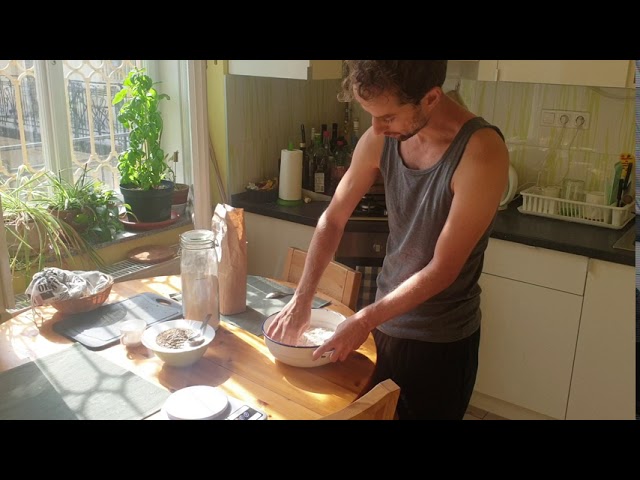
In this segment of Mario Sebok's sourdough tutorial, Speaker B explains the second step—autolysis—defining it as simply mixing flour and water. The recipe calls for 235 g whole‑grain flour, 110 g white flour, and 190 g room‑temperature water. The speaker emphasizes precise measurement and hints at hydration considerations, while Speaker A interjects with a brief question, creating a conversational instructional tone.
Go.
The second step is very simple. It's autolysis. The autolysis is just mixing the flour and water. So our mixture will be a mix of whole grain and white flour. 235 grams of whole grain. And 110 grams of white flour. 110 grams of white flour. And then to this mixture, you simply add 190 grams of water.
Boiling?
No, no, this is room temperature. Remember not to exceed. Be very precise because this is what the bread depends on. And here you're doing nothing but mixing them together. You can mix it with a spoon. I like mixing it with my hands just to feel the dough. So this is what we call autolysis. So pretty much what I'm doing is just simply mixing the flour and the water. You can see, no matter what recipe you're following, you mix the flours you're using to the water you're going to use in the right percentage. This bread of mine is around 68% hydration. Which means there's for 100 grams of water, 68 grams— 100 grams of flour, 68 grams of water. It's a low hydration. Professional bakers use around 80%, but usually 80% goes well with just white flour. But since I'm using whole grain flour and a special breed of wheat That doesn't, um, cool with too much water. Anyway, so I'm gonna mix this. If you wanna stop the video, I'll show you once it's done.