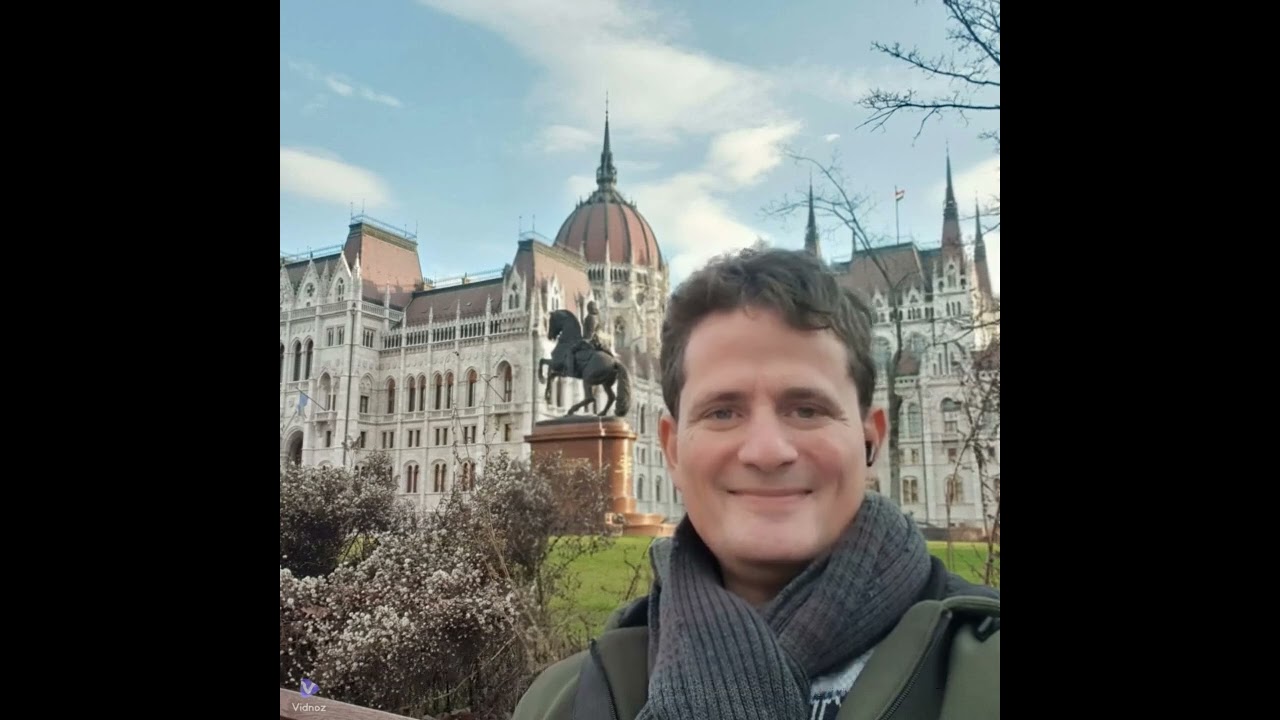
In a panel at the MCC Budapest Peace Forum, speaker Mr. Asher delivers a forceful critique of United States foreign policy and NATO’s eastward expansion. He references a recent Washington Post story that downplays Biden’s disregard for Putin’s red lines, framing it as evidence of a "surreal world of brain‑dead leaders." Asher traces the post‑Cold‑War trajectory of U.S. unipolar ambition, noting how Hungary, Poland, and the Czech Republic joined NATO, while Russia felt betrayed by broken promises not to move eastward. He condemns subsequent U.S. commitments to Ukraine and Georgia, arguing that NATO’s continued enlargement serves a U.S. fantasy of global hegemony rather than genuine security. Asher asserts that there is no possible military victory for Ukraine—whether the counter‑offensive succeeds or fails, the war will end in destruction. He questions how many NATO members truly share Washington’s stance, suggesting most of the world (India, China, Brazil, the Middle East, Africa) opposes U.S. dominance. He calls for European and NATO voices to speak truth to power, challenging the United States to abandon its expansive military agenda.
Chapters
Don't press to the last moment. We had a story in the Washington Post a couple of days ago, which in a normal world would have been shocking, but since we live in a surreal world of brain-dead leaders, wasn't even remarked on. The headline was, Biden now ignores all of Putin's red lines. Right. And then the article says, well, we keep pushing and he— we keep crossing his red lines and everything's fine. So we can continue to do so, they say. Until the nuke, okay? Oh, sorry, we didn't realize. So frankly, this is not so complicated. And it's not been so complicated for the last 30 years, which is the U.S. in 1992 decided it was the unipolar power, it could do what it wants. Understandably, Hungary, given the history, said, great, we're joining the alliance. Poland, Czech Republic. Okay, first wave, completely understandable. Russia saying, come on, you promised you wouldn't move one inch eastward. Now you've done this. What next? Well, George Bush answered them, 7 more. Then he promised, we'll continue. By the way, not just to Ukraine, to Georgia. That's a good North Atlantic country. And now they want to open the office in the North Atlantic capital of Tokyo. Come on, this is not even complicated. Now NATO supposedly is a— an alliance, not just a U.S. fantasy. So if Hungary and Turkey, and if you could find a couple of other sane places, Or places that had guts to say, really, this is not a good idea right now. This is not saving Ukraine. Whatever Ukraine achieves in this counteroffensive, if it wins, it's going to get destroyed, and if it loses, it's going to lose. So there's no win for Ukraine, period, on the military. It's impossible. It's impossible. So are there a few countries in NATO that understand this and that are— not just understand it, because I talk to NATO leaders and they say, Washington treats us like children. So are there a few that don't care how Washington treats them, that want to say the truth to the public? The interesting thing, and I'll stop here, most of the world gets this completely. Who's really on side of the U.S. in the world right now? Maybe 20% of the world population. India? No. China? No. Brazil? No. The Middle East? No. Africa? No. Because they get this. Why should we all die over a U.S. dream of global hegemony? Why don't you just stop and enjoy your wealth, United States? You don't have to push your military alliance everywhere. You don't have to retake Taiwan. You don't have to do all these things that you dream of. But who will say this inside Europe, inside NATO? That's what I'd like to know.