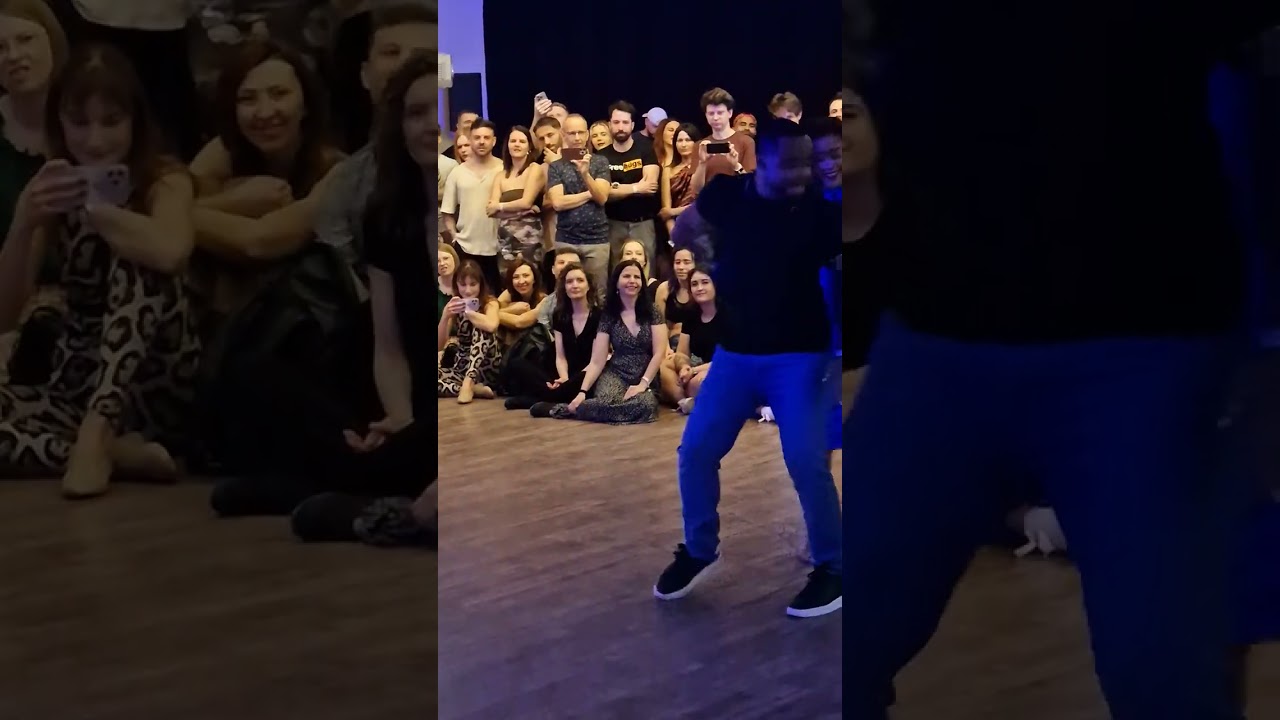
MCC FESZT 2022 - Smart Cities with Jonathan Reichental , Richard Florida & Carlos Moreno 1/2

The MCC Festival panel, moderated by student Csaba Johanya, brought together three leading urban thinkers—Richard Florida, Jonathan Reichental, and Carlos Moreno—to explore how imagination becomes reality in the development of future cities. The conversation began with a broad definition of smart cities, emphasizing that technology should serve people by improving livability, workability, and sustainability rather than being an end in itself. Carlos Moreno highlighted the need for gender equity and inclusive design, arguing that half of the world’s population are women and must be central to urban planning. Jonathan Reichental discussed the rapid pace of technological innovation versus the slower market and community readiness, noting that many technologies fail because citizens are not prepared, and advocated for innovation districts as safe‑test environments. Richard Florida expanded on the rise of global startup ecosystems, showing how both large and small cities can become hubs for scale‑up companies, and underscored the importance of universities in fostering brain circulation rather than brain drain. The panel then delved into Moreno’s 15‑minute city concept, tracing its origins after COP21, describing its six essential urban functions, and detailing implementations in Paris and worldwide, including climate academies that engage youth in creativity and sustainability. Throughout, the speakers reflected on the balance between technology use and human interaction, the challenges of car‑centric societies, and the need for creativity, participatory budgeting, and polycentric urban forms to achieve resilient, equitable, and climate‑friendly cities.
Chapters
Wendy Gane, Kebesh Festivalu su. Es en el elerkesten a szputolszok azért a beszérgettés és azemtettet a szten it a monatsimponnal. A beszérgettés time from imagination to reality, the cities of the future. Beszérgettés részüdői Padi Richard Florida, Amerika i Város tudományi sákenber, Dr. Jolleta Rankenthal, Palo Alto Városana, Korepi informatica id vezetője, Carlos Moreno, Francia Columbia jédetami professor. And now in English. Dear guests, dear festival visitors, we have now reached the final panel discussion of this year's MCC Fest at the Målman Stage. The discussion is called From Imagination to Reality: The Cities of the Future, featuring Richard Florida, US urban studies expert, Dr. Jonathan Reichenthal, former IT executive of the City of Palo Alto, Carlos Moreno, French-Colombian university professor, and our student Csaba Johanyak as the moderator of the discussion. Please give them a very warm welcome.
So, ladies and gentlemen, my name is Csaba Johanya, but you have already heard that, and I'm delighted to be hosting perhaps one of the most interesting panels here in the MCC Festival. entitled From Imagination to Reality: The Cities of the Future. Please welcome our distinguished guests. First, Richard Florida from America, an urban theorist with focus on social and economic theory. He is a beloved professor at the University of Toronto and the author of several books and publications. Hi. Among which I would like to highlight the rise of the creative class, and my favorite, the rise of the global startup cities. Please welcome Mr. Preda. And our second guest is also from the U.S., and who I had the pleasure of meeting in Palo Alto this fall. He's Jonathan Rehanta. And he's a well-known advocate for smart cities and an online instructor at LinkedIn Online Learning, and he has written many, many books on the subject, perhaps the most notable being Smart Cities for Dummies. Please welcome Mr. Ander. Thank you so much. And our third guest today in this lovely afternoon is also an expert on smart cities and the future of cities, Mr. Carlos Moreno. Thank you very much for being here. He's a French-Colombian scientist and a professor who invented the concept of the 15-minute city, and that idea has been so influential that Paris Mayor Anne Hidalgo has promoted the idea, and in fact similar concepts are being implemented all around the world. Please welcome Mr. Moreno, thank you so much. So for the first round, actually I brought 7 different topics, but for the first round I would like to start from the obvious, from smart cities. And I would like to ask the most simple question in this topic: when does a regular city become a smart city? And the trick would be that Jonathan should answer last, and I'd like you, Richard, to start the conversation. Thank
you. Yeah, because Jonathan has the answer, and he just gave me— I have a 5 and a 6-year-old, so he just gave me a coloring book for my 5 and 6-year-old. So that's like the greatest thing ever. You know, I think a lot of people think about smart cities as technologies, and Jonathan knows like so much about that. But I think smart cities are just about enabling people to do things better. And that could be done with increasing densities, like, or creating a congregate— that was the technology of its time— or, or making people able to travel down a river to meet with others, or then a simple road. But now a smart city uses technology to do many of those things. And I think— and Jonathan, it'd be interesting to hear Jonathan and Carlos. I think one of the things we're discovering now with the creation of the metaverse— you've heard of this thing of the metaverse? Well, I met the man at Facebook, at Meta, who invented the metaverse. I met him recently and he said the metaverse will be better than current internet technology or your telephone, your smartphone. Or Zoom or whatever, taking out Skype. But he said it will only complement; it will never substitute from the incredible bandwidth we get from being together like this. So I guess in the future, the smartest city will be one that uses technology to make human beings better. Carlos,
thank you. I put my that my first sentence. Will be about a very small problem because we are 4 guys for discussing about the city of the future. Sorry, different women present, I'm so sorry. I, I think that if we wanted to discuss on the future of cities, we need to consider that the half city in the world is Totally by women, and we need to consider this question for the next round table, for the next panels. We need mixity, we need diversity, we need to develop more and more a lot of intersections. Gender equity is today. A priority in our urban and territorial life. Okay, this is the first point. Now, good morning everybody. Good afternoon. The smart city, in my opinion, but Jonathan will discuss about it, is one of the first part of my technological life because I developed a lot of different technological solutions for cities based on artificial intelligence, based on electronic solutions for proposing how could we optimize our cities. But in reality, for me, the most important point in Smart cities is to have smart citizens, is to have happy life, happy citizens. I think that without smart citizens, it is not possible to have a smart city. To have smart citizens, we need to satisfy essential basic services. We need to develop more and more services. With new technologies for connecting people. We need to fight against this isolation in several cases, because in these times of hyperconnectivity, a lot of people is— a lot of people are socially hyperdisconnected. I think that we need to connect people not only by technologies We need connected people by social, economical, and friendly activities.
Thank you so much, Carlos. And now, Jonathan, you have the chance to express your feelings towards my city.
Well, I want to say a couple of things. First of all, I'm smiling because this is such an incredible context, looking out at all of you, this amazing area here. A lot of great qualities, by the way. You see the urban forest, Great use of trees, pedestrian. So you're creating place here. This is placemaking, a community. So a lot of incredible qualities here. The other thing I want to say, thank you to, you know, Hungary and my hosts and MCC, you know, for such a wonderful welcome and the miracle that you were able to bring the three of us together. People have been trying that for years. This is the first time it's ever happened. So. To have Richard, me, and Carlos on the stage at the same time is really fabulous. So I'm grinning about that. Real quick, these guys gave great answers. You know, when you talk about what transitions a city to a smart city, you're really talking about the degree to which new ideas, innovation, and technology can improve livability, workability, and sustainability. And if you super focus on people, make it all about quality of life, well, you're already ahead of the game, right? That's what cities have to do, is make sure that their focus 24 hours a day is on improving the quality of life of people.
Thank you so much, Jonathan. I'll just stick with you for one another question which I'm very curious about. That's, um, technology that can be used is growing almost exponentially. But is the pace of adaptation that fast? And I would like you to answer this first and maybe others give their thoughts about it.
Yeah, so technology is moving very fast. Can cities keep up? Can industry even keep up? Well, the marketplace is the great arbiter of what succeeds and what doesn't. Many technologies fail all the time because the market just isn't able to keep up or has no appetite for it. No difference in cities. The three of us see some of the most incredible ideas and technologies implemented all the time, but they fail simply. The community is not ready. The community is not interested, right? So that is a struggle. You can come to the table. You can come to a city, come to a mayor, and say, "You know, I have the most incredible technology. I want to roll it out. I want to deploy it in your city," and you may get. And no, because we're not ready, we have other priorities. So there is this very difficult balance between embracing the new and making sure that the existing works really, really well. The way that the communities that embrace new tech have succeeded is they separate. They have things like innovation districts, areas that are dedicated to trying out things before they deploy them to the city. That's one way that you can think about this, and you'll find out a lot because people will give you the feedback. They'll say, I don't like these cameras that are for traffic because I'm afraid it'll be disturbing my privacy, or it'll be taking pictures of my face or my children. So the community will tell you if it's ready for the technology.
Thank you so much. Carlos, do you have anything to add in this regard?
Jonathan said that the importance of to develop the technology for citizens' service, but in the first time, this meeting with placemaking, with the public spaces for having open discussions, I think that we, we need to develop these hybridizations. I love this term hybridization because on the one hand we have our daily life, and the other hand we have a lot of, lot of technologies, and we need to develop this convergence. How could we consider the technologies as a powerful tool for develop socially, for develop economical, added value activities? For developing more and more vibrant and livable cities. And technologies today is a reality present in the totality of our activities. And for me, smart cities is before all this new humanity connected by technologies, by sociability, by livability, in order to have a sustainable city, for being resilient against climate change, for being resilient against poverty, for being resilient against social exclusions. And we need to consider technology for developing otherness, for developing democracy, for developing transparency, for finding Against racism, against populism, because we need today to, to be in a humanistic way if we wanted to survive as a real humanity.
Most definitely. Thank you so much for your precious insights. Richard, do you have anything to add?
Yeah, yeah, very quickly. I mean, sometimes Like any human being, I worry that technology is outrunning our capacity to keep up with it. And, you know, I love my smartphone and I hate it, and I want to throw it away because sometimes I think it just ruins my ability as a human being to concentrate. It— I used to be able to read books and have deep thoughts, and now everything moves so quickly. But, but I guess what I think most of is We could do this on technology, right? The three or four of us could get together on FaceTime or Zoom, and we could do this. But it wouldn't be like one millionth as good. Like, and I think that's the real key: the technology has a role, but this is way better. Like being with actual human beings in a square, having this conversation is, in my view, a million times better. So I guess that's the point. Maybe, maybe we just need a little bit more balance. And maybe the more we advance technology and we get optimistic about it, at least for me, the more I've come to value just, just doing this, just being with people.
Yeah, thank you so much.
Yeah, I just wanted to just emphasize something Richard said, which is, you know, with all the connectivity and technology, you've got to make time to think. I really love that, you know, step away from the tech and think.
Yeah, yeah, let's encourage others to think. Uh, but moving on to the next topic, which is directed to Richard here. And, uh, so I have to tell you something, uh, that we are working on at the MCC, um, Center for Next Technological Futures, which is very similar to one of your publications, The Rise of the Startup Cities, but we are working with scale-up cities, which are startups above $1 billion funding, because we think that these are the ones that need to be scrutinized. And our research on European scale-up cities indicates that traditional university cities produce successful startups, but And this is the interesting part, smaller cities also have a chance by specializing in more specific and complex industries. This is what we found. And in your opinion, only global cities linked to strong universities can be catalysts for scale-up of the future?
Yeah, so you mentioned this. I'm very lucky. I'm not particularly smart, but I get to work with a lot of really smart people. So one day this young man said to me, we can collect information that no one else has collected on all the startups in the world. You used to have a list for Hungary or France or the UK or the United States, but no one ever could combine them. So he knows his computer science, and he compiled a list of all the places in the world that have startups. And there are 2 or 3 things that are interesting about that. The first is that in about the year 1995, almost 100% of all startups in the world were in America. If you look in the year 2017 when we did this report, half of all startups were in other parts of the world. That to me is just an incredible statement about how globally interesting the world is. The second is that obviously, because bigger cities have more people and they have more research universities and more technology-based industries, the preponderance of these startups, the big ones, were in big cities. San Francisco, which was the historical center of this, had the first. New York had a lot. London had a lot. Shanghai and Beijing had a lot. Mumbai had a lot. Paris had a lot, and then you went to places like Berlin or Toronto. And so there is some association between urbanization, if you will, and the rise of these startup ecosystems. But the third thing was really interesting. There were lots of really small places, small, small, small, small places that had really cool startup ecosystems. If you looked at those ecosystems as a function of their size, I'll place you on Boulder, Colorado, which is this kind of wonderful ski town with a university outside of Denver. I think had the highest number if you looked at per population. But one of the things that was so interesting is that you can go to any small town now in Western Europe, Central Europe, certainly through the United States and Canada, and find a what I would call like they would have had a music scene of musicians, or they would have had an art scene of artists. Now they have a startup scene. And because there's so much money and investment in venture capital flowing, people could make a startup in their town. They no longer had to go across an ocean or to a big city. So I don't think they might— they might not be the biggest, they might not be San Francisco or New York or London or Paris or Toronto, but you can do it anywhere. And I think— and then the other thing that we know, which I think is really useful thinking about this year, Is we used to think of the startups causing a brain drain, that if you left your town in Hungary or in France or wherever in small-town America and moved to the big city, you drained the brain. Now we're finding that you have much more circulation, brain circulation, and that people can move back and forth. And that to me is just so incredible because it means once you become a little node or hub, You're not just an isolated island, you're part of a system. And I think that's what's so cool about this, right? We're doing this as a node in a kind of world conversation about cities and thought leadership. And I think the same thing is true of startups.
Thank you so much. Jonathan, do you have anything to add?
I don't know that I do, but I will say something about university towns. I hear the experts here, so I can only add a little bit more to this, is the universities are more than just educators. We often think that a university is a place you just go to, you learn something, you leave. Universities are part of communities. They employ people, they create economic activity, they do engage the private sector, they do create innovation. So the value of a university in a town, you know, is proven. It's significant, and it's just— it's important. It goes beyond the educational part.
Thank you so much, Carlos.
Just to add that creativity is one of the pillars today for developing livable cities and to develop a high quality of life in cities. In the case of the city of Paris, for example, we have been developing a lot of different programs for the universities, but for people, in order to, to just educate people. For example, how could we use creativity for being resilient against climate change. In Paris, the mayor of Paris has created the Climate Academy. This is a new concept for mixing new technologies, creativity, university trainings, private sector, and to develop more and more creativity for kids. This Climate Academy in reality has started at 7 years old. For— because we need to deploy more and more creativity in kids, not only in the classical education, the school, but outside the school. And this way, I think that creativity is a question for all people, and not only people that has the possibility for going into the university. But outside the university, in different places in the city, in different locations of the city, in different districts.
Thank you so much. Staying with you, Carlos, first I have to make a confession because I did deep research on you guys, but the audience might not know your publications and your books. So, can you please, Carlos, introduce the audience into the main benefits of living in a city built of a series of 15-minute neighborhoods?
In fact, the 15-minute city is a concept for developing this way of the cities and territories of short distances for living differently in face with climate change, in face with sanitary crisis, and today in face with, for example, power energy crisis. The first time when I proposed this concept was in 2016. Just after the COP21 in Paris, because I consider when we have this COP21 in Paris that the cities are the most principal contributor of CO2 emissions. In particular, given that the transportations and buildings, and I proposed instead of to have technical measures. For developing more sequestration, captation of CO2, or transforming diesel cars into electrical cars. I said a traffic jam of the diesel cars or traffic jams with the electrical cars is before all a traffic jam. And my question was, how could we transform our urban life in reality for rediscovering proximities, for discovering more sociability, for developing more local economies, for developing more local employment. I proposed in 2016 for the first time the 15-minute city, but in— at this moment, several people said to me This is a very nice idea. You are researchers at Sorbonne University, but this is a utopia because it was impossible to have a job close to home. In fact, we have started a transformation in 3 districts in Paris for developing not only social mixity but to develop the functional mixed city. And I proposed a model. This is the ontological model based on 6 essential urban functions for having happy citizens. To live in good conditions, to work with some proximities, To avoid the long commute, to supply for developing the local economies, for developing medical services in proximity for the physical health, with the generalist, with the more proximities instead of to go to the hospital for the little situations, to develop Cultural activities in the public spaces for more democracy, for more social mixity, and to enjoy the public spaces for transforming public space for for for for people and not for cars. And in fact, when the mayor of Paris, Hidalgo, embraced this concept in 2018, she proposed not a magic wand for transforming a city as Paris. But she proposed a journey. She proposed a roadmap for six years in order to transform each one of our districts. Just imagine that in Paris, every day we have 1.2 million people who cross the city from the east to the west just for working. 1.2 million people for a city with 3 million inhabitants. This is all sustainable. With the COVID-19, this idea has become very popular around the world because we have the possibility for transforming our work style. We have the possibility for developing with new technologies remote jobs. We have the possibility for transforming the business model of the big retailers. Instead of to have the mall for shopping, we have now the local commerce in cities. We have developing short circuits. We have developing with the real estate players the new programs for developing the functional mixity. Instead of to have a district only with buildings for housing and the opposite of the city building for the corporate district. We have been developing a, a lot of social and functional mixity. And today this is a concept in fact adopted by the global network of mayors, the C40 Cities for example, Metropolis in The last two months in the World Urban Forum in Katowice, Poland, we have launched the International Observatory of Proximities with UN Habitat, C40 Cities, and a lot of different organizations for federating this concept because we have the possibility for customizing it with the several realities. The 10-minute concept, the vital district, complete district in China. The name is the circle of life for 15 minutes. We have a lot of different implementations because the 15-minute city is not a doxa. This is not a copy-paste. This is a vision, strategy, methodological guide for developing more next city, more local economy, more social inclusions. More sustainability, for reducing our original CO2 footprint, and the most relevant, to develop this concept of polycentricity for breaking with the traditional urbanism after the Second World War based on the specialized city, fragmented city, segmented city. We want to develop more and more Organic density based on this capacity for having local services, reuse of buildings, multi-purpose functions, more solidarity, and new tools for managing different cities. And the first one, the participatory budget, for example, for fostering citizens and dwellers to take part in these transformations. We have the possibility for funding with the new managing tools.
Thank you so much. It's really remarkable, your success. But as a business/informatics/economics student, one question left me wondering that I would like to ask the rest of the panel as well is that what can be done regarding this concept with underutilized capacities in this respect? How can it be solved? In terms of economies of scale.
Yeah, let me, let me, let me say something about the 15-minute city first. What this guy has done, Carlos Moreno, is probably the most important concept in urbanism of the past 2 or 3 decades. This idea, we all know it. It's like the best ideas are when you know something but you don't have a word. You don't have a phrase. We all know we want to live like this. We all know we want to raise our family. But his brilliance is that he gave us the word. He gave the world the word. This is genius. And, and that word came like a tsunami, like a tidal wave, and it was incredible. And I think what happened is the pandemic, as horrible as it was, In every horrible tragedy, there's always a little silver lining. Is it made people who were frenetic, who were crazy, who were on a train, a bus, a car, running, running, sit in their neighborhood and go, I like it, I like my life? And, and it's a very humanistic concept when you think about it. Look at this place where we are. And think back to the people who made this place. Their, their whole living and working and educating were integrated. They lived in a 15-minute or 5-minute or small place. And then with the Industrial Revolution, we, we reached a point where we just started to separate everything. We thought we were making good technologies of trains and planes and cars, but we kept separating these components of human existence. And we were completely separate beings in, in these vehicles. And I think the great possibility of our moment is we can reintegrate our lives in our community. We can reintegrate how we work, how we live, how we— with our children, with our families. And it's just such a beautiful concept with regard to new places. Well, instead of just building— my— one of my idols was a woman named Jane Jacobs. Brilliant urbanist, didn't teach in a university, just looked with her eyes. And she said the great problem was these mono-economic, single-economic, single-cultural places. A central business district just for work, a suburb just for living, a giant school just for learning. And maybe when we plan a new place, we tend to make them like that. It's kind of stupid. That's a dumb city made like that. Maybe, maybe the learning could be that we should plan everything with some sense that they should have the pieces of integrating life be based on this 15. I think that's the learning, that that's the way we should orient building new.
Jonathan? I don't have anything to add to that. Excellent. I do. By the way, I'm so happy it was raining the whole day, but for our little event here, we got the sunshine. Also wanted to say, 3 professors, so you're never going to get short answers, right? But I'll make a short answer. Um, of course, it's amazing what you've done with this 50-minute city idea, and I think that it's time— its best years are ahead. I think we're still heading towards it. Um, and, you know, I come from the US. The thing that has worked against us and what's real difficult is we built a country around cars. You know, automobiles have been fabulous but also devastating. So it's a lot harder when we actually emphasize distance rather than— I mean, long distance rather than emphasizing short distances. That's the challenge there, you know, to reorganize U.S. society around this is much harder. But in the big cities, in the urban, in the dense urban areas, great progress is being made. I love this idea.
He just said something very profound about technologies and cities and the car. Like, I have a car and I don't use it very much. I hardly ever use it, maybe to go on a trip. I don't use it day-to-day life, but it's a very good technology and I'm glad I have a car. I have a cell phone, but I try not to use it very much, and I don't like it when it overtakes my life. Maybe the key to technology is to have them but not use them very much. And they are good supplements, but when they take— like the car took over America, like the cell phone takes over your brain. They're good as long as you don't use them too much.
Do you have anything to add?
Roger Senet, our common friend, said in the Modern Urbanism, Long distances have becoming addiction, and in fact, the drug for this addiction is the car. And we have more cars, more distances, more time for commuting. And in fact, this is a vicious circle. We need to break this circle for. 5, 6 decades after we are in situation of car addictions. This car dependency is not normal for living in a sustainable world today. Climate change is not climate change today. This is a climate emergency. We have lived today with a lot of heat waves around the world. This is not possible to continue to live in the same conditions. We need to transform radically, and at the same time, we need to develop a sustainable world, but we need to develop the quality of life. How could we propose as a way— the 15-minute city is a way for reconciling these new capabilities for developing local jobs, local economy, shorter circuits, livability, reconquer public spaces, have vegetations, refreshness, and at the same time to develop added value to implanting local jobs with the technologies, with the remote jobs, to develop sociality. We need to fight against social exclusion. We need to develop more and more social links. In fact, we need simply to transform in a new way our urban lifestyle and our territorial lifestyle. And some people said to me, this is only available in the high density. But in fact, we have developed the twin concept, the 30-minute territory, for developing proximities in places with middle and low density. And we have today very, very, very great experiences. Because we have the possibility with technology today, with algorithm, with artificial intelligence, to develop more and more mobilities different of just to be alone in my car as driver. We have the possibility to develop new economic models in the territoriality, in rurality. We need just examining our trajectory differently. And I think that a significant element is our capability with the 15-minute city, with the 15-minute territory, to reconquer a useful time. Because with the modern urbanism, we have lost the useful time. We have a hectic life. We don't have the possibility for having a real personal, familial, social life. With the 15-minute city, with the 30-minute territory, we have the possibility for optimizing my time and to rediscover this useful time. The young workers between 20 and 40 years old today around the world want to go in this way because it's a new possibility for living and for work, definitely including to continue to be productive. This is for the economy in reality today an added value for having people totally committed for developing This creativity, but at the same time to take advantage of.
More from Mario

Boost Learning with Studio: Turn Your sources into Audio, Video, MindMaps, and More




Anima Christi - Beautiful Choir Performance in Corpus Christi 2025 - Stockholm - Sweden