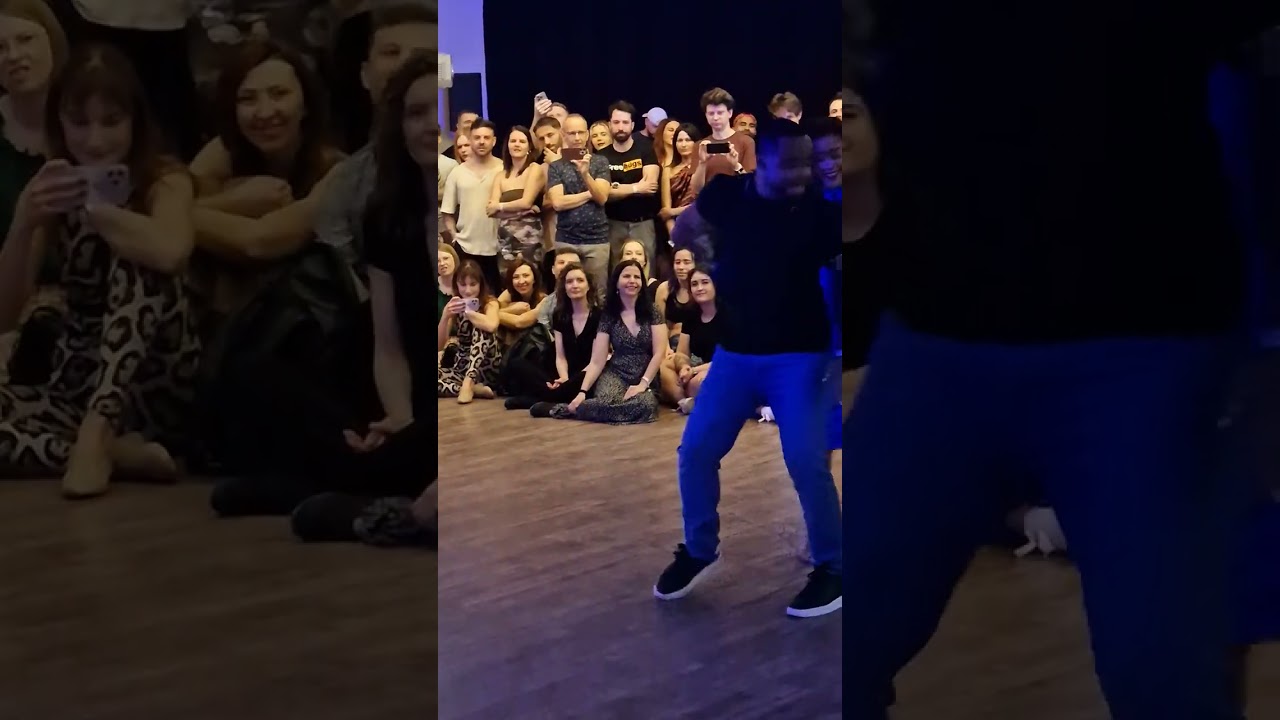
What kind of education is needed in the 21st century? Denis Prager in MCC FESZT 2021 Hungary 🇭🇺

In a one‑hour moderated panel at the Matthias Corvinus College (MCC) FESZT 2021, moderator Anna Benci asked four international guests – Dennis Prager (founder of Prager University), Patrick Gray (Durham University professor), Tomasz Dziążynski (director of Collegium Veterinarium, Poland), and András Láncsi (former rector of Corvinus University, Hungary) – to discuss the purpose, management and future of 21st‑century higher education. The conversation unfolded in three thematic blocks. 1. Purpose of education – Prager condemned the U.S. system as an instrument of indoctrination, citing examples of gender‑neutral language policies and the removal of Shakespeare portraits. Gray traced this trend to the rise of critical pedagogy (Paulo Freire) and post‑modern theorists (Foucault), arguing that schools of education have shifted from content expertise to political activism, producing “woke” graduates lacking classical knowledge. Dziążynski argued that Central‑European universities suffer from a communist‑era bureaucratic legacy, cancel culture, and a loss of the transcendentals (truth, beauty, goodness). Láncsi highlighted the erosion of the Humboldtian mission, the tension between national‑level elite institutions and a new globalized, competency‑focused model. 2. Education management – Panelists debated the role of teachers, community, and alternative institutions. Gray and Prager promoted parallel “alternative” schools (e.g., Prager U, MCC) to supplement mainstream universities. Dziążynski called for new institutions like Collegium Intermarium to restore academic freedom. Láncsi stressed the hierarchical nature of universities and the need for authority within democracy. The group examined the practical‑theoretical divide, with Dziążynski asserting that critical thinking is the most practical skill, while Gray warned that students arrive to university without a grounding in Western civilization, necessitating remedial classical curricula. 3. Future of education – When asked to predict 2050 in a few words, participants offered stark visions: Prager warned of a “collapse” and the dominance of Marxist narratives; Láncsi said universities will survive only if they continue to search for truth; Gray forecast a breakdown of the state monopoly on schooling, growth of homeschooling and vouchers, and a forced reckoning with the failure of Marxism. The discussion repeatedly returned to the need for a return to classical, virtue‑based liberal arts as a safeguard against ideological indoctrination. Overall, the panel presented a critique of contemporary higher education as increasingly politicized and market‑driven, advocated for a revival of classical liberal arts and virtue ethics, and highlighted regional differences (U.S., U.K., Poland, Hungary) while proposing alternative institutions as a path forward.
Chapters
Next presentation is about the education of the 21st century. Our presenters are Dennis Prager, the most influential conservative political commentator in the USA, Patrick Shovgrave from the Durham University, András Láncsi, philosopher, and Dr. Timóteusz Zych, board member of the World Leaders.
I hope you heard me now. So welcome everybody. Today afternoon's program, we are going to talk about the 21st century education the next one hour, and I would like to play to give a place to our four international guests to introduce themselves in shortly because it is important that what their background is. Because we are going to talk about education and education system, then location means a lot. So please start to introduce yourself shortly.
My name is Tomasz Dziążynski. I am director of Collegium Veterinarium, a newly established university based in Warsaw that is Goal, which is to unite intellectual elite of Central Europe. And I'm also vice president of, uh, Order University for Legal Culture, that is a human rights think tank.
My name is Patrick Gray. I am a professor of English studies and director of liberal arts at Durham University. in England. Durham is a very strong university with humanities and faculties such as English, theology, history, philosophy. As you can perhaps hear from my accent, I'm originally from the United States, but I've been teaching over in the UK for almost 10 years now. Oh, and I'm a fellow this year at Matthias Corvinus Collegium, which I'm very happy about.
Hi, I'm Dennis Prager. I spoke to you yesterday, and I am the founder of Prager University. It's a very large website in the world. Many of you, thank God, watch it. I'm also a national radio talk show host in the United States, and I write a number of books. Thank you. The most recent is a commentary on the Bible. The 3rd volume is coming out next year. It will be 5 volumes in all called The Rational Bible.
Last but not least, the only Hungarian on this panel except our charming guide, I am András Váncsi. I'm associated with the MCC and a university professor of Corvinus University, where I was a rector for 5 years, but not anymore, thanks to God. And, and my main field is political philosophy.
Thank you so much. My name is Anna Benci and I'm a freshly graduated student of Matthias Corvinus Collegium, and we are gonna cover 3 different topics during this, this hour. First of all, the purposes of the education, then the education management, and last but not least, the challenges of the education. So if you are done, we can start with the purposes of the education. So first of all, we heard that You are coming from really different backgrounds, from different countries and continents. So I'm really excited about that. What do you think about the education system of your country? What is the role of higher education there?
The education system in the United States is the worst of all the countries represented here, though England is perhaps a close second. And Canada is also trying to overtake America. I am very ashamed to say this to you. There is no joy in me. The American education system is so awful that I beg parents every day on my radio show not to send their children to an American school, but to homeschool them or to find one of the few schools that actually teaches. The purpose of an education in the United States, from college to elementary school today, is to indoctrinate. It is not to educate. I can give you so many examples that I would take the time from all my colleagues here, so I will only give you a couple. A number of years ago, it was— teachers were told in elementary school, do not refer to your students as boys and girls. Because that implies that all the students are either a boy or a girl. So teachers in the United States routinely do not call their students boys and girls. They will call them just students. This is common now in the United States. It is common not to teach white authors or white scholars unless you are teaching at least as many non-whites. As I mentioned, the picture of Shakespeare, which I mentioned to the professor of Shakespeare, but he knew this story. At the University of Pennsylvania, the English department took down the picture of William Shakespeare, the greatest writer in the English language. The reason? Not because he was not a great writer, but because he was a white male. So they put up a picture Of a non-white female lesbian who nobody heard of. And I have nothing against white female lesbians. I have something against non-excellence. The reason I love Shakespeare is not that he is white. I couldn't care less if Shakespeare were white or any other color. I don't think there is anyone here who cares. We read him because he is great. There is a war on greatness in American education.
I thought I might follow up and unfortunately have to confirm much of what Dennis is saying here. I thought I could give a little bit of backstory as well. I think part of where this is coming from is from the rise of schools of education, in particular theories within schools of education. So, um, for much of America's history, a teacher would specialize in particular content. So if you were a history teacher, you would focus on history. If you were an English teacher, you would focus on literature. Now teachers are often required to learn a great deal of educational theory, and this has been co-opted by certain kinds of political activism. A particular influence is a man named Paulo Freire, a Brazilian who wrote a book called Pedagogy of the Oppressed. Who takes as his model explicitly the Chinese Cultural Revolution and argues that the purpose of education is less to acquire a knowledge of particular content than to awake what he calls a critical consciousness in the students. So part of the reason why primary and secondary education in the US has become so politicized is because students are going through these kinds of school of educational theory and being taught to model what they are doing on essentially on the Chinese Cultural Revolution as a practical model under the label of critical pedagogy, of which one version, for example, is critical race theory, but there are others. Then we see parallels to this as well within higher education, where through the influence of thinkers such as Foucault or postmodernism that want to break down structured, chronological, comprehensive study in favor of case studies and in favor of interpreting every kind of human interaction as a form of power, a power game. And as a result, students are very sensitive to anything that they might perceive as oppression. They're very woke. They're very politicized, but often students coming out of the American or British system are deprived of content, of rich content of literature and history that might lead them to have some skepticism about utopian progressivism. I think it would be great to see, I mean, partly through programs such as Prager University, to see students encounter an alternative to that, and also to see students in classical and Christian schools in the US, in alternative institutions that have come up like MCC here, have access to, to history, to literature, to that kind of content that builds a more realistic sense of human nature.
First of all, I do I disagree with both previous panelists. I'm afraid that there is a country which has much worse higher education system than the United States, maybe even one— more than one country, but definitely Poland is in that list. We are facing as a whole Intermarium region, as whole Central Europe, we are facing structural problems of higher education. On one hand, it's our negative communist heritage, the bureaucratic heritage, the heritage of pointlessness, the heritage of nihilism, the heritage of mass education, which is anonymous in its very nature. I think that here in Hungary, it's— you're facing exactly the same problem. Without setting goals, without getting back to the original idea of what university was actually meant be, we will not fix it. We will not fix it. And what the university was about originally, it was meant to be a space of free debate, a space in which the truth, the good, and the beauty, the transcendentals, were meant to be the center of whole academic endeavor. We have to get back to this notion of university in which taking up courageous, sometimes difficult intellectual challenges is not only a right of every faculty member and every student, but even an obligation. On the other hand, there is other problem that has spread all over, probably all over the Western world. What I mean by that is so-called cancel culture, a part of this broader phenomenon of woke culture or neo-Marxism, however we call it. That's the modern form of academic censorship. What is censored? Things that have been considered as very basic. Even in Poland, which is very often considered a conservative country, we got a number of examples of people being canceled for citing Article 18 of our Constitution, which says that the marriage is a union between a man and a woman. People, academic lecturers in public institutions, were cancelled for describing, for referring to a person in its very first stage of life, the prenatal stage, as a child. That has nothing to do with the proper spirit of the university. A place where— in which such statements are prohibited is just a school of indoctrination, indoctrinating school, and not an academic institution. So our task is to get back to the proper understanding of freedom, which should be always rooted in the transcendentals. Otherwise, there will be no renewal of the university.
Can I react? I'm sorry, I don't want to take your— at all, but it was so interesting and depressing to listen to you. This competition for who has the worst education system is a very depressing competition. I don't want America to win that particular competition. I am shocked, actually, and I truly presume it's just my ignorance. I am surprised that in Poland, if a professor says that he believes marriage should be between a man and a woman, he, he risks being fired. Is that correct? Did I hear you correctly?
Yes, that's perfectly correct. There's a case of that kind in Silesian University in Katowice, where a professor faced disciplinary charges after making a statement like that. And to say more, it was part of a comparative family structures course. It was just part of a description of a family in Christian culture. So nothing more. It was just a descriptive statement, not a normative one, not any kind of imposition. Unfortunately, this happens. I think there has been like 25 cases of that kind in the past 10 years in our country, of canceling people due to statements like that.
This is not sad. If you cannot resist to say anything more. I don't know, I can sense that. Oh, I have only one route to cover, and it is the Hungarian educational system is the best in the world. And to some extent, it is true. Because all the topics and the keywords have already been put forward, that what kind of problems or troubles or annoying, to say the least, annoying problems we have all over the world. Some are common and some are not. In Eastern Europe, our educational systems are I think they are, they are a little better than some would believe, simply because it is a neglected area, has been a neglected area, at least in Hungary. We have talked a lot about education, but we actually haven't done anything with it. Right now, the Hungarian university system, the higher education is being changed. I wouldn't say radically changed, but reasonably changed. And the state-run universities, most of them are already run and will be run by private foundations. Private is not a good word here— foundations. So we would like to change the system because the original question referred to the system, and this system will be different after 30 years of the regime change. We try to do something with our higher education, not because it is bad, but we are not satisfied completely with its running and its output and achievements. As to the point. And I think the overlapping problems are perhaps more interesting for the audience than the particular ones, but who knows. The idea of university has been under change globally. All the problems that have been already raised here at this on the stage so far and outside, everywhere in the world, just read many essays, all sorts of contributions to the topic, is the first thing is that at least in Europe, but the American universities too, I guess, have been, have developed under the tacit idea of the original German Humboldtian idea, what a university is and what the idea of university is. And in one sentence, it is: a university should contribute to maintaining and holding— maintaining a community and holding the people together. The function is that the university should contribute to the idea of the nation, These, these have been the national universities. Harvard is an American university. Uh, uh, I don't want to mention Kraków University or whatever, but that's a Polish university, let alone Cambridge, Oxford, and the rest. Um, but today these universities have been have been merging into something that we can call globalized universities, technical-minded universities, and the ideas of education is focused on usefulness, not on, on, on the how you can better the man, better the character, better everything, but how you can make your students equipped with more competencies, with more skills, that is, that they could adjust themselves to life. These are very, very tempting words, very words that can attract the attention, and most parents would feel that, yes, this is what I want. Because I want my children safe, that they would earn enough when they graduate, and so on and so forth. But I think deep down the problem is what the idea of university is. And this is one thing that these universities are no longer tied to particular nations, but they behave like globalized universities. Globalized institutions. And this is the first issue that I would raise here when I, when I am asked to speak about the system of higher general education in any country.
Thank you for your answers for this question, and I think that we are staying for the purposes of education for 2 more questions. First of all, is the higher education responsible to manage social inequalities in a country? And second, is the education responsible just only for supporting the economy with skilled workforce, or does it have an important role to form the society? What do you think about? So it's it's not a country-related question. It's more about your your thoughts and how you feel this these purposes of the education.
This is a very provoking question. When I first read it, we were sent the original questions a day ago. This is the— because I finished being a rector and I was several times confronted with this problem: social equality and the responsibility of the university in one sentence. And I don't want to take the time of other contributors. Uh, it is not the university's responsibility to tackle social issues. This is not insensitive behavior on my part, but simply, if you want to make good universities, you don't have to take social inequality as a number one guiding issue. You will otherwise end up in bad universities. But I understand the core of your question.
If I may, I wanted to follow up on that and on your earlier answer as well. I think there's a little bit of history that can be helpful here, which is towards the middle of the 20th century, you had a lot of essentially Marxist intellectuals who realized that the population at large were not that interested in Marxism. So what could they do? What they did was they started what's now known as the long march through the institutions. They said— and this is where cancel culture is coming from too— they say, well, how can we get the people to accept Marxism? Well, one way is we can just force them to through things like cancel culture. But in order to acquire the power to do that, they had to take over institutions like the universities, like the church, like the media. I think they've been less successful, thank God, with the church, but certainly with institutions, with universities, they saw the education in the humanities in particular is an opportunity to indoctrinate people if you have that mindset, if you're that kind of hardcore Marxist, especially people who might not have the counterweight of church. And so I think part of the reason then why universities have become more focused on usefulness is because as the humanities have been increasingly taken over by Marxists people become less interested in the humanities because, you know, my student— my brightest students say, well, you know, I don't really agree with these guys. I don't want to study this stuff. I'd like to study Shakespeare, but I don't want to study, I don't know, Foucault or Althusser or something like this. Yeah. And so then, then you get declining enrollment in the humanities. But that's not just because people are inherently after material goods, and it's not just because there's some bias against the humanities. is because the humanities have been ideologically captured by a group that students intuitively recognize is not really consonant with reality and with what they would like to see.
So, if I can give just a very short follow-up. I don't have a feeling that higher education, at least in my country, has about usefulness. Actually, a person with a high school degree qualified to be a plumber earns much more money than a university graduate after sociology or humanistics.
That's good.
It's not usefulness that's all about, but It's illusion of usefulness, I would say. Illusion of usefulness and creation of ideological reality. That's what the postmodern universities actually look like. Is there any way out? Is there any solution? Of course, we have to dispel this illusion. Get rid of this illusion and get back to the reality, get back to the reality in which any single academic endeavor has some kind of goal. And the goal of humanistic education is always to integrate and develop one's character. In a broad sense. We cannot re-establish this goal without rediscovering the notion of virtue, so a stable inclination of the character of a person to be good, to do the, to do the right thing. That's the main goal of education, and of course this goal cannot be fulfilled without the proper model of education. So the mass education which is dominating the academia all over Europe just cannot serve this aim. We have to get back to this medieval and ancient, this classical notion of artes liberales, the liberal education of a person That can think for oneself, a person that is virtuous, a person that is integral. And of course, it cannot work without individual tutoring, without art of rhetorics, without the teaching of heuristics. We have to get back to all of those things, and I'm sure students will once more find interest in it. Thank you, Mario. Social sciences and humanities.
So I, since I agree with all of you, I would like to ask all of you a question. You, and it's very possible you cannot answer this because I know no scientific study has been made, but if you want to give me your impression, I'd like to ask you from England, From Hungary, from Poland. What percentage of university students in your country do you think can identify the Gulag Archipelago? What percentage can identify Auschwitz? Perfect bell. The bell was perfect.
You ordered it.
At what age? suppose would be the question.
University. So 23 years old, 22 years old, 21 years old.
An embarrassing— an embarrassingly low number.
Because—
and actually, either of them, either of them. I think— and I think not coincidentally, I think an enormous effort has gone into teaching students to have a visceral hatred of National Socialism or Nazism, but an enormous effort as well has gone into essentially whitewashing And avoiding any mention of the deep history of communism.
Agreed, agreed. But you say they don't even know what Auschwitz is, and that was done by the Russians.
Auschwitz they would know. Auschwitz they would know. But Gulag Archipelago, right, that's going to be— sorry, I missed the second term. Yeah,
right. I don't think— okay, in America we all— we do know, uh, that almost none of them have heard of Auschwitz. So it's maybe better in Britain. What would you say in Poland? I'm sure they've heard of Auschwitz. Have they heard of the Gulag Archipelago? So yes, so Poland has a unique response because Auschwitz was in Poland. And yes, I recognize it was a German camp, so we don't have to worry— you don't have to worry about that. But— and Gulag, of course, is the Soviet Union. And Hungary, would students here know Auschwitz or Gulag?
Well, some. Yes, some. No. The problem is that why don't they read? Because the whole culture is under a change, a change from the world of letters to the world of images. So these generations, members of these generations, no longer read. A smaller proportion of the students would read things like the Archipelago or Solzhenitsyn's other works or anything else, but they don't read anything else because these are old things and Auschwitz is an old thing and everything is old. And the past as such is not as important. And the word progressivism is responsible for that, because they don't want to find answers in the wisdoms of older generations. They are not important. Why don't you ask how many young students have read the Bible, for instance? I don't think that— That's a great question.
What percentage?
Right, that's a great question. more relevant than how many of them actually read Sózló Nitzan.
I didn't ask how many read Sózló Nitzan. I didn't expect that. But I agree with you 100%. I just want to say, I don't know if he is at all typical of Hungarian students. The 21-year-old MCC young man who was working with me the whole time, making sure I survived these weeks, these days. Uh, he named for my wife and me yesterday every president of the United States from Franklin Roosevelt to Joe Biden. The number of Americans who could name that is close to zero. This was a Hungarian student who could do that.
Okay, so thank you for the answers, and I think it's time to move on to the second part, which is the education management. And I'm curious about that. What do you think about the role of teachers and the community in the university in a 21st century education? So for example, MCSC is a strong community for students. We learn a lot from each other. So I'm really interested about your point of view in case of the role of teachers and education— the teachers and community in education, sorry.
I can take an initial stab at this. I think one of the most important developments going on right now in the United States as well as here in Hungary is the development of— and around the world in a way— is the development of alternative institutions of education. Because often, I mean, I sometimes explicitly tell students now what they're getting from an elite sort of mainstream secular university often is more like a brand name Or a calling card, and often to get actual substantive education, they have to look elsewhere. So there's a lot of institutes, for instance, that are springing up alongside Ivy League schools—not explicitly affiliated with the university, but providing a kind of parallel education. I mean, Prager University is another example. MCC is another example, where students are being forced to think: I go to this university to get a certain name. get a certain entry and access, and I go to this other place to actually learn the things that once I would have learned at university. And I encourage students to do that. And I think as conservatives, we have a dual fight. So one fight is to build up those institutions and make them as strong as possible. And then the other, I think, is to try to gradually take back influence win over the other existing institutions as well. Now, that's, that's not easy, and that fight, I think, um, has to be fought on both fronts. You know, you need, you need, you need the two together. But I have seen many exciting developments along those lines.
I think, I think it's a problem particularly in our part of the world, in the Mediterranean region. There are two leading rankings of academic institutions in the world. One of them is Times Higher Education with 500 top world universities in terms of the quality of education and research. The other one is the Shanghai ranking. In both cases, in past 10 years, number of universities from Central Europe was even— was always between 0 and 3. So the situation is really dramatic, uh, and from my angle, it's just virtually impossible to reform a socialist system that was created back in— not the '80s. It was created back in the '40s, and in many cases it was installed in our countries by Soviet tanks. This is the system that changed appearances but still works. Many academics, rectors of the universities in my country, in Poland, like to invoke principle of academic freedom. Even if they censor other academics, if they limit academic freedom, if they impose political correctness or cancel culture, it's actually not the proper sense of independence. Independence means freedom of the pursuit of the truth, right? What they are doing is just independence from reason. So the only way to Yeah. Answer this crisis, and I agree with your statement, is to create new institutions. And I, I just want to add one to this list, which is Collegium Intermarium, which is newly established one, but still I hope it's going to change things and inspire broader movement in whole Intermarium region. movement towards freedom, academic freedom, and towards reason.
Okay, there are several issues here. The one is, what is the position or place of a university in a democracy? Democracy tends to level. A university is for greatness and for the elite. And there is an almost neglected aspect of this problem. A university is a hierarchical institution, like the church or the army. What you need in order to be acknowledged You need to have authority. This is something that democracy hates— having authorities, authoritarian, and then, well, and other words just derived from this. So there is a hidden problem here, and sometimes most universities tend to simply look aside, not dealing with this issue. Or the society and the community outside the university sometimes just pondering about whether it is really the university where we can expect new ideas, or Or thought, or simply good education, or outside the universities. And when you are talking about alternative institutions attached or glued to universities, but why are they? Are they for improving what the universities are failed to do? Or achieve, or they could give something extra. In my understanding, an MCC is something that it can give you something extra as a man or a woman as a whole, and not an automaton, or not somebody pursuing usefulness and market-oriented ideas and the rest. And this is where you can perhaps teach philosophy at all, or mentioning a book like Solzhenitsyn's book, let alone the Bible, and/or Shakespeare, because Shakespeare is something that we have wonderful Hungarian translations, but in a language that is very, very difficult to follow even the lines. By Shakespeare in Hungarian, and so on. And so there are many, many big problems, but I just wanted to flash up a few problems tied to this question.
And I hope this addresses your question, but it does address some of the things just said. It goes back to the question of the purpose of education in the university. So, Professor just mentioned new ideas, and I'm sure he agrees with me. This is not a— this is not an argument with anything he said at all. I just want to say that I would give you 1,000 forint for any good new idea in the last How about $5,000 for it? Do I get any takers? I don't even know what a new idea is. The world has existed, civilization has existed for thousands of years. A handful of people have thought every great issue through. So I'm not certain what new idea would devise. I'm not interested in new ideas. I'm interested in the best ideas that have ever been formulated. What is the best idea? formulated. I'm interested in the best music, the best art, the best historical writing, the best of everything. We don't give that, at least we in America, we don't give that. We do concentrate on new ideas. Shakespeare is old. One of you said this to me earlier, right? Were you the one? He's old, so he's disqualified. When I, when I was at university in the 1970s, they came up with the idea, don't trust anyone over 30. And I remember thinking— I was 20— and I remember thinking, are you kidding? I trust people who are 2,000 years old. The people I trust the most, you know, I trust Moses. He's 3,000 years old. He's well over 30. I, I even think my parents have some good ideas, and they're over 30. It was the arrogance of of the baby boomer, as they're called, the post-World War II generation. Don't trust anyone or any idea over 30. I don't care if it's old. I care if it's good. I care if it works. I care if it's brilliant and deep. But they don't. Universities have no interest in brilliant and deep and beautiful. None. They have an interest in new. So everything is new. You're not a man or a woman. That's brand new. Men give birth. That's really new. So these are the new ideas. Or the new music. I'm into music. I conduct orchestras as an avocation. I'm very deeply involved in classical music. So I love the new music. So I was at a concert. I studied in England for a year in my third year at university. So I would— it was at the University of Leeds, middle, middle of England. I would go 4 hours on British Rail to London just to hear a concert. So I went to one concert where they had great works and junk written by a living composer. So the, uh, not only was it junk because it was atonal, and even Leonard Bernstein, whom I don't like, The great American conductor, the composer of West Side Story, said atonal music is an oxymoron. There is no such thing as atonal music. If it's atonal, it is not music. Anyway, they had the worst— atonal with a woman singing atonal music. I give you my word, sounded to me, who knows music, like this. Eee! The bell is perfect for me. They're listening. That proves it. So anyway, you will all enjoy this. I have what Jews call chutzpah. I have nerve. The when that little junk was over, people politely applauded. I wasn't going to boo because I can't boo the performer. It's not her fault. It's not the pianist's fault. They're paid to play junk. But then the composer came out and I went, boo! Boo! Boo! Now the English don't do what I just did. An American will boo. An Englishman will not. Boo! So the English people in front of me turned around to look who would boo, and I looked at them and said, did you think it was good? And they turned around. It was a great moment in my life. They all agreed with me, but nobody would boo. I said the emperor was naked. Everybody knew the emperor was naked. This was new music. It was junk. Pure, undiluted junk. You know how I know? I could have written it. I can write it. It's junk. I can't write music. I can conduct it, but I can't write it. This is new. Now, is all new junk? Of course not. I listen to new composers. Shostakovich is great. Prokofiev was great. They're 20th century composers. I don't have a problem, but it's got to be great. I don't care if it's new or old. The university should give— parents should give children the best that has thus far been developed. That is the only gift we can give them in education. The best that humans have come up with. That is our task. Not to give them the new or the diverse, but the best. Thank you, Mario.
Thank you so much. And still sticking to education management, my last question would be about this topic that studies versus work, which is really typical in Hungary nowadays. How could the education provide all the practical and theoretical knowledge for the students that they need nowadays? So not just learning in the university building, you know, as theoretical lectures. Mario Sebok. Yes.
Okay, well, I can start because this is a very practical issue. My home university, the Corvinus University of Budapest, roughly half of the students actually parallelly, they attend the university or they don't. And work, roughly the half of them. The question is whether these two different types of activity can be reconcilable or not. In my understanding, I don't think so. Most most students who work. They're usually employed in a full-time job. How much time does a student have for simply bothering about their studies? So it doesn't work. But there is another side of the issue that there are certain fields, very practical fields at universities where the actual meeting the world as such is useful. Therefore, this dual education, the concept of dual education, has been again a Hungarian phenomenon for some time, but it's all over the world. Universities have tried to introduce the dual education, that what they teach, what we teach, and what they learn can be measured by, by real life and by real jobs. I am not sure. It's certain— well, certainly, let's say a physician, for instance, I cannot imagine that you don't practice being a physician after a while. And there are some other hidden issues here that I don't have time to go into, but I'd like you to speak about.
I mean, happily following up on both what you've said and also Ms. Prager, I do think that as a society As a society, in order for young people to have access and to really appreciate these older works, whether it be of music or philosophy, it is very helpful for them to have an integrated chronological sort of deep understanding of how our civilization arose, how we got from there to here. You know, Greeks, Romans, European history, great literature. This is the kind of thing I would say that every student should encounter in some measure in primary and secondary school. What we find in the United States and in the United Kingdom is that because primary and secondary schools have been hollowed out and often replaced with a kind of activism growing out of educational theory, students arrive to higher education without that grounding, And so they're having to do, in effect, remedial Western civilization. You know, so, I mean, I've even had to teach a course called Classical and Biblical Backgrounds to English Literature because even very top students coming in might not be familiar with the classics, with the Bible. Now, if that ground were covered at the secondary level, then at university you could have people go on to do more specialized study. But instead, that's not being done. So, one of the things I'm most excited about is the rise of classical and— of secondary schools in the United States, classical and Christian education, that provides this background, that allows students, once they reach higher education, to go deeper, to do more, to specialize, to explore other things. And I'd love to see that continue worldwide.
I think there's no conflict between practical and theoretical education. There is rather a synergy between both, and there's no doubt that in academia there is nothing more practical than the skill to think on one's own. Unfortunately, nowadays in the mainstream universities, this skill, the skill to think critically, is out of the picture. The skill is not developed in any way. The ability to argue is not a proper part of the curriculum. In spite of that, we have ideological slogans, ideological dogmas, which are in many ways worse, in a sense, than classical historical religious dogmas. Because in case of religious dogmas, everyone was aware that it's a dogma, so one has to believe it or not, but it's part of a revelation. And right now dogmas are being depicted as a result of logical scientific reasoning, which is of course not true. Neo-Marxism, gender theory, queer theory, all things like that, which are counterfactual in the basic sense, are just part of the curriculum which is required in most universities nowadays. But it's not anymore depicted as ideology, not depicted as a dogma, it's depicted as science. So we can— we should get back to the proper understanding of words and to the proper mission of the university, which should educate an integral man.
I would like to bounce off the last comments. I nodded while the Professor spoke. So I have been saying for about 25 years, I've been asking people a riddle. What is the difference between the contemporary university and a Christian seminary? And here is the answer: the Christian seminary is honest, the university is not. The Christian seminary says, our purpose is to produce committed Christians. The university does not admit, our purpose is to, is to produce committed leftists. That's the difference. It is a big lie. The university in the West is a lie. If they said what I just said, I would have no I would have nothing against the university. If they said our task is to commit— is to produce committed leftists, I would never attack the university. You know what you're getting, you know what you're paying for, and you got it. They lie when they deny that. That's my anger. If the New York Times said our task is to give you the news the Democratic Party party wants you to read. I would never attack the New York Times. That it lies and tells you all the news that's fit to print— that is its motto— and that it is not biased, that is what is immoral. Not that it's leftist, that it denies it. The university is a left-wing seminary. It is identical, except as he said, They give you dogma but don't admit it's dogma. They, they say it's logic and science. Science says— this is what is now taught in America. I can't speak for any of your countries. In America, kids are taught science says humans are not male or female. It is a spectrum. They, they are not told, this is what we want you to believe. They are told, this is what science says, which is remarkable. Does science say that about apes, monkeys, cows, bulls, or any other animal? No. No. There's male and female in every animal on the planet except the human being. There's no male and female. There's a spectrum. That is the danger, that it is dogma in the name of science.
Sorry, I
was just gonna— oh yeah, I mean, I was gonna add to that.
I think it is for this reason that you often see the evisceration or the hollowing out of older material, because when students study older material, it provides, in effect, a dissenting voice. And also it kind of steals the thunder, you know. Derrida does not seem nearly as impressive if you've read Plato and Aristotle and Aquinas. And so there's a sense in which that indoctrination is hindered by including the material that a university would traditionally study. And so it's— I suppose the two go together. There's a reason why that tends to fall out of the curriculum. And then I think students come in and think, well, where is all that? But the— and that's why they look elsewhere. That's why they start to look for alternative institutions to, um, and to educate themselves, you know.
Thank you so much. And unfortunately, our time is soon up, so I would like to just, just, uh, go to the last topic, which is changes in education and Future of education, and we will have unfortunately just two minutes left. So I would like to ask all of you to give your answer in two or three words. My question is that what are your predictions for the education in 2050? What will be the biggest change in education by then in the next 30 years?
What will be the biggest change in education in the next
30 years? 30 years by 2050. Yeah.
I don't. All right, if you're looking at me, I'll
look. If it continues, a new idea is needed to you. What's your answer? A new idea is needed to you.
Yeah, that's right. No kidding. That is so true.
So
if it continues the way it is, it is over. There will not be education. Everybody will march to the tomb. of the latest Marxist notion of nonsense. And, uh, Western civilization will be studied as a historical anomaly. It will not be the actual reality in which we live. That is why I said to you yesterday when I spoke, and I said in Romania 3 years ago, I, I believe that the West— Mario Sebok, is collapsing. There is no desire to continue it in much of Western Europe or the United States. If it survives, Eastern Europe will save it. That is my belief.
Universities are old. I mean, one of the oldest institutions In our culture, universities have existed because they followed the idea that a university is for searching truth. In 30 years, if universities would like to search truth, then they will exist; otherwise, they disappear.
I'll give a twofold answer to that, one practical, one theoretical. I think the, the most interesting trend, I think, is the breakdown of the state monopoly on education within the United States. We're seeing increasing numbers of homeschooling, increasing interest in vouchers. I think if we can have a system where parents, even parents who do not have a lot of money, have some degree of choice about where their children go to school, we will see, as we already have, a return of more classical, traditional, substantive education. I think at a theoretical level, what I would say is intellectuals in the West have not really come to grips with the fact that Marxism failed and will always fail because its underlying notion of human nature is wrong. So eventually in the West, the intellectual elite will either have to admit that Nazism failed— oh no, well, that they will have to admit that communism failed in the way that Nazism did, or the social implications will have the kind of disastrous consequences that— so we, the intellectual elite, face a decision about that. Can we admit to ourselves that this utopian notion is not practicable?
There's a brilliant passage in Alan Bloom's The Closing of the American Mind, which says that true tyranny is not about administrative restrictions imposed on people, not about the censorship, but the true tyranny would exist if one couldn't imagine a different world, a free world, a world that is based on reason. And I hope that our initiatives, our institutions that have been established in the past few years will show that an alternative is possible. Will— I hope that will depressurize the system and inspire the change.
Thank you so much. I would like to say thank you for all of our guests today. I hope you enjoyed this program.
More from Mario

Boost Learning with Studio: Turn Your sources into Audio, Video, MindMaps, and More





Anima Christi - Beautiful Choir Performance in Corpus Christi 2025 - Stockholm - Sweden