WM (Wise/White Mirror) meeting Tuesday September 14th 2021
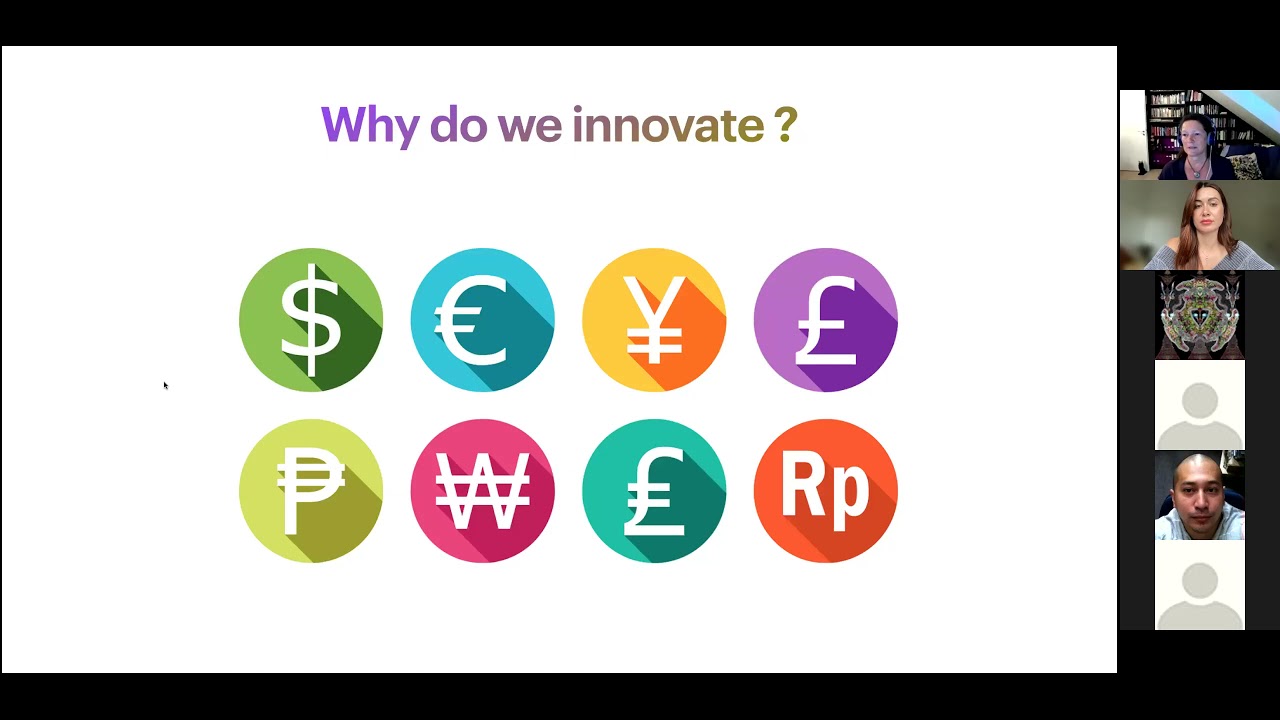
In this WM (Wise/White Mirror) meeting, Bettina presented a talk titled “Beware the Dark Side of Innovation,” followed by a group discussion. She introduced herself, outlined her background in architecture, business, and a PhD on innovation, and defined innovation as creating new value. The core of her talk examined the unintended negative consequences of modern innovation: environmental degradation (plastic and e‑waste, soil and air pollution, deforestation for solar farms, nuclear waste), health risks from chemicals, over‑consumption driven by convenience, the rapid pace of technology (AI, virtual reality, autonomous vehicles) and its societal effects (misinformation, loss of common sense, erosion of privacy, dependence on devices). She argued that innovation is neutral; its impact depends on human choices, and highlighted a “dark side” where profit‑driven, unchecked development leads to harm. Bettina advocated for proactive, responsible innovation: integrating sustainability (triple‑bottom‑line, SDGs), developing regulation in parallel with technology, fostering diversity in innovation teams to avoid groupthink, and revamping education to teach systemic thinking, critical questioning, and long‑term consequences (e.g., the Iroquois 7‑generation principle). The discussion participants (Ross, Samantha, Alan, Ellen, etc.) reacted with agreement, criticism of the presentation format, and added perspectives on regulation, the role of AI, the need for awareness, and personal anecdotes about innovation projects. The session concluded with reflections on personal actions (e.g., choosing train over flight) and a consensus to keep raising awareness of innovation’s dark side.
Chapters
Hello, hello.
Oh, what's that? Level up there, River.
There we are.
How is everyone?
Oh, great. I'm good. Yeah. Just got—
I did a projection mapping project today that's going to be up for 3 months.
Oh wow, tell me more.
Yeah,
um, it uses 2 projectors and, uh, it's the first time I've done anything with 2 projectors.
Right.
So there's a, there's a screen plus 2 project— the, the monitor has the probe, has the projection mapping program on it, and then there's 2 projectors as well. And, uh, it's in a room, so there's a wall and there's a column in front of it. And so I'm projecting in front of— I'm projecting onto the column And there's also a projector behind the column, so I'm projecting like in front of— like on both sides of it, kind of. I'm fronting it.
That's, that's, that sounds quite amazing.
Thanks, it looks really awesome.
Will it be recorded in some shape or form, or
Sorry, what?
Will it be recorded? You know, will the— will the— you know, is it— is there somewhere where, where we could see what it looks like?
Yeah, yeah, I have, um, I have photos and videos. Um, maybe I'll find a place on Discord to post them. Um, it's, uh, it's part of this, uh, uh, selfie museum.
Okay.
So, uh, there's some social media influencers that are coming to this, um, this sort of preview. And, um, yeah, basically people, um, there's artists who filled a whole floor of an office building with installations. Wow. So people are going to come and take selfies.
Wow.
That's quite amazing.
That sounds awesome.
Yeah, it's quite likely. I did.
Involved in it too.
Very cool.
Yeah, one of my friends made, um, like took wool Or cotton and LEDs. And there's LEDs inside the cotton and they're like these clouds that look like it— there's like lightning inside the clouds.
Oh, that sounds amazing.
I did a whole room like that. That's really cool.
Wow.
Yeah, yeah. So again, sort of if there's a link, if there's, you know, if there's an exhibition link or a website or whatever, that would be really cool.
Cool. Oh yeah, I'll put— I'll share some images and videos. And, um, I'm doing some more projection mapping this weekend and next weekend too.
Very cool. I had a voicemail message from Anurag yesterday. Um, is he joining us? Good morning, Roy. Good morning, Ellen. I haven't said good morning yet. Well, good afternoon, or wherever you are.
Thanks, Bettina. Yeah, it's 12:30 here.
Yeah, it's like decidedly morning here. It's still dark outside.
What time is it in Munich? I could guess. About 3:30?
Not that bad. Just— yeah, yeah, yeah, yeah, yeah. No, no, no, no, no. I just had to get up a bit earlier than usual to be, to be reasonably awake. I mean, I'm always getting up reasonably early, but, um, I, I I take my time waking up. So, yeah. Spring's the time for it.
Actually, you're not spring yet.
No, no, no, no.
Because I was going to use the excuse that Perth, like Western Australia, has the birds start up because it's spring now, September, at about 3:30, 4:30 in the morning. And it's just—
Awesome.
I mean, you could look at it as heaven, but it doesn't feel like heaven sometimes. The earplugs go straight in. But you guys must be autumn, is that right?
Yeah, yeah, yeah, that's right. It's getting darker, ready to curl up and shut down and, you know, to go inside and all that kind of stuff. Even though we've got a very beautiful Indian summer after we didn't have— you know, we had a very peculiar summer this year. Now it's really quite nice. Good. Do we know whether— you know, as I said, I haven't listened to Anuradha's message, voice message. Do we know whether he is planning to be here or whether he can't be here? Do we know?
Yeah, I don't think he's coming today.
Sorry, say again?
Yeah, I think he's reducing his screen time.
Yeah. Okay, so if he— yeah, shall I just get going and if someone joins, someone joins later?
Perfect.
Good. Yeah, just sort of briefly, I think Anurag spotted that I'm giving this this presentation this evening at the Technical University in Aachen, virtually of course, on Innovation: Beware of the Dark Side. And when he spotted that, he asked me whether I'd be happy to share that here as well, and I am. So you're my guinea pigs of whether I manage to keep to my time and whatever, you know, see what your reactions are. Because, well, even though I think you are a very different audience to the one that I'm expecting this evening. So I'll be particularly curious to see, to see what you think. All right, I— oh, there we are. Let's share this one, and then if I play So does that work? Can you see my screen? I can still see you at the side. That's brilliant. Yay, yay. Great. So beware of the dark side of innovation. And I will just— yeah, I don't know. I will quickly go through some brief introduction to myself. I'm not quite sure it's necessary in this context, but for the purpose of a run-through, I'll just quickly do that. So I started off with a degree in architecture and town planning, which was a compromise gone wrong between computer science and fashion design. And realizing that it wasn't what I hoped it would be, I then— that's actually when I left Germany to move to the UK to do my MBA at London Business School. When I finished, I decided I didn't want to take any job that I didn't really want anymore, which is when I started to work for myself. And that's basically what I've done ever since. So self-employed. And then I also realized that if I wanted people to come to me rather than to any of the other many people out there, I needed to develop a deeper level of expertise, which is when I went back to London Business School to do my PhD. And that really got me deep into innovation, laid the foundation for my thinking around innovation. And so that's the field that I've been in ever since. setting up my own company, the Innovation Leadership Forum, in 2004. And most recently, the last 5 years, really until the end of last year, I spent with an NGO called Katerwa, which is all about identifying, evaluating, accelerating sustainable disruptive innovation. So the kind of innovation we need to get our planet back on, back on course. And I also realized that if the financial aspect of the triple bottom line is not working, the whole system isn't working. So true sustainability needs to consider the financial as well as the social environmental aspects. I also like to develop stuff, which is— if my Word, which just doesn't do any longer. Okay, my screen is stuck. At least, at least— oh no, there we go. I use that one instead. So I like to develop stuff. In the early 2000s, I developed a tool for the assessment of conditions for innovation, which I call a facilitated tool because I think, you know, the self-assessment tool, unless you discuss them and whatever, is not very helpful. In order to deal with diverse and difficult contexts, I've developed some picture cards, and I absolutely love writing. So they are not all exclusively my books. I like to collaborate, particularly in the context of writing. So that's a little bit about me. And so before we go to the dark side of innovation, it's actually, why do we innovate? You know, why is everyone going on about innovation? And it might be pretty obvious, but here we go anyway. So there were a number of wise men who told us that innovation is the be-all, end-all, and be-all. And they started off with Peter Drucker, who said, marketing and innovation produce results, the rest are cost. Similar, Tom Peters, who said, you know, innovate— famously, innovate or die. And also Malcolm Gladwell sort of said innovation is at the heart of the knowledge economy. And certainly when I started in innovation in the '90s, it was that the CEOs were slightly more hesitant to say, well, you know, yes, we do need to innovate, even though it clearly was what they thought was quite important. Interesting though also that innovation at that time was really associated with products, whereas the innovation scape today is much more also about ways of collaboration and business models and so on and so forth. And certainly today, sort of one of the most recent surveys from the Boston Consulting Group has said, you know, innovation definitely is on the agenda. So, and a simple answer why we innovate is, well, actually to make money. And there is certainly evidence that the companies who are investing in innovation, particularly keeping innovating throughout the crisis, are outperforming the rest. So, okay, while there is money to be made, I think it is also particular entrepreneurs innovate in order to support and enable progress of humanities, not just the greed. And though I find it quite interesting the way that we're looking at the at the progress of humanity, the way we measure it, is generally monetary. So we're looking at the gross domestic product in order to say whether countries are actually developing and evolving or not. Yet I also found some interesting quotes about, you know, well, hang on a second, gross domestic product is all quite well and good and measures— so, you know, it's supposed to measure progress of humanity. But if you, if you think about why we measure gross domestic product, it is to measure progress of humanity. And in my reasoning, progress of humanity is not really measured in monetary terms. It's also so much about well-being. And, you know, of course, there were people who said it very early on, like Robert Kennedy. Robert Kennedy. And I just want to get the quotes right. He said, GDP is not measuring that which makes life worthwhile. And that was back in the '60s. And then the chap, I don't know whether you're familiar with him, Herman Daly. Anyone know Herman Daly, who's written a book Beyond Growth, stated in '96 that uneconomic growth occurs when increases in production come at the expense of resources and well-being that is worth more than the items made. And so finally, also in the EU in 2007, they stated that GDP does not properly account for social and environmental costs and benefits. It's also difficult to achieve sustainable decision-making aiming at sustainable progress and well-being if welfare is being considered from a purely financial point of view. So, you know, I think people realize that GDP is not the best possible measure, but it seems to be easy to measure. And so that's very often what we are going for. And I think another big challenge is also that this whole idea of growth assumes free availability of certain resources. And, you know, the question is, are they really free? And if you think of the consequences of our growth and our output, You know, if you know that there are more plastic particles than fish in the ocean, in fact, sort of it's 25 trillion macro and 51 trillion microplastics litter our ocean. So, you know, we might think it's a free resource, but what we are doing to it in the progress process is quite alarming. And of course, it's not only the water, it is also the soil, and about 33%, 33%, one-third of the Earth's soil are already degraded, and 90% could become degraded by 2050. So that's not really that much into the future. And then, of course, the third element that we rely on, air pollution, kills at least 7 million people every year, which is 15 times more than people die from war or terrorism and other violence. So, not surprising, the chickens come home to roost, and I thought it was really quite interesting in the latest climate change report from the UN, they stated it as clear as never before. It is unequivocal that human influence has warmed the atmosphere, ocean, and land. Widespread and rapid changes in the atmosphere, ocean, cryosphere, and biosphere Cryosphere is as I did. Anyone know what cryosphere is? It's the it's the bit of our planet that are covered by ice. I hadn't heard the term before before either, but so that's um that's it. So yes, so then the question is you know is innovation good? Is innovation bad? You know all the stuff that we are creating, and of course the answer isn't quite that simple. Because anything that we invent, anything that we create tends to have the habit of being neutral. And it depends what we human beings do with it, how we, how we put it to work, how we apply it, that makes the difference. And so is innovation good or bad? Well, it is neither. It depends on us, on how we use it. So for example, you know, solar panels. The idea behind solar panels is that they that they are doing good for the environment and improving the energy balance and finding a way to generate energy that is not harmful to our planet. Yet when I then see that forests are being cut down in order to create solar farms, then I begin to wonder, you know, what are we doing? You know, this thing is meant to do good, not bad. And here we are cutting down forests to establish solar plants. For me, another example is nuclear energy. In principle, it could be good, but the way we are using it, or at least how we are also using it, is not quite so good, I think. And to be quite honest, I also— people always say, you know, nuclear energy is so clean. I do have my question marks behind, you know, what are we doing with the nuclear waste that is generated in the process. And are we treating the argument that, you know, nuclear waste is not so bad the same way that we've treated our attitude to land, water, and the air, saying, you know, well, it can cope with it until we damage it so much that it can't cope anymore? So they are neither good nor bad. However, I decidedly I do think that there is a dark side. And what do I mean by that? One of the reasons I think is very often we innovate because we can, you know, we just do anything that is possible. And, you know, with the danger of making myself slightly unpopular, I think developing a car that goes 531 kilometers an hour, which is 330 miles per hour, you know, do we really need that? Where can anyone drive that thing? And then to know that, I mean, of this thing, 120, 125 have been produced, and they have a starting point of $2.8 million, and they sold out in no time. Do you really need that? Is really that the best use of our resources? Do we need that? Or we do, you know, we cram in as many functions and functionality as we possibly can because we've developed it and we want to show it off. And so, you know, I really want to see the pocket into which a pocket knife such as this actually fits. Do we really need all of that? And then the second dark side of innovation for me is about innovation for convenience. So, for example, you know, we all have this beautifully conveniently packaged food. And, you know, do we ask what are the consequences of producing food in this way? Because in order to get it packaged like this, we are putting all sorts of chemicals inside it. And as a friend once to me said, if you don't know the chemicals on the food packaging, your body doesn't probably know either. So what are we doing to our bodies by introducing all these chemicals that our body doesn't know what to do with? And of course, it's not only convenient in terms of eating, in terms of packaging. If you just think about all the food packaging waste that is being created. You know, yeah, I don't know, when I come home from shopping and just put my stuff away, yeah, I generally create a huge pile of plastic in the process. And again, you know, the question, you know, is that the best? With our ingenuity and imagination, is this really the best that we can do? Is this the best that we can come up with? Another aspect for me is, you know, I think we also, due to the growth mindset that is absolutely dominating every question, but how quickly something will change is another question. But it's sort of this more, more, more attitude, and what this more, more, more attitude results in is, for example, food waste. In 2019, 930 million tons of food have been thrown away according to the UN. And, you know, I thought it was quite interesting. They calculated that this volume would fill enough 40-ton trucks to stretch around the globe 7 times. Just imagine that, you know. On the other hand, we've got so many people dying or being threatened by dying through starvation, and you just think, come on guys, is this the best we can do? Is this why we innovate, you know, to create stuff that on the one hand we throw away and then the other hand people don't have enough? Can't possibly, you know, we need to innovate different things, we need to innovate in different ways. And it's not only food, it's also clothes. Again, some statistics, it's sort of, there was a survey in the UK a couple of years ago where over 34% of the survey participants said that they've never ever worn about 10% of the clothes that they buy. You know, so the stuff is being bought, not worn, then thrown out to go into landfill. Okay, and another big, really, really biggie is the entire electronic consumer goods industry. And in just 10 years, more than 7 billion smartphones were produced. And global electronic waste generation reached a record high of 3 million metric tons in 2019. That's sort of a huge increase of 21% over the previous 5 years. And, you know, and how often do I and you, how often do we upgrade our electronic gadgets because the next ones come out and it's so exciting and we need to have the latest? And what is happening to the stuff that, that we don't use anymore? Is it, is it in our drawers? Do we throw it out in the general rubbish? Are we sure it's being recycled? So, you know, these, these are some, some aspects of the dark side of innovation for me. what I call the dark side. And I would even go a step further. I would say there is also irresponsible innovation. And, you know, if you're thinking about the fact that we are producing chemicals from which we know they are dangerous to human health, and of course to the animals, and to, you know, the damage that they do to the rest of the planet, and then to know that we are creating chemicals that are considered to be dangerous to be used in the European Union, but we merrily export it to the rest of the world, particularly the developing world, then I really have to say that for me is so irresponsible. How can we do that? We know it's dangerous and yet we merrily export it. And so there's an example, a company called Syngenta is producing a pesticide that is so dangerous that just one sip can be lethal. Chronic exposure can, even at the low doses, can cause Parkinson's disease. It was first marketed in '62, has been banned in the EU in 2007, and yet despite this, about, what's it, 28,000 tons are still being exported to South America, Asia, and Africa. And I, again, so I think Really? Is that what we do? And, you know, there are even sort of in the US, they are using chemicals and coloring for food that's been forbidden because we know it is causing harm to health. It's forbidden in the EU, but it's still being used in the US. And so you know, can't possibly be. So I think, you know, that for me is definitely a very dark side of innovation or how innovation is being used. And then I think, you know, a step too far, question mark. Are we— My concern is that we are creating innovation which makes it increasingly difficult for humans, for us humans, Maybe not us here on the call, but certainly I think a lot who are less reflective, you know, to lose touch with reality. And, you know, even back in 2010, I contributed to a white paper developed by the, or written by the Finnish Aalto University, where my title, my paper, my contribution was titled, Will Virtual Become Reality? You know, in which I mused how long it would take people to lose the ability to discern what is real and what is fake, or what is virtual. And so, so the quote from that paper is, I believe that we are too much led by an excitement of what is technologically possible, rather than also asking whether, from a human development perspective, it is actually desirable. And, you know, I think it starts with the profiles that people create of themselves on social media. And we all know sort of the damaging side effects social media can have, particularly on young women who just see these glorious images online and look at themselves in the mirror and think, my God, you know, I can't keep up with that. And we know about bullying in the social media space that has quite some devastating effect on, particularly on young people. You know, and we all know about that it is increasingly difficult to discern what is fake and what is real in terms of news. You know, when I, when I see news today, I just really ask myself the question, you know, can I trust this? Whereas sort of 30, 40, 50 years ago, I think there was no question. If it was in the news, you know, it must be true. And sure, there would also be stories that aren't quite true. But I think the degree to which fake news have spread today and our— and it's just getting increasingly difficult. to figure out what is and what isn't true. And if you look at these, these nice people, you know, they look all very friendly and very nice. Who wouldn't want to meet them? However, all of these images— none of these people exist. All of these images are entirely computer-generated. And so my concern is, you know, unless we find a way of enabling everyone to discern what is fake and what is real and what is virtual and what is real, I think, you know, maybe it is innovation a step too far. What I certainly think is innovation a step too far is if we think that we, you know, as we are having the belief that we can control and manipulate nature, is when we start to use viruses and bacteria to weaponize them. And here I'm not quite sure whether it is fake news or whether it's truth. I tried to verify it and found the reference to the following in a number of what I would consider reasonable, credible sources, is that indeed— what's the chap called, the mega corona guru in the United States? What's his name again? I've got it here somewhere. Anyway, I think you know who I'm talking about. and the US-based NHI, that they have been funding research into weaponizing bat-based viruses in 2 laboratories, both of which are close to the Wuhan wet market. And if you know that, you know, well, there are all sorts of questions in my head. And, you know, as I said, you know, My question mark is, is this fact that the US has funded research to weaponize viruses in Wuhan? Is that fake news or is that real news? Is of course a question, but I think the possibility alone is quite scary. So I think also when we are innovating, we are always looking at what we gain, and I would like to invite us also consider, you know, what is it that we are giving up? And, you know, I think one of the things that is definitely getting lost for so, so many is our connection with nature. You know, if you think more and more people are living in cities, I mean, how many children have never seen a cow or maybe a duck because they are on the ponds in the parks in the city, but there are so many animals that children have never seen in real life. And then sort of again, sort of a piece of research with 5,000 children between— of the age between 5 and 16, and it is an absolutely alarming number of them think that, for example, that tomatoes grow underground, that pasta comes from animals, and all sorts of weird things because they just completely are disconnected with anything to do with nature. And I also think that this disconnect from nature is partly to blame for the way that we are dealing with nature, you know, the disrespect and the harmful way that we are actually treating nature. And, you know, when I'm walking in the city or whatever and someone drops a piece of rubbish, I just pick it up and say, I think give it back to them, and I say, I think you've lost something. Because I always wonder, you know, who do you people think, what do you people think happens to the thing they just carelessly throw on the ground? You know, so I, you know, disrespect for nature, I think, or disconnect from nature is, I think, one of the consequences. And yet at the same time, we know, we've got lots of indications that people who feel connected to nature happier, you know, they see more meaning in life. So on the one hand, we know that connecting to nature is beneficial to humanity, and on the other hand, we are doing absolutely everything to destroy it and make it really difficult for people to connect to nature. And I also always highly, you know, I'm not quite sure whether I'm amused or saddened when people just let go of the simple bit of common sense, blindly following, following their satellite navigation systems and driving into the sea because that's what the sat nav tells them. And yes, I hear you, you know, well, just a little bit of common sense would remedy that. But it seems that too many of us don't have much common sense. And as I like to say, common sense ain't that common. Otherwise, we wouldn't face many of the challenges and situations that we get ourselves into. So that's another one. And, you know, it's not only that. I just think we are, you know, we are Googling to find the truth we find relevant information. And, you know, I absolutely adored the session we had last week with Lita. And I think it's just so, so amazing. Yet I have the feeling that when people see see Lita and start engaging with her, you know, that she speaks the truth. And I really want to question that. Is that— is, is just because she's got access to so much information, is it really the truth that comes out? And, you know, I think we also had the discussion a little bit. I mean, of course it depends on what her, her resources are. What is the information that she's being fed? And if there are biases in the information, will she be able to discern the biases and will she be able to counterbalance them? And I thought it was really, really interesting when the same question was being asked again and again, that the answer was different every time. And so I also think, you know, that if there is conflicting data in the system, if there are sort of lots and lots of sources, there is bound to be conflicting data, then that is reflected in the answers that she gives. And so again, if we are so in awe of artificial intelligence that we kowtow to it and believe that it is the truth, then that is for me again sort of a huge danger. What is it that we are, that we are Giving up, and for me again it's sort of you know the whole of understanding of what really is as opposed to what is being projected. And of course then that becomes a very philosophical debate because you know we all know that reality is constructed by ourselves and by what we see and what we filter out and what we don't filter out and all of these things. And all I want to do with this is really you know to to raise a flag. that we should be careful on how we deal with it. And also just think about, you know, where are we, 2021? Think about 14 years back if you can. Before, if I had asked people whether they want to be available 24/7, 365 and be happy to answer work-related issues, they probably declared me insane. And yet in a way, that's what I would I would think most of us are doing today. I certainly do. And so what I— so maybe that's not the problem. What for me, where I see the problem is that the use— using a particular technology has fundamentally altered our behavior. It has altered our way of thinking, of acting, of feeling. And we have slipped into this. It's sort of like the boiling frog syndrome. because it has entered our lives gradually, we have not been really aware. And now that we are aware, it has become such a way of doing it that not to have a smartphone, not to answer email, and not to be available becomes a challenge, because that is what is expected today. And you have to be really quite firm when you say, well, no, I will not be available during my holiday. I will delete all emails that occur while I'm on holiday. You have to be really quite, you know, quite strong because that is going against the stream. And so, and again, the question, you know, what are we willing to give up and what do we even notice that we are giving up? And some other piece of research that I thought was really quite interesting is the fact that we are bombarded constantly with so much information with the social media, so we are constantly taking in new information, and unless we are adopting practices such, you know, no screen time, meditation, whatever, any form of switching off from all of that, we are making it impossible for any of this information to be stored in our long-term memory. And if these things are not stored in our long-term memory, it will disable us from making connections that we otherwise would be able to make. There's actually a little video where it's really nicely explained, and I gladly share the reference to that. So, and then sort of maybe one for amusement, are we willing to let go of our control over our body? Now, this one is from a university actually in Germany, where someone implanted electrodes in the legs of a person, and so this person could literally be remote controlled because the muscles would be activated to walk in a certain direction. You know, it reminded me of— I don't know whether any of you know Wallace and Gromit, and there was a Wallace and Gromit movie about the wrong trousers, which is basically, you know, the trousers walk with the human rather than the human walks with the trousers. And, you know, on the other hand, I can see positive effects of this one. For example, if someone is disabled or has, you know, problems with the muscular— with the muscles in their legs, and then you can implant electrodes that enable that person to walk again, well, then that's brilliant. But, you know, how consciously are we doing these things, and how much are we putting measures in place to ensure that we are getting all the benefits that without the potentially negative side effects. And, you know, I just also reminded of Elon Musk, you know, basically when asked about the integration of humans and technology, just said, you know, what about the smartphone? Is that not already an extension of us? And how many of us feel at a complete and utter loss when our smartphone doesn't work or has disappeared. And just think about, it's your extended memory. Just think about all the information it holds for you, from addresses to goodness knows what. And so certainly a path that we are on in some shape or other. And so for me, one of the fundamental questions is, what is it that we seek? What is it that we seek? Are we seeking control, certainty, the one right answer? Or are we seeking understanding, awareness, and possibilities? Whom or what do we trust? Do we really trust technology entirely? And, you know, do we use technology to make decisions for us or to support our decision-making? And, you know, and what is our belief? Do we believe that we are all entirely independent and rational beings? And I think that illusion of independence can be easily created by technology. We don't need to rely on others because technology helps us be autonomous if we wish so. So how much do we actually, you know, how much does technology prevent us from realizing that we are truly all of one system and relying on one and the same system? And, you know, we are definitely part of the same system and we are affected. What happens in one part of the system is today's— through today's interconnectivity is felt by other parts of the system, whether it is the economic crisis that started with the collapse of one company back in 2008 and has affected most economies around the globe, whether it is the eruption of the Icelandic volcano back in 2010. And I would argue that most people had never heard of Iceland, you know, nor would they be able to place it on the map. Yet, you know, the air traffic was severely affected for a number of weeks, and that was certainly felt around the globe again. And then, of course, the coronavirus has had huge implications emotionally, psychologically, for people's well-being. or these things do not stop at national boundaries, and they, you know, they don't care whether we are leaving the EU and declare ourselves independent from the rest of Europe in England or in the UK. So, you know, we are all part of the same system. So after all that, which might all have been slightly more on the depressing side, You know, so what? You know, what do we do now? And I think it is really, you know, one of the reasons I want to talk about the dark side of innovation is because I also believe we do have a choice. We do have a choice. You know, we do have a choice on how we use technology and how we bring it to life. Because I said earlier, technology, whatever we create in itself, you know, I'm sure there are certain things that are only evil or only good, but most of the things are fairly neutral. And so it's our choice whether we are building cities that look like this, or whether we are building cities that look like that. You know, it is both within our realms of possibility. It is a choice that we make. And if we are thinking about the impact on social and environmental, you know, I would argue that this scenario, you know, you can imagine how lovely the climate in hot summer's day because the trees will, or the plants will, provide some natural coolant, better air quality, and all the rest of it. So what I think needs to be able to happen for us to make more appropriate choices, appropriate or even better for sustaining our planet and creating a worthwhile future, a future where life on Earth does not look like life on Mars, is that we really need to be raising awareness and consciousness of humanity. And so how do we go about it? I think, you know, we need innovation that really is happening very consciously and very responsibly. And so in order to be able to do that, what I believe we need is education that is very different from what we experience today. We need education that encourages rather than discourages to have different points of view and to ask lots of questions. We need education that teaches critical thinking rather than multiple choice where you just tick boxes. We need education that really deeply conveys the self-systemic nature of life, of nature, of our planet. So that we really do understand that the change in a small part of the system that we that it is might be we might be the butterfly wing to take an analogy from chaos theory we might be the butterfly wing that that might seem small or the flapping of our wing might seem small to us but it might have a huge effect of the wider system so we need to embed sustainability considerations. In all that we do. And so how to achieve that? Well, I think we need to become much more ethical with the things that we have already created. And I think it is an absolute impossibility that we know that certain things are poisonous, yet we continue to sell those to countries where the awareness might not actually even be properly aware of that. We need to start looking for unintended consequences from the outset. You know, not create something and then say, whoops, you know, something can go seriously wrong with it. Because, you know, we get so excited by what can be done that we do it without actually asking appropriate questions at the outset. I also think that we tend to develop regulatory frameworks after we've created an innovation. And what I propose is that we try to develop it in parallel with it. Because I think, you know, we've put so much stuff out there that we just can't possibly keep up with regulation that keeps the dark side in check. And also, I think, you know, we've become very good, and there are also a number of interesting films on that, we've become so adept at hiding anything that's negative. We just focus on promoting all the positive stuff that our innovation does. And keep very quiet about the unintended negative consequences that there might also be. And I think sort of one way to help address many of these issues is to ensure that we really innovate in diversity, where we've got lots of different perspectives. And as a colleague of mine once said, if you've got an innovation team of 10 who all think alike, you've got a cost savings opportunity of 9. Because in innovation, you really want to have different perspectives so that we can avoid groupthink, where everyone just nods because we've got all the same perspective and same understanding of a certain issue. So we really need people, and the only way that you get people to challenge what you're doing properly is when you bring in people who think different from the way that you do. And so if that might sort of I think they're very practical things that you can do. And, you know, if you make any decision, if you build anything, if you do anything, just ask yourself, you know, does it bring us closer towards achieving or further away from achieving the Sustainable Development Goals? Very simple question. You might also want to think, you know, my decision, what is the impact? On the triple bottom line, i.e., you know, if I'm flying out for a 3-day holiday on the Bahamas, what is the impact on the environment? What's the social impact? What's the economic impact? So always keep that in mind and just, you know, try to be more aware of the negative consequences, or simply use ancient Iroquois wisdom, which says that you should make decisions considering the consequences of these decisions for the 7th generation hence. So really think, try to think about the long time. And then the last one, really, how to work with and through nature, not against it. And this is an example where they combine rice plantations with fish farming, so the fish eat any of the insect larvae that might damage the rice. and the fish poo fertilizes the rice fields. So that is a scenario where you need no intervention, no technology, no chemicals in order to create the results that you would want. So I think it is, you know, that there definitely, for me, there definitely is a very dark side of innovation. I think we don't talk about it enough. There's not enough awareness around it. And I think, you know, with raising levels of awareness and consciousness, we, we will be able to innovate, to use technology in the way that is beneficial for humanity and the planet, and not, not, not against it. There we go.
Thank you, Bettina. That was That was absolutely wonderful. Touched on so many points. So I mean, does anyone have any follow-up questions for Bettina?
Yeah, thank you. That was amazing. Not necessarily questions, because you kind of answered them of like, what can we do? But I do—
I think it's definitely enough to Samantha, just quickly, there is a very, very lovely purring of your cat that is— it's a little bit louder than what you say. I just love it. I just love it. Yes. Hello. It was— I was just wondering, I was trying to figure out what this was because I had difficulties hearing what you said, and I realized it was the purring of the cat. Beautiful. I love it.
Thank you. I
thought it was my connection.
Is that better?
Yes, thank you.
That was the cat purring. Yeah, it's definitely not spoken about enough, so thank you for sharing this. It's really, really powerful. Yeah, really empowering. And yeah, my questions are just about regulations, you know, what are we doing to monitor it? Because it is just growing so fast.
Yeah, I think, I mean, this is also the problem in the due to the connectivity connectedness of everything nowadays. What is is invented here is almost available, or there's an awareness and availability almost everywhere. Yet the entire way we deal with regulations is on a very localized basis. You know, I know we've got the got the UN and. You know, they are trying to look at things, but it's, it's, um, you know, whereas one thing is affecting the entire system, the regulatory side is always mostly dealing with small parts of the system because then people can't agree and the industry lobbies come in, you know, because they want to, want to assure that they are making their money. And then there comes the argument of jobs being lost if we're doing this, that, or the other, you know, and, and immediately it becomes even more difficult to find find regulation that keeps certain things at bay. Or, yeah. So I think it's—
I mean, I was just thinking about when you were talking about the amount of misinformation that's out there, which is really— I think that's the kind of— if I was trying to solve this in, say, just my— say that problem existed in my house. That's the first thing I would try to fix, and that is try and sift through and make sure that we identify the misinformation as misinformation and give people clear, verified access to transparent, proper information sources. And then you could create the awareness, and then with the awareness, you can then create the proper discussion on how we're going to Address this. So then you also have, as you said, there's all this bureaucratic, like lobby, like a like people with agendas, people with technologies to push. There's profits. So there's it's it's a it's a very difficult problem. So I appreciate that this goes really. Really fun.
Bettina?
Yeah, I think—
yes.
Um, I don't know if you, uh, defined innovation in this, uh, at the beginning, but I was, you know, wondering, like, what does that even mean? Because I was just looking at some of the examples, and to me, I'm just thinking, well, that's just not innovation. I wouldn't even qualify— I wouldn't even classify that as innovation. So I think it's important to define what you mean, because—
Yeah, I think sort of at the most basic level, sort of innovation is new things being created. Innovation is the process of creating something that hasn't existed before. And to be quite honest, I mean, I absolutely hear you, Ross. I absolutely hear you. And I find, you know, you cannot talk about innovation without the discussion about what actually is innovation and the definition of innovation coming up. And I mean, from my personal definition is innovation is about embracing the path of change to create value, whereby value has to satisfy— That's my personal definition. I mean, I think— go ahead.
You know, the, the, the way that corporations are structured, just the idea of, oh, well, you just— it doesn't matter how much money you make. You always have to make more the following year. That's just, you know, if you don't make more money than you did last year, you know, you basically just deemed a failure.
Yes.
You know, that's, that's the— that's really just the main goal. And the thing is, like, it's the stupidest shit ever. It's— I agree.
I entirely agree.
fundamental to— Yes. I mean, I just, I, I understand, like, pointing out, you know, like, I love the specific examples of, you know, the, you know, the waste and, you know, the people need this and, and, and, but, um, like, to say I mean, even just to— it, it almost seems unfair to just use the word we because it's really not most of the people who want this and who are, who are doing this. And actually, I think it's, it's technology that's allowing us to find out about what's happening, share it with each other. The idea of like You know, okay, so what are we gonna— like, if the thought of, oh, what do we do about such and such? Oh, well, let's, well, let's have a boycott. Well, I mean, that's really ineffective if we, if we didn't even have a lot of these communications technologies that we're using.
Yeah.
So
I, I,
you know, I, I,
I—
Everything is just based On like the stupidest, like on the basic, basic level, it's just greed and stupidity and is like in the driver's seat.
I mean, don't hold back, Ross.
Tell us what you really think, Ross.
No, I mean, I, I completely agree, yet at the same time, you know, I know that there's all the, the positive potential. Yet what I see manifests, and if the positive side would manifest more, then we wouldn't be in the situation that we are in. And I agree that might only be a few people who really, you know, driving this. And yet at the same time, I really do have the urge of pointing it out so that— that more become aware and consciously choose the positive over the negative. And also, you know, I think to be aware that it is not the only way. You know, it is, you know, we can work, we can have technology support humanity, dominate humanity. You know, I think these are two options. You know, I very often use the film The Matrix and the film Avatar to describe the 2 different scenarios. You know, for me, Matrix, and I believe that's the path that we are on because of lack of awareness, you know, we are slipping into behaviors that we are not aware of that are taking us further down that path. And so, you know, I just want to say, you know, wake up everyone, you know, wake up before it is truly too late, you know, because I think we're already quite, quite, quite, quite far down that path. And so You know, again, as I said, sort of with Lita, I think it is just so amazing. And the danger I see is that people start to believe that what Lita says is the truth. And, you know, hang on, hang on, guys. What comes out is what you put in. And even if, you know, the amount of computations, if she can take a million trillion more factors into account than we humans can, So, you know, it will be based on more information, and yet it will still be based on the information that is in the system. And so, you know, yes, there is so much positive potential, and yes, there are, you know, it is driven by some, and yet unless we talk about it, it will just get stronger and will continue. That is my concern. But what is the solution?
This is a practice. This is you're practicing a presentation.
Acoustically, I didn't quite.
Were you practicing a presentation?
I I have shared my strong beliefs, which are encapsulated in the presentation that I will give again this evening. Yes. I've been talking about this for, you know, I first talked about the dark side of innovation back in 2011. Because I think it really is necessary. And I know that people find it uncomfortable and they might find it depressing. But for me, this is the reality that I see. And I almost feel it's because I see this as a reality, it is my I feel that I have to speak up about it.
Your calling.
Yeah. Yeah. And you know, it's, it's to say, you know, I'm not seeing— it's not that I can't see the positive sides. I absolutely do. And I mean, there's so many amazing things that, that are possible. And, you know, again, it's, it's just for me, most of this, again, the stuff that we create mostly has the potential to do a lot of good and to do a lot of bad. And so unless we are— because I mean, you know, this— I sometimes also talk about the hype around innovation. Everyone, we must innovate, you know, people charge off in all sorts of directions. And for me, innovation has to have the aim of making something better. And yeah, so just, you know, just to create a discussion around it and encourage people to become more conscious.
So I think if you want to— if I think if you want to create a discussion around it and encourage a discussion around it, then start— I mean, like, I really don't know what the forum is or what your time limit is. for what you're— for where you're going to present this, but I was finding that the length of the presentation and the number of questions that you asked without giving us a chance to actually respond to them, I was getting frustrated by the content. Because the content is frustrating, you know. Yet at the same time, you were speaking for like 45 minutes. Didn't, you know, like there was the— and your, your questions were very rhetorical, and you would answer them so it didn't become a discussion. And then I felt, um, I felt frustrated by the length of the presentation and it not being interactive. And that was combining with the, the information that was already frustrating. Yeah. So I didn't have a chance to vent about any of these horrible things that you were talking about. Because I just listened to you talk for like 45 minutes straight.
Can I, can I jump in as well? I, I understand what Ross is saying because I felt that I interpreted it as this material is very juicy, as in there's so much to talk about. Like when you were talking about, uh, the supercar, I remember having a huge discussion with some people and I'm flip-flopping on that issue about, you know, why bother going— I mean, I'm not going to talk about it, but I mean, you know, we all had our opinions and I wanted to share that with the group too. But, um, you know, I still, you know, as the— as you— as your talk progressed, there was just so much stuff and I, I so much wanted to jump in, but, uh, he was still very satisfied at the end. So I see what Ross is saying.
Yeah, thank you for that.
Thank you for listening.
Yeah, I mean, yeah, Alan.
But Tina, I just wanted to add there, I had a completely different experience to Ross, which was that I enjoyed your presentation immensely. I thought it was beautiful. You're very eloquent, just standalone, and there's a separate Parallel topic: not all PhDs are eloquent. They they kind of dive off into their research, even if it's not like if they've gone into a different topic. They tend to make it dry where yours was very accessible. My favorite part was the quote from Professor Carol Dweck about growth mindset, which you probably wouldn't think links to innovation, but I love the fact that it does. And my recollection. of Dweck's mindset was that she and one of her colleagues issued a retraction about a year or 2 later because they thought it had just been completely hijacked by the general public, which it had. But I like how you tied that into we don't have to keep being better and better and getting more and more. And to Ross's point, we don't have to just wait for the savings account to go up and up and up. just really a weird fucking mental mindset, but it's prolific. It's all across the— all across different societies, not just our Western society. So yeah, I really enjoyed that part of it. I hear you about Leda as well, and it's good to have that balance and to hear the queries outside of that, and also to educate people about what the current language models are doing in terms of not being factual all the time. And those kind of quotes that don't really pop up unless you dig deep down into it. But I loved it. I think 45 minutes, even an hour, is pretty standard these days. I've sat through 2, 3, 4-hour lectures. I didn't think your presentation was too long or anything like that. I would have loved, I suppose, to ask some questions or answer some questions along the way, but that wouldn't happen usually anyway. So thanks for making the time and giving us a preview of your tonight My pleasure.
Yes, I'm just sort of a little bit— the, the, um, at the Technical University in Aachen, they've got something, Innovation Tuesday, where they've got people give a 45-50 minute lecture and then there's a— it is followed by, by discussion. So, um, and yet, as I said at the outset, I think this, this audience here is, you know, if I, if I would prepare a presentation for this audience, I probably would go about it in a somewhat different way and, you know, have the questioning in between rather than at the end.
I think— I mean, I think— I mean, maybe I was just not seeing the slides because of the— this medium. Like, you're like maybe screen sharing, and then maybe I clicked away at something and I never made it back to the slides or something. I assume the slides were going the whole time because I They were.
They were. Yes.
Okay, so I wasn't seeing the slides the whole time. I like thought that they like ended, and it was just like just me talking, talking. Uh huh. And I think perhaps if I had known what your format was, if you're like, okay, I'm gonna like give a 45-minute lecture. Um, at the outset.
Yeah,
yeah, I get you. It would have been, uh, kind of a different experience.
Yeah, yeah, yeah, I, I hear you. It is, it is about expectations, you know. If we— if you're expecting to have a discussion and then for 45 minutes, that's not, that's not very satisfying. I completely get that. Yeah.
Okay.
Is everyone okay for time? We're at 3:35 now. So did you guys want to keep going and maybe ask a few more questions, or Bettina, are you okay for time?
I'm fine. It's early morning, so still relatively early morning, so it's absolutely fine.
Okay.
Yeah, yeah, there's just a few things that I was just like you spoke about thoughts that I've already had. So a lot of synchronistic, a lot a lot of synchronicity for me. Um, it's like you articulated in in such a divine way that I'm like, ah yeah, that's thinking about that. Um, and especially like you know that expectation to be connected all the time and. I create stories in my mind if I haven't responded to people. And again, it's just coming back to like that education piece, isn't it? Of like, what can we do? Like, because we are that powerful. Like, we are that powerful.
I love your cat. I absolutely adore your cat.
Got hijacked by the cat. Probably reset her computer.
Beautiful.
See, that's what we got to do. We have to make the cats the rulers, and then everything will be okay.
But yeah, again, it's just coming back to like that empowerment of like, what can we do about this? Like, you know, we're all here on like sharing this little vortex together with all of these different perspectives and experiences, and it's like how How can we make like, like what can we do?
Like I know. Yeah, you know, and for me, you know, just raising the awareness that that innovation is not all, you know, all wonderful. You know that we need to to ask questions around it. Just just sort of be, you know, discuss with our friends and you know make make them aware and you know. If I'm going to Brussels, I will only go by train. And, you know, it's not, you know, it's because it is a conscious choice not to go and fly, even though it takes sort of 7 hours by train. And yeah, I mean, it's just, you know, just sort of share small stuff that everyone can do.
It's like now when we've got to scan in everywhere, like, I'm a bit of a rebel. Like, I just really resent doing it. And it's like, It's this constant, like, me soul just doesn't wanna be tracked 24/7. Like, you know, the cameras and it's just like, it's everywhere. And I'm like, wow, like what type of, and I can, yeah, like the type of experience of a reality that we are entering into because of innovation. Mm-hmm. Yeah.
Your cat looks like he's in a, like, an '80s music video right now because he's like
blurred.
It's very— it's so easy.
Absolutely gorgeous.
I just love it. Well, you know, again, thank you very much for giving me this opportunity. I really appreciate it. I appreciate that. And yeah, you know, I mean, I'm happy to stay on, but I have the feeling that maybe— also, I mean, the other thing that I— I'm very often— the presentations that I give very often get people to think and reflect. And, you know, that's exactly what I want to achieve. So actually, very often when I'm speaking, when it comes to the questions, people are There's so much inside there, you know, reflecting that there very often aren't any, any questions because they're just sort of trying to digest what I've thrown at them. So I'm very pleased that, that you had some questions and some comments, which is great.
Is this PhD work?
I have one.
Okay.
No, that's basically using my PhD It is basically, you know, it's my observations that I've put together. It's not PhD work. So my PhD was back in the, back in the, when was it, in the '90s.
Got it, thank you.
Bettina, I have a question about the rapid pace of innovation and how, you know, We may not why people aren't stopping; they have to push forward. Do you think that's because sometimes we have to go down these rabbit holes? Because if we don't go down those rabbit holes, someone else will. Like I think that was the Cold War mindset. You know, if we don't develop nuclear weapons.
Yeah, someone else though.
China or Russia will do it, and so we have to be the one holding the gun. And now that's happening with AI, that's happening with robotics, it's happening with space, and it's just becoming this, you know, especially with AI, you know, you're going to get to a stage where, you know, you push more and it can go Either way, like self-driving cars. You know, China is really pushing for self-driving cars and electric electric cars first of all, and then self-driving cars. And then the law, as you said, you'd want the framework to catch up or develop the framework in parallel. Like we don't even have that now. We can barely we barely have the laws to to do phone. We have these cameras that take photos of people using their mobile phones while driving. I mean, we can barely manage that, let alone what happens if a Tesla car— oh, sorry, if an electric car crashes in and kills someone. You know, where's the legal— where's the legal— it's a legal minefield, really. Who's to blame? Who's not to blame? Is it part of the software? Is it part of the AI's decision? How do we prosecute this? I mean, it's— but then people will push forward anyway and just say, as you said, we'll just make it up as we go along.
Yes.
What's your response to that?
Yeah, I think it is, you know, it almost sort of what just came to mind, you know, maybe it is a bit like the Quakers at some point decided, well, enough is enough, and decided to stay with it, with a certain level of technology and not go beyond it. Yeah, I mean, the question is, Is whether well, I don't think we can we can stop it because it's just developed such a momentum. I think the best we can do is is to try to get better at at becoming aware what we create and how we try to contain it. And I I I I don't don't think if I if I really honest with myself, I don't think we can stop it. You know how do how do you want it? You know, how could you stop it?
Thank you for that.
Which is probably the most depressing bit.
That's why I'm laughing. I laugh to cover my depression.
Yes.
Last week, I think it was after this, after our meeting, I participated in The, um, uh, not Sydney, but it was a, um, it was another, um, Australian cities, um, meetup. It was a Zoom call. It was SU. Um, oh. Yeah, I'm sorry, I don't remember the name of this, the city, but we were talking about access, internet access for indigenous people and other things like IoT. And I started. There was a couple of prompts, and I thought of, well, I think a good use of this could be. I think the question was for remote. Um, people living in remote areas to have, uh, internet access. Like, you know, what would be a good—
My question is, is that really desirable? Does it make their life— does it make their life happier? Will they be happier for it?
Well, the question was, what would— what would be, um, what do you think some applications of this might be? Um, and I live in a rural area, um, and my internet sucks. And, um, I work in IT, and, um, I mean, I'm interested in all sorts of things. So, um, for me, um, I think it's very important. Um, and, um, you know, I said with IoT, I think that we can utilize perhaps, um, with AI's help, um, to do a visualization of the butterfly effect. Hmm. And that you have sensors and you have real-time data and real-time data visualization, and you're able to actually get a sense of Literally how you are affecting somebody on the other side of the planet with your actions, and and you know again it's it's it's neither you know it's not the it's not the tool it's it's the application.
Yeah. Yes, it's difficult to have opened a box where there is no clear answer.
I might have to go. But yeah, actually, I thought— again, thank you everyone. Yes, thank you.
Thank you. Thank you everyone. I think maybe Maybe we should wrap it up. What do you think? General wrap-up. Super.
Yeah.
Wonderful. Thank you. Thank you all very much. And see you again next Tuesday.
Thanks, guys.
Okay.
Bye.
Bye.
More from Mario

Boost Learning with Studio: Turn Your sources into Audio, Video, MindMaps, and More




Anima Christi - Beautiful Choir Performance in Corpus Christi 2025 - Stockholm - Sweden