WM (Wise/White Mirror) meeting Tuesday November 23rd 2021
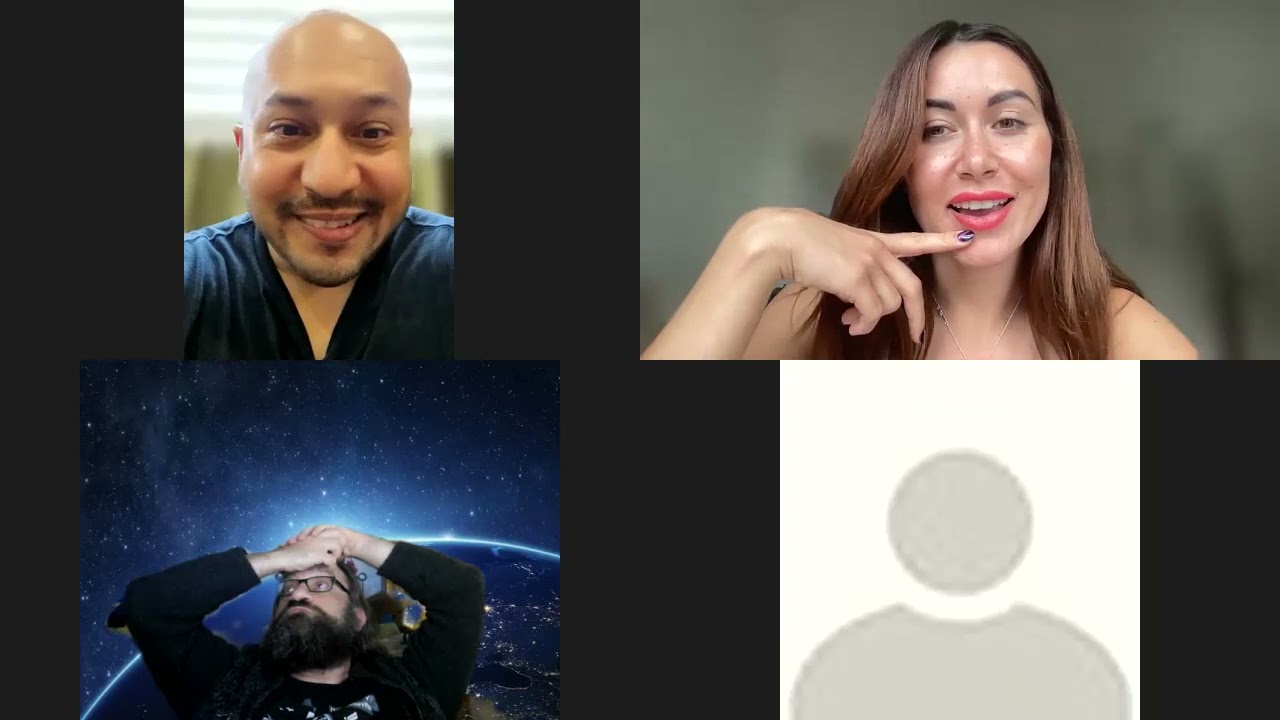
The group conversation, led by Ross, Royce, Martha, and Anuraj, explores the nature of intuition and "intuitive intelligence" as a skill that can be taught and augmented. Participants share personal anecdotes about reading people, the limits of gut feeling, and the potential for AI—particularly affective computing and facial‑body‑language analysis—to act as a "wise mirror" that calls out self‑deception and hidden beliefs. The dialogue weaves in references to non‑verbal communication statistics, body‑language cues, and the MIT Media Lab’s affective computing research. The team also discusses creative work: Ross’s song and story structure, Martha’s Reiki and tarot practice, and a cyber‑punk narrative linking augmented reality, mediated reality, and Plato’s tripartite soul. A poignant personal moment occurs when Anuraj announces his grandmother’s death, prompting collective support. The meeting concludes with a tarot pull (“Listen”) and a brainstorming session on a smart‑mirror/wise‑mirror prototype that integrates health vitals, aura capture, and AI‑driven emotional feedback, aiming to help users discern truth, balance, and creative inspiration.
Chapters
And then I basically just, um, like, had I not got gotten into like a business kind of relationship with these people, like, it probably wouldn't have been as as as much of a deal. It wouldn't have been as yeah, it wouldn't have been as much of a problem. But I did. So that made things stranger. But I was, I'm, you know, I'm. So after a couple of these, after a couple of times of this happening, I'm just like, okay.
You call it trusting your gut. Yeah, yeah, I gotta learn to do that too.
Intuitive intelligence. I actually teach this on my course.
Um, all right.
Yeah, like I'm going through, um, like I'm on week 6 now with like a group, and like on week 7, which is the crown, that is intuitive intelligence. And that's how learning to use your intuition and the body, because we're so disconnected from the body that we, we, we struggle to use discernment because we're so in the mind. We've actually got so many senses.
I, I, I, I know what you mean because, you know, we have language and we have reason but we also have emotion. And like, there's this whole complex, uh, unspoken language that can reveal, um, so much about the other person. Like, isn't that 70% of all communication is nonverbal?
Mm-hmm.
And that's just, that's just not even delving into anything spiritual. That's just empirical evidence. And then, um, And then to be able to listen to your emotional, your ability to understand emotion and understand what people are really like, to read people, even in business. Like, if you can really understand someone, you know whether they're bluffing, you know whether they're gonna, you know, as with Ross, you know, Ross said, you know, if you're in a business relationship, you really need to know these things before you get swindled or you get given the raw deal. So, I mean, that's very important. And even if—
Yeah, I was going to say, Russ, how did that play out? Did you— have you become more discerning with it?
No, is he there? I think he may
have— I guess.
Oh
yeah. I encountered a person that was like that in Cleveland, but the other 2 people were in Los Angeles. Um, I think, I think moving may have helped.
Yeah.
I know, I've— I knew a person as well. Um, I, I, I can share that with you guys if you want. Um, he was a school friend and he just seemed to know things about me. Like, for example, I eventually told him that I was engaged. I finally got engaged a long time ago, and I said, Phil, I've got something to tell you. And the first thing he said was, you're engaged? How do you know this? How do you even know this? He told me why he, you know, he knew it was Not a very nice story, but when he was really young, his dad would come in drunk and he would have to know in the first 5 seconds whether to run or whether to say hello, because the dad would just come and beat him. So he developed this instinct. It's like you can just read people. And he wasn't smart, he wasn't like an academic or anything, but he was so able to know things about people. And I was so— and I had no sense of that. I couldn't understand it. And I just remember we would have conversations over the phone and I would just remember saying, you need to have your own talkback show. You just know what to say. You just know exactly what people are feeling. This is a skill. And he goes, nah, Royce. But still, that— it just keeps blowing me away how he knows things.
Yeah. Yeah,
actually, the, uh, the person in— the person in Cleveland, um, like, I did not have, uh, this intuition About him when I met him, it's just like things were going great, and then all of a sudden he just started like changing his story and like you know being really weird and like saying stuff to other people about me. Like all of a sudden it was like wait wait wait. And then and then after after that I kind of looked back. And I was like, um, so I don't think that like the things that he said were— he really like talked himself up a lot. And then like in retrospect, I was like, you know what, like I've seen, you know, he says like, oh, he's so great at lighting, you know, and I've, I've seen videos and in person of what he does with, with lighting, and I'm like It's not that great. So I just, I just think that, um, like, he's just like potentially a narcissist and, and, and a liar. And, um, but, um, like, the thing that, like, um, it was a— it was common interests.
That kept you together?
Well, I mean, that's, that's what initially, like, well, my— that and my, my friend who is usually really good at reading people said like, oh, you guys have common interests, you should like, you know, you should talk, you should meet and whatever. And she was— she didn't know, she didn't detect something about him, but I thought that because he was really good at reading people that he was— he was trustworthy and But yeah, you know, common interest. I mean, there that was that's genuine whether or not he had actual you know much skill in in what he said. But it you know I went to his house and he appeared to you know have have some skills. But I don't think that it was really to the level that he was talking about. But then he started like. You know, he said, I want you to like, you know, do the show with me. And then he was— and then he told this other person, oh, well, I never told him I wanted him to do the show with me. I'm like, I saw— I went to his apartment and his— my name was like on the list of like the crew. So I knew, like, you know, I don't— I didn't photograph it or anything, but yeah. But the other 2 people in Cleveland, I was just like,
I just want to just add, can you imagine? I mean, I think, I think we could train AIs to become sensitive to this stuff. I mean, it must be. Yeah. Can you imagine an AI could tell you what other people are thinking? You know, everything from You know, um, uh, friends and, and colleagues who are doing something sinister, or whether— like, even something as basic as, um, I remember when I was younger, you know, do you— does she like you? You have no idea. Like, you know, you have no idea what's going on. You can't read the situation. Or is it in business or in, in a relationship? And then you look back and there's so, so many times I think AI that is trained in this would be so invaluable to so many people because so many people are blind to it. I know I'm pretty much blind to it. Okay, now I'm aware that I'm blind.
The thing is, so many people believe their own lies and like the mind as an intelligence, but I don't just use the mind. So like like the heart. Like, I'm more like guided by the heart. So like, if there was an AI that did that, if it was biased to like the brainwave frequencies, like, could that resonate? Did that connect with what else is happening? Because I might— like, my information is not just here, well, all of us, but I know I use the heart. And, um, and if I was to think of like narcissism, narcissists that I've experienced that wear masks, like, they believe their own lies. Like, so, like, that's coming into play.
Yeah, um, um, oh, I forgot what I was gonna say, but yeah, I agree. Um, yeah, there was, there was a, uh, oh yeah, that's what I was gonna say. You know that saying love is blind? I didn't know what that meant, and then I learned the hard way. I know now why you say that people say love is blind, and that's because you can be so in love with someone, so utterly in love, you'll never think anything bad about them because it's painful to think something bad about someone. And, uh, I found out the hard way about something, and when something bad happened between us, then I saw everything that other people were pointing out about this person that I refused to see. And then that really opened my eyes to, like, you know, you got to be careful who you love because that's— love is blind. In many ways.
Wow.
Yeah, we can believe our own lies. Like, you know, as you said, because, you know, if you like, you would like, for example, you know, have you ever heard yourself say, oh, you don't know her like I know her? Oh, she would never do that. Even if— sorry, reversible— he would never do that to me. You just— that's all you think about, how he'll never do that. And that's what you'll just won't think of it through, whereas other people will think it through and they'll connect the dots. And you can't do that when you're in love with someone.
Yeah. Wonder if the AI could be on yourself then, like to help you discernment.
Ask the questions that you. Wouldn't ask yourself?
Yeah.
Play devil's advocate. Oh, wouldn't that be a helpful AI?
Wow. Yeah. I mean, it could ask you right. It could ask you a question, and then you could provide an answer, and it could actually evaluate how you provided the answer. And then and then it could say you don't actually believe what you're saying.
Reminds me of that War of the Worlds. You know, when Tom Cruise's character, he's throwing, he's playing ball with his older kid, and he tries to throw it, throw the ball really hard, and it goes through the window. And then his younger sister, who is in tune with what's going on, she says, that's not how you're going to get through to him. So instantly, it's like the AI, it's like You can read the situation and go, look, you're going down a path. I know you're trying to do something good, but it's not working. Try this, try that.
And yeah, the AI could be like, you're just trying to convince yourself of what you're saying, but you don't really believe—
So many mind traps. Yeah, yeah, you don't believe it because you're— because I've done that so many times, you know. I convinced myself That this is the way I want to go, and it's completely wrong. It might take a friend sitting down with you for coffee and going, "Look, do you really think this through?" Blah blah blah. You know, there's just so many mind traps, and maybe you can. Maybe we can talk to the rest of the team about this.
Yeah, especially Dr.
Thompson.
I've got a funny name. I'm. I mean, obviously it wouldn't be called this, but I'm like, it's a bullshit bot to call you out on your bullshit.
Wow,
that'd be so cool
to
help you tap into your dissonance.
It's just my mind's— I'm just thinking of so many things at the moment, I just don't know what to say. But yeah, so yeah, he doesn't have the AI. Uh, what would you call this field? Because everyone's talking about general intelligence, artificial general intelligence. What would you call this? Artificial, uh, emotional intelligence? Well, maybe. I don't know. There's a whole— that's a whole other type of intelligence. Intuitive intelligence.
What would be the intuitive intelligence?
There is a field of computing, and at the MIT Media Lab they call it affective computing.
Because some people might say— I mean, you know, you might say something but mean something else. And if an AI can pick Pick up, pick that up. It can become more caring, more subtle. You know, like like telling Hey Google, I'm not interested in that Google. Or you know the way you say things to the computer, it might read between the lines. Well,
it's really good at reading faces too.
Oh, faces as well. Gosh, which is interesting. Body language.
Um, I mean, you would, you would think that humans would be a little bit better about reading faces. Now, we're really good at recognizing faces, so much so that we can— we see faces in clouds and in, you know, tree knots and on rocks and everything like that.
There's something you should know about our facial recognition.
Um,
it doesn't work upside down. So if you turn a face upside down, your facial recognition ability drops by like 80%, 90%.
Wow.
Yeah, you should try that because also when they were training the AI model to recognize faces, they noticed that when they turned it upside down, it dropped. And we do the same thing, you know, if you turn a face upside down, Barely recognized. So that's interesting. Wow. Yeah, even famous people. You get a famous person, flip it upside down, you won't know who the famous person is until you flip it up the right way and go, oh, that's Chris Hemsworth. Can't recognize Chris Hemsworth upside down. Maybe you can, but I don't know. I have yet to test that thoroughly. I just remember that in passing. There's a good point, you know, facial recognition, body language, the tone of voice, and then there's the whole intention. You know, you've made a certain number of claims and facts and What does it all mean? Are you trying to pull the wool over someone's eyes? Are you using them?
It's just so much manipulation, right? Isn't that even in like marketing and business? And yeah, like imagine if you could just have something that just helped you cut the— like, like literally like, like see through it. Um, because we all wear masks.
Wow.
We're all wearing these different masks, and sometimes we're not conscious that, like, you know, this, this mask is, and it's unconscious. But
yeah,
for the sakes of, like, people that live with an open heart, like all of us, um, and I'm the same as you, like, I put everyone in a good box until they showed me the red flags with it. And it's, you know, and it's It's still, still learning. Imagine if you could have— could help you do that because there's so much like scamming and manipulation. Would that be really powerful?
I think that would be one of the first AIs I would want as an assistant. Someone to go, you know, that business meeting went well. Oh well, did you realize that they might be thinking this? Oh, that, that would be just so—
I just got goosebumps actually when you just said that.
Uh, I saw an episode of Dr. Phil where he had a body language, um, expert analyzing something, and they were pointing out like, oh well, you were, you were looking, you know, you were looking up because you were trying to access information, or like you were looking down Or, or you were staring at the person because you were trying— you were overcompensating because you were, you were lying, but you were trying so hard to appear genuine. Yeah. Then you didn't like look away or blink like you normally would if you were relaxed and really telling the truth. And you were like staring them down and trying to convince them so much that you were telling the truth that, um, Like, that's a tell.
Yeah, well, there, there's 2 things in that. One is there are tells, you know, when someone, especially in poker, if you have a tell, um, you unconsciously may reveal that you have a good hand because you might always do this when you have a good hand. Yeah, things like that. And then the second thing is, um, Sorry, but yeah, while you were saying that, it's exactly— there's so much evidence to show that this is really something that you could really tap into.
Yeah. Wow.
Yeah, if I remember what I was going to say, I'll say it.
We started off talking about intuition. Oh
yeah.
Yeah, intuition and greater powers than us. Yeah, the light is—
it's a greater power than us and, uh, it might help us.
Yeah.
Oh, I was just gonna say, I remember now. Um, so you know how you look up to the right when you're accessing? Apparently we look up to the right to access like, uh, an episode, and we look up to the left to access people or something like that. And if you're left-handed, you actually— that's switched around. If you're left-hand— if you're left-handed, you Look up left to access whatever it is, and you look up right. So it is interesting that everyone will look in the same direction when we're accessing that stuff. Like, if you think, what did you do last week? I must be looking this way. So I mean, I'm left-handed, so I don't know if you guys will probably look that way. But it's, uh, all these things, they're amazing. It's amazing to see that there's that much information left on the table.
Well, I, I also, from a, from a, uh, there's, there's an augmented reality in the story that I'm working on. And so I think it's pretty interesting, the idea of somebody looking in a certain direction to like access information. You could actually make that literal with AR.
Oh yeah, you could leverage that. If you look at the top left, oh, you must be— the paperclip comes out, you must be trying to think of something in your past. Oh, here's your, you know, calendar for the last year. Got it.
Right, right. Wow,
because I actually just— I've done a Reiki session on, on Sunday with a with a really powerful woman too. And on it, when I touched the right hand, I looked up and I could see— I almost felt like it was someone coming through, but I couldn't distinguish like who it was. Like it was, it was someone coming through the light. And then when I went on a left hand, um, oh sorry, right hand, I, I seen like 2 numbers, which was 71. And when we come out session she shared, she was like, yeah, that was definitely me nan. And 71, she has it on her hands, and she was like, that was me, um, me uncle. So like, it was so interesting because I've not had that before. Um, you've just said that, give me that information which connects with, you know, an experience that I've just had. So wow, I'm gonna leave it.
Yeah, yeah. Maybe I, uh, I was gonna say, um, my mind's drawing blanks. Sorry, I'll come back in a minute. Remember what I was gonna say? But
yeah,
um, Martha, did you say that you were like doing a psychic reading?
A Reiki session? But it kind of—
Reiki?
Yeah, um, but it kind of, it kind of is. I've learned my superpower when it comes to doing that work is making the client medium, so giving you a direct experience rather than me telling you. Yeah, that makes sense. Um, so like, I facilitate the connection and then, um, I guide, clear the energy to allow it through, and then I do a bit of a guide meditation for you to like meet your guide or meet your messenger. And then afterwards, um, afterwards we'll discuss it. But there's been a couple of times that I've met with past loved ones, which has not been my intention, but it's just happened through our session. So yeah, I just love, I just love exploring like what, like we are really, really powerful And we're only tapping into like a percentage of how powerful we are as human beings. We're like, we're so focused on the physical that we forget that we've got access to all of this. Yeah, yeah, that's like, that's a
tool. Yeah, I wish I remember. I was gonna— you were talking about Anyway, anyway, so we've really talked about a lot of stuff. So if I if I don't remember this, that's all. It's all good.
Not a problem. Shall I pull a card for us to finish up?
Yeah, go ahead. Yeah,
I'll pull a card for us. Little intimate.
Um.
Does anyone have— or you know what, I'll invite you to ask a question, but maybe you can ask it like intuitively, like you don't even have to share it. And then—
I automatically looked up this way. Yeah, I don't know.
Um, okay, but like maybe an area you would like a little bit of guidance with. And even for anyone watching the replay, this will be a collective message for all of us.
I want. Can I? Can you? Can it be about someone else, or it has to be about me? I hope Anuraj is doing well.
Yeah.
Yeah. I hope Anuraj is doing well because he's he's dealing he's dealing with some something major right now.
Okay. I'll check. I'll check him with him as well. Okay, this. So we've got the this card come up called Listen. So I love this card, by the way, because look at his hair. On this card, his hair is the psychic antenna. And he's— and then you can see these frequencies.
Yeah, yeah.
Radio station. So when this comes out, this is like— it's so interesting how we started the conversation by saying I wanted to be a little bit more in touch with the intuition. This is saying you're not, and there's not enough space, or time, like there's not enough space created for you to receive the guidance. And that comes through quietening the mind and listening to the subtle whispers. And this will come in our conversation today, it might come in a song on the radio, it might come on a marketing campaign, you know, listen and observe the information that comes forward. To you. This is about not listening to the ego and really tuning into that inner sense of knowing. I've never really noticed this before on this card, but I'm seeing this like, um, it's almost like a metal chamber, like a gateway here. And, um, it's like an anthromyst is protecting it on his heart, and that is the gateway. So it's like, this is where your power is, in this area. Listen to the heart intelligence, not just the mind, and trust that this frequency is everywhere. And so how are you going to tune your, your vessel, which is, which is like the radio station or the radio, and you, your energy from what you choose to focus on, whether that's meditation, whether that's connecting with nature. Whether that's asking specific questions to your guides, that's you turning the dial to your station. But we must be open to receive the information so that it can come back and forth. And sometimes we are, we are already getting the information, but because we're not— we're literally not looking at it, the mind's too clouded, it can't come in. And it doesn't come in very loud. It will come in with little subtle whispers, little subtle whispers, and then little niggles that is— that you've been thinking about. Some little niggles. Listen to that little niggle. It wants to be heard and it wants to be seen, and it doesn't have to get really extreme and really painful if you listen to it now. Yeah. This is a bit of a wake-up call, this card, as well, to say like we are sending information We just need you to be receptive and the receiver of it and to allow the space for it to come in. I love that. And find a little bit more balance. The 2 can be about collaboration and opportunities. Definitely find more balance in your life. All of us. This is a message for all of us, by the way. Yeah, yeah,
that makes sense.
Yeah,
I definitely need more balance.
And when you create more balance, you allow more guidance.
Yeah,
um, so I've, I've found, um, Some story structures that I can use to to sequence the plot in my story, and you know give it dramatic structure. And I'm I'm also writing a song.
Oh good! Very good.
To hear the song, how have you got like a little taste of it or like? Any—
yeah,
any— anything we can—
Yeah, um, so, uh, I might, um, yeah, okay, so here is, uh, the When I've been working on the the beat, it's I'm basically adding. Roy, I was saying that when I'm when I'm when I've been working on the beat, it's I'm basically adding all of the layers initially. And then what I'm gonna do, I'm gonna like mute certain tracks at certain times, you know, like a song, like it has, like it doesn't have all the parts at all at the same time. But, um, um, I'll just give you a, uh, here's, okay.
Can you hear that? By the way, Anuraj is here.
Yeah.
Oh, sweet. Hello. Hi.
Hi.
Sorry, I've been— there's too much going on in life right here. Unfortunately, lost my grandma yesterday.
Oh, sorry.
In hospital. I was with her just a few minutes before she passed away. It was— but she led a good life. She went away peacefully, you know, 95 years old. So I just came back from the funeral director's and last 2 hours. So yeah, it's just been Getting everything organized, you know, right now.
What was her name, Anraj? I will like to come.
Avnash Gambhir.
Okay, I'm sending, I'm sending you all so much love.
Sorry, yeah, yeah, it's Avnash Gambhir is the name. A-V-N-A-S-H. But yeah, it's, you know, I spent so much time with her, actually a lot of my childhood, and then she moved to Australia in 1988, lived nearby with my parents. So yeah, we had a, you know, close, very close relationship. Unfortunately, had a fall last week, you know, in— was it Thursday morning? 4 o'clock in the morning, and then my dad called an ambulance, and then, you know, she was in emergency. And she'd obviously— she'd been frail and been through a few medical things, but, you know, was getting better. But, you know, Never, yeah, just when you know age just got to her and but she went peacefully, you know, which is the main thing.
Yeah. No, I'm so sorry.
Yeah, Donna, thanks. I don't we just have to you know overcome the brief the grief and the you know know that everybody is going to be in the happy place and and. We're eternal, so it's only this temporary body that we have is, is what you, you know, left. But the journey is always continuing. So yeah.
It's okay to like, to like be here now and feel and, and yeah, and sending lots of love.
Thank you, thank you. We've just been in Delhi with so many people because she had so many fans and so many people she influenced and, um, you know, friends and family. So been busy all day and didn't sleep much last night. Yeah, had a good catch-up with Roy yesterday morning. It was so nice. Then, you know, was planning anyway to go meet Grandma, but it was so lucky, you know, that we managed to be there and Um, you know, she smiled and enjoyed the mango that my dad fed her, the food, and then I fed her mango. And I left from the hospital. 10 minutes later, I got a call from dad, so we all rushed. So yeah, it was unexpected, but you know, when life's calling comes— It's so funny, actually. I was watching a really such a good documentary last 2 days ago called Heal. Which I'd seen before. I was telling Roy, I think, about it. Yeah. Have you guys seen it? Heal, H-E-A-L, on Netflix? It's got all the top guys like, you know, Dr. Joe Dispenza, Gregg Braden. Who else is the, you know, Deepak Chopra? Really good, you know, collection on wellness and well-being. Overall,
I've heard of it.
Hmm. So anyway, sorry, I didn't mean to change the mood. I know, Ross, you were playing some nice music there.
Yeah.
What was that about?
Yeah, so I wrote a song. So I'm gonna tweak it a little bit more. Hmm. But basically the beat that you heard is Is all of the percussion parts playing simultaneously. There's, there's no like, uh, there's no like bass line or like arpeggios yet, but, um, but this, uh, parts of this are gonna like drop out at different times. Mm-hmm. But, uh, here's, here's, uh, here's the lyrics as, as it is so far. Can you can you hear me still? You can hear me over the music. Okay. Music to become mediated reality. Senses three brains filtering unseen vibrations are reflected in a relative way. Cymatic foundries of particle and wave.
That's great. That sounds catchy.
Hive mind, data mind, overlay blinders, pop-up tribes, minds, eyes externalized, visualize crossing the divide.
Very Midnight Oil-y.
Nice.
Navigating models of environments, leaving out pieces, projecting out the rest. Visible spectrum, auditory range, signal-to-noise ratios and sample rates. Senses sensitivity setting states, say bandwidth for trauma and calm. Is displaced. Hive mind, data mind, overlay blinders, pop-up tribes, minds, eyes externalized, finding your cyber tribe. Extended reality contacts, appropriate collective vision, augmented media contracts, pay you for the data you give them. Just realize who decides.
That's great. By the way, thanks. Was there music? I think that the, um, the mic was muting the music because we— I could— we could hear you, but it was— the beat was— I think it was treating the beat as background noise for the most part.
Oh, interesting. Okay. Well, um, there's a— there's, there's, um, so part of what, what relates to the story is, um, there's augmented reality and, um, some people want to use it to, um, basically use it to— for collective, uh, visioning. Um, to co-create and manifest, um, things that people are interested in.
Um,
and, um,
have you, have you uploaded it to BandLab?
Not yet. And another, another group is, is interested in, in kind of like, um, basically analyzing your data in a social kind of media context. And they're very open about it and they're paying people for their data. But, you know, ultimately it asks the question, You know, in a world where everything is considered cybercrime, you know, what is cyber justice and what is, what is really, what is, what is the effect on this whole system when the, when we return to the original conception of what cyber really means? And Um, you know, uh, Plato said, um, he talks about, uh, so, um, so in Book 4 of the Republic, Socrates proceeds to search for wisdom, courage, and temperance in the city on the grounds that justice will be easier to discern in what remains. They find wisdom among the guardian rulers, courage among the guardian warriors or auxiliaries. I don't know if guardian is the right— well, it's the guardian rulers. Um, I don't know if guardian warriors is correct, but, uh, he finds courage among the warriors or auxiliaries, which is basically the enforcers of the laws, and temperance amongst all classes of the city. There's basically the remaining classes, like the workers or what he calls the merchants, among all classes of the city and agreeing about who should rule and who should be ruled. Finally, Socrates defines justice in the city as the state in which each class performs only its own work, not meddling in the work of the other classes. The virtues discovered in the city are then sought in the individual soul. For this purpose, Socrates creates an analogy between them, between the parts of the city and the soul. He argues that psychological conflict points to a divided soul, since a completely unified soul cannot behave in opposite ways towards the same object at the same time and in the same respect. He gives examples of possible conflicts between the rational, spirited, and appetitive parts of the soul corresponding to the rulers, auxiliaries, and producing classes in the city. Having established the tripartite soul, Socrates defines the virtues of the individual. A person is wise if he is ruled by the part of the soul that knows, quote, what is beneficial for each part and for the whole, end quote. Courageous if his spirited part, quote, preserves in the midst of pleasures and pains, end quote, the decisions reached by the rational part. And temperate if the 3 parts agree that the rational part lead. They are just if each part of the soul attends to its function and not the function of the other. It follows from this definition that one cannot be just if one doesn't have the other cardinal virtues. So basically, I'm looking at the form of the good, the form of justice, um, and, um, you know, cyber, um— Oh, bye, Roy. Ciao. Um, yeah, basically this, um, in, in the Ship of State, um, Plato talks about how, um, the state or, uh, an individual is like a ship, uh, and then the pilot of a ship is the kybernetes, which is where the word— where we get the word cyber and governor from. and government from. So I'm really just— you know, I've been doing this research for 15 years. Now I'm basically doing like a cyberpunk kind of story where I'm saying, well, cyber really means that people basically follow their soul path. And, and the same thing with the city, you know, and then they use, they use good judgment and choosing the right methods of governing for the right situation. And that applies to, you know, any, anything, any, you know, body that's being governed, as well as the, the individual. So it really relates cyber, soul, and government, and justice. And so, so there's parts of that song that, that touch on it. The beginning of the song talks about how, you know, we're already living in a mediated reality. We always are. You know, humankind always has because our senses, you know, only have a certain range. You know, our eyes can only pick up certain parts of the electromagnetic spectrum. And, you know, our brain is constantly filtering out information and basically throwing a lot of it out and also filling in things and projecting. You know, we we have this reality. You know, talk about like augmented reality. You know, like projecting like a like or virtual reality. Like you're projecting like this reality out in front of you. Well, that's what our brains are doing all the time. We're creating a model of reality. We're taking, you know, our eyes are taking things that are light that's reflected. It's basically like, that's, you know, something that looks red looks red because the wavelengths of red are basically reflected or rejected.
Right.
From that, from that, uh, from that, from that item. So, you know, just like looking in a, in like a kind of cyberpunk sci-fi kind of context, Where like it's a very popular subject to talk about augmented reality and mediated reality and mixed reality. And, you know, I'm saying like we're always living, we, you know, our ancestors have always lived in an augmented mediated reality. This is nothing new.
Right. So that's why the metaverse is just a a rebringing of a new thinking, you know, I mean, of an old thinking rather. So it's just, you know, repurposing of what, what has been known in multiple realities and realms that we can operate in.
Yes.
And just projected in using a new medium of technology. Yeah, very interesting.
Yeah. So it's going good.
Yeah, no, I loved your, your song there. I think, yeah, with the music, once you get it right— because we couldn't hear it properly earlier, but your wordings were really good. I love the, uh, yeah, you put some good techie type elements in there. It was nice. Love to, uh, yeah, rehear it properly when my mind's a bit more focused. Yeah.
Oh yeah, right on. I'm gonna, I'm gonna keep working on it. I have a couple musical, um, I have a lot of musical friends locally Actually, and I've shared this with a few of them and they're, they're all really excited about it. So I'm working on that simultaneously. I have some, some story structure that's going to help me pace. Mm-hmm. You know, set up my plot and like pace it and put, put certain things in a certain order.
Mm-hmm. Great.
And, um, and I'm looking at, um, you know, I'm still, I'm, I'm still wondering what the length is gonna be. You know, if I do a short story, it's easier for people to digest. If I do a Um, an audiobook that's 2 hours or less. Um, it's digestible. Um, and, um, I kind of have like 3 sort of books almost.
Very good. That's lovely. So, um, what, what was, um, what did I miss out earlier? What were you guys discussing? Was Roy just on, or were there other people on today, Samantha?
Yeah, it was just Roy actually. Roy and Ross.
Yeah, I know we haven't had much of an agenda also as much, but it's been good catch up with everybody. You know, at least whoever can get on, and we'll come back to. I know I'm still recovering, or you know healing from my eyes, which is my left eye is at least a little bit better, but I'm. taking things very easy.
Yeah.
But yeah, when this thing happened yesterday, obviously it set me back a little more with, um, uh, you know, being away from work-related stuff. So I've got a lot of things to catch up on, I suppose. But, uh, it's the end of the year and, uh, yeah, that's life.
You can—
we were talking about— we were talking about intuition and how AI could potentially enhance our intuition.
Really? Oh, okay.
And through things like emotional and being able to like, you know, sometimes we lie to ourselves, we convince ourselves of something. And what if we could use AI to like help us and analyze ourselves and be like, no, you don't really believe that. Oh yeah,
yeah, you can do a reality check on us. Yeah, that's right.
Things like facial rec, you know, facial, you know, body language.
Yeah.
And voice reading. And yeah, check yourself.
Yep.
See how— and that's, I mean, um, actually, that's, um, that would be, that would be so key because, um, you know, we have these beliefs, we have these subconsciously held beliefs, um, And, um, um, they, they, they affect our choices.
Yeah.
Um, throughout life. And we— a lot of these are, are, um, maybe like 80% of them or something, or at least 60%, are like of— it's like stuff that we picked up before age, you know, up until age 6, stuff that we pick up from our environment and family, and, and it, it affects how we make decisions in our life, and we don't even realize it. And so if we could, um, if we can have something, if we could have a mirror, a wise mirror,
Hmm.
that could, um, that we could look into and that could, um, help us, um, dive into our subconscious and our subconsciously held beliefs and help us realize what is actually driving a lot of our behaviors, then that would be extremely powerful. We would actually, uh, you know, gain self-mastery and, and like, like Plato says, we would be able to, you know, rule ourselves. from the navigation aspect of the pilot.
True. Yeah, that's a great idea. I think, imagine we tune in into our— into the wise mirror to get a self-prognosis or a, you know, approach of really looking at your deeper self and projecting what's the right Paths to take, you know, for you. So it's like a crystal ball, and yet it's a mirror, right? So you can combine a crystalline mirror. Oh, there we go! Some interesting thinking there. Potentially, we should. What do you think, Samantha?
I love it because the mirror we we you know there's already tech tech techy mirrors out that can do so much. But I use the art that my own. Mirror daily, as you know, to do the mirror work. Like I talk with myself and get a different perspective. But if you could have a mirror that's not got your cut, like you know your limiting beliefs, and that can actually like sense things like your tone, your your body language, your your facial movements, your micro movements, give you another perspective on your own shadow and the different masks. That you might be wearing. And I was like, I was joking before and I called it like a bullshit bot so that you could like, you know, not believe your own lies or—
yeah,
um, be more discerning. I wonder if there's any—
I like that you said give you another perspective on your own shadow. That's awesome.
Is there anything like that out there? Does anyone know?
What?
Is there anything like that already? Or—
I mean, there's smart mirrors, but they are more, um, to, to give you information. And like, they've got an integrated screen in them which is giving you up-to-date, say, weather or how well you're brushing your teeth or your health vitals in real time. So that's what we've been— I've looked at a few ideas around kind of smart home and let's say smart bathrooms and the mirror was definitely a key part of it, which is as you first thing you brush your teeth, you're able to sort of get a self-reflection and but yeah, I think we're talking at a whole new level here, which is— will be so interesting. Yeah. And I think combining that crystal crystalline mirror concept would be wow. And it love this
yeah. The border was made out of like anthracite or rose quartz. Yeah yeah. It'd be a quantum mirror.
Hmm, that's right.
Oh yeah. Oh wow.
AI AI has really got to be the main yeah embedded technology. So it automatically connects all the different dots from your health and vitals through your wellness, and then looks at you. Imagine if you're able to do your aura analysis with that also. So it's looking deeper within you.
And you can do that. You can get like little cameras that— because I've had my aura captured a few times.
That's right. In fact, I was just reactivating my Withings or Nokia, which is the scales, or the, you know, that's again for the bathroom. And then because that looks at obviously beyond your weight, it's giving you a lot of other features. And I'm just looking at my app here, my BMI, body fat, body water, bone mass, muscle mass. And then you could also integrate it with other health data and parameters. So I mean, there's so many— so much out there already which you can integrate with, like, with a lot of the wearables and this tech. And then all that can be presented through the smart mirror, the one I was earlier mentioning. But yeah, beyond that, if you can combine these new features, it would be amazing. That's— that'll be the wise mirror. Exactly, that'll be the— it's The smart mirror plus plus.
Yeah, I love that. And it could play, play tunes as well.
And that's what the universe is calling for us because we need to tune into that now.
Yeah, 100%.
Okay, create that as a concept. Yeah, I'm gonna get a bit of time and then let's document this and brainstorm further on it.
Yeah, and I think there's something really in the song creation, like, you know, like creating music. I know you're doing yours on your own personal project, but I almost feel like there could be a Wise Mirror song. Hmm. Transcend, because I know storytelling is a big part of the direction. And I do believe that music is how we transcend and we all know, we forget everything that's going on and we get to not be in a space of like no time.
That's where the AI can, you know, play from the wise mirror— well, from the literal mirror, but it'll have integrated acoustics and thing and play the right music depending on the context, the right mood and everything. So all the— look at your facial recognition and all parameters, and then you customize the music that's playing from there. Yeah. Totally.
Wow, I love
that.
That's so exciting. I'm actually doing a vision board this week, so I'm gonna put a smart mirror on it. Yeah, on my vision board.
Sure.
That's so good.
Great.
I'm sending you so much love, Anraj. Please let me know if there's anything I can do to support.
Yeah, no, thank you, thank you. I've already, yeah, been trying to be strong and just working on things now and, you know, getting on with what needs to be done in the physical world. And obviously, yeah, deep within, it's sending healing and all the energy of overcoming grief and all that. So yeah, I'm so glad I saw a heal, you know. Just two days ago, or in fact finished it only yesterday morning. It was amazing, and actually somehow I even my grandmother came in my dreams yesterday morning or early in the morning, and I remembered it, and it was amazing. And then you know, and then her passing away like that in the in a very peaceful manner. Yeah, it's just very interesting when you talk about intuition and this thing. You you know you really had this, and you know you won't believe even my dad he was about to get up and go because she fell asleep. But he stayed on, he stayed on and continued with some prayers because I'd gone by then and he stayed on. And then suddenly she got up and took one last breath and her hands shook. And my dad thought she'd gone unconscious, so he quickly ran, got all the doctors and nurses and everybody, and then they checked and said, yeah, we're sorry, no heartbeat. So, but he was there till the very moment with, you know. Which he was about to get up and go, but it's something he was he was telling us that you know something he went to the door about to leave, but then he said no no let me just stay a few more minutes and finish off this prayer and do that. It was just yeah forces which was guiding. Wow! Yeah amazing.
And she came in your dream?
Yeah, she came in my dream at. When she was much, you know, younger, and we were like, you know, maybe I was a little boy, I think that time. And yeah, it's hard to remember all the vivid details, but it's it was just a very happy dream. I remember.
Yeah. Try and write that dream down or document it.
Yeah.
Yeah. We all know that's not just a dream.
Oh yeah. Yep.
Wow. Wow. Wow. Much love.
Yeah, no, thank you so much. Well, I'm glad I made it here to see you guys, and I feel more at peace. And really, thank you guys. Yeah, we're, uh, yeah, just so glad with the White Mirror family, Wise Mirror family we have. And, uh, so lovely. Thank you.
Thank you.
Right, so yeah, if you want to continue, otherwise we'll wrap up and,
uh,
and see you next week.
I'm, uh, I'm talking to some people about, uh, trying to, uh, project onto a lighthouse.
All right.
A local lighthouse.
Oh, that sounds amazing. Wow.
Yes, that would be amazing.
Yeah.
Oh wow,
around the whole surface. Wow, that, that'll be a really cool image projection. Yeah.
Yeah, I'm, um, I'm talking to, uh, I've— I— this past like week I've been talking to her, and tomorrow too I'm talking to people about, um, things for like this winter and next summer. Um, there's Uh, 4 years ago there was, uh, the first, um, Front, uh, festival, and they called it a triennial. And the intention was to have a triennial, and it, it was postponed. It was going to happen, I think, this year.
Mm-hmm.
Um, but so it's going to happen, you know, 4 years later. The second one is gonna be 4 years later. It's gonna happen, uh, next year, and it's basically an international, um, national, local, national, and international art event. And they're trying to figure out how to, you know, include local artists. Yeah. Um, and at night, I'm, I'm, I met somebody who's— that's their kind of— they're a fellow for this, uh, festival. Um, and And that's that's their task is to involve local artists. So I think there's going to be some projecting video, and I'm starting to look into doing lasers. There's some it's need. It's not exactly a license, but It's similar to show that you can operate these things safely. So there's a process. And so then the lighthouse projection wouldn't even be until next— mid-next September. Mm-hmm. So by then, I think I should have enough time to get this certification and rent a laser. And I think the certification will be good for 2 years, and so I could potentially rent a laser for a month or a week. And as I, as I learn how to do it and set it up, I could actually rent it for, you know, the first time I might want to rent it for a month, get familiar with it, and then I could, you know, potentially just rent it for a week, um, for the event that I need it for. So I'm starting to look into that.
That's
cool.
In addition to the video. Yeah.
Excellent. All right, guys. I'll take off now. Thank you.
Thank you.
Have a lovely night.
Bye.
Bye.
More from Mario

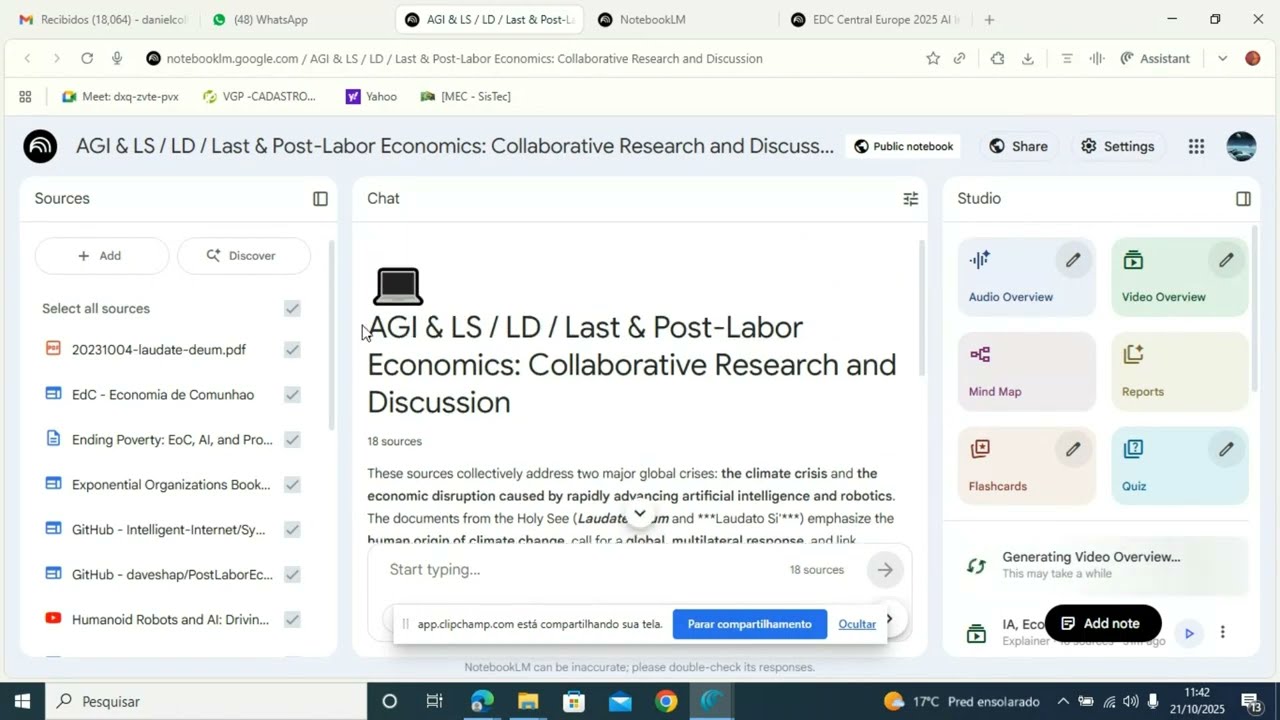
Boost Learning with Studio: Turn Your sources into Audio, Video, MindMaps, and More




Anima Christi - Beautiful Choir Performance in Corpus Christi 2025 - Stockholm - Sweden