7 Sales Psychology Methods That Get Brides to Book Faster

Marissa Brennan, a bridal hairstylist, shares seven psychology tactics she used to book $728,000 in revenue without ads. She covers loss aversion, social proof, and urgency, with specific moves like posting availability to create FOMO and packaging services into three clear options.
Chapters
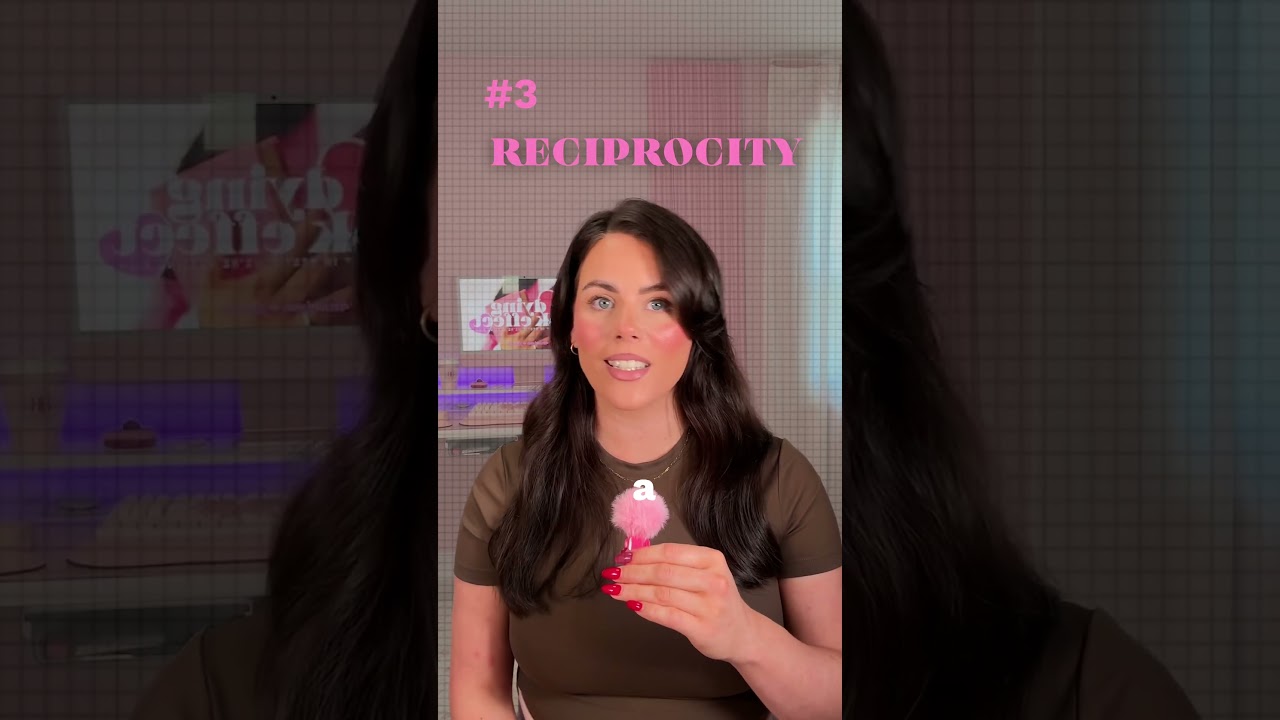
Cosmetology school taught you how to do a killer blowout, but it didn't actually teach you how to get booked. If you're new here, hey, hi, hello, I'm Marissa Grace. I worked as a bridal hairstylist for a decade in the wedding industry, generating over $728,000 in 4 years cash collected just doing wedding hair without a team or running ads. Here's the 7 sales psychology tactics that I baked into all of my wedding business so I could book more brides faster. When it comes to sales, the truth is buying decisions aren't made with logic. They're made with a 100,000 old brain that's wired for one thing: safety. It scans for pain, avoids loss, and makes decisions within like milliseconds that are likely unconscious. Way before your bride would ever consciously desire to hire you, she's making these decisions. Which means the DM that you keep rewriting, the caption that you keep putting into ChatGPT because you never know what to say, the email that you're afraid to send because you're overthinking it— none of it actually has to be a guessing game once you understand how buying behavior works and how the brain actually buys and says yes with sales psychology. And look, I am no content guru, no sales psychology expert. This is just literally what I learned, put into action, and help my clients do, and they see really great results. So I want to share it with you so you can feel natural, not salesy, cringy, or weird, and like it's 2021 wedding season all over again with brides filling up your calendar. So the first sales psychology method that you really want to understand is loss aversion. What it is, Our brain naturally feels the pain of losing something twice as more as the pleasure of gaining something. We are literally wired to avoid loss at all costs, even more wired to avoid loss than we are to chase a win. So for example, you're at the grocery store, you only need one bag of tortilla chips, but you see that they're having a buy one get one 50% off sale. And you're like, well, I don't want to miss out on that sale. So you walk out with 2 family-sized bags of tortilla chips that are gonna last you 6 months that you didn't even walk in planning to buy. buy because you didn't want to miss out on the sale. And it's the same reason why you will always shop the Sephora sale even when you don't need anything. Your logical brain will rationalize it with, well, I could just add that into my kit and use it later, even though logically you didn't even need anything. But the loss aversion in you is saying, I'm wired to not want to miss out on this. Now here's how I like to use loss aversion in bridal business. You want to make brides aware of the dates that you're available and the dates that you're booking. You want to constantly be bringing awareness to that because it's going to create FOMO. When you're naturally sharing your availability every single week, or you're sharing a bride who booked for May 17th, 2028, and her date may be just in May, it's registering in her brain of, I don't want to miss out on that. And it's natural, it's transparent, and it's not cringy at all. You're literally taking what you're already working on and you're just putting it public. It's using FOMO in an ethical way. Once she knows what she could lose, the next thing on her radar to keep you top of mind is just exposure. And that's what you can do with the mere exposure effect in sales psychology. Here's what it is. The more we're exposed to something, the more we're likely to trust it, even if nothing changed about it. So familiarity to our brain signals safety, and safety signals a yes. So for example, think about the song that you hated the first time you heard it, but then by the 3rd, 4th, 5th time, now you're singing along to it in the car. Me with literally every Taylor Swift song. Don't come for me. I love all of her songs, but it takes me like 5 times because I get familiar with it. I'm exposed to it more and more and more. Nothing changed about the song. It's just my exposure to it increased. So how I like to use the mere exposure effect in bridal business is stay consistent with one messaging and stay consistent in posting. When I started out, I wasn't the best at bridal hair. There was nothing really special about me. Then I changed my messaging and I said, I'm going to be the loudest. She's going to know who I am. And I posted every single day. I was top of mind when she got engaged. Brides are following you before they they even get engaged. And you want to be top of mind when she does and she's looking for a vendor. So you can do that by staying consistent with one message— what you want to be known for— and repeat that over and over and over again. But being remembered will only get you so far. She also does have to trust you before she hands over a deposit. So that's where the law of reciprocity will come in. So here's what it is: when somebody gives you something unexpectedly, especially when they give it first, we naturally feel inclined to want to return that favor and to give back. Our brain sees this as like a social debt that we want to repay. And it makes people trust you before you ever even ask them for something, like ask them to inquire, ask them to book. So for example, they did a study and they noticed that waitresses who gave a piece of candy with their bill saw a 14% increase with their tips. Why? Because that little unexpected gift at the right time signaled to the person getting the bill, I owe them something, I want to give something back to them, so they would increase the tip. Here's how I like to use the law of reciprocity in bridal business. Give first, ask second. And this doesn't have to be super complicated. One really underutilized thing that you can do is simply just share recommendations. When you recommend a product and you share a link with your bride, and then she goes and purchases that product, there's now this social debt in her mind that she wants to give something back to you. But even better, if she winds up loving that product, now every time she uses it, she associates that with you. And it's a win that is also associated with you. And that just builds even more goodwill in your bride's eyes with your name associated. A win-win. And once she trusts you, she's gonna want proof that other people trust you too. And this is what we call social proof in sales psychology. We look to other people to decide what's safe, smart, worth doing, especially if we're unsure about it. If other brides trust you, our brain naturally will assume it's safe for us to trust you too. So imagine you're scanning for restaurants, you're on Google Maps, and you go through, you find a couple restaurants, skip the one that has 3 stars and 12 reviews for the one that has 4.8 stars and 4,500 reviews. Even if you've never eaten at either one, you're going to trust the one that has more reviews first, because that's more social proof. That's more people saying this was a good restaurant, this was a smart decision. So it eliminates that decision fatigue for you to decide which one to go with. Our brain is lazy. We like to take the least amount of resistance. So other people saying, hey, this was good. We're like, sure, I'll trust that. The crowd does it it for you and takes that decision out for you. So here's how I like to use social proof in bridal business. The new era of brides likes to see social proof that is real, authentic, and cannot be faked or altered. Okay, so what that's going to look like is not your Knot or vendor listing site review or a link. They want to see an actual conversation. So that'll look like screenshotting a text conversation, screenshotting an email, screenshotting, um, a comment that a bride leaves. Those are all social proof. And even better, the new Google review that can absolutely not be faked the client reaction when you hand her the mirror. That is social proof that will do so much more for your business than posting a finished look of just your bride's hair makeup look. Now the next move from moving her from like a silent watcher of your content to an active participant is going to be the next sales psychology method, which is micro-commitments. One of my personal favorites. So here's what it is. Small yeses build big momentum towards a big yes. Once someone takes a small action, they see themselves as somebody who's already involved. Which means the next ask that might be bigger feels like a natural next step for them versus something that has friction. So for example, have you ever gone to buy a car and the car salesman is always going to let you take a test drive in it? They put you in the driver's seat. They tell you to imagine yourself road tripping with your dogs in the back. You're envisioning this. You already said yes to small stuff, which is sitting in the car, feeling it, imagining yourself in it. So saying yes to a bigger number or an ask for it is going to feel a lot smaller than if you just walk in the dealer dealership and they're like, hey, here's the price of the car, do you want to buy? And here's how I like to use micro-commitments in bridal business. The easiest way that you can do this is in your Instagram stories with polls, stickers, the question box. Get your bride tapping in with those micro-commitments, even if it's just a poll that's like, do you like The Summer I Turned Pretty, yes or no? Getting her to tap in and be an active participant in your social media moves mountains and goes such a long way. This can also look like using polls within your captions, asking her to comment in your caption. So she's no longer just a silent viewer. Now she's actually engaging. She's an active participant. She is involved. And this lowers the threshold for the bigger ask later of like, hey, sign my contract for $2,800 and I'll meet you a year from now. Like, that's a big ask if you think about it. Lower the threshold. Get her to be an active participant with tiny little micro-commitments. Okay, so now she's engaging with you and she trusts you. The last thing standing in between her and booking you is how easy you actually make the decision. And the best method to do that in sales psychology is choice architecture. What it is, is you present your offers and services in a way that feels obvious instead of overwhelming. It's not about giving her more options to say yes to, it's about removing them. So for example, Netflix has literally thousands of movies, and you could spend like an hour just scrolling through, watching trailers, figuring out something to watch. So instead, they implemented the top 10 shows and the top 10 movies. You can go straight to that top 10 list and find something to watch within like 5 minutes. And the choice makes itself. It makes it easier for you. Again, our brains are lazy. It reduces that decision fatigue for you. So how I like to use choice architecture in bridal business is with your pricing and the way you're sending over your offers, more specifically the way you're packaging them. So instead of sending her a list of à la carte services like bridal hair, bridal makeup, guests, every little add-on that you could ever think of, all of the fees, send her something that is a curated proposal that has packages that where you already decided that for her. And all she has to do is say, okay, which one do I fit into? When you package your services into 3 distinct packages with clear visuals bullet pointed out of exactly what's in each package versus handing her over a menu of à la carte services, you're making the choice for her. You're making it easier for her to say yes to you. She doesn't have to do the mental math of how much is this going to cost me? What else is added on top? How much is the travel fee? You do that all for her and you hand deliver it to her and say, hey, pick your best option. But you've psychologically already done that for her and made it easier. À la carte options create analysis paralysis. Packaging your services creates an obvious choice for her that she can make a decision on in 5 minutes. And once she's made her decision, the only thing left is to get her to say yes now instead of let me think about it or later. And we do that with the sales psychology method of urgency. What it is, is our brain is wired to act now when it senses that an opportunity is closing because the fear of missing out outweighs the discomfort of deciding. No deadline, no urgency leads to that I'll think about it later mentality, AKA never hearing from her again. And an example of this is if you've ever gone on and you're looking for hotels and you find a hotel and you see only 2 rooms left at this price, you're much more likely to act now versus let me close it down and I'll think about it later. All of a sudden you're checking out in record time versus like, let me chat with my partner. And even though 5 minutes ago you were just looking and you're like, I don't even know if I want a hotel, and now you're booking, put the credit card down. That's because they use to show you that there's only 2 rooms available at this price. So you are like, I gotta act now versus later. So here's how I like to use urgency ethically in bridal business. Instead of letting your brides feel like they can take their time with booking you, set a deadline. But let's do it in a non-cringy way. Instead of like, your proposal is expiring in 7 days— that one's kind of overdone, overused— I like to do something like set her a deadline and let her know that there's another bride who's inquiring for her date, only if that's actually true. It's true, we don't say that. So how you can set a deadline to like get the urgency in her mind is say at like the bottom of your email, you can say like, heads up, I just want to let you know I have another bride inquiring for your date. Let me know if you want to secure your date by Thursday at 12 PM EST. That way I can let her know. Nothing cringy about it if it's true. And it probably likely is true. 7 sales psychology principles your brain is already using on you every single day. Whether it's the buy one, get one at the grocery store, the Sephora sale, booking a hotel, rolling on Netflix. The only difference now, you know how to use it for your bridal business to get more brides to book faster and more money in your pocket in a way that feels natural but like not salesy. If you want to go deeper on this and get the templates, scripts, step-by-step how to implement this in your bridal business and work together with me for 7 weeks, you want to get on the Dying to Book Mini Mind waitlist. I'll hand you over the roadmap of how to start turning your Instagram into a Gen Z bridal booking machine naturally infused with sales psychology so you're confidently selling every single day without feeling salesy. That's exactly what we do in the Mini Mind. Get on the waitlist, link in the description box below, and I'll see you guys in the next video. Bye.
More from Marissa


7 Lessons I Wish I Knew In My First Wedding Season (I’ve Now Grossed $728,000)