Expert Reveals The 3 Simple Components To Business Success
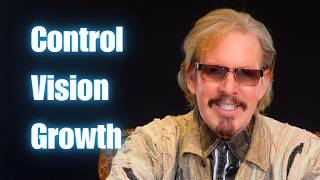
Mark Hamilton breaks business success into three parts: Control, which means breaking work into discrete physical movements to boost productivity; Vision, or reverse-engineering from your future goal; and Growth, which requires structuring jobs as profit-contributing mini companies rather than naive delegation.
Questions this video answers
Over $350 million
Over 2 million people
Chapters
Without these three things, you won't be able to start and succeed at business. My name is Mark Hamilton. I've sold over $350 million of my books and have helped over 2 million people start and succeed at business. The three things you need are control, you need vision and you need growth. Now let's start with control. Control starts with your daily schedule. Without control, you're just busy all day long. When I started my business, that was the problem. I was too busy to really do anything. Any forward progress and I starting to sink and fail. Then I happened to be listening to an audiobook on Henry Ford and it talked about how Henry Ford changed the production of cars from stationary car where people would bring over and they'd all kind of work as a team building this car from the center out to pulling the car along and having each individual just have a physical movement like put on the wheel or tighten the nuts, the lug nuts or put in the steering wheel. And he broke manufacturing to physical movements. And overnight he 8 folded. 8 folded. His productivity and the control of manufacturing cars went through the row. So I thought about that, why don't I I'm manufacturing success, right? So why don't I try that with my business? So what I did is I broke my day down into physical movements just like the assembly line manufacturing success. And guess what happened? You got it. Overnight my productivity increased Eightfold. Actually the same amount of increase of productivity as Ford Motor Company, Eightfold. So that meant I was done with my work by Monday afternoon, Tuesday at the latest. The work that I was too busy to get anything really done or accomplished before I was done, just a day or two. So now that led me to number two visions. Because I had so much time left over in my week. Now I started to think, well, what can I do to increase my business? And I started to get visions. For the first time, my mind was free enough to think forward, think into the future, get visions. One vision I happen to have for the publishing company that I had started was if I mailed my literature from the UK into the United States, I would have a big boost in profits. Different reasons for that, lower mailing cost, the prestige of something coming from overseas, all these things made a big difference in the business. So I had this vision and I reached out into the future. That's what a vision is. And I imagine my literature in a container being lifted into the ocean liner that was going to go across the ocean and deliver my material to America. Well, I started thinking from the future and thinking of the Steps that were needed to complete that future image, that vision. And I started working my way backwards. First I said, okay, to get that container lifted in the ship, I had to make a deal with the Irish on post, the post office in Ireland. So, so I realized I needed to meet with the right personnel in Ireland. Then I started thinking, well, to get to that point where I'm filling my literature in to the Irish post office and filling it into the ship, I had to think of, okay, who's going to print my literature in the uk and they had great printing presses and shops in England. So I started thinking and realizing that that's a step I had to work. Who's going to print my books? Who's going to print my literature? And then I started thinking, let's take the next step back. How am I going to get those books to Ireland? And so I had to think of the shipping routes. And I just kept working my, the steps, working my way backwards. And then I took all those steps to accomplish that vision. And I broke them down into the tasks that needed to be done. Well, guess what? Those are physical tasks, right? Physical movements. So I took those tasks, those physical movements, plugged them into my schedule that was broken, my daily schedule, broken down my physical movements, and bam. I moved through that vision in a hurry. And the next thing you know, I'm mailing my material from Ireland into America. Huge profit boom as a result of that. Now that's able. I was able to do that because I got control of my daily schedule. And then I was able to have visions. Now instead of having one or two visions, I ended up having multiple visions. Things that I wouldn't even think about in my entire career. All of a sudden I'm just plowing through these visions every single week. So there you have this dynamic duo of control with my daily schedule broken down to physical movements and these visions just getting yanked from the future down in the quick action reality today. So here I was just beginning to grow. And here's the third component that you need to get control of and that's growth. This is where a lot of companies will. New companies will fail when they start experiencing growth. And here's the reason why, which most people don't identify this. The natural thing to do, stimulus response, is to begin delegating. Delegating, delegating. Well, that's the easy way. That's the easy way. And it just feels right and seems logical. Well, I'm too busy. I'm going to just pass. I'm going to dump these to somebody else to take these over. And they can handle those while I keep working on my stuff. Well, the problem with that is you begin building weight in your company because these jobs that you're delegating, they're not doing anything for your company's bottom line. You see, they're just becoming dead weight. They're becoming a. You're going to grow a bureaucratic mess eventually where you're going to need what they call the hatchetman to come in and chop down all these excess jobs. See, delegating is a curse to new businesses. Here's what you need to do. You need to make every job in your company make money for the company by promoting and disseminating the company's values. That is actually very doable once you know how I call this breaking down jobs by areas of purpose. Because what is the purpose of your business? It's to make money by disseminating promoting its values. So if you think in those terms and you say, all right, what jobs are going to promote the value of our company and make money doing so well, then you start seeing things differently. For example, my publishing business, I started looking like, okay, what are jobs that can promote and disseminate the values and make money for the company? Well, I began breaking down the marketing approaches to the company into say, direct mail. That's advertisement through the mail space, media advertising through magazines and newspapers, television marketing, online marketing, customer acquisition, customer conversion, database marketing to my existing customers. So you can start breaking your growing business down by these categories that are making money for the company by promoting its values. And then if you grow more, you can break those down even further. Say like in online marketing at Facebook, Twitter, you know, Instagram, YouTube, or if you or television, you have different campaigns as different jobs or different projects as different jobs. All the jobs are these little marketing are what I call mini companies. M I N I companies for your company. They're all promoting the value in your company and making money for the company. Man, when you grow, it gives you such a healthy company. When everyone's working toward the purpose of your company, then you can break down further. I won't get into that in this YouTube video, but just basically you have your essence and you follow through responsibilities. For example, who's doing your order processing. You can break those down into what I call entrepreneurial units where they become so much more efficient because they're on performance pay and they're getting paid for, say, the number of orders they process or so on and so forth. So efficiency is always through the roof. So you have three components. Control. Break your job. Break your business down by physical movements. You have vision. When you have all that extra time, it frees your mind. It's no longer too busy to think. You freeze your mind to think. Think about in the future, what can improve the business. Then you can go out there and use what I call power thinking. That's thinking of the steps from the future backwards. And then breaking those steps down into 10 tasks that are physical tasks. You plug those into your physical movements through the day and boom. Your company experience growth. Once you experience growth, don't delegate. Instead, break your business down by these areas of purpose, these jobs that have purpose, that contribute to the profits of the company and disseminate your company's values. There you have the secret to a company of sound success. You can start your business. You can grow your business with great success. If you want to know more, I want you to go to neothink.com and subscribe to my newsletter. And don't forget, subscribe to my channel because I'm going to be giving you a lot more values in the days to come.