Personas for AI keyword research | Google breaks rank trackers | with Mark Williams-Cook
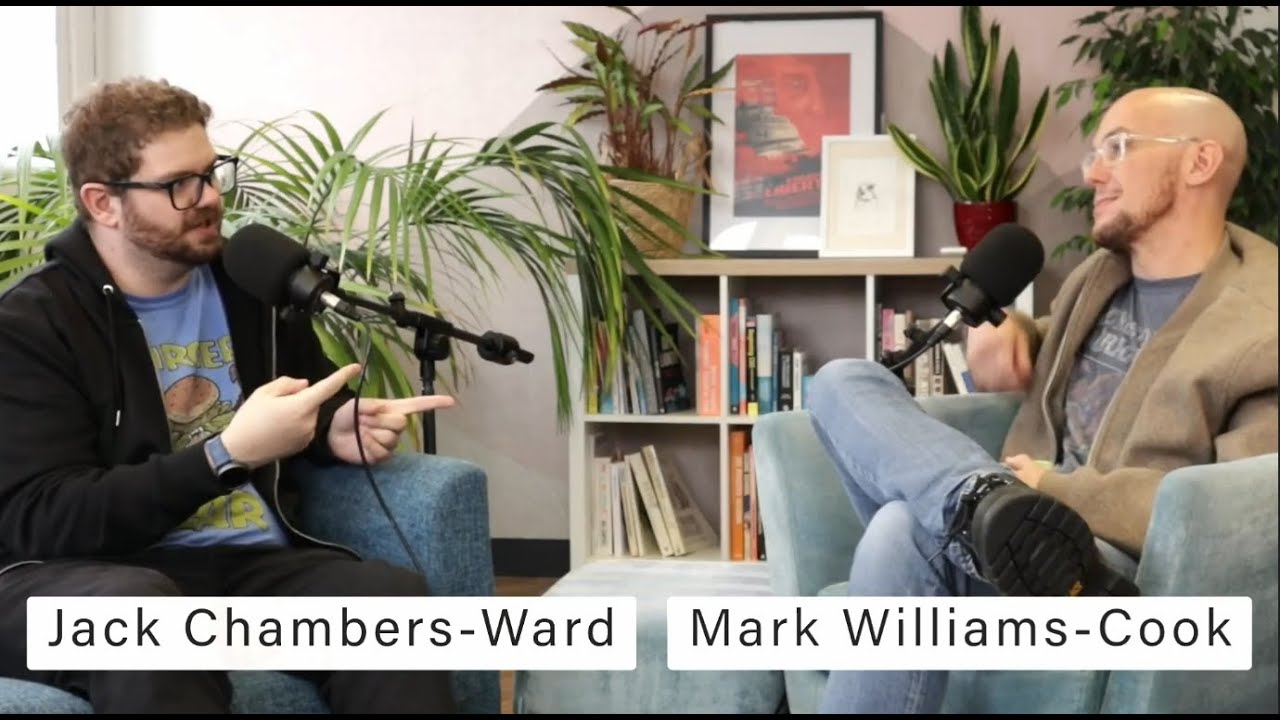
In this episode of Search with Candid, host Jack Chambers‑Ward chats with SEO specialist Mark Williams‑Cook about recent conference highlights, experiments using personas with ChatGPT for AI‑driven keyword research, and how personalization changes query results. They compare conversational prompting to traditional keyword lists, showing how feeding a persona plus classic keywords yields richer, multi‑parameter query suggestions. The conversation then shifts to Google’s recent removal of the &num=100 parameter, explaining how rank‑tracking tools broke, why impressions fell while average position rose, and how to correctly interpret Search Console metrics. They discuss the massive impact of bot and LLM scraper traffic—up to 40 % of impressions—Google’s new JavaScript requirement for SERP scraping, and the rising cost for rank‑trackers. Data transparency issues are explored, including anonymisation, zero‑click queries, and People‑Also‑Ask volume quirks. The hosts examine Google’s AI mode, new ad formats within AI mode, and PPC advice to use AI‑run campaigns with uncapped budgets. Looking ahead, they predict AI mode becoming a default tab, the rise of an “agentic web,” and the consequent shift in SEO focus from rankings to real business outcomes like sales and leads. The episode wraps with announcements of upcoming events (Digital Olympus, Search & Stuff Antalya, Brighton SEO, Hive MCR, International Search Summit) and personal updates.
Chapters
Hello and welcome to this week's episode of Search with Candid. I'm Jack Chambers-Ward, one of your hosts, because I'm joined by Mark Williams-Cook.
Hello.
Welcome to the show again, Mark.
It's been a while. It always feels like a while. I did cancel it the other week though.
You did, yeah. We've had to push this back a couple of weeks, but it's still within our usual cadence. We had one where we had like a couple of months off and we just basically didn't talk for like 10 weeks, it feels like. But we're back kind of normal a little bit. We're going to be talking about conferences and events, talking about some news to do with Google, how many results you see on a page and why everyone's freaking out about that, the number 100 parameter that everyone's freaking out about. And we're also going to talk about how personas can relate to keyword research in this AI era of search as well. And I guess we'll kick things off with some events and conference news. I know you recently attended and spoke at the Digital Olympus event in Amsterdam.
Yes, that was fun. Um, I particularly liked it because it's actually the only conference I've been to this year where I can fly directly from Norwich.
And, uh, it's always handy.
Yeah, the flight, even though it's near to where we are, the flight was almost as long as the taxi drive to the airport. It was like a 29-minute flight, so I loved it. Yeah, yeah, that was a great event run by Digital Olympus. Just the one day, loads of really good speakers. But we were talking about AI keyword research. And part of that was some of the experiments we've been doing with personas, right? Because one thing that I noticed about things like ChatGPT is the memory function you've got really can affect what kind of answers you get later down the line, which obviously doesn't really happen with traditional search, right? We've got a bit of customization— sorry, personalization, right? on traditional search, but it's not really that, um, impact, you know, impactive. Is that a word?
Impactful.
Impactful. Thank you. I was like, impactive? It does not sound right. Um, so we actually, um, were doing some experiments, um, and one of them I was running was just telling ChatGPT things about myself, right? And then over the next days and weeks doing searches and seeing how it would affect them. And one of the most obvious things I saw was I had an example where I asked it for a recipe. I said, because I'm vegan, so, you know, give me some lunch recipes. And it was like, sure, gave us these recipes. But then later when I told it, oh, I'm thinking about starting running, what are some good running shoes? It said, oh yeah, here are some good vegan running shoes. Now obviously, um, not that you're going to eat the shoes, but it gives you cruelty-free brands that it understands kind of have that same ethos, and also products that didn't use leather. So the kind of searches that were happening in the background had been modified based on personalization. So I was like, oh shit, this is kind of important, right? Um, and we were having to play around with different ways we can tackle this. And one of the things that seemed on the face of it I wasn't actually keen to do but did work was giving ChatGPT essentially a description of the person along with a set of traditional keywords. So, you might say, if I was a middle-aged man who's suddenly become health conscious, I'm vegan and I'm looking to start running, what might I ask ChatGPT if I'm looking for this information? And by this information, you feed in the kind of traditional key phrases we might have looked for, just stuff like, you know, best running shoes. Always use my running shoes example. Now, for every one of those traditional key phrases, queries you give ChatGPT with that prompt, it will come back with maybe half a dozen quite long, you know, like, oh, I'm a vegan 35-year-old Uh, man, I'm looking to start running. What shoes might be good for me? And what's particularly interesting about that is unlike traditional search, you're getting the 4 or 5 different parameters at once. And the reason I was initially not keen to do this was I've told lots of people, um, you know, don't use LLMs for keyword research. That is a a bad thing to do for lots of obvious reasons. But as I was thinking about it, it's, it's not actually keyword research in the sense of we're not asking ChatGPT what people are searching for in Google.
Yeah.
What we're asking it for is how would this person search for this information? Or actually, not even how would they search for it, how would they conversationally ask for it?
Yeah.
Which, when you think about it, perfectly aligns with the training set data they have, which is full to the brim of really specific forums, like a runner's forum, like, hey, I'm a beginner runner, the vegan subreddit, I'm thinking of starting running, right?
Yeah.
With people self-describing as your persona, and they're asking other humans in a conversational way the question, which is how people interact with ChatGPT. So actually, For this kind of stage, if you like, of the task, it was like the perfect thing to do. And you can feed in 4, 5, 6, however many like different personas. And it's really interesting then seeing the kind of different routes that people take. And the next step after that was trying to figure out what the rest of the conversation is gonna be, right? Because again, these aren't— like one-shot type searches. You don't do a search and then you write onto the next thing. It's literally, you normally have a back and forth conversation. And that's where we've been at the moment using also asked data because it's the next nearest intent proximity question, right? And I always love the examples because they're really fun. So the running shoes one was people go on to how much does a good pair of running shoes cost?
Sure. Yeah, makes sense.
And If you are a beginner runner, you'll probably be surprised at how expensive good running shoes are, right? They can easily hit you for like £150, £200. And some of the next nearest intent questions are, how much faster will I be with good running shoes?
Yeah.
As you can see, people trying to justify.
Yeah.
So they're like, oh, there's £50 or there's £150. Why would I spend that much?
Well, is it 3 times better? Yeah, because it's 3 times the price.
Yeah, like how much— how many seconds would it take off my 5K PV? Um, and it's just interesting seeing that because then again, you know, um, there's a whole other process, um, that we kind of go through that looks at identifying how to, uh, actually get visible for these conversations. But that as a starting point for me is, is really valuable because there's, there's all kinds of approaches that are happening at the moment with various tools where they're making, um, unpersonalized or generic synthetic queries, or in some cases, which I don't agree with, they're just chucking big lists of the traditional search terms into AI search, which I'm just not— yeah, I'm just not on board with because it's not how people are actually using them.
Yeah.
Um, so that, um, covered that Digital Olympus and Shout out as well to— I'll be at Search and Stuff in Antalya, Turkey, uh, between the 9th and 12th of October. And I'll be going through this whole process, um, there with loads more detail. There'll be free tools as well. I'll show you how, how to use. There's loads of other great speakers there. Uh, our friend Julia Panoso will be there. Uh, Arnoud will be there.
Uh, lots of people we've had on the show before.
Yeah, Martin Splitt from, from Google. Absolutely brilliant lineup. There's fewer than 50 tickets remaining at the moment. So search and stuff Antalya. Yeah. Great venue as well. It's gonna be nice and hot. 5-star hotel. Absolutely lovely stuff.
Can't go wrong. And run by Yama Shimsek, who has been on the show before. Long-term friend of the show and just does amazing stuff with the communities and the events they put on and stuff like that. I think it's a really cool kind of I don't know if it's like shift. I feel like so many conferences have been UK-based or US-based and it feels like there's been a nice shift, like going to Amsterdam. I know there's a lot of stuff going on in Italy and Spain and stuff like that as well. And even seeing branching out to Turkey now as well. We're seeing a nice kind of expansion of the SEO community in a way, I think. I know you talked a lot about last time you attended, there's like live translation and multilingual speakers and all this crazy stuff. Like kind of blew my mind a little bit. And I, I feel like I'm in such a little English SEO bubble sometimes you kind of get, forget how cool it can be outside of that as well.
Well, I've met, um, some really great Turkish SEOs as well, uh, like Metan, who's always posting some really tech stuff, which always gets my interest about, uh, how Perplexity is working and all sorts. Um, and yeah, the live translation was, was super, super helpful, uh, for that. So everyone can speak in their kind of native, uh, first language, but you still get the benefit that nothing's getting lost. in translation? Because I sometimes worry about that if I'm speaking to people who their first language isn't English, just because I talk fairly quickly anyway. And I've had, you know, native English speakers be like, oh, that was hard to keep up with. And I'm like, well, tough. You know, I want to, I want to say all this stuff.
So, um, gotta fit into 20 minutes.
Exactly. And you've got your Brighton SEO coming up.
Yeah.
How are you feeling about that?
Uh, okay.
Do you want to give it a little plug? Tell us what it's about.
Yeah. So it's about, uh, basically the future of content with zero clicks. So how can you monetize and still be a publisher and a content creator when we're seeing so much of exactly as we're talking there, the conversational search and the research stages happening in AI search and happening on those LLM platforms rather than people actually clicking through to your site? Because I think so many publishers have felt the impact of a drop in traffic means you're not getting those display ads, you're not getting that ad revenue, you're not getting All that kind of stuff. And we talk a lot about how irritating some news sites are with just ads, ads, ads, ads all over the place. Hopefully I feel like we're kind of moving away from that. And even Google has introduced a few different partnership programs and things like that. And I'll use examples from my history of podcasting over the last 15 years as well, and how I've made money from my podcasts and my content creation and stuff like that. So yeah, hopefully I can fit that all into 20 minutes. That's my main worry is that I'm used to talking with you or someone else for—
Yeah, that's my tip.
Faster, faster, faster. You— most people are like, you should slow down. You're like, no, it's been enough. Usually I'm used to like 45 minutes to an hour on a podcast. Like, I need to be tight on that 20 minutes. And, uh, yeah, I've got the live podcast the night before, then I'm speaking on the Thursday, then moderating on the Friday. So I'm going to be busy.
I'll be there, apart from watching your talk.
To heckle mostly.
I have no responsibilities. So if you want to hang out at Brighton SEO, hit me up.
There we go.
I'm just chilling.
Wear your Also Asked hoodie if you've already got one.
And yeah, I'll buy you a drink if I see an Also Asked hoodie.
You said that last time. That was dangerous.
But that was after I'd given away like 100, so I'm confident.
There might be fewer this year.
Yeah, see you people. Yeah. No, I'm looking forward to that. Um, it's, it's a hot topic to talk about. I think I said to you when you told me the topic originally, I was like, oh yeah, good luck with that. That's a, that's a tough one.
Yeah.
So, uh, yeah, I like how Google as well, you've been like Yeah, Google's kind of reducing all the traffic, but Google has a solution now. It's like the kind of Google being like, pick up the gun.
Exactly.
Yeah. Yeah.
They give us and they take us away. Yeah. Yeah. I think it's an interesting thing for, I guess, like this era we're in, right? Where so many people are freaking out. I know we'll get onto a weird shift in impressions that we saw.
Google taketh away.
Exactly. Google very much taketh away because we've seen the discussion of the great decoupling that's been a big topic over the last few months, right?
Or not.
Or not exactly. Um, a drop in clicks, an increase in impressions. Okay, so you're showing up on search, but nobody's clicking on you. And I think a lot of smaller creators, a lot of smaller publishers, and even the bigger ones as well, have really struggled with— and even us as an agency, I think a lot of having those conversations with clients, right, of like re— framing the value of a click and the value of an impression and what those mean when people are using things like AI mode and how AI overviews have all affected that stuff, right? That ties nicely into our next topic, which I think is the, again, much misaligned, misunderstood conversation. And I know we, you, I, and Brendan, our senior SEO consultant here, we talked about this. I think it was yesterday, wasn't it? Like, Why do you think this is happening? I was like, because it's, because it's this. And you're like, yeah. Like, okay, thank God. I thought it was fairly common sense, but apparently there's been a lot of like back and forth and it's the Google not having the num— is it and number 100? I don't know how you—
Yeah, it always comes after the query.
So it's always have the extra string there. So basically what that means is Google's, when you can show more and expand the page 1 to 100 results, You then, as we've talked about when it came to like infinite scroll a few years ago and stuff like that, it's like, we'll rank you on page 1. Cool. Does that mean top 10? No, no, no, no. 86. Like, you know, or infinite. Doesn't matter. You can be whatever you like. And I think for a lot of people seeing that, they were first of all, maybe unsure of what that parameter even does and why it's there. And then obviously saw, we saw a lot of third-party tools breaking and freaking out and loads of errors and stuff. I had a call with a client yesterday and we hadn't quite seen the shift in impressions, but we had seen a massive shift in the average position on Search Console. And I was talking to their head of marketing about it and he was like, is this an error? Is this on purpose from Google? Are those impressions actually changing? How does this all work? And I was like, excellent question, Mark. His name was Mark as well. Yeah, that's an interesting thing because from my perspective, and again, like we said, we were talking about it yesterday, when you think of page 1, you think of the 10 blue links and all that kind of stuff, right? That I feel like that is so cemented in our heads as SEOs and as users of Google in general and search engines. You kind of forget that you have those other options of, you know, on mobile it will show way more results when you can expand and the API can pull way more results as well, right? How are you feeling about the kind of reaction across the industry and what you thought people were saying about it?
So I think the, uh, just to summarize there, so Google's disabled this &num=100, or at least mostly. It still works very occasionally, randomly on some verticals.
Interesting.
But basically when you do a search, you get 10 results. You could add that parameter, you get 100 results. Pretty much every, not all, but pretty much every bit of rank tracking software was using that parameter to get the top 100 results because it meant they only needed to scrape once instead of 10 times. Right. Um, and I think it was Brodie Clark who first made the connection when across a lot of, um, Search Console accounts, but also interestingly, not all of them, because I think you're in one of the WhatsApp groups I'm in as well with, um, someone of a few people who have access to lots of, yeah, yeah, uh, Search Console accounts, and some of them quite big brands, they haven't seen any shift in impressions, which is also very interesting to me. But we saw this impressions down, average position up, which is essentially telling the story that your link is showing less. Um, and the average position is up, meaning it's very likely the rank 20 onwards, right?
Yeah.
The reaction, um, well, it was really, really like talked about yesterday, I guess, because the secondary impact of a lot of rank trackers breaking set a lot of people into like panic mode. I made a joke, it did kind of expose that apparently some SEOs have no clue what these metrics are or how they're calculated. I guarantee you there was at least one person Like in a meeting yesterday being like, great news, our average position is up. We have been doing an excellent job. And everyone's like, well, we've got no more sales or visitors. But the average position is up.
Yeah. And you, again, we were talking to Brendan about this yesterday, right? I think what you and Brendan were saying is an interesting thing because I think average position is one of those weird choices of metric on Search Console. And I think interestingly what you said was like, don't take it in isolation, right? Like you said, oh cool, you can see average position go up or down. It's like, have your clicks changed? If not, something else is happening. If they have shot up as well, then okay, cool, fair enough. Maybe you're seeing a positive impact there. But it's also things of like the average— I always try to remember the calculation for this. It's the average position from the highest ranking query for that page or something like that, isn't it? Yeah.
Yeah.
And that does not mean it's averaged out across all different queries. It's only a specific selection and it's like quite a specific calculation that is not just on average, how highly do you rank? Full stop. Like it's not as simple as it seems. And if you don't take it with the context of other things and what is happening to the other numbers, then it kind of just doesn't really tell you much really. Right.
So someone was actually looking at some of this data with me the other day and they were like, oh, you got that many clicks from average position 26. They're not on SEO, caveat. And, you know, I was saying to him, all other things being equal, if you had a ranking number 1 and another one 100, the average position would be 50, but you would get a fair few clicks because one of the things is in number 1. Whereas if you had 2, again, 2 rankings and they were both 20, your average position is 20, much better than 50, but you're not getting any clicks.
Yeah.
I was like, this is why it's It's, I mean, it's useful, like you said, in conjunction. So I use it sometimes, like if, um, you know, impressions have gone up, but average position has gone down, that, uh, and clicks have stayed the same, that will usually tell you you are now ranking for more keywords, uh, but outside sort of competitive positions.
Yeah.
They've dragged down your average, but the impressions are still there. So they, when you combine 2 of the 3 metrics together, I actually think it's quite helpful. I don't think they should get rid of it. No, it's just very, um, alluring.
Maybe you're new to SEO, you're just like, oh, average position, I don't need a rank tracker. Yeah, it's my rank tracker. It's like, yeah, not quite the same thing.
Um, so yeah, where we're at at the moment is probably the biggest provider of SERP data, or one of them, is Data for SEO. And they've kind of released a statement, if you like, basically being like, yeah, Well, uh, if you, if you ask for the rankings now, we're going to give you 10. And if you want position 10 to 20, 20 to 11 to 20, etc., they're charging you another scrape, but they've reduced the cost ever so slightly. Like, I think it's like 20, 25% or something to do that. But I mean, immediately, because a lot of these tools use various APIs Um, it obviously is 10 times their cost. Yeah, right, which is mad. Now, um, I don't know if there will be a solution to this. Firstly, we had one tool, and I don't want to talk specific names.
Yeah, yeah.
Um, we had one SaaS tool that was kind of— or one of the prominent people that worked there was kind of like, well, you know, what do you need outside 24 anyway? It doesn't get much traffic. And I feel that's kind of like gaslighting after you've been selling us rankings for so many years to then be like, you don't need them. Because while they don't deliver traffic, they are good as a long-distance radar for are we trending up or down. And, you know, sometimes you'll have like cannibalization issues that are suppressed because of that, and they're meandering around page 2 or whatever. So. I like to have the data because it's very useful in my opinion from a trending point of view of how many keywords are we invisible for, what direction are they moving in. Because sometimes, you know, you move from 90th to 60th to 40th.
Yeah.
To 25th, 20th, and over 8 weeks, and that's progress. If you're blind to all of that, again, it's 8 weeks of maybe money you've been charging someone to say like, don't worry, it will work. And they're like, show me that. And you're like, No, we don't need that, they said.
It's a marathon, not a sprint. Yeah.
So yeah, and I understand like that it, you know, we're kind of past rankings and, and all that, but I feel they are still helpful. I've always been— I've never been, uh, well, you know me anyway, I'm not like a super detailed person anyway, but when it comes to analytics, for me, I've always accepted analytics are not a precise science. It's all, you know, to me, very direct trends and that kind of thing.
Yeah. Yeah.
And, but I was shocked at, if this is correct, how high the impact of bot scraper traffic was on Google Search Console data. My assumption, and I think it would be fair to say it was the assumption of most people, was that Google was filtering out what it knew to be maybe more SERP scrapers than it was. I was thinking maybe 5, maybe 10% tops impressions. We've had some big websites we look after have like a 40% drop in impressions. We're talking like hundreds of thousands of impressions.
Yeah.
And I don't— it won't all be ChatGPT, our, you know, LLM scrapers, but There's a lot of non-bots there, but that's a huge, huge amount of traffic, right? And just, yeah, like you say, like especially, especially in a time where we're saying, okay, clicks aren't as important because da da da da, AIO views, people made decisions there. Therefore, yeah, impressions are important, right? If you're getting seen, but not if in some cases 30, 40% are a robot. Yeah, but again, arguably, what's the downstream benefit of that if you are then appearing. But yeah, I assume it was much higher than you expected it to be as well.
Yes, definitely. Yeah, it's like I said, I had assumed we had already kind of been factoring that in. Like, obviously so many— I feel like we're all aware of the big scrapers at this point, right? Like, that we will cover it on Core Updates whenever somebody like Dave Smart or Jamie Indigo will talk about Oh, there's a new bot that's been spotted.
New bot in town.
Yeah, new bot in town. Crawler spotted now. Like Google has a new thing or ChatGPT has a new thing. And obviously there's been a lot of chatter about how aggressive a lot of the LLM stuff is as well.
Yeah, like massively.
Just ignoring robots.txt and all kinds of other stuff.
Perplexity.
Hello, Perplexity. We're watching you like you're constantly watching us apparently. And I think there is that kind of, I don't know, maybe I'm giving Google too much credit here, but like that kind of old school mentality of like, yeah, we'll kind of be respectful, we're kind of chill and all that kind of stuff. I wonder if that is the increase in the amount of crawlers we've seen recently. There seems to be a new tool launching every month basically at this point. So, and a new LLM launching every other month. So there's going to be so many more of those kinds of traffic. But yeah, 40% is crazy, right? Like when you're reporting that to a client and then like going through that process of trying to almost like, yeah, so ignore 40% of what I'm saying, but like everything else is great.
Yeah.
Okay, that seems like quite a lot you're supposed to just kind of write off.
I mean, this is why I've always been, and I've said it on this podcast before, when people get really into the weeds about forecasting search traffic, and I've always been like, it's an estimate built on an estimate built on a, I mean, guess of the future of how this is going to change. And it's so inaccurate to me. As long as we can, I I think demonstrate growth and try and correlate that to activities. Yeah, then, right, like, that's the— I would rather then spend more time doing the things that get that growth rather than trying to work out the decimal places when, you know, of it. It's, it's kind of embarrassing. Like, Google must have known this. And I was thinking about this, so they recently did, and I haven't seen anyone mention this as well, they did the kind of JavaScript requirement update to the SERPs as well, which was— people thought maybe, uh, kind of pushback against some of the LLM scrapers.
Yeah.
Just so if you don't know, if, if you haven't kind of scraped stuff before, it's a lot more expensive and tricky to do that when you require JavaScript. Um, you can't just request the HTML, which is super simple to do. It's literally like a few lines of you know, any code basically to grab that. When you start having to basically client-side process JavaScript, yeah, it's, it's a lot slower, it's a lot more resource intensive. And the general thought was Google's done that to stop LLMs quickly just grabbing the search results.
A lot of the LLMs quite famously don't do JavaScript stuff compared to what Google has been doing for 15 years.
But then we saw, um, OpenAI is listed as a customer for uh, is it SERP API?
Hmm.
The service to scrape Google, right? So SERP API will be processing JavaScript anyway. So they maybe have just been like, don't worry, we can take care of that for you, pass it on. And now if Google's saying, well, you've got to do 10 requests to get the top 100, not only have they potentially times the cost of scraping by at least 10, because it's not always even as simple as just doing the 10 requests. They've reduced their own overhead as well, which I'm thinking now, based on the volume that we've seen, how aggressive LLMs have been in scraping, like maybe it's actually not even a negligible line item for Google.
Yeah.
It's like, yeah, we can save this many millions of dollars of infrastructure every month, every quarter, whatever. And as well, make things harder for our competitors because they are a competitor. You know, OpenAI, while AI mode is out now and it's rolling out globally, they didn't get the first mover advantage. People who I think go to AI mode, I think the figures are still in the low sort of 1, 2, 3% of people using it. It's very much a secondary tryout thing on Google, whereas ChatGPT, it's, I'm going to go to use it for the—
Yeah, yeah.
AI mode.
Yeah, I think a lot of that kind of— there's been a lot of discussion where we've even seen Google results popping up in like a SERP popping up as a citation in ChatGPT and stuff, right? Like, okay, yeah, so you're clearly pulling from the SERPs there directly.
And SEO is dead.
Yeah, exactly. SEO is dead once again. And I think a lot of that comes down to Yeah, the fact that AI mode is being pushed so heavily by Google and, you know, I've said quite a few times on this show before, I was predicting by the end of the year we'll have it in the UK and it happened like a month later. Like, yeah, there you go. Okay.
Oh, you're right.
Well, yeah, I was right. But like, yeah, they were even faster than I thought they were going to be. And I think I've also said like by the end of probably next year, 2026, AI mode is going to be a key part of the traditional search. Like using traditional search will not quite disappear, but I think AI mode will almost be a default kind of option in a tab. Like rather than having to, like you said, go off and choose it specifically with ChatGPT, you kind of know the experience you're going to get, right? And I think a lot of what Google has been talking about, I include this in my, my talk at Brighton and funnily enough, an interview with Sundar Pichai talking about how they kind of trial things in AIOs and AI mode. And he describes it as when we find features that work, we pull them through to the main experience. And it's going to be not quite a testing area, but kind of a thing of like, okay, we can see this works now, pull that through. And that's going to become a part of the more traditional search side of Google. I think that is a direction we're heading in. And I know a few people disagree and say like traditional search will never die necessarily. But then to extrapolate that further, you then go to the agentic web, which is something Pichai has talked a lot about as well, like predicting in the next like 4 or 5 years that we will basically not browse ourselves. It will just all be agentic experiences, right?
Yeah.
So saying that on the podcast yesterday, I was like, I like doing my own browsing. But as Chris Green said on the podcast before, like, It's— there's less friction. Each click is friction, right, for a user and for a customer. So if you can just say one thing and it goes off and does 10 searches for you and finds the right product, is that a better user experience at the end of the day? Kind of, maybe, if it works. And that's the big if, right? If it works and does its job properly.
Yeah. I mean, it's kind of like getting your shopping delivered or going to the supermarket.
Yeah.
In that going to the supermarket is an experience and you experience things on the trip to the supermarket, walking around, you might see people, chat to people, you might see a new like thing you're interested in. And like my parents still refuse to do their shopping like online.
Yeah.
Because they like, you know, it sounds, they like that experience. But then I do all my grocery shopping online because it's like time. I have things I need to do and like, that's the quickest way to get the thing I need. So yeah, I can see both. Interestingly, at Digital Olympus, there was a Googler there, Natalia, I believe was her name. I have to apologize, I can't remember the surname. And one thing I remember Natalia from Google saying was they expect only 5 to 10% of searches ever to be done within AI mode versus traditional search, which I found a little bit surprising because I think similarly to you, it's going to go to a more unified experience where Google kind of decides where they need to route you. Like, oh, AI mode is best for this query, or I'm just going to show you ads and shopping results for this one, or— as we have seen happen in AI mode, I'm just going to give you a list of websites. Um, so that wouldn't surprise me.
Um, again, it's that personalization as well, right? Then Google is then trying to understand like, oh, what does the person on the other end of this actually want to do? Are you looking for, you know, a traditional search thing of like, yes, I want to turn these bloody AI overviews off. Let me just see the links or whatever. Like, It's not as simple as that, but I think you're right. And if you say, for example, you put in a really long conversational search, the exact kind of things we were talking about earlier into the search bar, will Google then be like, hold on a minute, did you mean to do AI mode? Or I think you're better off using AI mode and it will just automatically do it for you.
I think you're better off looking at these adverts.
Well, that too. Yes.
Yeah.
Now we have ads in AI mode. Ta-da! Personalized to you. It's like, yes.
Have you heard much more about ads in AI mode?
No.
How that's coming about?
Marketing O'Clock have talked about it a couple of times. They cover a lot of the PPC stuff as well. I know we've seen quite a few in AI overviews already, and I know that I'm trying to remember the names of the PPC things. Not a PPC guy. Ads Max, I think it is, which is a version of PMax, has some AI mode functionality in it.
Okay.
Or some— don't quote me on that, listeners and viewers. Like, I'm trying to remember things I heard on a podcast. About a bit of digital marketing I don't really do anymore. But yeah, there is definitely options and stuff for like trials and stuff in AI mode side of things. I don't know if they're active yet or not, if it's just kind of like a coming soon kind of thing or select users, but it's going to be a thing for sure, right?
The other thing Google said at Digital Olympus regarding PPC The advice was to use the Google AI-run campaigns and to uncap your budget.
Interesting.
Yeah.
Just give us all your money and let us handle it.
Yeah, that was the advice. Made a few people smile.
Yeah. Yeah. I know. Obviously we talked about this. We don't do PPC at Kander here for that kind of exact reason where the optimizations core would be like, have you tried spending more money? You'll get more things if you spend more money. It's like, yes, I know how money works, Google. Thank you.
Maybe we should try that in the next kind of SEO strategic reviews. We've got your next strategic advice here and it's spend more money on SEO. And yeah, us would do the AI SEO with us, which is basically where you let us handle everything and you get no insight into how things are running.
So you don't get any reports, but you do need to spend twice as much. Thanks so much. See you later. Yeah, I think a lot of people are getting— again, kind of comes around to that conversation. I mentioned Chris Green earlier. The episode I had Chris, Miriam, Dawn, and Jono on where we talked about that.
What a lineup.
I know, that was maybe my favorite episode I've done. It was, it was so much fun to kind of just be like, I'll ask a question and then sit here for 25 minutes with some of the smartest people I've ever met just to have an interesting conversation. And they even started asking each other questions and stuff. I was like, cool, job is done. Mark and I have assembled the Avengers, we're fine now. Like, um, but yeah, what Jono was saying I think is that, like the transparency of data stuff, right?
Yeah.
We are being pulled further and further away from, as we said earlier, you're working on an estimate that is based on data that is not complete. And a lot of people, I use the term like first-party data for Search Console compared to GA4, right? But still that is limited by API limitations and how many lines you can see in a single page you can see at one time. Can you go past 1,000 lines? Some API can. Are you using the API? Are you just looking at the thing? There are so many different parameters.
Anonymization.
Anonymization, all this kind of stuff, right? We see that as like, that's the closest source of real data, but it is still so far away from actual real side of things. You talk about this with Also Asked all the time as well, right? The zero click, sorry, zero search volume, where it's like people are clearly searching for this stuff. Otherwise it wouldn't be in the People Also Ask feature. So, but it has zero search volume. So clearly nobody's searching for it, right? It's like, yeah, but data is delayed and they don't just track each search individually and tot up search volume. Yeah. This has a search volume of 6. You're like, what? That doesn't mean anything. There's parameters and thresholds and filtering and all this kind of stuff that happens. I think most people think of it from a GA4 perspective, you even get the little like exclamation mark. By the way, this has been thresholded. This has got specific parameters on it. We are estimating this because we don't have the full dataset. That also happens in Search Console. So everything is built on estimates and layers upon layers of a rough kind of estimate based on a parameterless thing that then is an estimate of that. And we haven't had like true data really ever. Like there's never been, oh yeah, I just have direct access to Google's, you know, exact search volume numbers or whatever it is, or click numbers. And I think a lot of people as an industry are getting frustrated with it being pulled further and further away from us. And if you get things like the AI optimization of ads, and if we get full AI mode, say, worst case scenario is a weird way of putting it, but traditional search disappears and you can only use AI mode, does then search volume basically not exist because long conversational queries and how do they handle the tokenization of things and all this kind of stuff? And Jono put it so brilliantly of just like the social contract we have with Google as users, as SEOs, never existed and doesn't exist.
I was going to say, but Jono was saying the social contract. I was like, does he think one exists? I wouldn't think he would think that.
I'm trying to remember the exact quote. I include it in my Brighton talk, funnily enough. It is like, uh, was a comfort blanket that Google never agreed to and never signed up for or something like that. We've all been cuddling together under a comfort blanket. Oh, I've got my lovely data. Don't worry about me. It's like all that data is a lie and you've been living a lie this whole time and, you know, nothing is real.
John knows that was garden hose.
Exactly.
Yeah.
Yeah. And I think that's kind of a bigger Tying around to the num 100 thing, I'm just like, the numbers don't mean what you think they mean sometimes. And they also aren't the full story on their own in isolation. So you can see one number go up or down or see, oh, how do you have a conversation with the client of like, we should be writing these things with zero search volume. Whereas 10, 15 years ago, you'd be like, oh, you need to go for the highest search volume terms and all these header terms and all that kind of stuff, right? And I think we're kind of heading in a direction where that data, and from Google's point of view, I guess the less data they give us, the better, because they can do whatever they want with AI optimization of ads and get you to spend more money and all that kind of thing. The less control and the less access we have, especially us nerds in SEO, probably the better for them from a business point of view. We can poke less holes. We can complain about less things or fewer things. And Yeah, I don't know if it seems like we're kind of not post-data, that would be a ridiculous thing to say, but certainly heading in a direction where we'll be relying on those metrics a bit less.
Yeah, I think it just comes back to the real success metrics are what impact it's having on the business.
Yeah.
Are we doing more sales? Are we getting more leads? Where is the traffic at least coming from? And then, you know, if anything, it's more work for people in search to try and figure out that opaque middle bit of what are people searching for, which one of those things brings us closest to a sale, how competitive are those things, you know, what are the variations. Like, that's a lot of work, uh, to do, and I think it's harder than ever. But as I keep saying to people, The same amount of money is sitting in consumers', customers' pockets and being spent online, if not more every year. So it's not like it's gone away. It's not like there isn't a return anymore. It just is changing how they're getting their information. So yeah, it's just understanding that really.
Definitely, definitely. Well, folks, hopefully you enjoyed conversation covering everything from events and conferences to data transparency and everything in between, pretty much.
And Jono's blanket.
And Jono's blanket.
Which never existed.
Jono's invisible blanket. You said you're speaking at Search and Stuff coming up in October.
Yes.
Anything else you've got coming up in the not too distant future people should know about if they're not already following you on LinkedIn? Or I assume they are if they're listening to this podcast.
I don't actually think so. I think Search and Stuff now is the last conference I'm going to be at this year. So I think it's the 10th one I've done this year. So it's been a busy year.
You've been busy. Yeah, for sure.
But apart from that, it'll just be you at Brighton SEO. I think that's the last event we'll probably be at before Christmas. And then next year, I've already signed up for Hive MCR. They've got some really great speakers. I'm not allowed to say who yet, but that's going to— I think that's going to be a really good event with no spoilers. Yeah, really good event.
Shout out to Charlie and the guys that sort out Hive. That's been—
so I'm going to—
I know we've had really— we've had some of the Canva people attend and speak before.
Yeah, Tabby was on a panel there last year. Yeah, this year.
Sorry. Yeah.
Yeah. Yeah, I'm looking forward to going to that. Awesome.
Yeah. And I will have the live podcast, like I said before, Brighton. We're also doing the live podcast at International Search Summit as well, which is very cool. So we're doing a live podcast in Barcelona as one of the like panel sessions. So Sarah Tasman and I will be there doing 2 live podcasts.
What date's that?
That is the, I want to say the 13th of November off the top of my head. Let me just check my calendar real quick. I'm pretty sure it's that. Let me have a quick look. So on the spot there, Mark. It is nailed it. 13th of November. There you go. Good job.
Yeah.
Yeah. So we'll be doing the live SEO Mindset Search with Candid crossover as one of our kind of like panel pieces in the International Search Summit in Barcelona. So come and join us there if you're not seeing us at Brighton. And yeah, I've got a busy rest of the year. I know you just did some boxing. I've got some MMA to do later on this year as well.
Raising money.
Yeah, yeah, raising money. I've crossed the £1,000 goal.
I'm not surprised. I don't think I've actually sponsored you for that yet.
Maybe not officially. I did sign a deal with John, creative director, the other day at your boxing event, so that was fun.
Oh really? Nice, nice.
I'll tell you about that later.
Yeah, that'd be nice.
Usually it's you that's making the deals with me and then you have to explain to John later, but no, I got there first.
Brilliant.
Anyway, I'll put links for everything we talked about, all the articles, all the data, all that kind of stuff in the show notes. In the meantime, thanks for joining me, Mark. Always a pleasure.
Pleasure, pleasure.
And we'll see you next month and I'll see you next week with more interviews and good SEO stuff on Search for Candid.
Ciao, ciao.
More from Mark

LASTCHANCE code for 25% off SearchNorwichXL THIS Thursday! #seo #norwich #snxl


Google asking if I will keep “a monopoly” on cats.txt standard open it to then community 😂 #seo







Google adding big new AI GSC features in the UK (but not because they’re your friend) #seo
