https://www.youtube.com/watch?v=IF3wq6kffng

Abbas Khan raised seed funding for Civiq IQ in under nine months. He discusses how he built a remote team, developed AI and data products for local governments, and navigated the govtech market while securing capital from pre-seed to seed stage.
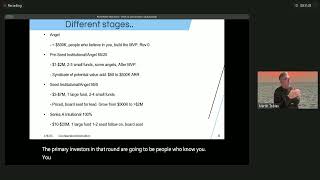
Hello, everybody. Welcome to another one of these webinars. Thank you all for joining. I'm Martin Tobias. I'm a pre seed vc. We do these webinars once a month on different topics. A lot of people have been asking, hey, we'd like to hear from one of your founders who's raised capital in this environment and you know how it's going. And so I thought about a boss. I invested in a boss's pre seed round and then about nine months later they were able to raise a seed round, which is relatively quick in this environment. And I put additional money into the seed round and I just thought it'd be interesting to have a chat with him about what he's building, how he came up with the idea and stuff like that. We'll talk for maybe 20, 25 minutes and at the end people can ask questions, either if you're a founder or if you're a vc, about what Abbas is building. And I'm really excited to talk to you. Hey Abbas, how are you? Maybe you just give a quick introduction who you are, where you came from, and then tell us what you've built.
Yeah. Thanks, Martin, everyone. Nice to meet you. I'm a boss, founder of Civic iq. I am based in Hoboken, New Jersey. I have two young kids, like two under two, so last couple of years have been crazy, like two kids and a startup. So technically three kids. But a lot of fun building while building the family as well. I was born and raised in Pakistan, started my career over there, started working for a company who eventually moved me to the US and now I've been. I call us my home now and I started Civic iq. I think I pitched to Martin last February when I reached out to him.
You were still in stealth?
Yeah, I was still building a prototype. One thing, maybe I'll just call out rightly I reached out via cold Twitter message. A lot of people say you need to have relationship and you need to know a lot of VCs to be able to raise VC money. I knew zero VCs before I raised money. When I raised the pre seed round, that's how I got connected with Martin. I sent him a a brief note and then we got connected. I've been building the company since early Q1 of last year. June we closed our pre seed round, I went full time and this February we closed our seed round as well. Very lucky to be able to do that and thankful to the team and customers who continue to trust us.
Yeah. So why don't you tell me a Little bit more about how you came up with the idea of this particular problem.
Sure, yeah. So to some context, civic iq, we basically use data and AI to help companies sell to government. And when I say government, we don't mean like your federal government or Department of defense. What I mean is local governments, which includes cities, counties, school districts, special districts. They spend over $2 trillion every year on procurement. And it's extremely fragmented market. There are over 100,000 entities and it's extremely hard to sell. Companies who have been successful poured in a lot of money. You would need to hire hundreds of salespeople who can go on ground, who can go to conferences, who can go knock door and sell. Otherwise it's very hard to sell at scale to government. So it's either local players who continue to win more business. Maybe mayor knows a local IT guy who continues to build their website. It might be shitty, but that's the best guy they know. So this is how business is done, especially when it comes to smaller cities. So we're trying to change that, trying to open up the market, make it more accessible to any company across the country. If a town in Nebraska needs to build agenda management software, they shouldn't go to just the guy they know. They should have access to every single latest and greatest technology. We aggregate a lot of data from government institutions. Both data that's publicly available as well as we source our own data and we make that available to companies who are, who either sell to government or interested in selling. So that's what we've been the core of our business. How I got started was initially I was working on something completely different. We mostly tinkering around vibe coding with ChatGPT. When I started wipe coding was very early, back in what, 20, 20, 23. It didn't do much. The context limit for most of the models was like 2,000 tokens, which is very small. The code it used to produce was really bad. But that's how I got started working on something very different. One thing I realized while I was playing around and I saw a lot of raising money, I built a thesis that AI is going to eat software because it becomes so easy to write code to be able to build features. If I wanted to build a company, I wanted to build some mode around it and not just have features which anyone can copy. And I wasn't the best software engineer, so I wouldn't be, wouldn't be in the fastest to build software. So I come from data backgrounds and actually started thinking about how do we build a data business So I started doing, I was doing some consulting work with a couple of companies. That's where working with one of the company in govtech space, I realized how big the market is, which I wasn't completely aware of, and then started to dig in more, deeper, got curious, learned a little more, knew nothing about the government space as well. Spent a lot of time learning what data sets available, how to acquire them and then build our tooling in house to how to structure them. So that's where we are a lot of initial time was started with data and then started thinking about how do we monetize that data.
Definitely. And let me tell you just a little bit about my feedback of why I got interested. When I met you, I was hearing lots of great AI company ideas. Everybody was taking their crypto project and saying we're an AI company now. I always look for an idea is what technology trend or what insight do you have that allows you to unlock some value today that you could not have unlocked even a year or two years ago? And when you started talking to me about the fact that people had tried to build this kind of local government database before, but the problem was there's 100,000 different websites you have to scrape. You got to do public records requests where they end up giving you PDF files which are hard to translate prior to AI. A lot of times these contracting opportunities are only available in webinars or zoom meetings and you have to extract data from those. So you ended up with three or four different data sources, all different formats. No efficient way to collect and structure that unstructured data. ChatGPT and AI and these models came along and the price of tokens went down 90%. And you were surfing that wave of increased intelligence from the layer that is going to allow you to take this massive amount of unstructured data and make it structured. And you've got multiple data sources, multiple unstructured things, and now you have an infrastructure that allows you to build such a database. Literally this company could not have been built two years ago or three years ago. And that's what got me interested, is that it wasn't just AI slapped on something else. You were actually able to create a product that could never exist before, like in the history of the world.
I know, I remember when GPT4 launched initially and I was testing it out one it was slow and expensive. You get some documents which are 4,4000 pages long and we were doing some math and each document just to extract data would have like cost 10 to $15 per document. And Even then it wasn't scalable. If you do the math, you can't build a page. It wouldn't justify the margins. As Martin mentioned, the cost of AI just keeps dropping and then become a lot easier. We build a lot of that, by the way, a lot of tooling around this data extraction in house. They're literally companies now who have raised Series A, who just are doing exact same thing which we build for our own purposes. Back then it wasn't feasible, so there was, there weren't many off the shelf solution available as well.
Yeah, but the underlying cost. You started the company before it was economically feasible, but your bet was that the economics were going to change in your favor quite quickly. And that has in fact continued to happen and maybe even accelerate to at rates that people didn't realize. And this business model is possible. I think that's awesome. So now when I met you, you were thinking we're just going to work on New Jersey and try to get local government in cities and school districts in New Jersey. Tell us a little bit about what you've done since the precede the coverage you have and number of municipalities and the size of the database today relative to the overall size that you think it.
Yeah, so we started very small. Partly I did not, I didn't know a single person who sold the government before I started the company. So there wasn't much to go in. So we had to find a way to start small and validate quickly without spending too much time. I live in New Jersey. So we started collecting data, very much focused on New Jersey. So we had everything. And then we started, you know, we went to a conference, started pitching to companies who did business in New Jersey only. That's how we got the interest. And we also realized that, yeah, there's someone who's willing to pay for it even small at that point. So that was a good signal to double down. We already had the infrastructure like document extraction, document acquisition and our whole data model was done. But that point was just scaling it out and using the same scraping technology we had built. Just continue to scale that and do it across the country. I'm a believer in law where if you can cover 20% of the major websites or major scraping technologies, that gives you overall 80% of the coverage. So that's the model we continue to follow and it has worked out well. Initially when our data was patchy, we went to look for what was most important for our customers, went after that top 20% and then kept going down that list.
What percent of the United States local government purchasing. Do you think you have covered with data?
It's hard to say because, for example, not a lot of people care about 100%. Village in Wisconsin, Nebraska, somewhere. Yeah. Our focus has been going after the states, going after the entities which our customers care most about, and also just following where our customers are and just making sure if we sell to someone who sells to fire districts, we make sure we have fire districts covered. If someone is selling to large cities, we make sure we cover the large cities. So I would say the type of customers we serve, we have 80% of the coverage.
Okay, super. And talk to me about the monetization. There's two ways you could monetize it. You could sell to vendors who want to sell more to the cities, or you could sell to cities to optimize their purchasing. You're starting on the vendor side, right?
Yeah. That market itself is so huge, there's. We estimate There are close 200,000 companies who do business with government. And when we say government, it also includes school districts, the community colleges, public universities, hospital, public hospitals. This includes anywhere from your software companies, your hardware, IT security, IT services. Then you have construction, then you have architecture. So you can name any category of business touches government in some shape or form. The market is huge. We focus very much on enabling companies to do business more efficiently with government. At some point, we will start to focus on enabling the other side of the market as well. But right now, we just have to very much focus on one side.
Yeah, and that makes sense because your offer to that side is increase your top line, sell more, or sell for the first time to the government if you've never been able to sell before, which is always a better way to start than cut your expenses, which would be your pitch to the cities. Okay, so that's very exciting. And I did want to mention another thing that got me interested is the fact that in creating the structured database from unstructured, you can actually discover the vendors who are already selling. And that gives you a qualified lead list. So you're not just going to Apollo and trying to scrape architects in Spokane. You actually know the architects that are already selling to Spokane. And so you have a little bit more of a targeted vendor list that's been surfaced through your work, which gives you a slightly better way to target potential customers than just trying to go to a generic Apollo type database. Maybe you can talk a little bit more about how that's working. For me as an investor, that was an interesting aspect of your database, is that it could be Self populating with your sales leads.
That's a hugely valuable data set because without that I don't know how would we know who does business with governments. You can find some high level, let's say these hundred companies but beyond that it's very hard to go down the list and find a 10 person company somewhere doing $15 million business. There's so many companies who nobody who's no one has heard of, some of them bootstrapped, some owned by private equity but no one knows about them, are not very well known. So we use a lot of our data to identify those companies and try to pitch our product to them. We also use our product in our go to market strategy. We pull in some information from our data, link it to that prospect and reach out to them. Makes the cold call or cold email a lot easier versus just randomly sending.
Out emails, marketing emails, it's a lot warmer. You could say hey I know you're selling chairs to the school district. Did you know that they have a table contract coming up next month and that email is going to get opened a lot faster than you know hey, you want to sell tables, great. So thanks for that background. So now tell me about what led you to want to raise. How much did you raise in your pre seed again? About 600,000, something like that.
500K.
500K is a pre seed and you didn't have a big burn rate. You still had a bunch of money left. But what led you to meet Urban Innovation Fund that led to the seed? Tell me how that happened.
Yeah, I think as soon as we launched our MVP product when we started speaking to customers it was almost a no brainer. A lot of early meetings went so well. People converted and they wanted to use the product so that was a good signal to double down. That's what we wanted to validate with pre seed money. Can we build the product and are people going to pay for it? So when we saw that there are enough people willing to pay for it that's when we started to have some conversation with VCS and part of it also we got, we started to get some inbound to met few VCS who showed a lot of interest even when we are very early on.
So how did you think you got that inbound? Was it because you announced your pre seed? Was it did you were doing any social media? Do you think it was customers? How do you think you got that inbound?
One thing I will tell a lot of founders is if you're just starting off it's a little Small trick. And a lot of VCs know, but founders don't know just on your LinkedIn put working on something new or stealth startups, a lot of VCs use that as their tooling. They will use up in their list and if your profile is interesting like on LinkedIn, they'll reach out to you.
After you raised your pre seed, you still left your profile to be working on something or in stealth. Yeah, I noticed that because one of the VC databases that track these kind of things said said that after you announced your seed then you came out of stealth even though you had already raised a pre seed. That's good advice to people, keep that stealth thing on there longer.
For some people it depends on what your goal is. For example, if you're raising like a seed or if you're raising money and you need to hire people, then you need to be more open about it, attract talent. In our case we had other ways to recruit. We didn't even announce our seed round as well because I don't have a reason to do it. You want to announce or you want to do a. Your press release, a post on LinkedIn if you think it's going to help you find more customers, that's going to help you recruit people. So I had that reason too. But generally I think earlier on, if you're just starting the company, it just helps. It's a small thing which VCs look at.
So Urban Innovation Fund was referral through.
One of our other customers. But before that we spoke to so many other investors who were interested and I would also say those calls are more of testing the waters. Like what are the investors thinking? Because you have nothing to lose, someone has reached out to you, you can have a conversation and then you see is and I just want to mention that again, I don't know any VCs. I don't didn't know anyone. So for me and I also didn't know how the VC industry worked before I raised. So having those conversations, it also helps you practice like what message resonates with an investor, what doesn't resonate and then so that when you actually start raising, your pitch is a lot better. If someone says hey, we're not ready at this point, they pass. You ask them for feedback. If they're a good investor, they'll tell you why. So you can use that knowledge as you talk to more investors.
How did you sort through the inbound and end up spending more time with Urban Innovation Fund?
So once we spoke to close to 60 investors with urban Innovation Fund. They were very quick. As soon as we met them, five days after the meeting, they said they wanted to invest. They had strong conviction. If someone has strong conviction, instead of dragging the process and looking for like higher valuation or looking for more VC with more popular name. If you like the, if you like the person you fight with them, they have conviction in your company, you go with them. So that's what we did.
Yeah, I know those guys and I know I am happy to be investing with them. I think one thing that got them to conviction quickly and this was different from the 59 others. A lot of times when you talk to VCs, if you're talking to a generalist VC who is looking for any good deal and doesn't have any specific thesis which aligns with what you're building, it's actually a lot harder to get interest out of those generalist VCs. The thing about innovation, probably why they were able to make decision very quickly, just like I was able to make a decision very quickly because you fit a thesis that I had about, you know, what value AI infrastructure was going to unlock at the application layer. They Urban Innovation Funds. For those of you who don't know, it's a fund that only invests in technologies that are helping cities get better. And so this was clearly right down the middle of their thesis. Helping urban environments be more efficient, helping be more productive, more people selling into them, more people buying, better cost effectiveness. It really was straight down the middle of what they were looking for. And I think because it was what the precede guys saw, unlocking a new database with AI and writing the benefit of the lowering models, they're like, okay, we love this model because every city is going to want that. So you ended up finding somebody. The reason they were able to make a decision very quickly, in my opinion, not here, but was because you were very aligned. When that magic happens, when you find the investor who has already a thesis is looking for something even though they before they ever met you in this area, it can happen very quickly. I would say keep looking for those. I tell all my pre seed guys that are raising due diligence on your investors and look at what else they've invested and look at what their thesis is. Don't pitch crypto investors, don't pitch hardware investors. You're just going to be wasting your time. Try to narrow it down a little bit. When you do find that one, it really can be magic.
Exactly.
And so how much did you raise? You raised 3 million in a seed. Okay. And how big is the team and everything right now?
So we have built most of our data team offshore. I believe their talent is a huge leverage when you're building a startup. We were able to leverage global talent engineers who are as good quality as I would find someone in New York and San Francisco. So we are currently 20 people. It's, it's a mix of. We have some junior data analysts who actually there's a lot of automation work we do with LLMs. It requires some human in the loop and data validation collections. We have a data team focus on that engineering and a few salespeople.
Okay. So from one person to 20 in a year, that's pretty quick growth. We're going to go to questions from the audience in a minute. If you have a question, just raise your hand and I'll call on you. The first question was, what were the traction metrics that you had when you raised your seed? A lot of people hear numbers all over the map. You got to have $500,000, you got to have a million dollars, you got to have X many customers. What were your revenue and traction metrics?
In my experience, and I know people would say different things as well, I don't remember in our first call, our investors asked for the numbers at all. Yeah. So I think if people like what you're building, people like you, the metrics, they take a backseat. It sure irrelevant because for some, like I've known people who have 500k in revenue, but they struggle to raise seed round. And then you also have people who have no revenue, who can raise seed round, no revenue. It's easier to raise because if you have a good story and you can sell the vision, it's a lot easier. When you go into numbers, then people start to see, oh, why are you not growing month over month? So it becomes challenging. In my experience, I wouldn't at seed stage. I know investors have a different view. But from a founder perspective, if your product is really good and you strongly believe in it and you have some early metrics, like customers are not paying, but using your product every day, you can just use that to go and sell that to investors. So there's a lot of metrics besides revenue. So maybe very early, if you're just starting off the company, even if, for example, you, you just launched and in your first month you onboarded 10 customers and maybe your revenue is 5k, I would say you start having conversation because that gives you the confidence that people are getting value out of your product and you're solving a problem. And then you can start having conversation with vcs.
Yeah, definitely. I would say track and report things like conversion from sales call to close conversion. But more importantly, things like daily active users, number of times they use it, engagement. For me, I would agree with you as an investor. The story and who the founder is the most important thing at the Pre Seed and the seed. But at the seed, you want to see a little bit more product market fit or customer adoption. At a Seed, I would want you to have at least 20 or 30 customers, some thousands of dollars a month of revenue and some interesting engagement metrics. Some indication that even a subset of your customer base really loves this and that gives you enough confidence to pour more money in and try to double down on finding more of those super users. But you did have that. You had some users, you had some usage, you had some positive signals and that was enough to give them confidence, I think, to give you more money. And that's why I wrote a larger check, is that your traction was going in the right direction.
If you meet a VC and they ask you or come back, talk to us. When you have 200k in revenue or 300k in revenue, they're not going to invest in you. It's just that they're trying to get rid of you. So if someone is going to invest, they probably invest you at, you know, 50k as well. But if there's someone who's not investing at 50k, they're likely not going to invest at 200k as well. So I would say focus on believers and if someone is not a believer, don't waste too much time on them.
Okay. Yeah, I think that is good advice. It gets a lot harder when it gets into the A because a lot of those guys are pretty numbered. You should have a lot more numbers.
On the A. I've not gone through the journey, but I can speak for both seed and Series A. My experience, when we raised Pre Seed, we didn't have a product set, a product prototype, right. But you talk to some of the VCs at Precede, they would expect you to have some sort of revenues. It really varies. All that matters is if you have strong belief in what you're building and then you'll find the right people.
That was a great overview of your journey from pre seed to seed in nine months in this tough market. I don't know if anybody else on the call has a question. If you do, raise your hand or put it in the chat and we can take a few questions. If there aren't Questions we can give people back their time. I don't see any questions. It doesn't look like we have a bunch of questions tonight. So Abbas, I'm going to thank you for your time and this has been. Oh here hold on. Somebody asked, John Parr asked Can we hear a little more about your pre seed experience?
Abbas yeah, a lot of pre seed as I said at that point I had no experience in the VC market so I what my the way I approached this was I was lucky I was in New York so I was able to do a lot more in person. After work I would go to a lot of meetups in New York to meet other people, other investors and go to events once or twice a week I started going to a lot of events to understand VC speak, see how to pitch, how to have those conversations and so I was doing that in parallel. I started cold outbound emails sending started sending cold emails. A lot of that was figuring it out initially I had not a very good looking email and I wasn't getting responses. I optimized what email is going to get response so I started sending bunch of emails. VC started responding I got a lot of meetings. That's how I met Martin as well. A lot of people passed and they didn't pass because I didn't have a product or expecting a revenue. A lot of them they didn't understand the space, they didn't understand the problem better. So I think a lot of, a lot of fed precede was just explain like being able to explain the problem and market to people and telling your story as well unshackled. They were our lead investors so they were very interested in like my personal background and journey. I would also say not every investor cares that much but with some investors if it's good for you bring your personal story if you don't have a product to show them if you have any experience or examples of resilience you've shown can you past career use that so at precede you're mostly selling yourself and telling why you are the right person to solve that problem. Those are two aspects. One, doing a lot of cold outreach, meeting a lot of people, figuring out what message resonate, what doesn't resonate and then in parallel I was also doing a lot of tinkering and building a prototype so I did have a prototype to show to them so they could visualize how it could work was something very basic. Don't hesitate to reach out to people like even if you're very early stage thinking about something at least It'll give you some experience, but it's going to take time. It'll take somewhere between three to six months easily.
And I do love that story. Cold outreach does work. You did an iterative process where you kept refining your thing to see what actually did work. Investors are definitely interested in your personal story and the fact that you did have even a prototype. I tend to not. I don't have a revenue bar, but I do want to see the demo, even if it's a prototype, to understand how far it is from the prototype to a working product. So having, and in these days, you know, if you're unable with Bolt New and Replit and all that stuff to create an MVP vibe, coding yourself, you should be shot. Every time you talk to an investor, you should have something to show them. If you have no code at all, or even wireframes or whatever, they're going to wonder what you've been doing. So the fact that something was good, it didn't have to be paid for, it didn't have to work, it didn't have to be the correct architecture.
I would advise everyone. Before this call, I was giving an example to Martin. I met one of the companies to get a demo of their product. The meeting got rescheduled. I had some time and I was able to prototype whatever that company does for our use case in an hour. So you can do a lot. You can build a lot more powerful application with AI these days. So if you don't have a prototype, prototype doesn't have to be even a good looking ui. You can just have a backend Python code running in a notebook. Will be hard to raise money or talk to investors. You should get your hands dirty and figure out how to build sauce. Even though eventually you might not code, but you should know it because it's so easy to do it.
Right now there are two more questions in here. We get to them. Lee asked, can I talk more about Series A metrics? What I'm seeing in the market today is to raise a Series A, you gotta have a lot more numbers. The minimum for a B2B software company is usually about $2 million of ARR. You also have to have a growth rate in my experience of over 100%, closer to 200% and a net revenue retention if you're selling SaaS of over 100, preferably 110 or 120%. I have a portfolio company that's doing $4 million of revenue, is profitable and they cannot raise a Series A. And the reason they can't raise a Series A is because they only grew 50% last year. And that's too slow in my experience. In the last six months, Series A guys expect really good growth, 100% or more, really good net revenue retention and pretty high numbers. They want to see you triple revenue next year. So if you're at 2, they want to see 6. And if you only grew at 50% last year, to try to grow to 300% is just too much for most investors to believe. So if you've already grown 100% or 150 to believe with extra money, you can double that to 300 is believable. So that's what I'm seeing in Series A. Two years ago it was a million dollars to raise a Series A. Now it's two, and sometimes it's even three or four. But you've got to add on that growth rate too. Unfortunately, there are some AI companies that have been growing at stupid rates like Cursor, and that has distorted a lot of VCs expectation of what a Series A should be. And then there's another question here from Fernando who said, is it good to keep operations remote in the early stages and if so, for how long? I would say it's best to build the company in whatever structure is completely natural and manageable for you. Abbas, you mentioned you came from Pakistan, you had friends and developers in Pakistan. So for you it was incredibly natural to have a remote development team in part for the cost people. You understood how it works. So it was very natural for you to have a remote development team and split up sales, different places and things like that. I would say as an investor, I want to see an authentic structure of the company that leverages the strengths of the founding team. It is negative if people are trying to paste on something like you've got two business guys who don't have any technical capabilities at all and they use an outsourced MVP third party builder in India to build the mvp and they have no plan to hire their own tech team. Then you don't have any tech assets in your company because they're all contractors. So that is a bad way to organize a company. In the beginning, I'd say just do it in, in whatever way makes it authentic and that you can keep meeting your goals and objectives. Do you have any thoughts?
That's a very good answer, Martin. I fully agree with you. You should just focus on your strengths and what works best for you. For me, that was the right approach. If I didn't know anyone and went with a dev shop you would struggle. I don't think anyone who's had a good experience with an outsourced dev shop. So you need people even though they're living in another country, they need to be all in. These guys wake up every morning excited because they enjoy the work they're doing. If you can build that culture, whether it's remote, hybrid or in person, it doesn't matter as long as people you're working with believe in the vision they like what you're building. I think that's important.
Yeah, definitely. I think we got through the questions. If anybody has more you can raise your hand or put it in the chat but otherwise I'll thank everyone for their time. And Abbas, thank you very much for giving us your time. I know you got a lot to do in the startup and I wish you the best and hopefully we'll have you back after you've raised an A and we'll talk more.
Thank you everyone.
More from Martin




Product and User Experience, how to make a cure and not a vitamin with Greg Raiz