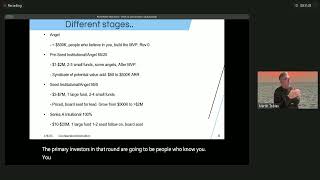
You have one job as a CEO: don't die. Don't run out of money.
A conversation between investor-operator Martin G. Tobias and host Christine covering founder mindset, hiring, fundraising strategy, and AI tools for founders. Key messages: cultivate curiosity and resilience; founders must be willing to do the hard work (‘eat sandwiches’); the CEO’s primary job is to avoid running out of money (three levers: raise, sell, cut); avoid structured financing that gives minority investors override rights; build syndicates based on complementary VC value-adds; hire the right early people and paper founder agreements (vesting, cliffs). Also discusses AI tools (digital twins, no-code development), poker as a metaphor for risk-taking, and book recommendations (Thinking in Bets, The Obstacle Is the Way, Power of Now, Viktor Frankl).
Chapters
Up the hill again, even if their last one was failed, then they understand the value of the sandwiches. I got that analogy from Mark Manson. I don't know if you ever read his book, the Subtle Art of Not Giving a Fuck.
Yes. That was the first book I've read. When I got into big law, I was like, I need this.
It is amazing. Yeah, he has that story, like, you know, when he was in high school, he's playing guitar and he wanted to be Aerosmith. And so his image of what it meant to be a guitar player was the Aerosmith guy. But the problem was from where he was at, which is, you know, jamming in his basement with his friends to Aerosmith the sandwiches he had to eat along the way. Schlepping his gear to a location, begging his friends to come to, you know, things. It was such a long way between there and his goal. And he didn't like the work along the way. You've got to like the work along the way. You can't just have this idea of, I'm going to be a unicorn founder. I want you to love the work. The hard work you have to do along the way. If you don't love that hard work, you're not going to make it to there. So I try to look at a lot of flags around. Are you going to really excel at the hard work from here to there?
And I wanted to bring up what you and I were just discussing before the show started. It's about attitude. The. The difference between curiosity and being defensive. Facts are the same. Right. Is whether you're looking at the question or that sandwich is that it's the obstacle on my way to happiness. And it just, like, annoying or it's a blessing. It's a key to the door that leads to the second door. And I cannot wait to open this and go through this.
Yeah, yeah.
It's like there is this. When I was preparing for the bar exam, the teacher gave this example that there are two kids, and one kid saw the horseshit and is like, oh, my God, Mommy, there is a pony here. There is a pony. And the other one was like, it's.
It's. Yeah, yeah. You can decide. You want to test your. The people you're talking to. Where does your default mode take you? Does it take you to curiosity and there's a pony or does it take you to. This is a pile of that is ruining my day. If you see them going to. It's a pile of that's ruining my day. This is not someone who's going to be successful in the startup journey because you're going to see piles of every.
Day, every day, multiple times, and then you see ponies, and then you see multiple. And you go through the highs, the highs, lows, the lows. I think it's very. It's very true. Yeah, yeah. I know that you changed a lot. Burning man played a role in that and you were the defensive guy maybe in other areas of your life. How. And now you're like, okay, I'm gonna suffer. Oh, it's a blessing. How did you switch and how founders can learn from you in that sense?
Well, you were not born with the curiosity. No, I wasn't really born with that curiosity. Maybe a little bit. But one of the things I told you the story, I won't repeat it, but about 15 years ago, I had a major decision to make in my life and I had something that happened that I thought was kind of bad. And my initial reaction was, this is bad, this is terrible. And I talked to a friend of mine and they said you actually have a choice in your reaction. Your initial reaction is that this is negative. But do you know that you have a choice to decide that this could be a positive thing in your life? And simply the knowledge that I had a choice that I could change my reaction to external events was a huge insight for me. And I want to see founders that have learned that lesson already, that they realize they can take facts and change their reaction to the facts to be positive or negative. And, you know, their mindset, that they have an option to have a different mindset and that. Your mindset, what your default mindset. If your default mindset. I'm trying to figure out with founders, what's your default mindset? If your default mindset is I'm a victim, the world's out to get me, things are hard, life is hard. This is not a very good mindset for a startup.
It becomes a self fulfilling process.
It becomes a self fulfilling prophecy. The mindset you want is I have a choice of the reaction can, you know, choose to react to things in a positive way. I can choose to see obstacles as opportunities. If I choose to see obstacles as obstacles, they will be obstacles, they will be obstacle. They will be what you choose to decide them to be.
Yeah, yeah. My whole life, it's just like those decisions even I shared with you when my dad passed away. Although it's objectively horrible, like what can you find good in it, but to also be objective, I completely switched my life. It gave me this courage to Be brave. I left Big law. I started my own thing. And when people ask me like, where did you get this courage? I'm like, from that that happened to me that transformed me in ways that I wouldn't be able to transform myself. So silver lining is also always there, even in the horrendous things. When someone you love dies from cancer at the age of 56.
Yeah. And many times people don't realize they have a choice to look for to decide the silver lining. And I'm looking for people who have found a way to do that.
One book that I would recommend, Viktor Frankl the Search of Meaning. I've read this book and also Eckhart Tolle Power of Now.
I love that one too.
Yeah, that's one of my favorite books. Like I think the Viktor Frankl book really helps you to shift the change the lenses. And if someone who was in like holocaust and could have a positive mindset and survived like you can't survive this startup journey. No one is killing you here. You're not dying.
So it's I love those two books. I've read both of them. They're on my reading list for pre seed founders. Two other books that are is Ryan Holiday's the Obstacle is the Way, which is definitely the stoic teaching of that. And another one which I haven't heard recommended a lot but which I love because I'm a poker player is Annie Duke's Thinking in Bets.
Okay, I'm going to write it down.
Okay. Thinking in Bets. And the reason is because a startup founder you basically have a limited amount of resources, however much money you've raised and you have to decide every day do I deploy capital in this way or that way? And you're making risk adjusted capital deployment bets over and over again. Which is exactly what a poker player is doing in poker playing. You've got two cards, you have to decide what are the odds that I'm going to make money? Do I put money into these two cards or not? Then you get three more cards and you have to decide are my odds better or worse? Does more information. And it's very similar to starting a startup. You have an idea, you build the first version. Is it good? Is it bad? Is what's the customer feedback? Is it positive? Do I put more money at this strategy? Do I pivot? It's the same thought process that poker players go through risk adjusted capital deployment decisions with limited resources over and over and over again.
Now I know why. So my friend, he's a co founder of Doordash So he is also. And I think it's similar to dating in a way.
It is, it is. Yeah, it kind of is. You know, LLMs now can help with that. Like, I actually wrote some prompts. I'm starting to publish these for founders and I recommend that you use them and have a prompt that will say you prompt 03. I'm going to pitch, you know, the person's name at their fund, research everything, tell me their thesis, tell me what they've invested in and tell me the five questions they're likely to ask me and tell me the two things that they care about in investments. Because you can probably find that when AI goes out and reads all their blog posts and what should be my questions to them. And that prompt will give you a great format to have a really productive conversation with the VC and will help you get a higher chance of success with that VC. I think you should do research on your VCs and come prepared with questions and understanding of what they think is important in the world. And if you fit into what they think is important, it could be a good fit. It's a magic. It's magic when it happens.
Honestly, full disclosure, that's how I prepared for our meeting because I am slammed. I don't have my assistant this week. So what I did at like at 11pm I wrote exactly that prom to analyze all of your social media and then give me the facts, give me the introduction, the questions and I highlighted the purpose. I want this interview to be valuable for founders specifically. And then it gave me the facts. The only thing that I did is give me the links to the facts to make sure I'm, you know, it's correct. And for example, we went into the detail like did the second IPO happen? Or like was it successful? You know, but the rest and like, wow, that work is handled by my assistant. But now just you can do it.
In, in, in chatgpt now. And it's, it's amazing. It's going to really help this low probability matching game, help people with like interest find themselves and be much more productive when they do finally meet. It's going to be great.
Thank you. That's a great advice. Yeah. How has been an operator shaped the way you evaluate founders?
I have a video that I send to, you know, stealth founders and one of the things I say is I've been in your seat. I've been at the beginning, the starting gates of something from 0 to 1, from 0 to 1. And you know, I understand the challenges and I Think I can help you. And that message is really resonating with a lot of founders because they've had, you know, the meeting with the MBA from Harvard at the associate at the big VC firm who comes in and ask him spreadsheet questions and stupid stuff that he got in a case study from Harvard they're going to get from analysis, from somebody like that versus somebody that's been an operator. So I definitely, I mean, I have a bias in this. I think I, you know, because I've run three companies can help that zero to one phase really well. But there's definitely, you know, things that I can help. I do webinars on telling you how to hire your first 10 people. Hiring your first 10 people is different than hiring employee 200 to 300. Yes, it's very different. What you have to think about. And yeah, I've got some great feedback from my founders saying that the fact that I've been an operator and that they can ask me operational questions that they might not be able to ask the Harvard MBA guy has been very helpful. And I think the smartest founders now are seeking out operator VCs. Maybe not as their only VC, but they're putting together. The really smart founders are saying, okay, what is each VC's unique value add? And creating a syndicate that has the things they need. For example, my primary value add is I help you raise your next round because I'm an LP in 17 funds and I've raised $500 million myself. So I can make warm introductions. Maybe there's another VC that focuses, they run a recruiting firm and they can help you hire people. So you should have a VC that can really help you on hiring. Then maybe there's another guy that's a go to market expert. There's a fund called the Go Market Fund and their value add is all about go to market resources. So I think the best founders today are looking at the different VC funds that are out there and saying, okay, I'll put together a syndicate of three or four funds that all have different value adds. And that in total is going to really accelerate my company. You know, sometimes with the larger funds you can get all of that. If you get money from Andreessen Horowitz, they can help you with everything. But in the pre seed, a lot of times you're putting together multiple VCs and you should understand what their value add is and put a syndicate together that has three or four different things.
That's great. So it's basically replicating on a16z's platform, right, that they have all of the hired people, they've got hr, they've got.
Press, they've got, you know, all sorts of things and they're, they're a great platform but they're, it's also very difficult for them to do the very early things. They really want to write a larger check. That's another reason why I love doing pre seed. If you look at the, the, all the unicorns that were created, I don't know, 1700 or something like that, something like 72% of them were their series A was led by a tier one firm, one of the 10 biggest, you know, Sequoia and NEA and Andreessen or something like that. But if you look at the pre seeds of those same unic, less than 5% were led by a tier one firm. So what that means is that if you have a billion dollar fund, you can't write a million dollar check. It's too small. So those million 2 million dollar rounds are done by small firms like me who know the partners at Andreessen who are going to introduce them later. So really, you know, your first round is unlikely unless you are a second time unicorn founder. Your first round is unlikely to be led by one of those platform companies that's so smart.
And from that from 0 to 1 before you hit that product market fit which you need for series A, you need to be very scrappy with people who you bring because you can't afford hiring top world, world's top talent. So but venture investors with that experience, they're probably likely in top 1% of the world. That's why they're like, you know, venture investors. So you kind of get to outsource those things and you have a small team and you use everyone, every opportunity to build the business with all of the areas where you need to succeed. I think this is genius that you know, when you think in marketing or go to market, I don't know, legal, whatever it is, you truly can collect a great group of people. I think it's really smart. Thank you. What red flags do you see early that other investors might miss?
I have a whole list of red flags. The biggest one I look for is a defensive or reactive CEO. I in the first call will ask some slightly rude, slightly hard questions to see what the person does and if they're defensive or reactive. And you know, I'm like, well what if, you know, the normal question is like what if Google does this? And if they're completely dismissive and they're like Google could never do this. And I'm so much smarter than them and they're stupid and I don't want to hear that. What I want to hear when I ask somebody a slightly offensive question, I want to see curiosity. The best founders I've found are ultimately curious about everything and they are challenged in a good way by hard questions as opposed to being defensive. Yeah, right. So a founder who's defensive in the beginning, I think that's a huge red flag for me.
Because they don't learn, because they don't.
Learn, because they're going to be closed minded, because they're, I mean the, the startup journey is just a bunch of fucking shit sandwiches coming at you all day long. And if you are not good at handling sandwiches, like if you don't love sandwiches, you're not going to be a very good CEO, you're not going to be a very good founder. You're going to be, I mean, another red flag for me is first time founder leaving big tech, leaving Microsoft, leaving Google, something like that. First, first time, if they've been there, they were at Google for 10 years. They're like, now I'm a startup founder, I'm like, I'll let somebody else fund you and when that one fails, maybe I'll fund your second one. Because I remember when I was running Laudai Technologies, I hired a guy from Microsoft, he's a vp, super senior guy, great resume, and he's like, I want to do the startup thing. And he had this image in his mind of what the startup thing was being like CEO. Yeah. He's like, it's gonna be so cool and you know, whatever. And he comes in, first day, he says, where's my assistant and where am I Engineer.
Yeah.
And you know, why is my office not, you know, whatever? And I was like, you don't have a assistant. This is a startup. And it was a.
You haven't earned it.
You have. It was a culture. It was a brain shift from the everything's provided for me, free lunch and everything to I have to go, like make my own lunch. Like a lot of times that brain shift is a red flag. It's a red flag for me if the person has never had a startup experience. I mean, I tend to think that's a flag, especially if they've had a very successful career at a big tech company. Like I looked at a guy, I've talked to three companies that were started by former McKinsey partners and McKinsey is like the oldest of old school technology consulting companies. Or whatever. They were horrible. I would never fund them just because that consulting, that big company enterprise consulting mindset is so different from what it takes to be a scrappy startup that I just didn't think their brain could make the switch.
I relate to this. This week I've been interviewing. So I only hire ex big law lawyers.
Sure.
And I've been interviewing them and you know, some of them, like I want at least 300k. I was like, then stay where you are. That, that's it. The pain and the meaningless of your life is baked in, in that price. If you want to take. The only time you get a reward is when you take a risk.
If you.
And now you're being adventurous but with the same salary, like, sorry, it doesn't work like that.
It doesn't work like that. Yeah, it's testing. Do they really, really have the risk appetite or do they have this media idea of what it means to be in a startup? That's why I personally, I mean a first time founder is not a red flag to me if they have done some other proven entrepreneurial, hard things. But second time founders tend to get it because if they're willing to run up immigrants.
So he obviously took a lot of risks. And now after exit, he plays poker like, you know, high stakes.
Absolutely.
And now it makes sense. It is kind of the same. The same thing.
It is very similar. And you know, it's funny, I've also noticed that most poker players or most founders or different people that work in the company play in a similar way that they make decisions in their business. I remember I flew to Sri Lanka to meet a founder and I played poker with the founder, the cfo, the cto, a programmer. So it's a whole table and the founder played different than the cfo, which you actually want. If you see a CFO should play poker in a very conservative way, should enter very few hands, should not bluff. And if you see a CFO bluffing, you're like, maybe that's not the right cfo. And if you see a CEO not bluffing, you're like, maybe he's not the right CEO. Like a CEO should take risk adjusted bets should push the limits a little bit in a calculated way. And you want to see CEOs playing that way. You want to see CFOs playing differently.
Yeah. I recently went to hassle fund camp and at night we were playing. You also were there.
I was there, I didn't.
So I was playing. At night we played poker.
Yeah, yeah, yeah. With Mike and Those guys.
Yes. So I won the.
They did not invite me on purpose. I was really bummed about that. Mike said, we're playing and you're not invited. I'm like, why am I not. You're too good.
I was like, okay, maybe universe was trying to help me to win.
I think the universe was. You won. I heard that. I heard that.
And the way I played, I was the one, like, you know, who put the poker combinations on the phone or like, on.
On the phone.
Yeah. And people like, oh. She's like. But I'm like, I just don't memorize information I don't need. Like, this is here. And yeah, I am playing all in. I'm like, this is $100. What am I have to lose? And obviously, I do calculate that, like, you know, the first two cars should be good. And if I see someone is bluffing, I don't want to put all of my money on, like, this crazy person. I don't play their game. But if my cards are good, I'm like, okay, I'm. I'm going. And the biggest thing that I won, I bet on this last card, on.
The fifth card, the very last.
Yes. And the guy who's really good at poker, he saw that and he analyzed it. I was like, I did not have the analysis. I truly go out of, like, my gut feeling. And that tells me everything to myself, like, how I make the decisions that I'm like, I'm just. I'm just going to go, yeah. And there were conversation because really cool people at the table and some of the things I would just like, you know, I'm not going to double down because I want to have a conversation. I want to enjoy this, but when I focus, I go all in. And that kind of like how I probably.
That's.
That's.
That's also can be a good strategy if you're willing to. It's actually really hard to play against somebody that's willing to go all in if you're not willing to go all in. And I make sure that founders understand that, too, if they're willing to go all in against competitors and their competitors are more conservative, it's probably a good strategy at the right time. I mean, you don't want to lose all your money, but you got to be aggressive, especially in startups. And that can work well in poker, too. It works well in a game where it's $100. It's a little harder if the game's bigger and I place it. Last night, I was playing 1025 for a $5,000 buy in. It was good. You want to be a little more conservative when it starts to get to be material amounts of money.
Yeah, when it's material amounts of money, I am more intentional number of bets. Yeah, I make less of them. Yeah. But you know, like how in life when building a startup, my strategy is that, you know, I always can get a job and as long as I don't, don't go into debt, like, I'm all in because what do I have to lose at the end of the day? Right. And I know that this is a competitive advantage because especially when you compete against incumbents, no one there is going all in.
They're not going all in. They're cashing their check, trying to make their mortgage. And that's another reason why I love startups, especially like you mentioned, I was an early investor in Deal, and the reason I invested is that I had used. The incumbent at the time was Trinet. And Trinet was owned by private equity firms. It had like 80% share, but it was an old company that was not innovating. They were cashing the check. And I'm like, I want to compete against that company. I want to build something new and take some risks, build some new features, because they're going to be slow. They're going to be. They had a really low nps. Any kind, Any business that, where the incumbent has a really low nps, where everybody hates the incumbent, but they have a lot of share. I'm like, I want to fund somebody to disrupt that person because that company is resting on their laurels and it's almost like Monopoly.
And you can disrupt that.
You, you can.
Yeah, that's what I feel about legal industry. Honestly, like, no one is innovating at all because it's like a tricky industry.
But, but it's very. I like what you're doing in part because, you know, AI can certainly do a lot of things, but the inertia in that industry, their business model makes it really hard for them to innovate because it's the hourly billing model on the person. And for them to fundamentally change their business model is really, really hard.
Yeah, I agree with you. And like coming back to the point that going all in, that is your competitive edge that those folks won't have. So you gotta, you gotta go all in and obviously like have emergency fund a little bit. Have, like have something. But yeah, I think it's really helpful when, you know, and you know, I think in terms of my plan B'S and my whole life I go all in. But my plan B's, like, they improve. So when I, for example, when I was living big law, my plan B was like, come back to big law. And now my plan B is tech enabled law firm that is just like a couple of million dollars a year. So when I was moving from Russia to the United States, my plan B was go back and get a job. So, like, those risks where you take what I found out throughout my journey, I've always been taking risks that it's actually fear is an illusion. The universe, I don't know how it works, but somehow it really loves people who jump into the abyss. All in. It's almost like law. I don't know how it works, but I swear to God it works. If you jump into the abyss, you're not gonna die. There will be like a cushion.
Yeah, yeah, absolutely.
Maybe not the full road, but you will. You will land softly and there will be another step. Another step, another step.
Yeah.
That I promise.
It is true is I have never had anything turn out as bad as my imagination had. It's always turned out better than my imagination. Because your brain's job is to try to keep you out, you know, keep you safe. And it catastrophizes. And it doesn't help to catastrophize. It's never turned out as bad as it could imagine.
And I think the books that you and I recommended, especially Power of Now, that which really helps you to feel grounded. Like highs, lows, especially lows. I truly take one step at a time. Today I felt, you know, there are a lot of, like, financings happening. It's like, okay, I cannot do yoga. One hour. I'll do five minutes. Five minutes I can do. I cannot meditate for 20 minutes. Four minutes.
You can do four minutes.
I can do four minutes. And so like, I took those days where you feel overwhelmed, like, one step at a time. And you don't think about, like, what is ahead. You just like, what is inside of my control. My to do list today. And it really. The next step appears.
Yeah, yeah. That's what the stoics talk about, is focus on what's in your control. And most of the unhappiness in your life goes. Comes from focusing on the past, reliving a past trauma or worrying about the future, neither of which are here.
Yeah. It's just like, is this problem in the room with us?
Is it? Yeah. And the vast majority of unhappiness is because you're worrying about something that happened. You're reliving it voluntarily, bringing back past trauma and reliving it. Or you're worrying about something in the future that may or may not happen, that hasn't happened yet. And if you kind of reduce those two and just focus on what is here, you're going to be have a much higher probability of being able to be happy because the only thing you have is right here, in fact. I mean, you can worry about the future all day long, but it's not here. And it's unlikely to come the way your brain is imagining.
I have a very specific example where being present, like, gave me magical abilities. It was during the bar exam. It was 2015. I didn't speak fluent English. The words on the bar exam, some of the words non legal, I didn't know. I literally didn't know. For example, if I don't know that this is a mug, right? Like, okay, there is like something with liquid like on the table. The, the book power of now. That's when I've read it. And in three weeks, you like a superhuman. You hear, you see, see, you navigate using the path that no one else sees. And so on the bar exam. So first I used that. Then the time was stretching out. And another thing that was crazy because I was really present, focusing on my breath, and there was instruction going in that, you know, the, the assays take 60% of the final score. I knew that information before, but now it's sounded louder for me. I was like, okay, we have the test, we have the essays. Essays is 60%. Knowing that my English isn't perfect, so I don't type fast. I. What I did, I put D's on the test and I spent all of my time on the essays and I passed.
Awesome.
And I could not have done it by thinking, you know, projecting. It's only in the present moment where you see opportunities that another person would think it's crazy. You're changing the strategy that you've been practicing for like three months. The last minute it makes zero rational sense. But you have like almost animal intuition going on when you're present. I highly, highly recommend implementing that, especially at the stage of 0 to 1. There is no law. Reasonable. It just doesn't exist. It's a lot about your gut feeling and connection to the customer that you feel like almost physically. When I hire people, all of them come through social media. I have goosebumps when it's the right person. How can you recreate that? It's just impossible. And maybe the strategies later with the Spreadsheets change, but I think from zero to one, it's this visceral connection.
It's much better. Yeah.
Yeah. Okay, so this is your experience. Yeah. Okay, Tell me, what is the biggest mistake you made as a founder?
The biggest mistake I made as a founder was raising too much money at Imperium Renewables. I was building a biodiesel refining company. I raised $270 million. My last round was $125 million Series C. And we put structure in it. We had a 2x preference, and we gave them override on change of control. And what happened was we had the thing. We got it filed to go public. In the Bake Off, Morgan and Lehman were the joint books, and they said the valuation is 1.2 billion. And our series C had been at like 400 million. They put in 125. So they said 1.23x. Happy. Right. So we go through the SEC took us a little longer to get through. The market had sort of degraded by the fall of 2008. And when we're in the cap markets meeting right before we were supposed to launch, they said, well, the valuation's 700. So 700 was not even 2x over the $400 million. People that came in, since they had an override on change in control or new stock options, they said, wait a quarter. They canceled the ipo. Those two investors that I took their money on in a structured note overrode our decision to go public.
Wow.
And then the. And the IPO window was sort of sliding close. It slammed closed. They recapped the company three months later at a $50 million pre. So the biggest mistake I made was getting too much money with structure and having a cap table that was. Had different motivations. So my early people were like, yes, go public. My later people were like, it doesn't meet my threshold. No. And they had an override. If you're a founder, if you can avoid it, never give any minority class of investors an override on any major decisions in your company because they. Goes back to the first thing you asked me. Understand the motivations of your investors. That Investor had a 3x return profile with a B in the thing. The minute it wasn't a B, they became a problem. But, you know, they were a minority investor, and they overrode what the management, what all the other investors thought was best for the company, and it turned out to be very bad for the company.
How did you agree to 2x liquidation preference? Was the market really bad?
The market was hard.
So the video that recently became viral and Mark Cuban commented on it. It was like very similar situation where 2x liquidation, preference, participating, preferred.
And yeah, if you get into that, you might be tempted to do it as a CEO. That's the biggest mistake. Don't take structured financing.
So what do you do?
I don't know. What would I have done then? I would not have. Well, the company wouldn't even had the option to go public if I hadn't have raised that money. I don't think that's.
That's the thing.
It's a tough scenario.
It's like choosing between the worst and horrible.
There's bad options. It's tempting to do it. I mean, I did it. Would I do it again? I would do everything in my power to. Not half my feet at the, the fire, but at the same time, if that were my only option or my best worst option, I probably would have taken it again. Just because it's money, like you raise money when you can. As a CEO, you're you, I have a thing. I tell my founders, you have one fucking job. As a CEO, you know what the job is? Don't run out of money.
Don't die.
Don't die. Don't run out of money. You have only three tools. You can raise money, you can sell something, you can cut expenses. There's nothing else you can do. All this about culture and blah, blah. It doesn't matter if you don't have enough Runway if you run out of money and you, those are your only three tools you can raise. If you can't raise money, you have to sell something, you have to cut expenses. There's nothing else to do. You have dwindling resources. So understand those are your only three tools and try to see how you can put those together and in a way where you don't run out of money.
One thing that I do want to bring up because I was definitely like similar to you in that sense, but through my experience, I realized that people play huge role in the revenue part. So when I was starting, I was starting as a one person. And then I hired my first person who came to me through LinkedIn, where I even didn't need her. And I think only because of her, I was able to 3x my revenue because I was able to go and create, actually, I was able to first two days rest and think like, oh, I'm bored. Then I created the products. Then I like relationships. I don't know, I think it's also luck. But people, especially your first five, 10.
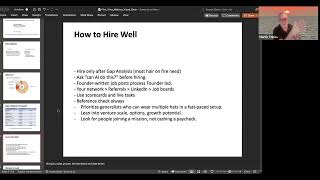
People, it's like, oh no, your first five and 10 people are very important and you know, you should fire people that don't work out, you know, quickly and so on like that. But I mean hiring the right person who can 3x your revenue is, is a better use of your time than taking three more pitch meetings with a VC to try to get them. Because that, that would be raising money. Like so there are different choice. Again, it goes back to thinking about and where do you as a CEO spend your time? Do I cut expenses? Do I hire people to raise revenue or do I raise money? I say spend as much time on moving your top line as you can because that money that you raise is going to be expensive. And if you have raised money, you got to make it last as long as you can. Too many founders that I know, especially if they're second time founders, they're like, oh, I'm just going to raise a giant amount of money and everything else will work out and it doesn't really matter who I hire because I have a lot of money. That's not a great strategy. You got to be parsimonious with your money no matter how much money you have.
And especially I think in the age of AI, there is no need for so much money.
Yeah, yeah.
It's about distribution.
Yeah.
Which money don't really solve the distribution in a sustainable way?
Not really, no. I mean that's why I'm excited. I mean I've been investing for over 30 years and I'm more excited now about pre seed than ever. Because you know, a lot of people don't realize, you know, what the total amount of venture capital that was raised by the Mag 7, excluding Tesla was before they went public. So $120 million. Microsoft raised one round $1 million and it's worth $3 trillion. Google raised the most. It was like 50 million or something like that. But there have been. The Mag 7 were created with the exception of Tesla because they had all the capital equipment for the car factory, very efficient to create companies. And we're going back to a time I think where that can happen. The last three Pre seed rounds that I have been in that were all between 1 and $2 million were all 2x what the projected burn to cash flow break even. They could potentially be one and done rounds. Now not all the companies will make it and whatever, but I really appreciate the change in attitude here that I'm seeing in founders, is that no, you don't have to raise $100 million and that's the other reason why I like B2B software, in consumer, you do have to raise a lot more money because you're brand building and all of that stuff. But in B2B, if you can't get a profitable company with a couple million dollars in revenue, you're doing something wrong these days.
Yeah.
A couple million dollars in fundraising.
Yeah. Yeah. I. I was able not to raise anything and it is much harder. I agree. But with AI. Yeah, it sounds gimmicky, but if you just put your time into using the AI tools. For example, I'm hiring my assistant computer science grad to automate the system.
Oh, absolutely. No, that's great.
And that will serve you forever.
You can get so much farther now.
Yeah. Before you have to build for a couple of years to get a good product.
I have a company in Africa, it's a fintech company. They raised $400,000. They got to $100 million in gross transaction volumes. Transaction thing with $400,000 raised.
Wow.
It was crazy.
I love it. I love it. Also hiring abroad. Hiring abroad. Yeah. It's super cool. Okay, so the times are changing. I'm super excited. Excited about that. What are the mind blowing AI tools that you think people need to check out?
A couple. I've been farting around with some of these no code things like Bolt New. I just built some risk management tools for my public securities portfolio in Bolt New. I like that it's a chat interface that writes code for you. Is it good?
Because I saw it on you Twitter and I sent it to my CTO and he's like, I don't want to stare at the black box. I want to see my code.
I think it's hard for a lot of traditional developers to get behind that, but I like it as a no code tool. That and replit are probably. They've really, really changed the game in terms of developing applications pretty quickly and they're very good. The other tool that we were talking about a little bit before, certainly for VCs and any influencer or anybody that has a big audience where they might ask you a lot of questions, is Del Delphi AI. And that will create a digital twin for you. And I have one of those on my website and I used to get like 50 or 60 Twitter DMs a day with founders just asking me questions. Do you invest in crypto and do you like this? And can you review my deck? And I created this digital twin which is trained on all of my blog posts, all of my podcasts, all of my Twitter feeds and founders can ask that a question, and it's 98% correct. And I get about 200 people a day that have a little chat with that. And frankly, that's very useful because it saves me having to answer all these random messages, but it also provides value to the founder because they get to get actual real accurate answers that I might give them if they did ask me a question. And that was pretty mind blowing too, is that a technology could do a 98% good job of answering a question the way I would without me having to do anything. That was. I thought that was pretty mind blowing.
I was actually trying to convince Naval to do the same, and he's like, no, it's like a parrot. It like doesn't produce anything new. I won't do it. But I'm like, I would chat with your parrot because, like, I have limited access to you.
Well, exactly. That's. That's just it. Yeah. I mean, he, that parrot's not going to come up with some new pithy stang, but it certainly can answer. You know, one of the things challenges I have as a VC is that I get a lot of times from founders the same question over and over and over again. And I'm like, I've answered that on podcasts. I've answered that in my. Why didn't you read my blog post? But with this thing, they can ask the question and they can get the answer that I've already said, and it saves everybody time. I personally think it's very useful.
Okay, let's do the rapid fire found around. So a book every founder should read.
Thinking in Bets by Annie Duke.
Biggest myth about being a startup CEO.
That it's all glory all the time.
And it's not a myth.
That's not a myth. That it's easy.
That it's easy. Okay, one founder trait you can teach, but always bet on.
Can't teach, but always bet on resilience. Being able to take a punch and get back up.
If you could go back to day one of your founder journey, what would you do differently?
I would choose my co founders better. I had to fire my co founder within six months.
Okay, can you tell me more about that? What?
The first company I started, I at the time, I owned a nightclub in Seattle. And, you know, we had a VIP lounge and I was hanging out with a friend of mine who was a video producer, and we were drinking and he's like, we should start a company together. And because we were drunk, it sounded like a great idea. So I'M like, cool, let's do it. And then the next day we're like co founders and. But I didn't really know that much about how he worked and his work ethic and stuff like that. And frankly, I put up all the money. And it was a company called Laodai Technologies. I put up all the money. But luckily I wrote an employment contract where I said we're going to work together for six months. And at the end of six months, if for some reason, you know, we don't like each other, you know I have the option to terminate the deal. Luckily I put that contract in place because it didn't work out. But if you're going to start something with somebody, I would say spend a lot more time with them than and really understand how they work. And if you think you're aligned and even if you don't have ability to do that or even if you have worked with somebody before and you think it's going to be great, give yourself the option about six months in to refactor the organization. I see this problem a lot where two guys, they'll go in and start a company and they'll be 50, 50 in equity. They'll work together for six months and then they'll realize that one guy's doing all the work and then they'll have this big breakup and the guy's like, well, I still have 50% equity. I recommend most founders, if you haven't worked with somebody together really for and you like totally ready to be married to them, give yourself the option to refactor the relationship after a period of time when you start it. I think that's a big error I see in a lot of founding teams is they go in all like, like a marriage, like everybody's happy but very soon they find something that's wrong and they have to refactor it and just realize that's likely to happen and give yourself some flexibility to do that. When you start a company from the.
Legal perspective, you must have vesting schedule.
Vesting schedule.
One year cliff.
Exactly. At least one year cliff. And be absolutely brutally honest with yourself when that cliff is coming up. Because the last thing you want to do is be stuck giving 50% of the equity to somebody that you don't want to work with anymore.
Yeah, and there are many examples. Like there is a public one gov works. The founder worked for 5 months and he was paid 700k to close the round because he was not working anymore. I currently have a founder 15 debt equity on the cap table anything that more than 5% debt, equity, your cap table is messed up and investors won't invest unless you're really hot deal. Right. Unless you like Elon Musk. So it's so important to paper that up and it's so important to issue that stock correctly because actually there was an example solo founder, Series A in the middle of financing, realizing the equity wasn't issued.
Had that been issued. Yeah.
Yes. So like you, you think you have this agreement but there should be board consent, there should be stock purchase agreement. It all has to be papered up perfectly. And it's, it's very you know, like basic. But I'm surprised how many times people get it wrong.
Yeah, yeah. Especially in pre seed people are just handshaking everything. And I think you should tie up your legal stuff and have your optionality covered sooner than you think.
Yeah. We even have a startup due diligence package which is exactly meant for people who did, I don't know, clerky, legal, zoom, stripe, atlas, whatever happened there. So before you raise even like a seed round, you come to us, we scan, we give you due diligence report and we fix things for you. And that saves like I bet.
Yeah.
It, it saves so much in the, in the deal. Yeah. Because every, every time people come to me I'm like the same thing again. So we build the package and we automate it and all I do now like I educate people that about all of those mistakes because they're so costly. 83B election, so costly. It's just like it could be millions of dollars. That specific founder in series A who didn't have the stock issued properly. 500k I believe. And it is a loan that will be forgiven by the company. But you're still on the hook for 50% in taxes. So if everything is good, obviously it's good. But if everything is bad, you will be on the hook for half of it. While things are not good, like you do not have cash. Yeah. And there is no like it's, there's no good option here to fix. So the last question is how do you choose the co founder? I have my own little things like nuggets that I've been collecting. But I'm curious what are your nuggets? And I'll share mine. I'll go first for me excellence, the skills. Like right now you are fit to build whatever we need or to sell. Then ambition. I'm aligned on a billion dollar outcome. If I hire or if I partner with someone who is not, there will be tension. What problems I was solving, what we're saying no to. And in the middle part for me, what I found out that I didn't know, it's my new learning is that you just have to really enjoy being around that person. Energy vibe is vibing. You can't explain it, but it's like that person gives you energy. If the person sucks energy out of you while nothing bad is happening or, you know, then the energy won't match. You will have to navigate this together. And if someone is taking the energy, I think this is a, this is really important. So three things for me. I'm curious to hear yours.
What I look for in founders and in a founder.
Like what if you were choosing a founder now? What are the X, Y and Z things that you like? It has to be check.
For me, the most important thing is proven resilience, proven ability to eat sandwiches and like them or find obstacles and overcome them in a positive curiosity way. You know, no victim mentality, no reactivity. So resilience. And then the second thing is some unique insight into the problem. And that typically comes from, you know, like in your case, you were a corporate lawyer for a long time, you saw gap in how corporate law was being delivered. You saw a unique technology approach. So what's your insight into the problem? And then secondly, having some trend or, you know, insight into why now and why is the solution capable now? So deep understanding of the customer problem and then insight into something that has happened recently that allows you to solve this old problem in a new way. Yeah, and typically that might, that might be a technology thing, it might be the AI LLMs. In your case, it might be something else, some mobile thing or something. And typically you would be able to deploy that insight with another founder. Like the fourth thing for me would be that the founders has proven their ability to recruit other people along their vision who are also smart. And typically, if it's a business founder that's being able to get a PhD AIML person to leave their Facebook job and join you on this thing, they have to prove that they can't just convince themselves or a vc, but that they can convince other people, arguably smart people, to join the cause.
Yeah. Yeah. Thank you so much. It was Martin Tovias.
Thank you, Christine. It was really fun.
Thank you so much. It was amazing.
More from Martin





Product and User Experience, how to make a cure and not a vitamin with Greg Raiz