Mehul Nariyawala walks through a new vacuum-robotic mop designed to clean without damaging rugs. Too much suction pulls out fibers, so the machine uses a tangle-free brush roll instead. A self-cleaning mop actively picks up dirt rather than dragging it, and disposable Hapa bags solidify wet waste with gel-forming salt to prevent odor.
Chapters
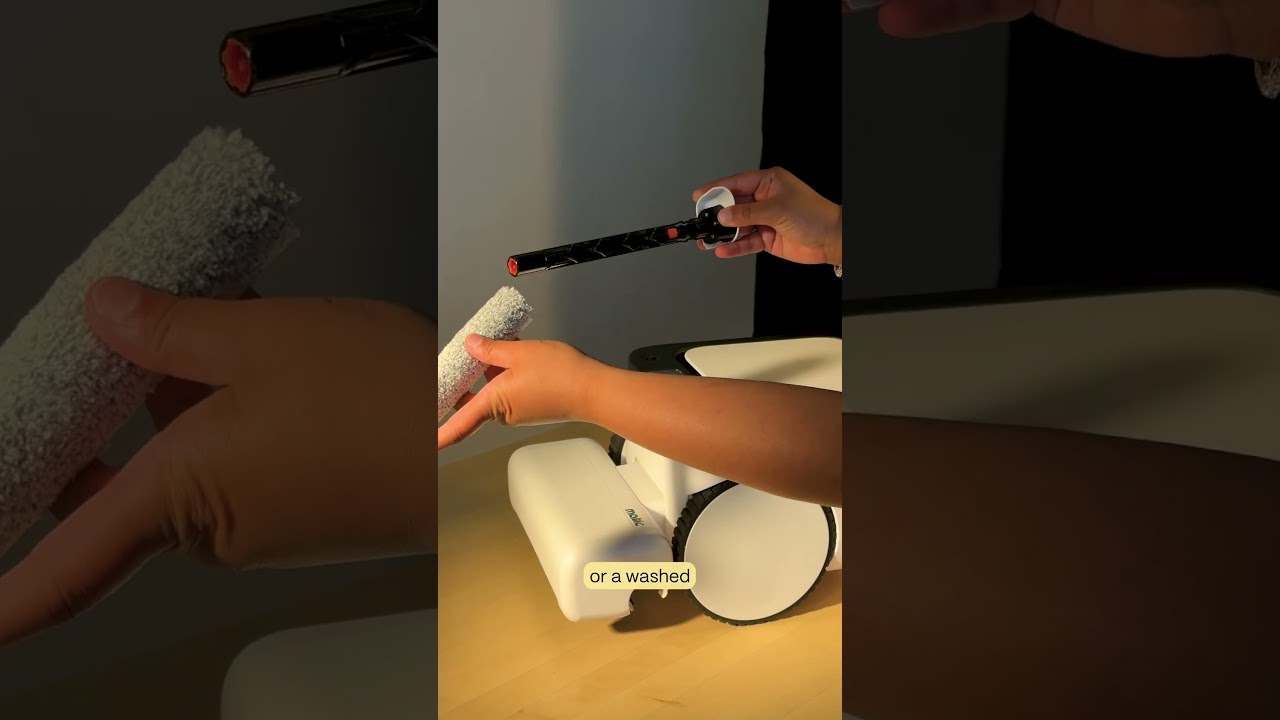
So actually, if you have a really high suction power in your vacuum, there's a good chance it's ruining your rug. It's balding your rug without you realizing it because it just sucks up all the hairs with too much, too much of a power. So what you really need is an amazing brush roll. So we designed the whole thing from scratch, have a first-of-its-kind tangle-free brush roll, which we'll talk about it. We've also added a self-cleaning mopping system, again, first of its kind. No one has this. So we don't just spray the water and drag dirt with us. As you wipe it, it actually cleans and picks up everything there. Then as we were looking into it, we realized that a lot of people have thick pile rugs and hard surfaces, so mopping is a critical feature. But what do you do with dirty water? Yeah. Right? And a lot of these solutions like mop vacs or even latest robots have these big docks where there is a dirty water tank and there is a clean water tank. Yeah. But this dirty water tank gets actually really smelly, moldy. If you leave it alone for a week, you'll probably have bacteria inside it. Yeah. Where do you throw it? It's not necessarily good to throw it in a sink or a toilet. So we actually built first-of-its-kind Hapa bags, which is both— collects both dry as well as wet waste. And we also have a version of diaper salt in it, so it turns into a gel so it doesn't slosh around and leak. But we also added antimicrobial powder, so it kills all the bacteria, never smells. Wow.