$10M in 5 Years From Door Knocking | @pestbadger
Jonas Olsen grew Pest Badger to $10 million in five years using door-to-door sales after COVID shut down his lawn-care business. He pays salespeople 25-60% of first-year contract value, reduces churn by 10% with same-day service follow-up, and scales by starting in small towns before moving into cities. Door-to-door sales for pest control remains largely untapped.
Chapters
Today I'm having an honest conversation with Jonas Olson, who's built a $10 million pest control business called Pest Badger. And he started just 5 years ago and he did it knocking on doors. We're gonna talk about guerrilla marketing and using these not so often talked about strategies to grow your business, whether it be knocking on doors, door hangers, and how to make sense of paying 25 to 50% commissions to salespeople. Let's get started with Jonas. From the Pest Control Millionaire. So maybe just kind of walk me through Pest Badger, the start, the story, the evolution of it all. I've watched your content. I'm sure some people out there have as well, but kind of give us the origin story in a nutshell.
Yeah, I think I started out in lawn care like you, like you did. Young, pushing a mower. Did that for 12 years. It was fun, learned a lot. It was my first business. And my mentor always told me, this will be— this is your first sack, you'll have many more to come. But it was a good business. I learned a ton. And then from there, COVID hit and in Michigan we got shut down.
Oh, right.
Yeah. You couldn't work.
Yeah.
Like we could not work at all. But before that, my idea was to take over like 5 small towns and then get to one bigger town afterwards. And JP was like, well, if that's the end goal, why don't you skip those small towns and just go there? I'm like, yeah, good point. So anyway, so COVID hits. And so it was already planning on going to Green Bay as it was. And then COVID hit and we got shut down in Michigan. Couldn't work at all. Not essential. Couldn't do anything. We could plow snow.
Was it 3 weeks?
4 weeks?
It was 6 weeks.
Yeah, it was, it was like, I remember people freaking out there.
Yeah.
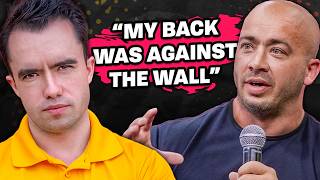
We didn't know like what was coming up. Right. Yeah. No, no. So yeah, I think I waited till like, cause that was like March. So I think I waited till like May and I started, then I started going down there every single day. I started driving and I've never sold in the doors before. All of a sudden my back was against the wall. I had a business up there that been in business for 12 years, couldn't do anything with. I'm like, I gotta go do something. So yeah, I taught myself how to knock doors, a lot of YouTube University, just trying to figure it out. And I got lucky in my first account, like first door that I knocked, their dog was allergic to wasps. And I was like, so I sold my first account, the first door I ever knocked.
So in that moment, did you pivot for pest control almost immediately?
So when I was on the door, I didn't know what I was selling. It was either gonna be fur.
You're like, if you need anything done.
Paint your house, I'm painting your house. Uh, so the name was Turf Badger. And so I went down there because lawn care is my background. Like, I'm just gonna go sell for my first account though. I knocked on the door and I sold the pest control kind of, okay, huh? Like, I can, I can take care of this. It wasn't recurring. I was just like selling whenever I could. I'll be honest with you, just to just get my feet wet and learn.
I noticed that car out front on the jacks. Need new tires.
And then, uh, yeah, from there I think I sold like 3 more accounts that day. And so I was like, okay, I can do this. And so like, I ended up recruiting— I took my operations manager from other company, he came down with me. I held the license for VertPass down there.
So you just canned the lawn care business?
Like, no, I just couldn't do anything at VertPass. I couldn't do anything for like 3 months.
But did you continue on after that?
Yeah, once it— once it—
oh, you did?
Once it comes back, then we start back up. So I'm down there for like 2 months just knocking doors 2 hours away, driving back and forth almost every single day. And so, yeah, I did that for the summer. And then by the end of that year, I had like 400 or 500 accounts. And then the other business got back up and rolling. Everything was going back to normal. I was like, okay, we're in a good spot. Well, at the end of that year, I also got these two businesses side by side.
Yeah. And how far away were they?
2 hours.
Oh, wow.
Okay. And the writing was on the wall.
Okay.
Like, this business is so scalable. The margins are good. I can teach people, other people how to knock doors. I can teach you how to do the service. It's hard. It was like during COVID it's hard time to find technicians too. So I was robbing people from, from my, uh, my old place. And at the end of 2021, and the next year, I had two businesses side by side, and I saw the scalability. And I had the view— like, I knew I was pretty good at my job, but I just didn't have the right vehicle to take me where I wanted to go. And so I come from a super small town. Remember doing like $3 million in revenue with a lawn care company. My town's 13,000 people. So like, we took majority share. Like, it was a really good company, but it just couldn't take me where I wanted to go, I thought. So I was doing pest control. I I had more money in my new company than I did for my old company, one been in business for 12 years, although it got shut down with COVID And that's when I was like, at the end of the year, I'm like, I knew what I had to do and I wanted to sell and end up selling my lawn care company that year in 2021, went all in to Turf Badger. And then it was like that next year, we're like 90% pest control, we're selling pest control in the doors. And then I was like, I'm going to change my name. So I sat down with my marketing team and they're like, no, don't change the name. Like everything looks good online, like you're ranking everywhere higher than everybody else, even for pest control. I'm like, I get that. But like, I'm just gonna call Sally Smith, 5 doors down and say, hey, I own Turf Badger, what do I do? And they're like, good point. Like probably do sod or something. So that's when I changed the business to Pest Badger, went all in on pest control. And so we have, I think, 17 locations and it's our 5th year, so. Awesome.
And so walk me through the 5 years. First one was kind of dialing in, adjusting to the market and the industry. What's been the 5 years kind of since?
Yeah, so the first year is just figuring out how to knock doors, start building a small team. You know, your second business is always faster. You have a little bit more money. You already have a lot of the skills here. You know how to do marketing and sales, all that stuff. So it went faster, obviously. And then once, like, it's our— through our second year, I built, like, I think we had a team of, like, 20 sales reps. We're all doing pretty well. And then they were just getting to the point where like they wanted to have some skin in the game. I was like, I don't want to lose these guys. Because as you know, in our industry, if you train someone really, really well, the first thing they're going to do is quit and go start their own. It's like, because I've had that happen before. I lost some really good guys because they just got capped out. I was like, how could I give these guys a better opportunity here? So like I could just make them a minority partner in their own location.. And so I did that for my second location. It went really, really well. And I'm like, so now we're running like basically 3 companies at the same time, all from remotely. And like, huh. And that's when I was like, I can do this. And that's how it then evolved from, you know, now we had another guy, Dylan, down in Grand Rapids. His mom had got cancer. And so we always planned on moving him back down there because he lived up by me, but it's like 6 hours away. And then his mom got cancer. I'm like, Dude, like, whatever I got to do to get you down there, we'll get you down there. Just go spend the— I just lost my dad. So like, whatever we got to do, like, just go spend the next 6, 8 months, however long she has with her. So we moved him down there. He started knocking doors down there. She ended up passing away like 6 or 8 months later, somewhere in there. And then he moved down there and now that business is like 3 years old and really well. That's kind of how the first 3 or 4 offices happened like that. Then once we figured out that, we started dialing in the system, dialing in the processes, finding the right people to take those leadership positions and then just scaling it up from there.
And do you find like the success of a location, is it hinged like 95% on that leader or that general manager?
At first, I'd say yeah. And then as it, like I said, we want to get those offices to $2 million as fast as possible. It's kind of like you, like you like to get to like $500,000 or $600,000. You have 7, 8 guys there, you hire a branch manager. Kind of same thing with pest control. It's like, no, we can run 7, 8 guys. You have a $2 million branch, have like a lead technician, branch manager. And so that's kind of our model.
And so from the outside looking in, I see the differences a lot on the pest control. Like door knocking is a huge deal in pest control. Like door knocking for lawn care is one of those things like if you have the balls to do it, maybe do it to get off the ground.
But for real, you can sell any service.
Yeah, yeah.
HVAC. I mean, for weed control, mowing, whatever. You just got to learn how to do the skill. And that's, that's probably one of the skills that I wish I had learned earlier on in my career, honestly, sales.
When does the unit economics make sense to do that? Right. So for example, let's say someone that's doing vent cleaning, right? Like, yes, you can sell that door to door. Window washing. Where is— you're like, okay, there's a cost to knocking these doors. Yeah. Having 20 salespeople is not cheap.
No.
Like, take the systems part off the table and teaching them. Assume you do a good job of that. Having 20 people doing sales for a location or multiple locations, um, what are the unit economics of like, okay, if you hit this, then you can— like, is there a certain customer acquisition cost? Is there a certain LTV? What are we looking at?
Yeah, I think that there's a lot, there's a lot to that. So like, it depends how much you pay your sales reps too, right? And so early on, like, you hear these crazy numbers, like these big companies pay 80 to 100%. We're never gonna compete with those guys. We don't want to.
What do you mean by that?
So they'll pay like, they'll pay 80 to 100% of the contract value for a year.
Got it. And then they're, they're only They're banking on—
yeah, got it. Yeah, so they're, they're banking on how long the customers stay there. So the retention team just has to be extremely good, or, and/or they tie them into these big contracts and then they have a bunch of customers that are unhappy.
Hey, it's Mike Andes, and just want to say thank you for watching the video. I wanted to stop here real quick though and say this is a really cool lake. I've hiked up here on the weekend, but, um, when you're all by yourself, it's not as enjoyable. And that's a big part of why we started Augusta Lawn Care, is the community that we call Augusta Nation, to be able to take in moments like this. But instead of being by yourself or feeling alone, they you have people that you can lean on, depend on, and you're part of a community. And so I think that's the biggest benefit. We can talk about the discounts, we can talk about the give-back program and all the things that make Augusta different, but it is the community that truly keeps you going when you really want to quit. And so if you're tired of being in beautiful moments in your business, beautiful moments in life, but not having it to share, having a community to share with, I really recommend joining Augusta Lawn Care. You can go check out augustalawncareservices.com/franchise, talk to Lee, and see if it'd be a good fit for you and for your family.
So yeah, for us, like, we could minimize how much we pay our guys, but they could still make a good living. Or our customer acquisition cost isn't super high, where we could afford to do this and pay them like per service. So we could afford to do it. So that's how, that's how we started it out. It's changed since then, but—
Got it. So now, like, is it a percentage they still get of like the initial year?
Yeah. Okay, got it. Yeah. So usually like the first year they'll get paid anywhere, let's go from anywhere from 25% to 60% of contract value. And then the remaining years, you want to have them like mailbox money or something. You can give like a 1 to 3% overrun. Okay, cool. Remaining years, as long as that customer stays active.
All right. And then the 25 to 60%, what's that based on? Tenor? Is that based upon what services you're selling?
So we base it all off revenue. So like back in the day, it used to be— let's say back in the day, like 5 years ago, it used to be off customer count. So I'd say the first 100 customers, you get 25%.
Oh, so like a tiered thing almost.
So then let's just say from 100— making these numbers up. Yep. For 100 to 200 customers, maybe you go bump up to 27%. Okay. Where the customer count to me doesn't matter. It's like how much revenue have you generated? Because you could have 1,000 customers versus 500 customers, where the 500 customers would be double revenue. So, you know what I mean? So that's how I look at it. So we change our model to more revenue-based. So at tiers of revenue, let's just go, let's say $100,000. Again, making up numbers. You're at 25%, say $150,000, bump up to 27%, and you work your way up to that 50% mark. And then everything is retroactive from there.
Okay, so on, on a dollar of new revenue, you're usually giving them, let's call it 25 to 50% or so. And then it's, it really is a churn, customer satisfaction and retention game. Got it. Is that where you see the downfall of people that try to do this? Is like if you don't have that backend built, you're basically like, anytime I think 25 to 50% of revenue, I'm like, oh my word, that is so risky. So where do you see the downfall of that model?
Uh, there's two, there's two sides. There's two downfalls. One, you come in as a technician, you know, the service side really well, but you don't know the sales side really well. So you'd never really get past that $250,000 mark, typically. And then on the sales side, it's like you really got selling it, but now you can't service it because you're not great at servicing.
And the technicians and training them up.
Yeah. So I see a lot of door-to-door companies go like really crazy fast. Yeah. And all of a sudden they're shut down because their service can't keep up, or they get terrible reviews. And then the other side is like, now a guy tries to go sell as a technician, he can't sell. So you have to be good at both. And I just happened to not be good at both. But I had a really good technician with me. I was good on the sales side. I didn't have— I wasn't— I was good enough on operations to keep us alive with my old business, but it wasn't like my strong suit either.
So if someone is listening to this and they're like, okay, I'm in a service where I can't collect upfront, right? I think that's the thing I love most about pest control. Is people are totally fine with paying $800 upfront for the year. If someone's like, well, I'm more of in the business of, you know, a $50 service or $60, I'll use mowing for example, or even treatments in markets where people don't buy packages. What would you say to them if they're trying to do door hangers? Because it's hard to give a percentage of revenue on that.
So I would say like if you're doing it yourself, let's say you have an operator that's out there that just started now, maybe $300,000 below. Like if you have nothing better to do, Goes, you can learn to sell and just go start knocking doors. Like, does it cost you anything at that point? Instead of like, for me, like I know you guys and I like door hangers too, but I'd rather go talk to someone. And if they're not home, then you can leave door hanger. But if I can, if I get someone outside off the porch, you know, off the porch, get them to walk around the property, odds of me selling them are pretty high. So if you have the time, go do it because it doesn't cost any money. It costs your time. And you're early on in business, you have more time than you have money. So I'd spend my time, you know, doing every door direct mail. You're doing your door hangers. But if you add that in, let's say you're doing Facebook ads, Google ads, you run all these things, but then you have teams that are out there yourself knocking doors. Like it just adds another piece. Again, it's not the end-all be-all by any means, but it's just another tool to use in your bucket list.
You know, I think for me, like a lot of times when I hear people rebuttal, I'm just trying to play devil's advocate on the door knocking strategy where 25 to 50% of revenue is out the door on year one. A lot of people are like, well, that works great as an owner-operator because I don't have to pay the 25 to 50%. But that model breaks down as soon as I hire someone and 50% of my revenue is out the door. I'm not making money on the customer for a year. So meaning that if my churn is anywhere close to even 2 years, like how do you keep the customer for 3, 4, 5 years to make sure you can actually make sense of that?
I think that's a lot of touchpoints, right? It's like it's not one thing. It's make sure you're following up really well, make sure that Again, you want to make sure your introduction call— yes, they're signing, the sales guy is at the door, they're signing the agreement, they're going through everything, everything's like signed, documented. Then make sure you have a follow-up call maybe 2 days later. Hey, just want to make sure you got everything that you need. Like, how was the first service? Uh, making sure that your branch manager or yourself is going to check on that service after technicians leave. It's doing the, you know, the nurture nature emails too, and just more, more touch points in that first year. Maybe not so much the second year, 'cause you can turn on the frequency after that. Just make sure you have a lot of touch points. That's kind of why we added the 30-day follow-up as well. So we're out there their first initial treatment, I would call it like a flush out, and then we're there 30 days later. Part of it is to pull some of that, uh, money forward, but also the other part of it is, um, do you just have that one more touch point with that customer? So you have it now, you see them an additional time per year, then you have your managers following up, make sure the technician did a good job, he's doing his ghost inspections. And then he's talking to the customer, make sure everything's going good for them.
Well, one thing I was looking at the other day, I kind of went through all the pest control P&Ls that I've seen, and I was comparing like the last 100 or so lawn care ones. And I think the biggest difference I saw was the difference in cost of goods sold, direct labor on lawn care and landscaping versus the pest control. It was a lot more in admin and sales because the touchpoint, like you have 1,000 customers, right? And you have Multiple people knocking on the door, lots of phone calls, lots of touchpoints. To your point, to keep the— how do you make sense of that and what percentages do you kind of see as a breakdown of when I'm paying labor? Obviously for home services, big chunk of our expenses.
We were just talking about that this morning. Okay. Someone posted in our, in our group is like, you know, asking what is your labor at? And we seen like 40s and 50s. Yeah. And so we pay— we're on a pay for performance model too. So I'd say it's under 20%.
And that's for operation, like doing the—
for the technician. Got it. COGS were like high 30s.
Got it.
In the low 30s.
And then for admin and operations, is there a functional percentage? I know it scales, so it's different somewhat, but like, 'cause that's the part I saw different is like, once I get lawn care or landscaping, like, I don't have a lot of calls. I don't, like, they have a car and phone, I never touch them, right? When it comes to this game of like, I have to reduce churn at all costs, how do you look at that as a way to balance that, make sure the numbers are still working?
Yeah, so, and that's like, building up the call center was, for me, was one of the hardest parts.
Yeah, it's hard, yeah.
And that, like, I struggled. I'll be honest, like, it's who I am. It took me like, 4 months of like nonstop crazy work just trying to figure out the call center. And although it's not perfect, it's getting there. But that was actually the hardest part because like we'll get 1,000 calls a day. Yeah. Like especially during spring, like it's wild, which you know, but so I wasn't prepared for that. So we had some VAs that we, you know, I talked about before we started the podcast that worked really well. We started building a call center, really dialing it in. That was one of the hardest parts for me. Yeah, because it's a lot more admin and overhead. It just really is.
So when you're growing from the sales perspective, what percentage are you kind of targeting? Obviously, first year revenue, 25 to 50%, but that's not of your P&L, especially year 2, 3, 4.
And that's like— so the first year is going to be hard for you to get through.
That's what—
yeah, it's tough. And so like that first year is just me and a couple of guys where it made sense. I wasn't paying, you know, our— I think our top guy was like 25%. So it wasn't crazy numbers. It wasn't 50, 80, or 100. But we were paying them like per service. So if they canceled, they weren't getting paid on it either.
Hmm. Okay. Okay. So on a per service basis, they are making that. So if they canceled, that money was done. Interesting. So that was almost like, how do you keep track of that?
So that's our software does it all. Got it. So when we were talking to your team down there, they asked the software reason why we switched from Service Autopilot. And that was one of the biggest reasons because we're like trying to just really track commissions and make sure that we pay per service. And yeah, it's a lot.
A lot of people wonder what makes HomeWorks different than any other CRM like Jobber Service Autopilot or Housecall Pro? There's a couple of big things. One of them is that we actually have an office with real support people from the US. They're going to answer phones, chat, and video calls throughout the day. The other thing is we're not owned by private equity. I own all the company and I'm making sure that this tool is built for your home service business so you can take it to the next level. Now it's like year 2. If there's a residual and then someone does an upsell, it's like, wow, that's a lot of tracking.
There's a lot of tracking. And so service, we just wasn't great at that. That's, that's the only reason that we changed.
For the technician side of things, I think a lot of times people say, oh, I can't do pest control or even weed control and fertilizer from the certification side of things. And so where do you see those as the roadblocks and how have you navigated that in trying to do so many locations?
Yeah, so this is great. That's a great topic. So we built out a training platform, probably like you did too. So like the majority of what they learn the first 2, 3 days, is going to be from that book where it just speeds up the process. So like, we bring in someone new that's never done it before, we can get them up to speed to pass their test within that first week, week and a half.
And so how is that different than like taking like a state exam?
It's the same one, but like, like our training like basically goes off of the book that they're going to study from. Got it. So we, we try to like, because, you know, people just don't like reading anymore.
Got it.
So you make like a training video of the book from the test and all the questions. So like every time I took a test or someone else take tests, We just come back and remember the questions and highlight them in the book and then made the training based off those. So I would think we could speed up the process. Like the first, I think the first 2 days are just going through all the videos they're learning and they're on the truck doing with our, with our, with our technician just learning. And then I think by the second or third week they're getting their license on those on their own. But it's definitely a bottleneck for sure.
Is that a state license or national? It's a state license. That's what we're running into right now. So, so we're this year moving into FERT a bunch. Yeah. Kind of mostly because I get so many leads for it. And I'm like, how do I train this? Because every single state, it's not just like a little bit different. Yeah, it is completely different. Completely different.
And every state's different.
Oh yeah. Like it's—
yeah.
And then yeah, every grass type, like I cannot make a training system like, watch this. So being selfish for a moment, what would you do for that sort of scenario? Or is it more a matter of like, hey, you got to go to your state and you got to look this up on ChatGPT and figure out what you got to do. But we really can't help on the training side.
You can help on the training side, but you can't help them pass their tests. Right. So there's a bunch of apps that they can use. So general knowledge, general knowledge, like, cause it's like most of it's general knowledge. Yeah. Like most of it really is, but then there's some compliance stuff, you know, like the PPE and just all that stuff that's normal. But then there's like specific state regulations that we have to train on for each different state. So every time we go into a new state, we're creating new videos so we can onboard these technicians. Cause like where, I don't mean to be rough, but most of like the industry's changing for us too, where all of our sales guys now have to be licensed. Really? Yeah. Which is—
they're diagnosing like they're doing things.
Yeah, because they're actually selling the service. So they're like, they're trying to regulate people knocking doors. Wow. Because it's just very— can be very invasive. And some big companies ruined it for a lot of people. And I should say big companies, but some sales guys just ruined it. And so they're really, they're really cracking down. So now all of our sales guys have to be licensed too. So that's just another bottleneck that we're going to have that we had to solve. So like one of our states that we're in is they made it pretty simple where you can just go to like an 8-hour class and then you are basically can go service as long as somebody already has the license. And then there's states like Michigan or Wisconsin where like you have to go get certified and licensed to be a technician. So there's definitely a bottleneck. But then what we did, like I said, is we just, we went in, we took the test. I hold license in most of the states, not all. Learned the questions around the test. I go back through the book, like I said, highlight them. Then I just created trainings around that. So when they come in, we onboard them, they're watching trainings like the first 2, 3 days, and they have like a quiz through each little one, helps them prepare for the test. And they typically still don't pass the first time, but it's usually their second time though. Really?
Wow.
Interesting.
Do the test questions change?
They change every single time. So they have like, they typically have 3 tests. And although like it might be the same question, it's just asked differently.
Got it. Got it. Interesting. Yeah, that's our biggest bottleneck right now. It's like everyone's like, we need training. And I'm like, yeah, but I need to create 50 different video modules for completely different— like, I can't mention your— no one knows what that chemical is in this other market.
And most of them like aren't— they're not even chemical specific, I should say. Right. They're more just like, like just general questions. You know, like it really is. And it's really not that hard. But if you've never taken a test like that before, it's like It's just new. One, you get nervous. Two, like, it's new. Maybe you're not good at guessing. So they failed and like, oh, I know how to— now I know what to go back and look for, study again. They usually pass their second time.
Yeah, my biggest thing is I don't want to just add like, hey, watch these 2 days of videos, but you still got to go watch your state-specific stuff and do the whole book because you still need that to pass. And then I'm just adding to their plate essentially, right? So that's a bit of our current bottleneck. I think we're trying to figure out.
Yeah. It's not hard, but at the same time it's like, that's, that's what we did. It's worked really, really good. And like, and every state is different. There's some states that are really hard, like Minnesota was harder, North Carolina was harder. And those ones just, they're tough.
Yeah. Where do you see the benefit of doing the 17 locations? Right. So correct me if I'm wrong, around $10 million in revenue is right now.
Yeah. Across the system. Yeah. We sold, we're like, we sold enough to do 18 for this year.
Cool. Oh, because you're so much ahead. Okay. So approximately, let's call it a little around $1 million per location. What's the benefit of doing that versus going to a big market that has 20 million people and just making a $10 million company? Why have you broken it up that way?
That's a great question. It's because I came from a small town, and so the closest, biggest town from me was 2 hours. And then from there, we just kind of started hitting all the small towns. So like, I don't know if you've read Sam Walton's book. Yep. Where we follow that same model.
Yeah, 100%. It's one of my favorite books. Made in America.
Me too. So we built all of our we built all of our locations around the big cities first and then moved in the big cities last.
Yeah. And that's usually where our target market is at in the suburbs.
We did the same thing. Got it. Yeah. So that's exactly— we're looking for those same markets and that's why we've been able to grow so fast because typically those big corporations, big companies are focused on those areas.
Got it. So like they'll be like, hey, yeah, we're going to burn $5 million going into Houston. You're like, yeah, well, let's go to the 5 markets around it.
Exactly. And then so like we did the same thing with like Madison and Milwaukee. We went all the small towns around it and then moved in there last. Got it. So like we are in those big cities now that can hold an $8 to $10 million branch.
But after a few years of brand penetration and ranking on SEO, stuff like that. Yeah, very cool. And from an organizational perspective, how does that look?
So let's say a million in revenue, several technicians under technicians and you have 3 technicians and like a lead tech.
Okay. And then how— and then the sales, is that separate from the operation side? Yeah.
So it's technically a whole different entity.
Oh, really?
Okay.
So like we get the work sales is completely removed from the operations of a technician underneath a general manager. Got it. Okay.
Interesting.
And why have you done it that way? Is it mostly because, like, I'll just, like, play my devil's advocate as general manager. I can't control what you guys are doing in sales, right? I just get my leads. Like, you want me to grow? Cool. But like, you guys aren't giving me enough leads or like, I'm not getting enough work. Like, I— hey, I got 3 technicians over here sitting there twiddling their thumbs. How do you balance that with the general managers don't really have control of the sales?
Uh, they're heavily involved. So, so like every morning we have a sales meeting and then he's usually the link between like the branch manager is the link between the sales team and then the service team. Got it. And so they, they typically have like start technicians that they have on the schedule waiting for the sales team to sell. Okay.
So lead or sale goes to the lead technician, start, start technician, and then it would go on an ongoing basis.
So like when the guys are in the doors, they can literally schedule right in there, start tech. Like right from their app. Got it. So then as soon as they see it pop up on their, on their job pool, then they're heading out to their job.
Got it. So it's really the handoff is like that first technician getting there, really solidifying the relationship.
And then usually like the other 2 or 3 technicians are just doing reoccurrings from before.
When it's so important to reduce churn and have those touchpoints, one thing you mentioned is like having that start technician. Walk me through that step and that process because I would imagine like almost everything recurring, you have a spike of churn and as long as you can get past the first 3 months, you basically got them forever. Yeah. What are you doing in terms of touchpoints as well as that initial visit?
And it's a simple thing, like, so obviously our sales guy is there. They usually build a ton of rapport. That's— and then they're signing the agreements, you know, that stuff. And then typically it's the same day or the next day. I actually like next day better than the same day because they're going to cancel. I'd rather them cancel before we do the service because it's not true churn. They just cancel before the service. So I try to keep it up 24 hours. That doesn't always happen. Sometimes we have to move them up.
Do you know what that looks like if you say, hey, it's next week versus tomorrow?
Have you—
do you know what that churn difference is?
Usually about 10%.
Whoa. So 10% if you just say, hey, next week will be there, 10% are just going to be like, I forgot.
Forget it.
Okay, interesting. So you're like, hey, just get you on tomorrow.
Sales guys love it same day. Really? Because that's how they're getting paid. So they want it. They want it done that same day. Got it. Because it's going to get serviced where I, as the owner, would rather push it off a day. I'd rather them cancel before.
Interesting. Yeah, we've noticed too, like if we say even from a mowing, it's like, well, you're on Mondays. Yeah, well, if that's being sold on a Tuesday, there is some likelihood. 10% is quite substantial. And what I find is people don't even measure that in their close rate, right? Because it's like, well, I closed the job. You did, but they never did service. So, okay, 10% leakage essentially by just having too much added time. So within 24 hours, awesome. Next day, better yet, day of. What else are we doing in that?
And then from there, it's usually the next day they're going to call ahead from like our office and hey, if something can be out there, automated text to say, so XYZ person's going to be out there at this time, usually like half hour or 20-minute time slots. Get there, knock the door, talk to the customer. That's when we try to introduce like our welcome packet, give away a few things, goodies, just to try it, like dog treats, things like that. Uh, just, uh, not— it's not so more like— it's more like if we mess up, like, they'll give us another opportunity because we're so good in the first service. Got it. So it's not like it's, uh, it's not— it doesn't solve all the problems, but it just— it's that thing that gives you like to get back out there to talk to them one more time. And then so from there, we're going to do the service. And then the next day they'll get another call from our office just following up, make sure the service went good. Usually like 7 to 12 days after that is usually when our branch manager goes there and just do a walk around, make sure everything looks good, talk to the customer, make sure that, you know, they had a pleasant, you know, the sales guy was good, the technician was good, that they're all taken care of.
So I imagine the thing that hurts most is someone who churns within like the first month. Exactly. Because you've, you've had the high-touch service, you've had a sales commission, you've had—
That's why we push that 30-day follow-up. Got to make sure that we're coming out there within 30 days to try to recoup some of that money.
And if someone does stay for, say, 3 months, what does that churn difference look like? If you say, hey, if they're going to turn, they're 80% turn, like, do you have those numbers? And mostly just for the sake of like the importance of those first 90 days, it's even something with software.
It's still like, it's still like a 10%. Really? Yeah. Right there. Yeah. Then after like that 90 days, then we're good. You know, then we usually stay like most branches that are are 80% plus. We have a few that are really tough markets that are like 75%, a little lower, but overall, yeah.
So 20 to 25% churn annually is pretty normal. Yeah.
And it's like, so that's why like door-to-door gets a really bad name. Churn rate can be crazy. That's just who sells under how it's sold. Like it can be done the right way. And that's like, that's where we've done a really good job.
And where do you see the churn rate where it's like alarm bells go off? Is it 50%?
Like basically, yeah, I've talked to people who are 50% lower and it's like, oof, like we personally, knock on wood, we haven't had that happen to us yet. But I've seen some markets that are just tough. Like a lot of big door-to-door companies and they're really good at switchovers.
And so they'll knock on the door and be like, hey, oh, you do have service, or I saw your sign.
We do that too. Got it. But when you get into like the big markets and there's a lot of the big companies and they're switching over people like crazy.
Really? So that's, that's where churn comes from.
Yeah, I've seen churn at 50% every single year. You have to make up that 3% churn and then try to grow 10-20%. That's tough.
Pay that commission upfront.
That's brutal. Brutal.
Cool. Very cool. For home services in general. Yeah, I know we talked a lot about door-to-door stuff. What do you see right now in 2026 as sort of being an opportunity that people aren't exploiting fully? And more broadly, probably sales side, because I think that's really the part that I see is a huge strength of yours is like growing, scaling quickly. What are some of the untapped sort of things that people can, can use this year?
Because it's your channel and I think that's— this is true though. I think door-to-door sales for fertilization, weed control, mowing is a blue ocean. It's wide open. No one does it.
And what's the, what's the main differentiator between those who do it well and crush it versus the people that do it and they're like, yeah, it's okay, there's bad churn, I can't upsell anyone, there's bad quality customers, all the other list of stuff?
I would think demographics is probably like not like something that they don't pay attention to that they need to pay attention to. Like doing your homework first, you go knock on the door let's say they can't afford it, but you're good at selling, that alone could increase your churn because they're just going to cancel anyway. Just knowing your demographics of where you're knocking doors, make sure you're in a decent neighborhood. And then from there, I would say it's another good one. Just being honest. Honestly, it's not that hard. Just explain the service really well. Explain exactly what they're getting. Show them if you have a cancellation fee, what the cancellation fee looks like. Just going through the full agreement and be an open book because they're going to find out anyway. And so that's right. I mean, just be very honest because if they got something the next day that says something totally different, what you told them, they're going to cancel.
Yeah, I think that's the part. Like, people watch my stuff or your stuff and like they get the sales, especially young guys. They're good at selling. They're ambitious. Like they can open the door. They have no fear. And then it's like, well, if you don't service them, like if you don't solve their problem, the whole reason they signed, like they hired you—
all the people want, right, is you to solve their problem. Yeah. That's all you have to do. And I just made a video recently about sales. Like most companies overcomplicate sales and just doesn't have to be complicated. They're calling, solve their problem, get their card on file. That easy.
Yeah.
Awesome.
Well, thanks so much, Jonas, for coming by. I appreciate it. And what's your channel name again? Jonas Olsen.
It just changed. Let's go.
I was so happy about that. Yeah. Awesome.
Thanks so much. I think you told me to change it. I did. I think so.






