2 Things That Hold Lawn Care Businesses Back
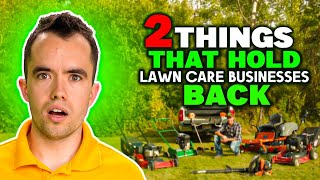
Mike Andes explains why lawn care businesses stall: owners obsess over equipment and hiring instead of sales. The ones that grow fast focus on testing ads, refining estimates, and automating follow-ups.
Chapters
What I would be looking for if I was you is one thing. Just take one thing away from the entire conference. Hey everyone, it's Mike Andes and you're listening to Landscape Business course. Today I'm going to be sharing the two things that keep lawn care businesses from, from growing. And I don't care if you're a solo operator and you're trying to get your first employee, or if you have a few employees and you're wanting to get out of the field, or if you have a staff of 10 and you're trying to figure out how to delegate and do sales within your organization. These are the two things that I find time and time and time again with lawn care businesses and landscape business owners that come and talk to me about wanting to grow their business, wanting to scale up. These are the two things I find that hold them back. Before we get into that though, I wanted to mention that the conference is now available for you to sign up for. So it's 2020 landscape summit. Landscape summit 2020 is going to be next January. You can get all the details just go to landscapebusinesscourse.com and just click on the tab that says conference and you can sign up. Now as part of signing up, you get meals for Friday and Saturday for breakfast and lunch. And it's just a fantastic time to network. We're gonna be doing a bunch of workshop as well as keynote style talking. We're gonna do a tour of my facility live and in person. And so we're gonna have. It's gonna be a lot of fun and so I really look forward to it. Bring your project managers, bring the people that are on your leadership team, and we're gonna have something for everybody. So really, really, really looking forward to that. And if you were at last year's, it was fun. This is gonna be even better, a lot better. And so I really look forward to it. So check it out. Sign up today. It's just two.
Now, today I'm talking about the two things that keep lawn care and landscape business owners from scaling their business. The first one is that they don't focus on sales. They don't focus on making sales. And the reason that we get distracted from sales is because there's so many other things we need to worry about as business owners within our industry. There's everything from equipment to the trucks that we drive, to hiring people, to all the things that go on every single day in your business. Keeping the shop clean, keeping the trucks cleaned out. Then you have breakdowns of equipment. You have jobs that don't go well and all of a sudden you're having to do customer complaints and callbacks and then you're trying to figure out how to staff correctly because you have a ton of influx of customers during the spring, but then during the winter there's really not much to do. And so you're kind of caught in this juxtaposition position of what, how many people you should be hiring. There's just so many things on your plate as the business owner. Then there's internal things. As your business grows, you get more employees, people have hard feelings and then there's issues between people and then all of a sudden you're like the mediator and all these things going on. Then as your team grows, you have to have team meetings and leadership meetings and all of these things. And we can get very, very caught up in all the day to day minutia that is required to run our businesses. And I have to say, for lawn care and landscaping business owners, we have so many hats that we have to wear everything from marketing to HR to designing our websites, to sales marketing, to design and logos. Like everything that we do as business owners within our industry is phenomenal. And the problem is that those things do not actually change the outcome of your business. Getting new equipment does not change the outcome of your business and the success of your business. It just doesn't. And so, you know, contrary to what every single landscape magazine or YouTube channel about landscapers in our industry would like to say and talk about equipment and the efficiencies that they bring and all these things, at the end of the day, the equipment that you buy, the brand that you buy, the size of deck that you use for your mower, whether it's a stand on a zero turn or push mower, it will not change the destiny of your business. It might affect your profit margins slightly, it might create efficiencies, But I don't care how good of equipment you have, how perfect it is, how perfectly your trailer is equipped with trailer racks and designed beautifully and it's perfectly efficient. If you cannot sell and if you do not constantly focus on sales within your organization, you will not grow a business and you will not scale. Now you might be able to run a profitable solo operation by having just you out in the field working and thereby those efficiencies with that trailer, those efficiencies with that equipment, is thereby something you should focus on and is important if you're wanting to scale your business. I'm not talking to that person. I'M not talking to the person that's gonna say solo. But if you're wanting to scale your business, you have to focus on sales. And when it comes to sales, you have to focus on marketing. You have to figure out what type of marketing is going to propel your business forward. And for the people out there that say, well, I don't do any marketing, I've never done advertising or anything like that, your business is not growing at a super fast rate. And I mean like going from a million to a million and a half to 2 million, like 3/4 million or 3 million. Like you're not growing at a super fast and you're not growing super. The size of your business isn't growing very much either. You might be able to go from 100,000 a year to $200,000 a year to $300,000 a year and take 10 years to make a million dollar business. But if you want to get there in two, three years, it's gonna take a lot of sales and really honing the craft and the skills of selling. And that comes down to marketing. It comes to advertising, you gotta figure out what works when it comes to marketing. You have to test out what works when it comes to, to what type of call to action works really well. Where should you put your contact form on your website? Should you have a chatbot for your, for your website? Where's your phone going to? Is it going to an office? Is it going to your cell phone? All of those things are part of the sales game. When it comes to sales. A lot of people just think about marketing. That's super important. But what about the estimate, follow up process? Are you actually trying to follow up on those estimates once you give them? Or they just kind of in oblivion and you just never hear back from them? These are things that are going, you're going to lose out if you don't follow up on sales. You're going to lose out if you don't have a sales process. You don't go to their house within a certain amount of time of them calling. You don't have a process for getting their contact information. You don't have a process for selling, mowing over the phone. You don't have a process for.
An introduction packet or literature that you give them at the point of sale. At the estimate. You're going to lose out if you start falling behind the trend of technology, being able to follow up with them and be able to communicate with the customer. Do you use audio notes via email? Do you use text Messages. Do you use automations or is everything a phone call after three days of them sending you an email? Like there's definitely ways that you can make your selling and the sales process better, but the general concept of why you are not scaling up your business and growing and getting to the next level is because you're not focused on sales and sales. When I talk about sales, I'm talking about the entire sales process from, right from marketing, advertising, getting awareness, right to when then they call, to then setting up an estimate, to then creating that estimate, that time that you're with them and that process of just interacting with the customer. There should be a process that is selling. You're shaking their hand, you're communicating with them, you're explaining, you're educating. Then there's estimate follow up processes. Okay, how do we follow up with this estimate now that we've sent it to them? Do we do follow up after a day, after 2, after 3, after 5 or 10? Or do when is it, when is that sale considered dead? When is that estimate considered dead? Do you go in person and present the proposal or do you just do it over the phone or do you send it via email or do you send it in the mail? How are you going to follow up with that estimate and make sure that you get a yes or a no and not just sending out 50% of your estimates and never even hearing back from the client. That's all part of sales. And so I truly believe that the companies that get to a million dollars in less than five years in our industry are fanatical about sales. Everything else to them is important, but doesn't really matter in the grand scheme of things because even efficiencies, you cannot save your way to a million dollars in revenue. You can't save your way to the next getting your first employee. You're gonna have to go out and make sales, you're gonna have to go on the offense and look at the top inch of your balance of your income statement and that is the income and how do you affect the income? You focus on sales, you focus on everything from the awareness and the marketing all the way through the estimate follow up process. There's that massive sales process that you have to figure out every single step. And the companies that do that, the companies that are fanatical and obsessed about that sales process and are constantly honing it, refining it, trying to fix it, trying to make it better, trying to test it, figuring out what works on Facebook, what doesn't work, what works on Google, AdWords, now Google Ads. What works, what doesn't, what works on YouTube, what doesn't, what works on the website, what doesn't, what works for contact forms, what doesn't, what works for for the process of estimate follow up, what doesn't, what works for the way that you connect the estimate over the phone in person. All of these things that are. If a company is scaling fast, almost always I can trace it back to the owner being sales driven and sales focused. Very rarely will that owner very be caught up a whole bunch in equipment and the maintenance of that equipment and how the edgers are cutting.
They're not the line, the line on the line trimmers. Like is it 0.95 millimeters that you're using or 0.75 or 0.105? They don't care. They don't care about the brand, they don't care about the type of gas can that people are using. And yes, those things are important. Should you have certain type of gas can to save from spillage and save and be more efficient? Absolutely. But you're never going to get a gas can that's going to make your business grow. It's going to save money. And when I find too many times that the equipment and all the paraphernalia that we focus on is defensive action, but offensive action is what's needed to scale and grow your business. So the number one reason, the number one reason why companies that talk to me, whether it be through the podcast, the course, the conference, the video course, online, whatever it is, time and time again, if they've hit a plateau or they've hit a place where they're not growing their business, it's because the owner has gotten their focus off of the sales game and off of the process of making the customer experience jive well with selling. And so that's the number one reason. Number two, the second reason that keeps lawn care businesses from growing when the business owner wants to grow. So again, you might not want to grow, that's totally fine. If you want to stay a solo operator and that fits your personality and the goals for your business, that's fantastic. But if you're wanting to grow and scale, these are the things I would share. The second thing is not delegating. This is especially true for someone that now is starting to get employees. And so this might be your first employee, this might be a helper. All of these things that you begin to build your business on are gonna become the foundation stones for the business in the future. So you might have one, two Employees and like, yeah, this doesn't really matter about this whole delegation thing. The reason that my company's been able to scale sustainably is because from day one, I knew that the end game was for me to be out of the field. I knew it was for me to be out of the business on a day to day operating level and for us to franchise and for us to go forward and scale this across the country and have an online course and all those things. And so in order to do that, right from day one, I was thinking about delegation. And you're constantly asking who can do this for me? Whether that be sharpening the blades to cleaning the trucks, to answering the phones, to sending emails, all the time asking yourself, who can do this for me? Not what can I do, but who can do this for me? And trying to find the people, they're going to follow along with your mission and your purpose and what you want the business to become. They're gonna follow along and are going to allow you to lead the, to success. And so constantly delegating, you know, the reason so many people ask me this all the time, how do I do all the things that I do? You know, I now have Anytime Fitness now I have a podcast, no three podcasts. And I have pro labor services. I do all these things online. And then I have Augusta lawn care services. And so many of the landscapers like, you know, I have a hard enough time running my landscaping business. How do you do all this other stuff? And the reason for that is very simple delegation. So in the lawn care business, I'm very clear that this is not what I'm gonna do every day for the rest of my life. And it' definitely a stepping stone to make a really big impact in the landscaping industry. And it's a testing facility. It's like my experiment house for figuring out what works and what doesn't in the landscaping industry. And it wasn't for me to be in day to day operations. And so just recently really have gotten to the place where, okay, we've got to scale, the business has come up size and where it can afford extra wages basically in order for me to be out of the business. So what we did is we broke the company up into like to 12, 13 different categories and I assigned people within the organization to each of those categories. Everything from the equipment and the supplies to the larger equipment, to training people on maintenance, to training people on hardscaping, to reporting and giving me reports. Everything within the business was delegated. Cleaning the trucks, all of the scheduling and the routing, all of the things were delegated. Now you might say, well, that's a big change you just recently made. But right from day one, I was always asking the question, who is going to do this for me? And so you might be just getting your first employee, but that first employee should be taking things off your plate. Maybe they get the truck loaded up in the morning, maybe they unlock things, maybe they lock things up at the end of the day. Then as your business grows, you get two, three people. Now you're getting the office assistant who is going to answer the phone, who is going to answer the email, that's going to be the office person, office manager. And then as your business grows and scales and continues to grow, you get crew leaders and you, they start taking off project management off of your plate. They might take quality control and customer complaints off your plate. You might get someone that's a really good leader and is able to do team meetings and they take that off your plate. And so as your business grows, one of the main reasons why businesses will plateau or stop from scaling really large to the size that the founder wants it to is because the founder is holding onto things and isn't allowing others to be successful and isn't allowing other people to take leadership or take ownership of their. And you can't expect people to take ownership and take pride in what they do if you're gonna constantly micromanage them. And I tend to be more of a micromanager than someone that just kind of blindly trusts people. And so it's something I'm still learning and I've had to learn in order to scale the businesses. Look, if you're gonna delegate and you're gonna give responsibility to someone else, you have to give them free course, you have to give them a lot of latitude within that role so that they feel that they actually are making a difference and they can make a positive change on the business and that you're not suffocating. And then you' always looking over their shoulder. And so the second biggest reason is delegation. Not delegating is what's going to hold you back. Because if you can't delegate, you're not going to ever let and you can't let people call the office and someone else answered the phone. If you aren't going to do that, you're never going to grow or scale your business. You know, the first year that I was in business, I was just solo and I did $28,000 in revenue. That first year I was doing it part time. When I was a trainer at the gym and then the next year I did 180,000. The next year after that I did 470. The next year after that I Did 800. The next year after that I DID 1.25. This year we'll probably do one and a one and a half, 1.6. And so how did I scale that? Those two things, number one, focusing fanatically on sales, everything from awareness and marketing and advertising all the way through the estimate process. How did I scale like that and how are we consistently growing? Number two, delegation. Focusing on delegating and giving the roles and responsibilities that I as the owner am doing and giving that to the people that I hire and then not just blindly trusting them, trusting them. We have reports, we have monthly reporting meetings now starting in April is actually our first reporting meeting since the major delegation that we did. And that's going to be when they have their own role, their individual divisions and their departments and they have to report to the entire team on how that division is going, where improvements can be made, what the successes, the losses of that last month have been. We'll do that every single month. But delegation is something that's. It allowed the company to grow those numbers and it's also has allowed me to do other business things. Buy a gym, focus on this podcast, the course, get this training facility and this video studio, start looking at really, really seriously at franchising our business and really scaling it out to so many of you. And so the conference, for example, all these things that I've been able to do have been delegated and focused on sales to grow the business to a certain size. And I do believe it's in that order. I feel like number one most important is Sal, because if you don't grow the business with sales, you'll never need to delegate because your company will always stay small. So number one most important thing is absolutely the sales game. Focus on sales, focus on marketing, focus on customer acquisition, focusing on sales process, focusing, closing, focusing on the estimate process and the follow up process. That's the number one, because that will fuel the top line revenue that will end up paying for people and for employees, which then you will need to learn the delegation game in order to give responsibility to those people. But all of those, that delegation, all those employees will never come about if you don't do number one. And that is focus on sales. I absolutely the number one indicator of whether or not a company makes it to seven figures. Or maybe that's not your goal, maybe it's half a million. Whatever it is, whatever the goal is for you and your business and your ultimate of what you want out of the business. Whatever it is. The number one deterrent when I meet lawn care and landscaping business owners is are they focused fanatically about the sales process and the customer experience during the customer acquisition process. And so I genuinely believe those two things will revolutionize your business and allow you to grow your business to heights you never knew and push through any plateau and allow you to constantly scale the business to the place you want it to be. You've been listening to Mike andes. Check out landscapebusinesscourse.com and I'd love to see at the conference. I'd love to see you in person. I know so many of you email and you listen to me on this podcast, watch videos and all that good stuff. I appreciate that, but there's nothing like seeing you in person. I appreciate it and I absolutely believe it'll change your business. So go to the conference link. Just go to landscapebusinesscourse.com conference or check out the link and sign up today. Thanks so much. I'll see you next time.






