4 Tips on Choosing the RIGHT Truck for Your Landscape Business
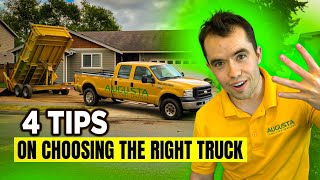
Mike Andes shares five tips for landscape business owners buying trucks. Buy used and paid-off rather than financed, choose half-ton or three-quarter-ton gas pickups over expensive diesels, and prioritize solid engines and transmissions over cosmetics. Older trucks with higher mileage cost less upfront, leaving more money for marketing and growth.
Chapters
Hey everyone, it's Mike and these. And you're listening to the landscape business course podcast. Today we're talking about the best truck for your lawn care and your landscaping business. Five things, five tips I would consider if I was you trying to make a decision in terms of what truck to buy. Before we get into the show though, just want to remind everyone about lawn carewebdesign.com as we come into the spring. If you're looking to get your website built, look no further than check out lawncarewebdesign.com where there's no upfront fees and it's just a month to month basis. Check it out today. Go to lawncarewebdesign.com all right, so five tips from me about the type of truck you should buy when you're starting or growing your lawn care and landscaping business. Number one, for 99% of people, the right truck is a paid off truck. In other words, don't go get a big loan, don't get to go get a lease. The reason for that? There's lots of different reasons. Number one, it's a depreciating asset, which means when you buy that piece of equipment, in this case a truck, and you drive it off of the lot immediately, it's worth less if you buy it new and if you buy it used, it's still depreciating, it's decreasing in value. All right, that's the first reason. The second reason why for 99% of people, a paid off truck is the best truck is that people don't take into account the fact that there's higher interest premiums. When you have a car that has a lien on it, a truck that has a lien on it. Same thing if you lease a vehicle, they're going to require much lower copays or whatever they're called, and they're going to for the insurance, they're going to have much, much higher premiums and making sure you have comp and collision and all these other things. If you have a cheap truck, you don't really need to pay $100 more a month to get comprehensive in case a tree falls on it or it blows up in a fire. Like those are not things you're worried about when you're paying for five, six thousand dollars for a truck. Now when you pay $40,000 for a truck, yeah, you're going to want to insure that thing. And if you get a loan on it, I promise you, the loan holder, the lien holder is going to definitely want higher Premiums and they're going to want to make sure that your deductibles, that was the word I was looking for. The deductibles are very low, alright? So if I have a cheap truck, I want my deductibles to be high because I'm not gonna try to fix it if it gets hit by something hard. I'd rather take that money I'm saving, put it in the bank account as cash in case I need to buy another one. So for example, if someone came to me and said, hey, I have this opportunity to buy a $30,000 truck and I'm going to make payments on it or whatever, and I only have to put $5,000 down, this is what I would say to them. Why not go spend $10,000 on a used truck, pay cash for it, and instead of taking a loan out for the other 20,000, why not go spend that on marketing? Like 5,000, $10,000 on marketing will completely change your business. We're gonna spend about 20 to $25,000 and in marketing on a new corporately owned Augusta lawn care facility. And it will do like 10, 20x in revenue of what we spend in marketing. And so it's very, very important that when you're starting, especially when you're starting, but even as you grow to really take into account that your trucks are one of your biggest capital expenditures, for a lot of you, it's your biggest capital expenditure. And then you got mowers, you got trailers and things like that. But it's a depreciating asset, which means it's going down in value over time. And the last thing you want to do is have a loan or a lease. Let's just talk about a loan. A loan. You don't have a loan on a vehicle and it's only worth 30,000 now instead of 40 because you used it for a year and guess what? There's dirt and there's dings and there's dents and there's rocks and they're work trucks. And all of a sudden you owe 30,000 on it, but it's only worth 30,000, but you still owe $38,000 on it. Like this is the craziness that I see all the time on people's profit and loss statements where the truck is literally worth $8,9000 and they owe 20, 25,000. It happens all the time. And literally they will not sell it because if they do, they still owe a bunch of money and they can't go buy another truck. And so they're handcuffed to it. So I'd highly recommend for 99% of people. And the reason I say 99% of people is cause everyone right now is thinking, oh well, I've heard about this person that does leasing or this person that gets older, only brand new, because it's all about the maintenance costs going forward. I heard it time and time again. And that's why I say 99% of people, because there are the 1 or 2%. Maybe they get brand new, maybe they have a good leasing agreement, whatever, whatever, whatever. But time and time again, I find that people are getting a loan and they're getting a lease because they want a newer vehicle for pride's sake, not because it's a good business decision. This is one thing I've said time and time again. My trucks, they do not make me proud. They make me money. That's all I care about. I don't care about them making me happy, making me proud, feeling good about myself or my business, making me feel good in front of my friends or family. That is not what I'm interested in. I'm interested in that truck, that asset making me money, not making me proud. Okay, number two, smaller is better. What I mean by that is don't get a three, a massive truck, don't go get a one ton F350 diesel. You don't need that if you're just doing lawn care. Now we're gonna talk in a second but like about matching to your equipment. But number two is smaller is better. If you can get away with a half ton pickup because you're just doing mowing, get a half ton pickup. If you, you know, in my opinion, you don't need anything more than a three quarter ton pickup for lawn care and for maintenance. Now if you start doing hardscaping, landscaping, you start hauling materials, you start hauling equipment, then you're gonna need a bigger truck. But I'd highly recommend smaller is better and not to go diesel. Reason I say not to go diesel, because I know a bunch of people in the comments right now are all unhappy because they love diesels and they last way longer and all the rest of it for unless you're a mechanic, diesel is going to cost you much more in maintenance. You have to plug them in when it's cold. When things break on a diesel, the expense in maintenance, like parts is so much more. The cost of having a diesel mechanic versus a regular mechanic is far more expensive. And literally, if you talk to anyone that does not do the mechanic work Themselves on a diesel, they know that when it breaks down or has an issue, you're looking at 1, 2, $3,000 easy. Like out the window easy. It's not like an F150 or F250 gas truck that like parts are really cheap, they're easy to find, easy to fix, fast to fix, and you can, you know, when something breaks down, it's a few hundred dollars. So that's something I definitely say. If you're small mowing maintenance, you do not need a diesel truck. You do not need a one ton pickup. Go for something three quarter ton or less and unleaded fuel. The reason I say smaller is better is because the upfront cost is less. Just because buying a half ton pickup in general, generally speaking is going to cost less than a one ton pickup. Maintenance. Bigger trucks mean bigger parts, bigger parts mean bigger. Whoever's working on that is going to have to have more knowledge and experience. Bigger hoist and a bigger shop. So like the maintenance on a bigger vehicle costs more, the parts cost more, all of that. Another thing is smaller is better is because the bigger your truck, the more training and the more skill your hires are going to need in order to operate those trucks. If you get dump trucks, you're gonna need to train them on that. If you have a diesel truck, you're gonna train them on how to turn the engine on and you gotta let it warm up and like how to drive it a little bit differently and plugging it in. You've got to make sure that if it's a big truck, you gotta train them how to back it up differently. If it's a dump truck and they can't see out their back windshield, they've gotta use their mirrors when they back up. These are all things you gotta think about when you talk about a truck. I want a big truck to be able to haul 10,000 pounds of material. Okay, but do you need it? Smaller is better. If you can get away with the upfront cost is less, the maintenance is less, and you won't have to have as high skilled of individuals and people and, and finding them is much easier if you don't have these big trucks, big equipment and things like that. Number three, when it comes to picking your truck, match your truck to the equipment. All right, so if you have a trailer, if you have a trailer, you're gonna need a slightly bigger truck. You're not gonna get away with like a Ford Ranger and hauling a dump trailer that is in and of itself £5,000. Like you're gonna have to figure out what are you doing for your trailer. If you have an enclosed trailer, you, you know, you don't need a one ton pickup, but you might need a three quarter ton to pull an enclosed trailer that's 7 by 14 and has a zero turn inside. So when you talk about matching your truck to your equipment, look at your trailers, look at your zero turns. Like if you have zero turns and they all weigh a couple thousand pounds or 1,000 pounds and they're going inside of an enclosed trailer, all of a sudden your net weight becomes pretty large and you need to actually have some towing power. So that's something you're gonna look at again. If you have matching your truck to your equipment, if you're going to be pulling an excavator and a skid steer or hauling a dump trailer with a bunch of gravel in it, then you're going to be needing a 1 ton or more pickup. You're going to need something that can pull a lot harder. You might want to think about getting a diesel. Alright, so these are all things that you'd want to consider when you're looking at a truck. And you know, in the past I've talked about the videos of this being the one of the reasons why someone should start with lawn care and maintenance and slowly switch or slowly add landscaping if that's something they want to do and it's in their business model. The reason is for this reason right here. Because if you're matching your truck to your equipment and you're starting with lawn care and maintenance, you can start with a smaller truck. Don't need a diesel, you don't need to have anything comp, you don't need a dump truck. Can be very simple. And then later on down the road you can think about adding excavators and skid steers and zero turns and trailers and down the road, add those things and in and then you'll need trucks to then pull that equipment. So for example, that new location we're starting with Augusta Lawn Care for Mount Vernon, it has a three quarter ton pickup, it has no trailer, it has no equipment, has no zero turn, it's all trailerless setups. And so therefore we can get away with much smaller truck, much lower upfront costs, less maintenance, I don't need to train people how to drive a trailer, all of that sort of thing. So that's again, match your truck to the equipment number four. When you're looking for a truck, make sure it has solid bones, but a cheap truck. What I mean by that is make sure the engine's good, make sure the transmission's good, make sure the bones of the vehicle are good. But if the brake pads are wearing down, that's an easy fix. If the tires are worn down, that's an easy fix. Those are things that kind of scare away the tire kicker. Joe Blow on the street that just wants a truck. He might not buy the truck because it has the worn down tires, it has the bad brakes, but you can fix those things very easily. Make sure the bones of the truck are good. That's the engine, the transmission, the main elements of the truck. I'm the worst mechanic in the world. Can't do, I've never changed my own oil, none of that. I'm bad. So for me it's very important that trucks that we buy have a solid skeleton. And if there's little things that need to get fixed, that's fine, those are cheap. But making sure that you don't buy a $10,000 truck and then have a $3,000 repair the next week is important. So make sure the bones of the truck are good. If you're not a good mechanic, take it and get an inspection by a mechanic. What you do. So for example, if you're looking at a truck on Craigslist, set it up with the person that you're gonna meet them at. The mechanic. The Mechanic does a 1 hour 30 minute inspection. Maybe there's like a 20 point inspection or whatever can give you a really good idea. If there's gonna be maintenance in the future, you're gonna already need to know about and need to address down the road. So solid bones, cheap truck. When I say cheap truck, here's a few examples of things I would suggest. Standard cab, long bed. All right? Unless you're having a bunch of crew members on a crew. So unless you're having like two or more people on a crew, you can go get away with a standard cab. You're gonna pay more if you're gonna get a crew cab or extended cab or like anything more than just that one, you know, the three seater up front. And when you do that then you can get a long extent or sorry, a long bed and get an eight foot bed to have more space for debris or grass clippings or equipment or whatever you got to put in the back of your truck. And so again, these are ways to make sure that you have a solid truck. But to make it sure it's cheap, have a standard cab. Unless you're going to have a bigger crew size and Have a long bed.
Also, trucks, we really like trucks that are 5 to 10 years old. That's when the fastest appreciation has come off the vehicle, those first four years. So 5 to 10 years old is what we're targeting. We're. We're looking for trucks that have 80 to 100,000 miles on them. Those are trucks that are going to, again, be depreciated, they're going to be cheaper, they're going to be fully depreciated, and they're going to have a much lower depreciation year over year in the future. So that's what we're looking for. 5 to 10 years old, standard cab, long bed, 80 to 120,000 miles. Knowing this is what everyone's going to say, this is what everyone says. You should buy new because you don't have to do maintenance. And if you buy used trucks, you're just gonna spend the monthly amount in maintenance all the time. If you do good preventative maintenance, you will not spend thousands of dollars on every truck. It's just not true. If someone's looking and saying, oh, well, I need to spend 550 bucks a month for a truck payment because it's new, I don't have the maintenance. There's no way you're gonna spend $6,000 on maintenance every year on a truck like you like. It's crazy what people say sometimes. And if you do good preventative maintenance and you make sure you have a mechanic look through all your trucks twice a year. You do your oil changes twice a year. You have them check the brakes, you have them check everything preventatively, like, you will not need thousands and thousands of dollars in maintenance. We don't have any trucks going down, and our trucks range from 3,000 to $8,000 upfront cost. Besides one truck. That's the range that we buy our trucks in. I know in some areas, trucks are a little more expensive. Maybe you're looking more like 8 to 12,000 is your range. But solid bones of a vehicle. The cheap truck number five is look for chipped and rusty. I like that. Some people are like, oh, no, it needs to be like perfect paint job. No, this is a work truck number one. Number two is get it painted. Like, if you can get a truck that's worth 10,000, but because it has a couple scratches, a ding, a dent here and there, and now someone's selling it for 7000, that's $3000 you saved. And then you can go spend $1000, maybe $1500 if you're fancy and go and get it painted and make it look brand spanking new. Okay. So we're always looking for, like, the ideal truck has a little bit of chips, has a little bit of rust. The paint isn't that great. Maybe it's weathered a bit. And we know we're gonna paint it right. And so if you're gonna paint your trucks, you can look for trucks that the general population does not want to buy because they're chipped, they're scratched. People on craigslist or whatever, they're gonna put comments like, hey, make sure you see the pictures because there's scratches, dent, that's totally fine. Like, even better yet, if you're gonna change out, if for some reason you have a custom bed that you put on, like you take off the bed of the truck and you put on a flatbed or something, look for a truck that has been dented in the back or like the tailgate's missing, or like something had a fender bender and it's messed something up, because that's gonna reduce the value so much to the general public that you'll be able to save a lot of money and then put that money towards fixing the problem that is painting the truck if it has scratches or little chips. So we like chip trucks. We like a little bit of rust. We like some scrat. The value, the cost that we have to pay for that goes so far down. So we just bought a truck last week from Mount Vernon. The Kelley Blue Book was 12,500. We got it for $9,000 because it has a little. Some rust on the wheel wells. And we know we're gonna get painted and it's gonna look brand spanking new. It's a 2012 truck. It's gonna look great. It's a Chevy. Chevy 2500. Just like I said. It's a standard cab, has between 80, 100,000 miles long bed 5 to 10 years old, has a little bit of paint chipped and a little bit of rust. That it will look completely perfect once it's done getting painted. And we will spend just under $900 getting that truck painted. So these are the things I'd have you consider number one for 99% of people, because I know there's always the 1% that has something going on or they know somebody else. But I can tell you this for sure after talking to hundreds, if not thousands of landscapers is 99% of people should be buying a paid off truck. All right, Smaller is better. Number three, match the truck with your equipment. Number four, make sure it has solid bones in terms of the engine and the transmission and things, and have a cheaper truck. But solid bones Number five, it's okay if it's chipped a little bit rusty, that's fine. You can paint it. You can recoup that extra money that you saved and spend it on marketing. This is the bottom line. If you're gonna spend $30,000 in a truck, you're gonna get one truck. I'd much rather you buy two $10,000 trucks and then spend $10,000 on marketing and get so much business you'll need a third truck. That's a good problem to have. It's definitely something I'd recommend. You've been listening to Mike andes on the landscapebusinesscourse.com podcast. I'll.






