45 Mins That Will Take Your Business to $500K+ Per Year! [2 secrets]
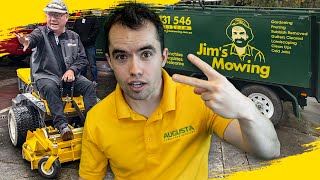
Mike Andes from Augusta Lawn Care breaks down how to grow a lawn-care business past $500K by focusing on two things: getting more leads and hiring the right people. He shows the math on how small marketing spend scales recurring revenue, and recommends pay-for-performance and open-book management to keep your team aligned with growth.
Chapters
Hey, everyone, it's Mike Andes. And today is a special episode. It's actually a full length keynote. Like, how hard is it? It's a weed whacker and a mower. Straight lines. I went over to Australia and I was going to Jim's Mowing. They have over 2,000 franchisees that do just mowing in Australia, Canada and New Zealand.
The whole goal was, how do you grow your business? A lot of the gyms mowing franchisees don't have any employees. And when I asked who had employees, only about 5%, maybe 10% of them even have employees. This whole event was about how to grow, how to scale up, how to really just take your business to the next level and start to scale up outside of just being a solo operator. So it's gonna be a great episode, lots of energy. Now, the thing you don't see in this keynote is the fact that I thought this was gonna be a Q and a until about five to 10 minutes before the keynote, when the media team was like, oh, yeah, so you're gonna have your Q and A in the afternoon. This first one is just an actual talk, like a keynote. This is crazy, crazy, crazy. I'm just being honest. So I'm literally making this up all up on the fly. So that seems somewhat disconnected or not put well together. Please forgive me. It was completely just off the fly, off the cuff. I was trying to make this up and had to talk for an hour. So without any further delay, Melbourne, Australia, from Jim's Mowing Group. Here we go. You just turned $3,000 into $40,000. Why would you ever turn your leads off? A few days ago, one of our team members wrote this up on the board. Says, every moment away from fear makes a man immortal. And that was by Alexander the Great.
Who said that quote.
And in relation to what we're talking about today, I think when we talk about growing our business, so often the times we are afraid of hiring another person, of scaling up the company beyond just ourselves. We're afraid of getting someone to do the office and do the bookkeeping, to really start to market and grow the company. And there's so much fear involved. But what makes this somewhat meaningful to me, and the reason I'm showing this today is actually yesterday morning when I woke up. Here it is midday over in the US And I woke up to a message from the general manager from this location stating that the employee who wrote this on the board had taken his life.
And so.
I didn't know him super well. He's just One of the field crew members and I have a lot of locations, but the impact it made on the guys was pretty substantial. We had everyone come in early. Well, they did over in the US and had them all come in early and just sat them down and explained everything that happened. And so I think when we talk about mental health and all these things that are so important, I think so often the times, though, fear is something sometimes distinguished as something that is a horrible thing. But I think regardless of whether it be the individual who wrote this or each of us as business owners, there's things that we are afraid of. But on the other side of that, fear is something that is so worth it. And it's literally a feeling of being immortal. And it's one of those things, I think of business ownership and growing a company almost very similar to, like having a child. Because when you have a child, there's this emotional connection with it because you made it. Without you, that thing would not be possible. That child, that baby. And there's oftentimes a lot of emotion that comes with it because you made this thing. And when the business is the exact same way without you, without you as the operator, you as the entrepreneur, you as the business owner, getting through certain fears that you have, that business would never be possible. And so I just encourage you today, when you are afraid of hiring another person, scaling up past two or three trucks, having a manager starting to outsource other things, have a general contractor come in or subcontractor come in, all the things we just heard about casual workers, if you're afraid of those things, realize on the other side of that fear is immortality. It's that feeling of, I built something and no one else can take it away from me. And I built this myself. And so when we look at building our companies, there's really three different stages that I think so many of us fall into. And just for my sake, how many people who have an employee right now, just raise your hand? Cool. So that first employee is a big step. And I know a lot of you are afraid or there might be fear around that thing. And that is having your first employee. Once you've done it 20 times, it seems like it's not even a big deal to you, right? In the US we have a slightly different labor economy, and our franchisees grow very quickly, fast. We tell them if they're not going to get an employee, they shouldn't even join Augusta Lawn Care, because we really are built to scale. Our average franchisee is doing over 30,000amonth. Within their first year. But again, they're starting off with multiple employees and really trying to scale the business. So when we talk about our training, we actually spend most of our training on scaling up and growth. We talk very, very little about the mechanics of how to mow a lawn, a type of mower blade sharpening. Like, it doesn't really matter when it comes to growth. And if you're going to switch from the mindset of being an operator and someone who is mowing the grass, you know, putting up the fences, cleaning the dogs, whatever it might be, and switching into more of a mindset of being a business owner and someone who's now leading a team, there has to be a completely different switch in your brain that goes off. Because no longer is your job how to sharpen the blades or how to make sure that the mowers are gassed up and fueled up, or that all the tools are ready to go for the next day. That is no longer your preoccupation. Your preoccupation needs to be, how do I grow this business? And there's really only two things that will grow your business. The only two things that we tell our franchisees they need to worry about. Everything else doesn't matter. If you're trying to grow your business, number one is sales, and number two is hiring. If you can nail those two things in your business and put aside all the other distractions, you will grow your company. If you're trying to go from 100,000 to 500,000, if you're trying to go from 500,000 to a million, those two things alone will get you there. Everything else is a distraction. The type of mower you buy, the type of truck you buy, all the tools, the equipment, what type of petrol, how much should I charge in here? That's all a bunch of distraction. If you're trying to grow now, making it profitable, you got to worry about profit margins and route density and making sure you're efficient and all those other things. And we'll talk about that. Those things are important. But if you're really stagnating without and you don't have that growth, those are the two things you have to really think about and ask yourself. Go throughout the day, over the course of 12 hours in a day, and ask yourself, okay, this hour, was I focused on hiring? Was I focused on marketing and sales? Or was I focused on the 10,000 other things I'm supposed to be doing as an operator? Was I fueling up the trucks? Was I washing the trucks? Was I on the phone with the banker, Was I talking to the guys? There's so many other things we have to do in our business, but they don't actually move the needle to growth and expansion. So there's three different stages of a business that when we talk about growing a company that I look at. And stress is obviously something we talk about a lot. It's something we've been talking about internally the last two days, a lot with our team. I'm actually organizing a funeral literally today for him over on Monday. When I get back, right when I get back, we'll be putting a service on for him internally. Inside the company.
It'S stress. There's a lot of stress in our lives and a big fear that a lot of us will have around growing our company is around the stress that we are going to take on by growth. And you're a hundred percent right. There's gonna be stress as you grow a company. And don't fall into the notion either if you talk to someone that wrote a book or someone on YouTube, they said, grow your business, just grow your business. And then it gets easier and like, just let everyone else do the work for you. And like, the only reason you're stressed is because you're working hard outside all day long. There's some truth to that. But. But ultimately, in my opinion, there's three different levels of your business, and every single one's gonna have a different type of stress that's gonna cause you as a business owner to have to change and adapt and grow. And there's gonna be actually some of you, after I talk about these today, that will actually be like, hey, I should not grow my business. And that's fine. The concept of growing your business is only if it aligns with the goals that you have for the business. The business should not run you. You should run the business. And so if you're being driven to grow the company but it's emotionally and psychologically damaging to you, you should stop growing. And there's three different stages of stress that I want to talk about. The first stage of stress is from 0 to 200,000 in annual revenue. And I'd say that most of you are still in this stage, especially if you don't have employees. So from 0 to 200,000 in annual revenue, this is the first stage of growth. And this is the first stage of stress that you're going to see in your business. Typically, the stress that you're going to have in step number stage number one is going to be physical stress. Because you are working your butt off. Especially if you're hitting 150, 170, 180,000 in annual revenue, you are working a lot of hours. You are physically out in the sunshine, out in the rain, the cold, if you're in Melbourne. All of these things are physical stress. You are literally working 10, 12, 14 hours a day to get your business off the ground and start ramping up the company. Now, the thing is this. What got you to 200,000 is not going to get you to 500,000. What got you to 500,000 is not going to be what gets you to a million and beyond. You literally have to evolve and change as a business owner into the different types of stress and. And the different operational roles you'll have to play as an owner. So the first stage is physical. That's your main job. Just the physical stress of running your business. You're probably performing 50, 70, 80% of the actual billable hours you're performing them. And that takes a physical strain on you and your body. That's why I call it physical stress. The next stage is typically from 200,000 to about 800,000 in annual revenue. And if those numbers seem massive to you, that's fine. But typically, what you're going to see at this stage of growth as the company is in that annual revenue stage is going to be financial stress. The reason is because from 0 to 200, you were physically beat up, but you didn't have a lot of overhead. You didn't have employees to pay for. You didn't have an office yet to pay for. You didn't have all these other people supporting you in terms of bookkeeping. You don't even need a bookkeeper if you don't have employees. Now, that's an extra overhead cost. Now you got legal things. Now you got someone trying to give you a lawsuit because of some employee problem. Now you got customers that are trying to give you problems, and you're way more overhead. You got to buy more trucks, you got to buy more equipment, you got to buy more shop space. All that's overhead. And now your margins, your profit margins start to get compressed. Because when you were working out in the field, working 10, 12 hours a day, you were making 60, 70% profit margins. If you made $100, 60 of that went into your pocket. The other 40 was franchise fees, fuel, insurance, the basics. But you didn't have labor, you didn't have a shop space, you didn't need a bookkeeper, you didn't have all that overhead as part of growing the company. So a lot of times I see from this stage 200 to 800,000, there is now more financial stress. Now the reason some people should actually get to this phase though, because everyone's like, well, why in the world would I grow my company then I have all this overhead. That sounds horrible. Well, the thing is, you didn't need a bookkeeper. You didn't have all that overhead as part of growing the company. So a lot of times I see from this stage 200 to 800,000, there is now more financial stress. Now the reason some people should actually get to this phase though, because everyone's like, well, why in the world would I grow my company? Then I have all this overhead. That sounds horrible. Well, the thing is, at this stage, you get out of the field, you are no longer working on your truck. You are no longer actually performing billable hours. You are now an operator that is actually managing people that are doing the work. And so at this stage, again, it sounds great. I don't have to work out in the field. I just drive around my AC truck all day long. I manage my crews. Great. But you're going to have financial problems and a lot more financial stress because your margin just went from 60% down to 20 or 30%. Running that type of a business is going to be more difficult financially, Especially if you're growing. Growth sucks cash in every single business. A company that is growing quickly is growing to suck cash. There's going to be waste when you grow. You're going to buy a bunch of trucks and oh my goodness, I didn't use that truck all week long. Oh, I hired too many people. There's waste that comes along with growing fast. You're not going to be as efficient when you're growing very fast. You're getting more stressed out when you're growing really fast. So this is the second stage. 200,000 to 800,000 in annual revenue. And then the third stage is usually 800,000 in annual revenue and beyond. And this again, everyone's like, that would be great. If I could just build a million dollar business. Life would be so good. I would be able to just sit back. Everyone's doing the work for me. I'm making hundreds of thousands of dollars in profit. Everything is just perfect. Here's the thing, you still have stress. No longer is it physical. I'm not working out in the field. Likely it's not financial because now I've figured out where my target market is. I know how to price things correctly. I'm Accurate on my budget hours. When I'm doing my jobs, I'm very, very good at what I do and I'm good at financial. Financially, I am set. But the stress that you now come in contact with at 800,000 plus typically is psychological stress. Because now you're responsible for 8, 10, 12 employees. And those employees have families and those families have children. And now you, every single day when you wake up, have the pressure of 50 or 60 people relying on you to perform in your business for them to put food on their table. And that's psychological stress. Because now at this size of business, every single day you have an unhappy customer. Every single day an employee calls out or is unhappy with you, or gets mad at you, or walks off the job. Every single day you have some sort of compliance issue with the government, an insurance problem, something goes wrong with the bank, something goes wrong. Flat tires, equipment breaks down. Every single day you wake up to fires in your business. At this size of business, at this size of the company.
It'S like, why in the world do we want to grow our business? It sounds horrible. Here's the thing. At 0 to 200,000 in revenue, although you control your own destiny and you are the operator creating all the revenue, there's a lot of physical stress that comes into play with that. And guess what? You aren't going to be able to do that your entire life. You aren't going to be able to be there at 70, 80 years old, pushing a mower for 10 to 12 hours a day. You cannot stay in this state for very long. And if you do get to the stage where you need to sell because.
Your size made 100,000 in revenue, now you do not have a sellable asset. No one wants to buy a job where they have to go work 10 to 12 hours outside. Like, hey, I got this great proposal. I'm going to sell you this thing and you're going to work outside for 10 to 12 hours a day. Who really wants that? There's not a lot of enterprise value if your business is at 0 to 200,000 in revenue. So I encourage you, ask yourself and be self aware enough to realize what type of stress are you willing to work inside of? It's not a matter of if I grow, it gets better. Don't buy into that theology. It's stupid, it's dumb, leads to a lot of burnout. If you look at people on a line, they'll start growing their company and it's like, yeah, look at me, I got all these trucks, I got These. And all of a sudden, look at a few years later, they go back to being by themselves. You know why? Because they couldn't take this different level of stress once they broke into that second category. And they'll say things like this. I was making just as much by myself as I was with four or five guys. You're right. They've entered in the financial stress of that second stage. And so it's a matter of what type of stress do you want. If you have a physical limitation, it does not mean you need to close your business down. It might mean you just need to grow so you can hire people and get into a different type of stress instead of physical stress. Because you can no longer take the physical stress. And for some people, they'll grow into this and they'll be very happy. And I'll tell them, do not grow here. Because psychologically, you cannot take people calling in every single day. You cannot take the pressure of having 10, 15, 20, 30 employees. There's a lot of stress that comes with that and has nothing to do with physical stress, nothing to do with financial stress. But guess what? It is stress nonetheless. And so when it comes to growing your company, the biggest question I have for you is what type of stress do you operate inside of the best? Okay. It's not to say that one is better or one is worse or you should get to this certain size of business. This is a perfect size. That is the perfect size for that person. And you've got to ask, only yourself can make the determination of what type of stress and size of company can I operate inside of and be most profitable and hopefully just keep your. Just stay alive from all the stress that is going on can get overwhelming.
So one of the things that happened to me as we were growing our company.
Way back. Let me really give you a quick story of me just so you know where I'm coming from. Most of you have no idea who I am. And you're like, this child is up there talking to us. It's okay, I understand. I got my booster seat out in the. Okay, So.
I was 11 years old, started mowing lawns. And I did that because my family didn't have money. My parents and grandparents never really went to college. We were always renting and we moved something like 25 times by the time I was 18 years old. My dad was a minister, still is. And so we. The place, we never really had a house, things like that. So anyways, I saw like college and education my way out. So I want to become A doctor. So I want to become either a heart surgeon or a brain surgeon. I was like the two things I wanted to do. So I was 11 years old, knew I was going to be in school for a very long time. So I tried to get through my primary school, school years as fast as possible. So I actually went to college when I was 13, started college when I was 13. I mowed lawns all throughout college so I could pay for college. Over in the U.S. we have to pay for it, bless their hearts. So was able to do that. And I was 18 years old, decided I was not going to go into my medical. Medical. Go to medical school because I'd gone to Africa for six weeks, done a whole bunch of operations and surgeries. It was the best thing ever. Came back to the us Did a bunch of shadowing with a bunch of physicians, and realized I was gonna be stuck doing the same four or five operations for the next 40 years of my career. And that did not seem super appealing to me. Especially if you do brain surgery or heart surgery. It's not like next day you can do your foot surgery and then go to bed. Someone's back. If you're new on specialty, you're kind of in it for the long haul, right? So I was like, I can't see myself doing this for the next 40 years of my life and keep my sanity. So I said, you know what? I'm taking this lawn care thing. I'm gonna scale it up. So that's when I started Augusta Lawn Care. That was about eight years ago, when I was 18 years old. I got my master's in business administration at night while I was starting that up the first couple years. And we scaled it up very quickly to this size within the first couple years. The third year, we were past 800,000 in revenue, and I saw college and education my way out. So I wanted to become a doctor. So I wanted to become either a heart surgeon or a brain surgeon. That was like the two things I wanted to do. So I was 11 years old, knew I was gonna be in school for a very long time. So I tried to get through my primary school years as fast as possible. So I actually went to college when I was 13, started college when I was 13. Psychological stress that I was going through, as is expected now that I look back on, it was a lot, because when you start getting employees, the worst thing is, like, why don't they just do the job correctly? Like, how hard is it? It's a weed whacker and a mower. Straight lines. Like, how hard is it? Right? It's like weed whacker rocks. No touchy window, no go. How hard is it? Like, how many broken windows do we need to figure out that rocks do not equal. Well, with a weed whacker anyways, you guys call it what, a weed whip. Whipper sniffer. You guys are crazy. All right, so.
A trimmer. That. That's easier. I like that. So grew it up relatively quickly. And the psychological stress. Just like employees, they can't do the job right. They're not efficient enough. It's like, okay, I did 15 jobs in one day, and you did like, three or four. Like, what is going on? Oh, no, I worked hard all day. Oh, yeah. I was just working really hard. And then you start tracking their truck, and they stopped at, like, four gas stations. There was 30 minutes in between a place that was a mile apart from each. Sorry, A kilometer apart from each other. And you're like, what in the world? And that creates psychological stress because now every single time you don't see your employees, there's this, like, thing in your head. Maybe they're not working hard. You see them on their phone, like, oh, I mowed lawns all throughout college so I could pay for college over in the U.S. we have to pay for it, Bless their hearts. So was able to do that. And I was 18 years old, decided I was not going to go into my medical. Medical. Go to medical school because I'd gone to Africa for six weeks, done a whole bunch of operations and surgeries. It was the best thing ever. Came back to the US Did a bunch of shadowing. What are they doing on Snapchat? What are they doing? Are they watching a YouTube video? Like, there's that constant stress now of you as the owner, being worried about all these people inside your company that are going to tear your company down. And your constant thought is like, why can't they just do it like me?
You want to have the answer to that? Here's the answer. Here's why your employees don't think like an owner. There's two things. You need to think like an owner. You need the information of an owner, and you need to be compensated like an owner. So until you're going to give the same compensation that you get to your employees, do not expect them to think and operate like you. Everyone's like, oh, they should be doing a better job. I do it, like, so much faster. Bunch of physicians. And realized I was going to be stuck doing the same four or five operations for the next 40 years of my career, and that did not seem super appealing to me. Especially if you do brain surgery or, you know, heart surgery. It's not like next day you can do your foot surgery and then go to bed. Someone's back. If you're new on specialty, you're kind of so much more efficient, so much better. Great. You're getting paid a lot more than they are and you have equity. So if you want your employees to think and operate like owners, we've got to figure out a way and a system to compensate them. Like an owner. Oh, and by the way, the information like an owner, which means the reason that you do so well every single day is for the long haul. Right? I was like, I can't see myself doing this for the next 40 years of my life. Because you aren't just thinking about the 10 jobs in your schedule. You're thinking about the fact that you have all these other customers tomorrow. You have to get them done today. You're thinking about, how do I upsell on every single job. As you're mowing the grass, you're looking at gutters, mulch, I can trim those bushes. You're constantly thinking like an owner because you have the information. You came here for training for an entire week, and yet your employee throw them on a truck after one hour and expect to have the information of an owner. We're training for an entire week here just to become a franchisee. And yet our employees, we give them 10 minutes. Hey, here's your uniform, here's the seat. Sit in the seat. Let's drive. That's your orientation for the day. How do we expect them to operate as efficiently as us, as owners, we without the information of an owner. And so the two things that we talk a lot about at Augusta, and if you listen to my content, this is like old news to you.
So I don't know why you guys always spray to erase dry erase stuff, but we don't ever do that. And now I understand why, because it doesn't work otherwise. Ok? And keep my sanity. So I said, you know what? I'm going to take this lawn care thing. I'm going to scale it up. So that's when I started Augusta Lawn Care. That was about eight years ago when I was 18 years old. I got my master's in business administration at night while I was starting that up the first couple years. And we scaled it up very quickly to this size within the first couple years. The third year, we were past 800,000 in revenue. So anyways.
What Was I talking about?
What's that?
I sure hope not. Two things, the information of an owner and the compensation of owner. So it's like, obviously we can't give them equity to every single employee. You literally have a big legal issue on your hands. Obviously we can't pay them like owners because you can't pay them $100,000 a year to push them over. Obviously we can't give them all the information and tell them every single thing and spend an entire week doing onboarding with them because by the time they left, they would have just got started. Because the average person now in our industry, at least in the US is like less than two months. They're staying with an entry level position like mowing.
So two things. Information, compensation. How do we do this? So there's psychological stress that I was going through, as is expected now that I look back on. It was a lot. Because when you start getting employees, the worst thing is like, why don't they just do the job correctly? Like, how hard is it? It's a weed whacker and a mower. Straight lines. Like, how hard is it? Two different systems we use, and I highly recommend both of these. If you have employees and you're trying to scale up your business and you want to alleviate some of these pressures that come in stages two and three, number one is what we call pay for performance. This is how you pay them, like an owner. Because every single day, this is the strain between you and your employees. The faster the job gets done, you make more money, the faster the job gets done. The if they're getting paid by the hour, the less money the employee makes.
Think about it. If that job takes five hours, you want it done in three. But if they take five, they make more money. They are literally incentivized to make the job take longer. Isn't that like the most counterintuitive craziness in the whole world? Hey, guys, go. Be faster, be faster. But they're being paid more the longer the job takes. Again, you're being compensated like an owner, which is the faster and more efficiently that job gets done to the level of satisfaction to the customer. You get paid more money. How can we do that for an employee? Something we call pay for performance, where they get a percentage of all the labor, right? It's like weed whacker rocks. No touchy window, no go. How hard is it? Like, how many broken windows do we need to figure out that rocks do not equal well, with a weed whacker anyways, you guys call it what A weed whip. Whipper sniffer. You guys are crazy. All right, so.
Revenue that they earn for the company every single day. So if the job is $600 and we give them 33% of labor revenue, they're making $200 on that job, regardless of how long it takes them to do it. I don't care if it takes them three hours or ten hours, they're still getting $200 for that job. Essentially, what all of us do as business owners. Go ahead. What the quality degrade if they're rushing. Yeah. So we have what we call yellow slips. So you have two things that you gotta monitor, right? Quality and quantity. P for P. Pay for performance. Incentivize. Incentivizes quantity. Like, go faster. The other side of that, that has to be balanced, has what we call yellow slips, which means they can lose money if there's callbacks, damage cases, and a trimmer. That's easier. I like that. So grew it up relatively quickly. And the psychological stress, just like employees, they can't do the job right. They're not efficient enough. It's like, okay, I did 15 jobs in one day and needed like three or four. Like, what is going on? Oh, no, I worked hard all day. Oh, yeah. I was just working really hard, you know, and things like that. So if someone has a survey and it goes down, It's a complaint. P4P is gone. The performance dollars that they get, it's all gone. We have what we call base pay. So they can't make less than a certain amount per hour. But we are constantly trying to make them make 40, 50% above that because that's where their incentive is at. Anything above base pay is on the table. If they're doing poor quality.
By doing this now, you don't have to worry about where they're at. I don't care if they're on their phone. That's up to them. Now it's determining how fast they want to work. They make more money. The faster they work, the more efficiently they work. I don't really care now about new employees taking weeks and weeks and weeks to get trained. You know why? Because the person they're working with wants them trained up as fast as possible and being efficient as possible, because now they're on the same route and they're splitting wages for the day. Okay, so how do I create this financial. Or start to alleviate the financial and psychological stress that comes along with growing a business? You have systems in place, and you have to have a system, and you start tracking their truck. And they stopped like, four gas stations. There was 30 minutes in between. A place that was a mile apart from each. Sorry, a kilometer apart from each other. And you're like, what in the world? And that creates psychological stress because now every single time you don't see your employees, there's this, like, thing in your head. Maybe they're not working hard. You see them on their phone, like, oh, how do I get my employees to be compensated? Like an owner, I also need a system to be able to have my employees start to have the information that I have. It's what we call open book management. It's nothing new or exciting. Basically, all it means is you have an open book. The employees can ask for any number in the business, and you will give it to them. They know how much we charge. They know our hourly rate. They know our markup of materials. They know our profit and loss we go over every single month. They understand the numbers of the business. They understand how much we spend on insurance, marketing, everything, including my pay.
There is nothing they don't know. So when they go to a customer, they have all the information that an owner would have, and I can expect them to perform at that level.
So, again, having systems in place are going to allow the financial and psychological stresses and fears that you have currently to be circumnavigated using a system. And we use P4P and open book management a lot. I know, like, a bunch of eyeballs are crossing, which means there's questions. So if you have a question, just raise your hand. You want me go deeper in P4P pay for performance? Yeah, go ahead. What are they doing on Snapchat? What are they doing? Are they watching a YouTube video? Like, there's that constant stress now of you as the owner being worried about all these people inside your company that are going to tear your company down. And your constant thought is, like, why can't they just do it like me? Right? You want to have the. You want to have the answer to that? Here's the answer. Here's why your employees don't think. Like you mentioned, if there's any callback.
On quality or compliance, how do you dock the schedule of the contract?
Absolutely. So question was if there are quality issues. Yeah. Thank you, Joel. Yeah, I got you, bro. So if there. If there's quality issues, how do you dock the pay so you can do this? Inside of Excel, we have a software called p4psoftware.com. You can try it out for free, but if you. The gist of it is you Basically make a mark of how much that time was. So, for example, you make a mistake on a Friday afternoon, make a big skid mark with a mower. I go back Monday and I spend half an hour fixing your mistake. I'm going to be paid half an hour's wages at base pay. So let's just say we pay someone $20 base pay. They can't make less than that. $10 is going to go to me and. And that $10 is coming off of your paycheck every single day. Now you're going to look at how much revenue this person produce. Here's the 1/3 or whatever percentage you're giving them, P4P. And then are there any manual adjustments? And I can go negative yellow slip damage cases. I broke an owner. There's two things you need to think like an owner. You need the information of an owner, and you need to be compensated like an owner. So until you're going to give the same compensation that you get to your employees, do not expect them to think and operate like you. Everyone's like, oh, they should be doing a better job. I do it like so much faster. Sprinkler head, whatever it might be. Or it can be positive for things like sharpening blades or other mechanical stuff that you're having them do that are not producing revenue and you don't want that to penalize them. So that would be a manual adjustment in a positive direction. Yep.
So you're saying there, if I have the staff that likes hanging back off the books for free, but will sharpen blades and top up fuel, etc. That you're going to financially reward them essentially and regain performance, Is that what you say?
Yeah. So basically every single day they're going to produce revenue. Right. I'm going to give them a set percentage of that every single day. At the end of that day, let's say they do sharpening blades. Well, they're not producing any revenue, so it's kind of being held like they're technically doing it for free and learn. So much more efficient, so much better. Great. You're getting paid a lot more than they are and you have equity. So if you want your employees to think and operate like owners, we've got to figure out a way and a system to compensate them, like an owner. Oh, and by the way, the information like an owner, which means the reason that you do so well every single day is unless I manually adjust them. So what we do is we say, hey, look, if you're gonna sharpen the blades for an hour, let us know. We put on a whiteboard or a clipboard. They sign off on it. The manager does that hour at base pay gets tacked onto their P4P, their performance dollars for that day. It's every single day. And then they get a report the next day of what they earned yesterday. You want to get the compensation as close to the performance as possible. I don't like the whole, like, oh, we do quarterly bonuses. Like, I'm sorry, but entry level people are not thinking about two months from now an incentive. They are not thinking about that. They need it now. That's why they go get jobs. If they thought about three months down the road or a year or five years down the road, they'd go start their own business. All right? And so what we do is on P4P, the software sends them an email every single day for the day prior and breaks down their what they made on hourly and what they made on P4P. So every single day, they get this reinforcement. Oh, I made 60 or $70 extra because I worked harder yesterday. Oh, sick. I made negative P4P dollars because I had a $400 window that I just broke. And I know it's because you aren't just thinking about the 10 jobs in your schedule. You're thinking about the fact that you have all these other customers tomorrow. You have to get them done today. You're thinking about, how do I upsell on every single job. As you're mowing the grass, you're looking at gutters, mulch, I can trim those bushes. You're constantly thinking like an owner because you have the information. You came here for training for an entire week, and yet your employee. You throw them on and hurt me for the next week, I'm not gonna be able to make any additional money, right? Or potentially, I crushed a massive project. And literally some of our guys make 40, $50 an hour because of P4P. They figure out, okay, instead of going through the gate, let's just remove this fence panel and we'll get through way faster. Like, didn't think of that. Yep, go for it. And now they're gonna make a crushing on P4P. Whereas if they're hourly, they'll be like, yeah, we'll just keep going through the gate. It'll take us two extra days. But guess what? I make more money the longer the job takes, so why would I not do that all of a sudden? I don't have to manage when they do breaks, when they clock in and out, if they're on their phone if they stop for gas or for lunch or. I don't care, I don't care about your lunch break. Take as long a lunch break as you want. Just realize that you're not gonna make as much money and that's totally up to you. I'm not gonna track your truck anymore. I'm not gonna be, hey, how are you doing? I'm not gonna roll up on them and see how they're doing on a job site just to see if they're working hard. I don't care if you don't want to work hard, you're just not gonna make as much money. Alright, in our market, for example, the first location, seven a truck after one hour and expect to have the information of an owner. We're training for an entire week here just to become a franchisee. And yet our employees, we give them 10 minutes, hey, here's your uniform, here's the seat, sit in the seat, let's drive. That's your orientation for the day. How do we expect them to operate as efficiently as us as owners without the information? $18 per hour is kind of starting wage for lawn care entry level. Our guys last pay period were making 26, 27 average people making over $30 an hour pushing a lawnmower. And they earned every single dollar of it because they start getting really efficient at looking at their schedule the night before, figuring out what equipment needs to go on the truck. Oh, and they start to realize that if I don't put the equipment on the truck and I have to drive back to the shop, that costs me money.
And the guy that's sitting next to me in my truck, he better be efficient too. And I'm gonna keep on top of him because he's affecting my paycheck. So I don't have to manage anybody anymore because now they're managing each other because now it's affecting their pay.
What happens if you schedule that crew for 10 jobs? They get through five because they just can't be bothered working efficiently and quick. What happens to those other five jobs that your clients are waiting to be serviced?
How do you deal with that? Yeah, so question is, if you have 10 jobs, they only get done five. The question is, how do I deal with that? Okay, so if you're on hourly, how would you deal with that? If you were paying someone by the hour, what would you do? Just put them off the note of an owner. And so the two things that we talk a lot about at Augusta, and you know, if you listen to my content this is like old news to you. But okay, so I don't know why you guys always spray to like erase, dry erase stuff, but we don't ever do that. Like, and now I understand why. Because it doesn't work otherwise. Okay, Marle.
Well, I've already got a schedule for tomorrow. So like it disrupts my week. Like I'd have to move some of these jobs. Maybe one or two the next day, maybe one or two the following week.
Yeah, in our line of work, there's going to be always times where you have to move jobs off. The difference is now they are incentivized to get as many of those jobs done as possible in the day. And actually they'll make more money if they get the 10 done versus the 5. Whereas right now the frustration is, you know, they need to get 10 done. And you're like, guys, work harder. And they're like, why? Because I'll be on overtime tomorrow.
So with P4P, the incentive is they would now have an incentive to get the all 10 done and they'd make more money if they did it that way. So there's going to be always times things like weather, there's always things out of our control. Check, check one. It's useless quality.
So there's always going to be things that are out of our control and the guys just have to kind of take that. With the good, the bad comes. So anyways.
What was I talking about?
What's that?
I sure hope not. Two things. Knowledge, the information of an owner and the compensation of owner. So it's like, obviously we can't give them equity. To every single employee. You literally have a big legal issue on your hands. The good. There's always going to be a week where we just have rain the entire week and it's really difficult for them to hit above base pay. But yeah, now there's an incentive for them to get those jobs done.
But say they don't care about the incentive.
Today if there's one person in your entire crew that does, it'll push everyone else out because they will not want to work with them. So when you get a larger crew, it's easier, right? So for example, right now the local shop, they have 15 to 20 guys working. If there's someone new comes along and is not money motivated and just wants to slap, I will know about it within two hours and they'll be fired by noon the first day because they know we won't tolerate it. And none of the guys want to work with them. Like they will no one will want to train them. So it gets pushed out, flushed out really fast. Because in the hourly system what happens is you get to know that in about two months, oh yeah, he's the guy who's lazy. No one cares because it doesn't affect their paycheck.
Have you seen an increase? So like you turn to P2P individuals going out to start their own thing because they've got more knowledge and how to run a business.
Great question. Question is, do you see more people going and starting their own business if with that, Obviously we can't pay them like owners because you can't pay them $100,000 a year to push a mower type of having all the information being incentivized like an owner 100%. And I love every single one of them because if they're that good of a person, just thrilled to get anything out of them because they're really that good and they're working an hourly position, they're not going to be with you very long anyways. And so we actually tell our crew, day one, we do not want you to work here for more than two to three years. We tell them that if we, we do not want you to be mowing grass in two to three years, we want you either become a manager or go become a franchisee. And we're going to give you all the information and the training to get there. Because I know that if I can keep someone for even two or three years, that that is an owner type level of skill, I'm thrilled out of my mind. So we actually waive all our franchise fees for them if they stay with a company for two years. And we have lots of guys, we call it the 3F program franchise fee forgiveness. They don't have to pay anything if they work somewhere for two years. And we have multiple young guys going through that program. It's really cool. Most like fulfilling thing you'll ever do as an owner.
Respect that.
The training you give to new franchises to scale, what does that do? Sort of what structures are you teaching them in terms of like setting up their franchise? It's not about going to my lawns off the bat. It's about how do I structure my business to have team members, managers, office managers. What sort of training does that involve?
Great question. Question is how do we do training in terms of the scaling up side of things. So the big thing that all of you have at gyms, that's really big plus is so many people having wanting work. You have a massive amount of unserviced leads, you have a mass amount of brand awareness in Australia. Here's the question. Who here wants to grow, but the who here wants to grow their business and get more employees? For example, Raise hands. Cool. Keep them up, keep them up, keep them up. Okay, so now lower your hand. If obviously we can't give them all the information and tell them every single thing and spend an entire week doing onboarding with them. Because. Because by the time they left, they would have just got started. Because the average person now in our industry, at least in the US is like less than two months. They're staying with an entry level position like Moe.
So two things. Information compensation. How do we do this? So there's two different systems we use, and I highly recommend both of these. If you have employees and you're trying to scale up your business and you want to alleviate some of these pressures that come in stages two and three, number one is what we call pay for performance. This is how you pay them, like an owner. Because every single day, this is the strain between you and your employees. The faster the job gets done, you make more money. You want to grow your business, we established that. But now you don't have enough leads. Put your hand down. Okay, so totally different. Okay, thank you. Put your hands down. So getting more leads is not the issue for us. We talk a lot about marketing and getting more leads. Lots of Facebook ads, Google Ads, we have like a whole training on that for you here. If leads are not the problem, it's 100% hiring. Remember we talked about the two things that are gonna grow your business, right? Sales and hiring. The only thing you need to figure out is hiring. And you'll scale up in gyms, in my opinion. And so I understand that the economic climate here is a little bit different. Cost of labor is different, but systems are pretty much universal. We have multiple things, gyms. The faster the job gets done, if they're getting paid by the hour, the less money. The employee owners using P4P, for example, from the software side of things. But the bottom line is if you can figure out hiring, you will scale up very quickly inside the system, in my opinion. And so how we train, though, is a lot more on the marketing side to generate the leads. And then a lot of, you know, how do you do hiring, training, onboarding, like, for example, like I mentioned it really quickly, first day of onboarding with your employees makes.
Think about it, if that job takes five hours, you want it done in three. But if they take five, they make more money. They are Literally incentivized to make the job take longer. Isn't that like the most counterintuitive craziness in the whole world? If it is literally. And this happens in larger companies, like your first few employees, you'll probably do a great job of onboarding, great job of orientation. But when you start having a churn of employees, like the last two or three weeks, they last a month. And now you're getting behind on work. This is what starts to happen when you're behind on work. Okay, great, I hired you. Fantastic. Here's a shirt. Hop in the truck, I'll show you. As we go. Like, that starts to get very dangerous. So even having an orientation system, what do I do? The first day we have a four page document. They have to read it line by line with the owner. Things like, how do I ask for time off? What is considered late? Because some people don't know what that is. When is start time? When is late? If I literally said this in our, in our. In the four guys could be faster. Be faster, but they're being paid more the longer the job takes. Page document that we make them sign and read word for word at the manager, it is. Start time is at 7:30am this means that 7:31 is late. Like you would think. That's kind of intuitive, but it's not necessarily for some people.
And so you know, things like orientation. Your hiring systems are extremely important. I feel like again, you're being compensated like an owner, which is the faster and more efficiently that job gets done to the level of satisfaction to the customer, you get paid more money. How can we do that for an employee? Something we call pay for performance, where they get a percentage of all the labor in gyms, that is the number one thing you have to focus on. How do I create a system around my employees and making them as profitable as me? So if there's a fear, if there's a fear from going from here to here, it's almost always around hiring and management of people. Because in my opinion, we'll get a business from 0 to 500,000 in annual revenue is just someone who can sell really good. And in my opinion, gyms is taking care of that. You guys don't have to. Your cost per lead is like nothing. If I was you guys and I wanted to grow, I'm just being perfectly honest, after coming through a whole week of training, I would be buying every single lead. Like if you look at the. Oh, man, this is gonna be fun. All right, let's run some math. Who loves math. Oh, man, this is horrible. Okay, hold on. Revenue that they earn for the company every single day. So if the job is 602nd. Okay, so we're gonna run the math of running a lead real quick, because, like, as we were talking about it in training, some of the presenters were like, yeah, I haven't taken a lead, you know, in five years or whatever. I was like, that's great. But for people that want to grow their business, your cost per lead is so small. Dollars. And we give them 33% of labor revenue. They're making $200 on that job regardless of how long it takes them to do it. I don't care if it takes them three hours or 10 hours. They're still getting $200 for that job, essentially. What? All here? I would buy every single one of your leads. Every single one. If I could come here and have. I need to be wrapping up right now, don't I? Five.
Okay, cool. So.
If I came here and I had a million dollars, I'd buy all of your leads every single day without any question. Because let's just say the average in million is what all of us do as business owners. Go ahead. The quality do.
Great.
20 bucks, huh? A lead. $12. What's like average, though? 15. $15 lead. Okay. This is gonna be great math. Okay. Oh, man, this is so fantastic. If you guys run the math in this, you will buy every single lead from gyms from now till eternity, as long as you can hire people. That is the denominator that all you have to focus on because you have this. This is unheard of. Like, I'm just saying.
Yeah. So we have what we call yellow slips. So you have two things that you gotta monitor, right? Quality and quantity. P for P. Pay for performance. Incentivize. Incentivizes quantity. Like, go faster. The other side of that, that has to be balanced as what we call yellow slip. I'm perfectly honest. I am willing to pay$55.0 for a lead, and I would do that every single day of the week. You guys are getting these for 15. This is crazy, crazy, crazy. I'm just being honest. So let's just run the math on this. Okay? $15 per lead. So how you want to look at marketing in general is if this is, like, way over your head, just, like, scream at me. Oh, microphone. This. Whoa.
You don't like the sound of that? Okay. Okay, got it. Cool. So this is how you want to think about marketing, okay. In the top, you have clicks. Typically, if you're Spending money on Facebook ads, Google Ads you're putting out, which means they can lose money if there's callbacks, damage cases, mail drops, whatever it is you got clicks, people coming to your site, people giving the phone center a ring, whatever it might be. What that's going to do is you're going to get a cost per click. Now, this is again, remember that over half of your leads are coming from digital. So. So there is a thing called cost per click. How much do you have to spend in order to get someone to click? If that does not make sense to you, don't worry. Because you guys don't even have to worry about clicking and your website at all and things like that. So if someone has a survey and goes out, It's a complaint. P4P is gone. The performance dollars that they get, it's all gone. We have what we call base pay. So they can't make less than a certain amount per hour. But we are constantly trying to make them make 40, 50% above that because that's where they're. So there's cost per click. Then you have what's called. And again, your SEO team here, the web guys I talked to yesterday, they probably freak out this stuff all the time. And that is their conversion ratio. That is how many people come to the website and then convert into a lead. That's a big number they track. They figure out where the boxes go and where should we put the phone number and all that garbage. Don't have to worry about that either. The other thing you guys have to worry about is you have a cost per lead. So you have a click that comes in that gives you a cost per click. You have a conversion ratio. A percentage of those clicks between become a lead that gives you your cost per lead. You all had the beautiful, most incredible thing. By having a fixed cost per lead of $15, I tell where incentive is at. Anything above base pay is on the table. If they're doing poor quality, my franchisees, if they get that under 5, 0, 50 to pour money on that all day long, here's the math behind that. All right, so cost per lead is 15. What is your average close ratio? Like 50% out of the leads that you get, how many of them do you close?
Okay, let's be really conservative. You guys are like too good for me. Okay?
By doing this now, you don't have to worry about where they're at. I don't care if they're on their phone. That's up to them. Now it's determining how Fast they want to work, they make more money. The faster they work, the more efficiently they work. I don't really care now about new employees and taking weeks and weeks. Just assume a close ratio of 50%. So let's just say it's me and I'm super bad at my job. I only get 50% close ratio. Now, if you're 80, 90%, guess what you should be doing.
Raising your prices or hiring. If you're not doing one of those two things, you are in stalemate in your business. You either be raising your prices and making more margin or you must be hiring and growing. That's why people turn off leads. They're not willing to do one of those two things. Either raise their price or hire in action. Either directions you'll turn off your leads. In my opinion, personal opinion, outside third party. Maybe Jim should never hear this again. You should never turn off your leads ever, ever, ever. As long as you don't. As long as you want to keep growing and weeks to get trained. You know why? Because the person they're working with wants them trained up as fast as possible. And being in the business, close ratio, 50%. What that means is our customer acquisition cost is going to equal What? Let's go right. $15 divided by 50% customer acquisition cost of $30. That's nuts. I just want you to all be very clear. $30 customer acquisition cost is incredible. You say, why is that? Because what efficient is possible? Because now they're on the same route and they're splitting wages for the day. Okay, so how do I create this financial or start to alleviate the financial and psychological stress that comes along with growing a business? You have systems in place and you have to have a system. I can do is I can spend if I know that this number is fixed at $30. If I know you guys have this fixed, if you know this number, you can calculate this. Let's just assume a $30 customer acquisition cost. Give me two minutes. $30 for a single lead. Let's go get 100 customers. 100 customers. All right. What would I have to spend in marketing to get 100 customers?
$3,000. All right, $3,000 I'm going to spend. In order to get 100 customers. How much do you spend? How much do you get on average for a cut? 40 bucks.
45. $50 per cut for mowing. Okay, let's just assume that every single year you make about $1,000 per customer a month. Or how do I get my employees to be compensated? Like an owner. I also Need a system to be able to have my own mowing and then another thousand dollars per customer on like other services and leaf cleanup, mulch, etc. So now we're gonna have $2,000 in annual revenue per customer. Okay, Whoops. Not take that out. Ah, sick. So we have $2,000 as the annual value per customer. Very clear. If I get 100 of that, employees start to have the information that I have. It's what we call open book management. It's nothing new or exciting. Basically all it means is you have an open book. The employees can ask for any number in the business and you will give it to them. They know how much we charge, they know our hourly rate, they know our markup of materials. I'm gonna get a $200,000 business off of $3,000 spend. Oh, and by the way, I'm gonna be able to keep 70 to 80% of these next year and I won't be spending any money on marketing. That's the beautiful thing about recurring services is as long as you do good customer service, and everyone in this room does, because you have a five star rating, this 200,000 will become 200,000 next year and the year after that and the year after that. And it'll keep growing the company. The fact of the matter is you spent $3,000 and in the first year, 200,000 in annual revenue. If you just have a 20% profit margin, that would mean that this is a $40,000 in profit business. You just turn $3,000 into $40,000. Why? They know our profit and loss we go over every single month. They understand the numbers of the business, they understand how much we spend on insurance. Would you ever turn your leads off if you want to grow your business? And on that note, thank you very much, back to you, Insurance, marketing, everything including my pay.
There is nothing they don't know. So when they go to a customer, they have all the information that an owner would have and I can expect them to perform at that level.
So again, having systems in place are going to allow the financial and psychological stresses and fears that you have currently to be circumnavigated using a system. And we use P4P and open book management a lot. I know like a bunch of eyeballs are crossing, which means there's questions. So if you have a question, just raise your hand. You want me to go deeper in P4P for performance? Yeah, go ahead. You mentioned if there's any callback on.
Quality or computer, how do you dock the casual contractor?
Absolutely. So Question was if there are quality issues. Yeah. Thank you, Joel. Yeah, I got you, bro. So if there's quality issues, how do you dock the pay so you can do this? Inside of Excel, we have a software called p4psoftware.com you can try it out for free, but if you. The gist of it is you basically make a mark of how much that time was. So, for example, you make a mistake on a Friday afternoon, make a big skid mark with a mower. I go back Monday and I spend half an hour fixing your mistake. I'm going to be paid half an hour's wages at base pay. So let's just say we pay someone $20 base pay. They can't make less than that. $10 is going to go to me, and that $10 is coming off of your paycheck every single day. Now you're going to look at how much revenue this person produce. Here's the 1/3 or whatever percentage you're giving them, P4P. And then are there any manual adjustments? And that can go negative. Yellow slip damage cases, I broke a sprinkler head, whatever it might be. Or it can be positive for things like sharpening blades or other mechanical stuff that you're having them do that are not producing revenue and you don't want that to penalize them. So that would be a manual adjustment in a positive direction. Yep.
So you're saying there I have the stuff that lights hanging back.
Off the books for free, but we'll sharpen blades and top up fuel, etc. That you're going to financially reward them, essentially.
Yeah. So basically every single day they're going to produce revenue. Right. I'm going to give them a set percentage of that every single day. At the end of that day, let's say they do sharpening blades. Well, they're not producing any revenue, so it's kind of being held like they're technically doing it for free. And unless I manually adjust them. So what we do is we say, hey, look, if you're gonna sharpen the blades for an hour, let us know. We put on a whiteboard or in a clipboard. They sign off on it. The manager does that hour at base pay, gets tacked onto their P4P, their performance dollars for that day. It's every single day. And then they get a report the next day of what they earned yesterday. You want to get the compensation as close to the performance as possible. I don't like the whole like, oh, we do quarterly bonuses, like, I'm sorry But entry level people are not thinking about two months from now an incentive. They are not thinking about that. They need it now. That's why they go get jobs. If they thought about three months down the road or a year or five years down the road, they'd go start their own business. All right? And so what we do is on P4P, the software sends them an email every single day for the day prior and breaks down their what they made on hourly and what they made on P4P. So every single day they get this reinforcement. Oh, I made 60 or $70 extra because I worked harder yesterday. Oh, sick. I made negative P4P dollars. Cause I had a $400 window that I just broke. And I know it's going to hurt me for the next week. I'm not going to be able to make any additional money or potentially I crushed a massive project. And literally some of our guys make $40, $50 an hour because of P4P. They figure out, okay, instead of going through the gate, let's just remove this fence peg panel and we'll get through way faster. Like, didn't think of that. Yep, go for it. And now they're gonna make a crushing on P4P. Whereas if they're hourly, they'll be like, yeah, we'll just keep going through the gate. It'll take us two extra days. But guess what? I make more money the longer the job takes. So why would I not do that all of a sudden? I don't have to manage when they do breaks, when they clock in and out, when, if they're on their phone, if they stop for gas or for lunch or. I don't care. I don't care about your lunch break. Take as long a lunch break as you want. Just realize that you're not going to make as much money. And that's totally up to you. I'm not going to track your truck anymore. I'm not going to be, hey, how are you doing? I'm not going to roll up on them and see how they're doing at a job site just to see if they're working hard. I don't care if you don't want to work hard. You're just not going to make as much money. All right. In our market, for example, the first location, 17 $18 per hour is kind of starting wage for lawn care entry level. Our guys last pay period were making 26, 27 average people making over $30 an hour pushing a lawn mower. And they earned every single dollar of it because they start getting really efficient at looking at their schedule the night before, figuring out what equipment needs to go on the truck. Oh, and they start to realize that if I don't put the equipment on the truck and I have to drive back to the shop, that costs me money.
And the guy that's sitting next to me in my truck, he better be efficient too. And I'm going to keep on top of him. Cause he's affecting my paycheck. So I don't have to manage anybody anymore. Cause now they're managing each other because now it's affecting their pay.
What happens if you've scheduled that crew for 10 jobs? They get through five because they just can't be bothered working efficiently and quick. What happens to those other five jobs that your clients are waiting to be serviced?
How do you deal with that? Yeah. So question is, if you have 10 jobs, they only get done five. The question is, how do I deal with that? Okay, so if you're on hourly, how would you deal with that? If you were paying someone by the hour, what would you do? Just put them off the note tomorrow?
Well, I've already got a schedule for tomorrow. So, like it disrupts my week. I have to move some of these jobs. Maybe one or two the next day, maybe one or two the following week.
Yeah, in our line of work, there's going to be always times where you have to move jobs off. The difference is now they are incentivized to get as many of those jobs done as possible in the day. And they'll make more money if they get the 10 done versus the 5. Whereas right now the frustration is, you know, they need to get 10 done. And you're like, guys, work harder. And they're like, why? Because I'll just be on overtime tomorrow. Right. So with P4P, the incentive is they would now have an incentive to get the all 10 done and they'd make more money if they did it that way. So there's going to be always time, things like weather. There's always things out of our control. Check, check one. It's useless quality.
So there's always going to be things that are out of our control. And the guys just have to kind of take that with the good. The bad comes with the good. There's always going to be a week where we just have rain the entire week. And it's really difficult for them to hit above base pay.
But yeah, now there's an incentive for them to get those jobs done.
But say they don't care about the.
Incentive today, if there's one person in your entire crew that does, it'll push everyone else out because they will not want to work with them. So when you get a larger crew, it's easier. Right? So, for example, right now, the local shop, they have 15 to 20 guys working. If there's someone new comes along and is not money motivated and just wants to slack off, I will know about it within two hours. And. And they'll be fired by noon the first day because they know we won't tolerate it. And none of the guys want to work with them, no one will want to train them. So it gets pushed out, flushed out really fast. Because in the hourly system, what happens is you get to know that in about two months, oh yeah, he's the guy who's lazy. No one cares because it doesn't affect their paycheck.
Have you seen an increase since like 2020 individuals going out to start their own thing because they've got more knowledge on how to run a business?
Great question. Question is, do you see more people going and starting their own business if with that type of having all the information being incentivized like an owner 100%. And I love every single one of them because if they're that good of a person, I'm just thrilled to get anything out of them because they're really that good and they're working an hourly position, they're not going to be with you very long anyways. And so we actually tell our crew, day one, we do not want you to work here for more than two to three years. We tell them that we do not want you to be mowing grass in two to three years. We want you either to become a manager or go become a franchisee. And we're going to give you all the information and the training to get there because I know.






