5 Things Small Business Owners MUST Learn from 2020 Recession!
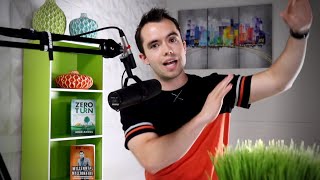
Mike Andes breaks down five lessons from the 2020 recession: keep improving instead of coasting, adopt tech like CRM and e-commerce, ask what could destroy your business, be ready to pivot like gyms moving to virtual training, and avoid over-leverage by building cash reserves.
Questions this video answers
March 16, 2020.
90 days free trial at gusto.com/bootcamp (gusto.combootcamp in transcript).
Chapters
Hey, everyone, it's Mike Andes, and you're listening to the Business Boot Camp podcast. And today we're talking about the five things that this recession should be teaching small business owners. What can we learn from all this? This craziness that's been going on, what can we learn from it? And how can we make our businesses better after all of this? Before we get into a show, speaking of making your business better, I really encourage you to check out gusto.combootcamp to try out 90 days free. Their software where you can pay your employees and them benefits in a very transparent manner. They have a dashboard where they can see their pay, all the taxes being taken out, as well as you can get them. 401k match benefits, as well as education benefits and health benefits. Really, really great software. Check it out today. Go to gusto.combootcamp now. Today, I'm talking about something that really is close to my heart because it's stuff I've had to learn over the past three to four months. Literally. March 16, 2020, was kind of a big turning point for me in my career, I believe. And that is because basically, it was the first time that I was really, really impacted by an economic movement. 2008, 2007, 2006, all of that happening. I was not involved in the market like I am now. I didn't have franchisees. I didn't have businesses of my own. I didn't have money in the stock market. I didn't have houses back then. It really didn't affect me. Like, I was young at that time. I was going through college as a college student. It was, like, in the news, but not really relevant to me. And so now, as I go through it, March 16th was just, like, it went from zero to 60 very, very quickly because literally, in the matter of a couple hours, we had to shut down the gym. And then literally within a matter of a couple weeks, we went. Massive amounts of decline of new projects across our system at Augusta, Lawn Care in all the franchisees. And so I had to learn a lot of the things I'm gonna talk about today by trial and fire. A lot of the things that I've been working with hundreds of. Not hundreds, let's say like lots of tens, maybe 80, 70, 80 business owners very closely to try to help them in their businesses over the past three months, ones that are really, really struggling. And these are the five things that I'm taking away that I'm learning from. Going through this. We've been very, very fortunate and blessed and I'm very thankful that we're gonna come on the other side of this in my businesses, stronger than we were before financially, as well as our team, as well as what we've learned and the systems and stuff that we've created. We're gonna become better because of this. I'm very fortunate and blessed to do that, and I don't take any pride in that whatsoever. We've just been very blessed because I know there's a lot of people that that's not the case. And it wasn't to no fault of their own. This is just. No one expected this. But what can we learn from this? And that's what I encourage you to really be thinking about. Whether you're going into this recession and not knowing what's happening or whether you're kind of just coming out of it now you're back being able to open up or if you're in the middle of it. Like, we still haven't opened the gym. We've been closed. We're going to be closed over three months. And so that can be really hurtful to a lot of small business owners. If you have to close your doors, if your traffic has been dramatically decreased, if you all of a sudden had to change the way you did business and it's more expensive. These are all things that have completely changed the game. And these are the five things I've learned. Number one is don't rest on your laurels. And I don't just mean, like be slack or just be lazy. I don't think most small business owners are that way. I mean, stay on the cutting edge of your industry. Let's learn about your industry. Learn about the trends, learn about what's happening. Learn about who's blazing a trail, who's creating new systems and better ways of doing things and better standard operating procedures and be constantly improving. Don't rest on your laurels. Someone that had a one trick pony going into this whole virus and economic meltdown, they were the ones who really lost out and are really being tested right now. The people that were able to adapt switch change had really educated themselves in their industry and what they could do and what the market and their industry were, where they were moving. Those are the people who are winning throughout all of this. Number two is technology is moving faster than most small businesses. I've learned this like none other than the past three months. That technology is just taking over and we cannot just bury our heads in the sand. And I really encourage people to embrace the technology instead of being naive and be like, oh, I don't want to learn it or I'm not good at it or I didn't grow up with it. Well, guess what? The companies that are coming out of this stronger are the ones that had great technology. You look at the big stocks that rebounded so fast and really didn't even go down much during the coronavirus. Amazon, Facebook, they're all doing better because of this, because it's forcing us to go towards technology. Because technology is more scalable, the infrastructure is much more cheap, it's much more cost effective than building stores. It's much cheaper to have the infrastructure once it's built out. Like Amazon has to deliver those things and not have employees be manning a till, but just have a cashier cash, you know, no cash being transacted, just be a credit card on a website. These are all things that are very important. And, and the companies that are winning after all of this are technology companies. This is gonna only accelerate the movement of society onto technology. And more importantly, it's gonna take where the money's at in our economy, which is the baby boomer market. And it forced them to adapt to that technology and get an Amazon prime membership and figure out how to use Uber and download things on their phone and check out online and order groceries to their door. They, these are all things that just a year or two ago would have been cutting edge, but for them, they had just kind of pushed aside. Well, guess what? Now the people who have the wealth of our country, they've had to figure out technology. And now you've got to make sure you're positioned to take advantage of that and make sure you are not going to be left behind. The fact that Amazon and Facebook and all these other companies bounce so quickly and are going to come out very, very strong on the other side of this is a very clear indication that small business owners need to have a CRM. You've got to be able to accept credit cards online. You need to be able have an effective email and social media campaign for marketing. These are things that are just so important and it's become very, very clear over the past few months. And maybe you don't like social media, maybe you don't like creating websites or educating yourself about SEO or figuring out how to take advantage of technology to not have customers come into your store or to deliver more effectively or more time efficiently, whatever it might be. Maybe you don't like it, but if you can't beat them, join them. If you can't beat Amazon at the game they're playing of one day delivery, join them and that is get your website going, get an E commerce running, figure out a way to use cloud software instead of an old desktop where you can only run payments on this one computer where there's software installed like get on the cloud, it scales, it's accessible anywhere. These are things we've gotta be thinking about and we should have and should be learning throughout this economic contraction. Number three is you gotta consistently be asking yourself, and this is something I talked about at Landscape Summit last year, what would wipe me out? What could wipe me out? What could happen hypothetically in the environment or in health or in politics? What could wipe me out? And really being able to be very open and honest with yourself and be like, there's certain areas that went in my business. I am weak and I need to protect against. In the case of a virus or a political uprising or protest like we're seeing now, or an economic contraction or a shift in the housing market or the population, my local market diminishes or whatever it might be. These are things you got to think about. What's going to happen now with this whole virus and people mass migrating out of big cities towards the suburbs? This is something to be thinking about, is something we're really keeping an eye on with Augusta Lawn Care Services. Because the suburbs is where we make our money. Because we are going after people with grass, not with people in the high, in a skyscraper. So if people are going to become, the distribution of population becomes wider, we are going to be able to benefit from that as the suburbs grow, as people move away from high rise buildings and into a lot with lawn and with property maintenance needs, These are things we gotta be thinking about though. What is going to wipe me out? What is the next environmental crisis that could happen? For example? I'm thinking about the same way that I just mentioned a positive. What about the negative? An environmental could wipe us out is what if we go into a drought across the entire country for three months? What if there is some massive event that literally from an environmental standpoint is completely never seen before? What could wipe us out? How would we adapt? Could we change our service offering? How would we handle our customer database? How would we be able to capitalize on those things? These are things you got to be thinking about. Nobody one year ago would predict that we would have a virus today and that it would have changed all of our lives, all of our businesses, all of our economics, all of our political structure. And this is just what we have to learn. From. We cannot bear a head in the sand. We cannot just say that the coronavirus is a once in a lifetime thing and that we're never gonna see anything like it again. Maybe we'll never see a virus like this before. It's probably likely that it's gonna become more of a recurring thing. But maybe we don't see the virus, but maybe we see other economic shifts, maybe we see other things happening. They're gonna affect your business and you don't even. You can't even imagine. I can't even fathom what those things might be because we didn't think about what was gonna come in 2020. And so, you know, ask yourself the question, what could wipe me out? How could I take advantage of that? And how could I protect my business if that thing happens? Hypothetically, Number four is be willing to pivot and change. This is something that boggles my mind is that some people over the past three months have literally been like, you know what? I'm just going to close down and I'm going to open up in a few months and everything's just going to. I'm going to go back to normal. Guess what? Things change. You've got to pivot. Just like I talked about a couple weeks ago with the gym, we're closed down and we had to pivot to online virtual training. Has it been wildly successful? Has it made tons of money? No, because there's a ton of competition right now, and every other good gym, as well as companies have been creating content for years, are already in that space dominating it. So. But does that mean I'm just like, oh, no, I'm just gonna like stick and just do the same thing. I'm just gonna wait till the gym opens and I'm just gonna sell gym memberships and in person training. No pivot change. Realize I gotta embrace technology. I gotta embrace the fact that we're not gonna open those doors for a long time and that some people are gonna be afraid to come back. And we've gotta change, we've gotta pivot, we've gotta figure out virtual training, we've got to figure out how to use zoom, and we've gotta figure out how to do all these things virtually that in the past we would have weighed people, we would have held their hand while they're doing balance moves. We would have been able to do so much more in person. How do we change? How do we pivot? And you've gotta be willing to do that. It's a mindset of flexibility. If you're so set in what you're doing all the time, you're never going to be able to adapt and you're never going to be able to change and you're never going to be able to take opportunity when these massive shifts happen. The people who are winning and are going to take advantage of what's happening right now are the people who are willing to change, willing to adapt, nimble, and literally within 24 hours can make a decision to go in a completely different direction. They're the ones who are going to win. Be willing to adapt, be willing to pivot, and be willing to change your business model. Number five, the fifth thing that you've got to learn from this whole recession and everything we've been going through for the past few months is do not over leverage with expectation that everything will continue the same way they always have. Because guess what, they're not going to continue the same way they always have. There's going to eventually be a recession. There's going to eventually be some sort of business hardship. And it might not even be a, a macro political or macroeconomic issue. It might be something like your family member gets injured or you get some sort of sickness, or a really key employee leaves or something happens, a competitor moves into your marketplace that is much bigger than you, it has funds to wipe you out. These are things that are very, very possible. And I think because we had a good for 12 plus years since 2007, 2008 recession, we kind of got a little bit lazy financially and we were over leveraging ourselves as small business owners. We were taking debts out, we were mortgaging our house in order to grow the business. And then guess what? One day that had changed in the past few months and now people had too much leverage, they had too much all this interest expense. And now all of a sudden they aren't growing 30% every single month in their revenues, which was needed and necessary to sustain that level of debt and that loan expense. And so you've got to think financially like, do I have money to get through a crisis? Do I have the money, cash reserves? Is my business model profitable enough to be able to take a hit in profitability and still survive? Or are my margins so low that something happening in the economy, in the hiring process and in my team, something happens and just can wipe me out so quickly? Am I that fragile of a business financially where literally if I'm not growing at this same rate every single month, or if I'm not making this great percentage month that I had in terms of profitability every single month that I'm not going to be able to survive. You've got to build in the fact that there's going to be these issues with the economy. There's going to be times when your business goes through hardships, when there's unforeseen issues in your team, in your marketing, with your employees. Your key best employee might leave, your key best customer might leave that has 30% of your business wrapped up with them. These are things that happen. And if you have not deleveraged and if you're over leveraged during that time, you're going to have a very hard time making sound business decisions simply due to the fact that you are, you are struggling financially. And what I've seen over the past few months is business owners making poor decisions because they are literally drowning financially. It's one thing to be going through an economic crisis or a virus like we're going through right now. It's another thing to have the added pressure of the financial aspect of your business literally going to shreds and you realizing that you over leveraged, you did not save up for a rainy day. I encourage people like I'm all about growth and expansion and getting to the next level and investing in hiring and growth. I love that, I love growing my business, but you've got to do it in a very efficient manner. We started our second corporate location for Augusta Lawn Care literally the day that our state went into lockdown. But the reason we were able to do that is because the model from the beginning, when we were getting ready for launch, like buying the equipment, everything was we're going to be profitable literally within like six to 10 weeks. And then we're going to stay profitable. We're not going to invest hundreds of thousands of dollars. We're not going to go get a big loan, we're not going to get a big high interest debt. We're not going to use credit cards to buy our trucks and equipment and a big, big mortgage on a piece of land. That's not how we did it. We started with a little storage facility. We started with one truck. We started very small to make sure it's profitable right from the get. And that's the kind of business model that's going to work when you go through really hard times, is high profit margins, systems oriented and a good team culture in place. And so these are all things I want you to think about. Number one is do not rest on your laurels. Number two is technology is moving very, very fast. You've got to stay up with it. Number three is ask yourself what could wipe my business out? Number four, you've got to be willing to pivot and change your business model. And and number five is do not over leverage yourself and depend on this ideology that things are going to continue the same way that they always have. You can listen to Mike Andes on the Business Bootcamp podcast. Until next time, be great. Nothing else pays.






