Building a $2M Hardscape & Landscape Business Using Sub-Contractors | ZERO TURN
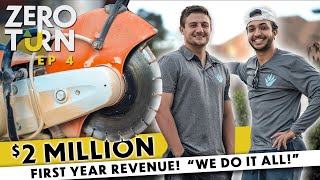
Carter and Josh of Urban Oasis Contracting rebuilt their Austin landscaping business from scratch during COVID, growing to nearly $2M by adding concrete, masonry, and irrigation services. They use 3D renders and a CRM to land jobs, rely on subcontractors, and guarantee 40-hour weeks for full-time crews. Word-of-mouth drives 70% of their leads.
Questions this video answers
2020.
Austin, Texas.
www.urbanoasiscontracting.com.
About 70%.
About five days.
Chapters
Hey, everybody. Welcome to another episode of Zero Turn. Today we're here in Austin, Texas, talking with Carter and Josh from Urban Oasis Contracting. We're gonna hear a little bit about their story and how they got started out here.
How's it going, guys?
Hey.
Yeah, excellent. Thank you very much.
Thanks for having us on.
Yeah, yeah, definitely.
Thank you, guys.
So do you guys want to tell me a little bit about your story and how you guys got started out here? What made you guys jump in along here?
Yeah, yeah, for sure. So Josh and I are high school best friends. We started a mowing and landscaping company back then. That was six years ago. Fast forward to college. We separated. I went to Chicago. He went to A and M in College Station. And then when Covid hit, I stumbled upon some old checks from the mowing and landscaping business that we had in the past, and it was when you were locked down completely. So I called Josh, I said, hey, man, let's start calling these numbers on the checks, see if they have any business for us. So we did that. We went through probably 20 or 30 checks, and one of our old clients actually hit us up just for a little mulch job.
Something.
Yeah, just a little stupid job. We did the job, and then we told him, hey, man, if you like your service with us, can you just post us on Facebook or nextdoor app? Can you leave us a review or. We'd like to get more business out of this. So he posted it, and then we ended up getting more jobs from there and kind of kept the ball rolling.
And that brings me to the wow. Just like, super, like, grassroots. Just kind of like on a fly. You guys jumped back into it.
Off the bat. We saw, since we were in the landscaping business already, like, mowing, we saw a little bit of, like, a hole in the market. We're like, well, there's not a lot of people that do this. You know, it does have a little bit of a bad connotation sometimes with contractors not being, you know, reliable. So that's when kind of me and Carter were like, let's try it and, like, make it into a business. Because Car and I have had multiple businesses before, so that's kind of like, our first idea of it.
Yeah, definitely. And both of us have a background in business. In school, he studied entrepreneurship and business. I did business and economics. And so we kind of ran with that along with the growth in Austin.
So you guys just got started. Was it in 2020?
Yeah, it was in 2020.
Like, obviously, you guys were on lockdown, so you had A ton of free time. But how did that like accelerate your growth or like hinder your growth? Were people not looking for landscaping at that time?
Yeah, yeah. I mean, it's a fine line. I think people were looking for landscaping jobs because they were spending more time at home enjoying their. But you also have to be very careful with COVID guidelines. You want to make people always feel comfortable. Yeah, we took those two factors into consideration a lot as we were building this.
We thought Covid actually helped us in a way too obviously. And it was a crazy situation for everybody. But like Carter said, it was hard to get clients. But then it also. I think that's what really gave us a boost to give us like a name recognition. A mix of COVID with Austin booming was kind of like our kind of lucky hit.
So what is like the main focus of your guys business?
So we're a full scope contracting company, so we specialize in general landscaping stuff. But we've really put a priority on expanding the services that we offer. So now we're into concrete, masonry, irrigation. Pretty much a one stop shop.
What was your guys original setup? Was it the two of you guys out mowing lawns in the beginning or did you try to find some employees right off the bat?
No. Yeah, it was us for a good while. We had a SUV and an old trailer that my dad had. And that's what we did our first round of jobs with. And then whenever we realized this is serious, we're actually getting a good amount of clients, we picked up our first truck and trailer combo. So then we had two setups. Then we had some of our friends join the team just for help with labor and everything. And then over time, you just constantly cycle through who's good at this, who's not. What more contractors can we bring in? Yeah, and yeah, you refine that way over time.
How did that feel going from like just getting started this last year and then just like that rapid, like explosive growth?
It's overwhelming good and bad. Yeah, I mean it's a lot of long nights, early mornings. You just got to scramble to keep up. But make sure that you're delivering the product at the end of the day. Yeah, and that was the most difficult part. But we knew that if we stagnate, we're just going to kind of solidify in the state of the business that we're in at that point. So we just constantly refine and we're not done with it either. I mean, to keep up with the growth in Austin right now, you just gotta be on your toes.
What was like the hardest point? Growing? So you guys are at like almost 2 million now. So what was the hardest point between 0 and 2 million? Was there like just a pain point in between or did you guys kinda just like fly through it?
I look at it as like a stair step. So you'll get to a point where you're like, oh, gosh, I need more guys. We have too many jobs. Need more guys. And then you double your guys. And now you're saying, oh, geez, I gotta struggle to keep these guys occupied or else I'm gonna be losing money. I need more jobs. So now you dump money into marketing, and now you've got too many jobs again. So then you gotta get more guys. And so like, that's kind of the way it's been with administrative hurdles along the way. But it comes in stair steps. Yeah. And I feel like once you overcome that stair step, it kind of levels out for a little bit and you can kind of take a breath, but then you want to get back on it and then keep going.
With bringing in a bunch of new people all the time. How is it trying to train up those? Because like a full scale contracting business, I'm sure you can't just hire like a Joe Blow off the block and get him like laying concrete and stuff.
Yeah.
The main team just kind of like naturally grew from that. We have a good list of employees who pretty much got picked. Out of maybe 30 people, we have the best, 10, the most hard working, the most reliable, the ones that we just like click the best with because we really are more of a community rather than just kind of like an employee, employee relationship. So our main team is of that, which is say 15 people total. But then we have a list of 15 other contractors. We do a full time specialized work. Whenever we have a client who really needs something very detailed and specialized, we use our contracting list.
Oh, dang.
That's all Those guys have 10, 20 years of experience just so we can deliver the best for our clients.
How is trying to find laborers been?
Yeah, it was difficult. We have, like Josh said, about 15 guys that are full time now. Apart from the managers. Yeah. So those guys are our labor and they're specialists too. That's the guys you see here. So they're with us full time. But it is kind of a balance because if we don't occupy their time, we're paying them either way. So if it rains, we pay them.
Oh, wow.
Yeah.
So are they. Are they salary too? Or is it just like you Guys are like, if you're scheduled, like you're.
Getting paid, they're full time, so they're 40 hours every week, guaranteed. If it rains or shines, whatever, they get their 40 hours and then we give them overtime if they go more than 40. Okay, that's. We're nice there. That's generous. But you have to be, otherwise you'll get your guys going somewhere else because there's kind of a shortage in labor. So you got to be nice to them. And that kind of like builds a good culture too. Everybody's happy.
Hey, did you know that they have parrots down here in Texas? Did you also know that you have less than a month to get your tickets for Landscape Summit? You can get them for January 13th, 14th and 15th at landscapebusinesscourse.com conference. We'll see you there.
So you guys are both out of the field now entirely.
I wouldn't say entirely out of the field because in this business you're always in the field. In a way. The bigger we get, the more managers we have, which are mostly all of them on site. So Cora and I really mostly, I would say 90% of the time are, I guess, behind the scenes now, but we are pretty much the face of it. So we pretty much do all the quotes and the most client relationship.
How was that transition like originally, stepping away from the field more and more and more and trying to work with clients more and more?
Yeah, it's really gradual. You don't want to step away unless you're fully sure that it's going to be handled without you there. So that was definitely a challenge for us because we're all about quality of jobs. And so stepping away, it's a little bit nerve wracking, but, you know, we kind of popped into jobs a little bit more frequently instead of staying on site and then gradually kind of ease away. We trust our managers a lot now. They've had tons of experience, so now everybody's completely proficient.
Yeah, I would definitely say the manager is the most important thing because everyone's representing the same brand, like the same company. So if we're not there and someone messes up, you know, we're kind of getting screwed on the back end too. So that was a super, kind of like a pivotal moment where we just had to trust them to do it. I mean, there was too many business where we. You have to grow and in order to grow, you have to let somebody kind of delegate.
Yeah.
So I would say, yeah, the manager is what's the most important thing.
How'S that scheduling work for you guys? Like, is it a headache for you guys to have to try to.
Yeah, that's the hardest part.
Or do you think, like, you'll want to pass on to your managers eventually?
I think eventually we can, but that's the trickiest part by far. We still haven't figured that out completely yet because one, you don't know if it's going to rain for a day or five days. And so it's impossible to plan ahead. But we're getting there. We're getting better at it. We're leaving ourselves buffers, but not too big of buffers to where we're not maximizing the jobs we can do. So it's like a really kind of fine line.
Do you guys want to walk me through what this sort of project looks like, how long it takes, what the estimate process is?
For sure.
Yeah. So each project does vary. The average job that Urban ISIS takes on is usually about five days long. Usually what we do is the quote, which is all online. So our clients book our quotes whenever they want a consultation card and I spearhead those. We meet with the clients, go through their design ideas, we provide our own. Once we finalize the design, we usually do a 3D render to really get everything into paper. Once that's accepted, the turnaround is probably about three or four weeks to get the client booked in. It serves a lot of back end things that you have to do to really maximize efficiency, maximize the labor.
Yeah, yeah. I mean, a lot of planning is involved. It's a really layered project because you don't want to, you know, put up some hardscape on top of some irrigation. You need to think backwards and really kind of reverse engineer all the projects to make sure that you get it right the first time so you're not going back and redoing things.
So what are some of the things that you guys do to work extra efficiently to make sure that your projects aren't dragging on between weeks and months and like a year?
Yeah, yeah. I mean, I think that's a big mistake a lot of people in the business make is just not taking time to plan. You get a lot of jobs and that's exciting and you want to take as many on as you can. But you really need to sit down, write down your process from start to finish, figure out what guys and how many you need at the job, pre order your materials, confirm everything with the clients. I think all those things can contribute to a clean project from start to finish, and they affect the Bottom line, your relationship with the clients and how quickly you're in and out.
When you guys are finding new clients, trying to book new jobs. By this point, is it like referral based or are you guys doing marketing behind the scenes too?
70% of our business comes from word of mouth. A lot of clients always see our work, they really like it. So we always have signs in the front that have our number. And then usually a lot of clients come in and whoever sees like our shirt, ask for our number. So I would say that word of math is a huge one for us, but we also do provide a lot of marketing via Facebook.
So you guys said that you break it down into phases. What does that kind of look like? Is that just part of that thinking backwards to try to like build that puzzle?
Yeah, definitely. Yeah. So a good example is right here. So this piece right here is going to be a concrete slab with a roof extension. Things like this require city approvals. We always want to under promise, over deliver. So with these guys, we're just going to play it safe and do a second phase for this so that we can kind of knock out, close out this entire first phase so that we're not held up with the entire project just on this phase itself. So it's really case by case basis. But with the context of the project, you can kind of determine which phases and how many you need.
Is there anything in particular you guys have to take into consideration when doing jobs out here? Is there anything else that's pretty unique about the area?
I'd say it's helpful to know the plants, just to know the conditions that they'll do well in. Apart from that, I think it's pretty straightforward here. We don't have, like you said, any crazy conditions or huge red flags about Austin. So I think the clients is super important. As people come in here, the reputation is super important. But on like a logistical standpoint, just knowing the plants, I think might be the only thing.
I mean, it's just hot.
Yeah.
Working in the summers, but you get used to it.
What is like a day to day in your life? I'd seen a little bit that you were like in the marketing side of it.
We're not necessarily completely like mutually exclusive here. We dabble in all of it. I'd say my main role, I deal with clients a lot. So in the morning I'm usually sending out quotes or going to quotes in person. I handle kind of the customer relations. So we're answering emails. I'm running the website and doing a lot of the marketing, like the social medias and things like that. Whereas Josh definitely handles kind of more of the employee and contractor side of stuff.
So pretty much, I guess my day is mostly related with the cruise since I speak Spanish. I'm kind of like the main lead on that. So pretty much I handle all the employees, payroll, more of the business side of everything, a lot of the numbers. So we do have a. An accountant who helps us with all of that. It's pretty much just all about like the future growth of it and how to step up, you know, finding new contractors. I'm building relationships with other people and other companies. So now we're becoming subcontractors of like big companies, home builders. So I'm more on like trying to get partnerships and trying to grow the crew.
What does that sort of look like? Like trying to find different partnerships. Like what is your guys ideal partners partnership or like clientele?
For us right now our most important relationship is pool companies. So once the pool installed, they pretty much are in the full backyard. So after that there's no landscaping, no irrigation, everything's broken. And then the pool companies don't do any landscaping. So it's up to the client to kind of find their own. So now pool companies are offering our services through them in a way. So that's probably our best relationship, business to business right now.
So. So you guys have put a lot into your brand recognition recently and I saw your website online, it's beautiful. What was the process of getting that done?
Thanks. Yeah, I actually did that myself. I just had to learn how to do it. Yeah, and just kind of trial and error. It took a couple weeks, but yeah, we got it done. A lot of YouTube videos.
That's great. And same with the logo. Did you guys do that too?
Yeah, yeah, same thing.
What kind of went through your mind when you were trying to like create that? Like if somebody is like a do it themselves sort of guy. A lot of YouTube, obviously. And then what did you guys use to build it?
I googled logo design, honestly. And then I just kind of found the one I like. We picked the color scheme of kind of the vibe that we wanted to create. Yeah, I got a lot of family and friends in on kind of voting for the top three that we had developed before we were Urban Oasis Contracting, we were called JNC Contracting. That was a little bit more of like a personal. Two kids off the street doing your landscaping, Carter? Yeah. So we wanted to pivot away from that whenever the this became kind of a serious deal and go Kind of target the commercial clients.
And did you see like that level of professionalism, like, kind of amplified once you guys took it away from like the homegrown brand into Urban Oasis?
I mean, that was definitely probably one of our biggest points, switching from just doing small jobs with a small list of contractors and employees to really switching into like Urban Oasis contracting, where that's like, you know, like a real business. We're BBB accredited. All that kind of came with, with us, really. You know, hey, you have to just do it and do it and that's the only way to, I guess, grow. Yeah, you can't just keep, keep at the same tone. You gotta tone up every time.
Whether you're just getting started in the landscaping industry or you're already an established business, you're gonna need a professional website to ensure your customers know how to find you and what services you offer. Lawn CareWebDesign.com is here for you to set you up, keep you going with SEO. You can do unlimited changes to your website, all for a flat monthly fee. Check us out on lawn carewebdesign.com.
Yeah, so we have weekly salaries for all the guys, all the managers, so they've got a base salary every week that they get for sure and then a commission based on the job that they manage. So we, the new system that Josh and I are pivoting to now is we're assigning all the jobs to people. So we're not managing any jobs ourselves. So just the managers are managing jobs and then Josh and I are just dealing with the clients and the back end stuff. And then they are going to get a percentage of the jobs that they manage.
And once they're managing a job, what is like, what's their role? Is it just top to bottom, like customer relationship?
Yeah, that's what it is now all.
The way through to like actual site management. Yeah.
So they're doing everything from start to finish except for the scheduling of the guys. So Josh and I will be handling scheduling, the scheduling from the start of the month to the end of the month. Every single month. We're going to hand every manager their plan for the month and that includes all the scheduling, every individual contractor, they have, all of that. But once we're done with that, the manager takes over completely.
So what do you guys do to build that rapport up with your clientele? Is there anything in particular, any tips that you could give anybody else?
It's more of what not to do. It's not crazy competition here in terms of the Communication with clients. I think just being straightforward, being honest, reliable. Answer the phone. It's one of the most elementary mistakes that people make, I think. And it goes such a long way. Just answer your phone, be responsive, be communicative.
Yeah. And if you're gonna do the business, you gotta know. It's like it doesn't stop because we have clients calling us at 10 that night. Yeah, I mean we get calls at night and you have to answer. Then we Woke up at 6 and you have to answer.
So whatever.
Gotcha.
You got to have to. You're going to do it. You just got to do it.
When you guys are doing big scale projects compared to small scale projects, is there anything that is too small for you guys to pick up or anything that's like way over budget that you wouldn't even like toss onto your contract Tractors?
I would say yeah. Minimum at this point just because of how many clients we're bringing in. We do have a small minimum just because we're not just gonna. We're not a company that just comes in and that's like a little flower bed. Obviously if it's incorporating like a bigger project, we obviously do that work. So there is a minimum to kind of contract us out and then no.
Maximum doing bigger projects. Do you guys have to go rent equipment or is that really what falls like the contractors when it gets to more like specified work?
Yeah, no, we streamline everything when it comes to machinery and equipment that we need. So yeah, we'll go out and find what we need. The contractors really are the skill involved in it, so they operate all the stuff. But we make sure that everything's done in house for that.
Yeah, I would say we have majority of the like kind of machinery that we use on a day to day basis. We definitely have multiple machines at a time because we have different contractors working at different sites and then for like the really big machines for like pre construction and we rent those out.
Going out and doing quotes and doing payroll and all this sort of stuff. You guys have a lot of moving parts in your business. Do you guys do anything in particular to keep it all under wrapped in control?
Yeah, that's actually what we're doing right now. I mean it's like constantly playing a game of catch up in terms of moving pieces like that. One good thing we have is a Google calendar for all of our teammates and you can color code that and assign different tasks to different managers. So that's one way of kind of syncing our calendars all together. We also have A CRM software called Keep. So it's a really good way to do it. It kind of holds all of your quotes. You can communicate with clients that way. So that's been super helpful. I think between those two that kind of goes a long way.
Yeah, I mean every day it changes. It's like the million dollar question. We've been in business for a little bit, but the more you grow, that lets you know, you know.
So.
Yeah, exactly.
Kind of like changing up the spots like every day we're learning still.
You guys have been in the business full heartedly from the beginning. Working late nights. Have you guys kind of manage your time going into it? I mean trying to do the books, trying to do the websites, trying to do the clients. What's your guys time management strategy? Do you have any extra time?
No, I mean business first in my mind, at least the first two years. You just have to treat it as your baby and give all of the time and availability that you have towards that. I don't think there's the luxury of having free time until you actually achieve what you want to achieve. And for us we're just keeping up with the demand and if that means not a lot of sleep at night, that's fine with us.
What is your guys end goal? What's that on the pillar? What's that kind of look like?
It's a good question because. Because this is our occupation, but it's also our hobby. Like we love what we do and I think building is the end goal for us. We don't have an end in sight where we want to stop necessarily. We're not trying to get out of the business at all. So I think just constantly growing is what keeps us happy.
Yeah, probably growing. And being in the top three companies in Austin.
You guys are doing huge projects left and right. What is kind of the goals as you guys keep growing into 2022?
Yeah, I think it's always just to get cleaner at jobs that we do. It's already a task in and of itself to take on a project this big, but to make it super clean for the client and the business is another story. So I think that's really what we're always striving to do is just clean it up.
We definitely want to obviously do the bigger projects. We like interacting with the client, you know, so the longer we're with the client, the better our relationship is, which provides future jobs. So we definitely want that. So pretty much jobs like this, this is probably like a month job with all three faces, spaces included. And in the future, we might get into pools.
Oh, really? What's the process behind getting into that? Like, what do you have to consider?
I mean, right now we just know pools is an excellent business in Austin. So I guess that one's just like a business strategy for us to like get in that field. Plus we do the landscaping. So.
Yeah, so it'd be like an all in one together with that.
But yeah, process wise, I mean, we gotta study.
Yeah.
Learn from the other guys. Pretty much.
Yeah.
And always bulking up the services you offer is super helpful. We didn't start out with projects like this. We kind of of took it one step at a time and started expanding our services with different contractors and things like that. So I think just kind of a slow burn and just. You'll eventually get there.
Yeah. Just trying to trickle in, like each little step.
Yeah, yeah. You don't want to take on what you can't handle off the bat. Even though it might be exciting sometimes, you always want to be prepared before you get to a job because it can go really bad if you don't.
So if people are down the Austin area looking for contracting work, we're. Where can they find you guys?
Yes, we've got a website. It's www.urbanoasiscontracting.com. and then our Instagram and Facebook is urban oasiscontracting.
If you're interested in joining on a future episode, check out the link down below. And you could be next on zero turn.






