Creating a World Class Team Culture at Your Lawn Care Company
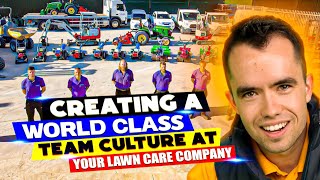
Mike Andes explains how to build a strong team at a lawn care company by aligning employee goals with company success, leading by example, and offering benefits early to signal trust. He recommends hybrid training with hands-on work plus video, pay-for-performance systems, and regular team meetings focused on continuous improvement.
Chapters
What I would be looking for if I was you is one thing. Just take one thing away from the entire conference. Hey everyone, this is Mike Andes and you're listening to the Landscape Business course podcast you might be watching on YouTube or Facebook. Thanks so much for coming again today. Today we're going to be talking about how you can build a world content class team. And I have some big announcements too. But before we get into today's show, a big thank you to today's sponsor which is Jobber. If you haven't already, go to getjobber.com im andes a n D E S as my last name and by following that link you're gonna get 20% off your first six months of their software. And a question came in about Jobber and I wanted to read it and my response to it. So it says I've heard about Jobber offering On My Way text messages. What is this exactly? On My Way text messages is an included service available on the Jobber app that lets your customers know when you're on your way to a job. Use a standardized message to remind customers that you're on your way, running a bit late or how long it will be until you arrive, allowing you to spend more time on the actual work than on corresponding and potential miscommunications. Go to getjobber.com im.
And check it out today. So today we are going to be talking about how you can build and create a world class team in your landscaping business. And my announcement today is that that is also going to be the title of my talk at gie. So if you're around GIE this year, definitely want to come to my Thursday talk. I've just got it scheduled the past few weeks. I am booked to be there. It's in Kentucky, Louisville. And I'm going to be there on the Thursday evening. I'm going to be speaking on creat, a world class team. And so if you're going to GIE or if you're in that area and you want to come see me in person, definitely want to come in October to the GIE event on Thursday evening. I can't wait to see you there. Now today we got questions that came in via the Facebook group. And so as always I'm going to read several of them. I'm going to answer them. I wanted to keep today's show a little bit shorter. We've been going 30, 40, 50 minutes plus but today I want to keep it a little bit shorter. So I'll get maybe five or six questions in today. So I posted on the group and just asked for questions about employees, accountability, discipline, culture, things like that. So I'm going to read the questions and then give my answer and we'll go from there. So T. Ryan Griffin asks, how do you get your team to buy into your vision? Is it just lead by example and explain what you are trying to do and what happens to and what needs to happen for it to work? So first of all, in my opinion, so the question is, how do you get your team to buy into your vision? So in my opinion, most laborers, they aren't necessarily going to be inspired by visions of grandeur or what you want the business to be. Even although that will help some people, it definitely is a part of it. I feel like the biggest thing is making sure that the success of the business aligns with the goals of the employee. And so what that means though, is that you're going to have to really get to know each one of your employees to know what their goals are. For some of your employees, their goals might be to work four days a week. For some of your employees, it might be to make more money. For some of your employees, it might be to become a project manager or work on different types of jobs or maybe one day own their business. But in order for, in my opinion, for them to really buy into the concepts and the mission and the goals of the company, those goals of the company to align with their goals. And so in order to make sure that that's happening, you gotta know your individual employees. And that's something that's easier when you're 2, 3, 4, 5 employees. When you're starting 10, 15, 20, that becomes a little more difficult. But in terms of getting buy in, what T. Ryan Griffin, when you said exactly was right, like leading by example is super important and explaining what you're trying to do and what needs to happen for it to work. Yes. However, you also have to realize that.
By the vision of the goal, you know, you said, you know, to trying to do what needs to happen for it to work. You gotta explain how the company working, the company doing well, getting bigger, growing, whatever goals you have for it is going to help the employee. So, for example, just telling your employees that, hey, we want to build a $10 million business and so show up, we're on work tomorrow, show up to work on time tomorrow and work harder. And you know, we need be more efficient. That's not gonna work. Now what if this is how you would could phrase it is, Hey, I want to, I want to be able to pay more per hour, or I want to offer benefits or I want to offer a medical for all, everyone that works here. In order for that to happen, we've got to make X amount more per month. In order for that to happen, we need to be more efficient in these areas. We need to make sure we're on time, we need to do X, Y and Z. We need to make sure that I'm out of the field and working on more sal and generating more income and revenue for the business and growing and hiring and so getting them on board with those things. In order for that to happen, they have to see how.
Their embedderment is going to align with achieving those goals. So how I would do it, and this is something that we talked about, I talked about a business owner just a couple days ago. Is they genuinely the individual I was talking to, they genuinely wanted to pay their employees more, they genuinely wanted to give them benefits, they genuinely wanted to make it where the job was, not just a dead end job. They genuinely did. And that's the first thing. If you're not being genuine about this, your employees are gonna see right through it. If you're just trying to make stuff up and try to pretend like you're nice, they're gonna see right through it. But if you genuinely wanna make a better workplace, if you genuinely want to afford to pay them more, if you genuinely care about them and their families, just tell them that. And then tell them that you wanna see them do better, you wanna provide opportunities for them to do better. And in order for that to what the business needs to do. And then some of them are gonna rise to the occasion and then begin to see the business's business success as their own success. And they will go the extra mile. Cause they see that the business doing well is going, they see the roadmap, they see the correlation between the business doing good and then them doing better. One of the most discouraging thing for an employee is when the business is doing fantastic and growing and making more money and the business owner's doing better and making big, having a bigger house and driving a better car, but yet their paycheck isn't showing it and they don't get anything extra and they don't get any benefits and they don't get any paid time off and they don't get anything more. And so it's something I'm always trying to address every single year, determining what more we can do for them. Because as I grow and I get less and less involved in the day to day. I don't want them to think that somehow I'm growing and building and making this thing and that their success is and their improvement is not corresponding with that. And so this past year we implemented two weeks of paid vacation. The year before that we set up a grid of minimum amount of payments so that everyone's making over $20 after two years. Next year it's probably going to be the paid by performance system that is going to make sure they can make more than 25 + whatever they can achieve in a day. And so I feel like in order, if you want them to quote, unquote, buy in, you've got to buy into their goals. If you want them to buy into your goals and the business goals and what you want to see success in the business, if you want them to buy into that roadmap, you've got to buy into them, their family and their goals and really care about what they're going through. And that's how you're going to get buy in. Next question. Joseph, I can't say the last name, sorry, Jose asked how exactly do you develop a culture in the business? What does that look like? I've never worked at a place with what I'd consider a good culture to work in, so it's hard for me to imagine it. So this is something I've never, never talked about a whole lot, but definitely something I recognize. And that is my first. I worked as a personal trainer at Anytime Fitness. I went on to buy the franchise last year, but six years ago when I was there as a personal trainer, my boss at the time and the guy I ended up buying the franchise from, he was an excellent leader and maybe definitely not perfect, no leader is, but he definitely set me up for the way that I treated my employees starting out and the way that he was just his demeanor and things, he was ex military, just awesome guy and I still, you know, am good friends with him. But he probably because a lot of times that first, that first culture, that first boss, they're kind of the one that you start to develop the framework of what a boss should be or what a culture should be. And so if you haven't had that role model, if you haven't had that culture that you say, you know, I enjoyed working there, I enjoyed the people there, I enjoyed going to work and you know, maybe the pay wasn't the best or maybe this wasn't good, or maybe that but like the people and the culture and just the feeling around the business was Something I enjoyed. And so how to develop that culture? I think there's two things. Trust is really, really big. Trust and communication. And usually communication leads to trust. So communicating to your employees and letting your employees communicate back to you develops trust and trust and communication together, I feel build that culture and make it stronger. So number one step, Jose, you asked, how do you develop a culture? I would say, number one thing is develop communication streams between you and your employees and from your employees back to you. In other words, ask for their criticisms, ask for how they think the business could do better. Allow them to question your ideas or ways of doing things. There's things that I genuinely wanted to do in the business, still do want to do in the business, but I allow the feedback of the team to either slow me down or to add or improvise or change that implementation. And thereby that's when you get buy in. Why? Because you get communication and thereby you get trust. Because now they trust the changes. They trust what's going on, they understand what's happening. And it also allows you to be more nimble as the business owner and make changes when people do trust you. And so the culture is not built. In my opinion, you really can't build a culture. I think you build a team. And culture is almost like saying an aura, like, it's not a physical thing. Culture is not a physical thing. It's just that feeling. It's the untold.
Policies, it's the things that happen without anyone saying. That's the culture of the business. If everyone shows up late, that culture has an absentee, tardy type of culture attached to it. And so the standards, it's the way of doing things that is considered acceptable in that environment, in that organization that becomes the culture. And back to the point that T. Ryan Griffin said about leading by example, a lot of times the culture, that is the atmosphere, the underlying themes and standards of the business many times fall directly in alignment with what the cultural implications of the founder is. So if the founder shows up late and doesn't show up to work on time or takes too many vacations or leaves early, that's what his, his crew is going to do. That's what his office staff is going to do. Generally, if the founder isn't good with money, you know that is going to then lead into the business not being able to financially do things that are prudent. Many times the culture of the business is determined by the founder. If the founder does not care about people, it's going to trickle down to the culture he's not going to care about his employees. His employees are not going to care about the customers. So many people whine and complain about their employees not doing a good job on customer sites and you getting callbacks and complaints from customers. That's many times a result of you as the owner not treating the employees correctly and not caring for the employees. Therefore, the employee's not caring for the customer. And when I talk about caring, I'm not talking about the ooey, gooey, like, love everybody sort of thing. There's also a certain amount of caring that will fire people after two days. That will fire them on the spot because you care so much about the employees you have and the culture that you stand for that you care so much for that that you will fire people fast. I don't mean caring in timid. Like, there's no rules, no policies. We just let everything slide. We try to work with everyone. We give everyone everything. We don't ask them to work overtime. We don't ask them to push the extra mile. Like, that's not what I mean by caring. Because caring is. It really is like the thing that tends to the culture. So, Jose, if you've never had an environment or a culture that you loved, number one thing I would do is make sure you're leading by example to create that culture as the founder. Number two is communicate that vision to your employees and allow them to communicate back to you on how the business can improve, what they want done differently, how they can be more efficient. Let them communicate and then that will lead to trust and thereby you'll be able to start laying the foundation and the building stones of a culture that you're proud of that's efficient, that's makes money, and that the business can be sustainable. Amity Morales asks benefits for employees, like health insurance, 401k, et cetera. When do you start them off with benefits? Also, how did you get information about this benefits.
Or did you search for lower cost for owner? Okay, so basically you're asking about benefits. We have paid vacation time, paid time off, two weeks a year, and it accrues from day one. And it just accrues on an hourly basis based on how many hours they work. So it averages out about two weeks a year of paid time off. And that's the main one. We have a health stipend they get every month for like a gym membership or for like health insurance or for life insurance. It's a stipend they get every single month. And we just do that right from day one. And I get why someone would want to do like every three, you know, after three months it starts or something like that. Totally get why you'd want to do that. We do it. I don't do that because I want to show a lot of trust up front and let them disqualify themselves from that instead of me coming in, being like 50, 50 with them and not fully trusting them. Because if I do that, they're going to reciprocate that they're not going to put all their effort in, into the relationship. If I as the employer am not putting no 100% committed to their success and trusting them, I can't expect them to reciprocate with 100% work ethic, 100% dependability and things like that. So I go all in on them at the beginning, Give them the benefits up front, give them the uniform up front, give them the training up front, do everything up front. And I don't like, allow for a nine, you know, a three month trial period before benefits kick in.
Keegan McGinnis asked. One of my install crews is all my best friends whom we have known each other forever. They have a blast all day working with each other, which is great and makes them fun to stop in on. But as the owner, I can't help but see how them joking around all day while working slows them down. Would you crack down on it or let them be for the sake of morale? So there's definitely a big time.
This is a big question. And there's a massive advantage to having great morale. I think one thing that Keegan realizes that great morale in the end is going to help with profitability. It's gonna keep your employees longer. They're generally more happy, they're able to, they're willing to work longer. And if they enjoy the people they're working with, those sort of things matter. And so Keegan already realized that morale is important. And I'm a big believer of letting them take some time in the morning, a few minutes to talk, let them talk in the evening. Like once all the crews come back, they like to touch base, tell funny stories, tell about what happened that day. Like, I'm okay with that now. If you're paying by the hour, I'm sorry, if you're paying by performance, like paid by performance, this is not gonna be an issue because they make the decision of whether or not they want to goof off or tell jokes or be funny. And they only get paid for the work they do. Now if you're paying your Employees by the hour. This is definitely something you're gonna want to keep an eye on. And how I would police this, because if they like each other and they rib each other and joke around a bit, it also means there's usually some level of competition and some sort of, like, nice.
Teasing that they do between each other. And so you can take advantage of that by making a scoreboard around their productivity and efficiencies and as well as callbacks and things like that, making it public to everyone else how much money they made in a day for the business. And you can do that as like a percentage of revenue versus payroll, for example, like revenue, like how much do they bring in versus how much do they cost the company in payroll? And you can make a ratio and then just make that a game for them to always be trying to beat each other in that ratio. Making sure that they. Or even more simple, keeping track of callbacks and having them be competitive and about who has the least amount of callbacks, how many days since they had a callback. Making that information public is something that is going to keep them accountable to each other. And they're gonna worry more about looking bad in front of their friends than even doing the harder work. So they're willing to put their head down and start working, or they'll work hard while they also talk and joke around. And I'm okay with that. Like, the end of the day, we're doing some really hard work out there, and they're outside and they're sweating. It's hot, it's cold, it's wet. And so having good morale is really important to keep your crew. But it should not come at the cost of profitability. It should not come at the cost of efficiencies. And so to do that a lot of times to police that, you're either gonna have some sort of pay by performance model or you're gonna have some sort of public accountability scoreboard way of tracking things. And allow the social pressure that comes with friendships to keep them honest and keep them working consistently so that they don' in front of everyone else when their score reflects their poor performance. So there's something for you. Okay, one more question and then we'll call it a day. Kevin asks, what training techniques do you implement and when? How often? What have you found to be the best form? Books, videos, show and tell, hands on. Or so and so? So we have a combination of everything. We used to do a ton of video, like six hours worth of video. And a lot of the guys, they just did not want to sit down and watch that many videos. They were basically going cross side and it was the last thing that they should be doing is the first day is literally just going cross eyed in front of a computer when they're laborers and hard working guys. So we've done more of a hybrid now. So there's a little bit of video and then they start in on the weed eating. Then they go to like the push mower, then they go to the zero turn mower. Then they go like driving the truck. Then they go to driving a truck with a trailer. Then they go to driving the dump trailer with a bigger truck. Then they go to the skid steer and track loaders. So we have kind of that continuum and they gotta like, they gotta kind of perfect each one of those steps before they move on. But there's some video training in there. We did like a video training with our entire crew. We trained them, we videoed it all. Made it into like an hour long, kind of really quick refresh for people of how we do things. So even if someone has landscaping experience, they can watch that hour, 45 minutes hour video of like how we do lawn care, you know, how we do mowing, how we do this, and how we hook up the trucks and trailers. And so that way they can kind of get to how we do things at Augusta. So it's really a hybrid. And then on every single, you know, twice a week we have team meetings. So every single meeting there's always something coming about training or ways of improvement. So we call it continuous improvement, like a lean model. So we call it continuous improvement. And we usually go over that every single meeting in some way, shape or form, whether it be efficiencies or improvements that we can make in the business. So really a high rid of all those things. A lot of really like hard labors, they just want to jump in and like start working and learn on the quote unquote on the job. Then you got other people that are going to be like more thoughtful and thinking really deeply and they're going to question things a little bit more. And they'd rather have like videos or like a manual or like pictures and they're going to take some more time. So there's definitely a variety depending based on the employee. So we've kind of made a hybrid and I would say we probably tend to put more of our emphasis on the job, like hands on. But there is a video component that we do have and then they have a kind of a continuum they work through on training until they've kind of mastered everything. And then on an ongoing basis, in our team meetings, we're always addressing everything from efficiencies, some mechanical things, teamwork, leadership stuff. And that's on an ongoing basis. So there's some questions. If you haven't already, go to Facebook and you can check out the landscape business course group and I can answer your question on the next video. But thank you so much for joining me again. Gie is going to be in October. I'd love to see you there. I'm going to be speaking on Thursday night on this topic of creating a world class team. We're going to be talking about the ways that you can get people to buy in and get them on board and the ways that we've done at Augusta to make that happen. So check it out. Go to landscapebusinesscourse.com and you can sign up for the course. You can sign up for the web, not for the webinar, for the conference. The webinar's in January. I'm sorry, the conference is in January. You will not want to miss it. Landscape Summit 2020. It's going to be absolutely amazing. Go to landscapebusinesscourse.com conference. At that conference we're going to be going over what I feel is going to be the thing that is going to completely change our industry in the next five years and solve the labor problem. Because that's the issue with 90% of businesses that talk to me is they can't figure out labor. They can't figure out how to get their employees to work hard. They can't figure out how to make them work efficiently and profitably and get them to buy into the profitability of the business. That's what we're going to be talking about for probably 30% of the court of the conference in January. So I can't wait to see you there. It's in Bellingham, January 16th, 1718. That's on a Thursday, a Friday and Saturday. It's $299 per person and I'm going to get you breakfast and lunch on Friday and Saturday. And I can't wait to see you there. So if you go to landscapebusinesscourse.com conference, you can sign up for the conference and you can sign up for the hotel at a discount. And we don't go like to a really super fancy schmancy $200 a night hotel. It's like I think 110, $115 per night. It's just brand new hotel. I think it's two years old now, so it's really fantastic in terms of value. And I promise you, you won't regret it. If you buy one of these tickets and you come to the conference for all three days and you do not think that you got all your value, I am very happy to give you 100% of your money back, because I know you're gonna walk away changing your business. You're gonna walk away thinking about your business in a completely different way. And I can't wait to see that happen. So check it out. Landscapebusinesscourse.com conference until next time, everyone be great, because nothing else pays. I'm Mike Andes. I'll see you next time.






