"Dude, I couldn't believe it." - Episode 062
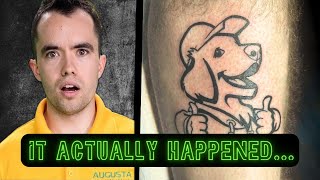
Lee Park and Mike Andes talk tattoos, a Theo Vaughn and Dave Ramsey collab, and how to build a business. Park shares personal stories while they riff on entrepreneurship and franchising.
Chapters
Welcome back. Another episode, C Suite Unfiltered. We'll jump into this episode and pretend like we weren't just debating something or anything like that. We're gonna start at the top here. Now, I didn't ask permission to share this, so I won't say the person's name. I don't think you'd be mad.
I thought you were gonna say something else. I was like, don't go there. Okay, Now I know where you're going.
Someone in Augusta got a Max tattoo.
I know. Why are you gonna say his name? Dude.
All right, I'll say his name. This is Chad. He's one of the owners in Indiana. So he got.
I know, dude.
Crazy dude.
He listened to the pod.
Yeah.
Actually, he said he was thinking about doing it before.
Yeah.
That was insane, dude.
Yeah.
I'm not necessarily gonna condone that behavior, but that was pretty crazy.
Yeah. I feel like we had to talk about it. I don't have any thoughts. Obviously, I shared them. When you talked about the Anytime Fitness owners.
Dude, I woke up and saw that.
Yeah.
And I was. It made me very happy. I'm not gonna lie. I. I was having. Last week was brutal because, like, my time clock would not switch after coming back from the turnarounds, So I was getting, like, two to three hours of sleep like, every night. I just could not sl. And so I woke up, like, I think it was, like, Friday morning or whatever, and I was like, that's so awesome.
Yeah.
So don't condone that. Don't recommend anyone do it. Please don't do it. But that was awesome.
Yeah. Yeah. The Max tattoo, I. I think seeing it, I was like, all right, that's kind of cool. The idea of it I don't like. Here's what I didn't like when we were talking about with Anytime Fitness. I don't like that. Hey, you're at training.
Oh, yeah. The pressure.
And you're bought into this culture now.
Yeah.
Do you want to get a tattoo?
Yeah.
But doing it on your own accord, I think I'm more okay with. Yeah, yeah, yeah, yeah. It was just funny.
What about, like, a QR code to get a free estimate? There you go.
Yeah, but then what if your QR code gets hacked?
It just goes to over another. That's hilarious.
Someone hacks your. Your link, Someone hates you.
They just get in there and, like, send it to some random.
Yeah.
Then you have to, like, always put marker on it just to, like, mess it up.
Oh, yeah. So we don't condone that. But if you want to get Augusta.
Tattoos, you know, be interesting is to wear a shirt or I have a tattoo shirt would be better because me bigger and all it would be is a QR code to give you money. Send me a dollar.
Like to your like Venmo or like PayPal or.
Yeah, yeah, send me a dollar. And then just a big QR code. I wonder what you'd get if you like, walked around a busy part of town or I get a stadium or something. He was like, scan it. Send you a dollar.
That'd be interesting.
Yeah.
Have you seen those?
I only think about it because yesterday I made one for $5,000.
Oh, that's true. Yeah, that's cool. Yeah. Don't you know, if you go to mike andy's.com backslash and just type in different words, you may find some easter eggs.
But yeah, we should actually. Okay, that'll be my non financial advice.
Okay, perfect. So, yeah, Max tattoos, they're a real thing in Augusta. People are branding them.
Really? He said, Max, you just have a QR code on his chest because he took out the words because I know it's like hard to do on tattooing. And so he just put a QR code there. And then you get. You scan and get a free for you. Dude. I'd probably just send it to my main website just in case.
Yeah, I think I. I don't want to speak for Chad here. I. I was he a marine? He's ex military. Yeah. So he's made the eating crayons joke. So he's, you know, he's the type that eats crayons and gets tattoos of Max. Yeah. Well, we had to talk about it from the top because we did talk about tattoos, and then all of a sudden there was one in Augusta.
Yeah.
All righty. Well, here is a collab that I never saw coming. Do you know who Theo Vaughn is?
Oh, dude, him and Dave Ramsey.
Ramsey does crazy. Yeah.
I listen to the first, like five minutes.
Okay. So there were some. There were some good nuggets in there. I haven't listened to the whole thing, but I obviously saw some of the. The. The clips that went viral.
I knew it kind of entry levels. I knew I wouldn't learn a lot. I know. I knew it'd be probably pretty hilarious though, to have Theo, like, thinking about finances. But I didn't watch the whole thing because I knew I would probably be like a learning.
So Theo Vaughn had Dave Ramsey on his P.O. podcast. I can't remember the name of it off the top of My head. But it was actually. It's very entertaining.
You're not going something weekend? Yeah. Over the weekend maybe. I think it's over the weekend, yeah.
So I don't think it was necessarily the most educational, but there were some good nuggets throughout. Actually. Very funny to see their banter. And it's kind of like Theo Vaughn. I feel like Dave Ramsey kind of comes across well, I mean he's Tennessee guy, kind of comes across as like a southern pastor dad. And then Theo Vaughn comes across as like the like hooligan and youth group. It didn't make sense, but it was hilarious. Well, anyways, this is a clip so I will try to put it on the screen. I'm gonna show it to Mike here. It was actually very interesting. So I'd love to get your, your thoughts on this.
So these are the top five careers of the millionaires that you guys looked at?
Yep.
Engineers.
What we found was which what occurred most often. Okay. Engineer was number one. The most often occurring among the people we surveyed that were millionaires was engineer. Number two is accountant. Number three was teacher, which is surprising. Number three, management business. Number five is attorney. Medical doctor. Didn't even make top five. We couldn't figure out at first what these things had in common because they don't seem to have anything in common. What we finally figured out is all five of these are process people. You follow a process, a set of rules, and you learn the rules and you follow the rules. You know, you're an engineer. There's only one way to build that building and it doesn't fall right if you're an accountant. It's not art. You don't get to make up how you do accounting. There's one way to do it. Teachers have a lesson plan they have to follow. Business has always a set of best practices. Attorneys, there's the law. And you can only conduct yourself in court a certain way or the judge will smack you backwards. All of these are process people. So they discovered because of the way the brain work that led them into these careers, they discovered the process of living on less than they make. Living on a budget, starting to invest, being generous, paying off their house, that kind of stuff. And they follow that process and that's what got them there.
Theo reminds me when he's like processing something of dial up Internet.
Like that, like the face is literally the amount.
Just like I like. It's just. Yeah, like I'm following.
I like him a lot more than Andrew Schultz as they've gotten like popular.
Yeah.
Yeah, Andrew's gotten more like, I don't know, just like a little high on his own supply. A little bit, A little bit like cocky sometimes. Yeah. Whereas like the. Such a goofball. I love it.
Yeah. So anyways, any initial takeaways on that? Basically, Dave Ramsey is explaining to Theo Vaughan, hey, these are the most common jobs for millionaires that we researched. And you know, I didn't look up the article on, you know, Ramsay.com or whatever. I'm assuming this is a pretty big pool that they tested. Obviously they have a ton of resources in financial research. But he basically says, hey, these are the top five careers of millionaires. It was attorney, teacher, engineer, business management. And then I'm blanking on the last one.
Something else.
Yeah, something else. So what are your thoughts on that?
I think all those people are very financially conservative. And so I think to become a millionaire in your career over the course of 40 years, you just need to be able to save. Like theoretically anyone can become a millionaire in 40 or 50 years if they get in a safe.
Yeah.
And so the reason I don't think a doctor is in there is because it's a level of prestige that you need to spend. And so in order to become a millionaire you need to be able to save. If your goals are DECA, millionaire 100, you know, or a billionaire, then you need to be focused on earning.
Yeah, right.
But that's why like teachers is so crazy I think for some people think. But it's also like it's such a conservative financial move because you are like almost like thought of like you need to be living on small and like you get are used to that especially because you start at a very low paying and then you graduate and eventually become like where you can teach at a professor level, etc. Like attorneys, like they're conservative because they see all liabilities, they see all issues, they see all risk. So they're very conservative. Engineers think about process, they think about structure, they think about foundation, they think about support. And like depending what type of engineer you are, like if you're a technical engineer and like software engineer, you're also making a lot of money. But in general I think those are like educated realms of, you know, work that people are just very, very diligent about saving and mitigating risk. And I think to make a million dollars over the course of 50 years, you just need to mitigate risk.
So yeah, I thought it was interesting because I feel like obviously, you know, you are an entrepreneur most of your brand and what we do with Augusta. And your content is supporting entrepreneurs. But I thought it was interesting because you see that, you know, entrepreneurship, business startups have like very high failure rates and then it's like these kind of mundane jobs have almost an element of security to it. That's one thing I noticed is that everyone that he listed is like a requirement. They're almost recession proof.
Right.
You're always going to need accountants, you're always going to need teachers, you will always need attorneys, and you will always need, you know, management or managers. And once again, I can't remember the fifth one. So that was my takeaway. Is that okay? So they've chosen a recession proof industry with low risk management. Yeah. So I just thought it was interesting. What is your take on that? Given that you talk to entrepreneurs and maybe someone hears that and they're like, oh man, maybe I should go the traditional career path route.
Yeah, no, like I think like the average entrepreneur that changes all the time, but somewhere between like 30 and $50,000 a year that the average business owner makes in terms of like theoretically all those people make more than entrepreneur. Although the average entrepreneur is not a millionaire. I think though, if you're trying to become a millionaire in the next 10 years, you're going to have to focus on earnings. Right. If you, if you're wanting to become a millionaire over the course of your career, like 40 or 50 years, those are all great occupations because they're steady, there's lot, very little risk. You're always going to be needed. And most importantly, you service billionaires and millionaires. Because the attorney is my best friend.
Yeah.
My teacher. When you have kids and you're rich, also your best friend because you can go have them babysitted like at a private school or at college. All these professions usually service rich people and so they're more recession proof. And so if you're looking at 40 or 50 years to become a millionaire, that's probably the route to go. If you're like, in the next 10 years, I want to become a millionaire, you're going to have to focus on earning. So it becomes like, what's your time horizon? And then what level of risk are you willing to have? Because if you're going to go after the I want to become a millionaire in five or 10 years, you're going to have a huge amount of risk. Probably 70, 80% of people, 90% of people probably will not be able to do that. And so would I rather go after the 90% of people over the course of 50 years? Make a million dollars. That's probably the safer route to go.
Yeah. And I think one of my biggest takeaways is not necessarily from this specific conversation, but just in general thinking about it. Now, obviously, I think I fit in one of these five categories. Business management. Right. I am one of your managers inside of your business. You are an entrepreneur scaling up massively. You need managers. Right. That's just the case. I think what's interesting is that people typically don't step back and realize, like, oh, I'm playing a different game than you. Right. If the world of economics and finance and business ownership and creating wealth is just a game, right. It's just ones and zeros, well, I'm playing a different game than you are, and that's okay. And it's frustrating when people, and I'm speaking for entrepreneurs here, not as one, like, give unsolicited advice to entrepreneurs because they're in this career path.
Right.
And that's where I'm very cautious with my advice to entrepreneurs, even though I have been in a coaching role and a support role to entrepreneurs, is I don't want to give unsolicited advice because I realize you're playing a different game than me. But I also feel like there's a flip to it where sometimes entrepreneurs or these business people, they'll look down on the other and it's like, well, you don't have to look down on them like you're playing football, you're playing baseball. It's not one's better than the other. You're just playing a different game. What are your thoughts on kind of that thought perspective?
Business fundamentals don't change regardless of whether or not someone is an entrepreneur or not. Like, what is the right decision in any case for business is still the right decision regardless of where that advice comes from. The difference is the stakes of the person that's giving the advice. So the person that does not have. Does not own the business. The stakes are that if they are incorrect, they will look bad in front of someone because they gave bad advice. The person that takes the advice or the person that is the entrepreneur that is actually owning the business, their stakes are they will go bankrupt in the next seven years. Will have to live with that decision. And so the stakes of being owner versus not are massively different. So I'm just trying to use your example of coaching.
Yeah, totally.
What's not this, what's not different is what's correct for the business to do. And so what I think is important for a business owner to do is to actually strip away the risk analysis and be like, oh, I'm not listening to this person because they have higher or lower risk than me. It's like, what is the right business decision based upon the data and then actually being stripped from that. That's why if someone actually has that mentality, that's why a lot of business owners that are really successful will go to comedians or they'll go to philosophers because it's like they don't need to have someone that has high stakes. Like a comedian saying something funny is not a high stake environment. But I can take what they say, like that's useful for this business case and I'll be able to make that decision or take some philosophy that has no high stakes. It's like high flute and words. But boil that down and make it for my business decision. And so.
I think that it takes a level of humility to be like, oh, I'm not going to listen to them because they haven't done exactly what I And that we all make, we all make excuses as to why we can't listen to the correct business advice. And so in my opinion, the business advice is either wrong or it is right. Whether or not it comes from someone that has the same risk profile as you. You'll have to strip away if you actually are interested in having the right business decision. And that's why like sometimes listening to people who have no idea what they're talking about in terms of business is still a good move because they'll come up with an idea that you're like, that is 90% correct. I can refine it and it'll work. And I think it takes a level of humility to do that though.
Now let's. I want to almost like zoom in even smaller here. Kind of flowing off of that would be how do business owners who are entrepreneurs and have that entrepreneurial spirit and verver to like get better and push themselves and create more, communicate effectively with an employee that just wants this. Like not saying that they're an underperforming employee, but they just want to be an employee. Like they want to work their 40 hours a week and be done. Like, do you feel that there's a disconnect with that communication? And if there is, how do business owners, entrepreneurs more effectively communicate with these types of people that just want the secure career path?
They just matter of like aligning incentives. Right. Like okay.
You and me, example. Sure. So like I'm open.
If we reach attain the goals that we are going to with Augusta. Right. Like, I will become a billionaire, you will become a DECA millionaire. Right. The risk profile is what determines that risk, that the output of the reward. Right. And so if you came to me like, hey, I want no salary, but I want a piece of the business. Right. I'd be like, first off, you're crazy. Secondly is like, okay, well, if you're willing to give that much risk, the profile, which, the output of your reward will be significantly higher.
Totally.
And so if you're going to be, if you're. Someone's going to take wages, whether they the owner or the employee, if they're, if you're going to take wages. That is how I look at, is that you're taxing the business. So I try to think of the business separate for myself. So if I can not tax the business, it will have more money to be able to grow, and it'll increase my risk, but it will lead to a higher outcome in the future. And so that's why I've always been like, big proponent of like, living so small, because I don't have to tax the business. And so we already know from Economics 101, less taxes, higher economic output, higher growth, higher GDP growth, et cetera. And so I know if I don't tax the business by taking money out of it, it'll lead to a larger outcome. If for an employee's perspective, if they can say, okay, I am willing to forego wages for equity, what they're doing is they're saying, I'm willing to not tax the business, but then get skin in the output and the game of where the business can become. I don't recommend most people do that because, like, the downside of most businesses is so small, and if you don't own the majority stake of the business, you also can't control it. The nice thing that the reason I would take that risk is I feel like I have full control. Yeah. And so if I, if I lose, it's my fault. I don't want anyone to ever have, like, I would never recommend you do what I just said because then if I do something stupid like, then all of a sudden, you've worked for years, you have nothing to show for it, and you have nothing. Like, there's no output on the end. Right. And so it's simply a matter of like, what risk profile. And then that's why I just think it's kind of crazy when people go after billionaires and things like that. I do think they should pay more in taxes. I do think they should pay their fair share. But also it's like, look, they put massive amounts of risk and they created massive amounts of value. And so if we actually strip out the fact, like is it fair that they pay billions of dollars in taxes or millions of dollars in taxes and you actually get paid by the government and you drive on the same road, you use same services and if you call the police, they come to your house the same. That's the type of thing where it's just like, you know, what you risk is what you're gonna be, your output's going to be. And unfortunately in entrepreneurship right now we glorify the people who actually do win. And so everyone thinks that you have like a 20, 30% chance of winning when it's like way less and the risk profile is so much greater. And so, you know, even like locally inside of Augusta, like we've been looking like we know 3 of 3, 4, 5% of people that are quitting every year. Okay, let's say 5% of people quit at Augusta every year. That's a 20 year average of tenor. That's far greater. And when I look at that, it's like, okay, 20 year average. We know that people will be successful because I need them to be like, I need them to be in the system for five to six years, typically before they actually start seeing the fruit of their labor. Entrepreneurs were add, we need like results in five to 10 years. But these people are willing to forego it for 40 to 50 years. And even though they have way less risk and way less output because they are willing to forego getting the, the, the return for 5, 10 years, but rather 40 or 50 years that' they become millionaires. And so that's why sometimes these individuals, although they are less risk adverse and they don't have the massive output because they simply just keep chipping away at it. They get to the outcome far more often with higher probability than entrepreneur that's trying to move at breakneck speed to get there in five to 10 years. And so I think that for the vast majority of entrepreneurs, there should be a healthy balance between these two things. I'm not going to try to build a billion dollar business in three years, but I'm also not willing to wait 60 years to finally be able to retire and live off, you know, what I've been working for. There is a healthy medium inside there. And that's why I always say like, think in terms of 10 year swings. Do this for 10 years. Most entrepreneurs think, can I do this for this week? Or this month or maybe this year. But if you can think in terms of 10 years, I believe that's a healthy balance between dependability of becoming a millionaire and then also wanting a higher in like a higher outcome with greater risk. Anyways, I went like on a way tangent there, but there you go.
I mean it was phenomenal. I could just keep going. So I'll keep spinning on the tangent then. What do you feel like entrepreneurs need in order to not fall into the pattern of what can I do in a week, in a month and a year? Like, how do you feel? Like, do you feel that as a society for entrepreneurs. Let's talk about the microcosm of society, that is entrepreneurs, that they are going to have higher failure rates in the future because of the instant gratification society that we've created. That they want it now, they want in a month, they want it in a year, they want in two years. That most people aren't willing to do the five to ten year swing.
Yeah, the same reason that people like stop, stop going to the gym after four to six weeks in January and February, you were doing the exact right thing to get the result you wanted. You just didn't do it long enough. And so unfortunately because of Instagram and social media, etc. We do believe, even though like we will say yeah, five, 10 years, but then it like people quit in two years.
Yep.
I'm like, there's not going to be any results, there's likely not going to be any evidence of success for three to five years. And if you actually go into it with that knowledge, but not that the knowledge, but the actual, like, I am going to grind and not expect anything. I'm not going to tax the business, I am not going to take money, I'm going to do that for three to five years, then I will wake up and see whether or not I can go from five years to 10 years. Because usually by five years there's evidence and traces of success. Okay, like I've finished, I've figured out the demand curve and spring rush, I figured out how to hire people, I figured out when to market and where to market. But like, if you don't wait five years, I don't believe you have any true ability to accurately weigh out whether or not you're even a good entrepreneur and whether or not you know your industry because you haven't seen like enough cycles, you haven't been in the gym enough to know whether or not you're capable of losing weight, whether you're capable of lifting £200. And so you're doing the exact right thing. And that's painful. Going to the gym is painful? Yes. You're sore and you can't walk and it's weird and awkward and it's hard to sit on the toilet and all this other garbage. You're doing the right thing. Just keep doing it. It's just a matter of time. And it's not a matter of time, it's a matter of reps. Right? Keep doing the reps. Don't sit around like, oh, it's a matter of time. I just need to wait five years. And Mike said, I see evidence of success. No, it's like reps. You keep going to the gym, you keep lifting heavier things, you keep pushing yourself harder. And that's also painful. That's why most people quit the gym. It's why most people quit entrepreneurship. And that's why the failure rate within 10 years like 90 plus percent in entrepreneurship. So the question is, should they go become these people? I don't think that they're capable of it. I don't think the person that is capable, that thinks that they need to be a billionaire in two years or three years or four years, or have this million dollar business in three years that's profitable and running without them on systems, they're just not going to be the type of person that can go do one of these jobs. They just can't. And so the same way that an employee, in my opinion should not be.
Trying to be, I'm going to be entrepreneur, I'm going to own a business. They are usually the ones that fail. Like they're trying to like live up to this, like dream like this, this aura around being a business owner.
They've like fabricated this image in their head that they need to live up to.
And the same thing is true for a business owner going back like, oh, like if I could just have an employee, like I just work 9 to 5 and be so easy, they go do that and they miserably fail at these jobs. And I believe there is a hybrid for that person. And that is like, I'm going to dedicate 10 years, I'm going to grow incrementally 10 to 20% a year. I'm not going to double year over year because that's going to create massive amounts of stress, massive amounts of chaos, massive amounts of financial, you know, stress in the business. And so most of us aren't that patient. And that's why I believe so much in franchising is because I Believe it is the healthy medium between hyper growth and hyper scale, which 95% of people can't. Like they won't make it.
And complete entrepreneurial freedom.
Right? Correct. Yeah. Which freedom comes with repercussions. Yeah, right. Like if we took all road signs away and all lights away and there was no police, we'd have perfect freedom and a lot of chaos. And that's what happens with entrepreneurship. And then way on the other end is like someone who literally cannot think about a new marketing strategy. They cannot come up with new ideas for sales, they can't push themselves to add more services or think outside the box for off season services. And so between those two is a happy. In my opinion, it's franchising. But unfortunately there's been bad actors that really got into that and like with legal documents and like really mistreating franchisees. That's like a big reason. Like Augusta, like I want to make it where we get to a thousand and then we do it the right way in my opinion. My opinion. And then hopefully other people are like, oh, like that's how we should run a franchise. And yes, it'll reduce your multiples from PE by like 80% but it's the right thing for the owner and if you do that, eventually it'll catch up. And I think, I think over the next 12 to 24 months, like that's going to be the.
This will be the reason why we hockey stick curve in terms of number of locations. It's like, okay, now there's enough evidence to prove that we are doing what was right for the owner and then it like the results will follow.
So yeah, I think one commonality that I see, whether you are a successful career person or you are a successful entrepreneur, I think you can reduce it to just one thing. They're both self disciplined. And I think that's where you're saying like franchise kind of allows this filter of self discipline. Like hey, you don't have to be the greatest at marketing, but you also might need to like chill out on your growth plans of 200% year over year. Like use this filter to make sure that you have good sound self discipline. Would you agree with that or disagree?
I would say it's like if you.
Using your analogy. Funnel. Yeah. Like the funnel is not comfortable because you are pushing things towards one objective. Right. And it restrains, it's constraining freedom. Whereas if you throw water just at the, at the table, it'll go 100 different directions. Now what that means is some water, 10% of it, let's say will actually go further, it'll make more progress because it doesn't have constraints. But the outcome of the vast majority of the water, if thrown at the, at the, at the table, will go in all different directions and the vast majority will not go towards the end result. Like if we're funneling the water.
Yep.
So the pain of constraints, the same way that if you're putting a cast on or if you're funneling water, the pain of the constraint is the outsized returns are usually reduced. Right. And so because of that, what I feel franchising is useful for is it puts constraints to have a greater outcome of the average success. But you are going to remove the outsized massive like gazillion one now, you know, massive fringe case. And so I believe that that's a healthier way to do entrepreneurship. And that is like okay, 95% of people don't fail. Maybe 20% fail. I think that's a good odds. Like if four out of five people can win in 10 years, I think that's good compared to one out of 10. And I think that's a better path to choose in life, especially if you're providing for a family to choose a path where okay, I'm going to succeed 60 to 70% of the time over the course of 10 years versus 10%. And so I believe that's why moving to franchising is a good move. And then people get the constraint. Like if people figure this out in 10 years, that's why we don't have people can move out of Augusta. Because like if they use us for 10 years and they're like, okay, great, I got it, I'm nailed. I've got the directions, I've got the systems. I okay, then go do something else on your own. And then maybe you do are that type of entrepreneur. You go build some massive thing. Yeah, right. But then you've used the systems and the constraints. That's why I believe like people coming out of like school, if they're entrepreneurial, 18 to 28, you do a 10 year franchise and you come up with all the systems and procedures. You come at 28 years old, probably the decently successful business, but you know, all the systems and the constraints to actually build a successful business. And then if you're so outlandishly, incredibly like 1% type percentage, then you go build a massive entrepreneurial business with massive risk and full freedom. And so I believe a franchise is the like is the way to actually look at education. Right. And so, like, when I look at, like, our $14,000. 400. $14,400 it costs to be part of Augusta. That is tuition. And if someone actually looked at it that way, they'd get through college in four years. They spend a whole lot less just joining a franchise, and they get way more business systems and come out of that with a. Say, let's call it a 60, 70% success rate after 10 years. And then they'd be able to go use those skills and then have full freedom entrepreneurially to do whatever they want.
Yeah. So I had two thoughts on that. Number one, as always, two.
LI always has two.
This is my thing. I can never reduce it. I can never get it to one.
Never has it been one. Never has it been three. It's always two thoughts.
Always two thoughts. The first one is you need to use that analogy that at conference. Imagine you got, like, this giant funnel.
Yeah.
And then you did, like, your whole. I guess this is full. So I'm not gonna. Okay, you got your. You get a big funnel. Like, I'm talking, like, a huge industrial one.
Yeah.
And you're like, hey, this is. And then you get, like, a big white sheet of paper, and you get, like, blue. Some blue liquid. Exactly. Or you get, like, some blue liquid and you go. This is, like, without a funnel. And you make this motion.
Yeah.
And then that blue liquid goes everywhere. You get a big industrial funnel. So you can make the same motion. Right. Like, look at the spread.
Yeah.
But this is what 10 years of a funnel does. And then you see with, like, a red liquid, and then it's like, all in the middle.
Yeah.
What are your thoughts on that?
Yeah, Like, I'm a big fan.
Visual.
I agree. The thing is, I have a shoe in the game because I'm a franchisor.
Right.
I believe massively in franchising. And so, like, if we can make one one, you know, Augusta. The brand big enough, I believe that I can then evangelize franchising much more because I really do believe it is the entrepreneurial education, like, the. The college education required, and it should be replacing business education in schools. There are so many people that get a business degree and have no idea how to run a business, and they actually get false confidence, basically going to business school that they can go run a business, and they still have massive failure rates. Like, it's marginally better than independence. So, like, you have independent. So if you look at success rates, like, the worst is if you just go start a business with no education. Right. There is Definitely a improvement. If you get some business degree, get some sort of like, formal education, then franchising is above that, like, in terms of success rate.
Okay.
I just genuinely. I just genuinely believe that people would be better served in five years of being in a franchise and learning real business versus five years in a business school. And if you could parlay both of them, like, this is kind of what my. My old dream is like with the education side. Like, that's why, like the masterminds, MBA for entrepreneurs, etc. Or if someone's like, not a franchise, be like, okay, I'm going to start a business and I'm going to do my MBA at night. That's what I did with Augusta. Yeah, I did my MBA at night while starting a business. So it's very easy to like, parlay, like learning and like formal education with business doing. And that's what, that's what a franchise should do is like, you get coaching, you get training, you get education and you run your business. And so, like, I just generally believe people would be in a better spot in five years in terms of business if they ran a franchise from a franchise or that had good business education along with the other elements of just go run your business. So, like, down the road, I will be on the path of like, don't go to business school, go join a franchise. And I'll have like a list of 50 franchises that I endorse based upon, like their FTD being positive, blah, blah, blah. Like, these are the ones I think that would work based on these industries. And here's what will Insights I recommend. Go for it. Right. And so, like, for now, let's try to be that for Augusta. Get go to a thousand, then franchisers will listen and I'll start pushing for stuff. But anyways, I just really believe in franchising. Yeah. I did it with Anytime Fitness. I would never want to start a gym without it, without having, like, the systems, the training.
Totally.
All the education side of it. Like, the community is huge, dude. Like, I'm putting together this thing for the webinar on Saturday. Like, the community is the reason you join a franchise. Yeah, right. And if you're going to go to business school, your community is going to be people that get drunk on the weekend and like a bunch of, you know, reprobates. And if you can join a franchise, like, you have a bunch of people that all have a common goal of growing a business and making much money.
Yeah.
Like, seems that it has a better community to join if your goal is to make more money. Yeah, like if you just want to have daycare, that's a different thing.
But anyways, that's fair. Yeah, I like that concept. All right, another item I'm going to throw at you here. You know, share this graph with you. This is from Finance Buzz.
Now, I'm, oh, I saw a headline about this.
I'm assuming this data is accurate, but, you know, I'm sure, sure there's some room for air. This is fast food price inflation.
Yeah.
And I really mainly have one question for you. But basically this is a survey of 10 different menu items per restaurant. So they did a good sample size. It wasn't like, oh, we're just going to look at, you know, the big Mac from McDonald's and we're going to look at the Taco from Taco Bell. Like they did 10 items per restaurant and they looked at 10 year inflation. So this is from 2014 to this year. McDonald's price increases are at 100%. Popeyes Chicken is at 86%. Taco Bell is at 81%. The lowest of like these mainstream brands is going to be subway at 39. And they have the actual inflation rate. 10 year inflation rate on food and consumables is at 31%. So my question to you, Mike Andes, how do fast food places get away with this?
I actually has anything to do with getting away with this. I think that this is a faulty chart.
Okay.
As of 95% of charts.
Yes. I know you're not a big chart guy.
Not a big chart guy. I'm a big fan of charts. I just want to know how the data was collected.
Correct.
So, for example, actual inflation of 31 is a blended average, I would imagine, of all CPI consumer price index, I'm assuming so, which blends all inflationary goods and services. The thing that actually affects these, these restaurants is food costs, transportation and labor, all of which has had a far greater inflationary pressure than things like technology that has actually gone down in price over the course of the time. So if I'm going to look at the actual inflation, you're going to be taking into account technology that has brought down CPI index over the course of the past 10 years. The cost of so much has gone down on the technology side. Labor 2014, I know I could hire someone for 12 to $14 an hour and get a good employee now double that. So 100 makes a lot of sense.
Yep.
A pound of beef, way more fuel costs, way more. The cost to transport that, that, that meat, which is heavy and Whatever other goods I'm refrigerated, all of that is going to cost more. Why? Because I have more EPA regulations, the fuel costs more and the driver costs twice as much. So in my opinion this is a faulty graph. It's like let's look at inflation, let's strip out, let's look at labor inflation over the past 10 years. Let's look at food cost inflation. Like when you go to the grocery store, the cost of everything in the past 10 years has gone up dramatically. 30, 40, 50, 60%.
Totally.
So like don't blame these food restaurants that are also doing it. Are they also making more margins and profits? Yes. But if they actually went too high, if they went too much, inflated the prices too much, guess what would happen? Consumers would stop spending money there. So the alternative to buying from a fast food restaurant, if you're on that end of the socio graph, is to go buy it from a store. Well, if the store's prices have also gone by 50, 60, 70%, but they also have less labor intensive work compared to these fast food restaurants which is going to have a more inflationary pressure because you've added more labor compared to just throw it on the store shelves and have someone pick it off. Yes, you're going to have more price increases. And so ultimately this is what a free market does. They can get away with inflating their prices more than what inflation is as long as customers are willing to buy. If you really have a problem with this, stop buying McDonald's and go shop at your local store. And I would reason to believe that over the past 10 years the grocery store has also inflated by 50 to 60%. And so by having 60, 70, 80% inflation at these stores, it's because wages have gone up significantly faster and it's more time and labor intensive to make the food and prepare it versus have raw ingredients on a store shelf. So faulty graph. I would say the actual inflation for these companies is probably like 40 to 50%. And that's why you see kind of like more like 50 to 60% is like that average of what they are inflating. And then you got companies like Starbucks that have such high profit margin they've actually probably absorbed some of this. Also these are the most tech enabled companies typically because they, that's deflationary. They can absorb more costs and they cannot have to raise prices because they have the app, because they do online ordering, because they really figure out drive through. Like these are the type of things that use technology and systems to be able to drive Costs down. But ultimately if they can make get away with it, that's what a free market does. And if you're, if you don't like like it, don't go buy their food. And if you don't do it enough, guess what they'll do? They'll lower prices.
Yeah, fair enough. I respect that. Take. I will say Starbucks, this is something we've never talked about, is basically a bank. Have you looked at.
Very cool. It's very cool.
It's super cool.
Yeah.
I was getting a gift card for my sister in law and I was like, do I really want to get this at Starbucks? But like you know, she's, she lives in a different state. So I was like, well, I mean it's the easiest thing to get is an E gift card. But I'm like, I'm literally just giving Starbucks alone.
Yeah.
It's crazy.
As they digitize it, you have so much more data. Yeah, right.
So yeah, you can go buy Starbucks gift card. You can get up to think like 500 bucks on their website.
Yeah.
All you need is your email and credit card information. That's all they care about. And that's. Who's it going to? Who's the receipt recipient email ever. Yeah. Crazy. All right, well, do you have any non financial advice for the people?
Okay, so my non. Whatever that was, my non financial advice is go to mikeannies.com webinar.
Okay.
And when are you releasing this? Can you release this sooner than usual?
Yeah, yeah, I can try to get it up today or tomorrow.
Okay. Yeah. So this, this Saturday. This Saturday we're doing a live webinar and I'm gonna basically break down the cost of joining Augusta and I'm gonna break down the value of it. And hopefully you come to the decision that I did and I was like, we have finally passed the part where I believe everyone should join and I think it'll become. We're adding more and more value and. But there's several things that we're going to be over the next six months. I think it's like an obvious choice and I'm going to, I'm going to do that. I'm going to sell it. Like we haven't sold Augusta for ages. Yeah, you never really have like until like the very first like webinars and all that. I was like before we started like to get it the first 10. And so we've mostly just gone off of people joining people looking at the content. Now we're going on the offensive for going all out.
Yeah.
And the mostly the reason for that is when I talk to Alex in Las Vegas, like, getting a thousand locations will drive down our customer acquisition costs by more than half because of brand awareness. And that's something I hadn't connected. It's like, more locations will be better for our owners. And I hadn't made that connection yet. And he's like, if they had any button that you could push, like, what would they want? Would they want to have get two customers for the price of one or would they want to have, you know, hold time go from 8 seconds to 6 seconds at command center? Like, oh, that makes a lot of sense. So, like, I'm gonna focus on that.
Yeah.
Right. Because obviously there's so many other things we're doing in terms like adding Christmas lights and doing like winter stuff and like getting discounts and things like that. But like, those are all like little tweaks when it's like the big knob that everyone actually wants. I can achieve that now, especially because now I think it's actually valuable and I'm confident in saying that.
Yeah.
So anyways, this, this Saturday, if you want to be sold. Yeah. Go to mikeannies.comwebinar and then I'm gonna actually break down every single cost, every single line. And then you will come to the conclusion as to whether or not it's the right fit for you.
Yeah.
Good. I love it. Well, my not financial advice is a video from five months ago. It is from a small YouTube. Yes. So for everyone to watch, it is from a smaller YouTube channel. Instantly is what it's called.
Instantly.
Yeah. They only have 20,000 subscribers, so, you know, not much bigger than us here, here at the C suite, unfiltered. But this video only has 50,000 views.
Okay.
And they interviewed Alex Hormozi and the email title and this, this will relate.
I got this, I think I got.
This cold email masterclass with Alex Hormozi and then the guys from Instantly. Now, a lot of us aren't doing like cold email lead generation, but I feel like most of the audience has a home service business, which means you have a customer database, which means you send out typically newsletters and or cold emails. This is like a 30 minute just masterclass, quite literally. It's in the title. It is phenomenal. There's a great section on like increasing show up rates and he has like his inflection points for doing cold email and cold outreach.
You share this with Christian?
I already did.
Yeah, yeah, yeah.
So I shared this with the salesman from Co Pilot Christian. Just an awesome video.
So I'll put it in, I'll put.
It in the description if you want to watch it. We aren't necessarily the lead generation cold email industry, but we all have customer databases and all of this education applies. Just a phenomenal video.
Yeah, I would assume what they did, they got this interview with him because they promoted his book the most, his top affiliates.
Yeah, that's cool. That's what they did. So that's like how it starts. He like thanks them for all they did for like. No, no. Basically no return, right?
Yeah, yeah. So then good for them.
Well, they got this return so. Yeah, yeah, but it's like it's 50,000 views. Yeah, it's like this is gold. But it's one of those videos that most people are going to watch because it's not clickbaity, it's all long form, one shot. So most people aren't going to pay attention to it. But it is great.
Yeah. You know what's funny about Alex is most time when you get closer to people that are like famous or like considered really good, you kind of actually think less of them because you see all their high in their parts and their weaknesses. And although he has those, getting closer to him has only made me think of him higher. He's. He's a one of a kind entrepreneur. Yeah, he has 1. 111 of 1 or 0. 1 of 0 One of you would.
Say as his nose stripes.
Yeah, I would, I would like to attain like like the fact that like not necessarily exactly his personality and things. Not necessarily, but just that when people get closer to me they actually think more of like my skills instead of being like, oh, he was all like, you know what's like all hat, no cattle type situation. And so like he's sharp. Like in Q A to me is like the telltale sign of whether or not someone is really at and how they respond. But he's a, he's a, he's a great dude. Yeah, he's smart. Very smart.
Cool. Well, that's a pod like and subscribe dude.
When I was young, Jewel was a person's name. So if somebody said you Jewel, I would be like, no, I'm Theo.






