Feeling Stuck? Listen to This
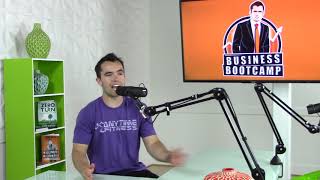
Mike Andes tells early-stage entrepreneurs to stop reading books and listening to mentors, and start doing the work. Success means learning your numbers, grinding through hard seasons, and staying with one idea instead of chasing the next thing.
Questions this video answers
June 20, 2019.
$9 per month per employee.
Three months free (regardless of number of employees).
Chapters
Hey, everyone, this is Mike Andes, and you're listening to the Business Bootcamp podcast. Today I'm going to be sharing with you something I've been thinking about a lot as I've been getting a bunch of questions from young entrepreneurs, people wanting to start their business, people that have hit a plateau in their business and are looking to go to the next level. Before we get into that, though, a big thank you to sponsor Gusto. If you haven't already, go to gusto.combootcamp to try out their software. What their software is going to allow you to do is pay your employees, not just with a. Just a paycheck. It manages all the benefits, allows them to see all their hours, how much, all their deductions and their taxes, everything that's coming out. Fantastic program. It's nine bucks a month per employee, and you can try it for three months for absolutely free, regardless of how many employees you have, if you go to gusto.combootcamp so go there today, try it out. I promise you, you will not regret it. First of all, before we get into show today, also want to say sorry about my throat. I've been battling some allergies. It's kind of a funny thing because I have allergies to grass and pollen and all that stuff. And I am in the lawn care and landscaping industry. And so every spring about this time, I kind of have a few weeks where I go through this. Can't sleep very well because of sinuses and all that stuff, but we get through it. And so, pardon the kind of monotone, chalky voice. But today I wanted to share based upon some questions I've had recently, some conversations and phone calls that I've had with entrepreneurs and other small business owners from the Business Bootcamp Podcast, from Landscape Business course, and from ProPlus. And so I want to just kind of talk about a couple of things that I've thought about, and I don't have any notes. I don't know how long this is going to go. It shouldn't be too long. But I wanted to share for the person that's especially just starting out, for the person that is starting out or feels like they're at some sort of disadvantage. And so where I'm going with all of this is.
Time and time again, I come in contact with people that are wanting to start a business, and I just got an email just a few minutes ago, and they were wanting to start a business. They say, hey, I have this great idea, I have this great plan. I have all this tested out and it's ready to go. But who do I need to contact? Who do I need to talk to that's going to help me do this? Who can I hire? Where can I find people that are going to make this happen for me? And at the end of the day, no one's going to do it for you. At the end of the day, you have to get started. At the end of the day, you have to put your head down and just go work.
A couple months ago, I was approached by a young entrepreneur, a young business owner locally that was wanting to sell his business. And his business was doing less than $100,000 in annual revenue and was probably worth in the range of like 30 to 40 thousand dollars. He was asking just over three quarters of a million dollars to buy his business. It was just delusional.
There's no sense behind it whatsoever. And so he was approaching me to buy it, and I said no. But I wanted to try to give back and help as much as I could to try to explain why. But at the end of the day, the business had been ran for just a few years, and in essence, he was giving up. He was going to start a different business. And his reasons for doing so were basically that he did not like the business he was in now. And when I see that it really is indicative of a culture that's been born around entrepreneurship, that there's this balance, like, I really believe there's this balance between putting your head down and working hard and grinding through the hard times, and then doing what you love, doing what you're passionate about. And I think there's a conversation to be had about this balance in that things are not gonna happen overnight. Things aren't gonna change for you to be your ideal world overnight.
And there's gonna be periods of times where it's really, really hard. And I really do feel like there's gonna be entrepreneurs that actually become.
Successful amidst those trials and tribulations and the things they have to go through. And I really am afraid of young entrepreneurs getting started. And. And two things happening. One, being very impatient with the process. And when I say that, I'm talking to myself. And then two, expecting that having one more thing or one more person talk to them or one more mentor or one more book is gonna somehow help them. It's somehow gonna change everything. It's gonna somehow make the world of difference when at the end of the day, it's just them putting their head down and working and just doing their craft day in and day out, day in and day out, not glamorous, not in front of cameras, not when everyone else is watching, not when everything's going good or there's lots of money in the bank or you're buying new houses and cars. But at 2 and 3 in the morning, when it's a grind and you don't want to be doing it and it's not what you're passionate about, but you do it anyways. And so I got, I had, this week, I had this phone call with an individual and was basically just trying to help him get his business going again. Like, it's kind of plateaued, it's really not being super profitable. And so just trying to help him make it better. And at the end of the conversation I was like, look.
I don't want. Because he kept asking like, who's gonna give me this information? Like, what book do I need to read?
Who can help me do this with my business? Who can do my number? Who can figure out my numbers for me? And at the end of the day I said stop. Like, stop. Like, no one else is gonna do this for you.
No one's gonna know your numbers in your business better than you. No one is going to be able to unlock the. There's no magic bullet in this thing called small business.
You're gonna have to put the work in. And yes, I'm all for learning and listening to audiobooks and listening to people who are really experienced and the great minds of business. I'm all into that. I do it every day. But at the end of the day, that's not what you need. One more book is not gonna change your life. One more speech, one more YouTube video that's inspirational is not going to put your business in the place it needs to be to be successful.
And I feel like, because now there's such an influx of information in the past 10, 20 years where we have access to the greatest minds and the greatest mentors and the greatest books. And all of it is so accessible now that we can literally, you could literally have a full time job just consuming that information without actually going out and doing the things they're talking about. The reason they become business icons, the reason they become legends, is not because they went and listened to everyone else. It's because they went out and did something. They went out and made something, they went out and created something. And the thing I've always been afraid about with business Bootcamp, podcast or the thing that I do with landscape business course and all of that is I don't want to Be the guy that just basically analyzes, sits back and is like the analyst of business. I don't want that. I want to go out and create something of my own. I want to go create a business that is actually respectable and then. Then be able to teach people, then be able to go from that and be able to build and grow from that. I don't want to be the guy that just sits back and is like, researching what's good and what's bad and, like, just trying to share information and like, just be a facilitator of communication. There's a reason why I stopped having a guest on the show. I don't want to just be an interviewer. I want to share my story. I want to share my truth. And then as I grow a business, hopefully people can learn from that. And no, it's not going to be as great content if I had Bill Gates sitting here or some other great business leader. But it's my story. It's what I'm doing. And I think if business owners, and if especially I'm talking to a younger demographic now, my age group, that looks so up. And now with our culture of really making popular, like the popularization of entrepreneurship, we. It's so easy to look up to those people, like they're like the rock stars of this culture.
It's so easy to do that and fail to see that in order to get to that place, they did a lot of doing, not a lot of thinking about wanting, like, looking for the next key, the next Facebook strategy, looking for the next. Know what person is going to get them to become the. What's gonna be their magic bullet? What is gonna be the one thing that turns things. It's not that way. That's why I'm so against, like, giving, like, ultimatum steps, like four steps to triple your business. Like, it's very. It's hard. It's hard to do that because there's such encompassing things. At the end of the day, you can have so many strategies. There's so much information. There is so much information on the Internet and on audiobooks and. And podcasts and all of these things. It's about the great entrepreneurs of our next generation is going to be the ones that actually implement those things. It's not gonna be the ones that know a lot about business. It's gonna be the person that goes out and does so many things and makes so many mistakes and then figures out one thing that works, but has the cumulative experience of 10 other individuals and is able to double down on their successes. That's the person that's gonna build the next thing. That's the person we're going to talk about in 20 years. And I want to be one of those people, and I want to be one of those people that built a real business. And then the journey of getting there was documented and people can learn from. That's what I'm trying to build for my career and what I don't want to be. And this is something I've. This is why I stopped doing a lot of things two, three years ago with consulting and things. I did not want to be an individual that just talked about it, that people respected because I had. I knew great, good people and I went to great conferences and spoke. I don't want to just be the facilitator of communication. I want to be the communication that other people talk about. And in order to do that, I truly believe to be a great entrepreneur, to be a real entrepreneur at all, you need to be a doer. You need to be someone that goes out and gets stuff done. And I just find so often that young entrepreneurs like myself, we get impatient. It's not easy to stay head down, grinding year after year after year in your 20s and you're not, like, for myself, not taking a lot of money out of businesses, putting all the money back in, not buying flashy cars, not buying a house, all of those things, doing all of that is not the glamorous thing to do. And it's easy to get impatient. If you're out there now and you're in your 20s, 30s, even 40s, and you feel impatient.
Like it's a natural thing.
And it's not easy to stay patient. It's not easy to.
From the outside, people think you're so successful and have a lot of money, and yet you know that you're putting every penny back in the business that you're still like, it's still tight because you're investing so much heavily into the growth of the company and into the individuals on your team, and you're pouring it all back in. Like, that's not an easy thing to do. It's not easy to stay in that position long. It's not.
But the people that stay in that position, they're the ones that break through. The people that give up, the people that are always looking for the next thing, and they're just jumping from one to the other. They never master anything. They never figure out. To break through the sound barrier takes a lot of energy. To break through the sound barrier takes A lot of energy. And to break through the success barrier, if you want to call it that, is going to take a lot of energy. It's going to take a lot of patience. It's gonna take a lot of just pounding and grinding to break through that barrier. It's gonna take a lot of not wanting to do the things that you wanna be doing and knowing that there's other things you could be doing that would be easier in a lifestyle that would be much easier for you, your family, et cetera. But you will break through those things and be patient to get through those times. And so if this episode is for anybody, it's for the person that's in my shoes and somewhat impatient, but yet you're still grinding it out. You know, you're not exactly where you want to be, but yet, you know, what you're doing today is going to set the framework for what you're doing in 10 years. And so you stay patient. And what I'm afraid of is that the culture of entrepreneurship that says, do what you love, do what you're passionate about, and if you don't like your job, so stop tomorrow. What I'm afraid of that is that people don't break through the sound barrier and they give up just before or way too soon, and they never actually get to the place they want to be at. They never get to a hypersonic speed, they never break through. That sound like if you're going to go 5,000 miles an hour, you got to break through the sound barrier at 500, you got to get through it. And so if you're going to want to see the speed and acceleration and growth in your business, there's going to be a point, there's going to be a growing time. And it might be 5, 10, 15, 20 years of growth and pain and trying to figure it out. And if you're jumping one year to the next and then you stay in something for two years, you kind of dabble in it. You figure out, you jump to another thing, you're trying to chase the next thing and looking for your next big break.
That's not an entrepreneur.
That's somebody that is really just trying to search for themselves. And that's fine. I really don't have a problem with someone trying to try a bunch of different things and figure out what works for them. But once you find something, go all in. Like, just. Just pour yourself into it. Learn. Yes. Absorb from other people, look for a great hire. Look for someone that you can bring on your team, but don't think that those things are going to solve your problems. Don't think the one thing there's going to be. There's never one thing. There's always pieces of the puzzle and different parts of the team and different circumstances and opportunities that come and then there's pivots and there's turns. Don't ever think that it's going to be one thing. And I literally got off a phone call with this individual and I had to tell them, look, you are discounting what you have in yourself. What you have is the ability to push and grind and build a business. But you've discounted it so much and you have absolutely no self worth to realize it. And thus you're looking for external proof, you're looking for external resources, external help, when really you have all that you need to make a great business. You have all that you need to make your business successful and turn it around and make it profitable. And literally the next day he texts me and asked me what book should he be reading. And I was like, it's inside of you. You need to write the book. You need to write the book. Don't go read the book. Don't go try to figure out the next tip, the next tactic, the next inspirational quote, the next thing that's going to solve your team problems or solve your leadership problems. I'm all about education. By the end of the day, the best education is the things you've done done, the experience that you can draw back on. And yeah, you might make a mistake or two, but that's all part of the journey. It's all part of the game. It's all part of what you got to do. And as I sit here and say this, these are the things that run through my mind. So I'm talking to myself here. I'm not trying to tell anyone what to do. I'm just trying to speak to the individuals that are probably in my same spot. And it's not an age thing. When I say young entrepreneur, I'm not talking about age. I'm talking about someone that's young. In the entrepreneurial game, the entrepreneurial spirit, the entrepreneurial like journey, you might be 50 and just starting out, you might just finished your, you know, got laid off and you're just starting your entrepreneurial journey. If you're just starting out, if you're in the first five, six, seven years of your business, you're still young, you're still growing, you're still figuring things out and that's okay. And as I say that Literally, there's a. I'm. I want to talk to a mirror because these are the thoughts I think about. There's other opportunities, so many opportunities that present themselves. And yet I mow lawns and I have a gym and I do podcasts like this. And it's not fancy, it's not elaborate. There's other things I could be doing, making more money, living a much more glamorous lifestyle, you know, traveling a lot more, which I would like to do. Those are opportunities that present themselves. But I've. I've determined, I've forced myself to stop taking those and just be laser focused on the now. Laser focused on what I'm doing, regardless of what's not exactly maybe what I want to be doing, but it's what I need to be doing to set the groundwork for the thing I want to do in 10 years. Because I could jump after the next opportunity. Opportunity. I could go after the next thing that presents itself. I could jump. I could jump from where I'm at now to another boat and jump back and forth. Or I could stay on one and set the track, set the course and make the story of my book.
A little more interesting from the standpoint that it wasn't jumping and back and forth and going and trying to figure it out. No one else gave me anything. You figured it out yourself. You did it yourself. And I encourage you to be a doer. I appreciate all the nice comments and the feedback of people listening this podcast, but my podcast, my books, whatever I talk about is not going to be the thing that makes your business successful. You're going to be the one that pushes through. I can't push you through the sound barrier. I can't push you through the hard times. You've got to be the one that just puts your head down and just grinds and gets through things. You got to be the one that when you want to be impatient and you are tired of just grinding it out and it seems like your business is install mode and you're tired of just pouring the cash back in in order for it to grow, whatever it is.
I'm speaking to that individual right now and saying, stay on board, keep doing and don't look for the next big thing that's going to change your business overnight. It's a grind. It's a lot of pain. It's not easy. Being an entrepreneur is not really an option in my opinion. It's something that you have to do. It's not like if you can get another job, you should. If you can get another job and you would be okay with it. You should go do that.
It's not easy to work a long, long week, crazy hours, lots of stress, and not make money. Yeah, there's weeks where you make a lot more, a lot of money. It makes up for that. It's fine. You have run a profitable business, but it's not easy in the micro. It's not easy to be patient, losing money, working crazy hours. Like, no employee would ever do that. Only the entrepreneur would do that.
And so I really empathize with entrepreneurs. And I don't know where this is going, but, like, I know I've talked about this a lot more and a lot of people have started communicating with me about this whole subject of young entrepreneurs and the mental health of those entrepreneurs and what it means to be failures in this community of being a small business owner, the whole Internet entrepreneur thing. And so I've got a lot of feedback about it and I've been more and more transparent about the way I'm feeling towards it. And the more and more I feel about some of the cultural implications we've surrounded the entrepreneurship community with in the past 20, 30 years. And so it's really interesting. I don't know where it's going. It's something I want to talk more about in terms of whether it be mental health, depression, or when the next recession happens. There's going to be so many young entrepreneurs, small business owners going to go out of business, but this time it's going to be different because they didn't start the business out of a passion for business. They didn't start it out of.
The fact that they were just an inbred, purebred entrepreneur. Like, they started because it looked good or because they wanted to drive the flashy car or they wanted to have the entrepreneur lifestyle or put entrepreneur in their Instagram handle and in their bio. And I just don't see them being able to live through it in their mind, like in their mind being able to comprehend and being able to live with themselves when it falls apart. And so it's an interesting subject, something I'm thinking about a lot more. And I hope I don't even know what this episode is necessarily about something I've just stuff I've been thinking about. So hopefully that helps somebody. And if you're in my shoes right now and you're feeling a little bit impatient, I just encourage you, put your head down, keep grinding. You've been listening to Mike Andes of Business Boot Camp podcast.
Sam.






