FIRE EVERYONE... SELL EVERYTHING!
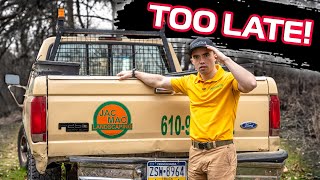
Mike Andes coaches Jack McConnell, a Pennsylvania landscaper drowning in unused equipment and $15,000 in unpaid invoices. The fix: sell four trucks, cut staff to two people, raise prices to $75 an hour, and spend one day a week collecting money. Jack starts implementing and sees early wins, though letting go of the trucks still stings.
Questions this video answers
$300,000 (Mike notes he doesn't fully trust the number).
Five trucks owned; one was reliably running at the start of the visit.
Approximately $15,000 (Mike later notes it had been $30–40k two months earlier).
About $75 per hour.
Around $29–30 per hour (Jack: 'They're going to be 29, 25, but that covers...'; Mike: 'So basically almost 30 bucks an hour').
Chapters
We're selling the trucks. We're selling the equipment.
Something is majorly wrong in my business.
How are we getting by?
I might as well do nothing. I might as well just be unemployed.
God forbid we make money.
It was just tough to get up in the morning.
$2,000.
500 bucks. 25,000.
Turn that off. I don't think I want to do this anymore.
$15,000.
I thought I was good, and that.
Makes no sense whatsoever.
I'm just going to do it myself.
If you go into Spring Rush without collecting that money, it's gone.
If I brought a kid into this world right now, oh, God, dude, he would. I just can't go through another season the way that I've been going through it. I can do it for two years, but a third year, I don't know. Nope, that's it. I'm done. You know, I'm done. I'm selling everything tomorrow.
Today we're in Pennsylvania with Jack from Jack Mack Landscaping. Did $300,000 in annual revenue. Not that I trust that number because he doesn't really know his numbers. However, he has five trucks. They're all broken down besides one, and he can't afford to fix it. Let's see if we can turn this thing around.
The man.
I'm Jack McConnell and I own and operate Jack Mac Land. I've been in the landscaping and hardscaping industry for 10 years of my life. I'm 24 now. I started when I was 14 pushing a wagon.
I love the actual work of it.
And I kind of use it as.
As.
As blinders. Something is majorly wrong in my business.
So this is your house? Is this your house?
No, this isn't my house.
But someone else lives here?
I assume so, yeah. No one lives here. The guy that owns it just kind of uses as, like, storage. So, yeah, so we just kind of got like, the outside stuff. It's kind of a good deal I got going on here. I do not. I don't pay any rent here. I just. The guy that owns this owns, like, a few different properties around the area. So, like, he'll just call me or text me and be like, hey, can you go, like, clean up whatever property? I'm like, okay, yeah, whatever. I'll just go do it. So. But, yeah, like, we don't have, like. We don't have access to, like, the shed or anything like that.
So give me a tour.
Show me around a little bit.
Sure.
This is it. So it's not. Nothing pretty for sure.
The equipment graveyard.
Yeah, the equipment Graveyard. So this, this stuff all runs. That stuff is just like stuff that we haven't gotten rid of yet. Unfortunately, we're kind of. We're kind of in a graveyard state right now. Like, this truck runs, but we can't use it because it has a lift gate on the back that isn't working. That truck I bought kind of accidentally at an auction. Saw that F350 that no one was bidding on, but it didn't have any details on it. And I didn't look at it beforehand, but no one was bidding on it. And I was like, whatever. Like, I just want to like throw a bid in there to see what happens. So I put in $2,000 and no one else bid on it. So then I bought it. And then I. I had no idea if the thing ran. I looked and saw that it had 423,000 miles on it. I looked at the pictures. The cats had been cut off of the thing, so. And there's a plethora of other issues with it. And it was in Pittsburgh, so I drove the thing all the way back here.
This one doesn't run, though.
This one does run, but the problem is. So the GVWR on this is £13,000. And I talked to the insurance company and they were like, it's going to be $1,300 a month to insure this. I was like, dude, like, for a $2,000 truck, I can't justify spending $1,300 a month. I mean, that would literally, like, that would kill me. So it's just kind of sat here and kind of rotted away.
Okay, so truck one, no lift gate. Truck two, no insurance. Bike runs.
It does run. It just needs a battery. And it would run. Yeah. And then this thing's kind of a conundrum too, because I bought this off a buddy for $1,000, but he lost the title, so I can't register it or anything unless I go through a whole bunch of paperwork, which I've just never had the time to do. Then this thing just. Yeah, it just needs a little bit of love for any of your truck lovers out there. It's a 50,000 mile, 24 valve Cummins. That's pretty cool.
It only has 50,000 miles.
50,000 miles.
Were you thinking of using that for, like, landscaping with the box and everything?
We used it a good bit last year, but, you know, we haven't used it since September. The inspection's up because I just haven't moved it. So I'm going to go on a.
Limb and guess this is the truck you use most of the time.
So this is. Yeah, this is the only thing that does run right now. So we use this one. And then that F150 was the other one that used to run for a while, but it kind of. It was kind of janky like that.
You weren't joking.
You literally have five trucks, and one of them runs.
Yeah.
Not that I need them all, but I haven't used them because I can't afford to fix even one. You know, one of them that's. That's broken. I have this one that. That runs, but everything else doesn't.
One thing's very clear is that Jack Mack has way too many trucks. It's almost as if they're hoarding these trucks. He can't really even afford to fix the trucks to make them operational. We need to find a better way to do this.
So that. That used to be my truck, that old F250 that ran for a long time. And then one day, it just didn't start in the Home Depot parking lot. And so I rented the Home Depot truck to go get a new starter, put the starter in. In the Home Depot parking lot, drove it back here, didn't start again. So it's just leaking oil so bad. It was getting in the starter, and it just. It's just killing the thing. So it needs a lot of work. That one. Why that one doesn't run? At 1.2 years ago, we put the battery in backwards at like 11 o' clock at night.
No.
Hooked it up, and then everything started going haywire. Then I. Last year, I had this guy, he was a mechanic who we kind of did like, a janky setup where, you know, there's like, a light switch in there that turns things on. But now I was driving down the road.
A light switch turns everything on?
Yeah.
Let's go.
So it used to. Now I was driving down the road maybe about a month ago, and all of a sudden, like, sparks and stuff were flying out of that switch, and, like, the thing just died. And so then we towed it here, and it's sat here ever since.
I've gone from having anywhere from, you know, one to two employees up to, like five or six. And the past three years that I've been in business have been a struggle. The current state of the business has not been fair to both my employees and my family. In 2023, we started with maybe four or five employees, and I had to sit everyone down and lay three people off all at the same time. And that was not an easy conversation, and I never want to go through that again.
I remember looking at, like, how much money we were bringing in and how many guys we had on payroll, and I was, like, doing just some simple math, like.
Wasn'T adding up. So. So, like, I had a lot of time invested and, like, money invested in them. So I, like, you know, I wanted to keep them, but I just. Right after doing the numbers, I was like, this makes. Makes no sense. So I told everyone to meet me at. At the garage over there. I was sitting. Standing here behind this truck, and all the guys were lined up on the sides here, and I just had to sit him down and tell him. I was like, I'm. I'm going to do, like, I can do, like, one or two more weeks for you guys. But, like, it was. It was such a hard conversation to have where I was just like, I, I. I can't keep you all. I just kind of opened up to him, and I was like, listen, I, you know, I kind of did something irresponsible. I hired all of you on with this, like, whimsical dream that I was gonna, like, all of a sudden grow the business by, like, double in, like, a matter of, like, a few weeks. And, like, that doesn't make any, you know, it doesn't make any sense. I just told everyone. I was like, I'm gonna have to lay, like, everyone off, and I'm just gonna do it myself again. They understood, and they, you know, they appreciated that I at least tried to, like, you know, get them through a week or two so they could try and find something else. I just couldn't, you know, I couldn't make it through. It was tough, but I kept pushing through. And, you know, it's funny, like, I kind of easily forget, like, how tough it is sometimes. Like, I get, like, overly optimistic. I just didn't, you know, I kind of got lost in, like, you know, what do I, you know, what do I do? Most of the time, I just didn't even think about it. And that's why, like, the problem gets worse when you don't think about it. But it was just like, all right, let's just go mow some lawns or, like, do a, you know, do a patio or just do work, because it's just like, all right, then I don't have to think about the fact that, like, we have no money in the bank account or anything like that.
Look, I understand that laying off team members can weigh on you a lot, and it's not easy. I've gone through it before, too, but ultimately, avoidance is not a great business strategy. Trying to think about other things just to avoid the problem that's actually affecting the business could lead to massive ruin.
A month ago, I was, like, kind of doing, like, a budget for myself for this year. I'm like, oh, yeah, like, this is what we can do. It'll be great. Everything. But then I kind of told myself in the back of my head, I was like, well, let's think about, like, the year or two before this, where I did that before, and we had problems within the first month or two. So this season, I want to be, you know, just maybe start up with, like, three or four of us, take on as much work as we can. Maybe, you know, try and be a little bit more profitable instead of just trying to get as much work as possible and just see how that. See how that goes. Everything that's going wrong. There's definitely been a lot of.
A lot of hard days and definitely long days and just like, sitting and just, like, thinking, you know, and just, like, right. Sitting at the lot, sitting. Looking out at the pond and just be like, I've done, like, done all this just to, like, make no money. It's like, that's crazy. Like, I might as well. Just, like, I might as well do nothing. I might as well just be unemployed. Better yet, just, like, you know, working, you know, McDonald's or something. I'd make more money than what I do right now.
Because my thought is, like, okay, if you have five trucks, one of them runs. Why don't we just scale back to the services that you trust someone else to do and, like, make those really profitable. Like, to be doing six guys and only $30 to 40,000amonth in revenue, there's either a pricing problem or there's an efficiency problem. And so from your perspective, like, do you think they're, like, busting tail all day long and kicking butt? Or do you think it's like, they're slow and, like. Or you have no idea, like, based on tracking them?
Yeah, I mean, from what I know that especially, like, the guys that I had for the whole season last year were, like, they were good. They were, like. They were fast. They were efficient, as efficient as I would ever, like, expect them to be. I don't expect them to be as fast as I am. But, like, any of the customers that talk to me, they're like, oh, your guys are, like, in and out of here in, like, 10 minutes. And I'm like, well, did they do a good job, and they're like, oh, yeah, they did great. I'm like, okay. You know, there was. There's two other guys that, you know, they were kind of slacking off. And he was a little bit of an ex drug addict, and, you know, he. He couldn't quite get over that. And, you know, I tried to help him out as much as I could to, you know, try and better his situation, but there's only so much I can do from, like, a position of, like, the hurt that I'm in to, like, help someone else out.
What's your target hourly rate, like, for mowing, for example?
So we're trying to get, like, $75 an hour.
That means you're getting under 60 usually.
Yeah.
And what are you paying the guys per hour, like, right now?
So one of the guys is making. He's making 18, 50. And then the other two guys. So they're H2B visa guys. So I actually hire out them from a third party. In this line of work, you're not gonna. You know, you're not finding the cream of the crop every time. You know, it's like landscaping. Kind of like the thing where it's like, yeah, I didn't go to college. I didn't go to. I hardly finished high school, and I don't know what to do. So you join landscaping.
There's a guy named Carl, and he finds somewhere between 40 to 70 guys from South America, Mexico, Guatemala, they come up, and he does all the visas and the paperwork and then sends them all off to other landscaping companies. So Jack's a part of that. All those guys are awesome. But it is really expensive to have Carl do all the visa work and all that kind of stuff.
They're going to be 29, 25, but that covers. That covers everything. So I don't have to worry about, like, workers comp. And that covers all the taxes and stuff like that.
So basically almost 30 bucks an hour.
Pretty much, yeah. So they're expensive.
For some contractors, the H2B program works great. Essentially, you get some temporary workers from Mexico that come up for. For your season and then leave once the season is over. However, he's using this middleman that is potentially causing the cost of these H2B workers to be extremely high.
Because that's my concern is like, so typically when you take your hourly rate, you want it to be less than 25% of that to be going towards base pay to the team. So, like, if you're doing 75, we really need to be around 18 bucks an hour to make that make sense.
I feel like I definitely underbid some of the work that I do, but it's also maybe an issue of the market that I'm in is pretty tough. We all fight for every job we get.
Sometimes I feel like we price things a little low. Definitely been a couple ones where we go to and we're like, oh, we should have charged more. We're gonna be here the whole day. So I feel like that kind of hurts sometimes for him.
Jabe is my guy right now who's working at the job today, and he's really good. He's kind of someone that I could see doing, like, you know, actually driving the trucks around and, like, you know, kind of leading another person to do something. So if I bring in one other person for, like, you know, somewhere around, like, 18, I would maybe bump him up to, like, you know, starting out maybe, like, 22. Yeah. Jade. He was there when I sat everyone down to lay everyone off. So he knows he was supposed to be laid off. But I just, like. I was like, all right. Like, I gotta. You know, I gotta at least try for him.
It was tough for a while. There was a couple weeks where I thought I was going to be let go. I thought everybody was going to be let go. So it's hard, but, you know, it's business, and I'm lucky to still be here.
He was really putting in his all, and he was really excited about everything, so I had to. I had to try and keep him. So I did, and it turned out for the best. You know, he's a good kid, and he's got his head on straight, and he gets stuff done.
Like, what do you think about having just the two of you working and going after, like, higher margin, cutting out all the other stuff, and you guys just working together?
That's what I did back in 2021. And it was. It was tough. Like, I was. I was beating myself up. I was definitely working like, 12 hours a day for like, six or seven days a week.
We do, like, the door hanger thing because it's easy, but it takes a lot of the time away that I need to get the jobs done. So I work like it. You know, in the middle of the season, I'm working seven days a week, you know, 10, 12 hours. When the sun's out, I'm working.
But that was the most profitable year we had was back in 2021, and now we've just kind of gone backwards from there.
So if you have all that Work, though, like, in 2021, how much revenue did you do?
I think it was. It was somewhere only around like 200, maybe 200,000.
And then you went to 300,000, but you tripled the amount of guys. You. You basically had to employ your revenue and productivity with just you and one other person. At $200,000, you can make, like, you can probably pull 70 to 80 grand out of the business in profit.
Yeah, there's definitely some days where I'm like, it'd be nice just to do my job and go home and not worry about it. But, like, as the. As the owner, especially, like a small little business here, your mind is on it pretty much from the time you wake up to the time you go to sleep. And that does get, you know, it does get draining, especially, like, when you're not really sure if you're gonna have enough money coming in.
See, when I look at 20, 21 and you say, hey, I had one guy and myself, we did $200,000 in annual revenue, and we worked like dogs seven days a week. I just say, okay, great, let's not work like dogs. Raise our prices and lose some customers. So we don't work seven days a week, make the same amount of money, but be way more profitable because we have a higher rate.
And that way I'm not, like, playing catch up where, like, you know, when I had, like, six guys, and it was like, I just need to get as many jobs as I can.
And then you're willing to take lower prices, which you start losing money on them.
Look, if the business is actually costing you money to keep it in operation, you just pack up and go get a job where you actually get a paycheck every single week.
Yeah, I mean, it's luckily, like, you know, I'm doing this at a young enough age. Like, I don't have kids. I don't have a house. I don't really have, like, any super major bills outside of, like, the business. If things just keep going the way that they are right now, there's no way I could ever do any of that. Like, I. You know, family is such an important thing to me with all the pressure from, you know, from. Right. My girlfriend, she's. She doesn't pressure me. Bad word to say, but, like, it'd be nice to, like, you know, live a normal life, like, you know, normal people and, like, do things that are fun. I one day want to have kids so that, you know, my parents can be grandparents, my grandparents can be great grandparents, and stuff like that. But, you know, there's definitely, like, you know, times where she's like, it'd be nice to, like, go do something, you know, even if it's, like, dirt cheap. And it's like, I'm, like, looking at my personal bank account. Like.
There'S just nothing. There's just nothing there. It's just like, I can't. I can't afford to go, you know, do even, like, halfway decent dinner.
You know, the thing is, in order for a business to grow sustainably, it has to have profit, right? And I think a lot of times it's very easy. Like, I will jump to the big business and I'll make it profitable, right? It's. It's so much safer to be like, I will take my. Me and one other guy, make it very profitable, 30, 40% profit, and then I will slowly grow that over the course of time instead of all the stress of, like, trucks not working, not having money, like, even right now, like, what is your girlfriend paying for? A lot of the stuff. Like, how are we getting by?
Yeah, so right now it's like, we live, like, pretty. Pretty, like, you know, not like a, you know, basic life.
The other, you know, financial struggle I've been going through is my girlfriend has been covering my living expenses for the past seven or eight months that we've lived in this apartment in Philly. And I. I won't let her. I won't let her just pay for that.
I need to.
You need to give her that money back.
We basically just pay rent, the, you know, utilities. So it's like, it ends up being like, maybe 15, $1600 each a month. So she basically covers that kind of stuff, and then I pay her back as much as I can. She's been with me for, like, two and a half years now. And so she's been through pretty much the business through the very beginning. So she's kind of seen, like, the downfall or just like, the. I keep trying to, you know, telling her, like, oh, yeah, it'll get better, it'll get better. That's. That's been tough, you know, and I can see how it's frustrating for her, but she. She believes in me. She hasn't given up on me yet. But there was a period in, like, November or December this year where I wasn't bringing in money because, like, I've never been the best about, like, invoicing people that. That tends to kind of fall behind.
How much do you have in receivables right now?
Probably somewhere around, like, 15, $15,000.
Jack Mac has $15,000 in receivables, which is essentially work that you've already completed. The customer owes you money and you just haven't collected payment. That would be a huge relief to have $15,000 to show up in his bank account right now.
It was worse. It was worse. Like two months ago in January, there was probably 30 or $40,000 on the table.
That's like all of your profit.
30 or 40,000 thousand dollars. If we're going to do the work, let's get payment. Otherwise we'll never be able to grow the business. Even $15,000 right now in Jack max pocket would be huge.
And I think the only reason I was like kind of making it through is like I had a little bit of money from before I started this. It's like that all kind of depleted. I needed to like, prove myself that this wasn't like a waste of time. That's why it's like, okay, anything I can do to just like make the business look like it's like decent. Oh, you got like four guys. Oh, you have six guys. That's like, great.
But I get it. Like, so when I left medical school, I had the same feeling because I was like, I'm gonna prove these professors wrong. That said I'm a failure and I'm wasting talent, all the rest of it. And if it's coming from family, I bet it would even be harder.
Yeah, there's been many times where like, you know, I've just sat down and been like, nope, that's it, I'm done. You know, I'm done. I'm selling everything tomorrow. That, that is a definitely last year, like, that was just a once a month occurrence where it's just like, it's not worth it. I'm going back to school. I'm doing, you know, I'm working for someone else. Not to pat myself on the back, but I'd be a superb, like, manager for another landscaping company. You know, I could. I would make them a lot of money if they hired me. So, you know, if I'm dumb and don't do what, you know, Mike's talking about, then, you know, I somehow go under. You know, I do believe in it and that's why I've stuck with it for so long. And I can be pretty stubborn when it comes to that kind of thing. Like, you know, people will say like, oh, it wasn't the right decision and stuff. And I just kind of. I just stay quiet and just. I'm just like, yeah, no, this Is this is what I wanted to do, so I'm gonna just do it. 2022 is where I really started, like, making the mistakes. And kind of like what you were saying is that's when I tried to, like, grow the business really big.
The only reason that Jack is still in business is because he had a nest egg, but he's been slowly siphoning that cash off. He also has a really supportive partner that's been able to pay the bills so the business can stay in operation. But if we keep sucking all the profit out of the business and it's actually costing us money to stay in business, eventually the business will fail.
I'd just be like, whatever work we can get done with the two of us. That's all the work we will do. And if we need to pare down services, trucks, equipment, whatever, to get down to where we're only doing about 70 to 80 budget hours a week, that's it. And then anything above that, we are going to raise price. Like, you're just overloaded with work. There's no more seven days a week of working. At least the seventh day, you do invoicing. Because, like, if you can be like, okay, I'm just going to keep raising prices until there's not enough customers to where I don't have a seventh day of work. And on that day, I'll do the admin, I'll do the invoices, I'll do the estimates, and I'll actually bring their money in that I earned. Then all of a sudden, I think in one to two years, you'll wake up and be like, I've raised my prices so much, to the point I can afford a third guy. So we should just literally go through this whole place. I'm like, okay, what are we selling? What's staying? What's going.
All right, look, I understand the equipment and trucks are exciting, but if they're sitting there doing absolutely nothing, they're not making any money. Trucks and equipment don't make a business. Customers make a business. Their payments make a business. That's what we gotta be focused on.
We gotta get rid of this thing. What do we think we can get for two grand?
The way it sits right now, yeah, it's probably like 2,000.
All right, $2,000, 500 bucks, probably.
That's my baby, though. That's what I started the business with.
I just sold my first truck, too. It's great. Now I guess you're driving around town. It's still painted yellow. All right, so I got another $500. Great. This is going to be our daily driver. Let's go. And then we got this bad boy. What do you think you get for that?
That.
I know it has all this fancy.
24, 24 valve Cummins. I bet someone would buy that thing for 25, 25,000. Oh, yeah.
Oh, dude. Okay, great.
It has a box on it, but, like, you put a flatbed on that.
Okay.
It's worth like 27, 28 grand. How much we get for that thing? Two grand, you said?
Yeah, I'd say like two grand. Yeah.
And then for the tray, like another thousand bucks.
Yeah, I can get rid of that thing.
Okay, we have 30 grand. We can liquidate like that. Okay. We have $15,000 in receivables. Let's just say five of that's uncollectible. People that are never gonna pay despite you burning down their house, they're just not gonna. So we have $40,000 we could create. Technically, in two weeks, we'd be down to one truck. Now let's go address the equipment. Do we need all this equipment if it's just you and Jade?
Sometimes the environment that we create around ourselves as business owners is a reflection of our mental state. Jack has already admitted that he goes out and does mowing, really just try to avoid the issues at hand. The same thing sort of reflects in the shop space. And his trucks are broken down, equipment is broken down, but he just avoids it. Pushes it out to the side, parks.
It there, and goes out and gets.
Other equipment and other toys, and it becomes a distraction.
We have like six mowers. Which ones would you keep? This one looks nice. These are older ones?
Yes.
Do they work?
Yeah, this one works.
It, you know, it's got a. This is our pull cable. So if it spicy in the heart, it'll kill you. But mercy, we can fix that. We can fix that.
You got to take that down, bro.
Yes.
Because you're probably going to get, what, like a couple hundred bucks for this? 500 bucks for this.
I bought that thing for $7,000.
It's probably worth five grand, probably if you clean it up, tiny it up.
Yeah.
That's probably worth what, four grand? We have at least $45,000 of equipment that can be liquidated in two weeks. It's not going to be fun. You're going to lose your beautiful box truck and your first truck.
It's going to be kind of tough. I don't want to get rid of it. I just think about, like, the little memories I have in some of Those trucks, like, you know that that first F150 is like the first truck that I, when I started driving, it's the first truck I had.
So.
So same thing with that other truck, the old F250. Me and that truck have a little bit of history. I rented a kind of shoddy trailer and I had like a 4 ton excavator on the back of that. And it was a little rainy. Brakes don't engage the way that they're supposed to. Pushes the truck completely sideways. Then the entire rig flips all the way around 180 and I just land right in the hole on the side of the road. And I just remember, like, just sitting there and like looking in opposing traffic and they were like, you know, yelling at me and whatever. And I just remember sitting in the truck and just being like. That was one of the quitting moments for sure where I was like, I don't think I want to do this anymore.
The good news is this is simple. The bad news is going to be really difficult emotionally to get rid of all these trucks and go back to one truck, a trailer, and then a smaller trailer is going to seem like a massive step backwards. But you're also going to literally have, for the first time in a couple years, fifty thousand doll, thousand dollars in the bank. And you're going to have like, all this work coming this coming spring. Like, so you have two weeks to essentially sell four trucks. I don't care if you have to give them one, get them out of here. The fact that that thing is costing you more per month in insurance than what the total value of the truck is, is insane. And so. Whoa, we have another. We have another.
Oh, there's another mower over here.
Like, even this is just like, get rid of clutter. Not so much a matter of organization as much as you need, like, mental space. Like, if this is just gonna sit here and collect rust, get rid of it, take it to the dump, give it away for free on Facebook. Like, it's just, it's cluttering your head.
I, like, just like messing with the trucks and stuff like that. That's why I keep them, because I'm like, oh, yeah, one day I can fix them. But I'm so busy doing all my stuff, it's delusional to think that I can do all that.
Yeah, you definitely see some broken stuff sitting around. A lot we could sell. You know, you come in every morning, it's just sitting there. It would be nice to, to just have that extra space and not Even money thinking. Just have that extra space and not have so much junk just sitting everywhere.
Like, how many mowing customers do you think we have? Like 70, 80?
Right now we have 110.
Great, great. Everyone's getting a price increase. You're not going to make a big deal of it. We're starting April 1st. Here's your pricing for the upcoming season. We look forward to serving you. If you have any questions, let us know. We don't need to go into depth about the price increase because half of them are won't even remember their price was last year. Well, how do I know that? Because they're not even paying their invoices. We need to lose at least 30 customers and it's going to be painful. And five of them are going to send you nasty emails. But you have to lose them because you can only probably accommodate 80 to 100. But as soon as you have to work a sixth day, we're raising prices. Here's what I would recommend. April, May and June. We're not doing any projects. None whatsoever. We're just doing mowing, property cleanups and mulch installs. But if someone asks you for a putting green, do the estimate, close the job, and then book it for July and August. Projects are time insensitive, so you can get them done during that time. Like spring cleanups. No one's waiting two months. But a putting green, they'll wait two months on that. Because what you're trying to do is like this massive demand spike in spring rush. We're trying to level that out by saying we're only accepting certain services and then pushing all the excess demand into our off season. You have this massive demand curve like spike during spring rush, right? You're just staffing up for it. And because you're staffing up for it, your price is staying low. Let demand go way high. And you're like, I'm only keeping it. Me and one other guy. Therefore, supply is low. Supply is low and demand is high. Guess what happens to price through the roof, right? So charge way more and get more people to say no to you.
In terms of price. I almost get like every customer that I ever go to. I don't, you know, I don't track it or anything, but like that. But like, just from like knowing what estimates I do, it's very rare for me to ever like get someone to be like, yeah, you're too expensive.
If every single estimate that you send to customers is being accepted, it's a good indication that your prices are probably too Low. So if more than 70% of the estimates you send out are getting accepted, there's a good chance you're leaving profit on the table. And you should raise your prices. Now, as you begin to go into profit mode and not trying to grow, grow, grow, maybe you raise your prices to the point where your close ratio or the percentage of jobs that are accepted is maybe more around 40 to 50%. Then you know you're maximizing profit on every single job.
So this is a number we should be tracking. Close ratio, right? So this is why we need to have one day a week at least. We are not working. You have to be doing admin work. That admin work is literally just going to be follow up on estimates, get paid, send out invoices, collect card information, whatever we needed do. And third, it's like track your close ratio is. You're saying, like, there's almost no one saying no, that that does not pair well.
With.
There's so much competition, I can't charge very much. That makes no sense whatsoever. If you're like, I only close 20% of my jobs, everyone says no and says I'm too expensive, then I would buy the argument that there's a lot of competition. Your close ratio determines if there's a lot of competition, if you're overpriced. But if you're saying that hard, hardly anyone says no. It means we're taking on a whole bunch of unprofitable work and handing it off to a bunch of overpaid team members for our business size. And that makes no sense whatsoever. We have two weeks.
Okay?
We're selling the trucks, we're selling the equipment. Probably an extra 30 grand in our pocket. We're then gonna go get at least ten grand of that Aldi Receivables. If you go into spring rush without collecting that money, it's gone.
There's a few things that we've done since. Since Mike's been there. So one of his biggest things was like, selling a bunch of the equipment, right? So we started. We started doing that. I actually sold one of the mowers the same exact day that Mike showed up. You know, once he left, Jabe and I were finished up with the. With the job. I went right back to our lot and just threw like, a whole bunch of mowers and stuff on Facebook Marketplace. And, like, immediately I was getting people like, oh, yeah, I want this, this, and this. So I think people were getting ready for the spring rush, and they were just like, all right, we weedy mowers so one guy bought one of the mowers, and then like, a few days later, I sold another one. We still have some of them. Some of the more, you know, the better mowers, the kind of cheapy, crappy ones, they went immediately because that's just kind of Facebook marketplace. But so the nicer ones, I still have some of them. I listed them at like a. Maybe like a higher price, but, like, what I think is kind of fair. I'm not, like, you know, I'm not dying right now. Like, you know, I have. There's some money in the bank account stuff. So it's not like a dire need to sell them immediately right now, but they're pending. They're still up there to get sold.
In terms of the trucks, we actually had a mechanic come by. We got all of them running, so they're all, like, moving. It didn't really take a whole lot. Like, one of them. One of them was like, a little.
Bit of, like a battery issue.
One was leaking oil pretty bad. And we fixed that stuff up pretty relatively inexpensively. So the issue is, I mean, we're just. I'm so busy getting the spring cleanups and stuff done.
I'm.
My head's spinning doing all that stuff. So if I don't get those sold until, you know, when things slow down, maybe in, like, June or something, that's okay. But I will get rid of all that.
So it's just the two of us. I am still going to have Santos, which is our other guy that's coming in on Visa, which we. We did talk about not being, like, a great idea because he is kind of expensive. The problem is, is that I already signed all, like, the paperwork and everything to get him here. And, like, backing out on that is, like, somewhat problematic. So unfortunately, we're going to have to kind of.
We'll have to kind of roll with that for this year.
I was able to catch up with some of my. My old customers who owed us some money from, you know, 6, 10, whoever year ago, however much money, you know, left on the table. So I got a good bit of that in not everything.
There was probably like $15,000 on the.
Street, and now maybe there's like 2500. So we got, you know, I got a good bit of it. That was good. I. I understand, but I don't understand why you haven't paid me yet. Let's get this check written.
Raising prices. That was the other thing that I did that was. That was huge. It was tough. Like, you know, I I almost felt bad, like, doing it. Like, people that were like, 25, like, I unremorsively just sent them, like, all right, it's 35. It's 40 now. Like, and I think we had, like, 125, 130 customers, and now we have eight, like 90 or 95. So we didn't lose quite as many as I thought. Like, I was. I was expecting to lose, like, half of them, but a lot of people stayed. And some people were like, oh, that's. That's like a crazy amount. And I was like, you know, kind of thinking about it, like, okay, you know, we have a bunch of houses near them. Okay, maybe I didn't need to raise you by 15, but it's still going to be a 12 increase, right? Like, that's, that's kind of where my mind was. And, you know, I just got a guy in the head space and I just, Just did them all, all the same day. Originally, you know, I had this, like, fictitious number saying, oh, you know, I'm charging some 75 an hour. And that was like if I was like Superman when we were mowing lawns. I mean, we were only maybe making like $40 an hour. Now, even, even. Just with the slight, the slight price increases, I've been. I've been timing like, every single one of our lawnmowers and pretty much every job that we do, and we're pretty much actually right on the money of either 75 or more. We're still bringing in, like, some. Some jobs and actually, like, it's. It's almost too much. Like, I'm like, you know, at some point here, soon, I'm going to have to just start telling people, like, we're. We're booked up.
If I was charging like, 70, $75 an hour, that would be enough to not only, like, pay myself a okay salary, but also profit the business somewhere around like, 50 to $60,000 for the end of the year, which would be huge. And it's funny because I, like, you know, I've ran the business the past two years on, like, okay, as long as we break even. Like, that was kind of the goal. And it. It's, you know, it's. It's, you know, it's not okay, actually. I keep telling myself, oh, it's okay. It's not, it's not. It's like, it's not sustainable. There's. What, what is it? It's not worth doing anything if you're not like, profiting anything in the end, you know. Yeah, we've We've gone on a few. A few little dates here and there. Now it's just like before has been just like that. Like, out of the question. I've been, you know, since I owed her a little bit of money for the rent.
I've. I've.
I'm not completely fully paid up with her.
I owed her, like, it was like.
Five grand at one point. Now it's down to, like, one or something like that. So maybe after, even this week, we'll be all squared away and then I'll be able to take care of myself. That would be kind of cool, right?
It was definitely.
It was interesting, you know, like, I didn't know what to think exactly. Like, going into it, he has this energy about him that's just kind of crazy. Like, he just, like, exuberates, like, go getter. It was kind of cool. It was just cool seeing him. And, like, it was good to talk to him, you know, to get, you know, some motivation, just, like, get the ball rolling. And it was. It was just little things, right? Little. Little bits of, you know, tips and tricks to just get everything right on track. I wouldn't say I was, like, forgotten.
Or like, it was impossible to fix this, right?
It was just little, little things. I was able to turn the business, you know, I can't tell right now because it's only been a month, but it seems as though things are kind of going in the right direction. I'm a lot more optimistic. He had good information, but it was. It was nothing that I haven't really heard before. You know, like my dad has been telling me forever, sell those trucks.
You don't need them.
It was good to hear it from him. It's just like a little bit like a. Of a reality smack in the face. Like, dude, like, just.
Just do it.
Like, that's. This is what you need to do. I knew that I needed to raise prices, but I just wasn't doing it. I don't know if I was scared.
Or, like, I don't.
I don't really know, but it was just. It was good to have him there to just, you know, sit me down and just be like, you need to. These are the things that you need to do. Just go out and do it.






