He raised prices... EVERYONE LEFT!
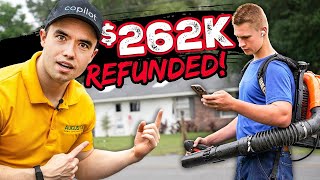
This is a coaching-style YouTube interview (May 24, 2024) with Mike Andes and lawn-care owner Caleb Conger. Caleb recounts rapid growth over five years, a failed move to low-priced monthly subscriptions that caused mass cancellations, heavy refunds, and employee churn, and then discusses recovery steps: cutting subscriptions, raising prices, hiring, rebuilding cash reserves, and focusing on profitability before scaling.
Questions this video answers
Year five
Year1 $3,000; Year2 $10,000; Year3 $30,000; Year4 $283,000; Year5 (last year) $175,000
About 800
Quoted ~200; closed ~150
About 175 subscriptions
Chapters
I hate to say it this way, but I almost like losing.
Today we're in Florida with Caleb's lawn care.
People always say that you don't want to meet your heroes.
Where he had almost $300,000 in annual.
Revenue the year before last.
In order to do that, you'd have to be the smartest or the hardest working person that I know. And you're neither.
You have given up all control of the business to someone else. But then he had this bright idea of changing subscription pricing.
I forgot to tell you the worst part.
And lost almost half his revenue.
Woo.
Yeah, you'll sell a lot of those.
We offered refunds.
His employees have left now you don't.
Have much when everyone hates you.
Well, it's stressful. If you're not making money and you're working crazy hours and all your employees are leaving. Why didn't you pull a band aid off right away?
Fired him without notice.
Dude, that is what you call a horrible spring rescue. I'm sorry. We're gonna try to turn this around.
With the help of the Rubber Ducky. With the help of Jocko. Go.
And the fact that we have a.
Tornado watch right now.
It's gonna be very, very exciting.
Oh dear.
How you doing?
What's up, Caleb?
How you doing man?
Doing pretty good.
Good, man. So I hear we have a tornado warning.
Do we really?
Yeah, dude. Severe warning.
That's totally my luck.
What's your name?
Robin.
Robin. Good to meet you, man.
My name is Caleb Conger. I'm the owner and operator of Caleb's Lawn care. We did $175,000 of revenue last year. The year before we did about $283,000 of revenue. We're losing our only employee next week and so I'm trying to hire and replace him. Last year we tried to completely swap up the business model and to do subscription based mowing. That didn't work. And so we're kind of restarting the business from scratch. This year we got that mower recently used. This is my first truck. And then I started thinking that I was a car mechanic. So I got a bunch of junk trucks trying to not have to spend as much money. Yeah, Got this trailer because we had a bigger trailer and I was trying to kind of move towards the ramps. We were doing a bunch of projects. Right. And so through doing the projects, we had trailers that weren't meant for hauling sod and stuff like that, but they were the size to be able to do it. Right. And so by cutting out that equipment, it Kind of forced me not to do safe things. So. And then these are cool.
Having the side. The side ramp so you can get the mower out front. Yeah, these are cool.
That was another thing that came with it that we'll use if we're doing like mulch or something. Yeah, we can kind of park and not spill as much.
Did you have to paint it blue or did it already?
I painted it.
Oh, that's cool.
So I painted the trucks and. And all of it.
And then do you have a couple units or just the one down here? Just one.
Sweet. And then we rent parking places here as well over there on the side.
Got it.
And so we could just park them here overnight.
And what does that run you per month?
It's 283 for all of them.
Oh, for all.
So then however that adds up for the. The unit is right at 200 and then the parking spot serves.
That's not bad.
Let's go.
In the past, I've tried to grow this location. My goal's always been to get to 1 or 2 million for this location. I'm almost aiming more for like what you do with your smaller locations, like 300,000 and then just have few of those, I don't want to say satellite locations, but have like a bunch of smaller locations kind of paired together. The reason being I can have less management heavy. That's my target right now. But all that to say in the past I've either overhired or under hired on the way to trying to get to that 1 or 2 million. I wasn't allowed to hire anybody that I didn't know. And so that rule was made by my mom in an ATT to kind of keep me from growing the business more than what I could handle and kind of pushing that capacity and stressing myself out. And so I went to everyone I knew and hired 15 people within a two week period. Just kind of pushing those boundaries that probably shouldn't have been pushed.
So when did you start? Which year?
I don't know for sure. This is year five.
Okay, so give me kind of like the revenue breakdown like for each year approximately.
So we started out, I know the first year we made three and that was 300,000. 3,000, 3,000. So that was me towing a trailer around by a lawnmower.
Let's go.
The second year we made 10. Third year we made 30. Fourth year we made 283. Fifth year, which was last year, we made 175. My family has never really had money and we've Always tried to work really hard to get it. My dad does construction and so I did roofing and construction with him. Even while I was part time doing lawn care, I was still working with him probably four year period. I was working with him full time during the summer and then not full time during the school year. But as much as I possibly could get ahead on. I never really had any friend groups or anything like that that I strived for. I heard a saying a long time ago that was you become who you hang out with. And I didn't really want to become anyone that I looked around and saw. And so I've always enjoyed working and just kind of trying to find the work ethic aspect.
Got it. And the drop there is because you say you try to move everyone a subscription and just like a ton of cancellations or was it just like you couldn't sell anything?
We sold and got customers. We couldn't perform the work because we underpriced it and didn't have the capacity to be able to handle it.
Got it. So doing the subscription, what was like the impetus behind that? Like what caused you to want to do subscription model?
My goal was to lower pricing thinking if I was route dense enough it would be like having commercial contracts where we could just mow everything.
So 12 month contracts essentially is what we were trying to like or like subscription.
Yeah. So they were subscription per month. It kind of worked but we didn't have the capacity to handle it. And so if I had went in having cash, it may have worked.
Well it worked a ton of customers just at a low price.
I think we sent out 800 subscription proposals or had 800 requests. So out of those 800 requests we only fulfilled. I even got them a quote to like 200. And then out of those 200 we closed 150 or so and we had everyone quit at once because they don't make P4P if your pricing is way too low. And so everyone would quit at once every month. And so.
Wowzers.
Yeah.
So you're cycling through trucks, you're cycling through.
Our average employee stay time was like two weeks if they made it that long.
It's really difficult to institute pay for performance when you have really low prices because ultimately on pay for performance you give a percentage of the labor revenue to your employees. Well, if you're looking labor revenue and your prices are really low, your employees aren't going to make much money and they're not going to be happy. And it's also difficult if you're a really young business owner to hire people that are 10, 15, 20 years older than you. It just makes things a little harder.
So basically ramped up. It was a great offer because it was so cheap. Got a ton of contracts because of that. They're all underpriced. The guys can't make any money on pay for performance, basically. And then so they just leave because.
They think basically everything. Like we went into it not having the equipment to handle it. So then if they don't have the equipment, they can't perform the job quickly. If they can't do the job quickly, then the price is so low that they have to do it quickly. We can't do a good job. And so it just gets where Cascading effect. Yeah, yellow slopes.
And so what'd you do?
Did you have to like clear out.
A bunch of those customers then? Cause you're like, hey, we can't even service you.
Well, we had I think 22 or 23,000amonth in revenue from subscriptions going into winter. And so going into winter I was just kind of like, this is too. Which I shouldn't have done it at that time. It wasn't wise. But I raised everyone by 50amonth. And we dropped down to like 6,000amonth in revenue. So we. We cut. I think we had 175 subscriptions. So we were doing 40 or 50 lawns a day. And everyone had just quit. So it was just me. And I was kind of had to cut. I have to cut down to something manageable. And so we sent out and said we're raising by $50 a month. And I did it terribly. I did it like three days before we were billing everyone. And so I was just couldn't get there. I mean, it was one of those things where couldn't get to them anyways. I couldn't get to it by the end of the week. And so it's. You kind of have to fire me by in two days. I definitely don't really care about winning. I hate to say it this way, but I almost like losing. Just fun to make the mistakes and kind of see where I went wrong. And that's probably the easiest way for me to learn, it feels like. And so I would almost say it's neither. It's just enjoying the process.
So when you raise everyone basically 50 bucks a month, so probably like a 25 to 35% price increase on across the board.
So we had priced at 99amonth. So everyone was at 25 a visit. And these are half acre Properties.
Oh, dude.
For acre properties, it was 150amonth, and then for acre and a half properties, it was 200amonth.
Yeah, you'll sell a lot of those recipe. You'll sell yourself right into.
What's terrible is I blew so much money on marketing, too.
Really?
Like, I shouldn't have had to.
This is last spring.
Last spring. So going into last spring, I think we spent 10 or 15,000 on marketing. Marketing. $25. Cut yards with inefficient employees.
Look, if your prices are the absolute bottom of the barrel, you shouldn't have to do a whole lot of marketing in order to be able to get new customers to spend 10 to $15,000 on marketing. That's a lot. Especially if your customer acquisition cost is really, really high and you're spending all this money on ads, and then your prices are really, really low.
That.
That's a problem because it could take months, if not years, to just recoup the cost of your customer acquisition, the money you spent on just getting the customer.
The main thing was at the end of the year, we started getting Facebook posts. Just basically people like ragging on you. Yeah, it wasn't just my dumb decisions that made it miserable. But we had one guy that was working, and he posted on Facebook and said that we had fired him without notice, and so he couldn't feed his. And that was like the one guy that I was making sure to kind of treat right, making sure that everything went well for him. And so I was. Because he turned in his notice, and I texted him and said, I've got your back for life. Anything you need, let me know. And then the next thing I see is a Facebook post by his girlfriend with him posting saying, he kicked me to the curve and didn't faint. And I was like, dude, like, just because everyone else has quit, I'm like, you're kind of all I got. Like, you don't have much when everyone hates you. So it's like, dude, I would say you kind of have to disconnect from a lot of the people aspect. So starting out, my only friends were people who worked for me. And so if someone quits, it kind of feels like they're quitting a relationship. And so viewing it as if someone quits, it doesn't mean that you failed them or that they failed you and they're just moving on. A lot of times, it was just a mutual parting that, on my end, I didn't view as very mutual. I was low on cash, and so I can't do anything. I'm kind of just gridlocked. And so we didn't have the cash to be able to pay people on time or efficiently. And so when you can't pay someone on time, they're going to quit. And when someone quits and you have a new person and the first day you say you have 50 yards, and it's me and you. And by the way, all the customers hate us because we're two weeks late. And so it just compounds.
Dude, that is what you call a horrible spring rescue. I'm sorry.
It was. It was all year, too.
So, okay, so break it down. So you do that, like, first thing in the spring. When did you realize, okay, I've dug myself in this massive hole of tons of underpaying customers.
I realized right away, and I'm so stubborn.
I wouldn't give up, really. So what was, like, what motivated you? The really low price thing? Just like, okay, I just want to scale really quickly, or was it like, you're like, someone else did it.
I'm so impulsive, and so I'm trying to.
You had a dream and you're like, let's go.
Well, it started two or three years ago. I said I wanted to go from 17,000 or something in revenue, and I told someone that I wanted to grow to 100,000. And they said, in order to do that, you'd have to be the smartest or the hardest working person that I know, and you're neither. So there's someone that I've been interested in since I was probably 8 years old. And I think that's kind of why I've committed down and just focused on only doing this, is because I committed when I was 8 to myself that I would be the only person that I would ever date or potentially marry. And so from doing that, if they don't. If they're not really interested in having a relationship, all I would really have left is work. And so I think it almost turned into a negative addiction of working just because I had nothing else to do. And so I think finding having a social life will probably be a good thing instead of just working all the time. And that just ticked me off. And so I was like, yeah, okay. And so we went and made 283. And so then the next year, I was talking same person, and this person.
Kicked down to the curve.
Dude. I was kind of asking who it would like, what it would take to impress them. Like, you couldn't make 2 million. And so that's how I got that number. And so it's like, I'm gonna go to 2.2.
First off, is that. Is that person you're trying to impress still in your life? Okay.
And I'm not still trying to impress. Like, okay. What I didn't realize is they didn't want to be impressed. And so I was trying to prove to myself that I could do it right. And so I used. Because it was everyone, like, I literally made a list and would go around and ask everyone that I knew. You think I'm good enough to do this? The joy that I find in it personally a lot has been just proving that things are possible that other people. That's probably a lot of why I even ask when I know that people wouldn't think it's possible. Finding motivation. And if other people don't feel like it's possible and I do it, I can prove to the minority who's trying to achieve things like that that it is possible. When I made that list of if I could make it to 100,000, I had a call with you, a coaching call last year.
Did 17,000 revenue this year. You think? What are you shooting for? Like 25, you think?
I'm looking to. I'm kind of someone who just sets ridiculous goals. And so I'm going for 100 this year.
Let's go.
You were the only person on the list that did believe.
Really? We talked.
Oh, dude, I don't remember that.
Sick.
My voice was even higher, believe it or not. I watched back 17.
Let's go, dude. Good job.
I watched it back and I was like, that's awful. How do you listen to that? That's funny.
It's pretty cool to be able to look back a few years ago and see just how much Caleb has grown since our call that we had together. And honestly, it's one of the most fulfilling things as an entrepreneur to be able to have people that are coming behind you and trying to learn underneath you and be able to give them information that hopefully saves them from all the pain that you have to go through. I remember it was like building a business. I started mowing grass when I was 11, 18. Starting a business, it's not easy. And so to be able to see him just grow. No, everything hasn't gone perfectly since the call. But just to be able to see him expand himself and constantly pushing to become better than that's pretty cool.
Hey, if you have a chip on your shoulder, you'll feed it. That's fine. It'll only take you so far, though. And what you Want to be careful is it makes you irrational. And so what I would recommend is like outside of everyone else's doubts about you trying to figure out a mission beyond that, because let's say you hit 2.2 million, then what?
You've proven that out of insecurity.
It's not right. And so it's like, let's figure out like why you want to build the business, not why they don't think you can. Because a lot of people, they'll just bag on you because they either a, have given up on their own hopes and dreams and so they think they want to reflect that on everyone else. And then guess what's going to happen when you become successful. They're going to dislike you more and doubt you more simply because now you make them look bad because they're comparing themselves to you. Like, the one way for them to feel secure is make sure everyone around them fails or doesn't succeed or doesn't go way above and beyond. So they just like, oh, yeah, you can't do it because the hope is you don't do it and it proves themselves. Like, I'm fine. If you can get the locus of control, like outside of them and back onto you, it'd be liberating. So, like, what do you want the business to look like? Because, like the whole, like getting lists of people's names, you have given up all control of the business to someone else.
Because it's basically a list of people who have more power over your decision 100%. I want to make sure that I can work hard enough, but also do the business smart enough to be able to provide for people around me. Our pastor had his water cut off and that was probably the thing that kind of pushed me a little bit over the edge, work ethic wise, just because I cared about them a lot and their water was cut off and I didn't have the money to be able to pay to have it cut back on. And that was all I really wanted to do at the time. And so that, that kind of motivated me too. I just sat down and said, never again.
I believe as business owners, it's important to know what the why of your business is. Like, why does it exist? And it's not just to make more money because there'll be moments you're not making money and things are going really, really bad. And in those low moments, the only thing that has really ever anchored me and kept me in the game is going back to why did I get started? What is, am I trying to Accomplish. What's the vision, the mission for this business?
All right, and so going into this year, assuming that we get still got a bunch of leads, like I'm assuming, are we switching away from subscription model or are you just raising your prices dramatically?
We already cut subscriptions.
Got it. Did you ever play with the idea of just raising prices and keep subscriptions? Because like you're able to obviously sell them. And I know in this market it's. You can sell subscription based pricing.
The only way that we sold them really though, was on the cost. And so raising the cost, we lost all of it. We went from 25 to like 35 a week and just that $10 jump everything pretty well.
Were you attracting like the lowest?
It's the lowest of the lowest customers. You get the lowest of the lowest workers if you're working as much as you possibly can for as little as you could possibly make. And so it's just an ongoing lowering standards, basically with the subscriptions, not only were we mo edge, weed, eat and blow, plus we're gonna pick up sticks, bag leaves, and so that was included too. But when you're doing that, then you have to buy a, like for the skag, it's like six grand for a bagger. And so we bought a big clamshell bagger. But like when that breaks and we have no money, it's like, well, we're in the contract, we're bagging leaves. So then we have to blow off the lawns. And so it's just nightmare after night. And then like we have weather like this all the time.
Oh yeah.
So when a hurricane comes through and someone has a 30 foot long stick that they're like, hey. Then that's where we drew the line. I think I took a simple thing which is taking grass from one height and making it shorter and made it complicated not only for me, but for workers and customers in the future, if I were to do it again, make it as simple as possible. Just kind of aim for simplicity so every time that someone shows up, they know exactly what they're doing. They're just kind of ready to face the job instead of wondering does it need mowed this week or just because all of the service was as needed. I forgot to tell you the worst part. We offered refunds and I told him, if you don't like the way that my hair looks, ask for a refund. Whatever reason they did, because normally how that would work is that's. That was our offer. I read Alex Hormozi's book that's actually kind of what started it.
Yeah.
So I built this offer in this package, but it didn't work because I.
Priced it because no one could refuse it. It was so good. It was.
And so looking at. Exactly. So out of the 175,000 that we made last year, that's not including retail, 60% of what we made last year was refunded.
60, 60%.
So close to $200,000 in refunds, basically. And that's for work that was performed.
One thing that's interesting to think about when you're doing really low prices, if you're on that race to the bottom, one of the problems is you attract the wrong type of customer. The type of customer that asks for refunds over the dumbest stuff. The type of person that asks for a refund even when you do a great job. That's why a lot of times just having a higher price attracts a premium customer. So that's why in my op, business owners in the home service industries should be focused on a premium service attracting premium customers for a premium price.
So once you knew that your pricing was too low, like, why didn't you pull a band aid off right away? Why did you keep going?
Because I kind of went into it with the basis of it being too low. So my original goal was we'll build these subscriptions and get almost like full neighborhoods of just large contracts, like to almost build our own hoa.
Just tons of lawns, like, make up.
For in volume and make up for it in volume. But then my goal was to raise prices once we had done that. And so I thought if we were the cheapest, we'd kind of drive out all the competition, get all of the properties, and kind of monopolize everything. Then once we had monopolized, we could raise prices.
Sometimes we as business owners, under the guise of trying to take market share and take over the market, we just do really low prices. And the expectation, the thought process, well, I'll go really low prices, I'll get all the customers, and then I'll raise the prices later on. And that works for a lot of big companies. And that's why we always want to say we want to be the Amazon or the Walmart and go into these. These areas and just get tons of market share. All of those companies are huge. All of those companies are backed by Wall street and a bunch of investors that are willing to lose billions of dollars for years. We, as small business owners, we need to be profitable very quickly.
But when you raise prices on people that you're mowing their grass at 11pm they might not like it, especially if.
You haven't shown up for two weeks. And every time that someone comes, it's a different person.
And that's what's killer. If you, once you get behind in spring rush, especially in Florida, when you show up, they don't want to pay any more because it's your fault. But the lawn is going to take twice as long to cut.
I kind of told customers that'll be mowed every week during summer. And so I work my brains out trying to keep up with that, like just to keep my word to everyone. I just couldn't as far as not holding up to my word. I was able to hire other people if they really needed it done. I hired other people who build three times as much as what we made one visit and refunded the entire month. And so I feel like I definitely did my best to honor what I said I would do. But it did hurt to have them all leave in the end after all that.
So. So maybe just kind of walk through what your current plan is and like where we're going from here. I know it's like, obviously we're not doing low price stuff anymore. The problem, like, we gotta find at least probably another couple employees, like bring up to date a snapshot for today.
My, my goal has kind of always been to grow it as big as possible. It didn't start out that way, but probably two or three years in, that's kind of what it evolved to. I'd like to do what you've done with Augusta franchise wise, but do that through corporately owned locations. So they would get a share of the revenue and kind of grow the business as if it was their own, but not have any of the stresses of the overhead or marketing or anything like that.
Yes. Like, if you're gonna do that, you basically need to get the location like 500,000 to be able to afford a general manager. Cause if you're, if you're going like 200, 300,000 with a general manager salary and like just paying them as a lot of overhead, usually there's not enough meat on the bone.
Especially for young business owners. It's very easy to get way ahead of ourselves and start planning what's going to happen to our business in five years and 10 years and even three years, a lot of things can change in three years. And so yes, it's great to have grand visions and dreams of what you want the business to become, but then you got to work Backwards to the present day and ask, what am I supposed to do now? What is the next step? That's really the main focus that we should be really spending our time and energy on. It's like, what's the next most important thing for my business? And I actually created a tool for you completely free that you can use as a Download. Go to lawncaremedia.com plan and you can actually fill out your three year vision map. And a lot of people, they nail this one. And then what I want you to do is work backwards to your one year strategic plan. What are you going to do this year to get closer to that three year goal and very specifically know your budget, what you're doing for marketing, et cetera. And then I'm going to drill all the way down to what are the things that you need to get done today, the next step in your business, that's the thing you want to stay focused on.
Step one though is like make this location a successful first one. Then like the whole nother step is like secondary location. Because like two locations is infinitely harder than one.
Yeah.
Because now you can't be in both places at the same time. But for now, like today, like what are we doing this year? Like, what's the projection in terms of revenue?
The objective this year is to kind of just stack cash because I've never done that in the past. I think what's led to a lot of the failing in all areas, my hope, I hate to say it, was that he would come down and say you pass out thousands of door hangers because that's something I can control. And so I think a lot of it's having control and if it's out of my controls when I don't like it and just waiting and saving money seems out of my control, well, it's stressful.
Like, dude, if you're not making money and you're working crazy hours and all your employees are leaving.
Last summer it got to the point when we were working so much that I'd be working until 10 or 10:30 at night because the mower's got lights on it and I'd stick my phone light in my belt. So we were mowing residential properties till 10 or 11 at night. And then I'd get up at 4 or 5, workout. Well, I wouldn't get up. I'd do office work all night because I was still in school too. So school works during the night. And so it got to the point where I was averaging two or three hours a week in sleep. It Was not good.
You've been in school now?
Mm. Mm. I'm still in it.
You're still in school.
So I do it during the night.
But got it because you're home. You're doing at home homeschooling.
Yes.
All right. So easier. You pull that off.
A lot of entrepreneurs and business owners have massive aspirations of what they want their business to become. Most are not willing to sacrifice what is necessary to actually attain and reach those goals. I can tell that Caleb absolutely is willing to sacrifice work crazy hours and put his body through somewhat of a hell to be able to reach his goals. And that's extremely admirable. I can't blame him for that. I know it's like to be hungry and wanting to get out of your current situation. And the only way you see, the only path you see to make that happen is through massive amounts of action. Working, grinding and hustling. As an entrepreneur matures, it is required to start working on the business instead of in the business. Because otherwise if you're just constantly working in the business, working harder and harder and harder as you begin to grow, you eventually run out of the 24 hours in the day. I believe Caleb can make that transition if he constantly changes himself, improves his margins and his profits. So he's not always having to work in the business.
In terms of like a balance sheet perspective right now, what's, what's cash in the bank? Is there debt? Did you have to go into debt last year, like give me kind of that breakdown?
When I spoke with you on the phone for the coaching call, you recommended that I buy a zero turn on zero percent interest. I think this was two years ago.
And then I got a 60 inch big dog zero turn. It isn't working more than it is. If I'm trying to expand next year, would that be something to look into, going into debt for something or is that.
Yeah, like you know your, your size and I don't. I wouldn't be opposed to it.
I took that advice. We did buy one. We owe $2,000 on it now. We got it at I think 14. So I didn't want to pay it off until I kind of talked with you to see if there's a better place to put that cash. There's no other debts and that's in my parents name because I can't get anything yet.
That's a good thing about being young and going to business. You're forced not to have debts because you can't get debt. Yeah, so. So besides that, there's no debt. And from a cash perspective, like, where are we at?
We've got kind of an operating fund and then another emergency, like checking in the emergency checking there's right at 8500, I want to say. And then in the operating expenses that'll be spent out is right at seven, A little over seven, in my opinion.
Having at least one month of revenue in cash reserves and is usually a pretty good benchmark for to be able to know how much money I need to have in the bank. So if I'm making $100,000 per month, I should probably have at least $100,000 in cash in the bank.
Ideally one, the hiring process, like the best way to find someone. Is that a good way? Just putting out flyers and like talking to people that I know locally who are reputable, who would have reputable communities of people looking for jobs. And then also what is the training process? Like just have a checklist. What I did yesterday was I had a checklist of each thing he would be taking on. And then we, since he's been doing it for a while, I just had like a proficiency skill of how good at you at each thing. And he is better than me at all of them. And so that's why I let him go solo this morning instead of just telling stay home.
Right. He is experienced and so he can jump in and do the job. The problem is finding people like that is not scalable. Like you're not usually gonna find someone on their first day is better than you at doing the work.
You need to be able to take.
A McDonald's level labor and turn them into a profit.
And so I would say this right now, we're not going to be spending money on marketing. Instead we're going to spend that on Indeed. And we're going to just keep interviewing people.
Okay.
Right.
As you're hitting capacity and you're raising prices and all this, you're going to find that next employee. And if you find them within a.
Week, you're going to give them a job offer for like three weeks from.
Now or four weeks from now.
So I should go ahead and try to get someone scheduled to start, you think?
Yeah, well, we know, we know within the next couple of weeks we're hit capacity. We know we're going to raise prices. And in a couple of weeks from then with the spring rush and you got four or five new estimates coming a day, like we should definitely be hitting 90 budget hours in the matter of a couple of months.
Because Robert knows someone that owns a business who's quitting his business just because he can't make money in it, is that someone that I should have a conversation with?
And I'm always hesitant of people that own their own business. The reason is because they are used to making their own rules. And so assuming that they are really humble and they. They actually are able to say, I failed and I'm not a business owner, if they can't do that, I wouldn't bring them on.
It's very difficult to be a leader.
Of leaders, that is business owners and entrepreneurs. It's, like, very difficult because they are rule breakers, and they don't want systems. They don't want people to tell them what to do. They want to make all the rules themselves.
Yeah. Like I would say if I was speaking to you as a friend without the cameras and everything, I would just be like, take this year, and we need to, like, put our feet back underneath us. Not for a month or two, the entire year.
Okay.
And stay in profit mode. Like, make sure this is the industry you want to spend the next 10 years in, be really profitable in it, and then the world's your oyster after end of this year.
The most difficult part will probably be not trying to make it artificially difficult. Like everything that we talked about, it will be super easy. And I think that will be the difficulty in it is getting to capacity and raising prices. It's the most difficult thing we'll have to do is raise prices on customers, and it's the click of a button to send a mass email. And so I think not having anything difficult to work on is going to be the main challenge. So I need to find something difficult to keep me busy.
It was something I talked about with the owners of Gusta Nation on our mastermind this morning, and that was like, we all have these plans in five or ten years of where we want to be at, but if we get our heads in the clouds on that, it will distract us from, like, what we actually supposed to do today. When people, like, want coaching or they want to think about, how do I create a command center? How do I start a second location? That information to you right now is worth absolutely nothing because you can't execute on it. The only thing you can execute on right now is raising prices, hitting capacity, and making this location more profitable. And if you do that, it'll make what you want in the future more possible.
I would say just refocusing with Mike and sitting down and looking at making the smart decision would be the best decision, business wise, rather Than operating on a hope of well in 10 moves down the road. Like if it's a chess game, you can't start off moving your king. Just because it's boring doesn't mean it should be different. It most likely means that that's the route that you should take. People always say that you don't want to meet your heroes and so I was kind of curious to see if that would be true. And so far it doesn't seem to.
Seems. Seems to be going really well. The biggest thing that I took away from my coming was just stepping back and not really pushing so hard. I've been kind of easing off for the last month or so and it's been really nice. We've been getting regular consistent customer flow, been getting good leads, we're raising prices on everything. And so we're still taking on customers, still booking up the schedule. And it's not near as stressful without all the made up limits basically naturally gaining customers, not spending a bunch of money on ads, not blowing money on us, unnecessary things. And so seems to be going well so far.
I've been working since I was probably 14 years old, close to full time. And so I've always put any extra time into work and never really done too many social activities at all. And so just kind of stepping back from that some and having more of a social life has been really nice. And so I could definitely tell it's making a big difference, having a lot more time for things.
I would say it's more of kind of at a crossroads and so I have the choice to continue to scale it. I think I would still definitely like to scale it to multiple locations. I think after talking with Mike though, I would do that slower. And so instead of trying to grow super faster over the next two or three years, install out, I'd rather slowly grow over the next eight or 10 years. And so just spending like he said, spending the next year or so just focused on this location and then after that deciding if we want to keep scaling quickly or kind of slow down. Over the last month, with me stepping back some, we've actually scaled revenue. And so we made more last month in recurring revenue by about 40% than any other month so far. Just making more money and having a lot more time. It's been really nice. I think with me being so sleep deprived all the time, it makes it where I was making poor decisions and it was costing us a lot more than what I realized. And so it made things a lot more difficult. I think this year we're probably looking at 4 to 500,000 is what it's looking like.
It might not have been two days after Robert left, so I know I.
Think I mentioned it in the video.
But we had a rock star in Cyprus working for us and he had taken off to Oregon for the summer. And so I actually called him the morning that Robert left and just said, I booked your plane ticket and you're welcome to hop on the plane if you don't want to the tickets there.
And he hopped on the plane.
So he came back and he's been working with us, and so that's been a major help. And so Cypress has helped pulled us through. I think I called him Thursday and he was here by Saturday. And so I drove four or five hours to go pick him up from the airport. Flew from Oregon to Georgia. And so that's been a huge help.
I think honestly, talking to the camera guys was one of the biggest things for me. Just riding around and I don't. Up till the last probably month or two, I've just been pretty closed off and just put my head down and worked for years and so just kind of almost hardened off against feeling anything. And I think riding around in the truck and especially talking to Mike and things too, and explaining why I do things was one of the most beneficial parts. Because when you tell someone why you do something, it makes you really think about it. And for a lot of those things, I realized it was just preconceived notions where I was. I said, I'm going to do it, so I'm going to do it. And so one of the biggest things was relationally. I know I was talking to one of the camera guys and he was asking me if I was dating or in any relationships or anything.
So there's someone that I've been interested in since I was probably 8 years old. I committed when I was 8 to myself that I would be the only person that I would ever date or potentially marry.
Long story short, there's been a childhood friend who I've known since I was five or six years old, and so we're actually dating now. And so that's been one of the biggest things is just relationally kind of opening up and not being so closed off and miserable and alone. So I've got good friends around me, got Cypress back, so good work help got her. So I have a little more motivation for things and have a reason to take off. And so that's kind of the. The biggest thing is having more motivation rather than just work and make money. And it's made it where we make more money in the process, too, so been pretty awesome.






