His Crew Take Their Work Van Home! (Coaching Call with Mike Andes)
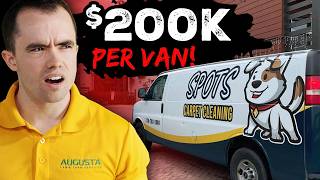
Uncut coaching call between Mike Andes (founder of Augusta Lawn Care) and Dave, a carpet-cleaning business owner. They discuss rolling out pay-for-performance (P4P) for a small crew, operational tracking (clocking, budgeted hours, manual adjustments), incentives for upsells, and practical allocations for overhead (chemicals, fuel, dump time). Mike shares observed efficiency gains from P4P and software/integration advice.
Questions this video answers
Over $50 million in annual revenue.
170% growth (from last year to this year).
About $100,000 this year; roughly $200,000 potential per van at full capacity.
About 25–30% increase in efficiency (blended average).
Rough ranges mentioned: around 33–38% of labor revenue; some cleaning companies may do 45–50% when overhead is minimal.
Chapters
My name is Mike Andes. I'm the founder of Augusta Lawn Care, where we do over $50 million in annual revenue mowing grass. But today I'm going and doing a coaching call. The carpet cleaning business from last year.
To this year, we grew 170%.
He's trying to figure out how he can pay his team more because it's a small team and they do a really good job and how he can improve the business. We see around 30 to 35% increase in efficiency. Let's jump into this uncut coaching call that I had with Dave and. And see if we can't help this carpet cleaning business. Oh, I remember you. Let's go.
Yeah, you came to our shop and we did a little video and stuff.
Yeah. That's awesome. So are. Have you kind of branched off and doing your own thing now then?
Kind of. I'm still partners with them, but I own a third of this company, which is carpet cleaning.
Good stuff. Got it. And how long you been doing it now?
We probably, like, I guess a year about now. It was like a soft launch because I transitioned out of Atkinson and kind of. Yeah, made that transition, bringing somebody else on for me, and then kind of slowly launched this company. But, yeah, I'd say, like, now we're kind of a year into it.
Awesome, man. Cool. Well, I know you probably are a little bit familiar with pay for performance already, but maybe just like, let's just dig into kind of, like some of your questions about, you know, how it can be applied obviously to carpet cleaning, and then we can go from there.
Cool. Yeah. I'm just going to open another tab here with my todoist here. Okay. So I guess, like, on my end. So pretty much I have like, one staff member currently, plus myself.
I don't know, like, whether the, like, paying for obviously P4P is, like, gonna be worth it at this point. But at the same time, like, I'm really protective of my time just because I am kind of owner, operator and like, automating things as much as possible is obviously kind of how I can scale right now. So that, like, I'm kind of curious about. And then, like, there's just some, like, kind of weird things, like if I should treat things kind of as a run, because it's almost more like traditional to, like, residential mode when I kind of like three or four jobs in a day. I guess maybe two or three. But there's also sometimes, like, my lead tech will be on jobs by himself, and then other times that, like, for bigger jobs and we need to speed things up. I'll obviously schedule myself to be there as well. So there's like lots of kind of manual adjustments. So I'm trying to create. Just make sure it's simple but also accurate.
Yeah, like that's, that's really why we did the integration of Copilot is because of this one major thing. And there's like when someone goes and helps someone else on a job, that's when it starts to get complicated in terms of tracking. Because someone's responsible for 60% of later labor, someone else is responsible for 30% and someone else responsible for 10%. They converge at one project. So no, I don't think it's necessarily required to have the software for if you just have one employee. Like if you, especially if you're working with them a lot, really you are the system and it's more a matter like I just recommend you make sure your budget hours are locked in, you actually have labor revenue and you just know what those numbers are so that when you do have multiple crews, you can roll, roll out P4P without having any trouble. And so like we always tell our owners like if they're going to not roll out P4P when they have one employee, it's just make sure your base pay you plan to have with P4P. You don't pay them more than that on hourly wages now. So that way when you roll out P4P, there's only upside for them.
Yeah, yeah, no, that makes sense. I mean, so right now what I do. Cause like running a solo carpet cleaning crew is definitely harder than running a two person crew. Like they're just a lot more labor intensive even just like kind of mentally it's a bit more of a grind. So right now I pay my tech who also came from Atkinson, so I know him very well. So I just give like a solo bonus essentially. But obviously like it's just a simple way of kind of incentivizing right now. But it's not. I mean, I mean I know your whole pitch. Like it's, it's a, it's a lazy way of doing it. And obviously it doesn't incentivize efficiency. Even though like it just cuts out like it cuts all of our expenses for labor like in half, including the drive time, which is as you know, the biggest killer. So for me, I don't really care if he's even as efficient. Like it's like just not having both of us drive 20 minutes just like instantly makes our dollar per hour go way Up. But obviously there is jobs that I feel like we could be better on or obviously, you know, yellow slips and things like that that are rare, but they do happen.
So, yeah, you could do a really basic form of PvP, Dave, at the beginning, if it's just one guy or if like, hey, it's going to be this way for a while, you could just be like, hey, it's how much revenue you produce every single week and you get a bonus based upon how much revenue you produce just because you know that the vast majority of your revenue is going to be labor re because there's not a lot of materials involved. Right. And so it's pretty easy based on, you know, how much labor revenue now that technically you tie that back to budgeted hours because it's all simply an hourly rate at the end of the day anyways when you're doing labor revenue. But you could do that as a basic. And then I, if I was you, I would really lean up, lean into incentivizing upsells. And so did you watch recently, Dave, that. That turnaround I did with the carpet cleaning company?
I did, yeah. Yeah, for sure.
Yeah. Like that. That's like the real advantage of like the carpet cleaning model is your tech is inside with the customer usually. And that's the difference between landscaping and like something like carpet cleaning is you are inside with the customer usually, and you're going to talk to them. And so the ability to be able to train the tech on the upsell is like, I would incentivize that just as much, if not more than efficiency.
Yeah, yeah, no, that makes sense. I actually made like a. Well, I've always kind of had like a pre and post cleaning checklist, but I added looking out for upholstery and stuff like that, you know, into that checklist. So trying to get some hermosi stuff going on to simplify things really well and then obviously taking stuff for what you're doing. My other. I guess it's like kind of more strategy, which I wasn't expecting to ask, but if you're here. So we have like, essentially like our setup of the day is like making sure that we have all the chemicals we need and it's, it's not a long time, but I would say maybe just like, let's just call it 15 minutes to make sure you're kind of prepped for the day.
Like, and. And the, the van goes home with my tech. So it stays at his house. He just starts his day, drives his site, finishes his day, drives Home. So right now I'm kind of paying him like, for the morning or. Sorry, I don't pay him for the morning. But he'll kind of get like, stuff set up for his job or do it on this first site, but then he'll get paid for his, like, drive home. So he's just getting paid. One of the ways, um, how would you, like, strategize? Like, should I just pay him from his first site and, like, all of that extra stuff is kind of on that P4Pmodel or like. I don't know. I don't know if that makes sense.
Yeah, totally. Like, honestly, when we've seen Companies that use P4P that have their trucks drive home with the employees, P4P impacts way more. Because now they're, they're, they're actually thinking about, like, how do they get to and from work as fast as possible instead of just while they clock in. So it expands the kind of horizons of how much P4P impacts their day. Because now they're at their house with the truck. They can literally pack their truck the night before with their, their, their, their tools, their chemicals, et cetera, for their next day. So we see like, in. As a blended average, we see about 25 to 30% increase in efficiency if they're doing P4P and they don't have that if they have the trucks go home with the guys, or in your case, vans. Because the, the crew member that is motivated by the money is, Is literally doing chemicals at night. And we can see them because they clock in like for like 20 minutes or 30 minutes at the end of the day after hours and on people. I know it's happening. They're doing all their chemicals and everything, and then they're doing it the next day. They're driving straight to the first job. And a lot of them we've, I've talked to, they move their start dates for like, the first job. Getting started for, say, carpet clean, where you go inside the house and you have to let the customer know they've moved that like 30 to 40 minutes earlier in the day simply because the crew gets there so much faster.
Right? Yeah, yeah, that makes sense. And then the other thing that kind of goes into that, that's kind of more overhead type stuff. So we have like a gray tank that all the gross water gets sucked back into the van. We legally, like, shoot down pit at like a yard or something. We like, have our Atkinson yard, which is gravel, and that's actually technically legal, but I make like we can't just dump it on the front lawn of everywhere. So it is like a.
I mean, essentially it's dumping a green waste. Pretty much. Kind of similar idea. Again, that is that kind of baked into that whole day's average. And it, it's not really allocated to one specific job because maybe it holds the tank of six jobs for that week. You know what I mean?
Yeah. The more you can bake any sort of daily activity into P4P the better. Because if you just like, well, I'm going to add 30 minutes an hour or that time is manual adjusted. Well, now they can take their time. There is no incentive to move quickly. I. If I was you, like, it's part of the day. Kind of like with, with blade sharpening or like filling up your gas tank. Like that is part. You're not going to get paid extra on P4P when you're mowing grass and you're sharpening blades every day. Like, it's just part of the job. I would make it part of the job as much as possible. And then if there's things that are very, very. For example, I'm just make some, like, let's say you have to flush out some of the. The tanks once a week, maybe those. You do a manual adjustment. And what I would recommend doing is make that a job that has a certain amount of budgeted hours.
Yes, I remember you did a video recently about that too. Kind of allocating hours.
As soon as you make it a manual adjustment, it's like, yeah, just track your time. Well, there goes P4P out the window. But if you say, you know, it takes 20 minutes, great. I'm gonna give everyone 0.5 budget hours and then we rock and roll.
Right. And if it takes longer, it takes longer. But at least like it's fairness in one sense, but at least it kind of averages the things out. And maybe, maybe it's quicker because they have a job two blocks away from our dump site and they can kill it. But then, you know, if they're an hour away and they need to do it and then, you know, that's just part of it. That makes sense.
Yeah, I would just make it part of the day. It's like you get. Look, even if you want to increase the. Because in your industry. What's your hourly rate, Dave? Like that you're kind of shooting for.
I try to get $100 an hour on site and then, you know, closer to like 85 to maybe 75 to 85 for the whole day.
Yeah. So you, you Might have to give a slightly higher percentage of labor revenue just because, like, there is no materials.
There's.
You don't have equipment, like I'm assuming. ATKINSON. They're probably 120 or 150.
Right.
Because they have like bigger. They have all the trucks and the equipment and the training that goes into that. So you're lower in terms of, you know, gross revenue per hour, but your straight revenue. But your straight labor revenue. And so you might end up having to give say a 35% or 38% on P4P to a tech to actually make it incentivizing enough for them. But it's fine because you have very, very little overhead. So like we've seen some cleaning companies in PvP doing like 45 or 50%, but they have no overhead. It's like literally a spray bottle and a rag. And so it's just. Just know that you might end up giving a higher percentage on P4P to your crew to make it incentivizing for them. But usually the margins make more sense because your overheads way less.
Yeah, yeah. So you don't think there's any value in aloe kidney, like X amount of dollars per job? Like, chemicals aren't cheap necessarily, but they go very far. So it's hard to allocate per job kind of idea. For commercial jobs, I do do it just because I know that it's like we're going to use for this square footage, we're going to use this amount of jugs or whatever. But yeah, for residential, it's. It's marginal, but it obviously does add to it. The other thing is fuel costs. Like, we're probably running about half capacity right now. And we're like. Because the van runs the whole job for the system we have, so it's about like 800, maybe a month in in fuel cost. Like, would it be wise for me just to take like a. Even like 5% cut off the labor revenue to allocate for that per job, or is that not even worth it?
I would just bake it into your model.
Right.
So like instead of giving them 38, maybe you give them 33% because. Right. You, you know, there's other costs. I would just bake it in. So that way you can just tell the tech revenue you get this percentage of. Because if you're like, well, it's 10% by the time they chemicals and fuel. Great. Just give them less of a percentage of the labor revenue and then they can do the math easier.
Okay, cool. Okay, it sounds Good. I. Yeah, I won't take too much of your time here. As far as the software goes, is there any integrations with Jobber at all?
Not with Jobber, no. We only do with Copilot right now. And I believe the advantage only is that it brings all the data over for you. And the tech, when they clock in the morning, can see what all the jobs they have and like, as they complete them, it shows how much they're making. And that, that's really the benefit is like not having to copy and paste. But honestly, like, we have quite a few people in Jobber using it and it takes them about a minute per day per person. And especially in your. In carpet cleaning, lawn care, you're not doing massive two three week projects. It's super basic. So like you could probably get away with using Excel for a while. It's when you get that second person and they start helping each other in jobs and it might even be like when you're helping on a job and that's when it gets a little bit funky when it comes to just like trying to keep track of it yourself.
Yeah, okay. No, that makes sense. And then so the PPP software is obviously separate from Jobbers. Like, am I pulling the hours over from Jobber and inputting them into P4P? Are they clocking into their own P4P system too?
You could do it the first way if you want, manually do it. But I would recommend just they have the app, they clock in and out on P4P. Then they go into Jobber to see their job notes, for example. And then they just know at the end of the day you go back into people and clock out that way inside of P4P. We they also keep track like their yellow slips, any dates they're late or they call out and they can see like. So we always, like before we did the integration with Copilot, we would say, hey, look, go to P4P for everything to do with your payroll. Go to other CRM in order to see all your job notes. So like and beginning and end of the day they'd go to P4P. And also that's where they can see like how much they're tracking for bonus, what their daily reports are that they get all through the P4P app.
Cool. Okay, last question here. Does Zapier have any integrations with the PPP software? Like if you're exporting data or anything like that or.
No, no, but really the main export that you can do is the CSV file. So if you're a big Zapier fan. You could use a lot of their Google sheet stuff. If you want to throw it into like Gusto or QuickBooks or payroll software for example, you can do that just using the export CSV and throw it in. But we don't have like a direct integration with Zapier yet.
Cool. Okay, based on what we've talked about in the last 15 minutes, is there anything you think I should know or continue to move forward with or vice versa?
Yeah, like I, I think the main thing is if you don't do P4P now, just make sure your base pay is less than what you know it's going to be on P4P. So when you do roll it out, you're good to go. I would, I would probably say if you do the software or if you do it without, like I would consider yourself an employee. And so when you go into someone's job site, you, you're just gonna have to figure out, okay, if it's a four budget hour job and I help for one and a half, I gotta take that out of what I'm paying them. Um, and so that like are you, are like what, what's your growth trajectory, Dave? Are you trying to like get like four or five employees next year? Like what, how, how fast you trying to grow?
Um, I mean kind of what money allows. Like it's pretty expensive to buy leads as, as you know, especially with local services. Um, so I'm really focusing on referral programs and stuff like that right now and just organic. I would say like right from last year to this year we grew 170% and so we're gonna do about like a hundred thousand this year. Ideally I think per van we could probably do about 200,000. So I pretty much need to get another like lead tech in because my other guy's leaving for the spring and then I myself will supplement those hours. But I think at a full time capacity van it's like going to be. Yeah, a couple hundred thousand. So I mean future probably two, three years. Yeah, get some more vans on the road. But I just want to hit capacity right now with the one van we have and then. Cool.
Yeah, like the faster you can get into lead gen yourself and then you have basically techs that are extremely self reliant and self sufficient with P4P and they're extremely incentivized on upsells. That's, that's when you can scale it. Right. Because as soon as you're in the field, you know this from Atkinson, like when they, when they started growing a lot faster, they were get out and do sales. And so I think that's your strength anyways. And so, you know, assuming you have the capital to do it, like the faster you can get them self reliant. That's what's nice about carpet cleaning and is like, they can do these jobs in the van by themselves. You don't need the overhead, the office. And so I just, I just really encourage you, like lean into your sales side as much as you can. Make sure operations is, you know, self reliant. Use P4P. Like even if it's a month or two, like, even if you're like, hey, I used this free trial. I don't really need it for another month or two. Let Lael know, we'll give you an extra month even if needs be. Or two. Or two. You get two employees. That's when you'll really feel the benefit of having the software to kind of do the math for you. But what you could do too, David, is just like use the free trial and run the math in your current employee without him even knowing it. So it'll take the extra minute because they, you have to put the pun, the clock in and clock out times. But like, you know, if you run that math, you'll be like, okay, do I give him 30%? Am I at 35? Am I at 38? You'll kind of know where you need to fall and then that way you can just like, from a budgeting perspective, know going forward, I'm always paying 33% of this revenue to wages and it's not fluctuating at all.
Yeah, okay. No, that makes a lot of sense. Cool. Okay, I'll let you go. I, I really appreciate your time and everything that you do. I'm sure you hear that a lot. But yeah, I've been listening to your stuff, especially owning the new business for myself. I've been keying back.
Good for you. I remember sitting in the back of the truck, chilling out, drinking, drinking some soda and hicking some golf balls into the field. Let's go.
Times have changed for sure, so. Yeah, no, you're killing it. Hopefully we'll, we'll see you again soon. Cool.
Best of luck to you, brother. Love you.
Take care.






