Hourly Employees VS Pay-for-Performance | Business Bootcamp
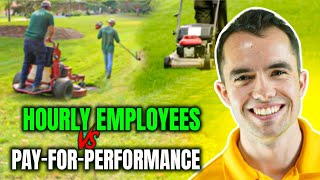
Mike Andes argues that pay-for-performance compensation aligns employee incentives with profitability better than hourly wages, rewarding top performers and removing underperformers. He outlines approaches like commissions and per-task pay across industries, but warns these need counterbalances to protect quality and long-term profit over pure growth.
Chapters
Hey, everyone, this is Mike Andes and you're listening to the Business Boot Camp podcast. Today I'm going to be talking about pay for performance and how you as a business owner, can pay your employees based upon the money they bring to the business instead of the hours they punch on the time clock. But before we get into today's show, a big thank you. Today's sponsor, which is Gusto, if you haven't Already, go to gusto.combootcamp for a free 90 day trial of the world's best software, in my opinion, for payroll and benefits for small businesses. So check it out. You get 90 days completely free. You're able to run your payroll through there. It'll give you your W2s. It'll do direct deposits for your every single pay period. It's fantastic because your employees can go in there as a portal and see everything. Very transparent, very good. Check it out. Today go to gusto. That's Gusto.com Bootcamp. Now, today is not gonna be a long episode, but I want to share something I've been thinking a lot about and something we are implementing in my business in the coming future. And we're working developing right now. And so this is something that I'm going to dig really, really deep in with Pro plus members and really go into how I'm actually breaking it down and paying my employees and my team. However, I wanted to kind of give a broad, general kind of view so that you can think about this regardless of whatever industry you're in. I don't care if it is sales services, online website stuff, and sales, like whatever you do, I feel like this is where you want to be. And so the reason this kinda came about and my intrigue has always been around this pay for performance instead of just hours. I feel like, especially in the past couple weeks as I've really dug into it, I feel like paying people by an hourly rate is a very lazy way of doing compensation. And the reason I feel that way is because it's just so simple for us as business owners to keep track of. And yet it's just a horrible, horrible.
Way to gauge performance or gauge value or profitability of an employee to the business. And so I've read some of Dan Kennedy stuff recently and stuff on management and things like that. And I really like some of the thoughts and ideas very different to the way I think a lot of times. And so the balance between my kind of traditional thinking about teamwork and leadership and paying people and what an employee is to a business and Then his, you know, other side of the equation, other side of the spectrum, and the balance between that, I think is, you know, creating something pretty cool. And what that is is really me being very focused on this idea that there's really no reason for someone just to have to pay someone as an employee for them just to show up and have a pulse. I really do believe that employee is brought into a business in order to drive profits for that business. And so why are we not paying people based upon the profits they bring to the company? And, and so this is something that is a little bit easier sometimes for higher level positions. It's a little bit easier for.
Very independent type businesses. In other words, you don't have to rely on a whole bunch of other people. And so in the past, I've always strayed away from pay for performance.
In the fear that by doing so there's going to be competition that's negative between team members. And I never wanna create a culture where people are trying to.
Not help others because they aren't getting paid for it or because they wanna do better than someone else. They don't help them out or whatever. And I really believe in this healthy competition. And for that reason we've always done scoreboards and keeping track of profitability and things like that on a crew by crew level and things like that. But I think this totally kind of expands beyond just any certain industry or type of work. I feel like this is something that any business owner, regardless of what industry, can try to implement. It might be just a piece of your compensation package that's based upon performance. But whatever it is, I don't care if you sell, if you sell things online, if you sell software online, there is a way to pay your people based upon how many pieces of software they sell, or at least pay them based upon how many transactions they effect and thereby turn your employees, all of them into salespeople, all of them into really business owners within the company. And so this is something that we've been really thinking about in really getting alignment between the business and what the company wants and profitability and what the employees want. And so especially if you're gonna have entry level positions or labor type positions, the last thing you want to do is have people that are high performing, working super, super hard and yet they're making the same amount as some person that just kind of there. They're just kind of flying under the radar, they aren't putting in 100%, they take long breaks, they are not engaged, they are always aloof, thinking about other things. They're on their phone. They're just not connected with the business. They don't worry about what other people are doing. They're engaged. And so I feel like the people who are at your business that are actually high performers are actually producing three, four times the amount of profit for your business as the average performer, and yet they're getting paid maybe 10, 20% more. And I genuinely believe that a great employee, a great team member, is literally worth three, four, five times as much as an average performer or less than average performer, and yet they're only paid 10, 15, 20% more, maybe twice as much, but yet they're making three, four times the impact of an average employee. And so how do you pay them correctly? You pay them by performance. And how do you discourage and how do you eliminate the people who are not performing well within your organization? You pay on performance? Because if someone's requiring me to pay them $20 an hour, and yet they're an average performer, or worse yet, and they're only gonna make $15 per hour when I pay them based upon performance, guess what? They're gonna leave and go try to find another employer that's a sucker and is gonna pay them 20 when they are not producing that level of work for the business. And so I feel like there's people within our organization that will make 15, $16 an hour. I feel like there's even people make over $30 an hour, literally the same people making the same amount per hour now. But when we do it based upon performance, it's just going to completely change the game. And what this is going to do for your business is it's going to be the natural way of eliminating the underperformers. So people who are underperforming are not going to make much money in the scenario that I'm creating here. And thereby they are going to leave. They're going to go find something else. The performers that are doing well, they're going to get paid so much that they are not going to want to go anywhere else. And for the people that are in between, they're going to realize that they can either slack off and get hardly any money, or they're going to actually embedder themselves. They're going to train themselves, they're going to figure out how to make themselves more efficient, make more product, they're going to sell more things. Whatever you're doing, they're going to start to be able to train themselves. Instead of you having to enforce training or enforce that they learn more or get more educated about your products or services, they're going to go figure that out themselves because they now know that by doing so they're going to make more money because it's going to directly correlate to their performance. So instead of me having to go out and tell my landscaping crews that they need to get training on how to mow efficiently or how to edge efficiently, or how to trim a bush efficiently, they're going to go do that themselves. Because they know if they do, they're going to get paid more money. And instead of me having to deal with people coming and asking for a raise and me not thinking or having to debate whether or not they deserve it, now it's up to them to go produce value. If they want more money, they should go educate themselves, they should go train themselves, they should go ask another employee about how they can embed their sales ability, or embedder their skill set or embedded the way they do certain things, or where's waste in their workflow. And they're gonna go and make themselves more efficient, more profitable, and better for the company as a whole, thereby make more money. And so no longer do I need to figure out will I need to figure out like raises and how much people are paid. It'll be a very simple scale that's across the entire board. And for the people that have been here for a long time, they think they des more. The thing is, if you've been here for a long time, you should have the skills and you should have the resources and you should have the knowledge that's going to make you make more money. If not, you're just been around for a long time and you don't deserve to make any more. Whereas some new person coming in, maybe they don't have all the skills, the training, the knowledge, the experience that that person has been around for a long time. But they might have work harder, they might put more time, and they might go and study their craft outside of hours, and all of a sudden they're making a whole lot more. That is a pure meritocracy. And I feel that our highest performing people are getting underpaid when our lowest performing people are getting far too much money that should be going to the high performers. And I also think that if you're worried about, okay, well if I do this pay performance thing and they're gonna get really efficient because now they're based upon, they're getting paid based upon how much they produce for the business, what happens if I don't have enough Work. This is what's gonna happen. You're gonna weed out the people who are not high performers because they're gonna leave, they don't make enough money in that new system, and it's gonna create more work for the people that are actually high producing and have upped their efficiency, because the new system, and they're gonna start to make more money and you're gonna be able to retain them and it's gonna be a pure meritocracy because if they don't do, if they don't make a bunch of money on a certain week, guess what? It was their fault. They were the ones that didn't check if they had all the equipment. They were the ones that didn't make the extra call and follow up with the client and get the sale. And so whatever you're doing, I don't care. Like, I'm using the landscaping scenario for myself since as we're incorporating in, however, whatever business you're in, I'd really be looking how can you pay your people, how can you pay your employees based upon their performance, Whether it be sales, profitability, revenue, whatever it is, whatever you are trying to, trying to incentivize, they're going to go after. If you incentivize productivity, if you incentivize, let's say, if you incentivize efficiency, you're going to also have to counterbalance that pay performance out with quality. All right? Because if I'm trying to get as many lawns for my crew to do every single day and they're getting paid based on how many lawns they do and how much revenue those bring in, I have to have a counterbalance to that pay performance. Because if they just go, go, go, they're going to cut corners, they're going to try to skip things to make more money. There's got to be a counterbalance to every pay for performance package. And this is what really got out of hand with, in my opinion, a lot of the things that happened back in 2007, 2008 with the banks and things is there was incentives around sales and things like that. But there wasn't counter balances. There wasn't things that were like, were going to be derogatory or things that were going to be negative or things that were going to take away from their bonus package if there were negative consequences on the qual. And so whatever you incentivize is going to be focused on buyer people. And so you've got to make sure that you have a balance between the quality and the quality and the quantity between sales and customer service, between satisfaction of the customer and generating more sales. And so I think that's really important to say. However, I feel it's also the thing that debilitates and keeps many business owners from trying to take the step towards pay for performance. We always are stuck in this hourly wage thing because it's easy to compare. And furthermore, not only is it easy for us to compare because we say, oh well, the competitor on the street pays 15 an hour, I pay $16 an hour, so I pay my people more. But what you're doing is you're going to attract the person that is literally looking for the dollars per hour. When, if you're really looking for All Stars, if you're looking for incredible people like the all stars of your industry, the All Stars that are working at your competitors locally are going to come to you when they realize that there is no ceiling, that they can make as much money as they can within your business by creating literally their own business within your company. Because now when my crew comes to work and they're getting paid by performance, they're gonna make sure that all their equipment's done correctly, they're gonna make sure their route's done correctly, they're gonna make sure that every single piece of their route is most efficient. They're not gonna stop, they're gonna be looking for ways to increase the value of the customer and keep them and make sure that the really high paying customers stay on with us by doing little things extra and their payment, their wages are aligned directly with the profitability of the business. And so how do we counterbalance that? If we have to go back, if they make a mistake, if they try to cut a corner, if they don't do the edge correctly, if they make a mistake on someone's lawn, they have to go back. And they're not getting paid for that because they're getting paid based upon the revenue. But if there's a complaint, they have to go back and fix it. And so I truly believe it's gonna attract the All Stars. Because if your competitors are topping out at $15 an hour and you're at $16 an hour, that might not be enough to get a really high performing person to come work for you that extra dollar an hour. But what will get them to come to your business is say, hey, look, you're gonna make a minimum of $13 an hour, but you have the potential to make 30, 40, whatever you want to make based upon performance. And this is how we're gonna do it. And so how you're gonna do it is really the secret sauce. It's the thing that you've got to come up with. It's the thing that you've got to figure out. What metrics are we gonna pay based upon?
I love this so much is optimally in the game that I would love to play is it's a sales game where all the employees that work for me get a commission of sales. Because then it's very, very simple. You're either good at your job and you do really good sales and thereby make a bunch of money, or you do no sales and you make no money. I just don't see why people need to get paid to produce absolutely no results for the business. And so I really like when we are paying people based upon results and based upon the revenue and the profitability they bring to the company. And so I truly believe that this will attract greater. It'll retain great people and it'll attract great people. Because when they start hearing that someone's making $25 plus an hour, when everyone else is making 15 an hour, but that 25 is not, there's no cap on that. They can make 31 day. They can make more based upon how efficient, how experienced they are, where they can determine areas of inefficiency. I truly believe it's gonna be game changing for our business. And I really encourage you to think about in your industry, in your business, whatever it is, how can you pay your employees based upon performance? It might be a warehousing job you're looking at. It might be very, very monotonous work. How can you pay them based upon per object they have to manufacture or per pallet that they stack or per truck that gets organized. How can you pay your people based upon performance instead of just time? And so another thing that I'm looking at is as I am trying to automate certain of my businesses to focus on franchising later this year is that's fantastic for an employee that's frontline worker creating revenue really hands on out in the field. What about management? And so how I really like to do this and am gonna be implementing within my businesses and something I've seen work with other businesses that contacted me through Landscape business course and through Business Bootcamp podcast. What I've seen work really well is again incentivizing the thing you want to happen. So if you want your business to grow like top line revenue growth, simply give them a percentage of top line growth. If you want to Stack money away and make a bunch of profit. And you want that business to become a money machine for you. Pay that manager, pay that top executive, that COO or that operations manager, president, general manager, whatever you want to call them, pay them based upon the profitability of the business. And I don't mean the profitability of the business. On paper, I would literally take the amount of money in the bank and have a certain amount of draw on it. Like hey, every time I take $10 out, you get $2. And literally they are going to now be incentivized to, to stack up money in the bank account because they know that their bonus is based upon the profitability of the business. And then their salary or their base pay is a smaller amount, but then that the bulk of their pay, the upside, the really, the area for them to really expand and grow is in one of two areas. Either the growth of the business or the profitability of the business. And so next year, as I look to really step out away from Augusta Lawn Care locally and really focus on it more, the franchise level, that's what I'll be doing with my management is like, look, look, I'm gonna give you a base pay to pay your bills and things throughout the year. But then we haven't figured out if it's gonna be quarterly or annually. They're gonna get a percentage of growth and a percentage of profit. So the reason is because if I just incentivize profitability, you also have to realize they're no longer incentivized to go get new equipment, go expand the business and advertise and grow the business. So what I wanna do is pay them a small percentage of gross top line revenue increase and then also pay of money in the bank stacked away profitability, money that I can take out. So literally as I take money out, they can take money out at a certain percentage. And I feel like that's the way to do it. If you want profitability and if you want growth, if you want to make go from a million dollars to a million and a half next year, that $500,000 Delta they should be getting a percentage of. Because whatever you incentivize, that's what is going to be the result of for your employees. If you incentivize growth and expansion and all that, you have to have that counterbalance of profitability. Because if you just give them based upon growth, they'll go out and spend money on advertising equipment and trucks and overpay employees and all of a sudden you have a ship that is going awry because you've gone way off to one side. So the same way for frontline employees, where you have to counterbalance quality and quantity. You have to balance the revenue that they're creating for the business with a quality measure, some sort of quality control. I feel like the same way for management. You have to incentivize them based on profitability balanced out with growth so the business is healthy going forward. And so there's a lot of fine print. There's a lot of little things that you might want to add to those things. But this today, I just want to plant the seeds out your mind. Why are you paying people based upon an hourly wage? You and your business are not getting paid based upon hours. Even if you charge a client by the hour, you are still not making money profit based upon the hours that you work. And I can prove this a hundred times over by all the service businesses I look at, your billable hours has no correlation to your profitability. Because one year, you might have 10 employees. I've seen this so many times. The same amount of.
The same number of employees. One company has twice as many billable hours, but they profit the exact same amount the two different companies. Why is that? It's because one company's been more efficient, and there's other things around just billable hours. And so I'd really be looking. Okay, look at your business and ask yourself, do I really make money from this individual, this one employee? And is it more or less, do they deserve a raise? If so, let's put them on pay performance. Let them prove to you how much they're worth. And I truly believe that when you make their. You tie their payment, you tie their wages, you tie their compensation to their performance. Watch their performance soar. Because if you're paying based upon time and then just showing up, they're gonna do exactly that. You're incentivizing them to basically stay alive and not get fired. And that brings their level of productivity from like, 100% down to, like, 80. Because they know as long as they're above, like, 79, they won't get fired. As long as they can stick around, they'll make 80, you know, do 80, and they will be just fine. And they'll make their hourly rate. That's all they're there for. But if you can make it, you can get them from 80 to 100. I truly believe the profitability of that employee triples if you're able to pay them based upon performance. So that's my two cents I don't want to give like all the specifics of how I'm doing it. It's more about planting the seed within your mind of how can you start to pay your employees based upon their performance and the profitability that they bring to the business instead of them just staying around punching a time clock eight hours a day and knowing the exact minute when they get to 40 hours and are on overtime and costing you time and a half. You can listen to Mike Andes on the Business Bootcamp podcast. I'll see you next time. Until then, be great because nothing else pays.
Ram.






