How He Built an Empire Fixing Garage Doors! (Home Service Expert: Tommy Mello)
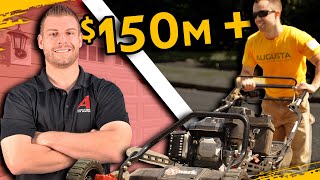
Tommy Mello started a garage-door business in 2007 and grew it into a major home-service platform. He doubled prices and made more money with fewer customers, hired aggressively at events, and acquired companies during downturns. He recovered about $6M through employee-retention credits.
Questions this video answers
2007
Adam Cronenberg, 2014
2017
About 90 attendees; ~25 hires expected from that event
Around $200 million (projected/estimated for the year he discussed)
Chapters
They didn't give out bad loans. I mean, strippers had 10 houses in 2008. Like, I don't know how to win the game. I'm not appreciated. This is my life. I've got a family. The difference is I was willing to do whatever it took. And a lot of people won't do that. They say, I got a family. I can't do that. If you got a family. Don't even think about, look, you can't. It's a divorce. I'm not married and never have. I don't have any kids. I was able to work these crazy, crazy, crazy days and with sweat equity. And I'm saying it's not easy to have a family and do that to them because if I would have been divorced, I mean, for sure.
But kind of me. Share your story how did you get into garage doors specifically? And I know you're actually doing landscaping. You did a landscaping gig prior to that. So tell us kind of the, the genesis of it all and how you got started with the, the garage door door side of things.
Okay, so yeah, so I started the garage door company in 2007. Prior to that. I'm from Michigan. So what do you do when you're from Michigan? You mow lawns and you shovel snow in the summers. So you mow lawns in the summer, shovel snow in the winter. And then I came out to Phoenix and I, I did the only thing I knew how to do. I bus tables and I started a landscaping business. Slowly but surely. I started doing water conservation analysis. Try to get into bigger dollars. Drip Systems learned a lot about how sprinkler systems work. And there was some money there. I got into bigger, more commercial type businesses that wanted me to come on the weekend. So started making some good money. I mean good money for me back then. I started getting 10, 15,000amonth. And then I learned about garage doors just through a roommate. Started painting garage doors for some big companies in Phoenix. Probably about six big companies. And then I saw that these guys are doing really well. My other roommate started being a technician 2006. He was making like 90 grand. So I said I gotta learn about this business. So we, we did a couple ride alongs and then we just decided to start a business. And back then it was like we were breaking even. We weren't paying our taxes correctly. We, we were the guys in the truck. We didn't really know what we were doing. We just decided spend money on the yellow page ad. Hence a one. And then we decided, you know, let's get in the VAL pack. Google was just kind of coming into a thing, so it was like not a whole lot. And then 2010, we just decided to go separate directions and I said, I'll take on some of the debt, or you could take on the debt. Whichever way we go. I'm doing my own thing. So, you know, the rest is history. I found a really good integrator in 2014. His name's Adam Cronenberg. Got on Service Titan in 2017. The first Roger company they only did H Vac Plumbing and Electrical. So I found the right CRM after five CRMs, hooked up with Al Levy, the seven power contractor. He taught us about manual standard operating procedures and just how to build technicians and read a lot of books, have a lot of consultants I'm always working with and just busting at the seams every year. So we're actually right now buying a lot of garage door companies. So we're trying to acquire growth as well as grow organically. Greenfield at the same time.
Very cool. And just for the listener that might not know about in the past, what in terms of revenue at. In terms of, you know, projected for this year. I know, obviously when I started listening to you, you first got started the podcast. I think I want to say it was like 20 or 30 million you're.
Doing, I think, correct me if I'm wrong, when I started.
That'S like 115.
This, you're going for this 151. And then that's not including acquisitions. So I think we should fall around the 200 mark.
A few. Awesome. I want to go ahead and jump into a couple of things. First of all, you really kind of were ramping it up during the last home recession. Like, you know, the home whole bubble in 2008, 2009, 2010. What was that experience like? Because obviously a lot of home service industries, whether it be lawn care, landscaping, garage doors, has something to do with the real estate market. So how did that impact you getting started during that period of time?
So it was weird because a lot of people were like, I'm losing my house to the bank, but I need to be able to use my garage. So I, I'd go to like where people dump their old garages off after they did it. And I, I basically be. It was like pick apart. I'd be taking all the old good stuff apart. I take the openers apart. I'd grab parts. I mean I was selling used openers. I was really. Now I'm like, the best you can offer I fix things the right way. But before I was just let me get it done for 180 bucks and I make it work. And I was the one man in the vehicle. I was the cheaper end. I did a lot of craigslist stuff.
But what I did is I always asked for reviews. And if I couldn't get the money, I'd say, I need you to look me up on here, here, here. I'd make a video. And that was before they had camera video on camera on the phones. So really what I learned to do is just maximize everything for the online reputation. Get the videos done, get the yard sign out there. If I couldn't get it with money, I'd get it with their time to do a really nice testimonial. I'd always ask for testimonials and go take reviews. So I think that's probably a piece of success, is when you go into a bad economy is you got to take advantage of where everybody else isn't. You got to find the things that people aren't. Never, ever, ever cut your marketing when you're going into a bad economy. That's what it's a death pill. It's a straight down spiral. If you start, here's what you do. You make an excel sheet of every employee and you start cutting the people that are non revenue generating or poor performers. So you got to get more lean, you got to get tighter. You got to shop for deals, you got to ask for more from your relationships like you, your vendors. You got to ask them to say, listen, I want to run a contest this month, contest this month. Need you to get involved. But those are some of the things I've learned is just we used to have a designer in house. Even though Valpak did it for free and Clipper did it for free. I think some people don't take advantage of their relationships. And you got vendors out there that'll do all these things. You just don't ask them to do it. You don't ask them to sponsor a home show. You don't ask them what do I need to do to move the next level for a better multiple? These are the things that you get gritty and it's called grit. And when you get that grit and you've been it before, you know how to do it again.
Since 2008, really the home equities in America for the most part in most markets have gone up very substantially. Do you think that if that changes over the next couple of years as we have rates go back up and people are upside down on their mortgages. We're going to have some sort of problem with project based work or getting you know, the home in certain home, you know, certain home services being affected dramatically.
I don't think it's the same deal. I think with inflation. So you got to understand we didn't have inflation last time. The economy spoiled. So now you can't pump this kind of money into an economy and expect prices just to drop. Yes, people will be losing houses, but there's too much pent up demand. The, you know, the kids are moving out of their parents houses. There's it used to be everybody wanted condos and wanted an HOA to take care of everything. Now I think with the demand where it is, they didn't give out bad loans. I mean strippers had 10 houses in 2008. Just bad, bad loans on stated income. Right now you can't get a loan if you don't get got a good credit score and good income and good put stuff to put down. Interest rates should be above 6. Naturally that's where they should be. The fact that it got down as low as it is. So there's going to take some evolution for mindsets to change back to where they should be. But I don't want it to go back up to 18% which it was in the Carter years in the late 70s if we get to that bad because what's going to happen is the interest rates got to get above inflation. That's the only way to reduce inflation. I think we're going to go through some turmoil. But Biden just, they're just passing another $2 trillion to stuff into the economy and they're hiring 270,000 new people in the IRS. So I think you never ever, ever raise taxes in a recession. And we're doing that right now. So it's going to cause hyperbolic inflation. But remember this, if you're good at what you do, there's an opportunity. There's 10% of the people that'll get very, very wealthy and they'll take market share. There's 90% that'll be scared. They'll start dumping stuff, they'll start selling equipment, they'll start taking it easy on marketing. You double down on marketing. I went from 130 employees to 500 during COVID in the last two and a half years because I doubled down when everybody else was running. When they say buy, you sell. When everybody says sell, you buy. When everybody says oh my God, we're headed for a recession you double down and you take market share.
And when, when we look at like different size of business, obviously you're at a size now where there's different problems and issues that you're facing. But if you had to break it down, whether it be two or three or four different steps over the course of your lifespan in your career, growing the business, like say zero to a million, maybe at stage one, a million to 10 million. 10 million to where you're now 100 plus, is there certain things that at those stages you would put more emphasis on in terms of importance to the consumer, to the entrepreneur?
Yeah. So I would say this, number one is okay, this is tough, but there's certain things that are for individual versus for the company. Number one, you need to learn how to delegate and own your day. So if you can't run a calendar and stop being a firefighter and start owning projects and getting things to the finish line, start there, get organized, use your calendar, make sure you've got uninterrupted time, make sure you get help. The next step, the evolution of that is finding an executive assistant to help monitor those things. You should not be cleaning your house unless if you're making $15 an hour at a business. Why do you even have a business? But figure out every task you're doing all day, every day and put a dollar value to that and say, should I be doing this or not? I think we take on low level tasks because when you're small, you say if I don't do it, it won't get done right. And that's true. So you got to put a lot, you got to have those long days. Number two, I'd say the biggest mistake that I probably made was not.
Not branding correctly. You know, I was like this, this rap will do good for now. If I could go back in time, I would have hired Dan Antonelli at Kick Charge and put the best frickin wrap and make sure my yard signs, my billboards, my stickers, my commercials, the, the website, everything looked in unison. I think that's a huge one that people fail in the beginning. Another big thing I'd say is I didn't pay attention. I did, but a lot of people don't. The online reputation piece, when you're small, it's David versus Goliath. When you're David, you gotta, you're not as busy, you don't have as many jobs, you got more time. You get the videos, you get on next door, you get on Yelp, you get on Facebook, you also get The Google, you got more time to ask for more. You get to know the HOA president at that location. You might stop off at their house and write a note to them saying, hey, I want to come give you a free tune up and get to know you more. So taking advantage of every opportunity differently than when you get slammed and you run a 12,000 jobs a month like me. The next big thing I would say is when you get right. When I got 2014, when I was doing 6,7 million, I needed to find an integrator. I read the book Rocket Fuel years later, but I didn't realize at the time, but I found an integrator. A lot of us in the business as a founder were we're founders slash visionaries and we need to find good integrators to be able to let our dreams flow and help people hit the finish line. So I started becoming a really big reader. I got a master's degree and just started getting obsessed with like the E myth and the ultimate sales machine and these different things like rocket fuel. And I just applied more of the things and I got them done. You see, failure to implement is why people fail. They go to these meetings, they listen to these podcasts, they got all these ideas and they go somewhere to die instead of getting them on the calendar and getting them to fruition.
But. And then the biggest, the next big thing is a CRM. Know your key performance indicators. A lot of guys say, I just want to get bigger. They say, mike, I'm just trying, man. I want to grow. I want to spend more time with family. I want to get more profit. They don't have any clue on what they need. I need this many jobs per day, this many per month, this many per quarter. I need to hire this many guys. I need. They don't, they don't know their average ticket and need to increase conversion rate. So to build a budget and have a plan of what needs to happen today. And the last thing I would say is.
After you got your KPI is figured out the right CRM, I'd say you've got to have the ability to make technicians because everybody's missing that right now. They don't know I've got a training center. I can handle 100 technicians a month. And I'm never trying to find lightning in a bottle. I'm never trying to find this perfect tech that knows how to do it. I hire for talent. I'm recruiting busboys. I buy my discount tire. I'm trying to steal one of those guys. If you make eye contact and you smile and you've got good body language and you believe in yourself. I want you. I don't care. I'd rather you not have experience so I don't have to unteach you those things. So those are some core things that I'd say, and if you nailed those, you'd have a hundred million dollar business.
Let me come back to the technician part in a second because I know for a lot of people that is the struggle right now, but you mentioned a part about tracking your day, seeing what things you're doing that are a lower level task and assigning a value to those. I think the excuse I hear sometimes is, well, the problem is, yes, I know I need to do marketing, but I am going to go for a landscape or lawn care guy, sharpen blades, do something inside the business. That's a lower level, 15, $20 an hour task. But I need to do that because if I go do marketing now, I've got to go spend more money on buying more TR trucks, more equipment, hiring more people. And I don't have the money to do that. So therefore I default back to just being in the business at this lower level task. How do you break that? If you feel like from a financial standpoint, they, they, they can't do it, but from a, you know, logistically and mental standpoint, it makes total sense why they should be focusing on something higher value.
Well, what I think what happens with a lot of business owners is they really go in there like, I own a business, but they don't. They have no right to say they have a business. And I was the same person. So nobody get mad at this. They don't own a business. Not, not if, if they have to do the job. If the only way they make money is pushing that lawnmower and sharpening blades, they got to raise their prices and hire better people. Because the fact is that if they've got to go mow the lawns to make money, obviously they probably started with very little money. So it's called sweat equity. They got to go do the lawns themselves because they have no one else. They don't have the money to hire somebody, but they also got to put in those extra 20 hours a week to build the business. And I get that. I understand that. I mean, I worked two jobs, I worked three jobs, whatever I had to do. I mean, there were days I worked doubles and then I'd go get up early in the morning and cut 10 lawns and still work a double shift. Bussing tables, whatever I had to do. And you don't just say, I woke up today. I have a business. I'm a business owner, you know, work for me because I own a business. You don't own a business. It's like if you can't leave your business for one month. If I took you to Hawaii right now, Mike, and I said, I'm paying for the dolphin tours, the volcano tours, I'm bringing your family or bringing your dog, all inclusive. But you don't get to call back the home at all. You don't get to look at any CRM. What does your business look like if it doesn't look gold? You don't have a business. You have a job. And I know it's going to piss a lot of people off to hear that he doesn't know me. I got these relationships with these clients. And I do have a wrap vehicle. At least it has stencils on the side. And I have a good guy. If you got to show up, I'm sorry you haven't built the infrastructure. You've got the most expensive job in the world because you still got to answer your phone at night and weekends. You're still sacrificing relationships and it's going to happen for a while, but if you continue to, if it happens more than three years and you're still finding yourself getting in the truck all the time and it's the only thing that you can do, you better stop right now and ask yourself, is this better? That I work my ass off and don't get it to go on real vacations? That I'm answering my phone and I'm sacrificing my kids? You better ask yourself, can I get a plan here in the next year to get out of the truck and build a business? Or it's just the most ridiculous 80 hour job a week that I've ever had and I just have a hard time when you say you have a business when you don't even have an office, you don't even have a company truck, you know, you don't have a wrap. And like I said, I didn't have a business. I'm telling you right now, it wasn't a business. I was a slave with a job. And it takes years because I didn't have any money to invest. So I had to make the money as I went. And I think people don't understand that. And I get that because I had nothing. So I had to make a little bit of money, save it and invest a Little bit more. I bought a Dodge Dakota for $2,000, put the crappiest wrap on it ever. But I slowly, I had eight shitty trucks and then I was able to top grade those. And I mean, look, it was never easy. Different economies, different states. But, and I'm not belittling anybody, I'm just saying I know how hard it is to continue this trend. And you don't have a business until you could get out and you could actually go on vacation for a month and not have to worry about what's going on at home.
For someone who does have nothing and is trying to grow it up to that point where they can do that, how long do you usually see that happening where sweat equity is involved? And yet, yes, you are going to have to work out and do things that you don't want to do. And out in the field and the business is dependent on you. How often, how long do you typically see that happening in the service industry? You know, five years, three years? Is it dependent on margins? What do you see is kind of the timeline there for someone who's like, yes, he's right, I can never go to Hawaii for a month?
Well, let me give you an example. I went in with a couple of buddies on a Christmas light business. And when I looked at the P. Ls and the balance sheet and income statement at the end of the year, I said, guys, we're going to double our prices. They said, dude, that's crazy. Double our prices. We're not going to get the same clients. Well, we doubled our price. We lost 40% of the clientele.
So now we had 200% of revenue coming in for 120% of the work, meaning that we'd lost. We didn't have. We had, okay, so we had 60% of the work, but we were doing double the amount of revenue. So it ended up to be a huge net gain. And then these guys were able to take vacations and do a lot more. So I think get your price right. Ellen Rohr wrote a couple different books. One of them, where did the Money Go? Is a great book. And then understanding your pricing, I find that most companies, they take on any money you can get your hands on when you're small. And then somebody walk up to you and say, hey man, I got this great idea. I want to flip this house or do this or do that. And then all of a sudden the money you busted your ass for from the business, you divest and you make a mistake because we got this shiny light. Oh, God, there's money there. Oh, God. Oh. Let me take on this commercial job, even though I don't have commercial equipment. Let me take on this other job, even though I have no idea what I'm doing. And then all of a sudden, you're like, what did I get myself into? So become a specialist of what you do and own that category. And don't get distracted with flipping houses. Don't get distracted. You might. You know how many people I meet that go gambling? And they say they made 30 grand last night, but they don't tell you about all the losses. The fact is, how much time did it take you? You want money today. So you're like, someone's like, hey, I know you do landscaping, but I was wondering if you could do the paint and the landscaping. And I know you don't do the brick, but I need you to figure out these pavers. And you sub it all out. You work your ass up. You meet the people there. You're like, Yeah, I made 20 grand. And you're like, okay, you weren't insured properly. There's so many things that could have gone wrong. And some of you have seen things go wrong, and then the guy doesn't show up, the subs don't show up. So focus on what you're a specialist in. And that's a huge lesson, is don't get sidetracked. Keep your eye on the ball. Have a plan. Be able to have these tough conversations. Be a talent magnet. Be able to give people more than they want to work for you.
Pricing, you mentioned that as a big key there in terms of making that margin. Here's something I want to run by you for somebody that is running their business, and they know they need to raise prices. They understand exactly what you said there. Maybe they even doubt that they could do it and get away with it, but they're like, hey, I'm going to do this. If you were recommending to someone, though, getting started, would you recommend that they scale up using a lower margin and a lower prices, and then make that shift where they double their prices, lose 40% of their customers? Customers. Or would you recommend having the higher prices from the onset and just growing at a small. A slower rate over time? Do you have any preference?
So usually when you get started, you're taking whatever you can get. I think the problem is you don't have a plan on who your avatar is.
You take.
You take the small house, the big houses you got. You know, here's the thing. You want to focus on the Perfect house. I tell people I can flip 10 small houses the time it takes to flip a 10,000 square foot house. So understanding your margins and building a pricing model and you know, here's what you would need to do. You'd have to get your gas, your equipment, taking care of your equipment, your hourly. You'd have to put it all in and come up with a pricing model that you don't deviate from. You might have a loss leader to get in the door to get something for, you know, half price to get it. But you do not veer from this. And then once you get the jobs, you say, listen, I always like the opportunity to get an upsell. So, you know, what I could do for you, Mr. Jones, is we're going to fertilize this as many times. We're going to do this, we're going to add flowers, we're going to do this. And then you've got this other thing in your business called drive time. So if you get more, you could come down a little bit on the price if you got a neighbor and you're allowed to do it whenever you want. And so. But the problem is I need to see your pricing model because if you don't have anything, how long it takes sharpening the blades, how long it takes for gas, how much I need to run the maintenance, so I need to give a guy. And here's the other thing is if you could pay your people more.
Then, then you could recruit way easier. Then you don't have. There's an opportunity cost of paying less, you get more jerks. You know, if I saw a landscaper that just was dirty, nasty, I don't have any kids, but he's around my kids. He's looking at him funny. I mean, that's. I want to be the premium. I want to enter the market as the premium provider that you feel safe for your family. You feel fine about that way. One of the things I used to put is English is our first language. I know this sounds really, really bad, but I used to put the. And I used to put. Do you find it hard to communicate with your Lance? I took everything that I heard everybody say, man, I can't even talk to the guy. I asked him to prove this. He didn't know what I was talking. So I take every problem that I heard and I put it into a mailer and people will read it. They go, oh my God, I want to talk to these guys. Because this guy saved me money on water efficiency. He literally came on the days That I didn't want to be distracted. He came Saturday. Instead of coming, you know, during the week and waking me up an hour early, whatever it is, I'd always say, Look, I'd ask 10 questions when I was in the last cab. I'd say, what really bothers you right now? I take them down a pain funnel. And I always figure that out. And then I could charge them more because I answered all their problems and they were like, you know, it's an extra $20 a week or $50 a week, but it's worth it because they're solving all my issues. What is it? So it just depends on who your avatar client is.
Let's assume it's a higher net worth type of client that we're going after. Do you see it as a better way? If someone has money and they're willing to scale up quickly as a method to get market share, lower prices and then raise it like double their prices. Have you seen that work or would you just, again, hey, stick to your avatar, stick to your price that you need.
And I understand if you don't have any money, you got to go cheaper. You have to, you got to be a price sitter to get into it. But for me, I would say this. If you want a higher end net worth, they're more picky, they have a nice house. When they have people over, they want it to look amazing. So I'd say, here's the reasons why our blades are sharper. You're never going to get that. I find out the pet peeves of all these companies because they all have them, especially with their landscapers. Hey, this guy makes a lot of noise. There's always grass on the sidewalk when they leave. This, this, this, this, this, you know, when they, when they do the edging, they use a weed whacker. And there's always, it's always screwed up. So you, you find these out and you say, here's the difference between us and you want to separate yourself. You don't even want to be in the same hemisphere as this other company. And if you could do that, you definitely got to know you're making money, though. I see these guys work every day and they say they have a company, especially with landscaping because it's a low entry point. They're not making profit. They don't even understand they're literally losing money. But because they're working 60 hours a week, they're able to make their bills, but they're not putting an hourly on their, you know, how much are they Making. So you need to reverse engineer. Am I making more than 20 an hour? If I work 60 hours? Yes, 60 hours. I made $1200. But if you work 60 hours, else you get time and a half. So add that, you know you'd be working 20 of those hours at 30. So you should be making 20 hours at 30 is 600. Should be making $1600 for those 60 hours. And that's where I think people go wrong, is they screw up and they think they're making money, but they're really not. And all I would do is make sure you're making more than you could make. If you're not making more money off the bat, we're doing all the other stuff you do. Answer the phones, work on the weekends, take the calls. Da, da da, da da.
And this is lasting more than a year. Then there's. And I realize why is because you're starting from nothing, that you don't got any reviews, you don't even have a website. Like, these things cost money. But I'll tell you this, man, if it were me going back, I'd make sure I get with a couple consultants, couple smart guys, and I would borrow the money. I would have taken a $50,000 loan than to be starting with zero. Nothing. I work my butt off. I'd move back in with my mom. I'd work two jobs. I do whatever it takes to get enough money to start so that I'm not. I'm not working in the business all day for the first few years.
Back to what you talked about, the technicians, obviously, over the past couple years, you said you basically quadrupled your workforce on the front lines. The technician side. What has changed in your mindset as you really focused on scaling that side of the business? For most companies that have, you know, anything more than one or two employees, this is the number one issue in focus. Regardless of what home service industry we're in. As less people want to work outside, do this type of work, what have you seen as the way beyond? Just which I feel is the biggest thing, and that is being able to raise prices to the point where you can afford to pay them and compensate them correctly. Outside of that, though, it sounds like you have a training system that you've really started develop and focus on. What are some of those keys to attracting that talent?
Well, I had a. I had a hiring event yesterday. There was 90 people that showed up and interviewed. 90 just in Phoenix. And we're probably gonna hire 25 just from that event.
But when they do a Tour your facility is a big reason. Like. Like, one of the things I figured out is if you have a great friend at work, someone that you like, the chance of you leaving go down exponentially. So what are you doing outside of work? Are you taking the guys to go shoot hoops? Are you playing Frisbee? Are you going to play cornhole? Are you inviting the wives? Are you inviting the kids? Because if you could build a situation where we've got a lot of friends here, we don't want to leave here, that's a good opportunity right there. So what do you do outside of work? And they call that culture, right? Are you buying the guys Gatorader? They got to buy everything. Are you feeding them sometimes, you know, it doesn't cost much to make pancakes. You go buy biscuits from Costco. You do something nice for your people. They just got to know you care. So it starts there. And then really be building that referral, saying, hey, guys, I know you know other people. Listen, if you could just pick up someone on the side for Saturdays, that help is use your network, talk to the customers about people, say, you know, get helpers everywhere. I think building a referral network is huge. And then what we've done is we built really nice manuals to where you know your dress code. You know, if a truck breaks down, every question you get every day, there's an answer for in the manual. And you say, hey, it's in your manual. And if it's not, you add it to the manual. So we're in a year or two, you got a manual that covers their shirts. What happens if it gets bleach on it? What happens if this is this. How do you get a new shirt? Where do you go? What happens if you get a tattoo on your face? What happens if you need an extra week of PTO? What happens with the health insurance for this? There's 70 pages of our initial tech manual. Then we've got two other manuals on top of that for technicians. But one of the things I always tell people is, how am I supposed to win if I don't know how to play the game? The manuals just tell you how to play the game. The KPIs are what the score is, right? I don't think most people understand that. They go, yeah, just shadow this guy for a month. And then you learn it. Well, how do I move up in the company? How can I become a supervisor? What's considered great behavior? What kind of attendance am I supposed to do? Why should I follow like like the day you show up, if you're like, hey, dude, you're going to be driving with this guy all day. I understand it's different landscaping, but that sucks. Like, I don't know how to win the game. I'm not appreciated. This is my life. I've got a family. You just, you come in, you shake my hand and you say you're with this guy for the day. Like, can you give me this is. I came to work for you. Like, could I see, at least see an agenda of what I'm going to learn how to win the game? What, are we going to lunch? Is there, like, nobody really thinks you're like, well, you work for me now. Okay, good luck. That guy's lasting for a couple of months and he's gone.
How, how have you seen that work? When it comes to reading and like, you know, videos, for example, we've had a struggle in the past with especially frontline staff with no experience in something low level like mowing lawns, struggle with any sort of regimen around making sure that is read or that they actually refer to the manual.
We read it with a book that.
You have got it.
You read the manual with them and you go through and you say, mike, what does that mean to you? What is that? We just went through the couple pages here. So when you say, I'm going to ask you questions about this, they need and then they need to sign off on it. So no matter what, you got to read it with the manual. And if they're horrible at reading, just read it for them and go through it. Say, do you got any questions about that? Does that make sense? I want to make sure you understand this and I need you to initially are saying you do on each page.
Got it. Awesome. I want to be respectful of your time because I was late. But before we go, I wanted to ask, as we kind of head into this recessionary quote unquote time, you talked about having this opportunity as a way to actually double down, go all in during this time and actually make real wealth and growing the business. How. What does that look like, Tangibly, for someone that is seeing their market potentially right now, Lots of houses on the market, people, the prices are going down, people are getting a little bit afraid. I specifically think that this winter a lot of people are going to be selling their businesses because it's been so hard to find labor and inflation and all the rest of it. What are some of the things you're looking looking at? Obviously you're buying out companies as well during this time, what would you give as a tangible sort of, you know, recipe for actually taking action during this time?
I wanted to just take a piece of paper if you don't know Excel and make a grid. Write down the people you work with and just write down their attributes and rate them 1 out of 10. I want you to take your marketing, if you have any, and write down 1 out of 10 and say if the, you know, if hits bad, like what am I going to do? And you say this is always done really, really well. And you got to start leaning out, you got to start having a plan for this stuff. You got to start getting rid of the pain in the ass clients, start to figure out how to get super profitable. And what you want to do is start to go out there and see if there's an opportunity. Depending on the size, let's say you're a two million dollar company, you find two other companies at the two million dollar company, you get on the same, you find the best platform out of the three of you. And then I would try to figure out a way to strategically become larger, to become a big asset to sell. Because if you wanted to take that route.
Then you could get a lot more money each if you were to partner. And I'll tell you what, this is where the big is going to get bigger and the small is going to get to sell. I mean that's just. Look.
We'Ve got enough, and this is by no means talking about, but if we go through a three year recession, we've got enough capital to make it through here. But I'm still going to have to cut. Look, if you're not an A plus performer, a good employee is the worst employee. Because a good employee just sits there. They're okay, they never get written up, they don't get put on a performance improvement plan, but they don't take you anywhere. A great employee in A plus, they're going out there, they're recruiting, they're picking up customers, they're never missing a day, they're on time, they're willing to sharpen a blade when they're not on the clock. The bad employees get fired, right? They don't show up, they get fired. So good employees, the worst employee. So you get rid of the bad ones right away. You get rid of the bad clients, you get rid of the bad advertising sources, you get rid of the old shitty trucks that break down and you start optimizing your time and you know, it's really tough to start a business in a recession. Because I've done it. And it just meant, man, I was at a movie. I left. I couldn't tell you how many movies. I went to the theater. I love movies. I left the theater to go run a job. I worked at 2am on a Friday night. The difference is I was willing to do whatever it took. And a lot of people won't do that. They say, I got a family. I can't do that. If you got a family, don't even think about, look, you can't. You're better off going to work for somebody than putting in. It's a divorce. I'm not married. I never haven't. I don't have any kids. I was able to work these crazy, crazy, crazy days with sweat equity in. And I'm saying it's not easy to have a family and do that to them because if I would have been divorced, I mean, for sure.
Awesome. Cool. Thank you. Tommy, where can people hear more about you? Obviously the Home Service Expert is the podcast anywhere else that they can find more of you?
Yes, you get the Home Service Expert. You know, you could check us out. I'm all over Facebook. I wrote the book the Home Service Millionaire. If you go to homeservicemillionaire.com forward/free, you pay like nine bucks for shipping. I'm writing a new book that's coming out in October. And you know, I gotta think of tommysroladex.com where I've got some of the tools that I use, Tommy's Rolodex. Because I speak a lot on stage and I got sick of people saying, how do I get that guy's number? How do I do that? How to do that? I got the best recruiter I've ever. There's, there's small recruiters, like if you need help. But if you're looking for an integrator, I got a gal. Her name's Blair. If you're looking for just like 10 employees, use Jody with Rapid Hire Pro. I've got this tax, this huge tax credit I'm getting. It's called a employee retention credit. I got information on there. I'm getting 6 million back by just holding on to employees during the recession or I mean during the COVID So I put all my resources on tommysrolodex.com and yeah, I wrote the book. I got 12 co authors. Al Levy teaches you how to do the manuals. Ellen Rohr teaches you how to raise prices if you're selling a company. Brian wrote. My buddy Brian wrote a chapter Cowan on Cohen, on how to sell a business properly. There's things on there, how to sell financing. I put it all in the book. It's a pretty good book. It sucked at first until I got 12 smarter people to add onto it. So I think you guys would dig the book. And if you never need anything, you know, hit me up on Facebook. I'll respond pretty quick. That's probably the best way.
Awesome. Thanks, Tommy. We'll go ahead and cut it off there. I appreciate it.
Thanks, buddy.
Appreciate it. If you enjoyed the interview, do make sure you go check out mikeandies. Com Summit because Tommy has just confirmed that he's going to be the opening keynote speaker for landscape summit2023. Go check it out mikeannies.com summit and we'll see you there.






