How to Get Rich Being a BIG FISH in a Small Pond
Mike Andes built Augusta Lawn Care by targeting underserved niches instead of competing in crowded markets. He offers 24/7 support and specialized services like cedar staining, which lets him charge premium prices to customers who aren't shopping on price alone.
Chapters
You.
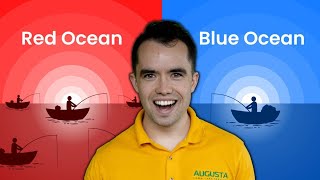
Today we're going to be talking about blue oceans and red oceans, basically how you can get customers that your competition isn't even thinking about. And this is something we've been thinking a lot about at Augusta, and that is how do we market and advertise and go after the blue ocean? Now, what is the difference between a blue ocean and a red ocean? A blue ocean is where none of your competition is actually trying to get customers. And it's completely open. No one's. Look even, no one's even thinking about this market. The red ocean is usually the bigger piece of the pie that everyone's going after. But because of that, you have all this competition. So competition is increased inside of a red ocean. In a blue ocean, there's no one even thinking about this market. And it's usually a smaller piece or a niche of the larger market. Now, at Augusta Lawn Care, we've been thinking a lot about how do we market to a blue ocean, because the red ocean is the vast majority audience. 60, 70% of people that want their lawn care done, they're looking for the small homegrown mom and pop shop. They want that hometown fuel. They want to be able to text someone individually, they want to be able to shake their hand when they come on the property, etc. That is the vast majority of people looking for lawn care. I'd say upwards of 50 to 60%, potentially even 70%. And it's easy to be able to think that whenever you're doing marketing, you should go after the bigger market. Oh well, if 70% of the market wants me to do X, Y and Z, I should do it. When reality sometimes specializing in any sort of industry is going to actually yield you better results because there's less competition. There's a reason why the specialist that does the neck surgeries and spinal surgeries makes more money than the doctor that is doing general practitioner. And like general physician, simply the fact that one is specialized, they just do the spine. Is there less people that are wanting spine surgery than who are wanting an annual checkup? The answer to that is yes. So should we just do become a general practitioner, just do general medicine because there's bigger market? Not necessarily just because there's a lot more people that have that degree. And the same thing true in our business. And when it comes to Augusta, I'm just using Augusta example and we'll talk about your business for us, we've realized that the blue ocean is that there's a segment of the population, there's a segment of Customers that actually want a service that is a national brand, when they call in, they want answer the phone 24, 7. They'd rather talk to someone on AI than talk to a real human being. They want a credit card on file. They're willing to be able to check out and order services from a website instead of having to call. There is a segment of the population and it might only be 30 or 40% of the population, which means you're going to have a lot of unhappy people because 50, 60% of the population doesn't like what you're doing. And this is why so many people go to the Red Ocean. They go to the larger market where everyone wants them to be. And the reason everyone wants them to be that is because they're comparing you against all the other competition in the Red Ocean. When it comes to lawn care and landscaping for us specifically, there's very few big players. There's no one that's national. There's no national chain of lawn care providers that have over a thousand locations. And so when you think about lawn care, you think about your hometown mom and pop shop, because that's all there is. There's 600,000 landscaping companies in the United States and the, the top one or two make up like only a 1 or 2% cut. There's no big monopoly, there's no big player. But there's absolutely a market in the residential sphere for the, the customer that wants a big brand because they want the security of knowing that if something goes bad they can go to corporate. They want to know that there's a ton of these locations and that gives them peace of mind knowing that they're three or four properties or their, the house that they're not never at their winter home is going to be taken care of. And I know this for a fact because I personally use merry maids to clean my little apartment. And once a month and I use them knowing that they're twice the cost of the local mom and pop. Why did I use Merrymades? Because I knew I'd be able to get instant notifications, I'd get reminders and automations. They have my credit card on file and never have to think about it. And it's the fact that like if something goes wrong, if they break a camera, if they steal something from my house, I will be able to go complain to corporate. And I'm an ideal customer for them because I didn't even look at the price when they gave me the price. I'd already given their credit, given the person my credit card, like I didn't even care about the price I was buying because of the brand and more importantly the size of the brand. And so I believe there's a segment of the population that is actually looking for that national brand. So that's for Augusta. And that's why we've really been trying to focus on what can we do to go after a market that no one else can even compete with us on. No one else can answer their phone 24, 7 have AI doing that. No one else is getting where you can get pricing from your website and be able to check out. No one's doing these things. So how can we focus on that segment of the population even if it's only 30% of the of the population? You said, why would you only go up for 30%? And 70% of people are not going to be happy. Here's why. Because in this 70%, let's just say there's like a hundred different providers that can also do this same service and market to the customer. In this example, that also wants the small mom and pop shop in the local area, there's a ton of competition. And over here in the blue ocean, no one else can be the national provider. So even though I'm going after a smaller piece of the market, let's just say this is 30%. Well, if this is 70% down here in the bottom, but there's 70 different providers, that means that everyone gets a 1% cut. Whereas in the top here, if there's 1, 2 providers, I'm going to get a massive chunk of the market because there's a demographic that has a specific need. And guess what? People in the blue ocean don't usually know that they're the oddball. They don't actually usually know. Like they don't even. Because there's no one else competing in this market. They don't know that they want to talk to AI. They don't know that they want to have a credit card and file. They just assume that if they want their lawn cut, they're going to have to deal with some unprofessional person that never answers their phone, doesn't have a uniform, they have to put a check underneath the mat, they have to text them to see if they're coming tomorrow. All this sort of gizmo and gadget is like somehow expected because 70% of the market and 100% of the competition and all the other vendors are going after the red market, that is that is tends to want to have a smaller mom and pop shop. Now, when it comes to your business, the question is, how can we compete in a Blue Ocean? How can you specialize and become the one that inside of your market is. Is the go to. For anyone that is in the blue ocean, the 70, 80% majority, there's tons of competition. Everyone is mowing. Great. Can you do soil samples? Okay. This is for lawn care, landscaping. Okay. Everyone does painting. They paint their houses and all the rest of it. All right. Can you be the go to guy for cedar stain?
Because guess what? There's gonna be someone that is willing to pay the cedar stain specialist twice as much as the person that does painting of everything on the house. Okay. All right, Blue Ocean. Can we figure out how to do some sort of solar H vac systems? We hook up your solar to your H vac system. That's a Blue Ocean. Very small market, not a lot of competition versus just being the person that's going to be like, yeah, I install any H vac system in the world. Okay, Am I going to be the electrician? Okay. And I am only. I'm going to do anything electrical fantastic. Or am I going to focus on marine.
Electricity? This is going to be like boats, for example. Not a lot of electricians can actually do things on boats when it comes to solar and the batteries and all this other stuff. This person working in the Blue Ocean might have one or two competitors. They might literally be going after a very small piece of the market. But because there's no competition, they're able to charge way more on price. And so I would recommend, and I would think about, how do you take red? Take a larger service, has much more broader appeal, and then upsell customers into things that are in the Blue Ocean, things that are more specialized, things that don't necessarily take more effort and don't necessarily take more skill on your end. But they do allow you to specialize and go after a segment of the market that feels not heard. They don't feel like there's no one serving them. Right. This is, to use the Augusta example, the person that's like, oh, I just hate the fact that I always have to put cash underneath the mat. I hate the fact that I always have to text the guy and ask if he's coming tomorrow. These are the type of things that you can solve and go after the people in the Blue Ocean that are usually less price sensitive. They don't have a lot of options because all the competition is doing it another way, trying to serve the bigger market. So something to think about. I'm not necessarily trying to improve a point as much as get your mind thinking in terms of am I marketing in a red ocean.
If you're marketing in a red, red ocean, your marketing will look like everyone else's marketing. It will look like every other home service business owner that is marketing their services. And usually what are you going to tend towards to be save time and that's going after new customers, or you're going to be saying, you know, tired of so and so doing this on your property, we'll do it better. Great. If it looks like everyone else's marketing, you are advertising inside of the red ocean. If you're going to advertise something new that no one else is doing in your market, there's a good chance you're gonna have a much better customer acquisition cost because it looks so different than everyone else. It's enough for people to stop scrolling and actually look at your advertising. So, something to think about, a little thought exercise. Something I've been thinking a lot about. Because we all want to go after the big market. And when customers complain, usually they're comparing you against the competitors that are also going after the red ocean. And if you're actually going to go after a smaller segment of the population, is underserved, is much less price sensitive, that's the blue ocean. And trying to get there will lead to massively outsized returns and much higher profit margins. Because. Because this customer is willing to pay, they're eager to be able to give you money because they're just dying to be able to have something that's different than everybody else.






