How to SELL Your Service Business for $1M+
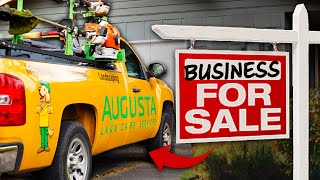
Mike Andes breaks down what actually drives the price of a service business. Four things matter: equipment and trucks, recurring contracts, systems that work without you, and websites that generate real leads. Everything else is noise.
Chapters
Hey everyone, it's Mike Andes. I'm the founder of lawn care businessforsale.com, a free tool for lawn care and landscapers to be able to sell their business. There is no charge, it's completely free. I hope you use it as a tool. But today I want to talk about buying and selling your business and the factors that go into that. Now, I'm not going to go super, super deep. I don't have any notes right now. I'm literally just going off the top of my head because I want to make it as simple as possible, you understand? And at the end of this video, there's a, a couple hour webinar that's gonna break down different mechanisms for valuation. So that one will be much more in the weeds. And you can, you know, if you're a numbers nerd, you'll enjoy that. Right now I wanna break down some things that make a lot of sense to me when it comes to acquisitions and buying and selling, landscaping, lawn care business, and really any home service business, honestly, even the gym that I purchased, I use these frameworks in terms of determining a value. Now this works for if you're a seller or if you're a buyer, because if you're a seller, you've got to optimize for the things I'm gonna talk about today. If you are a buyer, you wanna look at these three things when you're potentially looking at an acquisition and you're gonna try to whittle down the owner on these key aspects. So there's really three parts that will go into evaluation. And again, much more complicated mechanisms I talk about in the webinar. It's gonna be the end of this video. But the first one is assets. Alright? These are the things that have ideally been paid off. And these are trucks, equipment, mowers, trimmers, blowers, etc. Unfortunately, most businesses, because they don't run on systems, they are going to be worth basically just their asset value. And that is what is the cost to replace them or to buy them new. Again, this is another thing you're going to want to think about if you are a potential buyer. If someone is valuing all of their equipment and their assets at what is the cost to replace? Very different than the cost that they would be if they were to sell them today. Because the cost to replace a new mower or a mower might be $10,000. But if they were to go sell that mower right now, it's probably only worth 5,000 because it's used so again, two different ways of just valuing the assets inside the business. But this is something that's very, very important because ideally, if you can buy a business for pennies on the dollar, usually that means you are getting things for the cost of less than what the assets are currently worth. And if you can buy a business that is just at the asset value, you essentially get all the contacts, the leads, the name, the website, the phone number. That's all free. So in a distressed sale, that's when typically you're going to get that type of a purchase. Is the purchase price being relatively close to the asset price, where you can literally just like sell all the assets and recoup all your costs, your money back. That's kind of cool. But there's other things that go into the valuation of business and this is where it gets murky because a lot of us could agree upon the value of assets, whether that be what they are purchased at brand new and the replacement value, or if you were to go sell it today, what the value is. It's used equipment. Most of us can agree on that. It's not too difficult. You can look at Kelley Blue Book for the trucks. You can usually eyeball a lot of the equipment based upon its usage. How many hours are on that piece of equipment? You can ask a dealer for mowers and things like that. Assets are easy. Let's talk about some things that are not so easy to quantify. This one's the one that contracts, contracts and contacts. Okay, contacts. This is the intangibles. These are the part where everyone starts to have a different varying opinion on the valuation of a business. Now, if you are a buyer, this is the part where you're gonna have the biggest, typically the biggest delta, the difference in opinions of the buyer and the seller is what the contracts and contacts are worth. The contracts are things that have recurring revenue in place. And it doesn't necessarily mean that they have to have a signed contract, because that signed contract a lot of times a customer can get out of relatively easily, especially when the change of ownership is being moved or if you're starting a new llc, all the rest of it. So assigned contract. Not what I'm really talking about. I'm talking about recurring revenue. What is the recurring revenue? On what percentage of the revenue is recurring? This is why recurring based businesses typically sell better, is because they have more contracts, they have more recurring revenue. And so when that acquisition happens, there's a certain amount of track record that you can look at as a buyer and be like, oh, I expect that the last five months we've been at 18,000, 20,000, 22 and 24,000 in monthly recurring revenue. I expect at least there to be 20,000 doll continuing forward on monthly revenue. Whereas if you don't have any contracts and you just have one time projects, you don't have any guarantee or any sort of promise of any recurring revenue and leads could dry up. Now that leads me to contacts, because we got our contracts and our recurring revenue, but contacts are also very valuable. If a company's been in business for 10, 15 years, they literally might have thousands of email addresses, phone numbers and contacts inside their CRM that have not been utilized. If you have a better marketing mechanism and a better way to keep those leads warm and remarket and retarget these contacts, they actually might be a lot of value to you. Because at some point over the past five, 10 years, whatever it might be, even two or three, depending on the size of the business, they have at one point needed your services and that company that you're trying to buy. And so those contacts are worth something, especially if they've been kept warm, especially if the business owner has stayed in touch with them, made sure that there's still a brand affinity. There is now value inside of the contacts. If you can increase the level of advertising and marketing acumen and make sure you actually farm those leads that are just sitting idle inside their CRM, there is some value to that. Unfortunately, most sellers are going to overemphasize the value of this and they're going to put this massive number on this. They're going to look at their contracts and contacts and be like, yeah, it's doing, you know, $30,000 a month. We did last month and we know last year we did 250,000 in monthly revenue. We're going to charge $200,000. It's incredibly stupid. It's ridiculous. Here's what you want to do in my mind. You want to take your contracts, you want to look at what is the revenue per month of recurring revenue, and then you can multiply that by approximately what you expect to be the profit margin, let's just call it 2 or 20%. So let's just say if there was $20,000 in monthly revenue and we expect there to be a 20% margin, that means that there is going to be a $4,000 worth of profit on those recurring contracts or that recurring revenue. So I expect that if I buy this business, I'm immediately going to be making $4,000 in profit. Let's just assume for the sake of this example that there's going to be 10 months of mowing for the year and 10 months that these contracts are going to be active. I can then assume $40,000 or worth of profit. And this is where people start to say, oh well, I'm going to take the profit of my business, multiply it by 3. So multiply this by 3. So it'd be 120k plus the asset value that we talked about up top. And so a lot of people will use this as a way to come up with a valuation if they are a seller. Again, at the end of this video, I break down several other ways to do valuations and not just use assets plus three times profit. It doesn't make sense. A lot of times your multiple there is to depend on what type of services you have and what size you are and a whole bunch of other things. The most important and most promising and mostly commonly used way of valuing recurring contracts is simply to say, okay, what is my customer acquisition cost? That is, how much would I have to spend to go out and buy these customers by spending money on marketing? And then what am I then spending per paying customer currently in the acquisition? So if I'm spending $100 to go buy a new customer, use my advertising, my marketing, why would I spend 500 or $600 per contract or per recurring customer that's coming across from this new acquisition, that I have no guarantee I'm going to keep them and the pricing might be off and they might leave anyways. So these are some things to think about. And again, the video at the end is going to talk more about that. Now another thing that is going to be brought into account is systems and training. Okay, so systems are going to be. Oops, train training. Okay, so systems are going to be okay. Can the business run without the owner? This is the biggest determining factor of what the multiple is on your profit. Okay, so over here we use like the three times multiple. That could be a zero. If you as the business owner have to be there all the time, you're out doing all the work, you're doing the estimates, you're doing everything in the business. You don't have a business to sell. There's nothing you're selling, you're simply selling your equipment and Maybe you'll get 100 or $200 per contract if you're lucky. If you are trying to sell a business and you're really trying to have a good valuation, you're going to need systems in place to be able to replace you as the owner. So that when you sell the business, you aren't selling a job, you are selling a business and a system that works, makes profit and works without you as the owner. You are not selling someone like hey yeah, here's this business and you're going to have to work in it 50 to 60 hours a week and do all the estimates and all the hiring and actually you're going to have to work a couple days a week. And like if you do that, your valuation is way lower way. And for the vast majority of businesses in our industry that are doing under 500,000 in annual revenue, they will be simply judged on their asset value plus a simple dollar per customer that they'll give for a contract or a recurring customer. Simply because there are no systems in place. That same business doing 500,000 in revenue, but having a manager in place all their backend being completely systematized and automated literally might get this three times multiple of profit simply because the business runs without the owner. And therefore when the business is sol, the new owner expects the business to be able to run efficiently and profitably without them having to revamp and change. Because if you're going to have to jump in and do a job, it's not worth much. And if you have to jump in and change things and renovate and there's big problems, there's no value to the business. You should just as a buyer go out and do marketing and get the customers brand new. Alright, so the only advantage to buying these contracts, buying these contacts is you save time, you're able to grow faster, especially if you're paying a premium on top of what you would otherwise be spending on marketing customer acquisition costs, just go out and spend on ads and get new customers yourself. But you able to save a lot of time by just doing an acquisition and there is sometimes a premium on top of your customer acquisition cost that you are willing to spend. So that's systems extremely important. Probably the biggest reason why I would say 80 to 90% of lawn care businesses should be simply sold based on assets plus a certain dollar amount on their contracts. That's the reason that is the number one thing. And if you're trying to optimize your sale, your business focus on that next thing is training. Is the owner going to stick around and train the new owner for any given period of time, a week, two weeks, whatever it might be, if that is involved, that's definitely going to add some value to the acquisition because it shows that hey they are going to have some skin in the game. They're not just going to drop things and run. Does the money actually come out after they train and get the new owner onboarded and ready to roll? All very important. So when I look at any sort of acquisition, I'm looking what the assets are. And this is the thing, if you're trying to buy something for pennies on the dollar, try to get rid of this one. Try to just buy this, okay? Because part of the systems, the training, et cetera, the only thing we haven't talked about is brand awareness. And this is what everyone tries to sell. This is the intangibles, this is the possibilities, the future. And this is usually what people will put massive value on in their business when it's really not worth anything because they'll say, hey, it comes with a website and a phone number and everyone knows our brand in the local community. But if you're doing 150, 200, 500,000 revenue and you're in a city of 3 million people, no one knows really who you are, you are still doing mostly direct marketing and you don't have tons of word of mouth. It's not like you're massive, okay? You've not achieved economies of scale. And so you don't have a brand you don't like. Not everyone in your city knows you. You think that, but trust me, if you're doing under 500,000 in revenue and you live in a city that has more than 500,000 people, you don't have brand awareness. You have pockets of people that might know who you are and you might get some referrals. But branding and the possibility of what's to come in the future is only valuable if it's bringing new leads. So the only thing that you might look at in addition to the assets, the contracts, the systems and the training that you're gonna get is the fact of leads. And this is what people are gonna sell you based upon their brand and what the future is gonna hold and how the possibilities and what this business can become. Look, the only thing I care about is lead flow. So the thing that might hold some value here, if you're trying to keep the brand and actually keep the same name and likeness of the old owner, if you're trying to do that, what you might wanna look at is like, okay, I wanna see how many leads came in from the website, I wanna see all the estimate request forms, and I want to see exactly how many people came through that website and gave me a new lead. Because look, if someone is generating 50 new leads a month through their website, that website has some value. Because my lead acquisition cost is 50 bucks and they're getting 50amonth, technically that's worth $2,500 to me as the new owner. That's valuable. I might want to make sure I have that. If that website, that machine is actually creating some brand where leads are coming in. So this is another thing. If you as a seller are, are trying to optimize your sale, make sure you have a great website that's churning a whole bunch of new leads. Because that lead engine, you're getting 50, 60, 70, 100, 200, 300 leads a month. You can really create more value for your business. Because when someone buys your brand, they're actually buying something that's generating leads. They're not just buying like, oh yeah, like everyone knows who I am. Well, if their website is not producing, you know what, one or two leads a month, I'm sorry, there's no brand, no one's trying to find them. There's not a lot of word mouth going on. And you're not buying anything. If you're trying to be a buyer and you're trying to optimize, you're literally going to try to sell to buy. Just this because people are always going to inflate their assets. They're going to inflate how well their businesses ran on systems when most people are not. And they're going to inflate their brand. They're going to say, everyone knows them, the future is bright. You get all these leads and all that if you want to get things for pennies on the dollar. And the best acquisitions that I have made is when I come out and I buy, hey, look, I don't want your assets. Go sell them on Craigslist or Facebook. Sell them to someplace else. I don't want to even keep your brand. I'm going to literally change them over to my brand. But I will buy the contacts and the contracts inside your database and I'll take the recurring revenue and I'll try to move as many as I possibly can using the same pricing into my model and we'll do a video together and you'll say that you have now sold the business to me and I'm going to take over their contract, I'm going to take over their mowing service, I'm going to take over the recurring maintenance program and I'm going to try to retain as much of that and I'll give you a certain amount of dollars per contact, per contract. I'll do that. That's going to be your best as a buyer, as a seller. The best way that you can optimize your price is make sure you have these things. Make sure your assets are in good quality, good shape, well maintained. Make sure you have good systems in place that don't require you as the owner to always be there. Make sure you have the ability to have SOP standard operating procedures. Have a place where ideally you send them for training if you're part of a franchise or B, you have a system in place and you have a manual ways of doing things and systems. And four, if you actually have leads coming from your website. So@lawn careweb design.com we build websites all the time. I know how many on average people get in terms of leads from their website and if they're only getting two or three or four, they do not have a brand. If they're getting 60, 70, 100 plus leads from their website every single month, there's real value to your brand. So you want to build that out, build up the website, build up through. There's always these leads coming in. That stream of leads is consistent. That is what is going to offer a lot more value. When you tell a perspective buyer you have brand and why do you think that the future is gonna be so bright? Why do you think that they have so much more opportunity to grow the business? You should only be able to stand on the feet of what your brand and the lead flow is coming from your website and people contacting you because of the brand. There is no brand if you're not getting leads organically without paying for the leads. All right? That's when you have real brand awareness, is when you're getting leads without spending money on marketing and ads. So I hope that was helpful. At the end of this video, you're going to see a video pop up somewhere on the screen. It's a much longer webinar breaking down ways of valuation. But I hope that gives you a starting point of what you should be looking at as a buyer. There's a whole bunch of questions you could ask and we'll do make more in depth video in the future of what you should ask as a buyer. But this is what almost all of it will center around. Assets. Are they worth anything? Two, your contacts and your contracts. Three, your systems and your training. And four, your brand, the future and what your lead flow is. I hope that was helpful. I'm Mike candies lawn care businessforsale.com. enjoy the free tool. I appreciate you all so much.






