How to Start a Lawn Care Business & Grow to $500,000 | Interview w/ Growing Green Landscapes Podcast
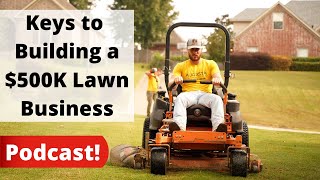
Mike Andes started mowing lawns at 11 and built Augusta Lawn Care to over $500k in revenue. He hit key milestones: reach $80-90k before hiring your first employee, then focus on sales and hiring to scale past $500k. His franchises now operate in 70+ locations across the US and Canada, with employees earning $28-30/hr under his pay-for-performance system.
Questions this video answers
11 years old.
13 years old.
Around 18 (while starting an MBA).
About two years prior to the interview.
A little over 70 locations (US and Canada).
Chapters
What's going on, everybody? Welcome into the Growing Green Landscapes podcast. This is your host, Jeremiah Jennings. Thank you all so much for tuning in to another episode today here on the podcast. I'm excited to be coming to you with another guest episode. These are my favorite by far. We get so much value out of these, and I'm excited to see where. Where this show goes. We have a very, very special guest on today. I'm honored to have on Mike Andes with Augusta Lawn Care and whatever. You got, like, 10 other businesses, man. I can't even name them all off. How are you doing today, buddy?
Good, good. Thanks for having me on, Jeremiah.
Absolutely. I'm honored to have you here. So we're not gonna. We're not gonna beat around the bush, guys. We're just gonna hop right into the show today and kind of see where it takes us. So, Mike, I, like I said, super thankful for your time today. Thank you for hopping on here with us and hope to. Hope to bring a really good quality show out to these guys that are out there listening and these. Maybe even women out there, these young entrepreneurs that are starting. Maybe it's in their green industry business or outside of the green industry. If you're just kind of starting out as an entrepreneur, that's kind of what we're gonna be talking about today. So if you want to. Mike, I know you're kind of like, social media is definitely growing for y', all and Augusta Lawn Care and all the other side ventures that you have going on, y' all are growing on the social media side of things. But in case there's anybody out there who doesn't who hasn't heard of your name yet or Augusta Lawn Care, would you take us just kind of a. Kind of give us a backstory on how you got to where you are today, kind of how you got started in your lawn care business and then all the other businesses you've built along the way.
Yeah. So I, like a lot of us out in the industry, probably have started when I was really young. So I started mowing lawns when I was 11 years old, and then I went to college when I was really young. I thought I was gonna become a doctor, so I actually went to start college when I was 13 and paid my way through college mowing lawns. And so at the time, it was my brother and I, we call it Andy's Lawn Care, just our last name. And then When I was 18, I finished my undergraduate degree, was gonna go to medical school at the time and decide to cancel My applications for medical school and go get my mba, my master's in business administration. At that time. When I was 18, as I was doing my MBA at night, I started Augusta Lawn Care. And so wanted to kind of scale it up and grow it beyond just my brother and I mowing on the weekends. And so since then, it's been about a little over eight years now. And so two years ago, we started franchising. So we now have over 70 locations around North America, US and Canada. And yes, we kind of went the franchising route. I own a few of those in North Carolina, New York, and Washington state, personally. But then the rest of them are franchise. So kind of a really cool gig because I'm able to see so many landscapers start and I'm able to see a lot of the patterns of where people struggle with what are the common hurdles for growth and a lot of the struggles that you go through at each stage of growth when growing a lawn care business. So really, really fun, Very interesting and really cool to see the progression across the whole country, different climates and different regions, and how growing a long care business can differ so much in these different areas.
Yeah, you literally have your hand in, like, how many, however many different businesses that you have out there. How many franchises do you have now? Did you say that? Or I missed. Did I miss that?
Yes. Yeah, we have a little over 70 now. And then I also do other things. Like, other business you mentioned is like lawn care. Bookkeeper.com lawn careweb design.com lawn caremedia.com and those four. Those are for other landscapers outside of the franchise. But most of my time, 95% of my time is spent on Augusta lawn care.
Okay. So it's really cool to me that you get to. It's cool to me that the social media side is blowing up for you because you have literally seen, like, you're saying you're in all these different climates around the country. Like, you have a different perspective on this. And I think almost anybody out there does besides people that franchise. Because you. You literally, like you're saying you get to see the climates in North Carolina and the struggles, but from all around the country and even like, economically too? I mean, how does that play into things? Like, you get. Do you feel like you have a better. The franchise and you feel like you get to help more people by starting these franchises because you have such a. An experience, I guess you could say, from seeing all these people real time and even over the two years, I mean, you've seen how Much stuff has changed in the past two years. That's. We can all. We've all seen that, and we know where the economy is heading and where it's come from. So how do you think that kind of gives you a benefit when it comes to these franchises and helping people start up because you have had such a hand in all these different people around the country starting their companies?
Yeah. It's funny because I kind of look at it sort of like a parent and child relationship. It's like when. When you. When you have a kid and you kind of. They're going through adolescence and their teenage years and, you know, trying to grow up, and you kind of see them struggling through all the things that you struggled through, and you almost want to almost laugh a little bit because you know exactly what's about to happen because you went through it the same way. And so it's similar with franchising, except I get to see, like, I've seen 70 kids now, 70 of the people that I really care for and love and want to see succeed. And, you know, I know what they struggle with. I know their personal issues. I know their health issues. I know all of those things. And so it's very. It's stressful. The same way being a parent is to kind of have to see your kid go through some things. You can't. You can't just drag them through. Right. And being part of a franchise is helpful. You get certain systems and things like that. But in the day, business is a lot about. It's just like overcoming personal issues, growing yourself professionally in your own leadership style. And a lot of that I can't do for someone else, but I get a. I have to kind of see them go through that evolution and go through that. Those struggles. And sometimes it's not easy. It's sometimes a little bit stressful, but it's extremely rewarding when they come on the other side and. And you've been able to say, you know, you've done a part of that. Kind of like the same way that a parent would be proud of them, a kid graduating or, you know, walking across the aisle and getting the diploma. Like, there's a certain sense of pride there. And there's definitely. That's what I live for, is seeing the young guys especially kind of get past things in their past, maybe financially not set up for success, or not having a good family structure and being able to use business as a way to mold their character and grow and. And then financially succeed.
And I love that you show character in there and kind of use business to help them and they're in their life. It's not. It's not all about money at the end of the day. It's not. It's about what kind of character you have, what kind of family you have and what kind of life you're living to. And I think you are a fellow Christian, I believe, Mike. So we talk about that on our show a lot. I hope it doesn't. I hope you. You don't mind us talking about it on here, but. Because you have a. You have a Christian background, if that's right. Uh, don't you? Were you raised. Was your data in the ministry or anything like that? I thought I'd heard that at one point.
Yeah. My dad's a minister, and then his dad was a minister, so kind of from a long line of.
Yeah. So you've been in it. Yeah. Hey, I love it. My dad was a. I was a PK, too, so I know exactly what it feels like to go through that. But it's cool to me that you kind of take that and you've. You've moved into the business world now. So you're not a minister, you're not a minister, but you're taking the stuff that you learned and you're taking into the business world. So you are furthering the kingdom of God by helping these people, helping these franchisees start their companies and like you're saying, build a life for them that means something more than money. It builds their character, it builds their morality, it helps them provide for their families that they can create one day. And you have 70 other people on the end of that now that are. Who knows how many impact, how much impact those 70 people are having all across the country, across the world. So I really admire you for the franchising part of things because that's a really unique thing. Actually have somebody in my networking group who does franchises, and he talks about how hard it is and stuff, and it's not something that I think I would want to get into, but I admire you for doing it. And I just. If there's anybody out there that wants to maybe check into that, how would they get in? How would they look into doing that? If there's somebody that listened that thought, I want to start, but I don't know how, and maybe I want to do the franchising route.
Yeah, you know, we don't really pressure anyone join the franchise. Like, we really want it to be a very beneficial for you mutually, that you're going to grow Your business. And so, you know, augustalongcareservices.com franchise has a whole bunch of videos on it. But when we talk to you, we don't really try to pressure it, because I think that there's some people who need to do it independently. Some people just. They have to go. It's kind of like the kid that just has to go and mess up a little bit in life, and then they'll figure it out themselves, and they'll kind of come bumbling through, but they'll learn a lot from it. And some people need to go through that, and I'm not opposed to that. I think it does definitely save some time and money of trying to figure things out in yourself by just having a system that you can follow, a network that you can tap into and ask for advice. And that's really the part that I enjoy so much. And that's where no franchising for me was so, so fulfilling because, like, I had stake in some regard to someone's success, right. In the past. Like, I've done the consulting and things like that in the podcast I've had for years, but, like, at the end of the day, I was just giving suggestions, and it was like, take it or leave it. Well, now it's like they're part of my brand, and, like, we are on the same team. Right. And so to have that skin in the game just elevates the stakes. I feel so much more when I'm trying to help someone or improve their business.
And it's almost like you probably have, like, a sense of responsibility. Do you feel that at all? Because, like, this stuff that you're telling them they're relying on to build their family and to put food on the table for their kids and stuff, so that's something that we can kind of transition to. What we want to talk about next is scaling the business you scale to these franchises, but you scaled Augusta first. Our audience, I feel like, is a lot of younger guys that are starting out and guys that are maybe are on the fence about scaling or not. I've personally thought about that. Do I want to scale? Do I want to stay small? One or two main crews, and I'm still figuring that out. But if you would kind of walk us through these steps of scaling, I guess you could say maybe, maybe, I don't know, two or three big points, or however you want to go about it. I know you've given advice on this in the past, so I'm sure you have a method of doing it. But to the guy that's out there that's maybe thinking, should I scale? What are the benefits to it? What am I getting into? And I know it's going to be a short, condensed version. I mean, there's a lot more to go into here. But how could you. What advice would you give somebody who's thinking about scaling and how you did it?
Yeah, if you're solo right now, you're by yourself out in the field working, what you really want to make sure you've buttoned down is that you're profitable before you go get an employee. A lot of times the reason people will get an employee or two and then retreat back to being solo is because they were never profitable enough to actually afford an employee. And there's going to be a massive overhead jump when you get an employee. So I recommend is, hey, try to maximize profit. Try to maximize revenue before you go get an employee. That means I really want you to be doing at least like you can do ninety, a hundred thousand in revenue by yourself. And if you're doing 30 or 40,000 revenue, you don't need an employee. And I'm talking about annualized basis. But it probably means your pricing isn't right. It probably means that you're not efficient enough. You're not getting enough budget hours in a day completed. So trying to figure out that first, especially if you have family and you gotta provide and you can't just afford to leave all the money in the business, you better make sure that you're producing enough profit before you go. An employee and then their family is now relying on a paycheck and putting food on their table. So I feel like it's a. As a business owner, we're somewhat obligated to make sure that we have enough profit in our business. It's not because we're trying to make a bunch of money or we're greedy. We have an obligation, if we're going to go hire people and they're going to depend on our paycheck, that we are producing a sustainable business. So the first thing is, in terms of growth is like, hey, if I'm going to solo to an employee, I want to be doing at least 80 to $90,000 per year in revenue. And I know that's very generalized based upon, like, what service you're offering and things like that, but that's kind of across the board. And then it's a matter of like, all you need to focus on is sales and hiring. Those are the two things that will drive your growth and your Revenue past half a million in revenue. Right. You focus on those two things exclusively. Just like all in on sales, right. You want to be doing at least 50% close ratio, ideally 70% close ratio. So you got to figure out, like, what are the systems to make sure I can follow up with people I can get, you know, call them back or send them an email and try to get them back in if they've gone cold on an estimate. It's all about selling. Once you pass half a million, you start getting towards that million marker. That's when it becomes much more about leadership and strategy and really honing in the system side and trying to carve out the five minutes here and the 10 minutes here and implementing what we call pay for performance to make things more efficient out in the field. That's what it becomes more and more about as systems, as you grow the business. But I think for most people, what we struggle with is getting past that 150 to $300,000 marker. That's a very tough zone for the business, mostly because during that zone, you're extremely busy physically. It's still demanding on you. You're still out in the field working, but at the same time, you have this massive hike in overhead because you have employees. And so a lot of people will kind of get disillusioned in that zone. And so I kind of feel like you either stay at 200,000, you know that zone, or you speed up to 500,000, because in between that, usually your profits aren't going to go up, mostly due to the fact that to get to half a million, you're going to ramp up in overhead. Employees, you have more trucks, more equipment, more insurance, all the rest of it. So a lot of times between 200,000 and 500,000, there is not much more profit. It's a matter of asking yourself, like, is the goal of this business to be a 7, $800,000 business? If so, let's speed through this zone. Otherwise, stay at 200,000 for a while, get some profits, raise your prices, increase your margins, get one or two really good employees and solidify for a couple of years before you try to scale up and go past half a million. Yeah.
So you have to figure out what your end goal for the business is. When you get to that point. It sounds like you got to figure out, do you want to stay at this point for a little while and be profitable, or you don't want to get caught in the 350 to $400,000 trap, is what it sounds like. The Trap of you're not making much profit, you need to get through it or stop before you get there. And I'm glad you mentioned the pay performance. I just wanted to hit on that really quick because I hear some people talk about it. It's not too, it's not talked about too often that I've heard. Could be in the wrong circles of hearing things. But now you said you start implementing that when you get to those multiple employees, get to like the 500 plus mark. Now are you saying that you don't implement that when you have one or two employees? Or like explain that a little bit and explain what P4P is if somebody hasn't heard that.
Yeah, we, we, we do have our franchisees implemented from day one, just so that way they don't have to ever transition. But it's definitely something that once you get past a couple of crews, it's extremely important because no longer can you micromanage those employees. You can't watch where they're at. You can't be exactly right. So what pay for performance, or what we call P4P is, is basically they get a percentage of labor revenue the employee does every single day. So the more, the more money they make for the business, the more money they get in their pocket. And it's just a way to align their efficiency and their speed with their. And it mostly comes from the fact that I wanted to be able to pay some people more, I wanted to pay employees more, I wanted to give a livable wage. But on the flip side, there were some employees that were just on their phone, lazy all day long, and I can't raise their pay. So I want to make it completely merit based, not based upon who knows me, not who asks for a raise, who has kids and needs more money, who got in an accident last week. I want it to be strictly based on merit and creating that meritocracy by which they get a percentage of the revenue they make for the business.
Yeah, whoever gets the job done, you're going to get paid for it. I mean, that's, that's what it sounds like. You go out and do the work you're supposed to and you're going to, you're going to get rewarded for it. How was that?
A lot of people are scared on that point. Sorry, Jeremiah. No, no, no, go ahead. About quality. Right. Because they think, hey, if I give people a percentage of all the money they make, they're just going to speed through it all day.
Yeah.
And so that's the part of P4P, the system that is so important, that's what we call the yellow slips and damage cases. So if they get a call back, they're going back that person's property. Well, there's no more revenue being made. So therefore, they're not making any more money on P4P. They're going to make sure we make sure they get a base pay, making sure they make it a floor, but they're not going to be making performance dollars and killing it. Right? We have people mowing lawns, making 28, 29, $30 per hour every paycheck, mowing grass. But it's because they get to work, they have a plan. They've looked at their route. They already know what they need on their truck. They already have looked. Customers they're serving that day, they have a plan in place to be extremely efficient. They don't stop at gas stations. They pack a lunch. They're not stopping, you know, for, you know, 10 bathroom breaks and a smoke break throughout the day. Like, that person deserves $30 an hour. Now, I can't say the same thing about someone else that comes to work, stops at five gas stations and little, you know, lollygags for 30 minutes before and after at the shop while they're drinking on coffee. Like, that's why P4P exists.
Do you now, in your. In your.
I guess you could say in your time of scaling over the. And when you got started to where you are now over the past couple years, where. So I guess Augusta Lawn Care. Where is it at for you? Part, like in your. In Washington, where you are, aside from the franchises, where are y' all at, size wise? Like, how many are y' all running? Like, I mean, I know you're on a multiple cruise, but, like, how has that worked from employees is what I want to hit on here, is how long did it take you to get the hiring process down? Because like you said, it's hiring and selling. So you figure selling, you need that 50% close rate, all that. The hiring is what's so hard right now. It's hard to get people to get out of bed. It's hard to get people to go to work and work outdoors now. It's hard enough to get people to go flip burgers and McDonald's. So how are you. How are you getting people to go work out in the field for y' all every day? And what advice do you think you could give somebody from your past years of experience of hiring?
I think what we got to embrace in this industry is that we are an entry level position if you're, if you're getting guys to mow and put landscaping blocks together, right. The thought that you're going to get people that want to be with you for 10, 15 years and they're going to be in their 20s right now is very unlikely. The perception on social media is that there's other things that they can do. And that's the truth. So it's like, what can we offer somebody, right? In the past, if you just had a job, you just expect them to show up to work because they should be happy that you gave them a job. Well, now the employee has the leverage because they have 500 other options out the door tomorrow that they could get a job. Oh, and by the way, it's at Amazon where they can make 18 to $20 an hour moving boxes inside of an AC unit or AC'd warehouse. Right. And so why would they want to work out in the blazing heat for 16, 17, $18 an hour when they can do that? Right. As an alternative. So what we have to start asking ourselves is why would someone choose us and our business over that Amazon option? Why would they choose us over UPS or FedEx or every other blue chip company that's looking for massive amounts of frontline staff right now? And I think what we got it we got to zero in on is what can we offer in this term of, in the form of career development? What can we offer in the form of developing someone's character in terms of, do we have a book club? Do you live audio programs? Do you talk to them about their career? Do you talk about how they can improve? Do you teach them P4P? Do you teach them open book management where actually they learn the numbers of the business? They learn about marketing, they learn about what a P and L is and what a balance sheet is and what good profit margins are and how to cut waste out. And what we can tell them is like, look, I want, this is why I tell our crew locally is like, you know, I don't want you to be here for more than three years. I either want you to move up inside of Augusta, which we have that unique because of the franchise. But even if we don't, like, I want you to go do something better. I want something better for you and your family. I want better for your career and I want while you're here to work on yourself. You know, we're going to be pushing books like Extreme Ownership. We're going to be having meetings and talking about our profit and loss statement and understanding what advertising costs are and what insurance costs and what credit card processing is all about and what margins are good versus bad and why we can or cannot afford certain equipment. That's the type of thing that when they go to their next job is going to set them up for a much better career opportunity. Right. If you go into any position in the second tier of your career after being in Frontline and you're able to start thinking about like waste and start telling managers like, hey, this could be improved and this could cut out waste and this would cut off five minutes, that is going to set them up for such massive opportunities down the road. And so that's why something like P4P is not about the owner. It's not all the business making more money, profit sharing, open book management. It's not about the owner. It's about the employees having that opportunity to learn because that's what's actually going to set them apart from the rest of the applicants at their next job.
So it sounds like you're investing in people. That's what it really sounds like in Augusta you're doing. And I love that you've created the company culture. That's one thing we talk about on here a lot is company culture. We've had multiple interviews talking about that about, because I feel like that's necessary. And I think you would back me up 100% here to scale a business is you have to have a good culture, right?
Absolutely.
So by creating that culture, you're investing in these people for their long. So you're saying you don't want a guy to be mowing yards for 10 years in a row. Like that's not what your goal in is the company, because you want to either move them up in the company or get them out into a better, better way of life. So I love that you are investing in people that way. And I feel like it's something that everybody out there who, whether you have two guys or 10 guys, and I'm not one to talk about having 10 guys because I don't, I personally have a couple employees, but for me I want to invest in them any way I can. And if you're out there and you have those employees, invest in them any way you can because don't make them feel like they're just showing up to clock in and clock out. That's what it sounds like you have down. And that's why you're getting people to come in and work and not go to the Amazon jobs, come to work for you. For Augusta and grow into the. Whether you said the franchises or better yet, just going off somewhere else and maybe stepping up in management or whatever, maybe starting their own company one day outside of the green industry, who knows? But I love the way that you have invested in people and the way that. That. Whether it sounds like you have really hammered down your hiring processes there in Augusta. So aside from.
It's a process too, right. It's an evolution. Like, for me to stay here and say, hey, like, we nailed culture and we have everything figured out is completely false. And I also believe that the day that someone believes that is the day. The first day of stasis, the first day of them dying and that culture beginning to erode. And so, you know, we still have problems. We still have times where we have to figure things out. We're doing things wrong. And, you know, even in several weeks ago at our local shop, we had a meeting with the crews, like, hey, these things need to change and we want this different. And here's. And I had to step back and realize that, hey, like, this labor force is different than it was 10 years ago. Right. And there's got to be certain changes, and they're not going to want overtime and they're not going to care as much about the money as much as a different living work life balance and things like that. And so those are the type of flexibilities that you have to have if you do actually want a culture is like, hey, it's never gonna be perfect. We're never gonna get it right. And the fact. The ideology that we have it right and perfect is way off. Because I'm. I believe there's always room for improvement. Yeah.
And I don't want to. I didn't want to come across that way. And saying, you do have it figured out, but you have a good model. I guess you could say that's the best way. You have a good model to base it off of. And like you said, it's a growing process every day. You're always growing. So if you. So we've talked about.






