How to Winterize Your Lawn Care Care Equipment
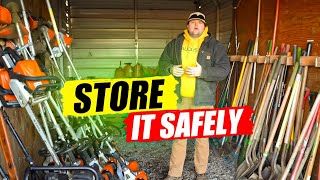
Lee walks through the crew's winterization process for lawn equipment: draining fluids, replacing spark plugs, sharpening blades, changing oil, and disconnecting batteries. Everything gets pressure-washed, greased, and staged into storage boxes, with Caleb inspecting and repairing items before the freezing months hit.
Sam.
Foreign.
Hey, what's up, everybody? It's Lee, the office manager here at Augusta Whatcom County. And as you can probably see, my breath, it is winter, it is upon us. And we wanted to shoot this video for you guys to see how we winterize all our equipment, what that process looks like. So we're just getting started. So nothing's going to be polished or clean or anything. We're just going to show you, you know, the first steps of the process. So we have one of our maintenance guys, Caleb. He's just at the shop today. He's not going out doing any jobs. He's to going. He's going to do some tidying around here and then start winterizing the equipment and getting us ready to make sure next spring we're ready to go and all the equipment set up. So first thing we're going to do, obviously, as you guys know, what we practice and what we preach is trailerless setups. So the trailerless setups obviously have lots of equipment on them in Washington, as you see, when we walk around the shop, it gets real frosty in the mornings during the winter. So we don't want that equipment outside for months at a time. So what that means is we have to take all that equipment off the trailerless setups and. And store it accordingly. So what we do kind of stage one is bring in all the combi. So we use the steel combis and then the solid shaft string trimmers. So what we have the guys do at the end of the season, we take them off and then we make sure that they're labeled properly. So on the end of this one here, you can see they put a new label on P12 trimmer. And we bought this one, we know in August of this year. So that way we have them labeled. They're ready to go for next year. So we know that that one will go on the P12 racks. And we know when we bought it. So if any major maintenance needs to happen on it, we know when we bought it if it's worth it to just scrap it and buy a whole new one. Or if it's worth it to make the changes. So these guys will just be drained of all fluids, and then they'll just be washed, pressure washed, cleaned up, and then just set aside for the winter. So the steels are nice. I mean, you guys know it in the industry. Two strokes, they start up just fine in the spring. As long as you drain the fluids. We will replace spark plugs on them if they need it. And that's something that Caleb and the maintenance guys will go over and assess as needed. So those guys come off the trailer setups as well as the blowers in the back. Same thing if we need to replace plugs on those and then draining all the fluids. But we are using blowers, as you guys know, throughout the winter, if we're still doing cleanups, still doing tree trimming jobs, leaf cleanups, whatever it may be, we still need some blowers ready to go. So we don't winterize all the blowers. The just a handful of them. So that would be. These ones here would probably be the winterized ones. And then the ones that the guys have out today obviously are being used. So trimmers come in here. We obviously stockpile gas cans because we aren't going to be using as many. So the guys are still taking two cycle, you know, for the trimmers we are using in the blowers we're using, but we're not using as many of the regular gas cans because we'll show you next. All our mowers are stored for the winter. So in the winter we're going to store all the mowers and. And what we do is kind of just a one big process where we get them all off of their mowing setups. So that's going to be. All the trailerless mowers will go into this storage container here, what we call box one. And we pressure wash them, take the blades off, sharpen the blades. We already change the blades once a week, so that's normal process for us. But we're going to go ahead and take them off, make sure fresh blades are on them now. So when we start up in spring, we don't have to worry about one extra step of getting the new blades on. We're just ready to go right away. So in this box here, we put all the mowers. Like I said, they're not clean, they're not pressure washed yet. We just started. We just stopped mowing yesterday. So we line up all our 30 X's. That's what we call the Exmark 30s. So they're all lined up and ready to be cleaned. So that'll be Caleb and the maintenance guys coming soon. We'll take all these out and we'll pressure wash them, take the blades off like I said. Then we'll drain all the fluids. If anything major needs to be done as far as repairs, that would be up to the maintenance guys to decide. And we would either take them into our local shop or if it's a Small repair, we would just decide to do it ourselves. So we'll clean these out, drain fluids, change the oil, clean out all the air filters, everything like that, and get them ready to go. So that way as soon as spring starts, we should put gas in it, pull the handle. We got sharp blades, we got fresh oil, and we're ready to go. So Those are the 30 X's. We also have our backup Honda 21s, which we've shown you in videos previously. And those same thing, cleaning out the filters, draining the fluids, giving them a proper oil change, and then double checking any major maintenance. As well as in the back, we have our sod cutter, two aerators, and a dethatcher. Same exact process. Cleaning out the filters, draining all the fluids, changing oil as needed, and then any major repairs. Also on the sod cutter and the aerator, we're gonna make sure we grease them appropriately on their grease points and lube, anywhere that needs to be lubed. As far as the dethatcher, aerator and sod cutter, because there are some different spots for that as well. So we also have just some spare, you know, really old mowers in the back. But we will still make sure the fluids are out of those for the winter because they will still be sitting for a couple months. So mowers right here, we just keep them all in this box. Nice dry place for them all year. And then the last thing I want to show you, we also will do our zero turns. I'm not going to show you those, those are still in the trailers. But we'll do those same thing. Sharpen the blades, pressure wash the decks, drain any fluids, give them an oil change, fresh oil filter, and then we would also disconnect the batteries. Last thing I just wanted to show you here is in what we call box two. And this is the back. So this is where Caleb's mostly going to be working today. And what's back here is going to be the equipment that the crew knows needs to be fixed before it's winterized. So we know we have, like I said, we label everything here. So we know that P2 had a faulty weed eater. So it's already labeled there. The guys know Caleb knows that he can talk to whoever had P2 yesterday what was going on with this and how do I fix it and get it ready to be winterized? So we leave this here, you know, only a few things. We got one blower, one trimmer, and then all the backpack sprayers will go back here so those get drained and ready to go for next spring because we aren't going to use them in the winter. Once it starts freezing, these can't really sit outside. They'll freeze up. It can crack the tubes. So we bring them in here where it's dry. They still will freeze up overnight. But it's that cracking of the tubes not being out in the elements. This helps preserve them a little bit. So we take those and leave those there as well. So that's kind of all that we do here at Augusta for winterizing. Really try to make sure everything stays labeled, everything stays organized. And we're repairing things now so that when we jump into spring we're not like, oh man, what truck had that messed up trimmer? What? Well, we know that it's right here. Caleb's going to fix it this week and it'll be ready to go in spring. Same with all the mowers. That's how we handle it here. Hope that helps you guys. Let us know if you have any questions like subscribe, share the video and have a good one.
It.






