I made $70 in 28 minutes mowing this OVERGROWN Lawn!
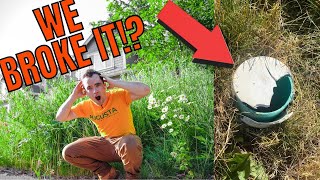
Mike Andes mows a 3-4 foot overgrown lawn in 28 minutes for $70, using a Honda commercial mower and Kombi steel edger. He hits a 4-inch septic pipe mid-job, bending the mower rim, and walks through his equipment choices, safety checks, and why he photographs jobs when clients aren't home.
Questions this video answers
$70
Less than 1,000 square feet
About 3–4 feet tall (including vines, blackberry bushes, and thick-stemmed weeds)
About 27–28 minutes
Honda commercial mowers (referred to as a 21-inch and later a 20-inch Honda mower)
Hey, everyone, It's Mike Andes, landscapebusinesscourse.com and today we are mowing this overgrown lawn. The city is not happy. The neighbors are not happy. But today we're gonna make some money mowing this lawn that's overgrown. It's like three or four feet tall. We're gonna get cut down to an acceptable length and make some money doing it and kind of walk you through the process. So this property, let's look at the numbers. We're making $70 on this cut. Literally the turf square footage. The area that we're actually servicing is less than a thousand square feet. So really, really small.
All right, so we're starting off with an edge here. This is using the combi steel system. So if you haven't used that before, basically you can just put new attachments on the end of the motor. And currently on this, right now, we're using the edger. And I know some people have used the bent shafts, and those are nice from a view standpoint, but usually those are for residential. There are some commercial brands that do the bent shaft, but we use the straight shaft just because that's what our local dealer has, is the steel. And we've kind of stuck to that. But the, the Kombi system is. Every brand basically has its own version of the combi system where you have interchangeable different heads for the actual trimmer. So this overgrown lawn you can see here, it's basically as tall as me. In this one spot here, it's not even just grass. There's like literally vines and BlackBerry bushes and some type of weeds. I don't even know what they were, but they were basically like plants. And so typically this side, this. This right hand side of the driveway I'm working on now that those type of weeds, like you might want to use the steel, like brush trimmer. Honestly, the br. The brush attachment for, for the Compi system, we're actually using a metal head and not just a line trimmer. But we're still, we're still edging right now. And we usually use this steel stick edger, we call it, along the pavement. So any sort of pavement, concrete, hard edges, we're going to use this one. We find that if we use the line trimmer, over time it just starts to get wider and wider and further and further away from the actual concrete. So if every single week we're using a line trimmer to make the edge, you know, what starts off as a eighth of an inch, becomes a quarter inch and becomes a half inch, and then before you know it, you have like an inch gap between the concrete and the lawn. So right from the first service like this one to going forward, we try to use on the, against concrete and pavement, we try to use the stick edger. It is a little more work. It's a little, not as efficient because you can ideal if you can use your line trimmer for the entire job. But it definitely keeps it really tight, that edge up against the pavement. So now I'm using the flathead shovel just to kind of clear off the debris and scrape it away because it's literally like 6 to 12 inches overgrown onto the sidewalk. So now we're going to go ahead and weed whack the entire thing down and even the lawn area on the left hand side of the driveway where I'm mowing this, eventually I'm going to actually use the weed whacker. And there's a couple reasons why I do this. Not so much because the mower can't handle the, this tall grass because it's really thin, it's dead. It's not like super thick. The mower wouldn't have an issue. But what you're really looking for is any sort of obstacles. And I actually saw an obstacle while I was doing this. There's a septic pipe that comes up out like a 4 inch pipe coming out of the lawn. And you're gonna see I end up hitting the thing. So no, just because you see it doesn't mean you're, you can be smart enough not to hit it. But somehow I forgot and I end up hitting with the mower later on. You'll see that later on in the video. But that's the main reason why I'm actually weed whacking and using the trimmer here before I use the mower is just to make sure there's not like you can hit all sorts of garbage. You can get dog poop, you can have trash, you can have septic pipes like the one I'm going to hit here in a second. You can have big rocks, things that can damage your blades. So this is kind of just kind of a preliminary visual check to make sure that there's not that sort of stuff in the lawn and in the tall weeds even before I use the mower. So this is the, this is the spot where I would probably ideally use a brush cutter and a metal brush cutter that isn't gonna have just a line trimmer. You can see here I go this one area probably five or six times to kind of get this lawn or this. These weeds down an acceptable height. That's because they're super thick. And the stems on some of these things are literally like half an inch because they're so tall and they're like thistles and all the rest of it. So a metal head is usually much more. A lot better, more ideal in this scenario. And then use the line trimmer if you want to make it, you know, look a little prettier at the end. But you can see here how many times I got to go back and forth and go up and down and I go, you know, slowly move the height of this grass down further. If you had a metal head, a brush attachment, you could just literally whack this right at the base of the ground right off the bat. When you're doing this tall of weeds and brush, you definitely want to be careful of your surrounding areas. For example, right behind me is a car make. I'm making sure my back is to it at all times when I'm doing the. This corner of the property. So even as you see the rest of me doing the weed whacking here, I'm going to keep my back to the road as much as possible because there's a car. Traditionally, as long as you keep the guard on the trimmer, you can basically keep your back to whatever you don't want to hit. So if there are windows you don't want to hit, or the house or cars or people and yourself, that's kind of important, I guess, then you can definitely keep the any sort of debris or little rocks from getting thrown. And again, we have a lot of damage cases on these big overgrown lawns because you can't see the rocks. You can't see little pieces of debris that can all of a sudden be flicked out at like 100 miles an hour towards windows, cars, and all the rest of it. So again, that's partly why we slowly weed whack these tall weeds down, is because if I go right at the base, I could very well hit something. Like, I could hit their great grandma's ornamental Voss vase, vase, whatever it is, I could accidentally hit one of those. And now they are hating me and they think I'm a horrible person when literally I just couldn't see it. So that's something you definitely want to be careful of on these overgrown lawns. It's like, make sure you walk the property beforehand, make sure that you actually know what you're getting yourself into. And you can avoid a lot of damage cases. And if there is a lot of gravel, you need to be extra careful because doing what I'm doing right now where I'm whacking up against the soil could lead to a spray of gravel going towards the house, towards cars, towards windows. And trust me on these overgrown lawns, this is where most of our damage cases happen. When we damage something on the customer's property, we don't see see things. And you're going to see I do a damage case here, but things like gutters or potted plants, it's so easy to hit them when the lawn is 4 or 5ft tall and you can't see anything. So definitely keep that in mind when you're doing these properties. You're going to see I'm making a ton of a mess here. And even, you know, if you're doing this in a really nice neighborhood, you might want to actually blow this thing off before you go to the mowing part. So this neighborhood is nice, but it's not like where it's crazy crazy. But sometimes if you're in a really upscale neighborhood where the houses are a million dollars plus, you might want to actually consider blowing off your all the trimmings before you even start mowing just to prevent the bad look of having that debris all over the place. This is a Honda 21 inch commercial mower. And again now the lawn is probably about 6 to 7 inches tall. It's relatively dead, it's not super thick. And a lot of times when you're doing these overgrown mows for the first time, you're going to want to bag them just because if you don't, it just looks horrible, especially if it's wet grass. So fortunately, today is really, really warm. It's actually this is the hottest day on record in Washington state ever. And so we definitely deserve a like for getting out and making a video and mowing the lawn in that kind of weather. But furthermore, that is, you know, really just keeping, keeping track of, hey, if the grass is going to be five feet tall, there's definitely going to be a wear and tear on my mower, right? The blades are going to get go out faster. The spindles, it's harder on the equipment. You can see, you can hear, you can hear the motor. It's working a lot harder right now because it's overgrown lawns. So you've got to keep in mind on these overgrown lawns, you're going to be working your equipment a lot more. And you need to take that into account when it comes to the pricing side of things. So yes, we charge $70 and I do this whole lawn in all of like 27, 28 minutes, I believe. But you've got to take into account the fact that there's probably three or four times as much wear and tear on my equipment during this lawn mowing because of the fact that the grass is overgrown. It's harder on the equipment, it's harder on the blades, and I'm going to have more damage, I'm going to have more callbacks. And before these lawns, before we start doing these lawns, we always make sure that we talk to the customer before and after. So ideally I'm able to talk to the customer before I start this big overgrown lawn and say, hey, we're going to go ahead and get started and make sure you're here for a walkthrough in about an hour or 20 minutes or whatever it is, because we really want to make sure we do a walkthrough. It's so easy to get callbacks and complaints on these type of lawns because people have unrealistic expectations of what a four foot lawn is going to look like once I cut it. They somehow think it's going to be like a putting green. It's like, Look, I'm taking 4ft tall grass down to 3 inches. It's not going to look perfect. There's going to be patches. And so setting that expectation for them and making sure you have a walkthrough at the end of the job is really important. So on this job, I actually tried to do a walkthrough. The client wouldn't answer the door. I rang the doorbell a couple of times, but I ended up taking pictures and documenting this job just to make sure. Because these overgrown lawns, that's where you, a lot of times will get callbacks. Because you can see right now I am doing, I'm actually double passing this. So I went one direction diagonal and I'm going the other way just to prevent though from missing spots. And a lot of times it's not that you're missing spots, just that the wheels will just knock down the taller grass. And then now instead of cutting the grass, your lawn mower is literally just going over it and it's been smashed down. So a lot of times what will happen is you will mow the lawn and then the day later the customer's like, oh, you missed all these spots. You can see the stripes and all the rest of it. And, and a lot of times that's just because you didn't double pass it in a different direction. So you want to do it in an opposite direction, different direction than what you mowed beforehand. Just to make sure that any stragglers on the lawn are cut. You can see here there's a few times during my blades are actually stopping. I'm pretty, pretty, you know, mad right now because the blades keep stopping just because the amount of grass that is coming into them turns, you know, turns the blades off. And that's again hard, harder on the mower. And that's why on this, this lawn I'm literally going to make like $150 quote unquote per hour that I'm working. But it is absolutely something to keep in mind. And that is that the wear and tear on your equipment is substantial on these type of lawns. And you're going to see it right now.
Yep, I just hit that 4 inch septic tank or septic pipe and what these usually are is there is a, an area for them to clean out between the road and the house in terms of the septic and it's a 4 inch pipe coming up with PVC. And it's not so much that it's going to damage the blades, but it can. Once I hit it, it basically bent in the perimeter rim of the mower. And I basically am not going to finish the rest of this job with this mower because it's literally knocking the, the edge of the mower. So we're going to fix that at the end of the job. I'm going to show you exactly what I had to do to kind of bend that back into shape. And what I'm doing here is just literally wrapping up this job. The last I only missed like maybe 8 or 10 square feet that I had hadn't double passed yet. So I just cleaned that up. Any stragglers on these larger properties literally going through the weed whacker afterwards is necessary just to hit those extra stragglers and, and those sort of things. Now you're going to see here what I'm doing. Fortunately, on this property I can blow everything and I have an area to blow it into. And that's that overgrown kind of forest vegetation on the right hand side of the driveway. If that wasn't there, I would need to be collecting all of this. I would need to probably blow it onto the lawn and suck it all up. We can see here I can blow it all into the BlackBerry bushes and that, that kind of forest area, it's overgrown and it'd be fine. But usually I would want to blow this off before I mow so I can actually suck it all up and it's not sitting on top of a freshly cut lawn. You also notice there I made sure to blow off the neighbor's lawn because they've obviously taken care of it. They've watered their lawn well, they've probably put some sort of fertilizer and they mowed it. So I don't want to again get a call back or complaint from the neighbor of a customer simply because I let clippings get onto their lawn and then they're going to complain that the weed seeds came in when I was mowing and they want a free service and all the rest of it. So just kind of keeping note of your customers, neighbors and what they, you know, their perception of you is important. So how you leave this lawn is really important. You get great, you know, referrals and customers that see you from the neighbors and they're like, man, they do a great job and they want you to do their lawn. But you can also set yourself up for a lot of failure if you don't do a good job or, or you leave clippings all over someone else's lawn. And all the rest of it. On a day like this one's really, really dry, you can see all the dust flying up. It's definitely a possibility that grass clippings, seeds from weeds can fly into the neighbor's property and you want to minimize that as much as possible. So on this property, after blowing off, this is when I'd go talk to the customer, make sure that they're happy, make sure that, that everything is to their satisfaction to reduce callbacks. But now I've got to fix this mower. So this is a 20 inch Honda mower. Again, I hit the PVC pipe. It actually never hit the blades. It hit the front guard, the rim, metal rim. So I'm trying to take this hammer and basically beating it back, back, forwards. And so that way the, the blade isn't hitting the rim every single time it turned. So I think I basically got it worked out here. It was working just fine. But I am going to have the maintenance guys go ahead and take a look at what, why the blade stopped so much. Even though the grass was long and it was putting a lot of stress on the mower. It shouldn't have been stopping like every 30 seconds or a minute. So this is what we call the red slip system. We basically tie these little tags to any piece of broken equipment so it doesn't go out on a route and frustrate somebody and the equipment guys that do the maintenance know exactly what's wrong with it and who to contact if they have any questions. I'm Mike Andes. Hopefully that was helpful. Hopefully you can make some money mowing these type of lawns. We'll see you on the next video.
Hey everyone, Mike Andes here. Thank you so much for watching the video. If you haven't already, click the links below to check out Lawn Care Media, where you can get door hangers just like this for a variety of services for lawn care, landscaping, fertilization, irrigation, fall cleanups, and the list goes on and on and on. You can get all there and customize these and make money mowing lawns doing landscaping services. We'll see you there.






